
Key takeaways
- One mole usually makes all the hills in a garden
- Traps set in active main runs are the most reliable way to remove a mole
- Moles are busiest from February to May and October to November
- Vibrating stakes, mothballs and home remedies rarely work
- Never pour chemicals or fumes into tunnels, as it's illegal and dangerous
- Molehill soil is lovely and fine, so use it for seed sowing and topdressing
Few things are more annoying than finding your lawn dotted with fresh molehills overnight. It looks like an army has moved in, but it’s almost certainly just one busy mole. Moles live alone and dig astonishingly fast.
Here’s how to deal with it, from trapping and deterrents to calling in a professional. There’s also a little about the good moles do, and why their hills hold some of the finest soil in your garden.
How moles live and dig
Knowing how moles work saves time and money. Most failed attempts come from not understanding their tunnels.
A few mole facts
Moles aren’t rodents. They’re insect-eaters, related to shrews and hedgehogs. Their velvety fur lies in any direction, so they can shuffle backwards and forwards through tunnels with ease.
- They eat mostly earthworms, plus leatherjackets, chafer grubs and other soil grubs
- They live alone and guard their patch fiercely
- Their territory is usually bigger than a whole garden
- They don’t hibernate, so they’re busy all year
Because a mole’s patch is so big, one mole is almost always behind all the damage in a typical garden.
The tunnels
There are two kinds of tunnel, and knowing the difference is the key to trapping.
Surface runs sit just under the turf. They’re temporary feeding tunnels that show as raised ridges across the lawn. A mole may only use one once or twice.
Deep runs are the mole’s main roads. It uses them every day to get between feeding spots and its nest, and they last for years. When one mole goes, another often moves into the empty tunnels.
Molehills are the spare soil from digging. The mole pushes it up to the surface. While it’s digging new tunnels, fresh hills appear every day. Once the tunnels are built, new hills slow down.
 Shallow feeding runs near the surface are temporary. The deeper runs are the mole’s everyday routes.
When moles are busiest
Moles work all year, but there are two busy spells. In the breeding season, roughly February to May, males dig long new tunnels looking for females. In autumn, October to November, they extend their territories before winter. Young moles leaving home in early summer can turn up in gardens that never had moles before.
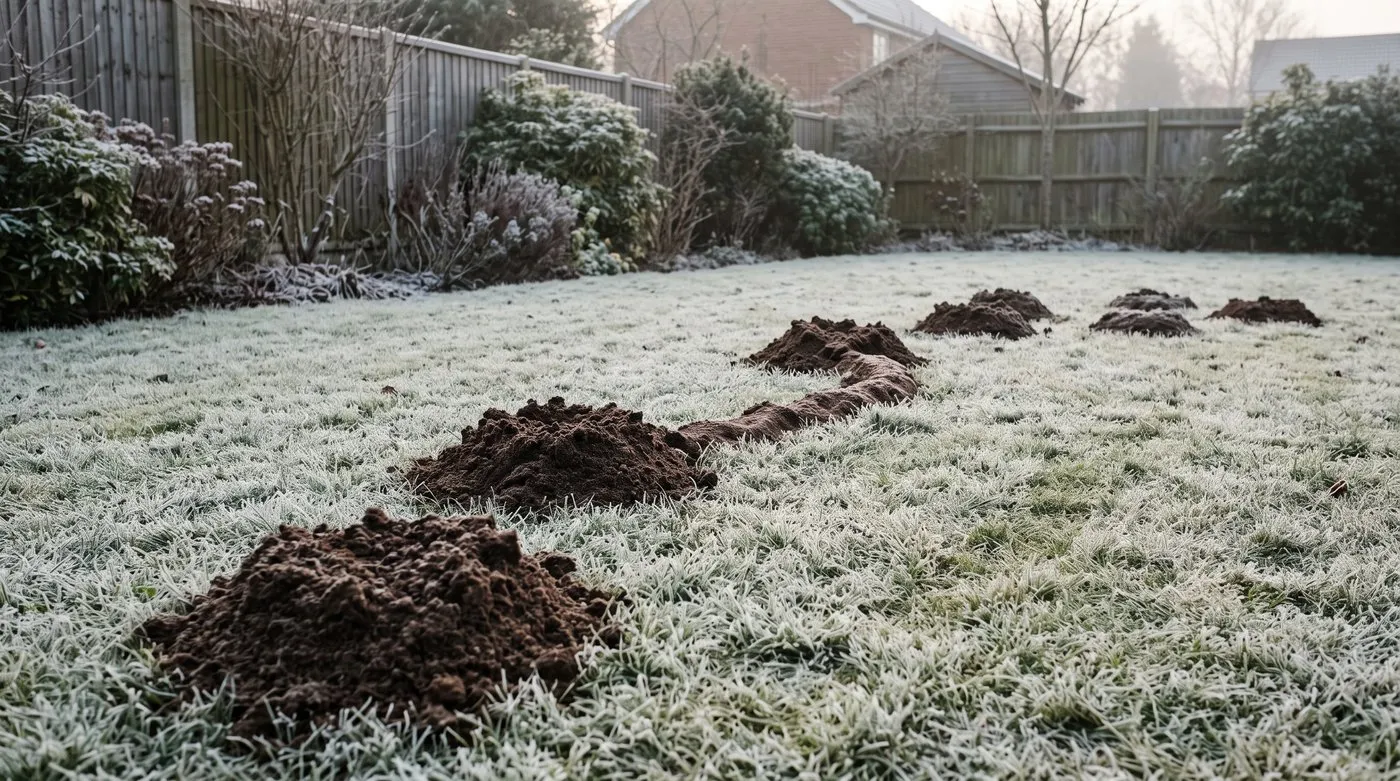
A fresh line of hills in early spring often means a male mole is out searching for a mate. Hills in a line usually sit over a main run.
Mole control methods compared
Some methods work well. Others are a waste of money.
| Method | How well it works | DIY or pro? |
|---|---|---|
| Scissor traps | Very well | DIY |
| Duffus or barrel traps | Well | DIY |
| Professional molecatcher | Very well | Pro |
| Castor oil granules | Not reliably | DIY |
| Vibrating stakes | Poorly | DIY |
| Mole mesh under new lawns | Very well, as prevention | DIY or pro |
| Mothballs, broken glass and the like | Not at all | Don’t |
Trapping: the method that works
Trapping is the most reliable way to remove a mole. Professional molecatchers rely on traps, and with a bit of practice any gardener can learn.
Types of mole trap
All the common traps are designed to kill the mole quickly.
Scissor traps are the most popular. Two spring-loaded jaws close as the mole passes through. They’re easy to set.
Duffus traps are tube-shaped and sit inside the tunnel, catching a mole from either end. They’re a bit more forgiving if your placement isn’t perfect.
Half-barrel traps are similar to the Duffus but simpler and cheaper.
How to set a mole trap
Where you put the trap matters more than which trap you buy.
- Find an active tunnel. Press down runs and hills in a few places. Check back a day later. Rebuilt tunnels are in use. Ones that stay flat aren’t.
- Pick a main run, not a feeding run. Look for a line of molehills. The main tunnel usually runs underneath, linking them.
- Open it carefully. Use a trowel and remove as little soil as you can.
- Set the trap firmly so it sits snugly in the tunnel and the mole can’t squeeze past.
- Block out the light. Moles avoid tunnels where light gets in. Cover the hole with a piece of turf, a board or a bucket.
- Check every day. If nothing’s caught after a few days, the run may be out of use, so move the trap.
 A scissor trap set in an active run. It must fit snugly, with all light kept out.
Is it legal to trap moles?
Yes. Moles aren’t protected in the UK and can be trapped at any time of year, as long as it’s done humanely. Poisons and gassing are restricted to licensed professionals. For gardeners, mole traps are the standard legal option.
Mole deterrents and repellents
If you’d rather not kill moles, there are products that claim to drive them away. Don’t expect miracles.
Castor oil granules
Castor oil granules are the most common deterrent. You scatter them and water them in. The idea is that they make worms taste nasty, so the mole feeds elsewhere.
Some gardeners swear by them, but the effect is patchy and washes away with rain. Worth a try first, but don’t rely on them for a bad problem.
Vibrating stakes
These solar or battery stakes buzz into the soil to scare moles off. Moles often tunnel right past them. The RHS guide to moles says there’s little evidence they work reliably.
Plants that “repel” moles
You’ll sometimes read that certain plants keep moles away. There’s no good evidence for it, and moles happily tunnel straight through beds of them.
Mole myths that waste your time
The internet is full of mole tips that don’t work.
Mothballs: they break down quickly in soil, do nothing to moles and aren’t good for pets or soil life.
Broken glass: moles just dig around it, and it’s dangerous for you, children and wildlife. Never do it.
Windmills and pinwheels: far too feeble to bother a mole underground.
Sweets and chewing gum: moles eat worms and grubs. They won’t touch a jelly baby.
Flooding with a hose: moles swim well and tunnels drain fast. You’ll just make a mess of the lawn.
Never pour chemicals, petrol or exhaust fumes into mole tunnels. It’s illegal, dangerous and doesn’t work.
Mole mesh: a barrier for new lawns
When you’re laying a new lawn or rebuilding part of the garden, mole mesh stops moles pushing up into the lawn for good.
How it works
Tough plastic or metal mesh is laid flat just beneath the turf. Moles can’t push up through it, but worms and water pass through freely.
How to lay it
- Prepare the ground for the new lawn.
- Lay the mesh flat across the whole area, overlapping the sheets.
- Cover with soil, then turf or seed.
It’s most practical for a new lawn, as fitting it under an existing one means lifting all the turf. It’s also easy to add to the base of new raised beds as you build them. If you’re starting a vegetable garden, put it in before you build the beds.
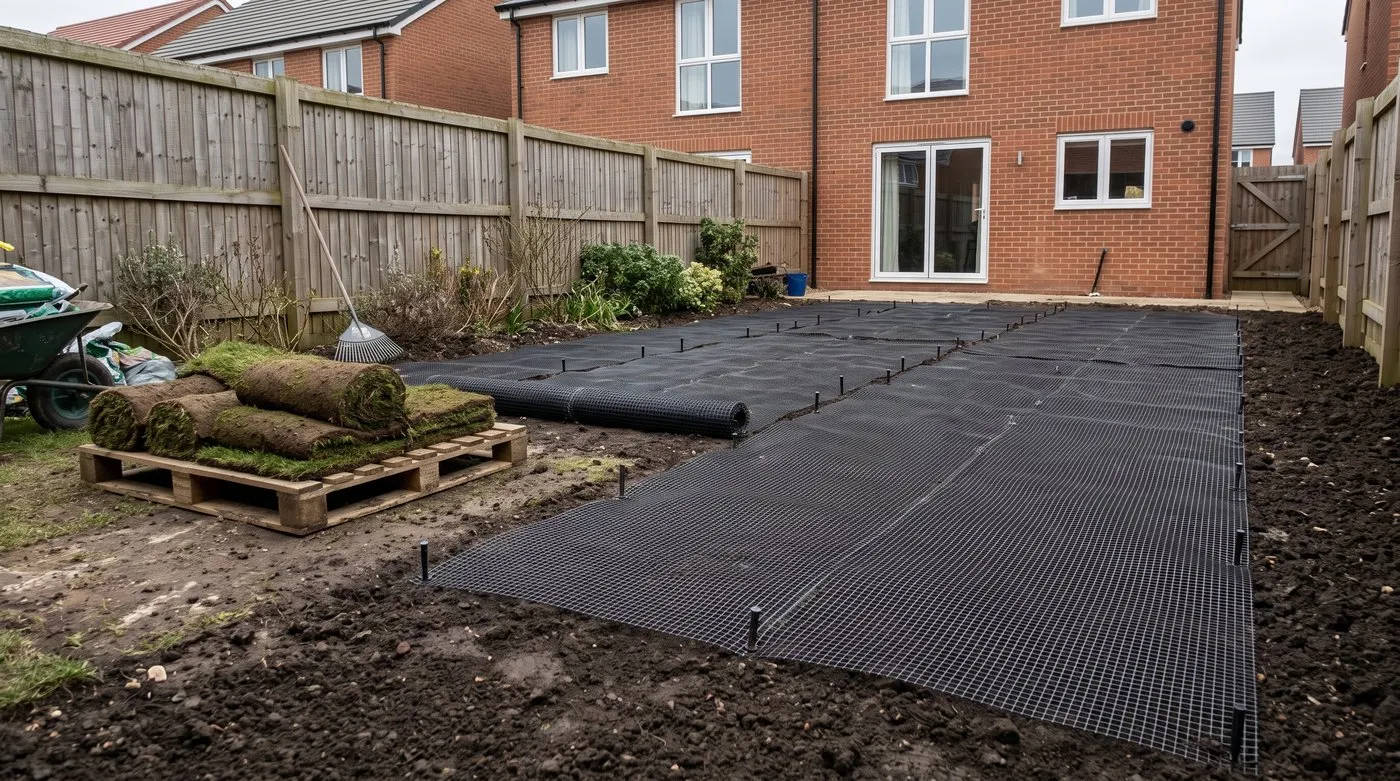
Lay the mesh flat with generous overlaps before the turf goes on. Worms and water pass straight through, but moles can’t push up.
Hiring a professional molecatcher
If DIY isn’t working, or you’d rather not handle traps, a professional molecatcher is the quickest route.
What to expect
A good molecatcher will look over your garden, work out the tunnel system, set traps in the right places and come back to check them. Most charge per visit or for a course of visits. Prices vary by area and garden size.
Ask for a member of the British Mole Catchers Register or the Guild of British Molecatchers.
When to call one in
- You’ve tried trapping for a couple of weeks with no luck
- The garden is big and the tunnels go everywhere
- Moles keep coming back year after year
- You need a perfect result for a smart lawn or sports turf
The good side of moles
Not every mole needs to go. Before you declare war, think about what it’s doing for you.
Airing the soil
Mole tunnels help air and drain heavy soil. If your garden is on clay soil, a mole may be doing useful work down there.
Eating lawn pests
Moles eat lots of leatherjackets and chafer grubs, which both eat grass roots and cause brown patches. Unlike slugs, which munch your plants, moles go after the grubs in the soil.
Molehill soil
The fine, crumbly soil in molehills is lovely stuff. It’s already sieved by the mole, with hardly a stone in it, so it’s perfect for sowing seeds and topdressing lawns.
Scoop it up to mix with your own compost for seed beds and pots.
 Molehill soil is fine and crumbly. Collect it for seed beds, pots and lawn topdressing.
Month-by-month mole calendar
| Month | How busy | What to do |
|---|---|---|
| January | Fairly busy | Fewer hills. Plan spring trapping. |
| February | Getting busier | Breeding season starts. Start trapping. |
| March | Very busy | Males hunting for females. A great month to trap. |
| April | Very busy | New hills appear in clusters. |
| May | Very busy | Babies born. |
| June | Fairly busy | Young moles move out, so new gardens get visitors. |
| July | Quiet | Dry soil sends moles deeper. Harder to trap. |
| August | Quiet | Little surface activity. |
| September | Getting busier | Autumn rain softens the soil. Start trapping again. |
| October | Very busy | Moles extend their territories. A great month to trap. |
| November | Very busy | Last good trapping chance before winter. |
| December | Fairly busy | Keep traps going in mild spells. |
Common mistakes with moles
Trapping a feeding run
This is the big one. Shallow feeding runs may never be used again. Set traps in main runs you’ve proved are active, because they were rebuilt after you pressed them flat.
Expecting instant results from deterrents
Deterrents take a while to show any effect, if they work at all. Give them a few weeks, but be ready to switch to trapping.
Thinking you have lots of moles
A badly dug-up lawn looks like the work of many moles, but one mole usually does it all. Catch that one and the problem is usually solved, at least until another moves into the empty tunnels.
Flattening hills without dealing with the mole
New hills will appear within days. Remove the mole first, then flatten the hills. Spread the soil over the lawn and reseed any bare bits. Keeping on top of lawn weeds that pop up in the bare patches saves you another job later.
Using illegal or dangerous methods
Petrol, bleach and other chemicals in tunnels are illegal, dangerous and don’t work. Stick to traps or a professional.
Living with moles
You don’t have to have a mole-free lawn. In bigger gardens and wildflower areas, moles do more good than harm. If it isn’t a smart lawn, or if grubs are doing more damage than the hills, consider letting the mole be.
A happy middle ground is to protect your best lawn and seed beds with mole mesh and put up with moles elsewhere. Encouraging owls and birds of prey helps too, as tawny owls and buzzards will take moles that come to the surface.
Repairing mole damage to your lawn
Once the mole has gone, the lawn is easy to fix.
- Flatten the hills. Rake the soil thinly across the lawn rather than leaving it in heaps.
- Firm it down. Walk over the area or use a roller.
- Reseed bare patches. Molehill soil makes a perfect cover for the seed.
- Press down ridges. Prick raised runs with a fork, tread them flat and water.
- Feed the lawn in spring or autumn to thicken it up.

Spread the soil thinly rather than leaving it in heaps. Molehill soil makes a perfect covering for grass seed on the bare bits.
How to stop moles coming back
Catching one mole doesn’t mean you’re mole-free forever. A neighbour’s mole may move into the empty tunnels, and good, wormy soil will always tempt them.
- Mole mesh under new lawns gives lasting protection
- Keep an eye out in the busy months, February to May and October to November
- Act quickly when fresh hills appear, as a new mole is easier to catch while it’s still exploring
Now you’ve dealt with the mole, read our guide on lawn weeds: identification and control to keep your repaired lawn looking its best.
Frequently asked questions
What is the fastest way to get rid of moles?
A trap set in an active main run. Find the active runs by pressing tunnels flat and checking which are rebuilt within a day. Set the trap there and keep the light out. A professional molecatcher is quicker still, as they read tunnels expertly.
Do vibrating mole repellers actually work?
Rarely, and not for long. Moles often tunnel right past them. They might cause a short upset, but they seldom solve the problem. Trapping is far more reliable.
Are moles protected in the UK?
No, moles aren’t a protected species. You can trap them at any time of year, as long as you do it humanely. Poisons and gas are for licensed professionals only. For gardeners, mole traps are the usual legal method.
How deep do moles dig?
They dig at two depths. Shallow feeding runs sit just under the turf and are often used only once. Deeper, permanent runs are the main routes the mole uses every day, and they’re the ones to trap.
Will moles damage my plants?
No, moles don’t eat plants. They eat earthworms and soil grubs. Their tunnelling can disturb roots and dry the soil around them, though, and molehills smother grass and make lawns bumpy.
How many moles are in my garden?
Probably just one. Moles live alone and guard big territories. One mole can make dozens of hills across a lawn, so it looks like more. Two in one garden is unusual outside the breeding season.
When is the best time to trap moles?
Spring and autumn, when moles are busiest. They’re most active from February to May and October to November, and damp soil keeps them near the surface. In dry summers they go deeper and are much harder to catch.
Our team produces practical UK gardening guidance from source research, contributor records and established horticultural practice. Editorial standards are overseen by Matt W.


