Key takeaways
- All UK bats and their roosts are protected, so never disturb a roost
- Put bat boxes at least 3-4 metres up, in a sunny spot away from lights
- Night-scented flowers bring in the moths that bats love to eat
- Outdoor lighting is the biggest turn-off for bats, so keep the garden dark
- A pond gives bats a drink and a great hunting ground
- Bats are out from April to October and hibernate through winter
Bats are brilliant garden helpers, gobbling up midges, mosquitoes and moths on summer evenings. Sadly, many have declined because of lost habitat, pesticides and bright lights. The good news is that a few simple changes can make your garden a bat haven. The Bat Conservation Trust is the go-to charity for help and advice.
UK bat species you might see in your garden
The UK has 18 bat species, and a handful turn up in gardens. Most are rare or live in particular places, but these are the ones you’re most likely to spot.
| Bat | Size | Where you’ll find it | How likely in a garden |
|---|---|---|---|
| Common pipistrelle | Tiny | Houses, gardens, woodland edges | Very likely |
| Soprano pipistrelle | Tiny | Near water, gardens, woodland | Likely |
| Brown long-eared | Small, with huge ears | Woodland, big gardens, parks | Sometimes |
| Noctule | One of the biggest | Parks, woodland, open spaces | Now and then |
| Daubenton’s | Small | Over rivers, ponds and canals | Only near water |
| Serotine | Large | Fields, gardens, woodland edges | Mainly southern England |
| Natterer’s | Small | Woodland, parks, old buildings | Sometimes |
| Leisler’s | Medium | Parks, woodland, open spaces | Now and then |
The common pipistrelle is the one you’ll see most. It roosts in buildings and squeezes out at dusk through tiny gaps. It looks almost identical to the soprano pipistrelle. A bat detector, which turns their calls into sounds you can hear, helps you tell them apart.
The law: All bats and their roosts are protected. It’s a criminal offence to kill, injure or disturb bats, or to damage or block a roost, even when the bats aren’t there. If bats roost in your home, contact the Bat Conservation Trust before you do anything.
Bat boxes: types and where to put them
A bat box gives bats somewhere to roost when natural nooks are hard to find. Modern houses and tidy trees have far fewer cracks and crevices than they used to.
Woodcrete or wood?
Woodcrete boxes, made from a mix of concrete and sawdust, are the best choice. They hold their warmth, stand up to the weather and last for many years.
Wooden boxes are cheaper but don’t last as long. Use rough, untreated wood at least 20mm thick. Never use wood preservative, as the fumes can harm bats. A rough inside gives them something to grip.
Where to put bat boxes
Where you put the box matters more than what it’s made of:
- Height: as high as you can, ideally at least 3-4 metres. Bats need a clear drop below the entrance to take off and land.
- Sun: facing south, south-east or south-west, so it warms up. Mother bats need warmth in summer.
- Darkness: well away from any outdoor light. Even one security light can put bats off.
- Clear flight path: no branches right in front of or below the entrance.
- Shelter: some protection from strong wind and driving rain.
- More than one: put up at least two, facing different ways, so bats can pick a warmer or cooler spot.
Fix boxes to mature trees, sunny walls or gable ends. Avoid north-facing spots. Use stainless steel or aluminium screws, and make sure the tree or wall is sound.

When to expect bats to move in
Bats are cautious, so don’t expect them straight away. It can take a few seasons before a box is used. Look for droppings underneath as a sign someone’s home. Never open or disturb the box.
Night-scented plants that attract bat food
Bats don’t eat plants, but they eat the moths and insects that plants bring in. Night-scented flowers draw moths in at dusk, and the bats follow. Pale flowers are easiest for moths to see in low light. Evening primrose is a lovely choice, opening its scented flowers as the sun goes down. Willowherb and fuchsia feed the elephant hawk moth caterpillar, and the adult moths are on the bat menu too.
Best night-scented plants for a bat garden
| Plant | Flowers | Height | Good to know |
|---|---|---|---|
| Evening primrose | Yellow, June to September | 1-1.5m | Opens at dusk and self-seeds |
| Honeysuckle | Cream and yellow, June to September | Climber | Native, best on a wall or fence |
| Night-scented stock | Lilac-pink, June to August | 30cm | Easy annual from seed |
| Nicotiana | White, June to October | 60-90cm | Scent is strongest at dusk |
| Jasmine | White, June to September | Big climber | Needs support |
| Soapwort | Pink-white, July to September | 60cm | Native wildflower |
| Sweet rocket | Purple-white, May to July | 90cm | Scented in the evening |
Plant them near your bat box and along hedges, fences and tree lines that bats follow. Honeysuckle is especially good, as its long flowers attract the moths bats love. For more wildlife-friendly climbers, see our guide to the best climbers.

Native trees and hedges
Native hedges are insect factories. A mixed hedge of hawthorn, blackthorn, field maple and hazel feeds lots of caterpillars, which become moths, which become bat suppers.
Even in a small garden, a native tree like crab apple, rowan or birch adds plenty of insect life.
Water features for bats
Bats drink on the wing, swooping low over still water. They also hunt over ponds because there are so many insects there. Daubenton’s bats even snatch insects right off the water’s surface.
A wildlife pond is one of the best things you can add. Even a small one gives bats a drink and a hunting ground. Aim for:
- Still water with some open surface
- No fish, or at least a fish-free area, so insect larvae survive
- Plants round the edges for insects
- No lights near the water
No room for a pond? A shallow water dish at ground level in a dark, open spot is better than nothing.

A pond also helps frogs and toads and all sorts of other wildlife.
Light pollution: the biggest threat
Outdoor lighting is the most damaging thing in a garden for bats. Many bats won’t cross a lit area, even to reach their roost or a good feeding spot.
Why light matters
Pipistrelles sometimes feed round street lamps, catching the moths drawn to them. But most other bats avoid light, and some will abandon a roost if lights go up nearby.
Light also confuses moths, which circle bulbs until they’re worn out. Fewer moths means less food for bats.
How to cut down on light
- Switch off lights you don’t need. Motion-sensor lights are far better than lights left on all night.
- Choose warm white bulbs. Cold blue and white light bothers bats and insects more.
- Point lights downwards. Light the ground, not the sky, hedges or trees.
- Keep hedges, trees and water dark. These are bat highways and feeding spots.
- Never light a bat box.
- Close the curtains at night to stop light spilling out.
If you’re planning garden lighting, leave dark strips along hedges, fences and tree lines. Bats use them to find their way, and a single badly placed light can block a route.
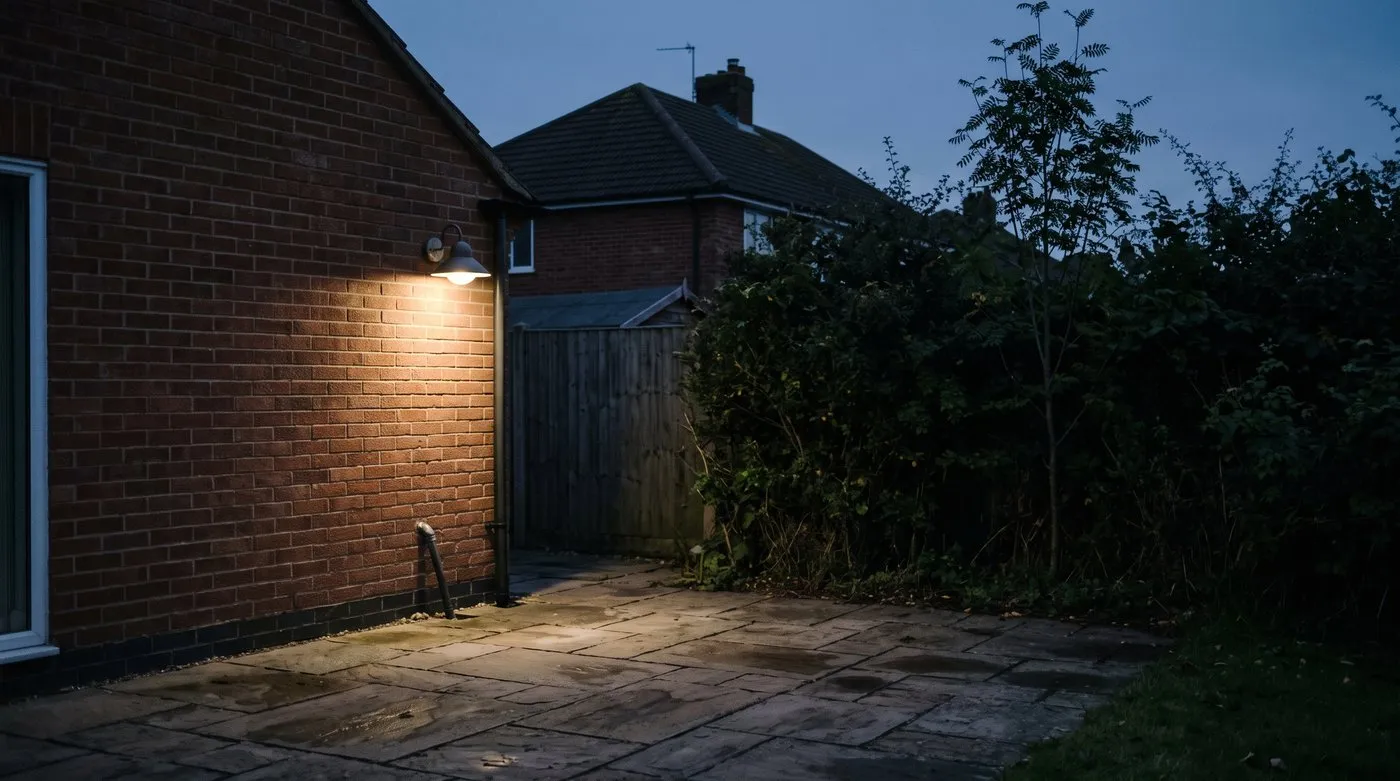
Point lights at the ground and keep them warm white. Leaving hedges and trees in the dark keeps the bats’ flight paths open.
When bats are active
Bats follow the seasons and the insects.
| When | What bats are doing |
|---|---|
| November to March | Hibernating, tucked up in cool, quiet roosts |
| Late March to April | Waking up and feeding on mild nights |
| May to August | Mothers gather to raise their young, born in early summer |
| June to August | Busiest time, with plenty of insects about |
| September to October | Mating season |
| October to November | Feeding hard to fatten up for winter |
Different bats come out at different times. Pipistrelles appear soon after sunset. Noctules can fly before the sun has set. Brown long-eared bats wait until it’s properly dark. Watching at dusk with a bat detector is a fun way to find out who’s visiting.
Bats often return to the same roosts year after year, so a bat-friendly garden can become a long-term home.
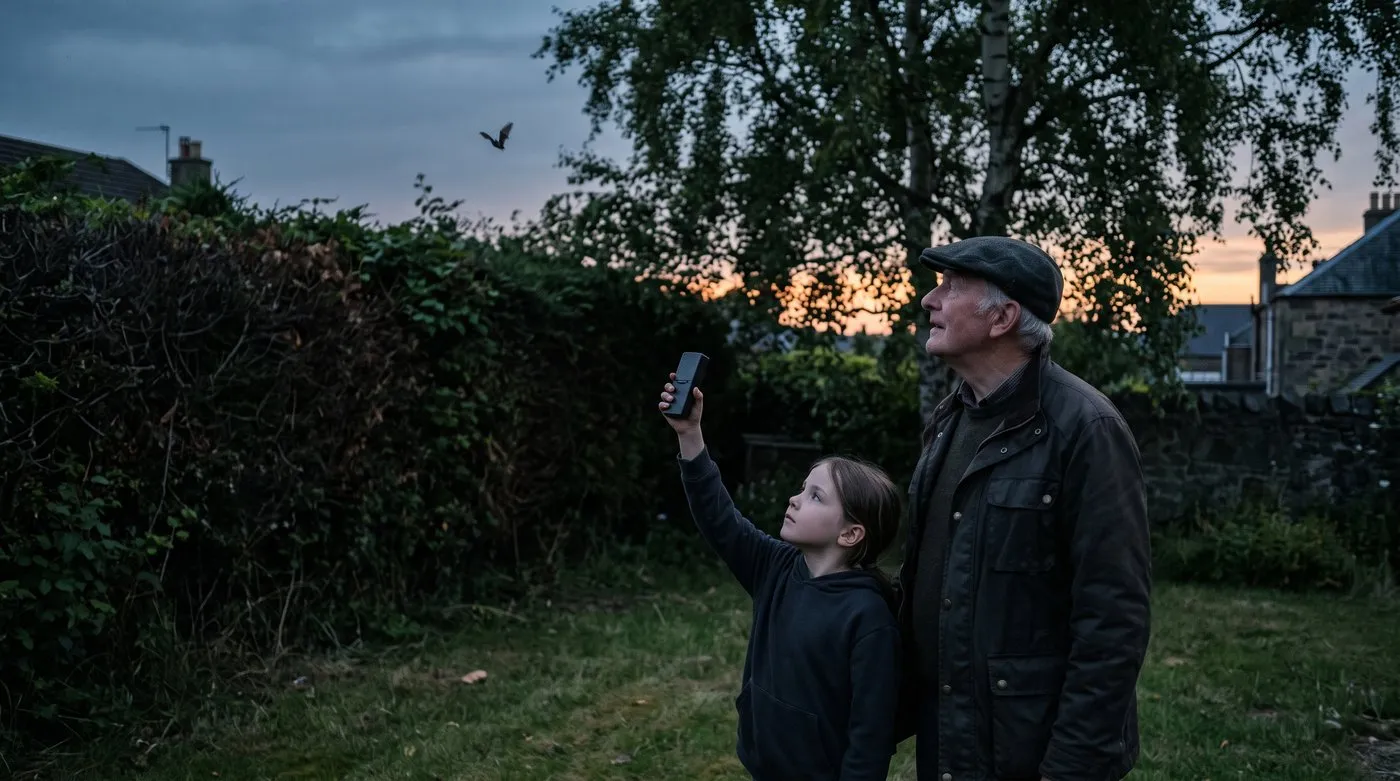
Pipistrelles come out soon after sunset, so that’s a good time to start watching. A bat detector lets you hear who’s out hunting.
Creating dark corridors for bats
Bats find their way along hedges, tree lines, walls, rivers and fences. These dark corridors link roosts to feeding spots, and bats can travel a long way along them each night.
In your garden, you can help by:
- Keeping hedges dark and leaving trimming until autumn, after the breeding season
- Planting native hedges along boundaries to link up with neighbouring gardens
- Leaving ivy on walls and trees, as it gives shelter, insects and late flowers
- Keeping mature trees that might have roosting holes
In towns, a chain of bat-friendly gardens makes a network of dark habitat. Have a chat with your neighbours about lights and hedges. A hedgehog highway through fence gaps is another great way to link gardens together.
What to do if you find bats
Bats in your house
If bats roost in your roof, they’re protected. You can’t remove them or block their way in without a licence. Bats usually cause no damage and very little mess. Call the Bat Conservation Trust helpline on 0345 1300 228 for free advice.
If you’re planning building work where bats roost, you’ll need a bat survey first. You may also need a licence from Natural England or the equivalent body. That applies even if the roost looks empty.
Injured or grounded bats
A bat on the ground is usually in trouble. Pop a small box over it with a gap for air. Don’t handle it with bare hands. Call the Bat Conservation Trust or a local bat group for help.
Recording bat sightings
Share your sightings with your local bat group, or join the Bat Conservation Trust’s National Bat Monitoring Programme. Your records help track how bats are doing.
Helping bats and other wildlife together
A bat-friendly garden is good for almost all wildlife. Night-scented flowers feed moths at night and pollinators by day. A pond helps bats, frogs, dragonflies and birds. Dark hedges help hedgehogs, moths and beetles.
A compost heap is full of insects, and log piles shelter beetles that fly at night. A wildflower lawn feeds caterpillars that grow into moths for bats.
It all comes down to one simple idea: a garden full of insects is a garden full of bats. Go easy on chemicals, grow lots of different plants, keep it dark and add some water. The bats will find you.
Frequently asked questions
Are bats protected in the UK?
Yes, all UK bats and their roosts are protected by law. It’s an offence to kill, injure or disturb bats. Damaging or blocking a roost is illegal too, even when the bats aren’t there. If bats roost in your home, get advice before doing anything.
What time of year are bats active?
Roughly April to October. They wake from hibernation in spring as nights warm up and insects return. They’re busiest in summer, when mothers raise their young. In autumn they feed hard to fatten up, then hibernate through the coldest months, usually November to March.
Where should I put a bat box?
Put it as high as you can, ideally at least 3-4 metres up. Choose a spot that gets sun for part of the day, often facing south, south-east or south-west. Fix it to a tree, wall or building away from outdoor lights. Leave a clear flight path to the entrance. A few boxes facing different ways give bats a choice of warmer and cooler spots.
Do bat boxes actually work?
Yes, when they’re well made and in a good spot. Bats can take months or even a few years to move into a new box, so be patient. Boxes near hedges, trees and water are more likely to be used. Woodcrete boxes stay a steadier temperature than thin wooden ones.
What plants attract bats to gardens?
Plants that attract night-flying insects, because bats follow their food. Night-scented and pale flowers bring in moths at dusk. Try evening primrose, honeysuckle, night-scented stock, jasmine and nicotiana. Native hedges, trees and a pond help too. Avoid pesticides, which kill off the insects bats eat.
How do I report a bat roost?
Call the Bat Conservation Trust’s National Bat Helpline on 0345 1300 228. The advice is free, and they’ll explain how to live alongside bats and what the law says. If you’re planning building work where bats roost, you’ll need a bat survey first. The work may also need a licence from Natural England or the equivalent body.
Do bats bite humans?
Very rarely, and they aren’t aggressive. A bite usually only happens if someone picks up a frightened or injured bat. Never touch a grounded bat with bare hands; use thick gloves or a cloth. A few UK bats carry a rabies-like virus, so get medical advice after any bite.
Can I attract bats to a small garden?
Yes, even a small garden can help bats. A bat box on a warm wall, a few night-scented plants and a small water dish are a great start. Darkness matters most. If your garden is unlit and near a hedge or line of trees, bats are likely to visit.
Our team produces practical UK gardening guidance from source research, contributor records and established horticultural practice. Editorial standards are overseen by Matt W.