Key takeaways
- Common evening primrose grows leaves in year one and flowers in year two
- The flowers pop open at dusk, which is great fun to watch on a summer evening
- Moths love the scented flowers, and bees visit in the morning
- It likes poor, dry soil and full sun, so it's great for gravel and sandy beds
- It seeds itself freely, so cut off spent spikes before the seed ripens
- Perennial kinds such as sundrops are tidier and better for borders
Evening primrose puts on a great little show. On a summer evening, as the light fades, the tight yellow buds pop open in front of you and release a sweet scent that brings in moths. It’s well worth sitting outside to watch.
This wildflower came from North America and now grows wild across much of England and Wales, on sandy soil, embankments and waste ground. In the garden it’s happiest where other plants struggle: poor, dry soil in full sun. Rich borders actually make it worse. Below you’ll find the best kinds for UK gardens, from the classic tall one to low, tidy perennials.
What is evening primrose and why does it open at night?
Common evening primrose (Oenothera biennis) is a biennial. That means it grows a flat rosette of leaves in its first year, then sends up a tall flower spike in its second year, sets seed and dies. Despite the name, it isn’t related to the spring primrose.
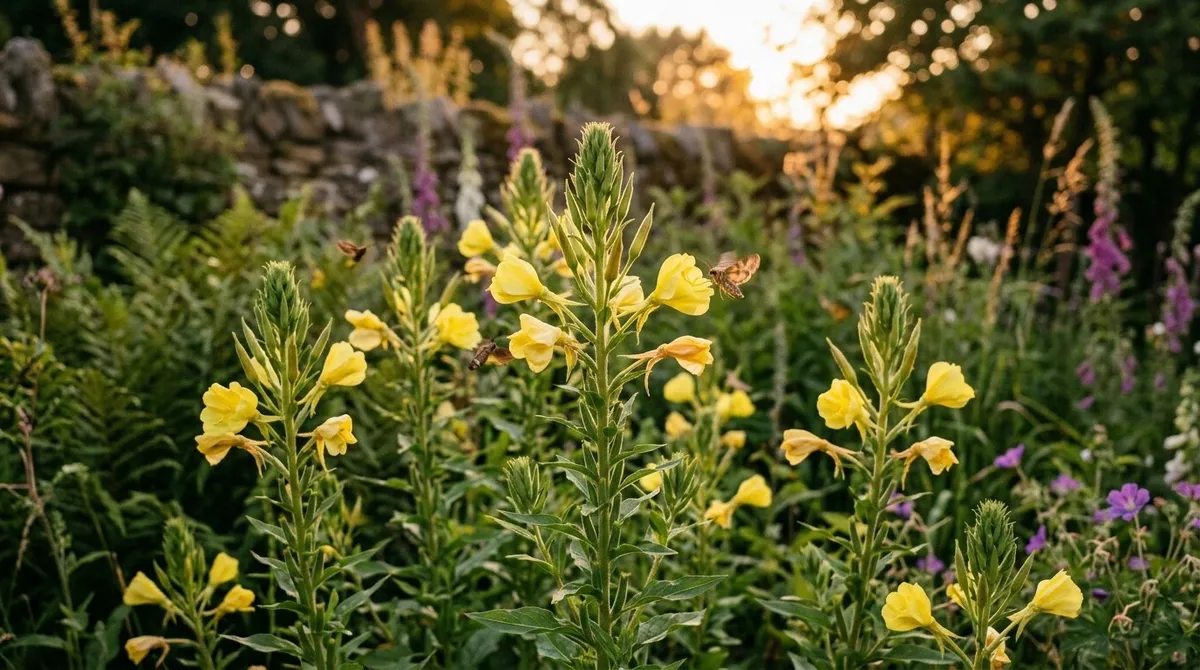
The flowers open at dusk, often in just a minute or two, which is lovely to watch. Each flower lasts one night and fades by morning, but new ones open along the spike for weeks.
The night opening is all about moths. As darkness falls, the scent gets stronger and moths come to feed on the nectar, pollinating the flowers as they go. Encouraging moths and bats brings a whole night-time world to the garden.
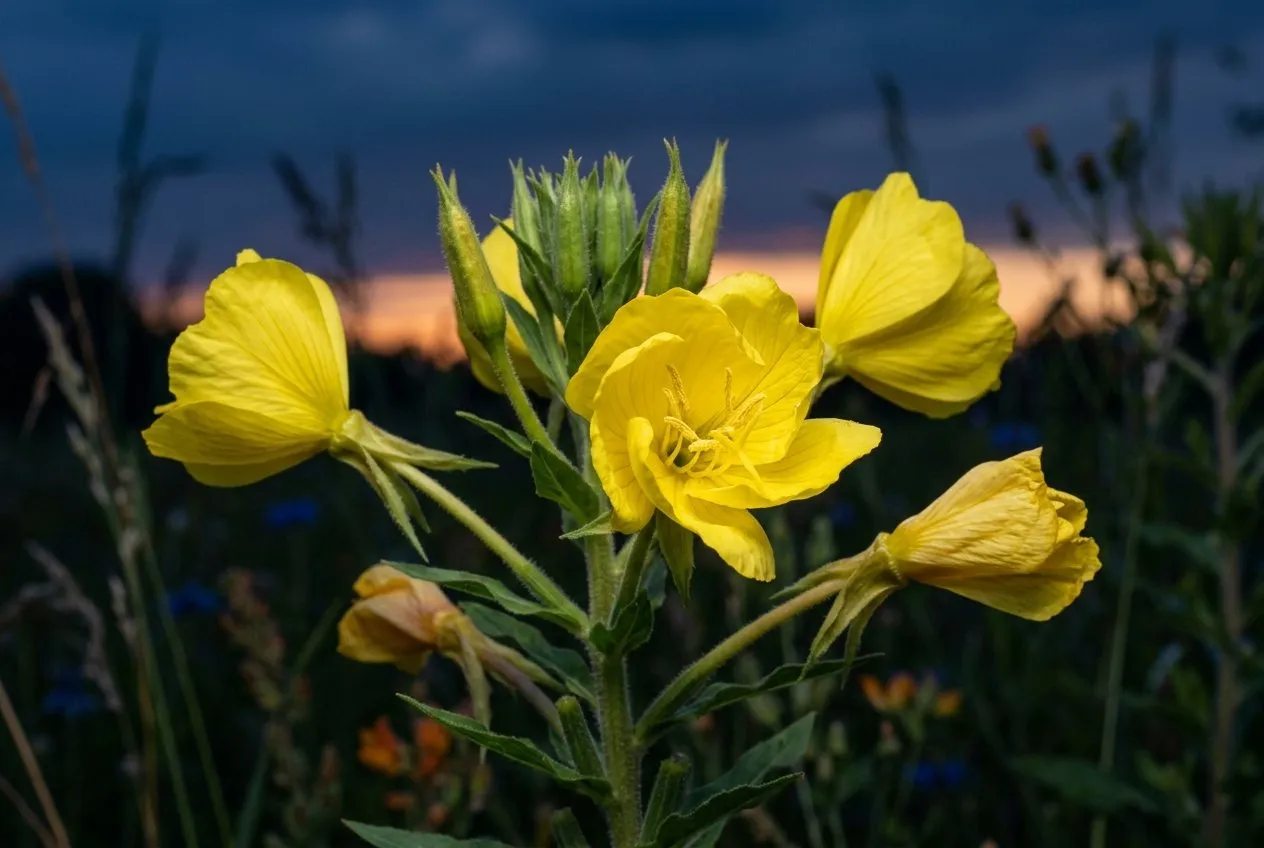 Evening primrose flowers opening at dusk. Grab a cup of tea and watch.
The best Oenothera species for UK gardens
Four kinds grow well in UK gardens. They differ in size, how long they live and when they open.
| Kind | Lives | Size | Flowers | Good to know |
|---|---|---|---|---|
| Common evening primrose (O. biennis) | Two years | Tall | Bright yellow, at dusk | Seeds itself freely |
| Pink evening primrose (O. speciosa) | Perennial | Short, spreading | White fading to pink | Can wander |
| Sundrops (O. fruticosa) | Perennial | Short to medium | Golden yellow, by day | Tidy clumps |
| Ozark sundrops (O. macrocarpa) | Perennial | Low, trailing | Big and yellow | Lovely over walls |
Oenothera biennis (common evening primrose)
The classic. Tall, upright stems carry lots of yellow flowers through summer. It seeds itself freely on light soil, so it’s best in wildflower patches, gravel gardens and relaxed borders.
Oenothera speciosa (pink evening primrose)
A low, creeping perennial with bowl-shaped flowers that open white and fade to soft pink. It spreads by underground runners and can wander in warm, well-drained beds. ‘Siskiyou’ has darker pink flowers. In colder gardens, give it a sheltered spot.
Oenothera fruticosa (sundrops)
Sundrops open during the day. Clusters of golden flowers appear in early summer on neat clumps, and the leaves often redden in autumn. ‘Fyrverkeri’ (Fireworks) has pretty red-flushed buds. This is the best one for a normal border, as it stays in a tidy clump.
Oenothera macrocarpa (Ozark sundrops)
A low, trailing perennial with huge yellow flowers for the size of the plant. It looks wonderful spilling over walls and raised bed edges. It needs full sun and really good drainage.
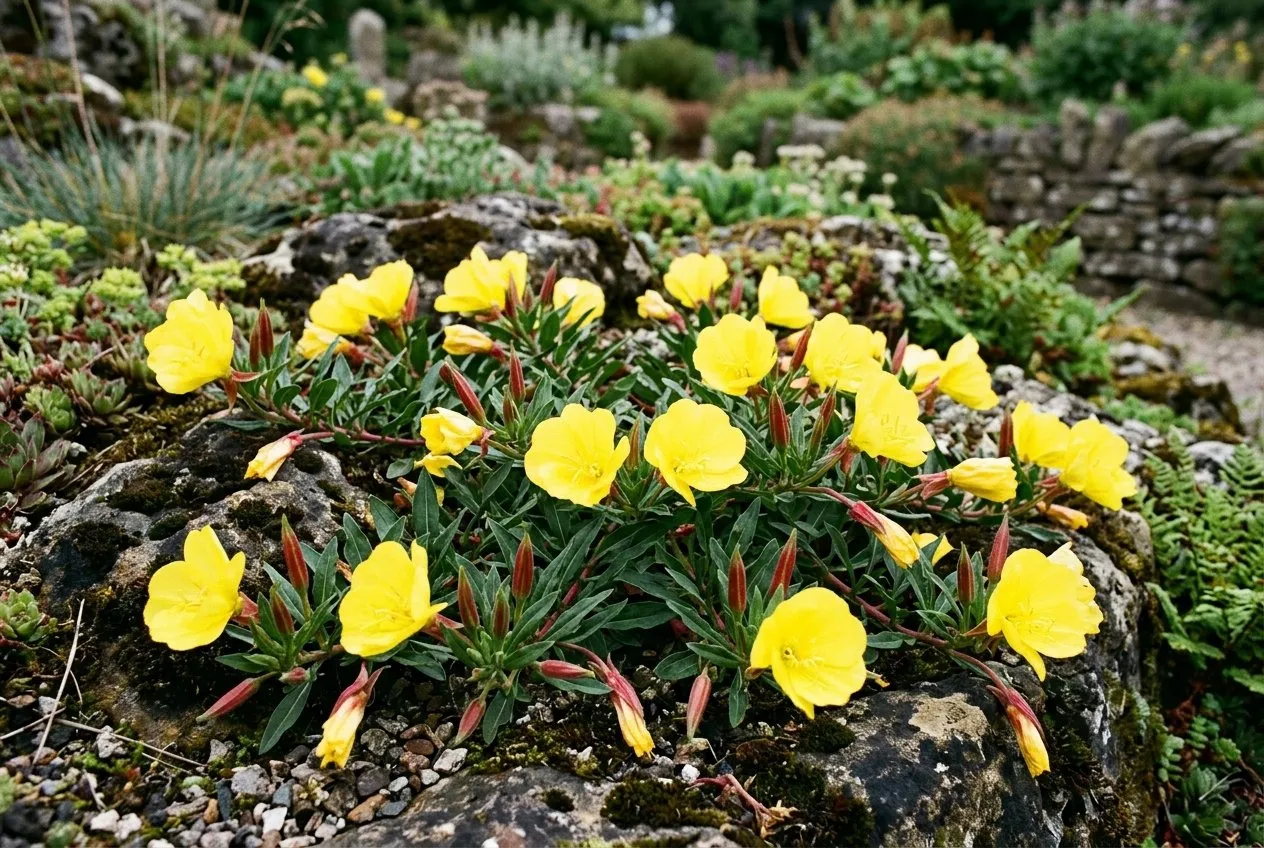 Ozark sundrops has big yellow flowers on low, trailing stems. Perfect for wall tops.
How to grow evening primrose from seed
Seed is the easiest way. Plants don’t like being moved, so sowing where they’ll grow works best. Sow outdoors in spring (March to May) or autumn (September to October).
Rake the soil fine, sprinkle the seed thinly on top and press it in lightly. Don’t cover it. Water gently if it’s dry. Seedlings usually appear within a few weeks once the soil is warm. Thin them to 30-40cm apart.
Autumn sowing copies what happens in nature. The seed sits in the cold soil over winter and comes up strongly in spring.
To start in modules, fill them with compost mixed half and half with perlite and sow on the surface. Plant out carefully once seedlings have a few proper leaves, disturbing the roots as little as you can. Our seed sowing calendar shows when to sow other biennials too.
The perennial kinds (sundrops and Ozark sundrops) can be started indoors in late winter. Pot them on and plant out in May. A few weeks in the fridge before sowing can help the seed come up.
Where to plant evening primrose
Give it your poorest soil. Rich soil makes tall, floppy stems with fewer flowers. Lean, sandy or gravelly soil keeps plants compact and full of flowers.
Full sun is a must. A south or west-facing spot is ideal.
Good homes include gravel drives, dry banks, gravel gardens and the edges of wildflower patches. It’s one of the few plants that’s happy in rough, stony ground.
In a tidier garden, give the common kind its own patch where it can seed about, and cut spikes off elsewhere. The perennial kinds behave better and suit mixed borders.
How to care for evening primrose
This is a plant that thrives on being left alone.
Watering. Once settled, it doesn’t need watering. It’s a great drought-tolerant plant and actually does better on the dry side. Just keep newly sown seed moist until it comes up.
Feeding. Don’t feed it. Food just means leafy, floppy growth and fewer flowers.
Deadheading. This is the one job that matters. A single plant can make a huge amount of seed. Cut off spent spikes in late summer, before the pods ripen and split. If you’d like some seedlings, leave two or three spikes to drop their seed.
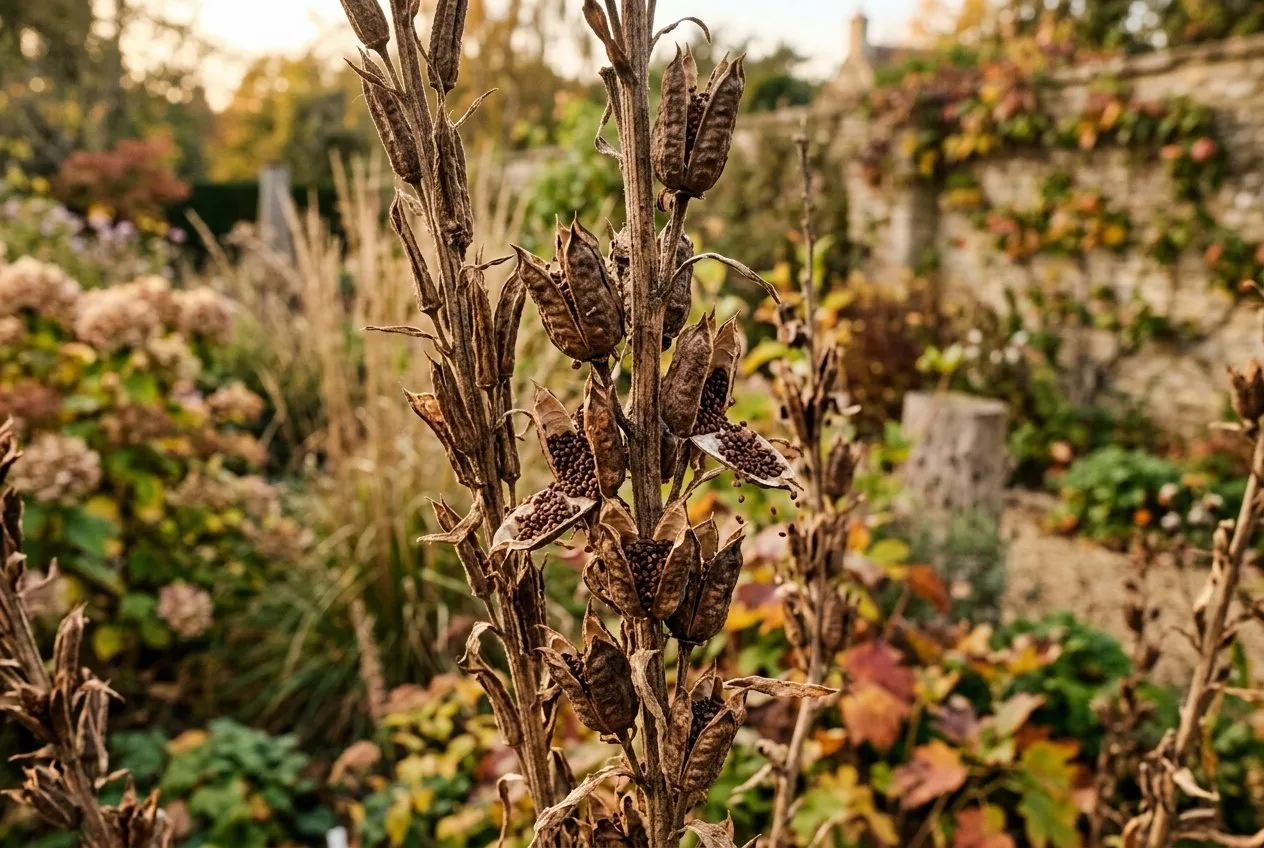 Each seed pod is packed with tiny seeds. Cut spikes off before they ripen if you don’t want it spreading.
Evening primrose for wildlife
Evening primrose is a brilliant plant for night-time wildlife, and many British moths need all the help they can get.
Moths. The scented flowers bring moths in from dusk. Look out for the beautiful pink and olive elephant hawk-moths on warm summer evenings.
Bees. Bumblebees and honeybees visit the fading flowers early in the morning for pollen. Early solitary bees drop in too.
Birds. Goldfinches may pick at the seeds in autumn. Leaving a few seed heads standing gives birds and insects something over winter. Our bird feeding guide has more on natural winter food.
For a moth garden, plant evening primrose with other night-scented plants such as tobacco plants, night-scented stock and honeysuckle. Even a small bed makes a difference.
The medicinal history of evening primrose
Evening primrose has a long history as a herbal plant. Native American peoples used it as a remedy, and today evening primrose oil, pressed from the seeds, is sold in health shops across the UK.
Parts of the plant have also been eaten. The roots of first-year plants were cooked as a vegetable, and the young leaves and flowers used in salads. If you fancy trying it, be sure of your plant and don’t eat anything that’s been sprayed.
How to control evening primrose spread
Self-seeding is the one thing to keep an eye on with the common kind. On light, sandy soil, a few plants can soon become a lot.
The fix is easy: cut off the spikes before the seed ripens. Cut the flowering stems to the base in late summer, before the lowest pods split. Bag them up or put them in your council green waste rather than on a cool compost heap.
Hoe off unwanted seedlings in March and April while they’re small rosettes. They come out easily then. By summer the root goes deep and they’re much harder to pull.
If you love the flowers but not the spreading, grow sundrops or Ozark sundrops instead. They’re perennial, stay in clumps and seed about far less.
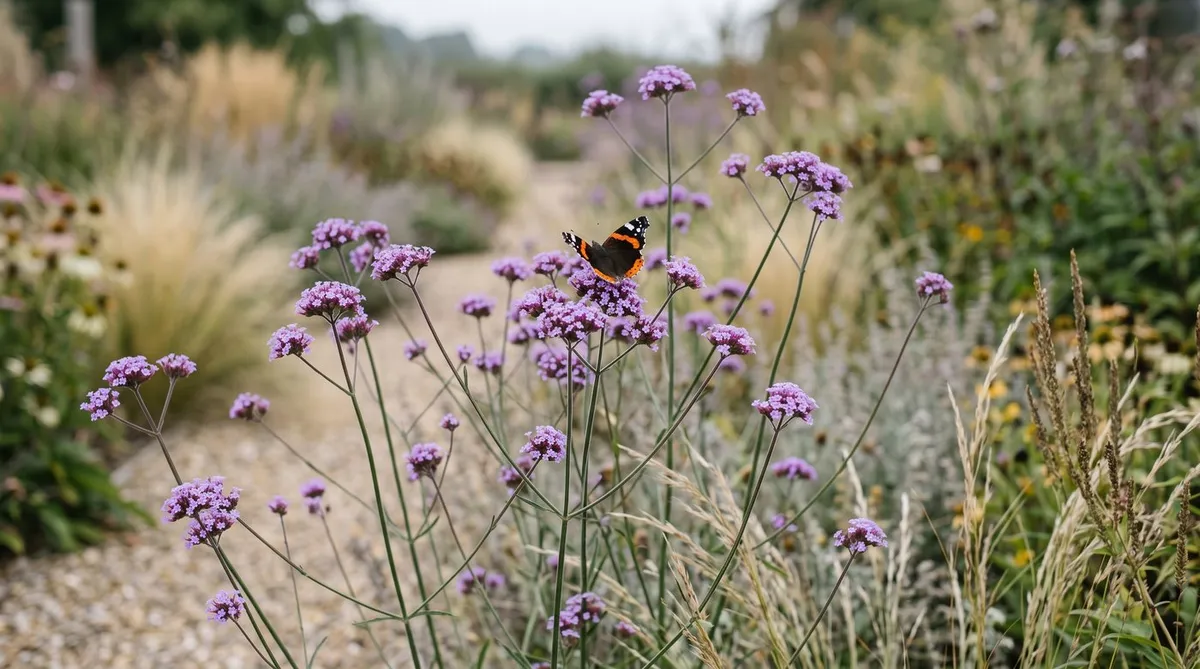
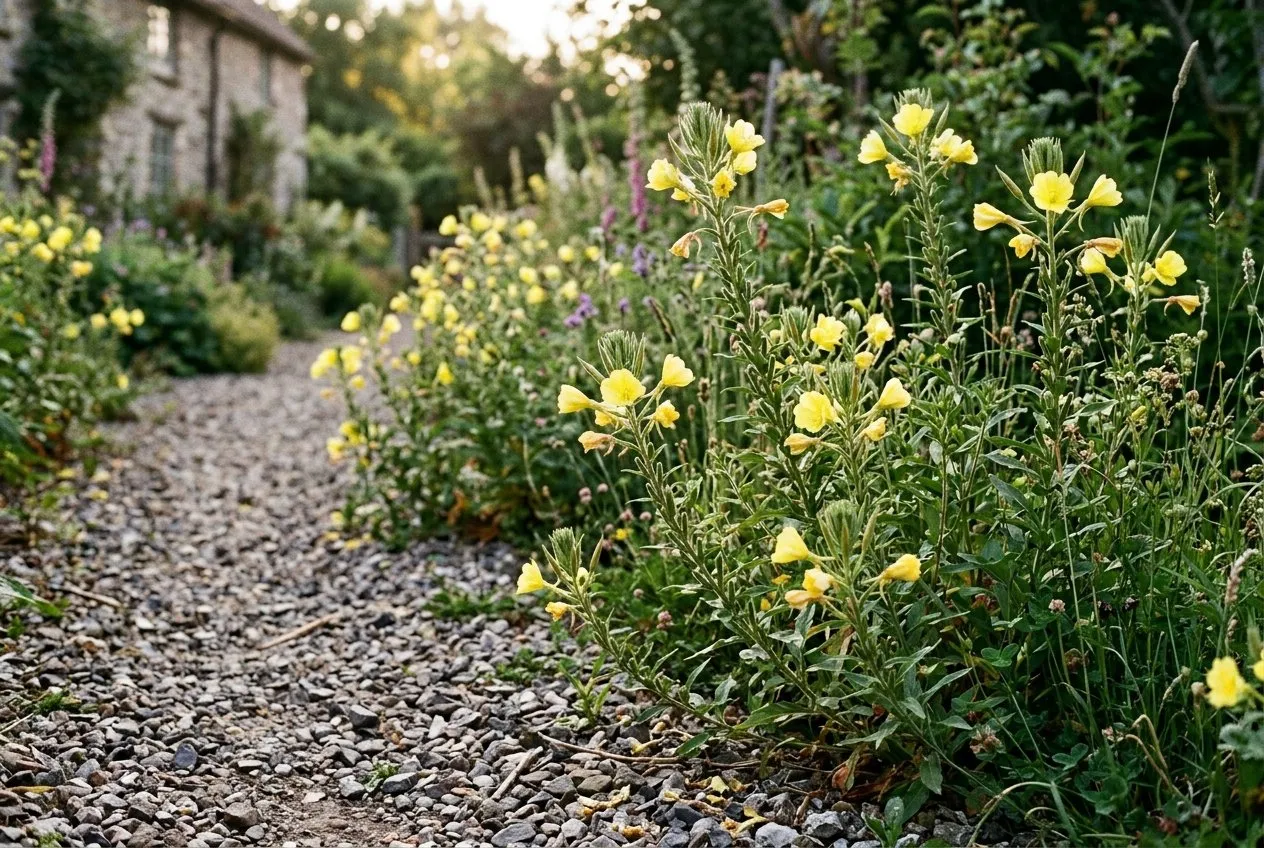 Evening primrose is at home in a gravel garden with lavender and grasses.
Frequently asked questions
Is evening primrose a weed in the UK?
Not really, but it seeds itself freely on light, sandy soil. It came from North America long ago and now grows wild on embankments, waste ground and dunes. In the garden, cut off spent flower spikes before the seed pods ripen. On heavy clay it spreads much less.
When does evening primrose flower in the UK?
From June to September, in its second year. Each flower opens at dusk and lasts just one night, fading by morning. New flowers open along the spike for weeks, so there’s always something to see. July and August are the peak.
Why do evening primrose flowers open at night?
To attract moths, which pollinate them. As the light fades, the flowers open and their sweet scent gets stronger, drawing moths in. By morning the flowers are fading, and bees often call in for leftover pollen.
Can I eat evening primrose?
Some parts have traditionally been eaten. The roots of first-year plants have been cooked as a vegetable, and the young leaves and flowers used in salads. Only eat a plant you’re sure you’ve named correctly, and don’t eat anything that’s been sprayed.
How do I stop evening primrose spreading?
Cut off the flower spikes before the seed pods ripen. Each plant can make a huge amount of seed. Cut the old stems down in late summer once flowering is over, and hoe off unwanted seedlings in spring while they’re small.
Is evening primrose good for wildlife?
Yes, it’s one of the best plants for moths. Moths visit the scented flowers from dusk, and bees come for pollen in the morning. Goldfinches may pick at the seeds in autumn. Leave a few stems standing over winter for insects to shelter in.
Will evening primrose grow in shade?
No, it needs full sun. In shade it grows weak, floppy stems with few flowers. Give it the sunniest, driest spot in the garden and it’ll be much happier.
Our team produces practical UK gardening guidance from source research, contributor records and established horticultural practice. Editorial standards are overseen by Matt W.