Key takeaways
- Grows 1.5-2m tall but only 45-60cm wide, so it works at the front of a border as well as the back
- Needs full sun and free-draining soil; wet winter soil kills it more often than cold
- Flowers from July until the first frosts
- Plant in groups 45cm apart so the stems hold each other up
- Leave stems standing over winter and cut back in March or April
- Self-sown seedlings are the easiest source of new plants
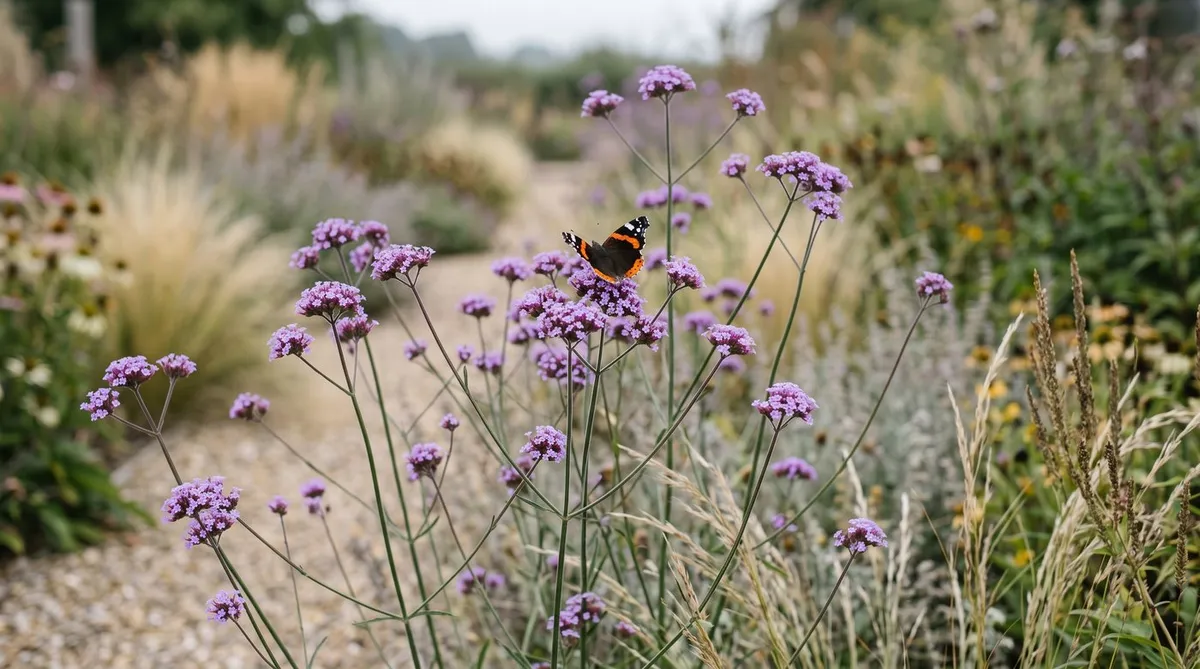
Verbena bonariensis is easy to grow in a sunny, well-drained spot, and it flowers from July until the first frosts. Its thin, almost leafless stems reach up to 2m, topped with little clusters of purple flowers. Yet it only spreads about 45-60cm, so you see straight through it. Butterflies love it, and it seeds itself around so you rarely need to buy it twice.
This guide is all about this one tall, see-through plant. For trailing basket verbenas and the other types, see the guide to growing verbena in the UK.
Where does Verbena bonariensis grow best?
Give it full sun and free-draining soil. It comes from open, sunny grassland in South America and hates sitting wet.
- Sun: a south or west-facing spot is ideal. In shade the stems lean and flop.
- Soil: poor to average soil is fine. Rich soil gives soft, floppy growth and fewer flowers.
- Drainage: this is what keeps it alive. On clay, mix in plenty of grit or plant on a raised, gritty mound or gravel bed.
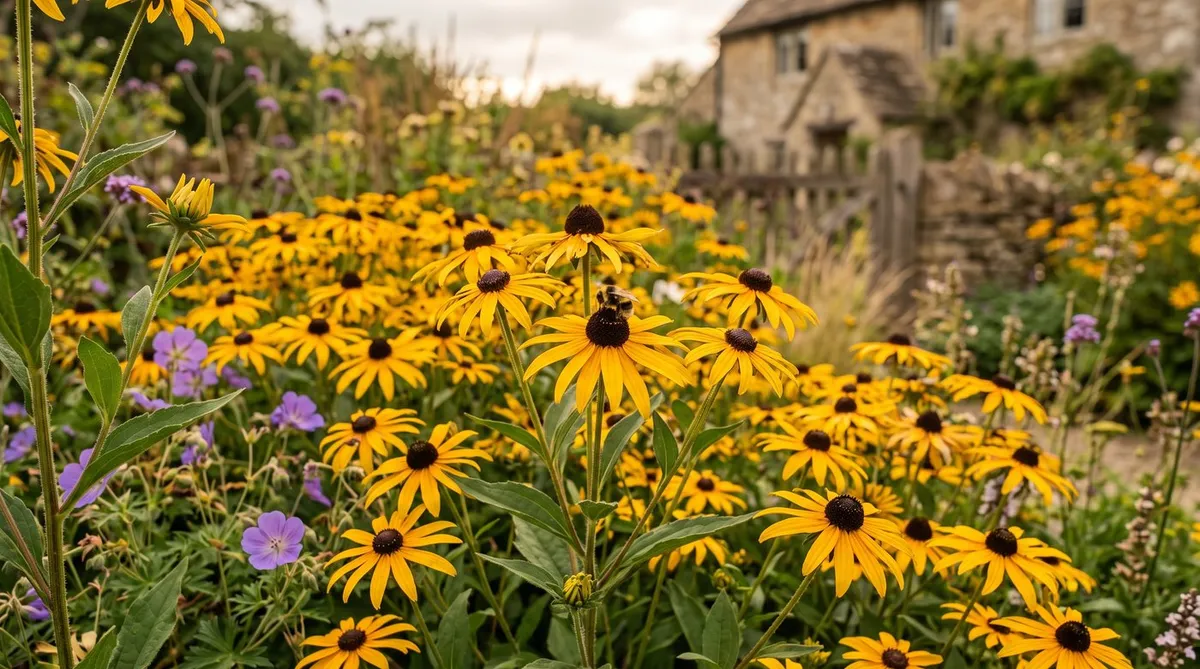
It enjoys the same lean, sunny conditions as echinacea, which makes the two good border partners.
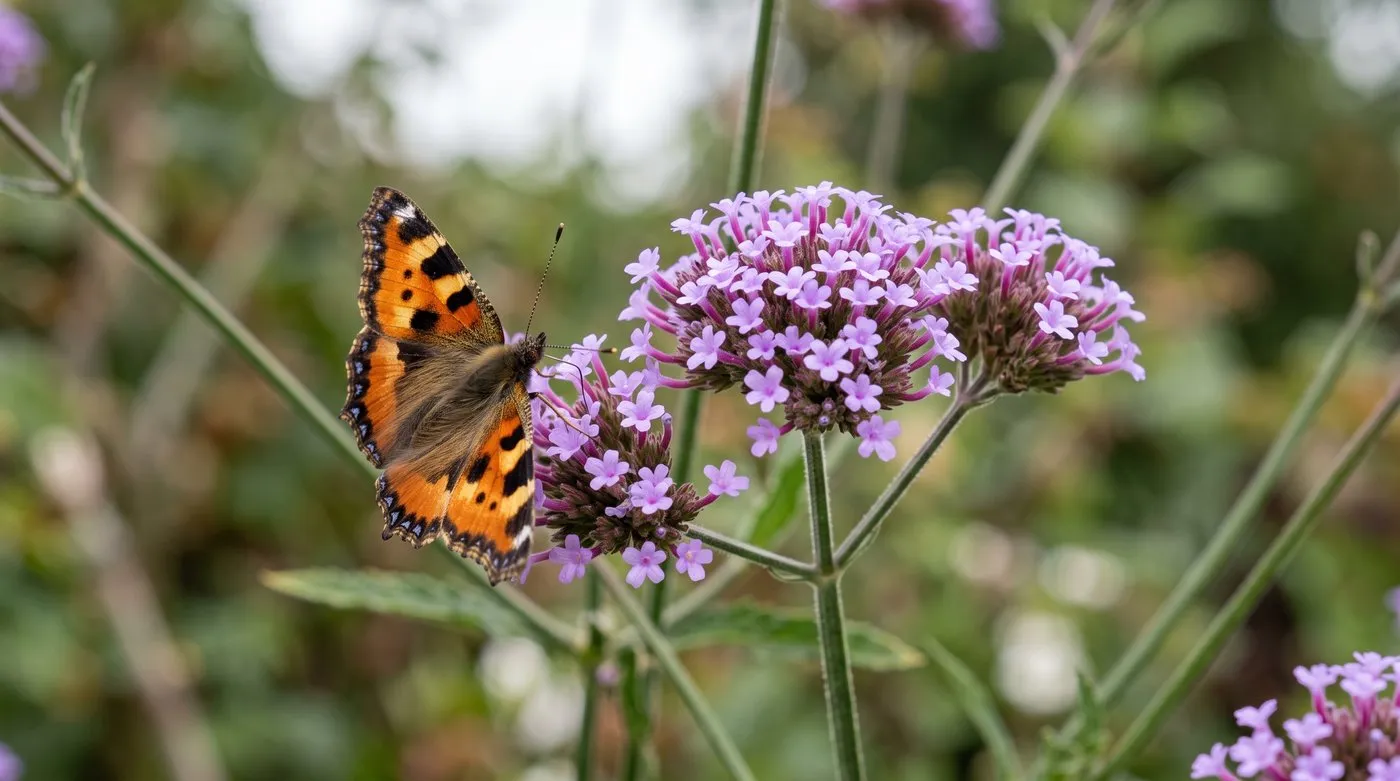
Each flat cluster is made of lots of tiny purple flowers, a handy landing pad for butterflies like this small tortoiseshell.
Is Verbena bonariensis hardy, and will it come back?
Verbena bonariensis is borderline hardy and short-lived. In a mild, well-drained garden the same plant can return for a few years. In a cold, wet garden it often rots over winter.
Either way, it rarely disappears, because it self-seeds freely. Seedlings pop up around the parent each spring and quickly fill the gap. So on heavy clay, think of it as a plant that renews itself rather than one that lasts.
To help it through winter:
- Plant in free-draining soil or a gritty mound.
- Leave the old stems standing until spring.
- Mulch around the base with grit or gravel in cold gardens.
- Cut back only when new shoots show at the base, in March or April.
Gardeners often blame the cold, but wet soil around the base is the usual killer.
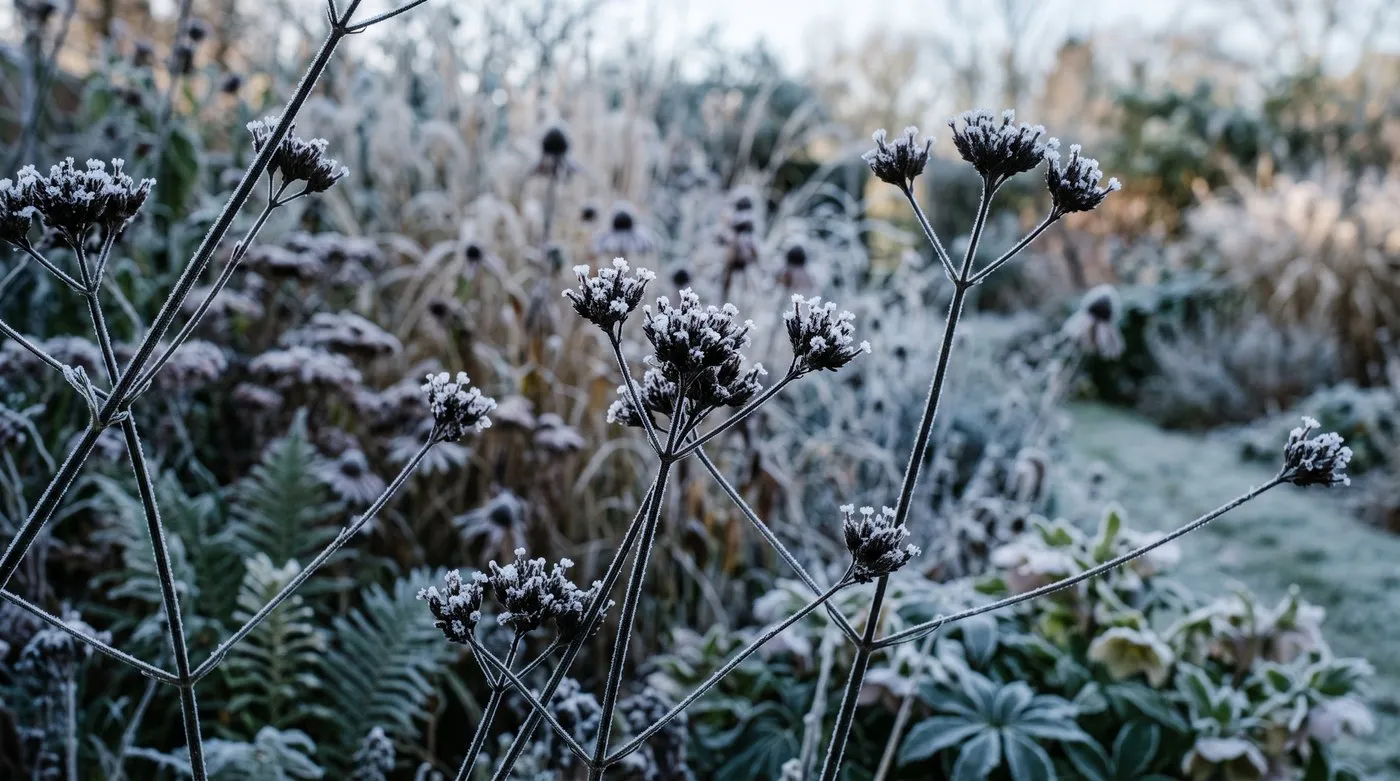
Leave the stems standing over winter. They protect the base of the plant and look lovely on a frosty morning.
How to use Verbena bonariensis as a see-through plant
The best thing about this plant is that you can see through it. The stems are thin and stiff, with flowers floating at head height. So you can break the usual rule and plant it near the front of a border, where it makes a purple haze in front of everything else.
Plant it in groups of three to five, about 45cm apart, and weave drifts through the middle of the border too. Close planting lets the stems lean on each other, so you won’t need stakes. A lone plant on rich soil is the one that flops.
It looks great with ornamental grasses, echinacea, rudbeckia, asters and salvias. For a small garden or a pot, try ‘Lollipop’, which has the same purple flowers at about 60cm tall.
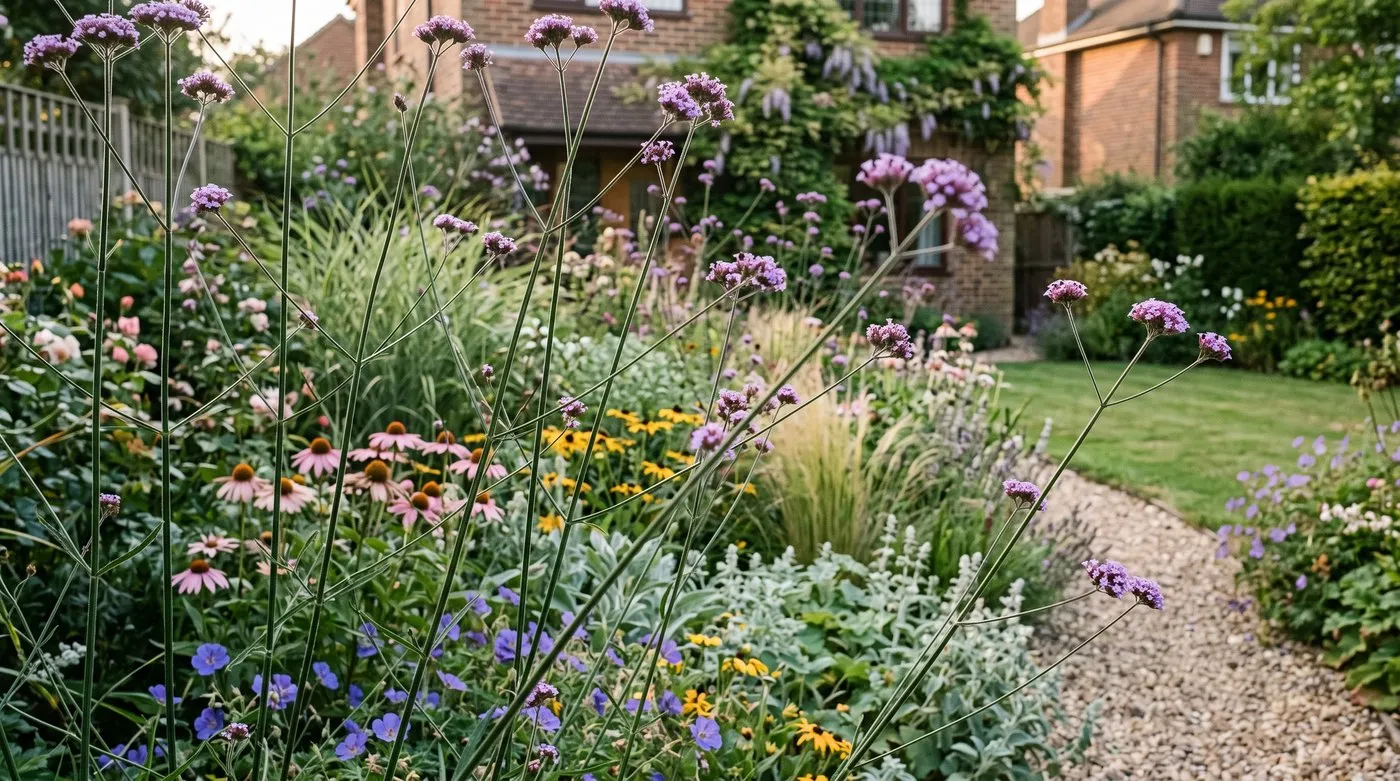
Planted near the front, the airy stems make a purple veil you look through to the rest of the border.
How to grow Verbena bonariensis from seed
Verbena bonariensis grows well from seed, but it comes up slowly and unevenly, so be patient.
- Sow indoors from February to April, in trays or modules of peat-free seed compost.
- Press the seed onto the surface and cover it only very lightly, if at all.
- Water from below and keep it at about 18-21C, in a propagator or on a warm windowsill.
- Wait. Seedlings can take several weeks to appear, and not all at once.
- Prick out into small pots once they have two true leaves.
- Harden off and plant out after the last frost, usually from mid-May.
The guide to sowing seeds indoors covers the basics in more detail.
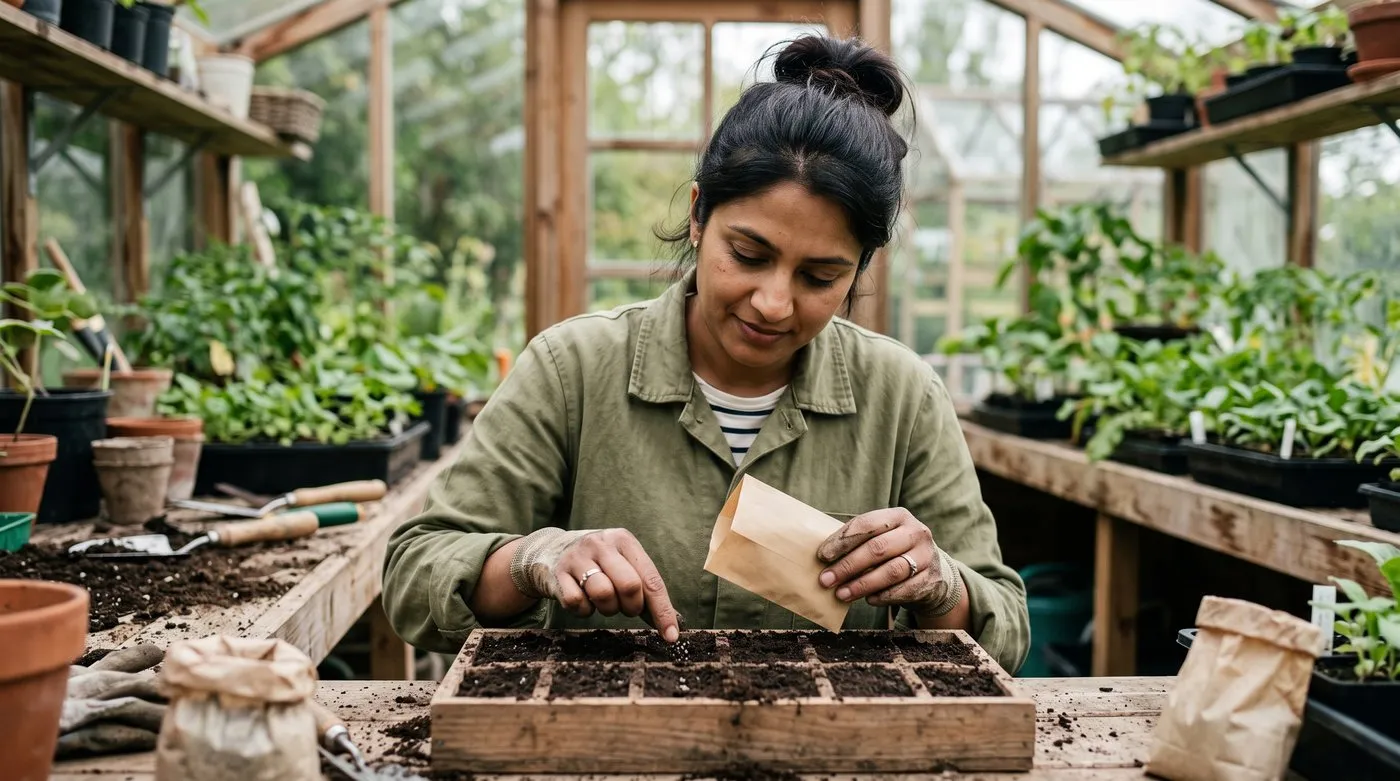
Scatter the tiny seed thinly on the surface. Germination is slow, so don’t give up on the tray too soon.
Moving self-sown Verbena bonariensis seedlings
The easiest way to get more plants is to let it seed. Self-sown seedlings appear around old plants from April, once the soil warms. They have square stems and rough, paired leaves just like the parent.
Lift them with a trowel once they have three or four pairs of leaves, keeping plenty of soil around the roots. Plant them straight into their new spot, 45cm apart, or pot them up to give away. Water them in and keep them damp for the first couple of weeks.
If you don’t want it seeding everywhere, cut off the faded flowers or grow ‘Lollipop’, which seeds less. It is one of the friendliest self-seeding plants for easy gardens, and unwanted seedlings pull up easily.
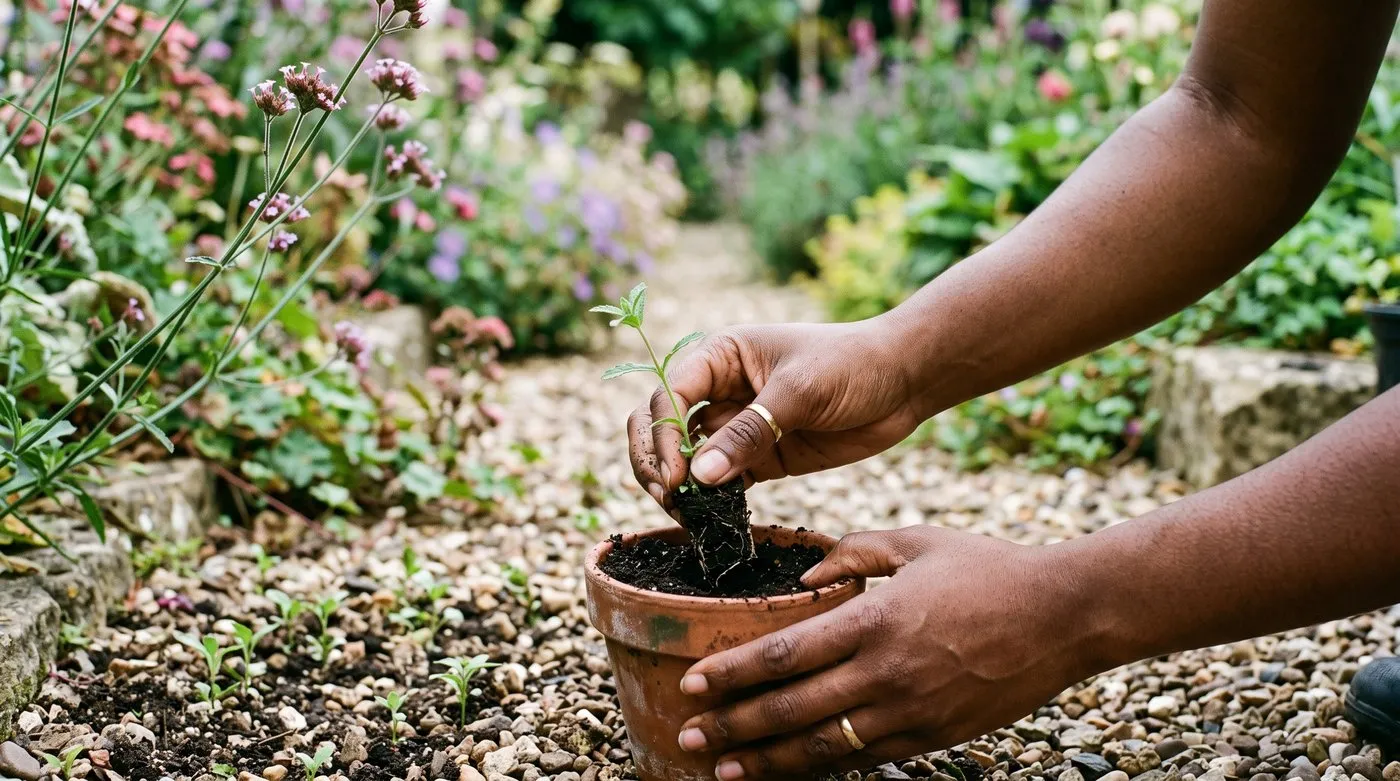
Self-sown seedlings move easily while small. Pot spares up for friends or plant them straight into gaps.
How to plant Verbena bonariensis
Plant young plants in May or June, once the frosts are over. That gives them a full season to settle in before their first winter.
- Prepare the soil by forking it over. Add grit on clay.
- Space plants 45cm apart in groups of three to five.
- Plant with the base level with the soil, as it sat in the pot. Burying it can lead to rot.
- Water well, then keep damp for the first few weeks.
- Don’t feed. Once settled, it copes with dry spells and needs watering only in long droughts.
Month-by-month Verbena bonariensis calendar
| Month | What to do |
|---|---|
| January | Leave stems standing |
| February | Sow seed indoors |
| March | Main sowing time. Cut old stems down once new shoots appear |
| April | Prick out seedlings. Look for self-sown seedlings |
| May | Harden off and plant out after the last frost. Move self-sown seedlings |
| June | Water new plants in dry spells. No feeding needed |
| July | Flowering begins |
| August | Peak flowering. Cut a few stems for the vase |
| September | Flowers keep coming. Leave some to set seed |
| October | Flowers carry on until frost. Collect seed if you want it |
| November | Flowering ends with hard frost. Leave the stems |
| December | Nothing to do. Add a grit mulch in cold gardens |
Problems with Verbena bonariensis
It’s close to trouble-free in the right spot. Most problems come down to soil, not pests.
- Dying over winter: almost always wet soil around the base. Improve drainage before planting. There’s no cure once it rots.
- Slugs and snails: they go for young plants and seedlings. Protect them while small; established plants are rarely touched. See how to get rid of slugs.
- Floppy stems: caused by rich soil, shade or a lone plant. Plant in sunny groups on lean soil.
- Powdery mildew: a white coating on leaves in dry, still weather. It looks untidy but rarely harms the plant. Give plants room for air to move.
Verbena bonariensis for butterflies and bees
Verbena bonariensis is a superb plant for butterflies. Peacocks, red admirals, small tortoiseshells and painted ladies all feed on it, along with bees and hoverflies. Because it flowers so late, it keeps feeding insects well into autumn. Grow it with other autumn-flowering plants for bees to stretch the season.
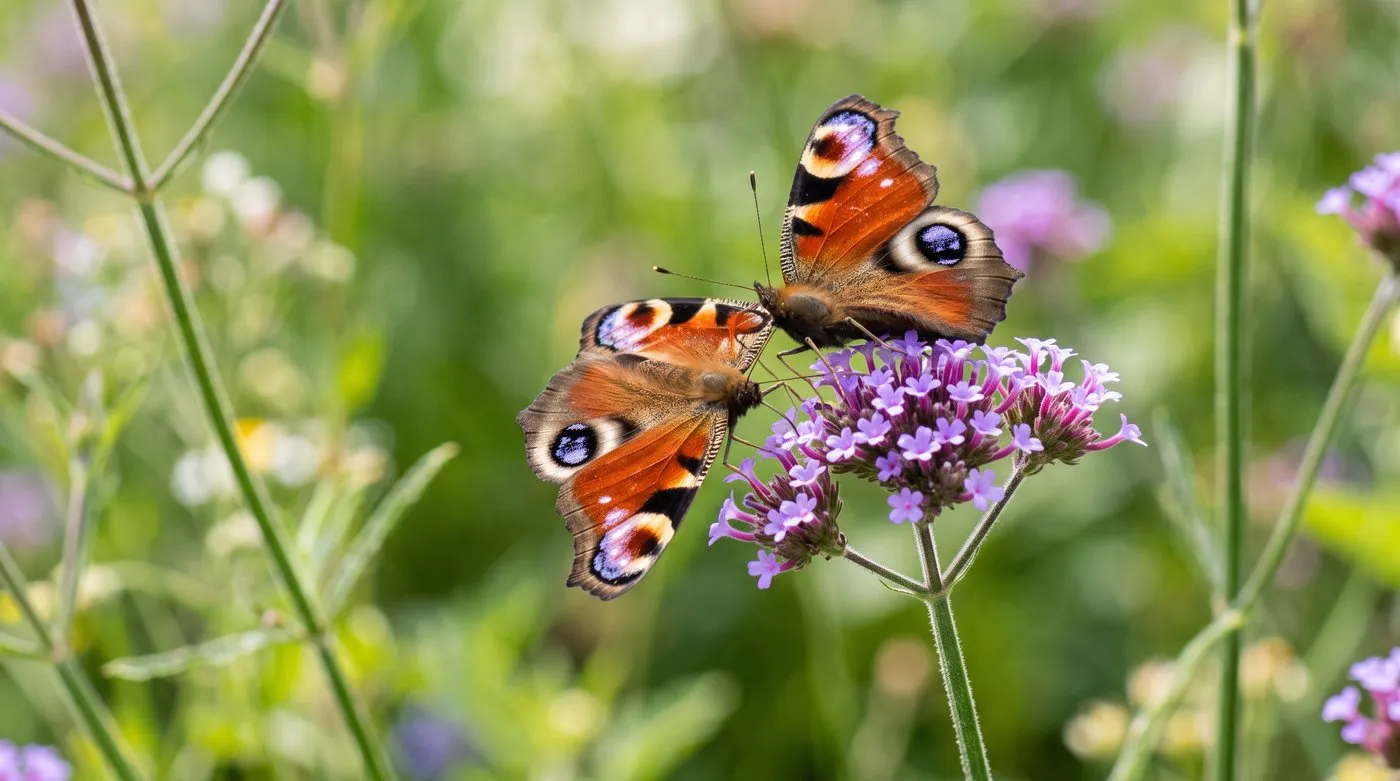
A peacock butterfly fuelling up on a late-summer flower cluster.
Verbena bonariensis as a cut flower
The tall, airy stems make a lovely filler in a vase. They add height and a purple haze to denser flowers like dahlias. Cut stems in the cool of the morning when the clusters are partly open, and change the water every couple of days.
Common mistakes with Verbena bonariensis
- Planting in wet soil. This is the one that kills it. Plant in sun and free-draining soil.
- Mixing it up with other verbenas. It isn’t the trailing basket verbena or the herb lemon verbena.
- Cutting back in autumn. Leave the stems until spring to protect the base.
- Feeding it. Rich soil means floppy stems and fewer flowers.
- Planting singly. One plant on its own leans. Plant in groups 45cm apart.
You’ll find more ideas in the plants section. Now your verbena is sorted, read the guide to the best plants for winter seedheads for more stems to leave standing through the cold months.
Frequently asked questions
Is Verbena bonariensis a perennial or an annual?
It is a short-lived perennial. On free-draining soil in milder gardens the same plant can come back for a few years. In cold or wet gardens it often dies over winter but carries on by self-seeding.
Is Verbena bonariensis hardy in the UK?
It is borderline hardy and survives most winters in well-drained soil. Cold, wet soil around the base is the real danger. On heavy clay, treat it as a self-seeding short-lived plant.
How tall does Verbena bonariensis grow?
It reaches 1.5-2m tall but spreads only 45-60cm. Its thin stems are see-through, so you can plant it near the front of a border. The compact ‘Lollipop’ grows to about 60cm.
Does Verbena bonariensis need full sun?
Yes, full sun gives the strongest, most upright plants. In shade the stems lean, flop and flower poorly. Lean, free-draining soil suits it far better than rich, damp ground.
When does Verbena bonariensis flower?
From July until the first frosts. In a mild autumn it can still be flowering in November, feeding butterflies and bees late in the year.
How do I grow Verbena bonariensis from seed?
Sow indoors from February to April at about 18-21C. Press the seed onto the compost surface and be patient, as germination is slow and patchy. Lifting self-sown seedlings in spring is even easier.
Should I cut back Verbena bonariensis in autumn?
No, leave the stems standing over winter. They help protect the base of the plant and look lovely with frost on them. Cut them back once new shoots appear, usually in March or April.
Our team produces practical UK gardening guidance from source research, contributor records and established horticultural practice. Editorial standards are overseen by Matt W.