
Key takeaways
- A few seed packets of self-seeders can fill a garden for years with almost no extra cost
- Nigella, calendula, foxgloves, honesty and forget-me-nots are the easiest to start with
- Match the plant to the spot, such as nigella for sunny gravel and honesty for dry shade
- Leave seed heads standing until the seed drops, then edit seedlings in April
- Avoid green alkanet and herb Robert in small gardens, and never grow Himalayan balsam
Self-seeding plants are the easiest way to fill a garden for next to nothing. You sow them once, they flower, drop their seed and come back as seedlings the next spring. Your main job each year is deciding which ones to keep.
This guide is for anyone who wants a cheap, low-work garden that fills itself. It covers the best self-seeders for each spot, how to get started from a few packets and the few plants to keep out. For a longer plant-by-plant list and border management tips, see the main guide to self-seeding plants for UK gardens.
Why self-seeders make gardening easier
Self-seeding means a plant scatters its own seed and new plants grow without your help. Once they settle in, you stop buying and sowing those plants every year.
They also cover bare soil, which leaves less room for weeds.
Self-seeders come in three kinds:
- Hardy annuals grow, flower and seed in one year. Examples: nigella, calendula, borage, poached egg plant.
- Biennials grow leaves in year one, then flower, seed and die in year two. Examples: foxglove, honesty, forget-me-not, teasel.
- Short-lived perennials last a few years and replace themselves from seed. Examples: aquilegia, Verbena bonariensis, feverfew.
The trick is a little less tidiness. Leave spent flowers standing until the seed drops, and leave some soil bare for the seed to land on.
The best self-seeders for each spot in your garden
The easiest way to succeed is to match the plant to the spot. Self-seeders put in the right place spread happily. In the wrong place they fade out.
| Spot | Easy self-seeders | Watch out for |
|---|---|---|
| Sunny gravel, paths and drives | Nigella, calendula, poached egg plant, Verbena bonariensis | Seedlings in the middle of paths |
| Dry shade under hedges and trees | Foxglove, honesty, aquilegia | Very dense ivy, which smothers seedlings |
| Damp shade and woodland edges | Red campion, forget-me-not, sweet rocket | Welsh poppy spreading into borders |
| Between young perennials | Nigella, calendula, aquilegia, borage | Big self-seeders crowding small plants |
| Wild corners and wildlife areas | Teasel, foxglove, red campion | Teasel is too big for small gardens |
Sunny gravel, paths and drives
Gravel is the perfect seedbed. Seed lodges between the stones, stays moist and has little competition. Nigella (love-in-a-mist) is the star here, with blue flowers in June and July. ‘Miss Jekyll’ is the classic sky-blue variety.
Calendula (pot marigold) gives orange and yellow daisies from early summer until frost. Poached egg plant makes a low yellow-and-white carpet from May to July and is loved by hoverflies. All of these suit a dry, sunny spot, and the guide to drought-tolerant plants has more. Verbena bonariensis sends up tall, airy purple heads that you can see through. The guide to growing Verbena bonariensis covers it in more detail.
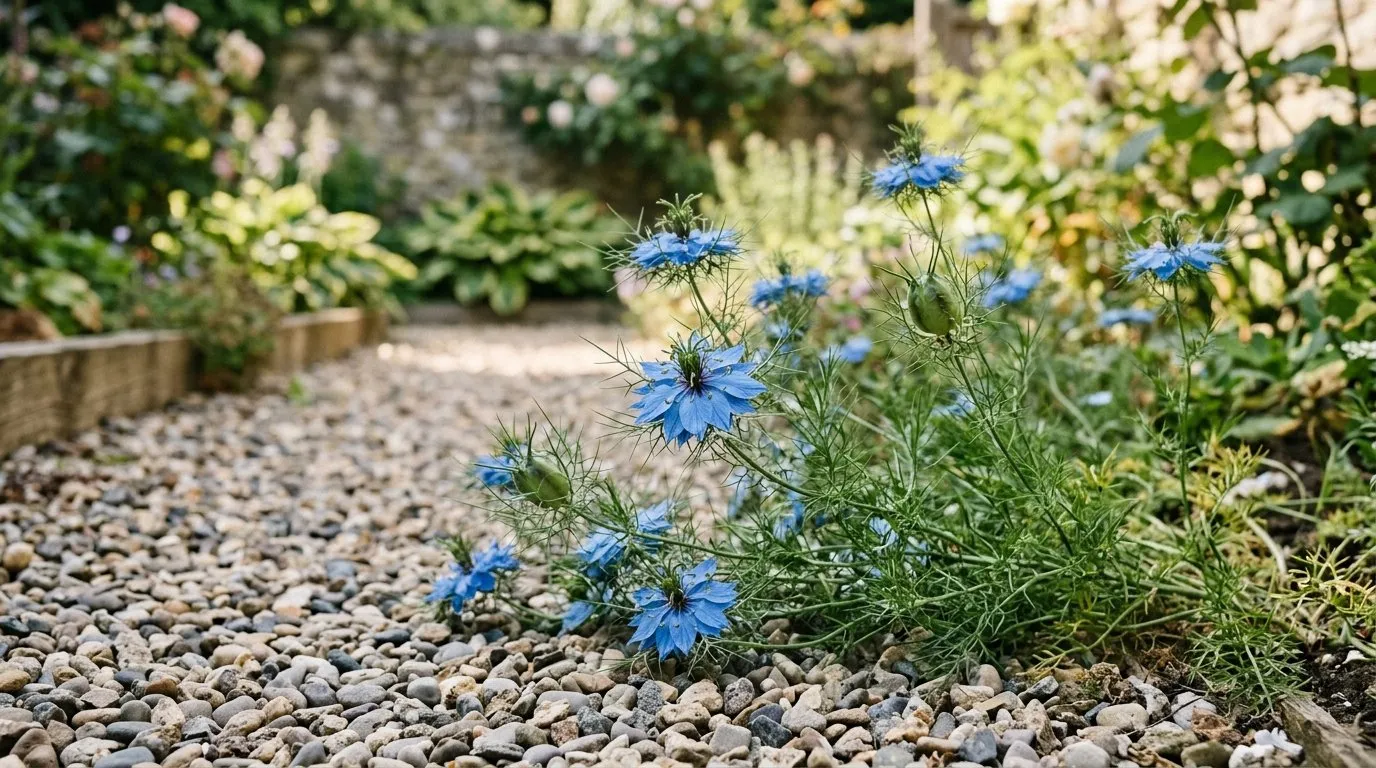
Nigella loves the shelter of gravel. Let a few pods split each summer and you’ll get a fresh crop of blue next year.
Dry shade under hedges and trees
Most plants sulk in dry shade, but a few self-seeders cope well. Foxgloves are the stars, with tall spikes in early summer. The wild purple Digitalis purpurea self-seeds best. Every part is poisonous to people and pets, so wear gloves and plant them away from where small children play.
Honesty flowers purple or white in April and May. Its flat, silvery seed pods then last well into winter. It is also a food plant for orange-tip butterfly caterpillars. Aquilegia (granny’s bonnet) flowers in May and June. Its seedlings cross freely, so expect a mix of colours.
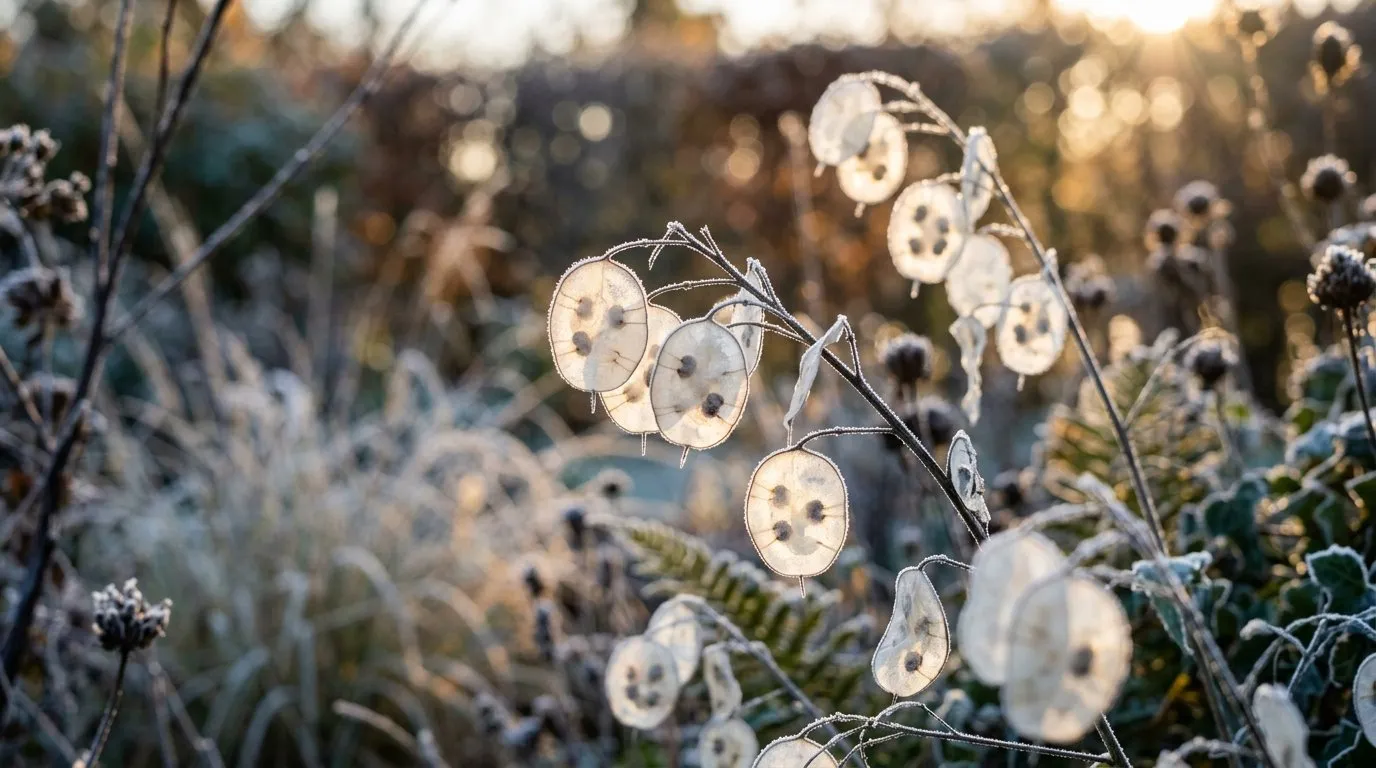
Leave honesty standing after it flowers. The papery pods look lovely in frost and drop their seed as they wear thin.
Damp shade and woodland edges
Forget-me-nots make a haze of pale blue under tulips and wallflowers in April and May. Pull the plants out once they go straggly, and new seedlings appear by autumn. Red campion is a native wildflower with pink flowers from May, often into summer. Bumblebees love it.
Sweet rocket has white or purple spikes in May and June. Its scent is strongest in the evening. These plants suit a north-facing border or the edge of a tree canopy.
Between young perennials
A new border has gaps for its first couple of years. Self-seeders fill them while the perennials grow. Nigella, calendula and borage, which has bright blue star flowers that bees adore, are all good gap-fillers. As the perennials spread, pull the seedlings that crowd them. The plantswoman Margery Fish gardened this way, and her cottage-garden lessons are full of ideas for relaxed planting.
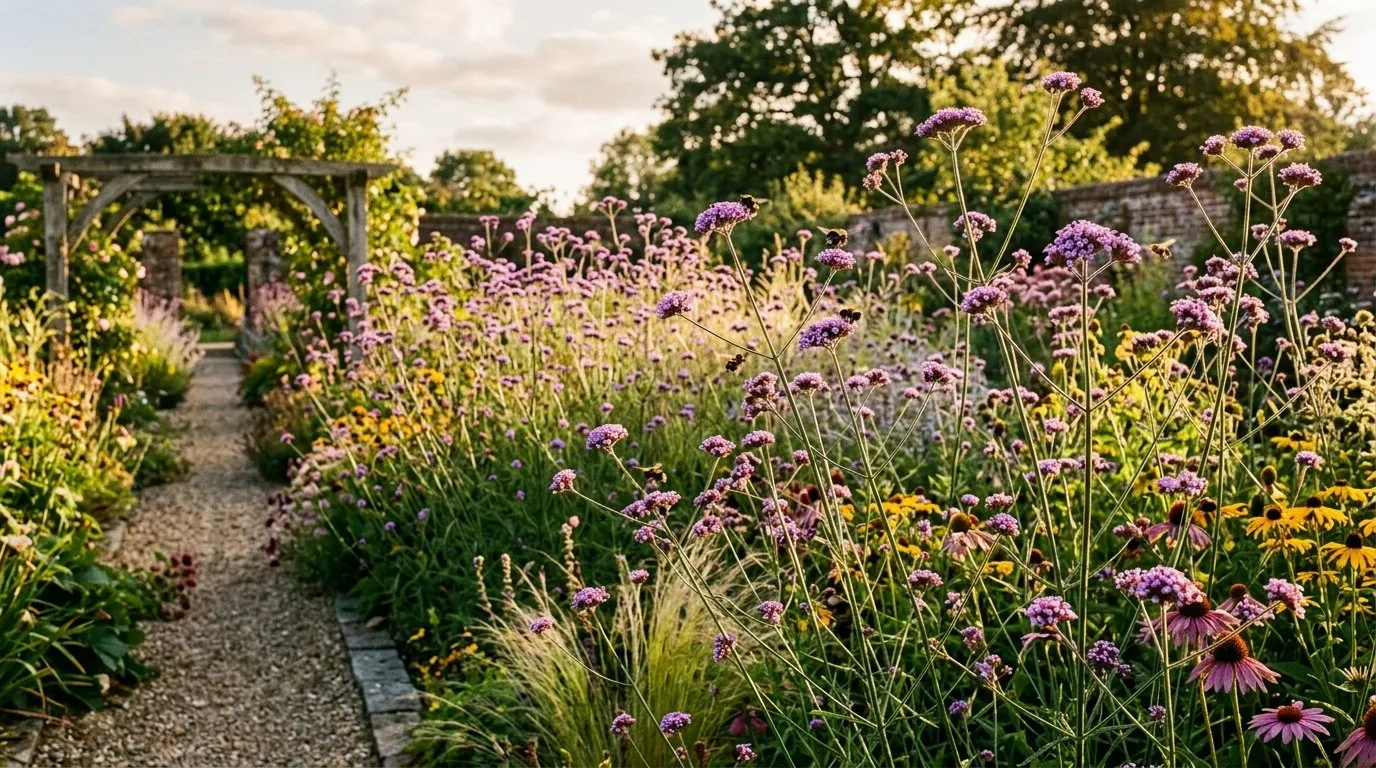
Verbena bonariensis threads itself between other plants without blocking the view. It’s a handy see-through filler for a young border.
How to start a self-seeding garden from a few packets
Start with four or five easy plants from the list above. A few seed packets cost far less than buying plants, and you only buy them once.
Year one: sow. Sow hardy annuals straight into raked soil in March or April, or in September for earlier flowers. Sow biennials such as foxgloves and honesty from May to July, either in the ground or in pots. Hardy annuals flower that summer. The guide to sowing hardy annuals direct walks you through it.
Year two: leave the seed heads. Let the spent flowers stand until the pods turn brown and split. Seedlings appear around the parents, usually in spring. The biennials flower this year too.
Year three onward: edit. By now the garden fills itself. Your job is to thin seedlings, move some to gaps and pull the ones in the wrong place. Fill any real gaps with a sprinkle of saved seed. The seed saving guide shows how to collect and store it.

Give it a couple of years and the self-seeders mingle on their own. This kind of relaxed mix is very hard to plan from scratch.
Self-seeders that take over
Most self-seeders are easy to pull out if they come up in the wrong place. A few spread too well for a small garden.
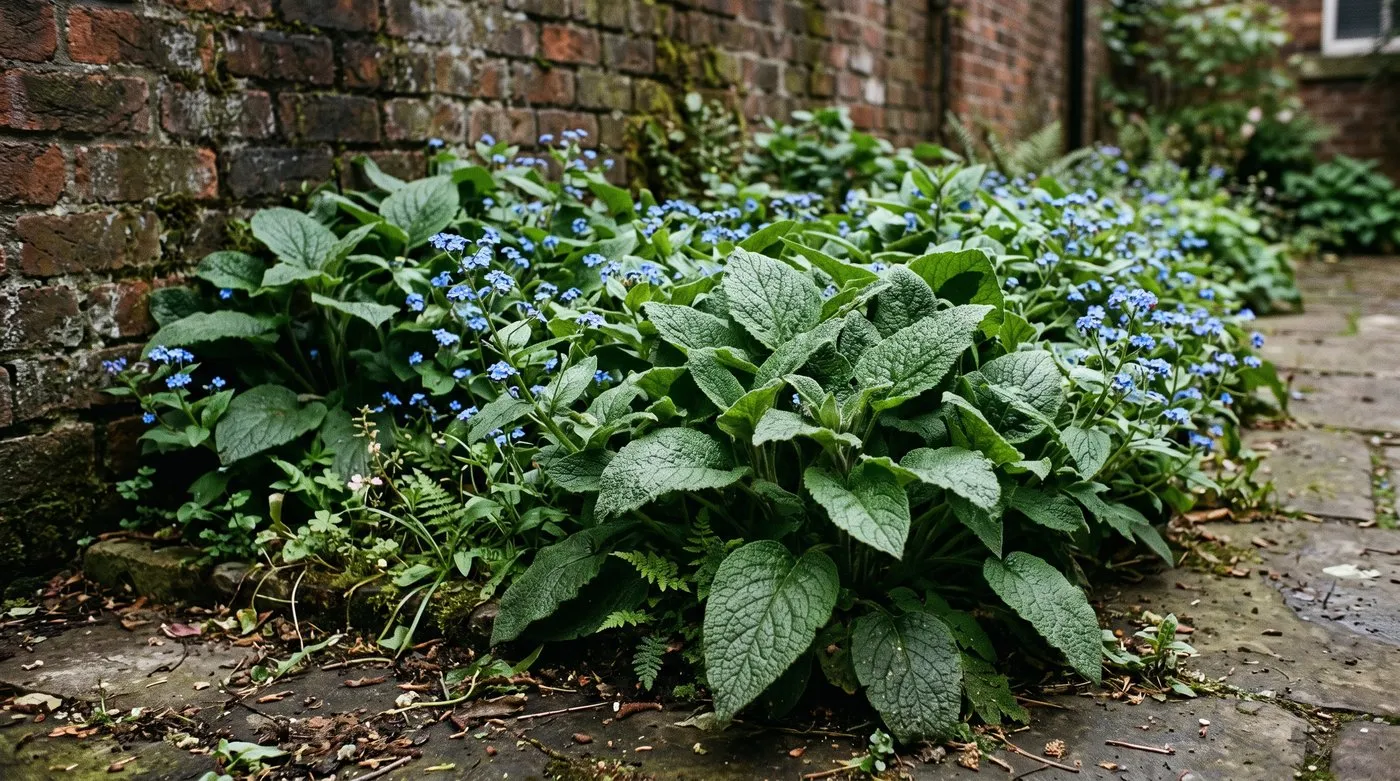
Green alkanet looks pretty in May, but its deep roots and endless seedlings make it hard to shift. Dig it out before it flowers.
| Plant | What it does | What to do |
|---|---|---|
| Green alkanet | Deep taproot, seeds everywhere | Dig out the whole root before it flowers |
| Herb Robert | Seeds into every shady gap | Pull before it sets seed |
| Welsh poppy | Seeds into walls, paving and borders | Deadhead in formal areas, enjoy it in wild ones |
| Forget-me-not | Carpets the ground quickly | Pull out after flowering |
| Teasel | Big plants, lots of seed | Keep it to wild corners |
| Himalayan balsam | Listed invasive plant that smothers riverbanks | Never grow it |
Editing seedlings in spring
A short weekly look in April is the only real work a self-seeding garden needs. Deal with seedlings while they are small and easy.
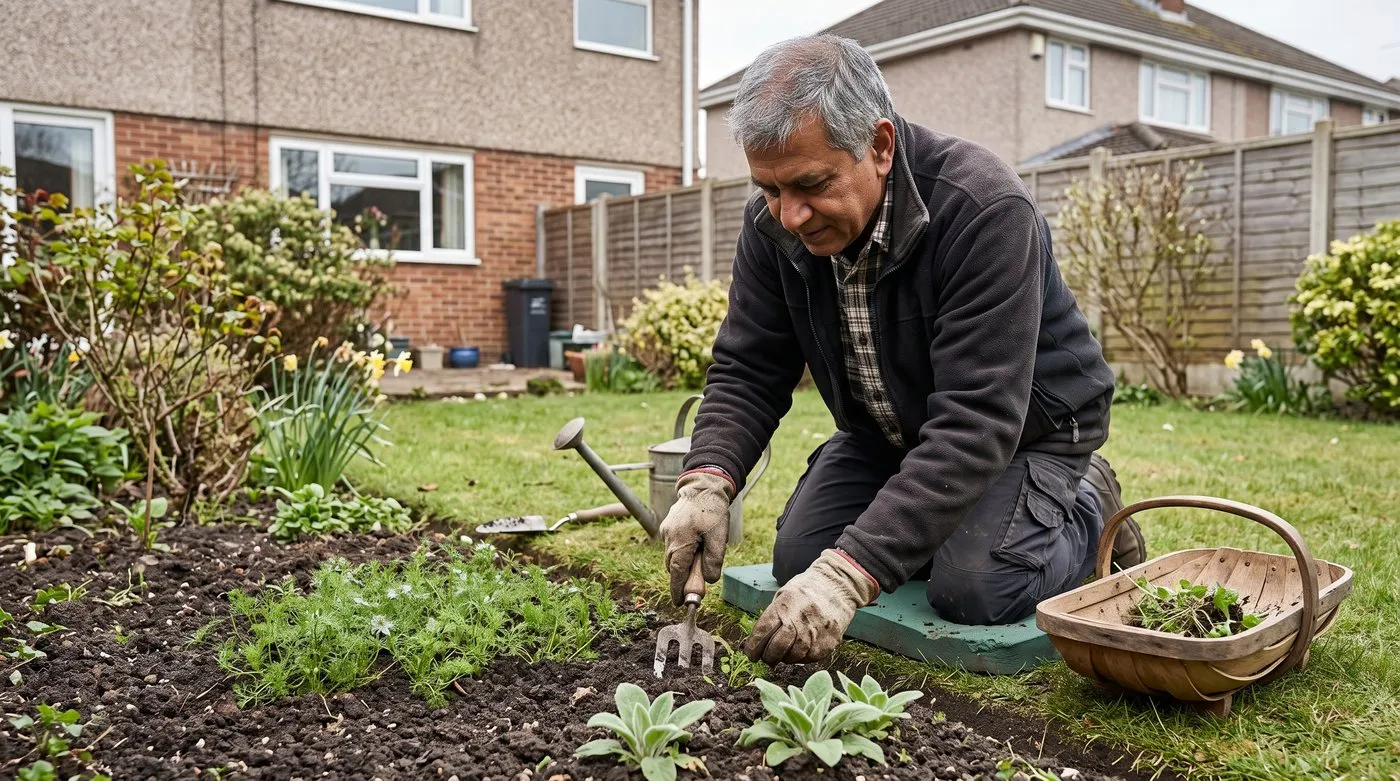
A short session in April is all it takes. Thin the keepers and lift spares while they’re small and easy.
- Learn what your seedlings look like. Leave a few to grow on until you’re sure.
- Hoe or pull the ones you don’t want when they are a couple of centimetres tall.
- Thin the keepers to 15-30cm apart, depending on the plant’s final size.
- Move spares to gaps on a damp day, with a good lump of soil round the roots. Nigella and poppies dislike moving, so thin those where they stand.
To stop a plant seeding at all, cut off the flowers before the seed ripens.
Month-by-month self-seeding calendar
| Month | What to do |
|---|---|
| January to February | Leave old seed heads standing for birds and winter interest |
| March | Cut down old stems. Rake bare patches. Sow hardy annuals |
| April | Thin and move seedlings. Hoe out unwanted ones |
| May | Pull forget-me-nots after flowering. Sow biennials |
| June to July | Enjoy the flowers. Sow more biennials. Deadhead any you want to limit |
| August | Let seed pods ripen and split. Collect some seed to save |
| September | Sow hardy annuals for earlier flowers next year |
| October to December | Leave stems standing. Avoid thick mulch where you want seedlings |
Common mistakes with easy self-seeders
- Mulching too thickly. A thick bark mulch buries seed. Use a thin layer of gravel or leave some soil bare.
- Tidying too early. Cutting stems in late summer removes the seed before it drops.
- Weeding in a hurry. Seedlings are easy to mistake for weeds. Learn their leaves first.
- Not thinning. Crowded seedlings grow weak and flower poorly. Thin them in April.
- Planting a thug. Green alkanet and herb Robert are hard to get rid of. Leave them out of small gardens.
Once your self-seeders settle in, add a few long-lived plants for structure. The guide to low maintenance garden plants is the next step, and there are more ideas on the plants hub.
Frequently asked questions
What does self-seeding mean in gardening?
It means a plant drops its own seed and new plants grow without your help. The parent flowers, sets seed and scatters it on the soil nearby. The seed sits in the ground over winter and comes up as seedlings, usually the following spring.
What are the easiest self-seeding plants for UK gardens?
Nigella, calendula, foxgloves, honesty and forget-me-nots are the easiest. They come up on most soils with no special care. Let the spent flowers stand until the seed drops in summer, and seedlings appear nearby the following spring.
Do self-seeding plants come back every year?
The same plant often doesn’t, but its seedlings take its place each year. Annuals such as nigella live for one year. Biennials such as foxgloves and honesty grow leaves one year, then flower and die the next. Both leave enough seed to keep going.
How long does a self-seeding garden take to look established?
Usually two to three years from the first sowing. Hardy annuals flower in their first summer. Biennials such as foxgloves and honesty need a second year before they flower, then their seedlings keep the cycle going.
Which self-seeding plants become invasive in the UK?
Green alkanet, herb Robert and Welsh poppy most often get out of hand. Pull them before they set seed if they start crowding other plants. Never grow Himalayan balsam, which is a listed invasive plant.
When should I thin self-seeded seedlings?
Thin them in April or early May, when they are a few centimetres tall. By then you can tell them apart from weeds. Keep the strongest ones 15-30cm apart, depending on the plant’s final size, and move or give away the rest.
Our team produces practical UK gardening guidance from source research, contributor records and established horticultural practice. Editorial standards are overseen by Matt W.

