
Key takeaways
- Thyme survives UK winters outdoors as long as the soil drains well
- Plant in poor, gritty soil, because rich compost gives floppy, less tasty growth
- Take cuttings from June to August for free new plants
- Trim by a third after flowering, but never cut into old bare wood
- Replace plants every 3-4 years when they get woody
- Creeping thyme copes with light footsteps and makes a scented path or mini lawn
Thyme is one of the most useful herbs you can grow, and it asks for almost nothing. Give it sunshine, sharp drainage and poor soil, and it’ll give you fragrant leaves for years.
It comes from sunny Mediterranean hillsides but is hardy in most UK gardens. There are upright bushy types and low, creeping mats. Whether you want herbs for the kitchen, scented ground cover between paving or a bee-friendly rockery plant, there’s a thyme for the job.
Which thyme varieties grow best in the UK?
Pick by what you want it for: cooking, ground cover or looks. All of these grow well across the UK.
Upright varieties for cooking
Common thyme (Thymus vulgaris) is the classic kitchen thyme. It grows 20-30cm tall with small grey-green leaves and pale lilac flowers in June. This is the one for roasts, stews and stuffing.
Lemon thyme (Thymus citriodorus) smells of lemon and is lovely with fish, chicken and salads. The golden-leaved ‘Aureus’ looks pretty in borders and pots too.
Orange thyme (Thymus fragrantissimus) has a gentle orange scent that’s nice in baking and fruit puddings. You’ll usually find it at specialist herb nurseries.
Creeping varieties for ground cover
Creeping thyme (Thymus serpyllum) makes dense mats just 5-7cm tall. It copes with light footsteps and fills gaps between paving. Flowers range from white to deep purple, depending on the variety.
Silver thyme (Thymus vulgaris ‘Silver Posie’) has silver-edged leaves on plants about 20cm tall. It’s pretty and good to eat.
| Variety | Height | Use | Flowers |
|---|---|---|---|
| Common thyme | 20-30cm | Cooking | Pale lilac |
| Lemon thyme | 20-25cm | Cooking | Pink-lilac |
| Orange thyme | 15-20cm | Cooking | Pale pink |
| Creeping thyme | 5-7cm | Ground cover | Purple or white |
| Silver thyme | 15-20cm | Cooking and looks | Pale lilac |
If you love Mediterranean herbs, our guide to growing herbs in the UK covers everything from basil to sage.
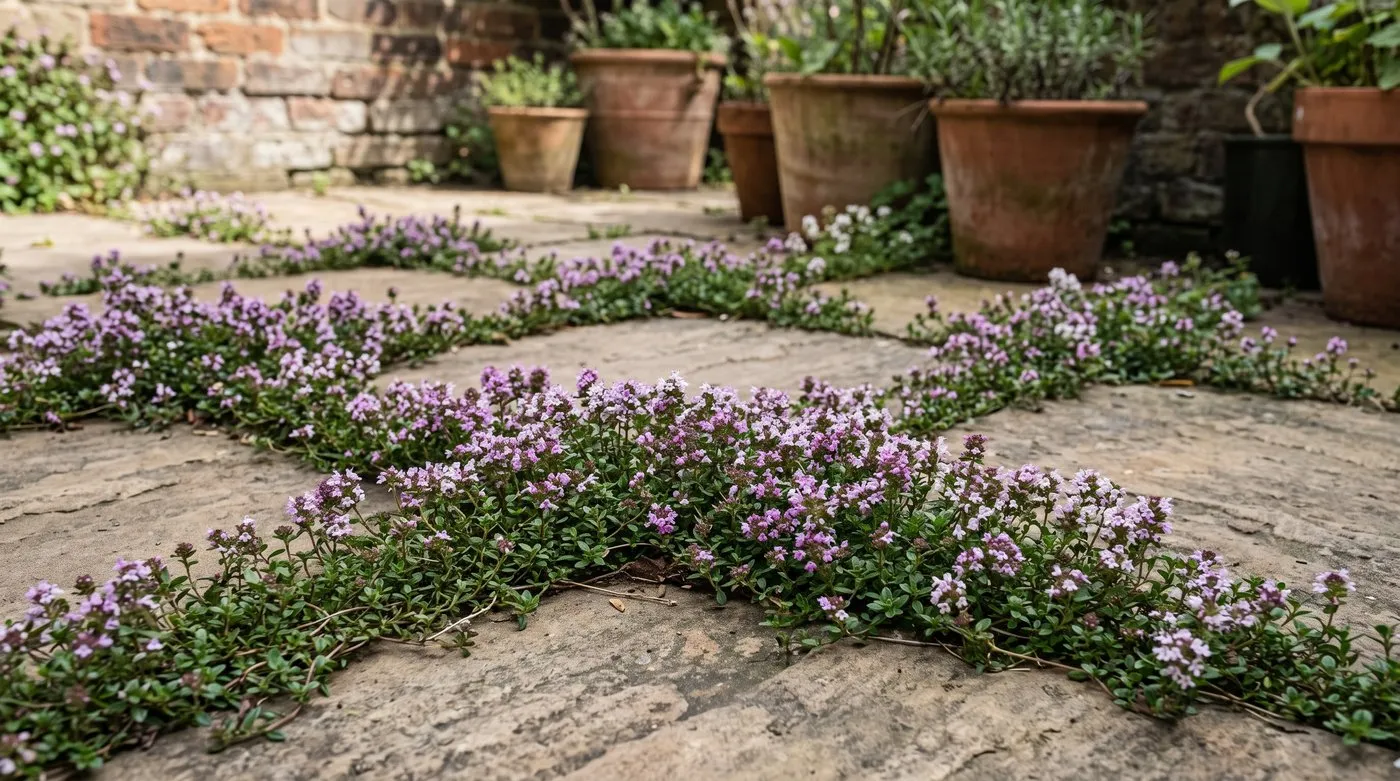
Creeping thyme copes with the odd footstep and smells lovely when you brush past. It’s ideal for sunny cracks in paving.
Where should I plant thyme?
In full sun, in soil that drains really well. Get those two right and it’ll look after itself.
Soil and position
Choose your sunniest spot. Thyme wants at least six hours of direct sun a day. South-facing walls, raised beds and rockeries are perfect.
The soil must drain freely. Thyme hates sitting in wet soil, especially in winter, and heavy clay finishes it off faster than frost. On heavy soil, mix in plenty of horticultural grit, or grow it in a raised bed of gritty compost.
Don’t add fertiliser or rich compost. Thyme tastes best in poor, lean soil. Rich soil gives soft, floppy growth with less flavour, which catches out lots of gardeners.
How to plant
Plant outside from April to June, once frosts are over. Space upright types 20-30cm apart, and creeping ones 15-20cm apart if you want a mat quickly.
Dig a hole the same depth as the rootball, and fill in with garden soil mixed with grit. Water once to settle it, then leave it be. Mulch with gravel, not bark or compost, which hold moisture around the stems and cause rot. Our guide to making compost explains when compost helps and when it doesn’t.
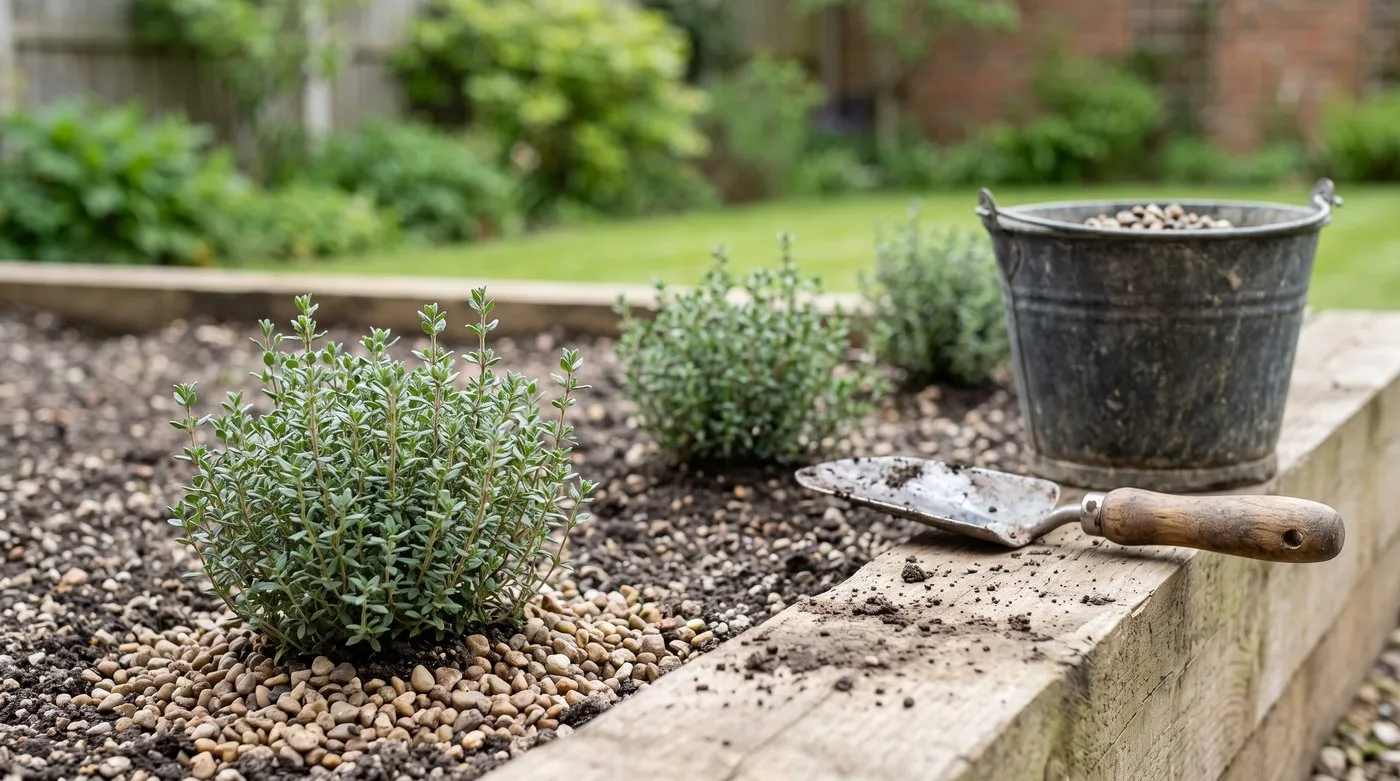
Mix grit into the planting hole and mulch with gravel, not bark. Thyme likes its stems dry and its soil lean.
Growing thyme in pots and containers
Thyme grows brilliantly in pots, because you control the drainage.
Use a terracotta pot at least 15-20cm across. Terracotta lets moisture escape through its sides, keeping roots on the dry side, which thyme loves. Plastic and glazed pots stay wetter, so roots are more likely to rot in winter.
Fill with half multipurpose compost and half grit. Top with a thin layer of fine gravel to keep the base of the plant dry. Stand it somewhere really sunny, such as a south-facing doorstep or patio.
Water only when the top 2cm of compost is dry. In a hot summer that might be twice a week. In winter you may not need to water at all. Overwatering is the quickest way to kill potted thyme.
Repot every couple of years in spring with fresh compost. A single half-strength seaweed feed in April is plenty. Our container vegetable gardening guide has more on drainage and watering for pots.
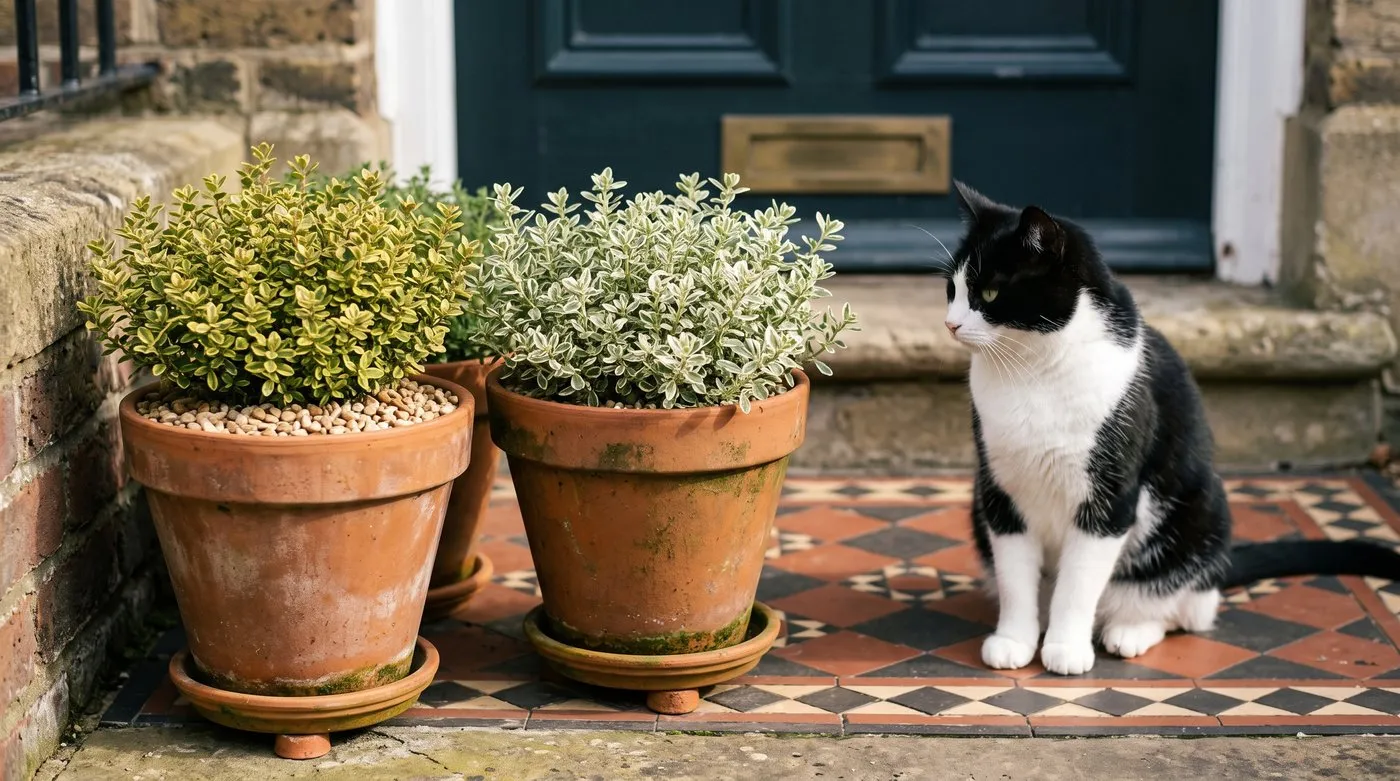
Terracotta and a gravel top keep the roots on the dry side. Raise pots on feet so they never sit in water.
Can you grow thyme indoors on a windowsill?
For a while, but it rarely lasts. Indoor light in the UK is too weak for most of the year, so plants go soft, pale and leggy.
If you want to try, use your brightest south-facing windowsill and a terracotta pot with drainage holes. Keep it away from radiators. Water sparingly, only when the compost is dry a couple of centimetres down, and turn the pot every few days.
A better plan is to keep thyme outside and bring a pot into the kitchen for a week or two at a time. Supermarket thyme is grown fast under glass and usually fades indoors within weeks. Planting it outside in spring gives it a much better chance.
How to propagate thyme
Cuttings are easiest, with layering and division as simple extras. Seed works for common thyme but is slower.
Semi-ripe cuttings (June to August)
This is the most reliable way. Take 7-10cm cuttings from shoots without flowers. Strip off the lower leaves and dip the end in rooting powder if you have some. Push them into pots of half perlite and half peat-free compost. Keep just moist. Roots usually form in three or four weeks. Pot them up separately and grow them on until next spring.
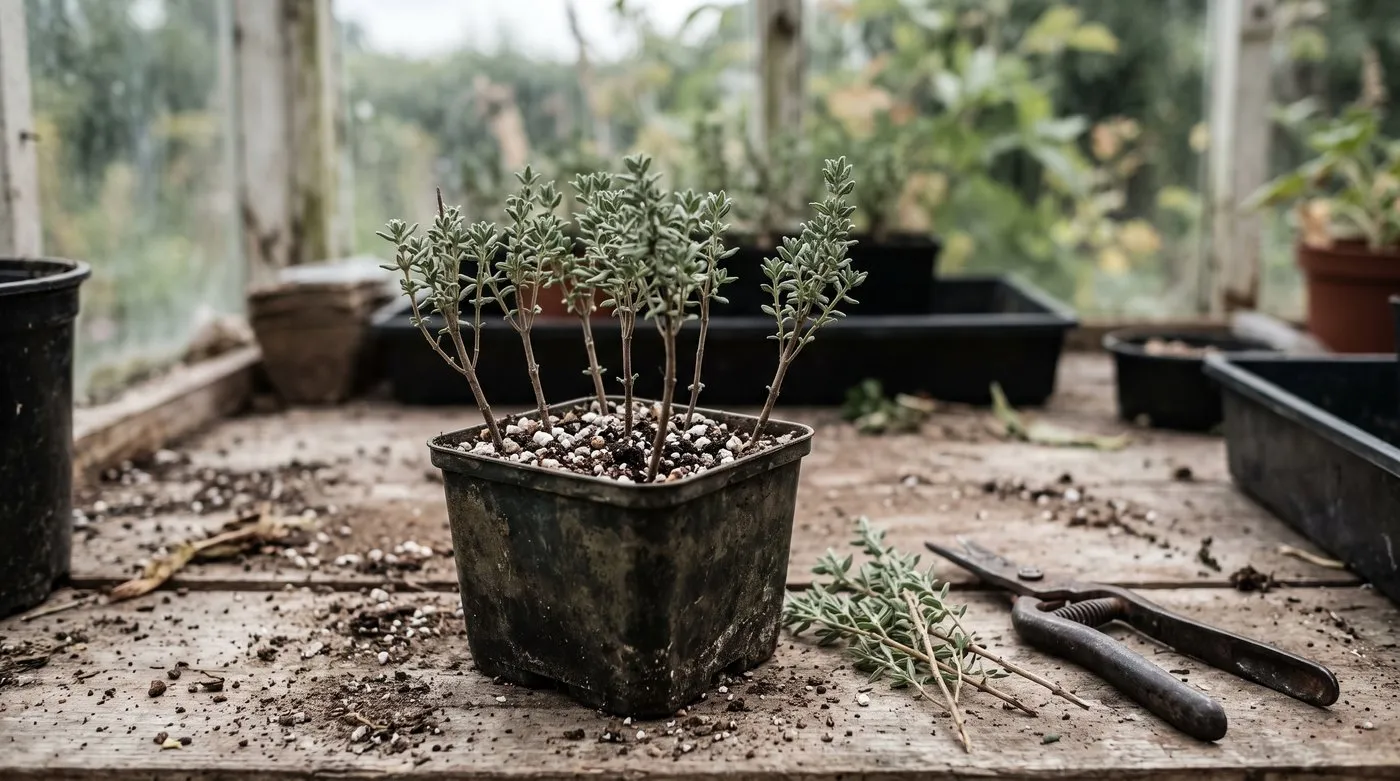
Choose shoots without flowers and keep the mix just moist. Roots usually form in three or four weeks.
Layering
Creeping thyme often roots where it touches the soil all by itself. To help it, peg a low stem to the ground with a wire hoop or a small stone and cover with a little gritty compost. Once it has rooted, a couple of months later, cut it from the parent and move it.
Division
Split clumps in spring before new growth starts. Lift the plant, gently pull it into pieces that each have roots, replant straight away and water once. It’s also a good way to perk up an old plant that’s going bare in the middle.
How do you grow thyme from seed?
Sow indoors in spring, on the surface of moist seed compost, without covering it. The RHS thyme guide suggests a warm, bright spot, and seedlings should appear within a couple of weeks.
Water from below or with a fine mist, as tiny seedlings can rot. Move small clumps into modules once you can handle them. Harden off over a week or two and plant out once frosts are over.
Seedlings take about a year to reach a good picking size. Seed suits common thyme well, but named varieties such as ‘Silver Posie’ rarely come true, so buy those as plants or take cuttings. Our guide to sowing seeds indoors covers the basics.
Can creeping thyme replace a lawn?
Yes, in a small, sunny spot with free-draining soil, but not where people walk all the time. It never needs mowing, flowers from June to August and smells lovely when you step on it.
How to make a thyme lawn
Clear all the grass and weeds. Fork in sharp sand and grit to help drainage. The spot needs at least six hours of sun a day, so shady areas won’t work.
Plant plugs of Thymus serpyllum 15-20cm apart in April or May. Water regularly through the first summer, and keep on top of the weeding, as weeds smother young thyme. By the second year, the plants join up into a lovely scented mat.
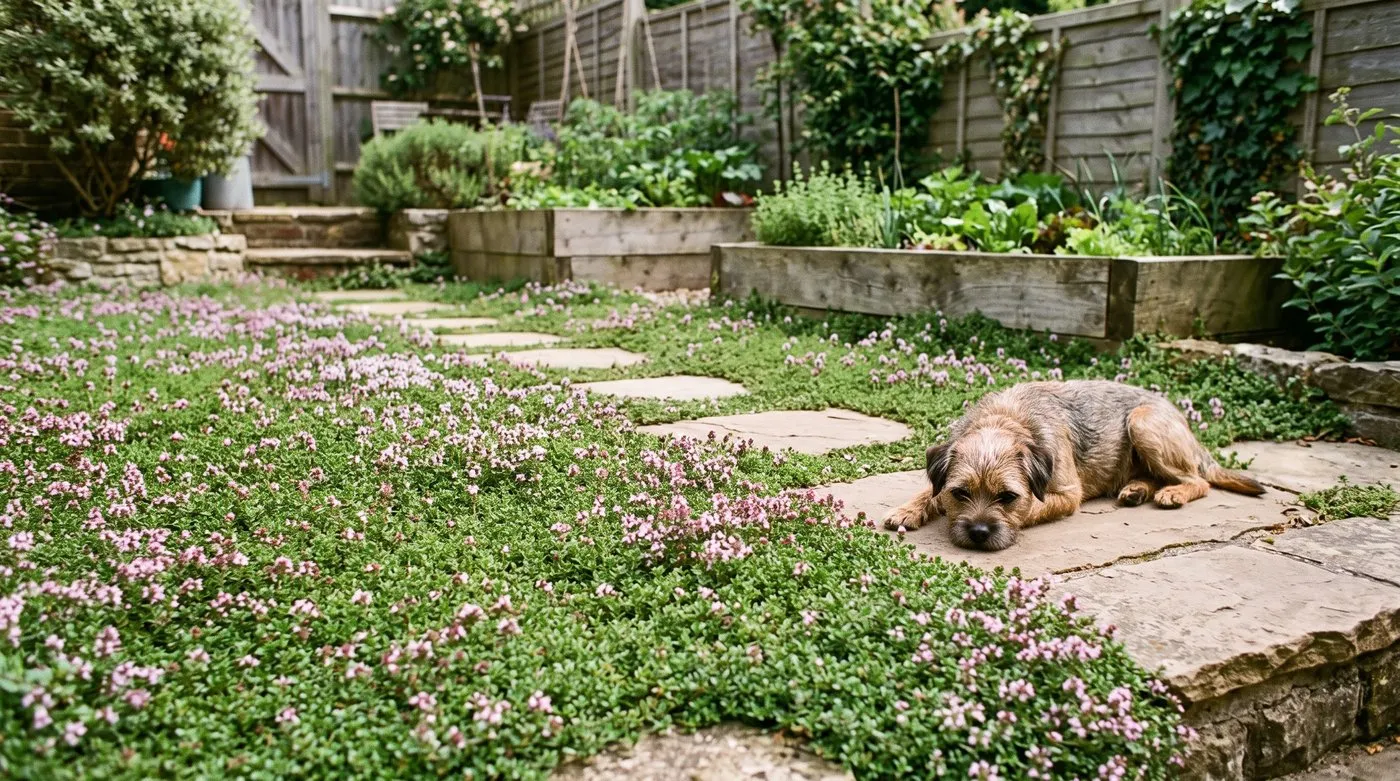
A thyme lawn works best in a small, sunny spot with light foot traffic. Stepping stones take the wear where you walk most.
Things to bear in mind
A thyme lawn copes with the odd footstep, but not daily heavy use. It works best in small areas, as bigger ones take a lot of plants and weeding.
On heavy clay it’ll struggle. Look at our guide to drought-tolerant plants instead, or our companion planting guide for other ground cover that copes with heavier soil.
How to prune and maintain thyme
Trim it lightly after flowering every year, only into green growth. Skip it and plants go woody and bare within a few years.
When and how to prune
Trim straight after flowering, usually late July or August. Cut the whole plant back by about a third with sharp secateurs or scissors, shaping it into a neat dome.
The golden rule: never cut into bare old wood. Thyme can’t regrow from leafless brown stems. Only ever cut back into green, leafy growth. The same goes for lavender and rosemary.
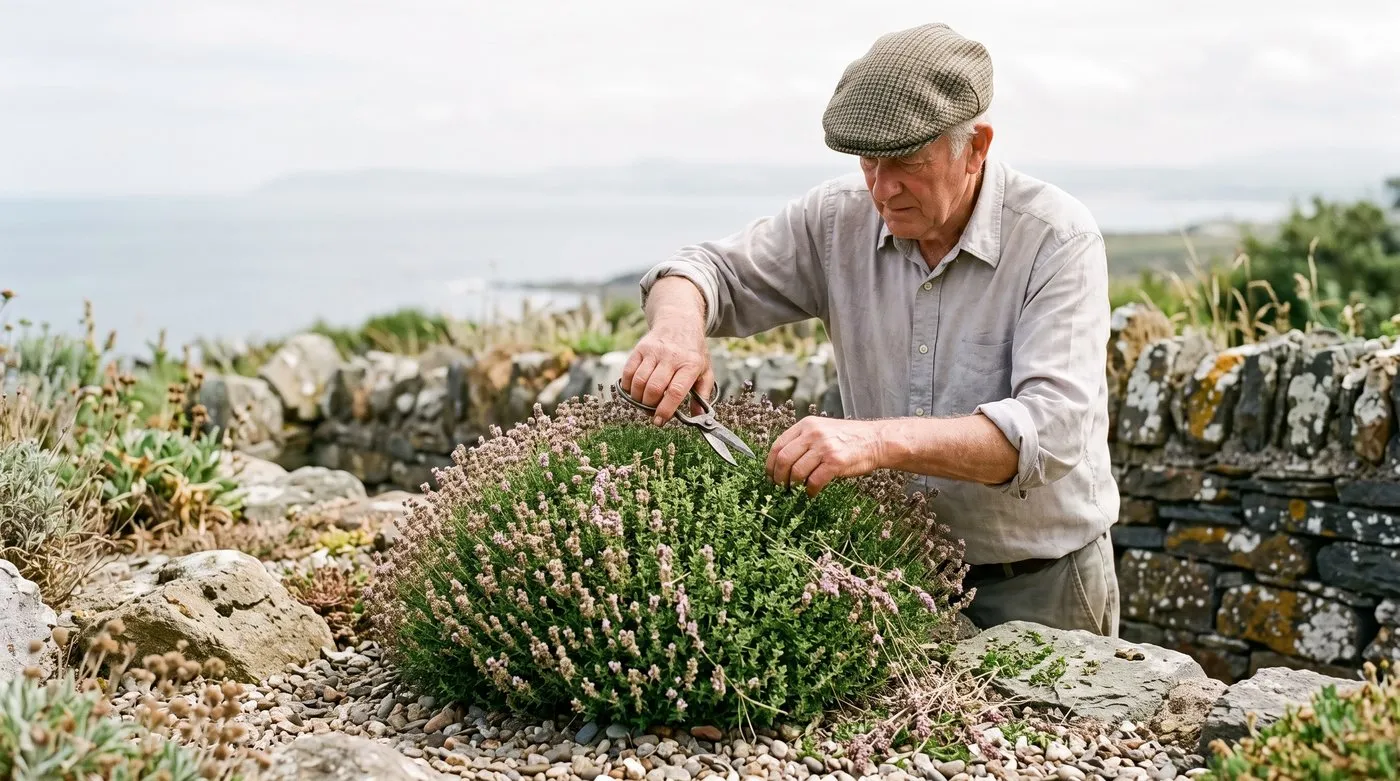
Trim straight after flowering and only into leafy green stems. Thyme can’t regrow from bare brown wood.
Should you let thyme flower?
Yes, and the bees will thank you. The little pink, mauve or white flowers appear in early summer and are full of nectar. They’re edible too, with a milder taste than the leaves.
The leaves taste strongest just before flowering, so pick what you want to dry or freeze then. Afterwards, let it bloom. Trim off the faded flower stems, cutting back into leafy growth, for a fresh flush of leaves later in summer.
Creeping thyme is grown mostly for its flowers, so it just needs a very light trim afterwards.
Watering and feeding
Thyme in the ground hardly ever needs watering once settled. Only water in a long dry spell of several weeks.
Don’t feed it. Thyme does best on poor soil, and feeding just makes soft, less tasty growth.
When to replace plants
Even with perfect care, thyme goes woody after three or four years. The middle opens up and you get fewer leaves. Take cuttings in year two or three, then swap the old plant out when it fades. That way you always have young plants on the go.
When should I harvest thyme?
Pick whenever you like from May to October, but never take more than a third at once. Snip sprigs 7-10cm long, just above a pair of leaves. This makes the plant branch and stay bushy.
For the best flavour, pick in the morning after the dew has dried. Just before flowering, usually early June, is the best time to pick for drying or freezing.
Drying is easiest and works well for common thyme. Tie small bunches and hang them upside down somewhere warm and airy for a week or two. Strip off the leaves and keep them in an airtight jar.
Freezing suits lemon thyme, which loses some of its lemony taste when dried. Strip the leaves, spread them on a tray, freeze for an hour and then bag them up. Add them straight to cooking.
Fresh sprigs keep in the fridge for a week or two, wrapped loosely in damp kitchen paper in a sealed tub. Handy for those first pickings of the year with your other spring gardening jobs.
Common thyme problems and how to fix them
Most thyme problems come from too much water or too little trimming.
Rotting roots are the number one killer. The plant wilts even though the soil is wet, and the base of the stems goes black. It’s caused by poor drainage or overwatering. Prevention is everything, as there’s no cure once it’s set in. Remove the plant and start again in a better-drained spot.
Leggy, woody growth comes from skipping the yearly trim. Once a plant is mostly bare stems, pruning won’t save it. Replace it, and trim the new one every summer.
Grey mould can appear in damp, crowded spots. Give plants more space and remove any mouldy bits.
Pests rarely bother thyme. Rosemary beetle sometimes feeds on it, so pick the shiny striped beetles off by hand. The RHS rosemary beetle page helps you spot them. Aphids may gather on new shoots in spring but seldom do lasting harm.
Companion planting with thyme
Thyme is a great companion because its flowers bring in bees and hoverflies. Claims that its smell keeps pests away are mostly old tradition.
It’s often grown next to cabbage-family crops and sits happily beside strawberries, tomatoes, aubergines and peppers. Keep it away from mint, which will smother it.
In a flower bed, thyme looks at home with other Mediterranean plants such as lavender, rosemary, sage, oregano and santolina. They all love sun and sharp drainage, so grouping them in a gravel garden or raised bed makes care easy.
Now you’ve got the hang of thyme, read our guide on growing herbs in the UK to see which other herbs grow well together.
Month-by-month thyme growing calendar
| Month | What to do |
|---|---|
| January | Nothing much. Check pots aren’t waterlogged |
| February | Order seeds or plants. Clean pots ready for spring |
| March | Sow seeds indoors. Check for frost damage |
| April | Plant out young plants once frosts are over. Divide old clumps |
| May | Harden off and plant out seedlings. Start picking |
| June | Take cuttings. Pick plenty before flowering |
| July | Enjoy the flowers and the bees. Start trimming when flowers fade |
| August | Finish trimming by a third. Take more cuttings |
| September | Last big pickings for drying and freezing. Water less |
| October | Add a gravel mulch around plants |
| November | Check drainage. Raise pots onto feet so they don’t sit in water |
| December | Nothing to do. Thyme is happy outside |
Frequently asked questions
Does thyme come back every year in the UK?
Yes, thyme is a hardy evergreen that lasts for years. It keeps its leaves all year and gets through most UK winters outdoors if the soil drains well. After 3-4 years plants go woody and produce less, so take cuttings in year two or three to replace them.
Can you grow thyme from supermarket plants?
Yes, supermarket thyme can do well outside. Repot it straight away into gritty, free-draining compost and harden it off over a week before planting out. These pots are usually crammed, so split them into 2-3 smaller clumps first.
Why has my thyme gone woody and leggy?
Usually because it hasn’t been trimmed each year. Cut it back by a third after flowering every summer, shaping it into a neat dome. Never cut into bare brown wood, as it won’t regrow. If it’s mostly bare stems, it’s time for a new plant.
Does thyme grow well in pots?
Yes, it’s one of the best herbs for pots. Use a terracotta pot at least 15cm wide with drainage holes. Fill with half multipurpose compost and half grit. Water only when the top 2cm is dry.
When should I harvest thyme?
Pick thyme whenever you need it from spring to autumn. The flavour is strongest just before it flowers, usually in June. Pick in the morning once the dew has dried. Regular picking keeps the plant bushy.
Can I use creeping thyme instead of a lawn?
Yes, in a small, sunny spot with soil that drains well. It copes with light footsteps, never needs mowing and flowers from June to August. It won’t stand up to heavy daily use like grass. Plant plugs 15-20cm apart in spring and weed well until they join up.
Is thyme safe for pets?
Garden thyme isn’t generally thought of as harmful to cats and dogs. Most pets ignore its strong smell anyway. Thyme essential oil is a different matter, though, so keep it well out of their reach. If you’re worried, ask your vet.
Our team produces practical UK gardening guidance from source research, contributor records and established horticultural practice. Editorial standards are overseen by Matt W.


