Key takeaways
- Tomatoes, chillies, lettuce, herbs and dwarf beans are the easiest crops for pots
- Use pots at least 30cm deep for fruiting crops, always with drainage holes
- Bigger pots dry out more slowly, so you water less
- Water daily in hot weather, as pots dry out much faster than the ground
- Feed tomatoes and chillies weekly with tomato feed once flowers appear
You don’t need a garden to grow vegetables. A sunny patio, balcony, doorstep or even a wide windowsill can give you fresh food from pots. It works in any space, costs little to start, and your crops are just steps from the kitchen.
This guide takes you from choosing pots to picking your first crop. Pots are perfect for city gardens, where space is tight. If you have more room, our guide to the best vegetables to grow at home covers beds and allotments too.
Best vegetables for containers
Not every vegetable likes life in a pot. The best ones are compact, crop well and are ready in a single season.
The easiest crops for pots
| Crop | Pot size | Good to know |
|---|---|---|
| Tomatoes | 30cm or more | Bush types need no staking |
| Chilli peppers | 25cm or more | Windowsill or patio |
| Lettuce | 20cm or more | Cut-and-come-again types keep going |
| Herbs (basil, parsley, coriander) | 15cm or more | Windowsill or patio |
| Dwarf French beans | 30cm or more | Bush types, no supports needed |
Also good in pots
| Crop | Pot size | Good to know |
|---|---|---|
| Spring onions | 20cm or more | Can be sown close together |
| Radishes | 15cm or more | Any shallow container, very quick |
| Beetroot | 25cm or more | Three or four roots per pot |
| Courgettes | 40cm or more | One plant per big pot |
| Potatoes | Large potato bag | First earlies only |
| Aubergines | 30cm or more | Need a warm, sheltered spot |
What to avoid in containers
Maincrop potatoes need too much room. Pumpkins and squash sprawl everywhere. Brussels sprouts, cauliflowers and other big brassicas need deep roots and a long season. Carrots and parsnips need pots at least 40cm deep, and the roots still come out smaller.
Choosing containers
Material comparison
| Material | Good points | Downsides | Price |
|---|---|---|---|
| Plastic | Light, cheap, holds water | Gets hot in sun | Cheap |
| Terracotta | Looks lovely, breathes | Heavy, dries fast, may crack in frost | Mid |
| Fabric grow bags | Drains well | Dries quickly, less stable | Cheap |
| Recycled containers | Free and fun | May need drainage holes adding | Free |
| Self-watering pots | Water reservoir, less watering | Cost more | Pricier |
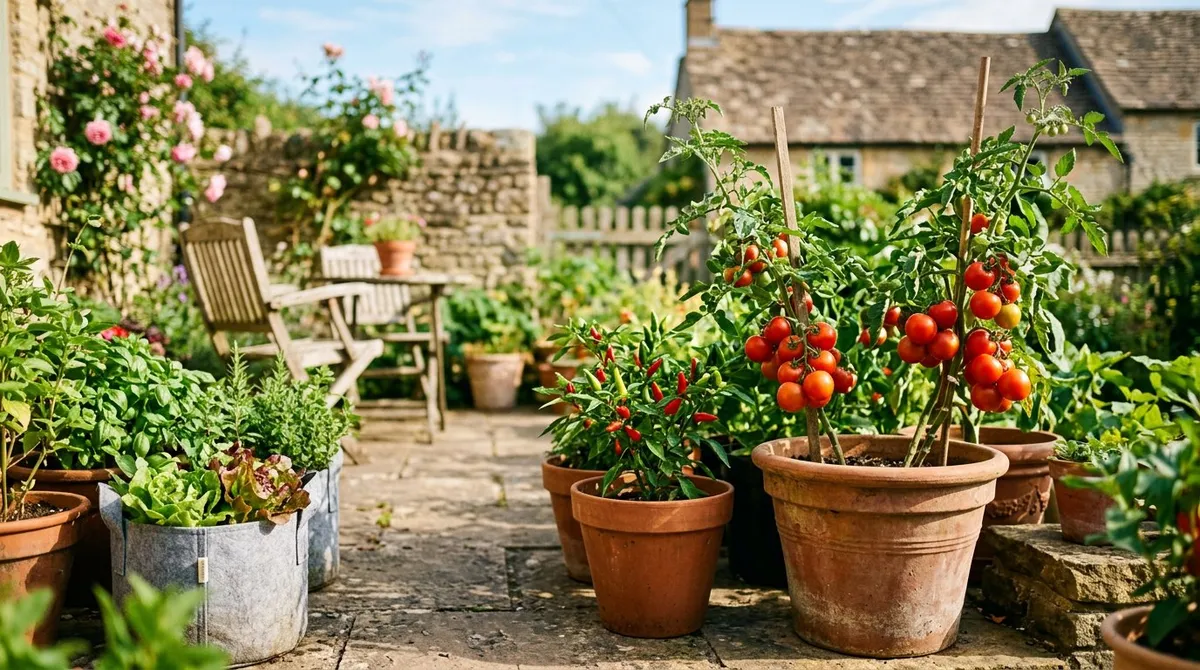
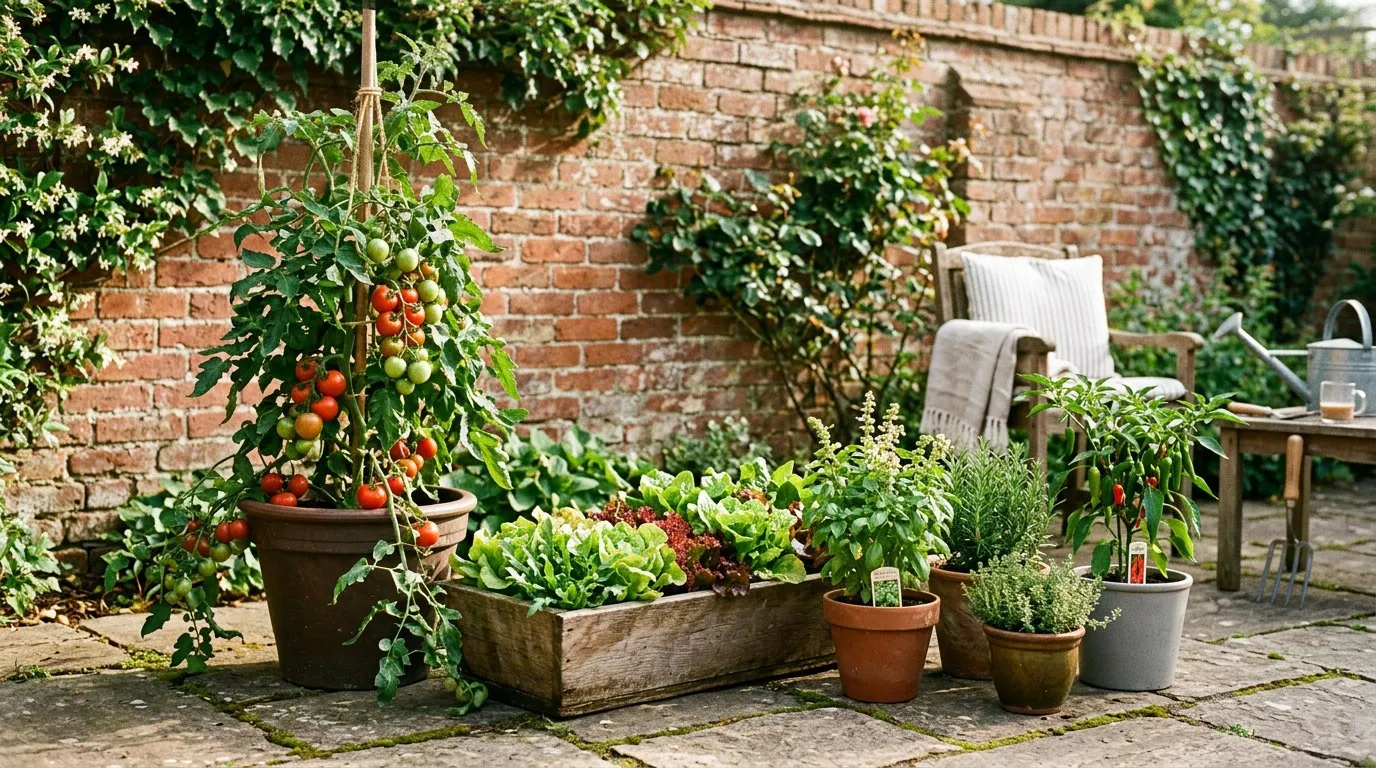 Six pots on a sunny patio, full of salad, herbs, tomatoes and chillies.
Drainage holes are a must. Drill some in any container that hasn’t got them. Roots sitting in water soon rot. Stand pots on feet or bricks so water can drain away.
Bigger is better. A large pot holds more compost, stays damp for longer and gives roots room. Small pots can dry out in hours on a hot day.
Tip: Dark pots soak up heat and can cook roots on a sunny patio. Wrap them in hessian or stand them inside a slightly bigger pot. Light-coloured pots stay cooler.
Compost and growing media
Use peat-free multi-purpose compost for most crops. It holds water and has enough food to get plants started.
Help it drain by mixing in one part perlite to four parts compost. It keeps the compost from getting soggy.
For tomatoes, use tomato compost or mix in slow-release fertiliser granules when you plant. Tomatoes are hungry and soon use up ordinary compost.
Use fresh compost each year. Old compost packs down and runs out of food. Replace it or freshen it up each spring.
Watering containers
Watering is the big job with pots. They dry out much faster than the ground, and missing a hot day can set a crop back badly.
How often
- Hot, sunny days: every day, sometimes twice
- Cool, cloudy days: every 2 to 3 days
- Winter (for crops kept going): weekly or less
How to check
Push a finger 2 to 3cm into the compost. Dry means water, damp means wait. Or lift the pot: light means dry, heavy means it’s fine.
Best method
Water slowly at the base of the plant until water runs out of the bottom. That way the whole root ball gets a drink. A quick splash only wets the top.
Self-watering pots with a built-in reservoir mean you can water less often. They’re great if you’re busy.
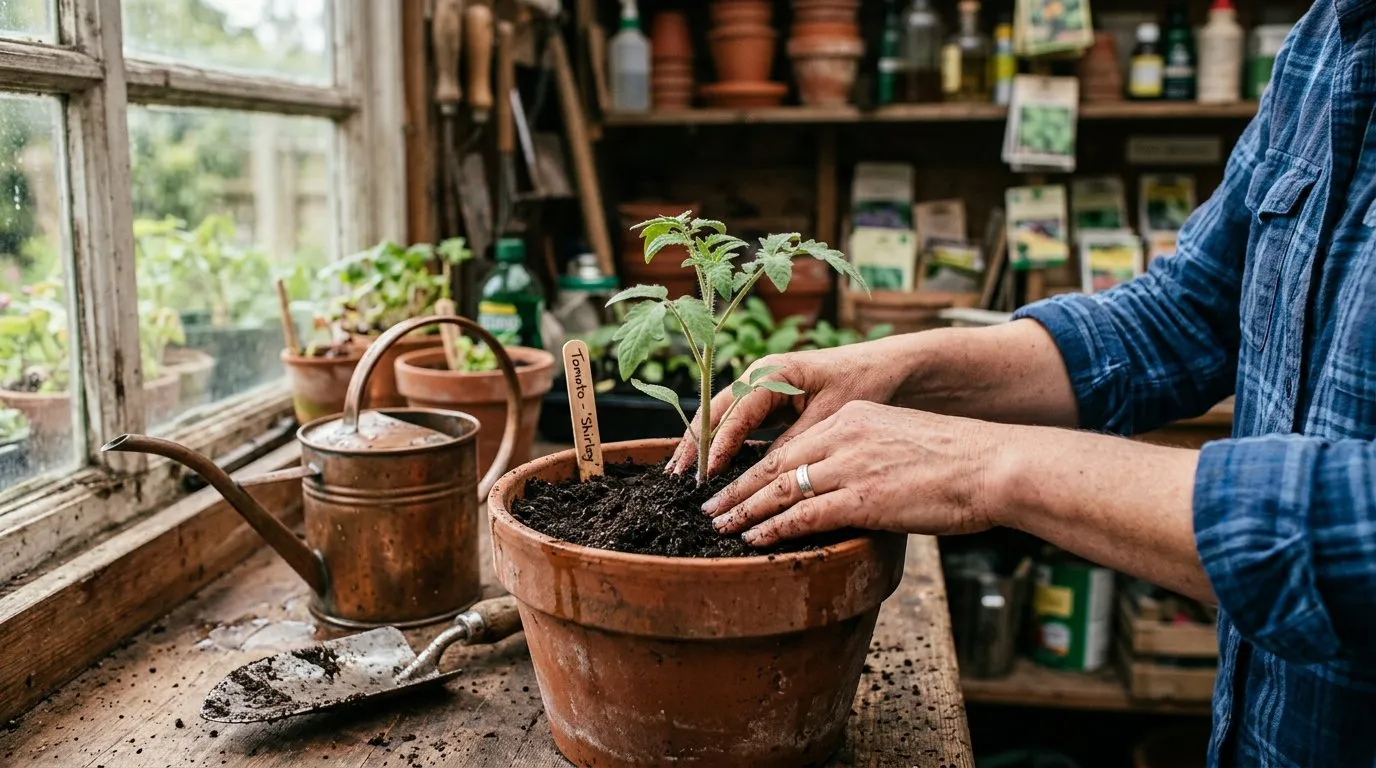 Potting up a tomato into fresh peat-free compost. Fruiting crops need pots at least 30cm deep.
Feeding
The food in fresh compost lasts a few weeks. After that, your crops rely on you.
Leafy crops (lettuce, herbs, spinach): a balanced liquid feed every week, starting about 4 weeks after planting.
Fruiting crops (tomatoes, chillies, beans): tomato feed every week once the first flowers appear. It’s high in potash, which helps flowers and fruit.
Root crops (beetroot, carrots): a balanced feed every fortnight. Skip high-nitrogen feeds, which give you leaves instead of roots.
A six-pot starter setup
This little setup fits on a patio about 2m x 1m and gives you fresh pickings through summer.
| Pot | Crop | Sow or plant | Pick |
|---|---|---|---|
| 1 (30cm) | Bush tomato ‘Totem’ | Plant in May | July to September |
| 2 (25cm) | Chilli ‘Apache’ | Plant in May | July to October |
| 3 (25cm) | Cut-and-come-again lettuce | Sow in March | May to October |
| 4 (20cm) | Mixed herbs (basil, parsley, coriander) | Sow or plant in April | May to October |
| 5 (30cm) | Dwarf French bean ‘Safari’ | Sow in May | July to September |
| 6 (20cm) | Spring onions and radishes | Sow in March | May to October |
It doesn’t cost much to set up, and you’ll have salad, herbs, tomatoes, chillies and beans from late spring into autumn. Add a raised bed next year if you want more. If there’s room, a mini greenhouse lets you start earlier and keep going later.
Balcony growing tips
Balconies have their own challenges: weight, wind and often less sun.
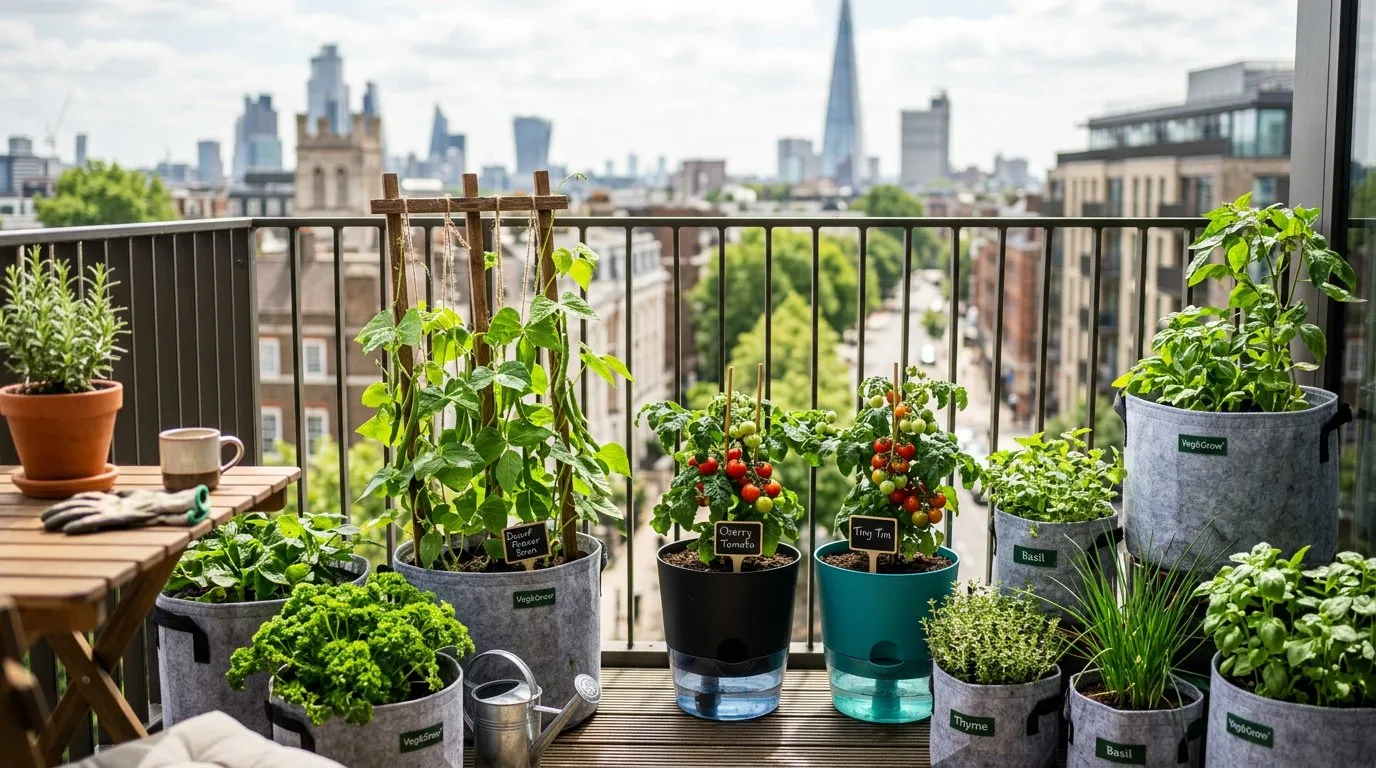 A balcony veg patch in fabric grow bags and light pots. Check the weight limit before adding big pots.
Mind the weight. Pots of wet compost are heavy, and they add up fast. If you live in a flat, check with your building manager.
Shelter from wind. Wind dries pots out and knocks plants about. Put taller plants where they shelter smaller ones, and avoid top-heavy plants that might blow over.
Go light. Plastic and fabric pots weigh far less than terracotta. Perlite in the compost helps too.
Now your pots are planned, read our guide on growing tomatoes in the UK for the most rewarding pot crop of all.
Frequently asked questions
What vegetables grow best in pots?
Tomatoes, chillies, lettuce, herbs and dwarf beans are the easiest. Spring onions, radishes and beetroot do well too. Pick compact or bush varieties bred for pots. Skip big spreading crops like pumpkins, squash and maincrop potatoes.
What size pots do I need for vegetables?
At least 30cm deep for tomatoes, chillies, aubergines and beans. About 20cm deep suits lettuce, herbs and spring onions. Radishes and small herbs manage in 15cm. Bigger pots stay damp longer, so you water less.
How often should I water vegetables in pots?
Every day in hot weather, every 2 to 3 days when it’s cool. Push a finger 2cm into the compost. If it’s dry, water until it runs out of the bottom. Watering in the morning sets plants up for the heat of the day.
What compost should I use for vegetable pots?
Peat-free multi-purpose compost suits most crops. Mix in one part perlite to four parts compost to help it drain. For hungry tomatoes, use tomato compost or add slow-release fertiliser granules when you plant.
Can I grow vegetables on a north-facing balcony?
Yes, but stick to leafy crops. Lettuce, spinach, spring onions, rocket and many herbs cope with some shade. Tomatoes, chillies and beans need at least 6 hours of direct sun, so they struggle facing north.
How do I feed vegetables in containers?
Start feeding about 4 to 6 weeks after planting. Use a balanced liquid feed for leafy crops. Switch fruiting crops to tomato feed once they flower. Feed weekly through the growing season, because pot plants only get the food you give them.
Our team produces practical UK gardening guidance from source research, contributor records and established horticultural practice. Editorial standards are overseen by Matt W.