Key takeaways
- Sow chilli seeds indoors from January to February and provide steady bottom heat
- A greenhouse, polytunnel or sunny conservatory gives the most reliable UK crop
- Early-ripening varieties are the safest choice for a sheltered outdoor position
- Switch to high-potash feed when flowers appear to boost fruit set and ripening
- Healthy plants can be overwintered indoors, although survival and later cropping vary
- All chillies start green and change colour as they ripen, developing more heat and flavour
Grow chilli peppers in a greenhouse, polytunnel, conservatory or sunny sheltered position. Sow early enough to provide a long warm season, then pot plants on gradually and feed after flowers begin to set fruit.
The RHS chilli-growing guide recommends protected growing for the best crop and outdoor planting only after nights stay above 12C. This guide covers varieties, sowing, potting, feeding, ripening and common failures. New growers should also read how to sow seeds indoors.
Which chilli varieties to grow in the UK
Choosing the right variety is the most important decision you make. It determines how much heat you need, how long the growing season is, and whether you can grow outdoors or need a greenhouse. The RHS chilli growing guide has additional variety recommendations for British gardens.
Start with mild to medium varieties if you are new to growing chillies. They are more forgiving, ripen faster, and produce heavier crops in UK conditions. Move to superhot varieties once you have a season’s experience. Grafted vegetable plants are worth considering too, giving slow superhot varieties a stronger root system.
Mild varieties (100-8,000 SHU)
- Padron - Spanish tapas chilli. Mild when green, occasionally hot. Prolific cropper. Pick small for mild flavour. Ripens outdoors in southern England.
- Hungarian Hot Wax - banana-shaped, thick-walled fruit. Excellent for stuffing and roasting. Ripens from yellow to red. Good outdoor variety.
- Anaheim - large, mild fruit. Well suited to stuffing. Thick flesh makes it good for roasting whole. Grows well in UK greenhouses.
Medium varieties (8,000-100,000 SHU)
- Jalapeno - the most popular chilli worldwide. Thick-walled, 7-8cm fruit. Pick green or leave to ripen red for more heat. Heavy cropper in UK greenhouses.
- Cayenne - long, thin-walled fruit. Dries exceptionally well. Classic heat for curries and sauces. Produces 40-60 chillies per plant.
- Serrano - hotter than Jalapeno. Thin-walled, ideal for salsas. Compact plant suits containers and small greenhouses.
Hot varieties (100,000-600,000 SHU)
- Scotch Bonnet - fruity, tropical flavour. Essential for Caribbean cooking. Needs a warm greenhouse. Produces 20-40 wrinkled, lantern-shaped fruit per plant.
- Habanero - closely related to Scotch Bonnet. Intense, fruity heat. Orange, red, and chocolate-coloured forms available. Needs sustained warmth to ripen fully.
- Bird’s Eye - small, upright fruit. Extremely hot for its size. Compact plant works well in pots on a sunny windowsill.
Superhot varieties (1,000,000+ SHU)
- Carolina Reaper - 2.2 million SHU. The world’s hottest pepper by Guinness World Records. Red, wrinkled fruit with a pointed tail. Needs 120+ days and a heated greenhouse.
- Trinidad Scorpion - 1.4 million SHU. Pointed, wrinkled fruit. Slightly shorter growing season than the Reaper. Intense, delayed heat.
- Komodo Dragon - 1.4 million SHU. Bred in the UK by Salvatore Genovese. Has a deceptive mild start before the heat builds. One of the best superhots for British growers.
Chilli variety comparison by heat level
This table compares the most popular varieties for UK growers. Scoville Heat Units (SHU) measure capsaicin concentration, the compound that causes the burning sensation.
| Variety | SHU range | Fruit size | Days to ripe fruit | UK growing | Best use |
|---|---|---|---|---|---|
| Padron | 500-2,500 | 3-5cm | 60-70 | Outdoors/greenhouse | Tapas, frying |
| Hungarian Hot Wax | 5,000-10,000 | 12-15cm | 70-80 | Outdoors/greenhouse | Stuffing, roasting |
| Jalapeno | 2,500-8,000 | 7-8cm | 75-85 | Greenhouse | Salsas, pickling |
| Cayenne | 30,000-50,000 | 12-15cm | 80-90 | Greenhouse | Drying, sauces |
| Serrano | 10,000-25,000 | 5-7cm | 80-90 | Greenhouse | Salsas, fresh |
| Scotch Bonnet | 100,000-350,000 | 3-5cm | 90-100 | Heated greenhouse | Caribbean cooking |
| Habanero | 100,000-350,000 | 4-6cm | 90-100 | Heated greenhouse | Hot sauces |
| Carolina Reaper | 1,400,000-2,200,000 | 3-5cm | 120-150 | Heated greenhouse | Extreme sauces |
How to sow chilli seeds indoors
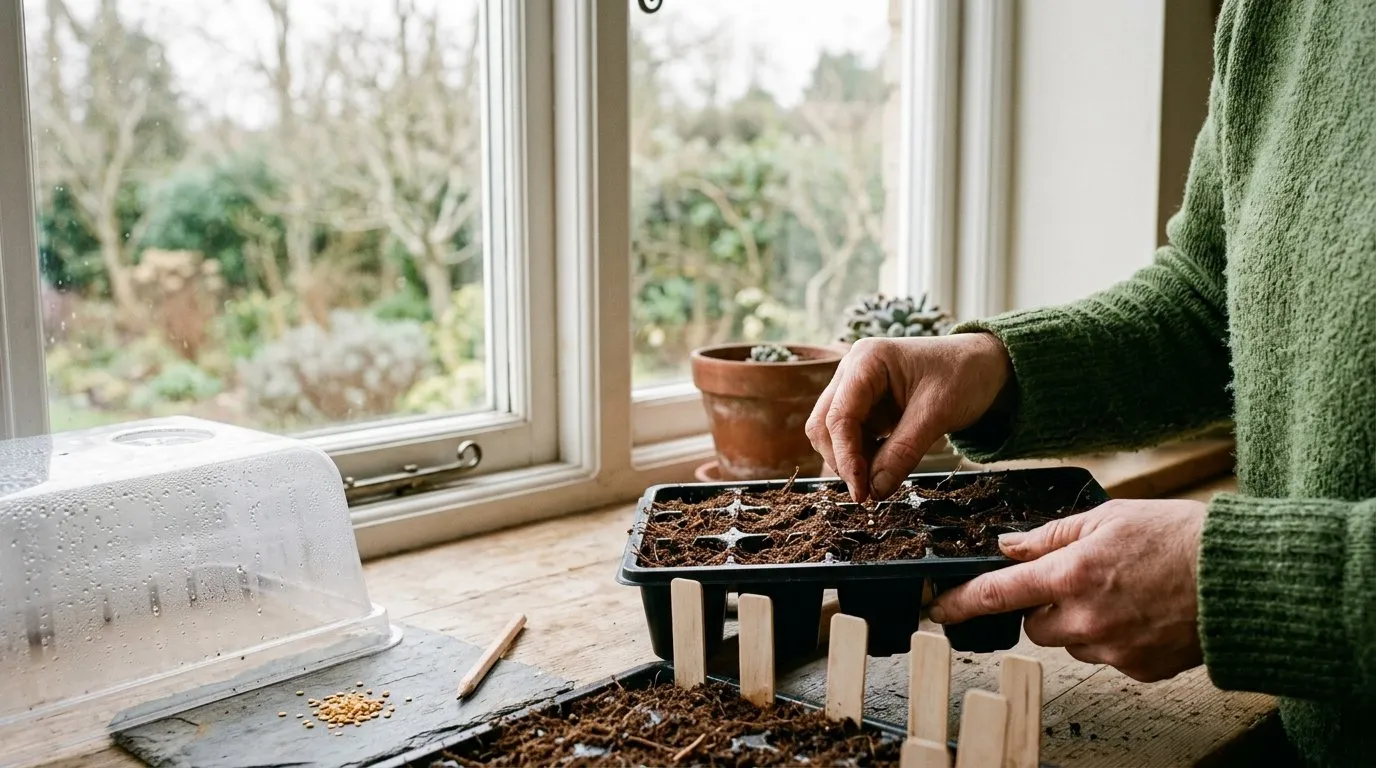
Start chilli seeds early. January to February is the ideal window for most UK growers. Chillies have a long growing season, and starting late is the most common reason for poor harvests. Our January planting guide covers the full range of indoor sowings you can make alongside chillies. See our full guide on how to sow seeds indoors for general seed-starting advice.
Equipment you need
- Seed trays or small pots (7cm)
- Heat mat or heated propagator set to 25-30C
- Seed compost (low nutrient, fine texture)
- Clear plastic lids or cling film
- Labels and waterproof pen
- Spray bottle for misting
Step-by-step sowing
- Fill 7cm pots or module trays with seed compost. Firm gently and water until evenly moist.
- Sow 2-3 seeds per pot, 5mm deep. Press down lightly and cover with a thin layer of vermiculite.
- Place on a heat mat set to 25-30C. Cover with a clear lid or cling film to retain humidity.
- Keep the compost moist but not waterlogged. Mist with a spray bottle rather than watering heavily.
- Seeds germinate in 14-21 days for most varieties. Superhot types take 28-35 days.
- Once seedlings emerge, remove the cover and keep on the heat mat for another week.
- Move to a bright windowsill or under grow lights once seedlings have their first true leaves.
Bottom heat is essential. Without it, germination rates drop below 50% and take 4-6 weeks. A basic heat mat costs around fifteen to twenty pounds and makes the difference between success and failure.
Warning: Do not sow chillies in cold compost on a windowsill without bottom heat. The soil temperature at window level in January is 10-15C, well below the 25C minimum needed for reliable germination.
Potting on and growing strong plants
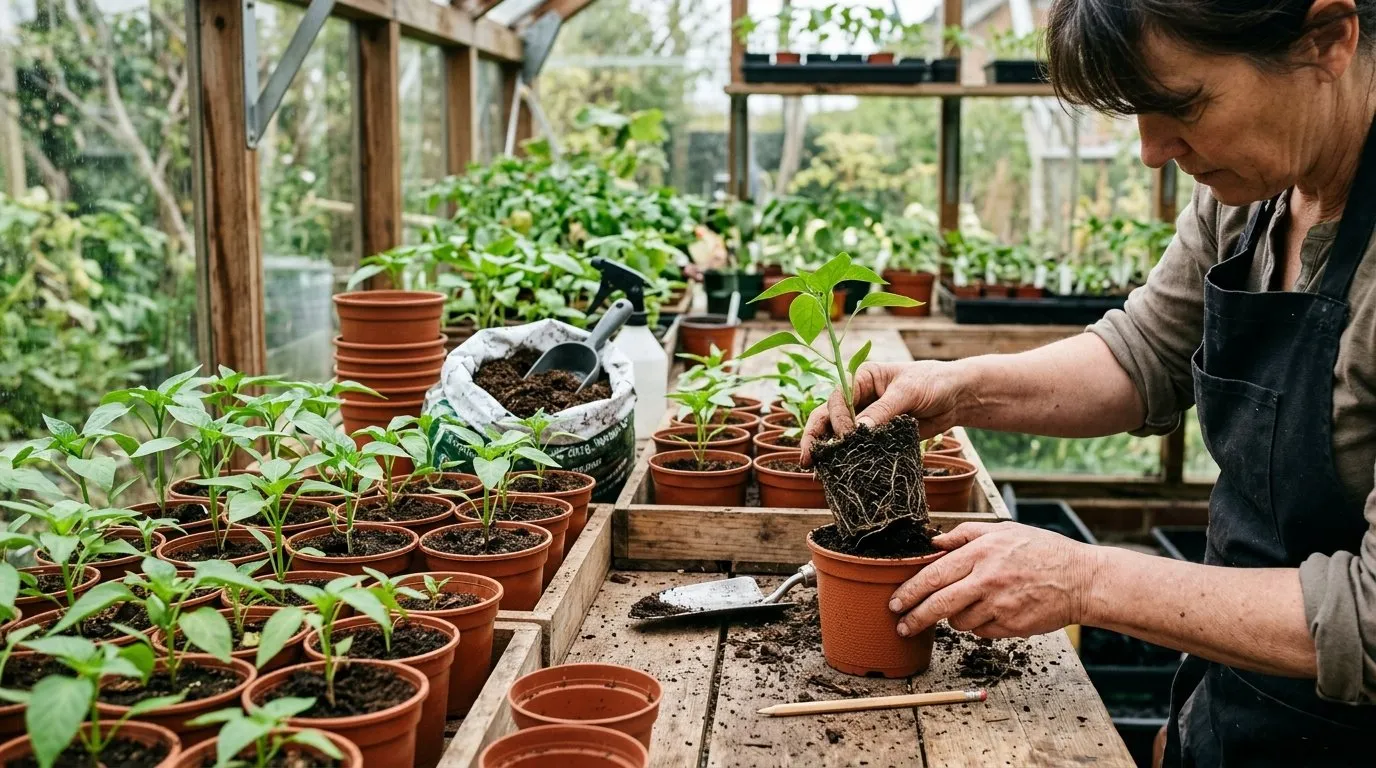
Pot on chilli seedlings when the roots fill their current container. You can see roots through the drainage holes or gently tip the plant out to check. This usually happens in two stages.
First potting on (March)
Move seedlings from 7cm pots into 9cm pots filled with multipurpose compost. Handle seedlings by the leaves, never the stem. Water well after potting on and return to a warm, bright position.
At this stage, pinch out the growing tip once the plant has 6-8 pairs of true leaves. This encourages bushier growth and more flowering stems, which means more chillies. Some growers skip this step. Pinched plants produce more fruit but it ripens slightly later.
Second potting on (April to May)
Move into the final container: 3-5 litre pots for compact varieties, 7-10 litre pots for larger plants like Habanero and Scotch Bonnet. Use good quality peat-free multipurpose compost mixed with 20% perlite for drainage.
If you are planting in a greenhouse border, space plants 45-60cm apart in rows. The soil should be enriched with well-rotted compost dug in the previous autumn. Greenhouse borders give plants more root space and require less frequent watering than pots.
Hardening off and growing outdoors
If you plan to grow chillies outdoors, harden off plants over 10-14 days before planting out. Start by placing pots outside in a sheltered spot for 2-3 hours per day. Gradually increase exposure until the plants spend full days and nights outside.
Only plant out after the last frost date, typically late May in southern England and early June in northern areas. Night temperatures must stay consistently above 12C. Cold nights below 10C halt growth and can damage flowers.
Best outdoor positions
- South-facing wall or fence - reflected heat makes a warm microclimate. The wall radiates stored heat at night, keeping temperatures 2-3C higher than open ground.
- Sheltered patio - away from wind, which dries out foliage and knocks flowers off.
- Raised beds - warm up faster than ground-level soil. Good drainage prevents waterlogging.
Outdoor growing works best for mild and medium varieties in southern England. Padron, Jalapeno, and Hungarian Hot Wax ripen reliably outdoors in warm summers. Hot and superhot varieties need the sustained warmth that only a greenhouse or conservatory provides.
Gardener’s tip: Black pots absorb more solar heat than terracotta or light-coloured containers. Use black plastic pots for outdoor chillies to raise the root zone temperature by 2-3C.
Growing chillies under cover
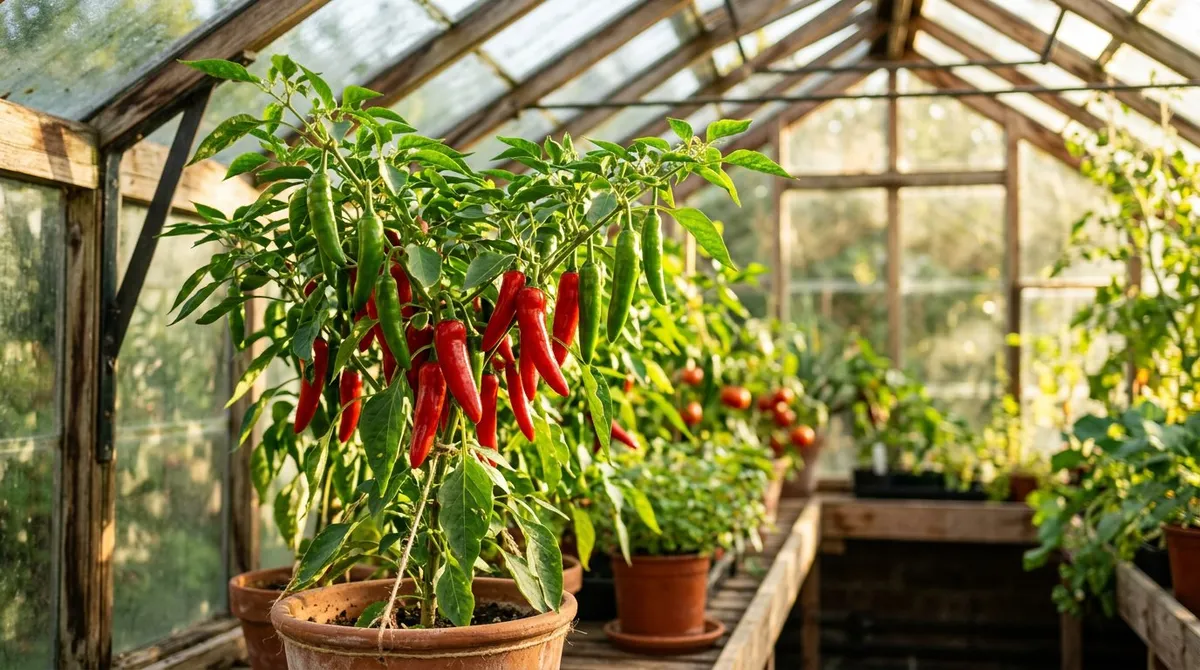
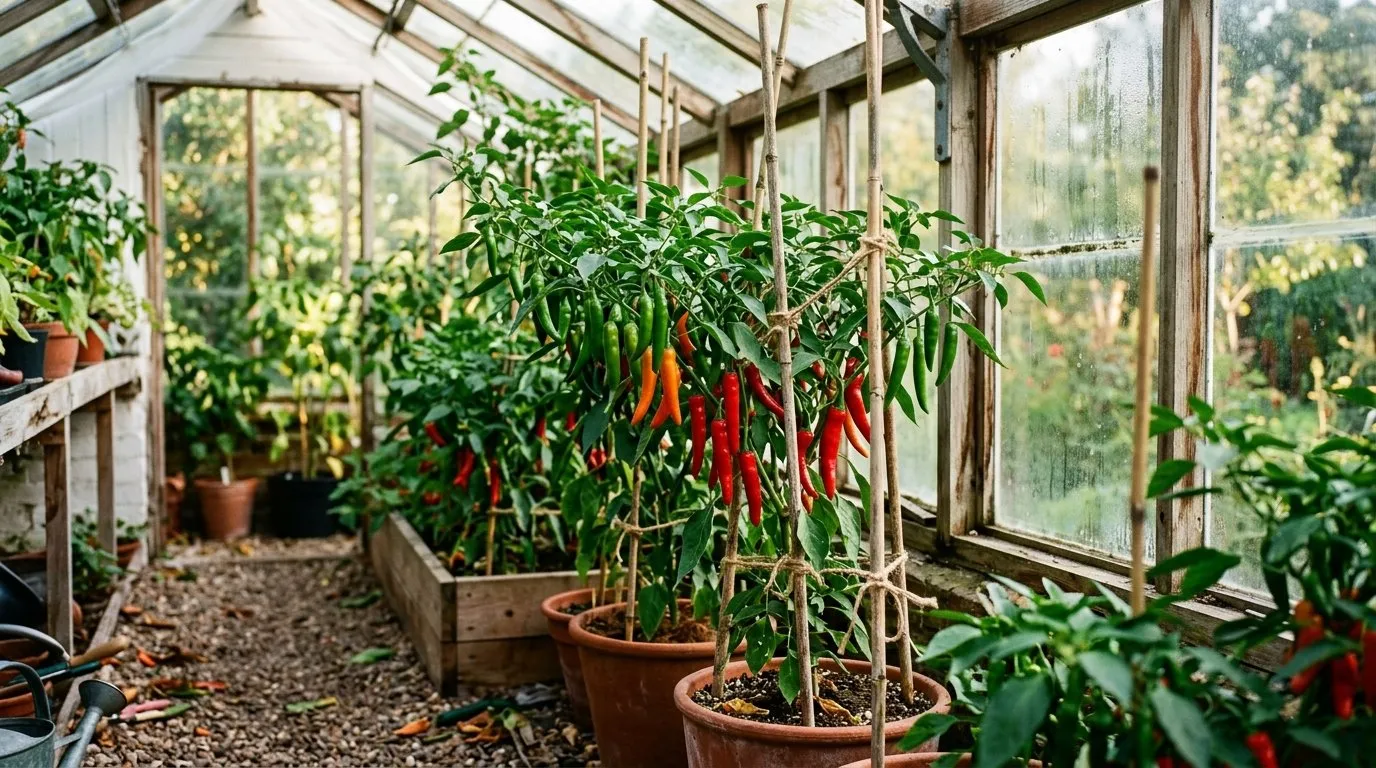
Greenhouses, polytunnels, and conservatories produce the best chilli crops in the UK. They provide higher daytime temperatures, protection from wind and rain, and extend the growing season by 4-6 weeks at each end. If you are starting a vegetable garden, a greenhouse opens up the full range of chilli varieties. Not sure whether a greenhouse is worth the investment? Our guide on whether you need a greenhouse weighs up the costs and benefits.
Greenhouse growing tips
- Ventilate on hot days to prevent temperatures exceeding 35C. Chillies stop setting fruit above this temperature.
- Water daily in summer. Potted plants in a greenhouse dry out fast.
- Mist foliage on hot mornings to raise humidity and help pollination.
- Open doors and vents to allow insects to pollinate flowers. Alternatively, tap flowering stems gently to shake pollen loose.
- Use fleece or a small heater on cold nights in early and late season to keep temperatures above 12C. Our greenhouse heating guide compares electric, paraffin, and tube heaters with running costs for different greenhouse sizes.
Windowsill growing
Compact varieties like Apache, Prairie Fire, and Basket of Fire grow well on a sunny south-facing windowsill. Use a pot at least 3 litres in volume. Turn the pot daily to prevent the plant leaning toward the light. Windowsill chillies produce smaller crops than greenhouse plants but are convenient for the kitchen.
Feeding chilli plants
Chilli plants are heavy feeders once they start flowering. The right feeding regime makes a significant difference to fruit production.
Before flowering
Feed fortnightly with a balanced liquid fertiliser (equal nitrogen, phosphorus, and potassium) from the first potting on. This promotes strong leaf and stem growth. Do not overfeed with nitrogen at this stage, or you get large leafy plants with few flowers.
After flowering starts
Switch to a high-potash feed such as tomato fertiliser (Tomorite or similar). Apply twice weekly at the dilution rate on the bottle. Potash promotes flower formation and fruit development. This is the same feeding approach used for growing tomatoes.
Signs of nutrient problems
| Symptom | Likely cause | Fix |
|---|---|---|
| Yellow lower leaves | Nitrogen deficiency | Apply balanced feed |
| Purple-tinged leaves | Phosphorus deficiency | Feed with balanced fertiliser, check temperature |
| Poor fruit set | Potassium deficiency | Switch to high-potash feed |
| Leaf tip burn | Overfeeding | Flush with plain water, reduce feed rate |
| Blossom drop | Irregular watering | Water consistently, never let pots dry out |
Watering
Water chillies regularly. Inconsistent watering causes blossom drop, where flowers fall off before setting fruit. In hot weather, greenhouse chillies in pots need watering once or twice daily. Check the compost surface with your finger. If the top 2cm is dry, water thoroughly until it drains from the base.
Chilli growing calendar month by month
For the full greenhouse sowing schedule covering all crops, see our best greenhouse plants month by month guide.
| Month | Task |
|---|---|
| January | Sow superhot and hot varieties indoors on a heat mat at 25-30C |
| February | Sow medium and mild varieties. Pot on January sowings to 9cm pots |
| March | First potting on for February sowings. Pinch growing tips at 6-8 leaf pairs |
| April | Pot on to final containers (3-10 litre). Start hardening off in mild spells |
| May | Plant out after last frost (late May, south). Move greenhouse plants to final positions |
| June | Water regularly. Begin high-potash feeding when flowers appear. Hand-pollinate indoors |
| July | First green chillies ready for picking. Continue feeding twice weekly |
| August | Main harvest of green and ripening fruit. Dry surplus Cayenne and Bird’s Eye |
| September | Final harvest of ripe fruit. Remove new flowers so energy goes to existing fruit |
| October | Pick all remaining fruit. Cut back overwintering plants to 15-20cm |
| November | Keep overwintered plants in a bright spot above 10C. Water sparingly |
| December | Rest period for overwintered plants. Order new seeds for January sowing |
How to ripen green chillies
All chillies start green and change colour as they ripen. The final colour depends on the variety: red, orange, yellow, chocolate, or purple. Fully ripe chillies have more heat and deeper flavour than green ones. Some varieties, like Jalapeno and Padron, are traditionally picked green, but they still taste better when allowed some colour development.
Speeding up ripening
- Move plants to the warmest spot available in September and October.
- Keep watering steady so plants remain healthy while the fruit colours.
- Remove all new flowers in September. The plant redirects energy to existing fruit.
- Place a ripe banana near the plant. Bananas release ethylene gas, which promotes ripening.
- Pick a few fruit to encourage the plant to ripen the remainder faster.
Ripening picked fruit indoors
If frost threatens and you have unripe green chillies, pick them all. Place on a sunny windowsill with a ripe banana. They ripen over 1-3 weeks depending on how mature they were when picked. Very small, undeveloped fruit will not ripen off the plant.
Why bottom heat helps: Chilli seed germinates most reliably in consistently warm compost. A heated propagator or thermostatic heat mat avoids the cold fluctuations common on a winter windowsill.
Overwintering chilli plants
Chilli plants are perennials in their native tropical climate. In the UK, healthy plants can be overwintered indoors and may resume growth earlier than newly sown plants. Results vary with variety, light, temperature and pest pressure.
How to overwinter
- Pick all remaining fruit in October, including green ones.
- Cut back stems to 15-20cm above soil level. Remove all leaves.
- Reduce watering to almost nothing. Water once every 3-4 weeks, just enough to stop the compost drying out completely.
- Keep in a bright spot above 10C. A cool spare bedroom, frost-free porch, or heated greenhouse works well.
- Watch for new growth in February or March. When fresh shoots appear, resume regular watering and start feeding again.
- Pot on into fresh compost in March. Remove the top few centimetres of old compost and replace with fresh multipurpose.
Not all varieties overwinter equally well. Habanero, Scotch Bonnet, and Rocoto overwinter reliably. Annual types like some Cayenne cultivars are better grown fresh each year.
Gardener’s tip: Label overwintered plants clearly. By March, a cut-back chilli stump looks like any other dead twig. Without a label, you risk throwing out a perfectly healthy dormant plant.
Growing chillies in containers
Container growing suits chillies perfectly. They have compact root systems and do not need deep soil. Most gardeners grow chillies exclusively in pots, even those with large gardens.
Container sizes
| Plant type | Minimum pot size | Ideal pot size |
|---|---|---|
| Compact (Apache, Prairie Fire) | 2 litres | 3 litres |
| Medium (Jalapeno, Cayenne) | 3 litres | 5 litres |
| Large (Habanero, Scotch Bonnet) | 5 litres | 7-10 litres |
| Superhot (Carolina Reaper) | 5 litres | 10 litres |
Use peat-free multipurpose compost mixed with 20% perlite for drainage. Chillies hate waterlogged roots. Ensure every pot has drainage holes. Stand pots on feet or gravel to prevent the base sitting in water.
Container placement
Place containers in the sunniest spot available. South-facing walls, patios, and greenhouse benches all work well. Group containers together to create a warmer microclimate. Dark-coloured pots absorb more heat. Water daily in summer and feed twice weekly with high-potash liquid feed from flowering onward.
Drying and preserving chillies
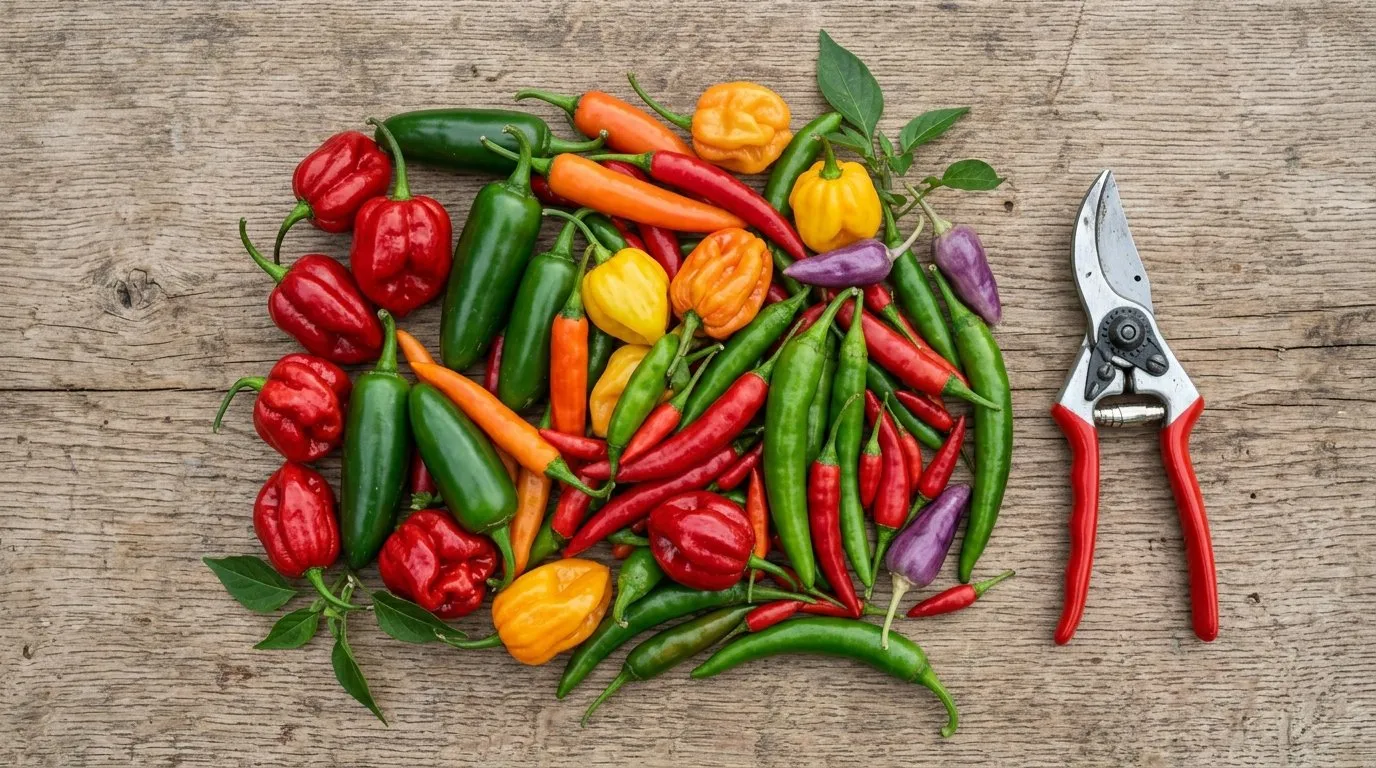
A successful chilli season produces far more fruit than you can eat fresh. Drying, freezing, and making sauces are the best ways to preserve the harvest.
Air drying
Thin-walled varieties like Cayenne, Bird’s Eye, and Thai chillies dry well in air. Thread a needle through the stems and hang in a warm, airy spot. They dry in 2-4 weeks. Fully dried chillies should snap cleanly when bent. Store in airtight jars away from light.
Thick-walled varieties like Jalapeno and Habanero rot before they dry in air. Use a dehydrator or oven for these types.
Oven drying
Slice chillies in half lengthways. Lay cut-side down on a baking tray lined with parchment. Dry at 50-60C for 4-8 hours with the oven door slightly open. Check every hour. They are done when brittle and papery.
Freezing
Freezing is the easiest method. Wash and dry chillies, then freeze whole in labelled bags. They keep for 12 months. Frozen chillies grate easily from frozen, which is useful for adding measured heat to dishes. No blanching is needed.
Making chilli flakes
Dry chillies completely using any method above. Crush in a pestle and mortar or blitz in a spice grinder. Wear gloves when handling dried superhot varieties. Store in small jars. Homemade chilli flakes are far more flavourful than shop-bought versions.
Warning: Always wear gloves when handling hot chilli varieties, especially Habanero and above. Capsaicin oil transfers to your skin and causes painful burning. Avoid touching your face or eyes after handling chillies.
Common mistakes when growing chillies
Sowing too late
Many UK growers sow chillies in March or April, the same time as tomatoes. Chillies need a longer growing season. Sow in January or February to give plants enough time to flower and ripen fruit before autumn. Late-sown plants produce green fruit that never ripens.
No bottom heat for germination
Chilli seeds need 25-30C to germinate. Room temperature (18-20C) is too cold. Without a heat mat, germination rates drop below 50% and take 4-6 weeks instead of 2-3. A heat mat is not optional for chillies. It is essential equipment.
Overwatering seedlings
Young chilli seedlings rot easily in waterlogged compost. Let the surface dry slightly between waterings. Mist rather than pour. Good drainage in the compost prevents the roots sitting in standing water.
Too much nitrogen fertiliser
Nitrogen promotes leafy growth at the expense of flowers. A chilli plant fed too much nitrogen grows tall and bushy with dark green leaves but produces very few flowers and fruit. Switch to high-potash feed as soon as flowering starts.
Leaving fruit on too long
Leaving all fruit to ripen red reduces overall yield. The plant puts energy into ripening existing fruit rather than producing new flowers. Pick some chillies green to encourage continuous production. Balance your harvest between green and ripe fruit.
Now you’ve mastered chilli peppers, read our guide on growing tomatoes in the UK, they share the same growing conditions and benefit from the same high-potash feeding approach. If you grow chillies for Indian cooking, our grow Indian and Eastern spices in the UK guide covers Pusa Jwala, Kashmiri, and Bhut Jolokia alongside turmeric, ginger, curry leaf, and the rest of the curry cabinet.
Frequently asked questions
When should I sow chilli seeds in the UK?
Sow indoors from mid-January to late February. Starting early gives plants enough time to flower and ripen before autumn temperatures drop. Use a heated propagator or thermostatic heat mat for steady warmth.
Can I grow chillies outdoors in the UK?
Mild varieties grow outdoors in sheltered, sunny spots. Padron, Jalapeno, and Hungarian Hot Wax ripen reliably outdoors in southern England. Northern growers and anyone growing superhot varieties should use a greenhouse, polytunnel, or sunny conservatory.
How long do chilli seeds take to germinate?
Most chilli seeds germinate in 14-21 days at 25-30C. Superhot varieties like Carolina Reaper and Scotch Bonnet can take 28-35 days. Without bottom heat, germination takes 4-6 weeks and rates drop significantly.
Why are my chilli plants not producing fruit?
Poor fruit set is usually caused by low temperatures. Chillies need consistent warmth above 15C to set fruit. Other causes include overfeeding with nitrogen, lack of pollination, and insufficient light. Tap flowering stems gently to release pollen indoors.
How do I make chillies ripen faster?
Move plants to the warmest bright position available. Remove late flowers in September, keep plants evenly watered, and harvest mature fruit as it colours.
Our team produces practical UK gardening guidance from source research, contributor records and established horticultural practice. Editorial standards are overseen by Matt W.