Key takeaways
- Chillies, sweet peppers and aubergines need sowing now at 21-25°C to ripen in a UK summer
- Onions from seed, leeks and sweet peas all do well from a January sowing under cover
- Plant bare-root fruit trees and roses on days when the ground isn't frozen or sodden
- You can still plant garlic in January if the soil is workable
- Start chitting seed potatoes from late January in a cool, bright spot
January is when the new sowing year starts, even with frost on the ground. The crops that need the longest season, such as chillies, sweet peppers and aubergines, go in first. Give them a warm start indoors now and they’ll have time to ripen before autumn.
Outside, bare-root planting carries on from December whenever the soil allows. For the non-planting jobs, like bird feeding, pruning and greenhouse checks, see what to do in the garden in January. This guide is all about what to sow and plant.
What to sow indoors in January
January sowings are for slow growers that need months before they flower or fruit. You’ll need a bright windowsill and, for the heat lovers, a heated propagator.
Chillies and sweet peppers
Sow chillies and sweet peppers as early in January as you can. They need a long, warm season, and late sowings often fail to ripen.
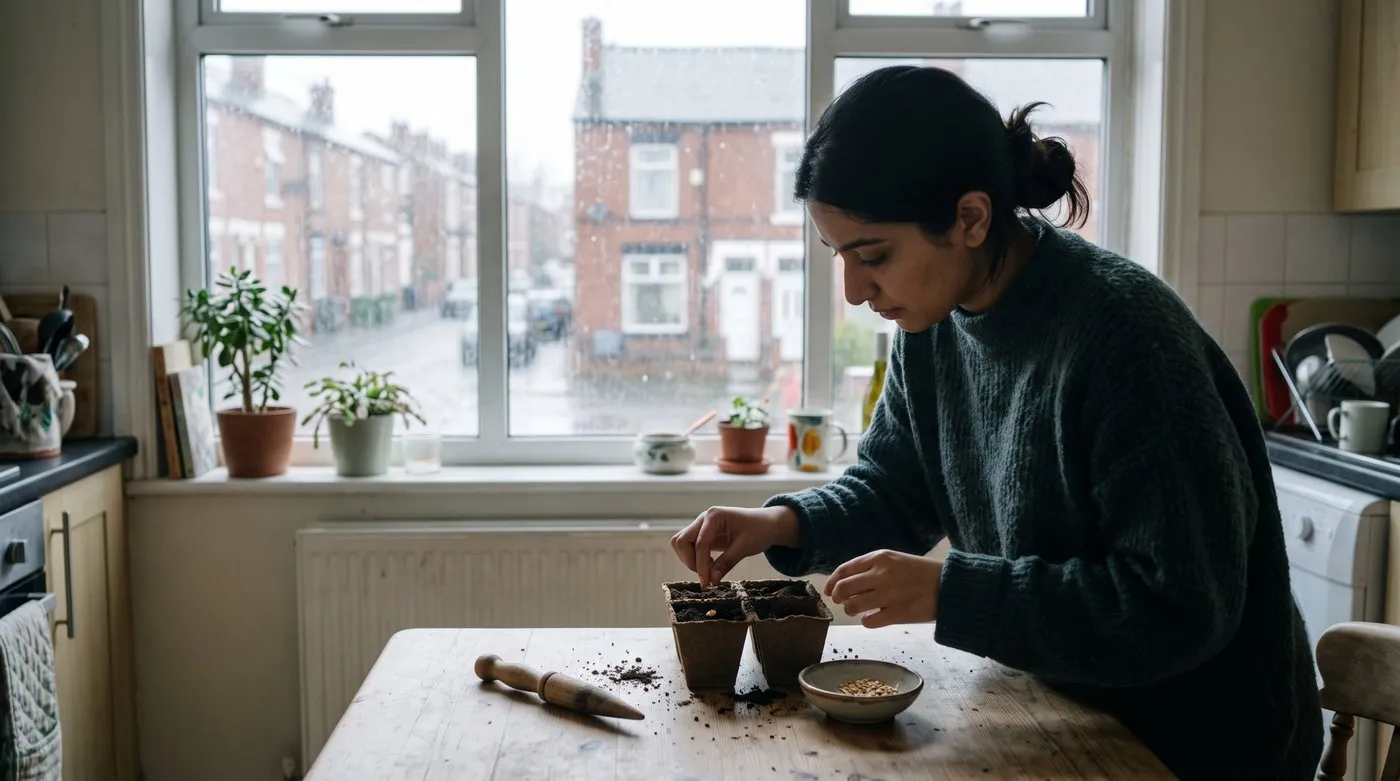
Two seeds to a small pot, about 1cm deep, is plenty. Keep the weaker seedling out once both come up.
Sow two seeds per small pot, about 1cm deep, and keep them at 21-25°C. Most come up in one to three weeks, with very hot chillies taking longest. Pull out the weaker seedling once both are up. Move seedlings to the brightest spot you have, or under a grow light, as soon as they appear. The guide to growing chilli peppers follows them right through to picking.
Aubergines
Aubergines are just as slow and just as fond of warmth. Sow from mid-January at 21-25°C, 1cm deep in small pots. Pot them on when the first true leaves appear. In most of the UK they crop best in a greenhouse or a sunny porch.
Gardener’s tip: A windowsill can drop to single figures at night. A heated propagator with a thermostat keeps chilli and aubergine seed at a steady warmth, so it doesn’t sit and sulk for weeks.
Onions from seed and leeks
Onions from seed need a long season to make big bulbs. Sow thinly in trays at about 15°C, 1cm deep. Or sow four or five seeds per module and plant each clump out whole in spring for a crop of medium bulbs. Show growers sow their giant onions now too, and the guide to growing onions covers both routes.
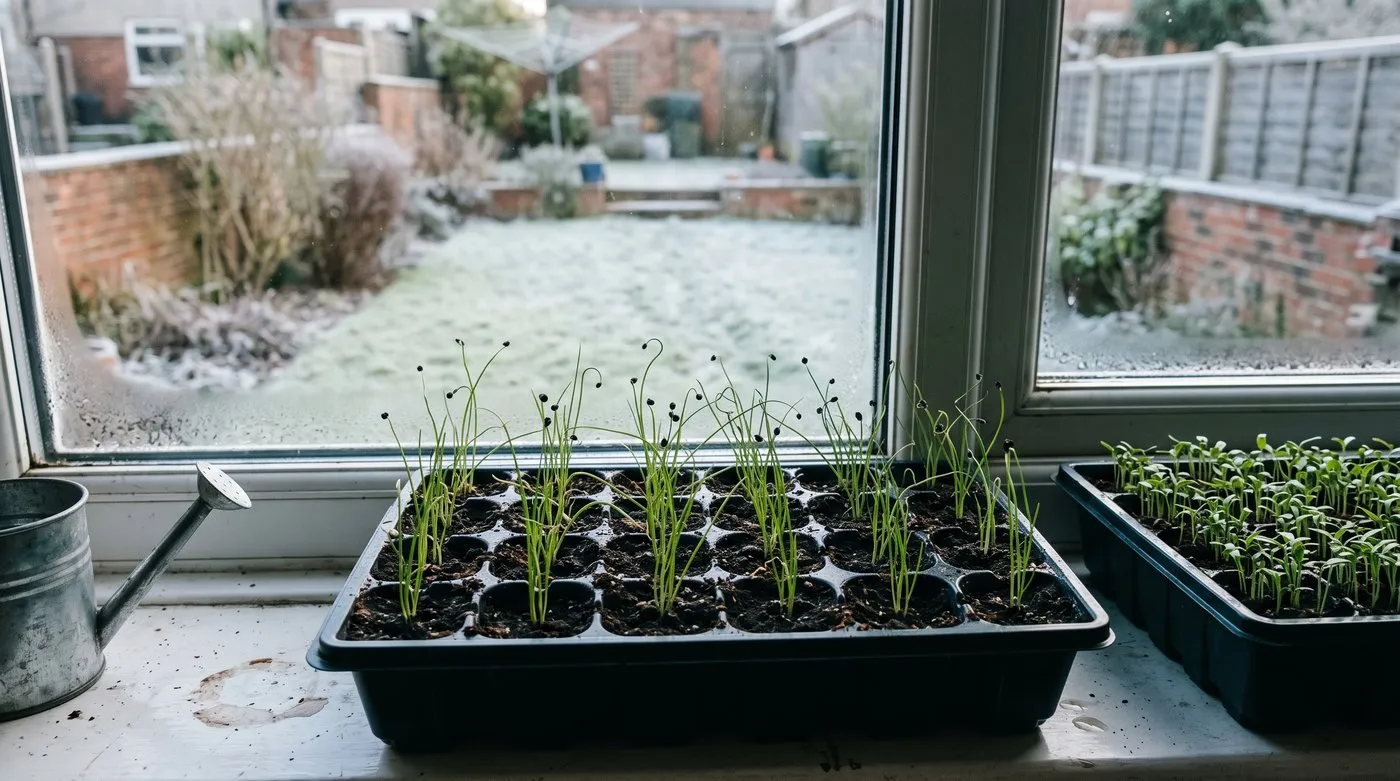
Four or five onion seeds per module grow into a clump you plant out whole. It’s an easy way to get lots of medium bulbs.
Leeks can be sown in trays at the same time for an early crop of long, thick stems. Most gardeners sow leeks later, in March or April, for autumn and winter use.
Flowers to sow indoors in January
A handful of flowers need a January start to bloom by early summer. They all want gentle warmth and good light.
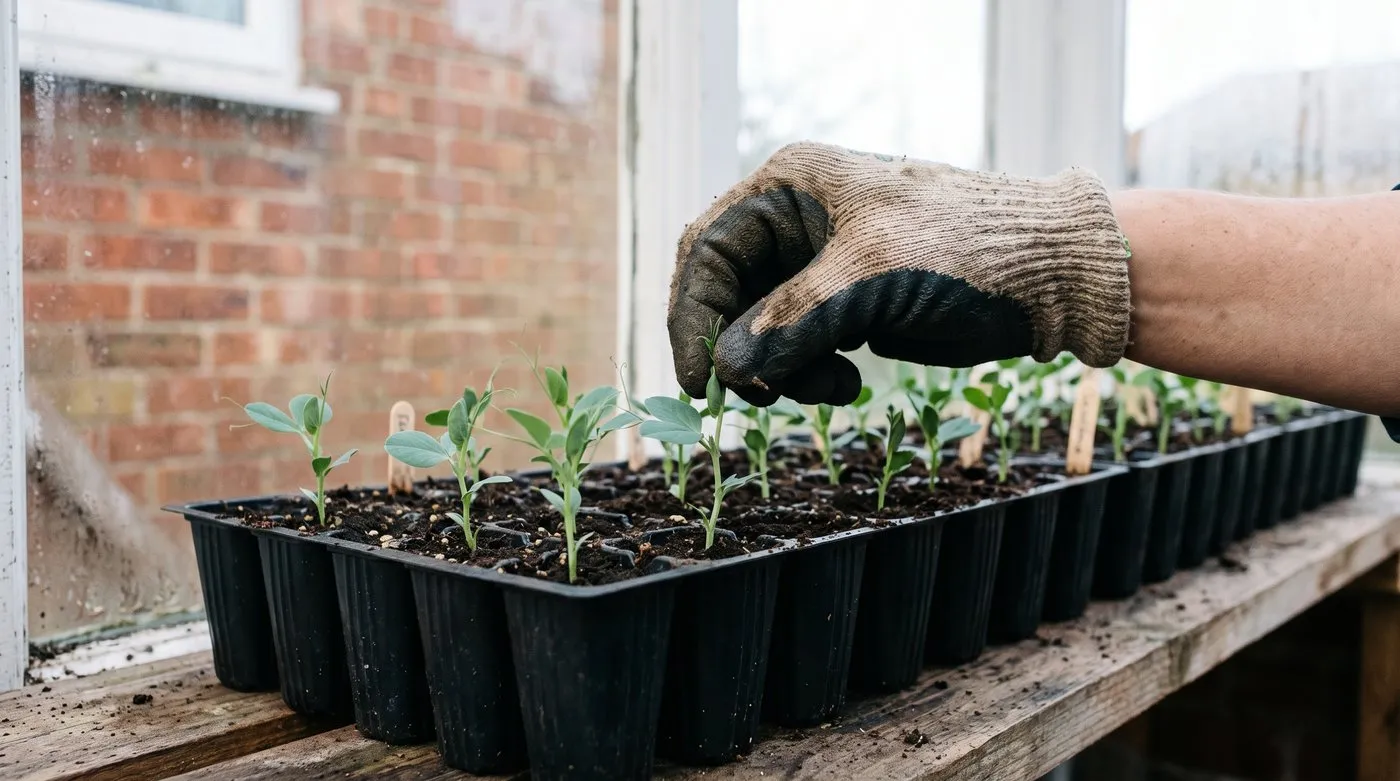
Pinch out the tip once there are two or three pairs of leaves. The plant branches out and gives you more flowers.
Sweet peas sown now flower earlier than spring sowings. Sow one or two seeds per root trainer or deep pot, 2cm deep, and keep them cool once they’re up. Pinch out the tip when the plants have two or three pairs of leaves for bushier growth. See how to grow sweet peas for planting out and picking.
Begonias have seed as fine as dust. Mix it with a pinch of dry sand, scatter it on damp seed compost and don’t cover it. Keep it at about 21°C under a clear lid.
Lobelia and antirrhinums (snapdragons) are slow starters too. Surface sow lobelia and keep it warm. Antirrhinums need pricking out early so they don’t get crowded.
Bedding pelargoniums from seed need a warm start in January or February to flower by summer. These are the tender “geraniums” sold for pots and window boxes.
What to plant outdoors in January
Outdoor planting in January means dormant plants: bare-root trees, roses, hedging, rhubarb and garlic. Choose a day when the soil isn’t frozen and doesn’t stick to your boots.
Bare-root fruit trees and roses
Plant bare-root fruit trees with the point where the trunk flares into the roots at soil level. Dig a hole wide enough to spread the roots, backfill with the soil you dug out and firm with your heel. Don’t add compost to the hole. Stake the tree on the windward side and water it in well. A layer of compost on top of the soil, kept clear of the trunk, helps hold moisture.
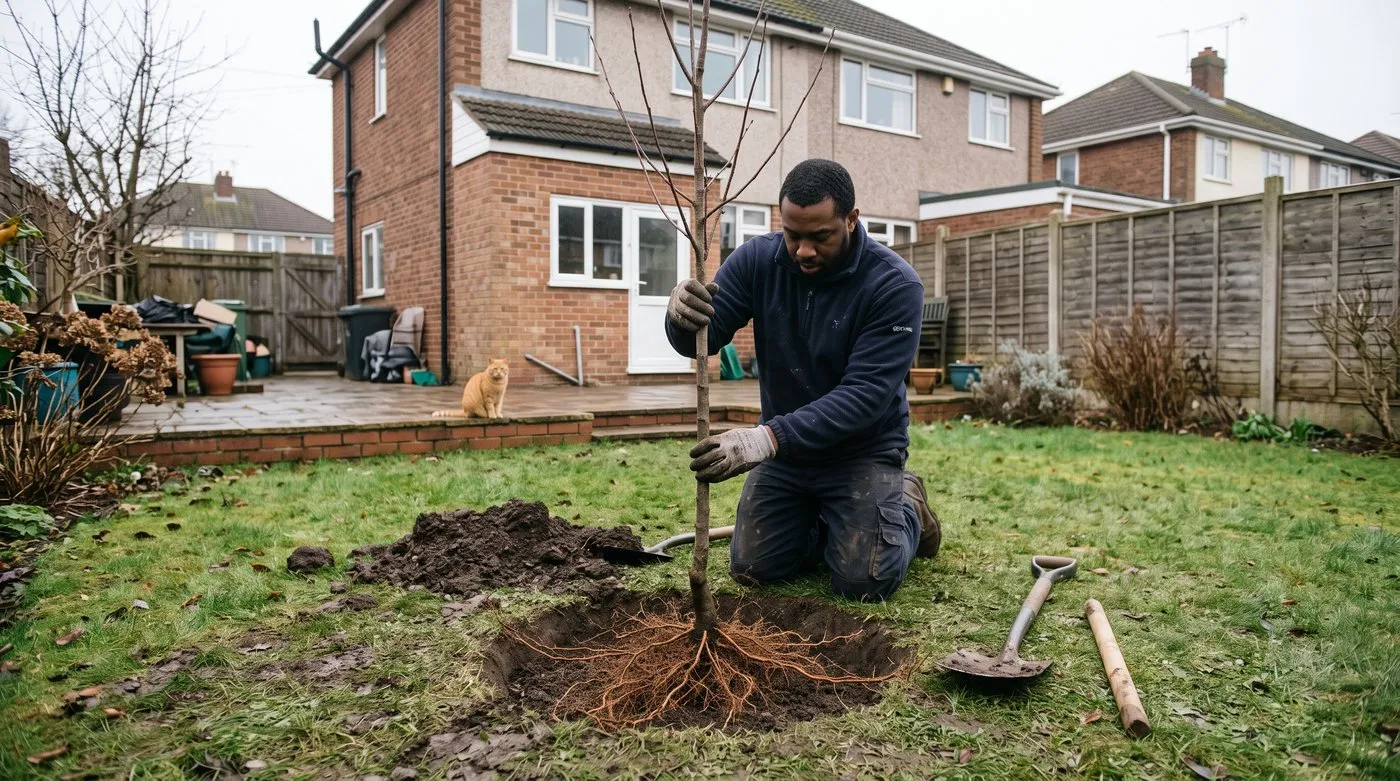
Spread the roots out flat in a wide, shallow hole. The flare at the base of the trunk should end up at soil level.
Plant bare-root roses with the graft union, the knobbly bump where stems meet roots, at soil level. The guide to planting bare-root trees goes through each step.
| Fruit tree | Type | Pollination | Usually picked |
|---|---|---|---|
| Bramley’s Seedling | Cooking apple | Needs two partner apples | October |
| Cox’s Orange Pippin | Eating apple | Needs a partner apple | Late September to October |
| Conference | Pear | Partly self-fertile | September to October |
| Victoria | Plum | Self-fertile | Late August to September |
| Stella | Cherry | Self-fertile | July |
Garlic and rhubarb crowns
You can still plant garlic in January if the soil is workable. Push cloves in pointed end up, tips 2-3cm below the surface and 15cm apart. Solent Wight is a reliable choice. On heavy, wet soil, start the cloves in modules in a cold frame and plant out later.
New rhubarb crowns can go in now too. Plant them with the buds just at the surface in rich, well-drained soil.
Chitting seed potatoes from late January
Chitting means letting seed potatoes grow short shoots before planting. It gives early varieties a head start.
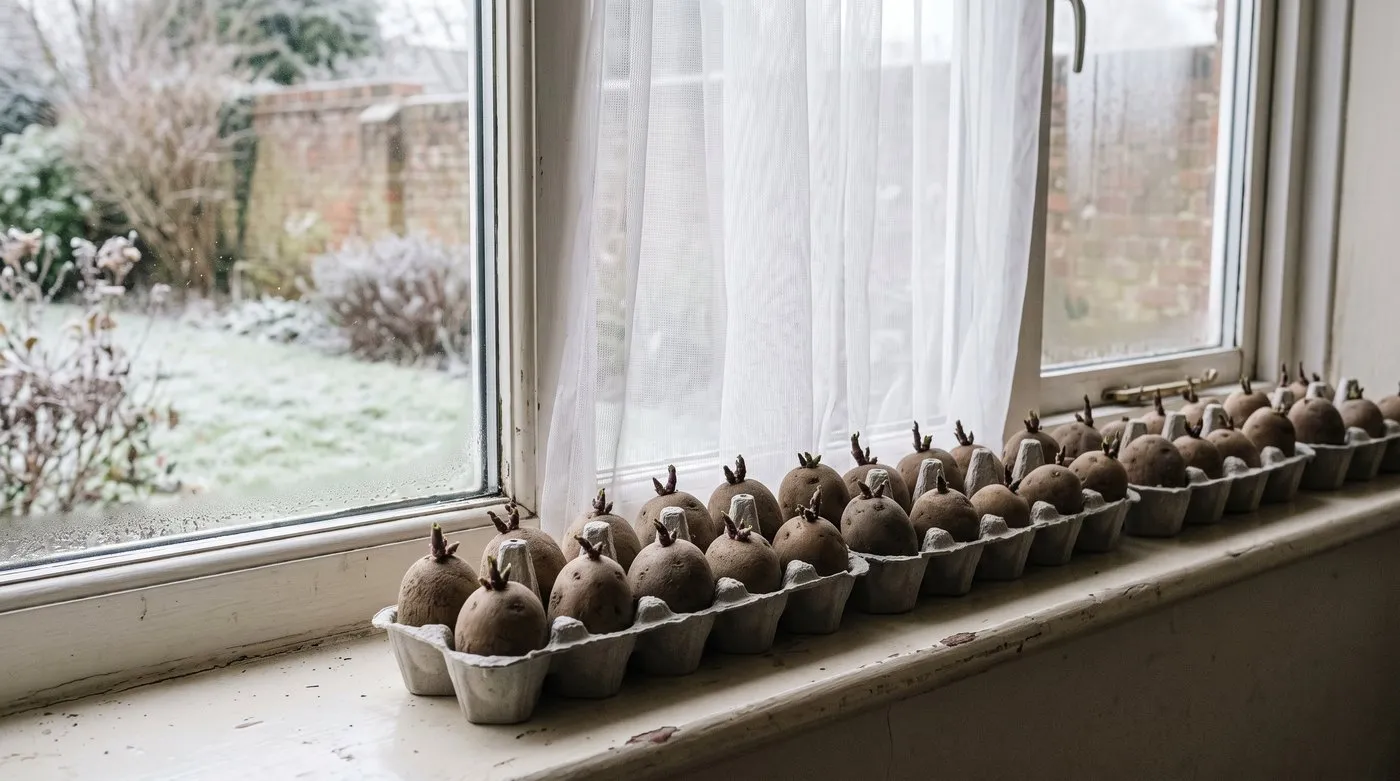
Short, stubby shoots like these are just right. Long pale ones mean the room is too warm or too dark.
From late January, stand the tubers in egg boxes or seed trays with the end with the most eyes facing up. Keep them in a cool, bright, frost-free room, not a dark cupboard. You want stubby green or purple shoots about 2cm long by planting time in March or April. Long, pale shoots mean the room is too warm or too dark.
What to grow on a January windowsill
Fresh leaves are hard to come by in January, but a windowsill can still give you something to eat. Microgreens such as pea shoots, radish, mustard and rocket are ready to snip in one to three weeks.
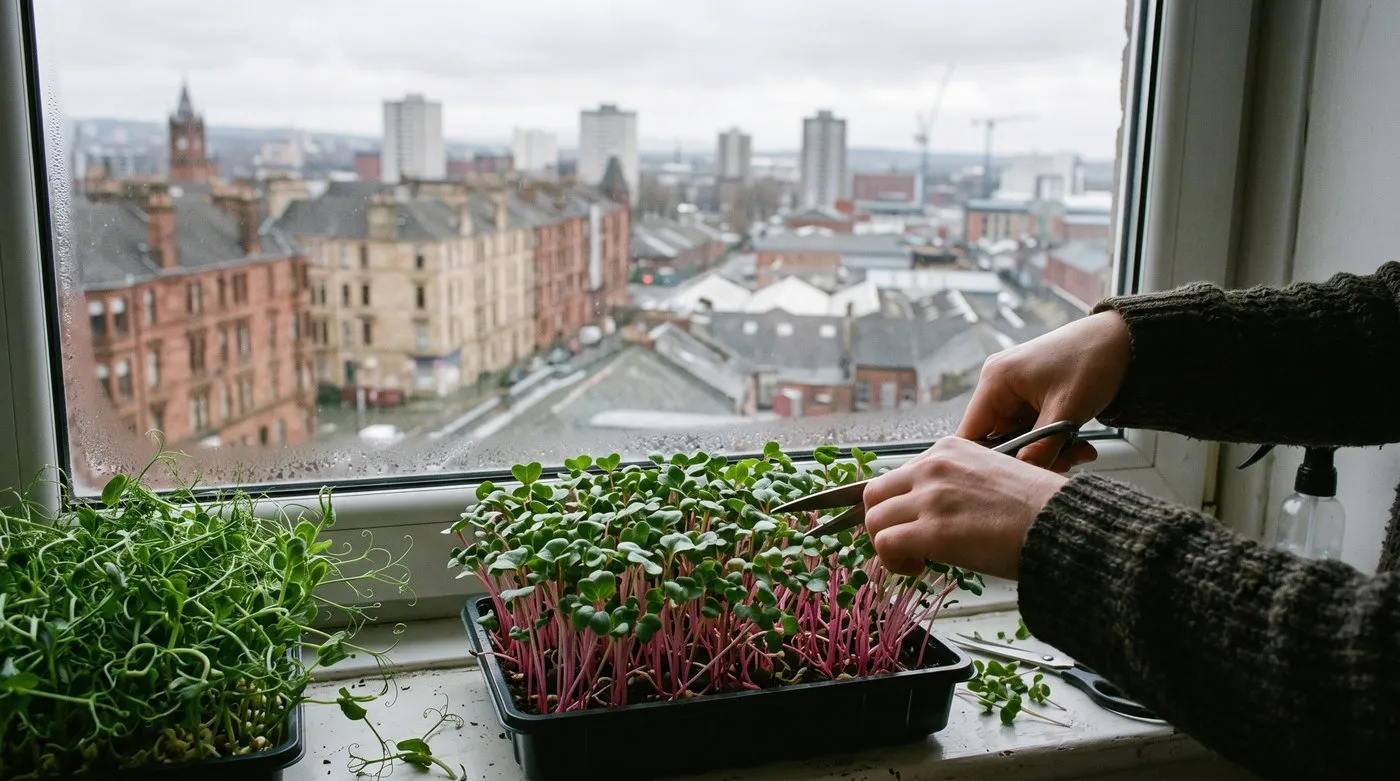
Microgreens are ready to snip in one to three weeks. It’s the quickest fresh crop you can grow in January.
Sow them thickly on a shallow tray of damp compost and keep it moist. Cut with scissors once the first leaves open. Pea shoots often regrow for a second cut if you snip above the lowest leaf.
January sowing and planting at a glance
| When | Sow indoors | Plant outdoors |
|---|---|---|
| Early January | Chillies, sweet peppers, sweet peas | Bare-root fruit trees and roses |
| Mid January | Aubergines, begonias, onions from seed | Hedging, garlic |
| Late January | Lobelia, antirrhinums, pelargoniums, leeks | Rhubarb crowns, last garlic |
| All month | Microgreens on the windowsill | Heel in plants when the ground is frozen |
Common January sowing mistakes
Sowing too much too soon. Only the slow crops need sowing now. Tomatoes, cucumbers and most flowers grow leggy if started in January. Wait until late February or March for those.
Not enough light. Seedlings stretch towards a dull window and flop over. Turn trays daily, or use a grow light. The guide to grow lights for seed starting explains what to buy.
Overwatering in the cold. Wet, cold compost rots seed and seedlings. Water from below and let the surface dry slightly between waterings.
Planting into frozen ground. Heel bare-root plants into a spare patch of soil and wait for a mild spell.
Chitting in the dark. Potatoes in a dark cupboard grow long, weak shoots that snap off. Give them light.
Frequently asked questions
Can I sow seeds in January in the UK?
Yes, but only indoors with warmth. Chillies, sweet peppers and aubergines need the earliest start of any crop. Onions from seed, leeks, sweet peas, begonias and lobelia also do well from a January sowing.
What vegetables can I plant outside in January?
Mainly garlic, rhubarb crowns and bare-root fruit trees. Plant them on days when the soil isn’t frozen or waterlogged. Seed sowing outdoors mostly waits until March or April, once the soil warms up.
Is it too early to start chitting potatoes in January?
No, late January is a good time to start. Stand seed potatoes in egg boxes with the end that has the most eyes facing up. Keep them in a cool, bright, frost-free room. Short, sturdy green shoots are ready for planting in March or April.
What flowers can I sow in January?
Slow growers such as sweet peas, begonias, lobelia and antirrhinums. Sow them indoors in gentle warmth. Bedding pelargoniums from seed also need a January or February start to flower by early summer.
Do I need a heated propagator for January sowing?
For chillies, peppers and aubergines, it helps a lot. They want 21-25°C to germinate, and a windowsill drops much colder at night. Hardier sowings such as sweet peas and onions manage fine in a cool, bright room.
Can I plant bare-root trees in January?
Yes, January is a great month for it. Fruit trees, roses and hedging settle in well while dormant. Plant when the soil is workable, stake trees firmly and water them in.
Once your first seeds are up, move on to what to plant in February as the days lengthen. If you missed last month, December’s planting guide covers bare-root planting in more depth, and there’s plenty more in our growing section.
Our team produces practical UK gardening guidance from source research, contributor records and established horticultural practice. Editorial standards are overseen by Matt W.


