Key takeaways
- Windowsill light in a UK winter is too weak, so seedlings stretch and flop
- A full-spectrum LED panel is the easiest, cheapest-to-run choice
- Hang the light 15 to 30cm above the seedlings and raise it as they grow
- Run lights for 14 to 16 hours a day on a timer, and give them a proper dark spell
- Keep the room warm, around 18 to 22C, as light alone isn't enough
- Harden seedlings off for a week or two before they go outside
Grow lights let UK gardeners start seeds in late winter and still get sturdy, healthy seedlings. In January and February the days are short and dull, and even a bright windowsill doesn’t give seedlings enough light. A simple LED light on a timer sorts that out.
Poor light is the main reason young plants stretch and flop, which is exactly what causes leggy seedlings.
Why do UK growers need grow lights for seed starting?
British daylight from January to March is too short and too weak for healthy seedlings. Seedlings sown indoors then tend to grow thin and stretched, leaning towards the window. They then flop over when you plant them out.
It’s the main reason windowsill tomatoes struggle. The plant puts all its effort into reaching for light, rather than building a strong stem.
A grow light gives seedlings steady, bright light right where they need it. They grow short, thick stems and dark green leaves. Raising tomatoes from seed under lights is also cheaper than buying lots of young plants in May.
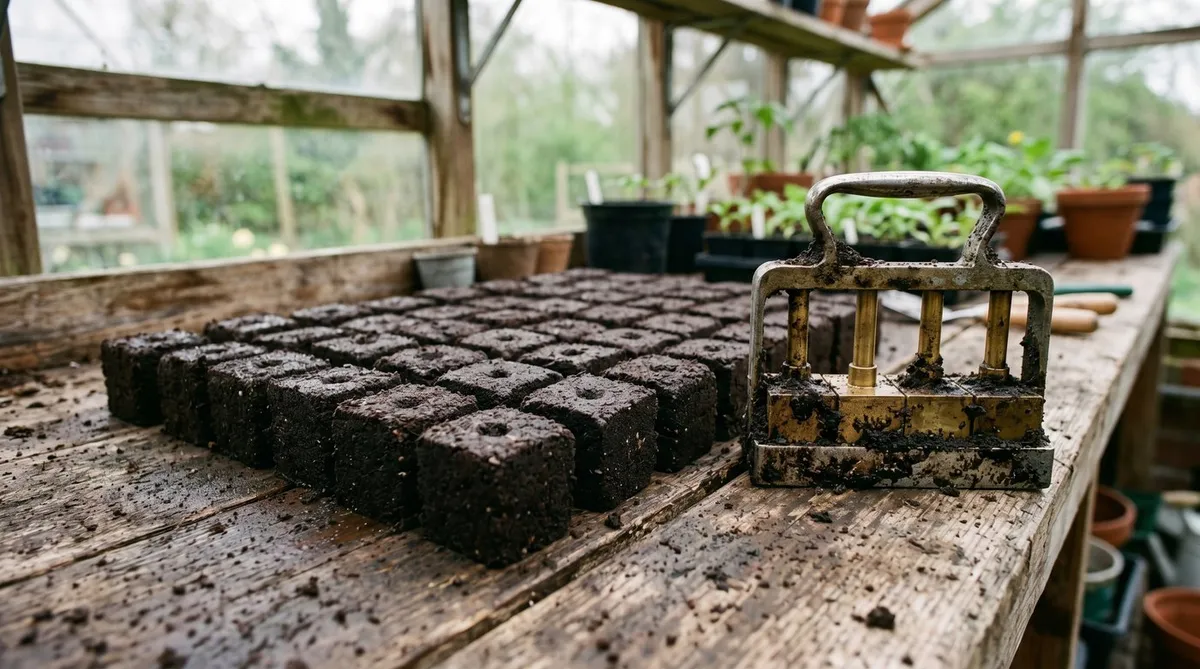
Shelf space soon runs out. Seed snails are a clever way to fit more seedlings under each light.
 Tomato and pepper seedlings growing their first true leaves under an LED panel. The purple-pink glow is normal for many grow lights.
What type of grow light is best for seed starting?
A full-spectrum LED panel is the best choice for most UK gardeners. It runs cool, uses little electricity and lasts for years. Here’s how the main types compare.
| Light | Light for seedlings | Heat | Running cost | Good for |
|---|---|---|---|---|
| Full-spectrum LED panel | Strong | Low | Low | Your main light |
| T5 fluorescent tube | Fair | Medium | Medium | Fine if you already own one |
| Compact fluorescent bulb | Weak | Medium | Medium | A short-term top-up only |
LEDs give the most useful light for the electricity they use. Because they stay cool, you can hang them close to the seedlings without scorching them.
T5 fluorescent tubes still do a decent job if you already have them, especially for lettuce, cabbages and herbs. For heat-lovers like chilli peppers, tomatoes and aubergines, which spend a long time indoors, an LED is worth buying.
How to set up grow lights for seed starting
Setting up grow lights is a quick job. You need a light, a timer, somewhere to put the trays, and a way to raise the light.
Step 1: Pick your shelving. A simple metal shelving unit works well, with a light under each shelf. Or fix a light under an existing shelf, a cupboard or a table.
Step 2: Hang the lights. Most panels come with hooks or adjustable chains. Start about 20cm above where the seed tray surface will sit. Adjustable chains make it easy to raise the light as seedlings grow.
Step 3: Add a timer. A cheap plug-in timer from any hardware shop is all you need. Set it for 16 hours on and 8 hours off, for example 6am to 10pm.
Step 4: Place your trays. Put the trays right under the light, centred. If the edges look weaker than the middle, turn the trays round every couple of days so they grow evenly.
Once seedlings outgrow the lights, a cold frame outside is the perfect halfway house for hardening off.
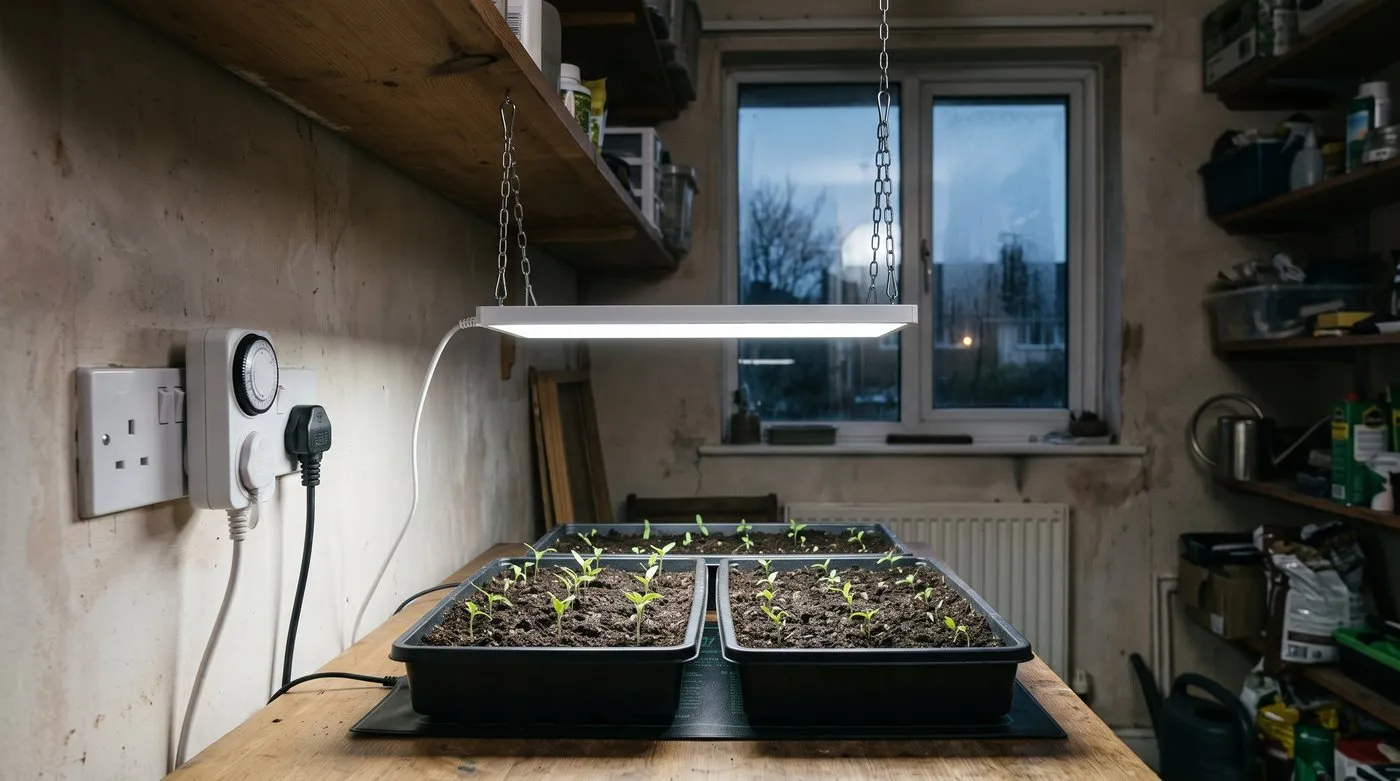
Start the light about 20cm above the trays and raise it on its chains as seedlings grow. A cheap plug-in timer set for 16 hours on and 8 off does the rest.
Understanding light spectrum for seedlings
Plants use different colours of light for different jobs. You don’t need to know the science, but it explains why grow lights often look purple or pink.
Blue light keeps seedlings short and sturdy, with good leaves. Without enough of it, stems stretch.
Red light powers growth and helps roots develop.
Far-red light tells a plant it’s in shade, so it stretches upwards. Cheap bulbs with lots of it can make seedlings leggy.
Green and white light help too, and make the panel easier on your eyes.
For most UK vegetables and herbs, just buy a full-spectrum LED panel. The maker has already got the mix right for you.
How to measure if your grow light is strong enough
The easiest test is to look at your seedlings. Healthy ones have short, thick stems, dark green leaves and stand up straight.
- Stems long, thin and leaning: not enough light. Lower the light or add another panel.
- Top leaves pale, bleached or curling: too much. Raise the light a little.
- Seedlings at the edges smaller than in the middle: the light doesn’t cover the whole tray. Turn the tray round or move it closer to the centre.
If you like gadgets, a free light meter app on your phone gives a rough idea. Hold the phone at seedling height and compare the middle of the tray with the corners. Use it to keep things even rather than chasing exact figures.
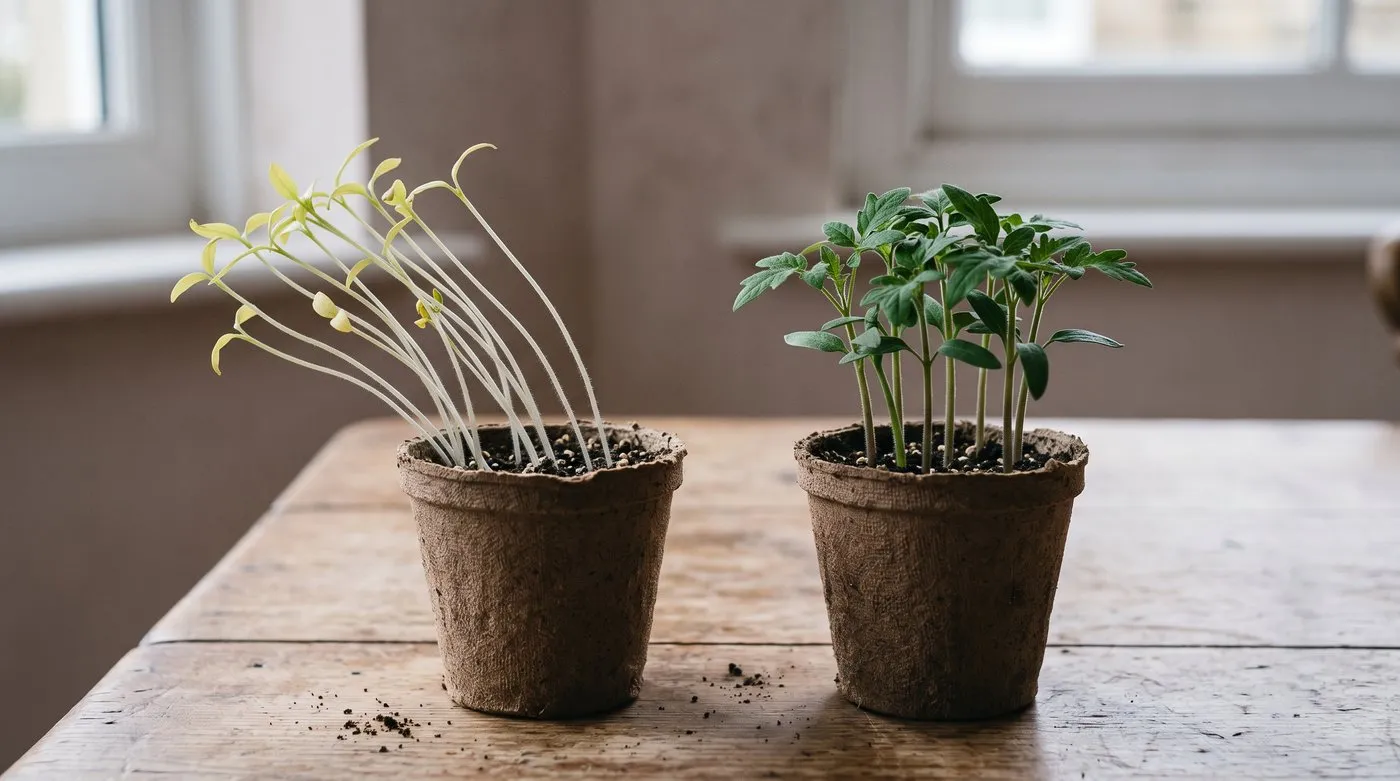
Healthy seedlings have short, thick stems and dark leaves. Long, thin, leaning stems mean not enough light, so lower the panel or add another.
Seed starting schedule under grow lights for UK growers
Grow lights let you sow earlier than you could on a windowsill. These dates suit the Midlands and southern England. Further north, sow a week or two later.
| When to sow | Crop | Warmth to germinate | Notes |
|---|---|---|---|
| Mid-January | Aubergine | Warm, 22-25C | Needs a heated propagator |
| Late January | Pepper, chilli | Warm, 22-25C | Slow to come up, so be patient |
| February | Tomato | 18-22C | The easiest. Sow in modules |
| Mid-February | Basil, coriander | 18-20C | Sow straight into small pots |
| Late February | Lettuce, salad leaves | Cool, 12-18C | Happy in a cooler room |
| April | Courgette, squash | 20-22C | Fast growers. Don’t start too early |
| April | Sweetcorn | 15-20C | Hates root disturbance, so use deep modules |
| March | Parsley, chives | 12-18C | Parsley is slow. Don’t give up too soon |
The big mistake is sowing too early. Tomatoes sown in December soon outgrow their pots and get weak and leggy before it’s safe to plant out. Work back from your last frost date, which is usually mid to late May in much of England.
A heated propagator plus a grow light is the most reliable combination for heat-lovers. Our greenhouse growing calendar picks up the story once plants move on.
 A shelving unit with an LED strip under each shelf. Freshly sown trays at the bottom, bigger seedlings higher up.
Common mistakes with grow lights for seed starting
1. Hanging lights too high. Light weakens fast as you move it away. Start at 15 to 20cm and raise it as the plants grow. Pale, bleached patches on the top leaves mean it’s too close.
2. Leaving the lights on all the time. Seedlings need a dark spell each night. Running lights round the clock stresses them. Use a timer for 16 hours on, 8 off.
3. Forgetting about warmth. Light and warmth go together. In a cold room, seedlings crawl along however bright the light. Most vegetable seedlings like about 18 to 22C by day and a little cooler at night. A heat mat under the tray helps, or see our greenhouse heating guide for bigger setups.
4. Overwatering. Seedlings under lights in a warm room still don’t need to sit wet. Water when the top of the compost starts to dry, ideally from below.
5. Skipping hardening off. Seedlings raised indoors have never felt wind, strong sun or cold nights. Toughen them up over one to two weeks. Put them outside in a sheltered spot for a couple of hours at first, then a little longer each day. Growing herbs under lights uses exactly the same hardening-off routine.
The RHS guide to growing under cover has more on raising plants indoors and moving them out.
How much does a grow light seed starting setup cost?
You can start small and cheaply. One LED panel, a plug-in timer and a few seed trays is enough for a shelf of tomatoes and chillies. If you get hooked, a shelving unit with a light on each shelf lets you raise trays and trays of plants.
| Item | Do you need it? |
|---|---|
| LED panel or strip | Yes, one per shelf |
| Plug-in timer | Yes |
| Shelving | Handy, or use a shelf you already have |
| Heat mat | Useful for chillies, peppers and aubergines |
| Seed trays and modules | Yes |
Running costs are low. A small LED panel uses far less electricity than a kettle or an old fluorescent tube. To work out your own cost, multiply the wattage by the hours it’s on, and check against your energy bill.
Buy from a UK seller so you get a proper UK plug, a warranty and someone to contact if it goes wrong.
Once your lights are up and running, try growing microgreens. They’re a quick, tasty crop you can grow under the same lights in a week or two.
Frequently asked questions
What grow lights are best for starting seeds in the UK?
A full-spectrum LED panel is the best all-round choice. It gives seedlings the light they need for strong, stocky growth, runs cool, uses little electricity and lasts for years. A modest panel covers a few standard seed trays when hung low over them.
How many hours of light do seedlings need under grow lights?
About 14 to 16 hours a day. Put the light on a plug-in timer, for example on at 6am and off at 10pm. Seedlings need a dark spell each night too, so don’t leave the lights on round the clock.
How far should grow lights be from seedlings?
About 15 to 30cm above the tops of the seedlings. Check every few days and raise the light as they grow. If the top leaves go pale or bleached, it’s too close. If the stems stretch and lean, it’s too far away.
Can I use a normal LED bulb as a grow light?
It helps a little, but it isn’t ideal. Household bulbs are designed to light a room, not to grow plants, so seedlings under them still tend to stretch. A proper grow light panel gives much more useful light for the same electricity.
When should I start seeds under grow lights in the UK?
From January for slow crops like chillies and aubergines. Tomatoes can follow in February, and lettuce and herbs from late February. Don’t go too early, or plants outgrow their pots before it’s warm enough to plant out after the last frost.
How much do grow lights cost to run in the UK?
Not much at all for a small LED panel. It uses far less electricity than an old fluorescent tube. Check the wattage on the box, multiply by your hours on, and compare with the unit price on your energy bill.
Do seedlings need grow lights if I have a south-facing windowsill?
In January and February, they usually still benefit. Winter days are short and the light is weak, even on a south-facing sill. Seedlings lean towards the glass and grow leggy. By April, a bright windowsill often copes on its own.
Our team produces practical UK gardening guidance from source research, contributor records and established horticultural practice. Editorial standards are overseen by Matt W.