Key takeaways
- Electric fan heaters with a thermostat are the easiest choice where you have power
- Gas heaters give plenty of heat with no mains electricity needed
- Paraffin heaters are cheap to buy but add damp, so leave a vent open
- Just keeping frost out costs far less than heating for summer crops all winter
- Bubble wrap on the inside of the glass keeps heat in and cuts running costs
- A thermostat stops the heater running when it doesn't need to
Heating a greenhouse stretches your growing season by months. It keeps tender plants safe from frost, lets you sow earlier in spring and keeps crops going into autumn. The right heater depends on the size of your greenhouse, your budget and what you want to grow over winter.
Here’s a friendly look at the three main options: electric, gas and paraffin, plus easy ways to keep the heat in. If you’re new to growing under glass, our guide to sowing seeds indoors is a good place to start.
Why heat a greenhouse in the UK?
An unheated greenhouse can get almost as cold as outside overnight. In January and February that can mean several degrees of frost, which kills tender plants and seedlings.
A little heat makes a big difference. Just keeping the air above about 2C means you can overwinter geraniums, fuchsias and citrus, sow seeds weeks earlier, and grow winter salads, spinach and herbs right through the cold months.
Keep it at 10-15C and you can grow warm-loving crops like aubergines and chilli peppers for longer. It costs more, but you’ll be growing all year.
Gardener’s tip: Insulate before you heat. A layer of bubble wrap on the inside of the glass keeps much more warmth in, and it’s the cheapest step you can take.
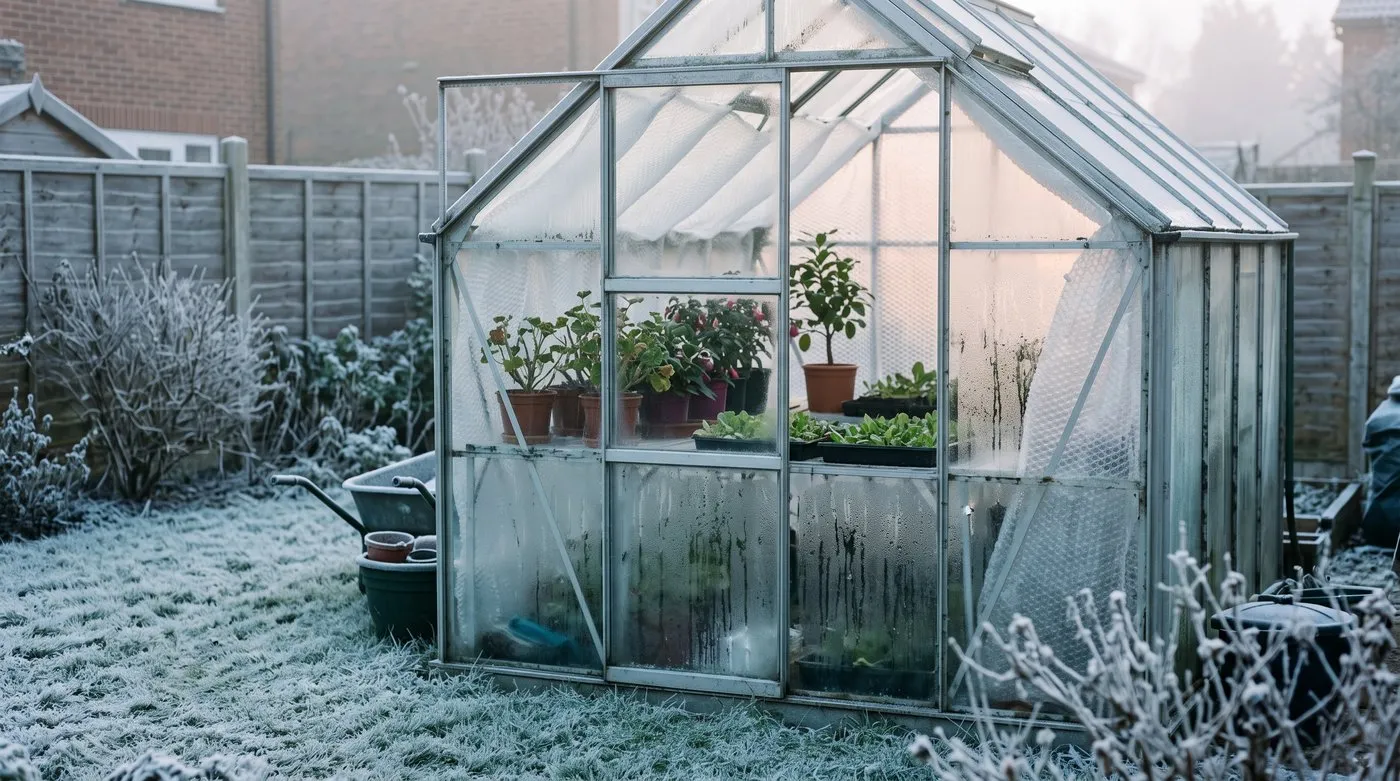
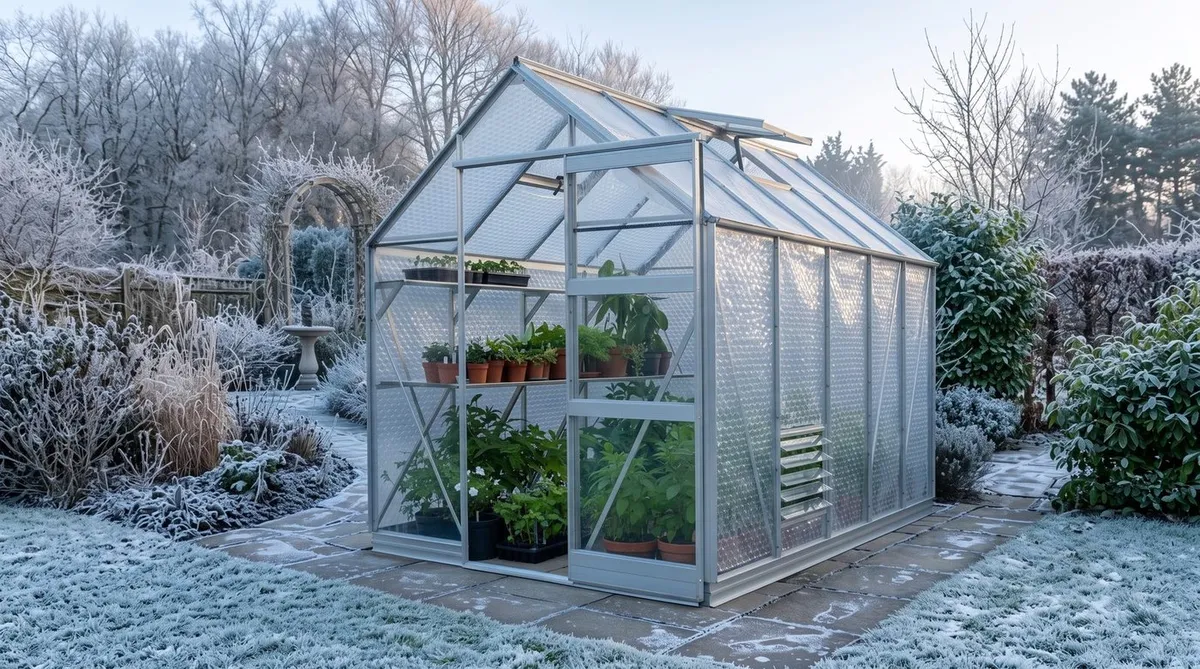
Just keeping the air above about 2C is enough to overwinter geraniums, fuchsias and citrus. Outside, an unheated greenhouse can be almost as cold as the garden.
Electric greenhouse heaters
Electric fan heaters are the favourite for hobby greenhouses. They warm the space quickly and keep the air moving, which helps stop cold spots and damp.
Pick one with a built-in thermostat, so it only comes on when the temperature drops below your setting. That keeps your bills down. You’ll need a safe, weatherproof power supply to the greenhouse.
The Eden 2kW Greenhouse Heater suits smaller greenhouses up to about 8x6ft. For bigger ones, the Palram 2400W Heater with Thermostat handles up to about 8x10ft and has a thermostat built in.
Tube heaters are a gentler option. The Elite Slimline Tube Heater fixes low on a wall or bench and gives steady background warmth. It uses less power than a fan heater and is good for keeping frost out overnight. It doesn’t move the air, so add a small fan if things get damp.
When to choose electric
- You have a safe power supply in or near the greenhouse
- You want a thermostat to look after things for you
- Your greenhouse is under about 8x10ft
- You’d like air moving as well as warmth
 The Eden 2KW electric heater gives thermostat-controlled warmth in smaller greenhouses.
You can shop the Eden 2kW Heater at Greenhouse Stores.
Gas greenhouse heaters
Gas heaters run on propane or butane bottles. They’re great for greenhouses with no electricity and give out plenty of heat, enough for a large greenhouse.
The Eden Pro 4.2kW Greenhouse Heater is a powerful propane heater for bigger greenhouses. For smaller ones, there’s the Elite Gas Blue Flame 1.9kW Heater.
Remember to budget for refilling or swapping gas bottles through the winter.
Gas heaters give off water vapour as they burn, which makes the air damp and can bring on grey mould and other diseases. Open up briefly each morning, even in winter, to let the damp air out, and follow the maker’s advice on ventilation.
When to choose gas
- There’s no electricity at the greenhouse
- You need plenty of heat for a bigger greenhouse
- You’d rather not rely on mains power
- You can ventilate easily
Paraffin greenhouse heaters
Paraffin heaters are the old-fashioned favourite. They need no electricity or gas. Fill the tank, light the wick, and they give gentle warmth for many hours per fill.
The Elite Super Warm 5 Paraffin Heater is a reliable choice. You can buy paraffin from hardware shops, garden centres and online.
The big downside is damp. Burning paraffin gives off a lot of water vapour, and in a shut greenhouse that soon leads to grey mould, damping off and other problems. Leave a roof vent slightly open when it’s lit, even on cold nights.
Paraffin heaters don’t have thermostats either. They burn at the same rate whatever the weather, so they waste fuel on mild nights.
When to choose paraffin
- There’s no electricity or gas
- You want backup heat for power cuts
- Your greenhouse is small (6x4ft to 6x8ft)
- Money is tight and you only need to keep the frost out
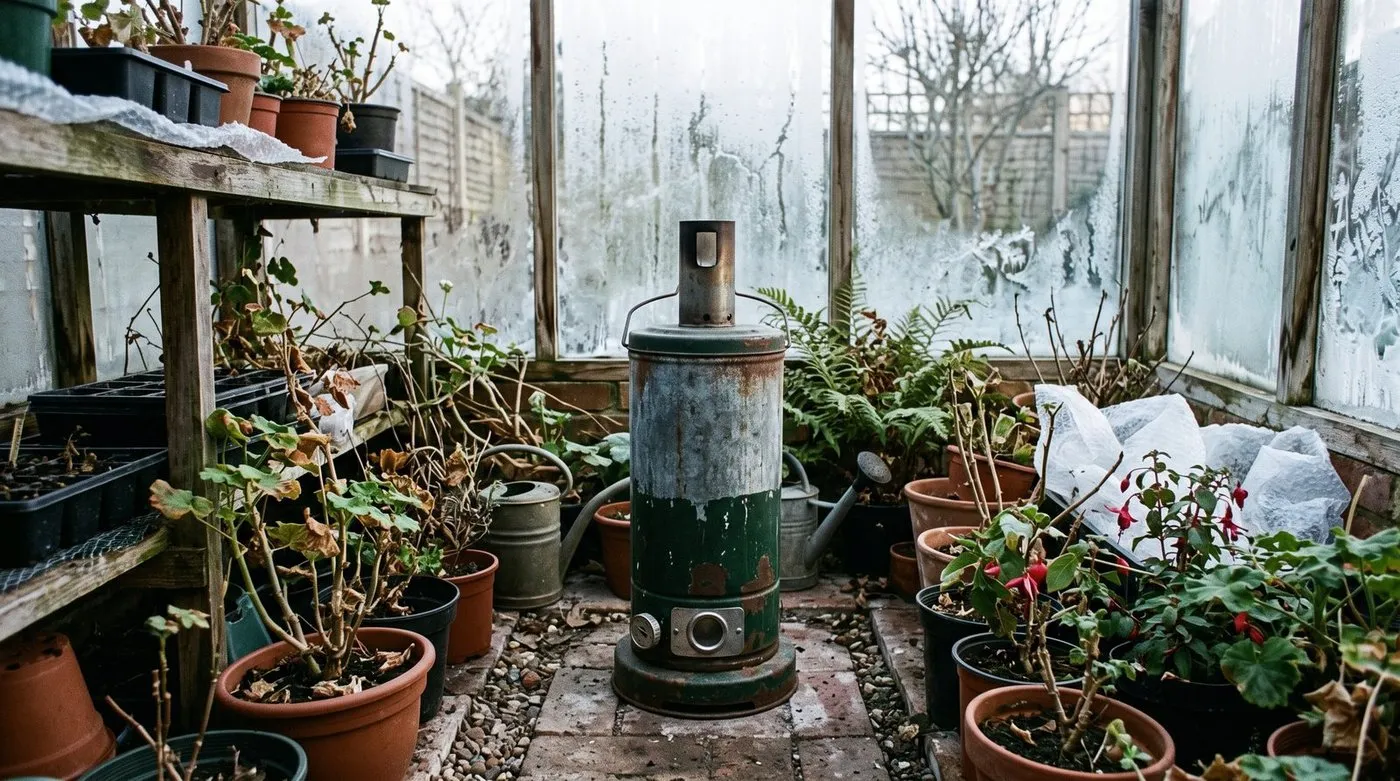 A paraffin heater is a handy backup that needs no power supply.
You can shop the Elite Paraffin Heater at Greenhouse Stores.
Heater comparison table
| Electric fan | Electric tube | Gas | Paraffin | |
|---|---|---|---|---|
| Heat | Good | Gentle | Plenty | Gentle |
| Thermostat | Yes (most) | No | Usually no | No |
| Moves the air | Yes | No | No | No |
| Adds damp | No | No | Some | Lots |
| Needs mains power | Yes | Yes | No | No |
| Best for | All-round heating | Keeping frost out | Big or off-grid greenhouses | Backup |
Frost protection vs year-round heating
There’s a big difference in cost between keeping frost out and keeping a greenhouse warm all winter. Work out what you really need before you buy.
Frost protection means keeping the greenhouse above about 2C. That’s enough to see overwintering plants through and keep hardy winter crops growing. With insulation and a thermostat, it’s the cheaper option by far.
Year-round growing means keeping it at 10-15C all winter, so you can grow tomatoes, cucumbers and other warm-season crops for longer. That uses a lot more energy.
For most UK gardeners, frost protection is the sensible choice. It costs far less and still adds months to your growing season. Our greenhouse growing calendar shows what to sow and pick each month. Pair it with hardy crops like winter lettuce, pak choi and herbs to keep picking right through to spring.
How to reduce greenhouse heating costs
Every pound saved on heating is a pound for seeds, compost and plants. These steps make the biggest difference.
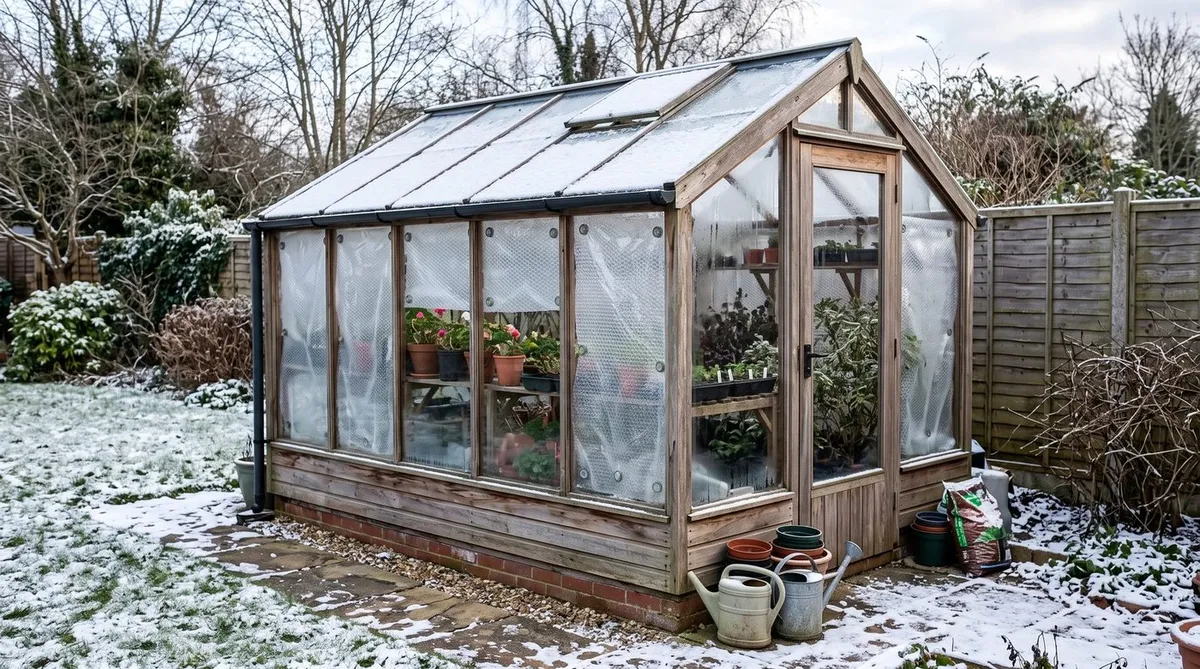
Insulate with bubble wrap. Line the inside of the greenhouse with horticultural bubble wrap, the big-bubble kind made for greenhouses, not packing wrap. Fix it with clips rather than tape so it’s easy to take down in spring. Our guide on how to insulate a greenhouse for winter shows you how to fit it and when to take it down.
 Bubble wrap on the inside of the glass keeps the warmth in and the bills down.
Use a thermostat. A heater running all night wastes energy once the temperature is high enough. A thermostat-controlled heater like the Palram 2400W only comes on when needed.
Heat only the space you use. In a big greenhouse, hang a bubble wrap curtain to section off a smaller area and just heat that.
Shut up at dusk. Open vents let heat escape fast, so close them before the temperature drops each evening. The RHS guide to greenhouse management has more on airing the greenhouse through the seasons.
Put the heater in the middle. Stand fan heaters in the middle of the floor so the warm air spreads evenly. A heater in a corner leaves the far end cold.
Safety: Use a heater made for greenhouses, not a household fan heater. Greenhouses are damp, and household heaters aren’t built for it.
When to start and stop heating
When you need heat depends on what you grow and where you live. Gardeners in the north usually need it earlier and for longer.
| When | What to do | Aim for |
|---|---|---|
| October to November | Start keeping frost out | Above 2C overnight |
| December to February | Coldest spell | 2C, or 10-15C for tender crops |
| March | Start sowing with heat | 15-18C for seeds |
| April to May | Ease off as the days get longer | Just keep frost out |
| June to September | No heat needed | Natural warmth |
Harden off seedlings raised in a heated greenhouse before planting them out. Ease them into cooler conditions over 10-14 days in late April and May.
If you grow vegetables in containers on a patio or balcony, a heated greenhouse makes a perfect nursery for young plants before they move outside.
Common mistakes to avoid
Heating without insulating. It’s like heating your house with the windows open. Bubble wrap first, heater second.
Skipping the thermostat. Heaters without one waste energy on mild nights. Choose a model with a thermostat or add a plug-in one.
Sealing the greenhouse completely. Even heated greenhouses need a little fresh air, or damp builds up and disease follows. Leave a small vent open or air it briefly each morning. Our guide to greenhouse ventilation and humidity control explains how to balance fresh air and warmth.
Forgetting about winter sun. Even in January, a sunny day can make the greenhouse surprisingly hot by midday. Open the vents on sunny days and close them again before dusk.
Putting the heater against a wall. The heat won’t spread evenly. A central spot with space around it works best.
Now you’ve got heating sorted, read our guide on greenhouse ventilation and humidity control to keep the air fresh through winter and spring.
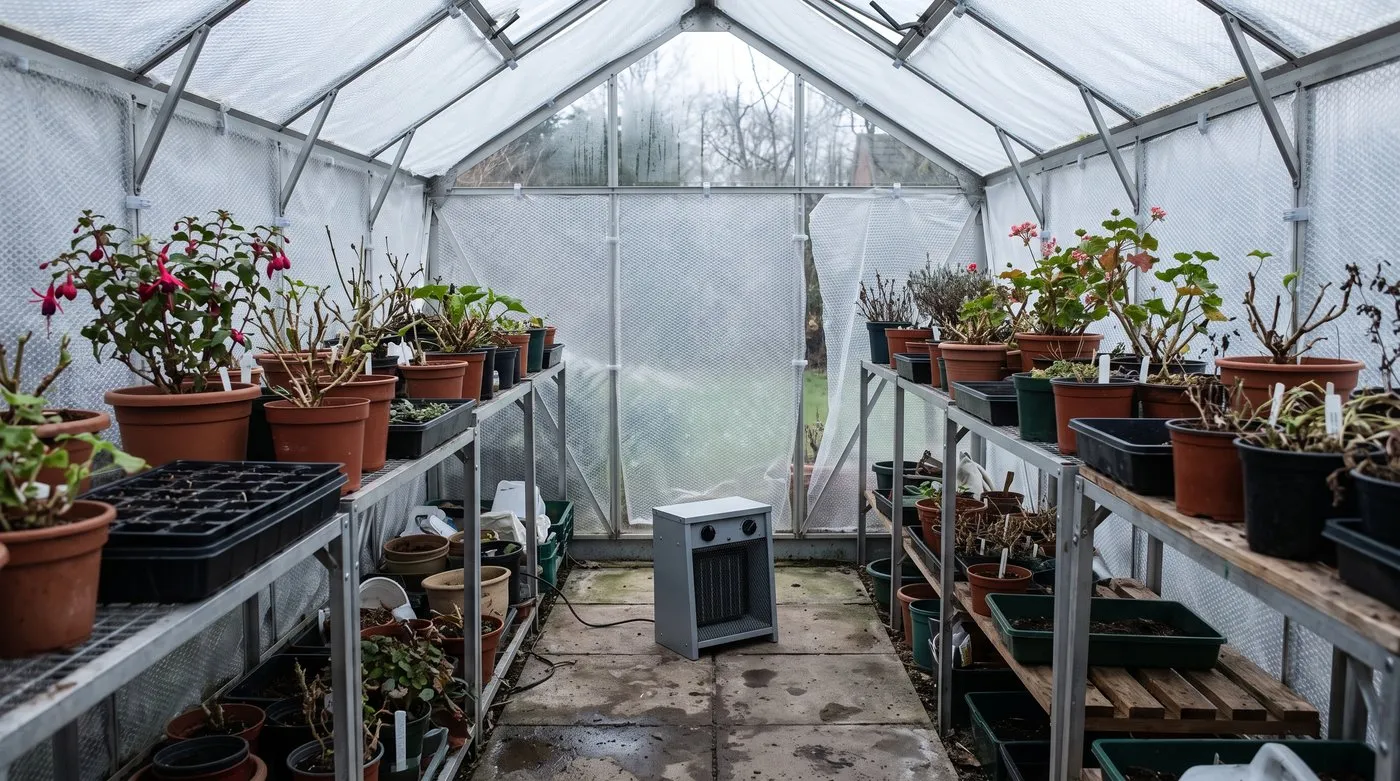
Stand a fan heater in the middle with space around it, not against a wall, so warm air spreads evenly. Leave a small vent open so damp doesn’t build up.
Frequently asked questions
How much does it cost to heat a greenhouse UK?
It depends on size, insulation and how warm you keep it. Keeping frost out costs far less than heating for tomatoes all winter. Bubble wrap and a thermostat make the biggest difference to your bills.
What is the cheapest way to heat a greenhouse?
Insulate first, then use a heater with a thermostat. Bubble wrap keeps heat in, and the thermostat stops the heater running when it isn’t needed. Only heating to keep the frost out saves even more.
Can I heat a greenhouse with a paraffin heater?
Yes, and it needs no electricity or gas supply. The main drawback is damp, as burning paraffin gives off water vapour that encourages mould and grey mould. Always leave a vent slightly open when it’s lit.
Do I need to heat my greenhouse all winter?
Only if you’re growing tender plants. Hardy crops like winter lettuce, spinach and broad beans cope in an unheated greenhouse. For most growers, just keeping the frost out is plenty.
What temperature should a heated greenhouse be?
Above about 2C to keep frost out. Tender perennials and citrus like 7-10C over winter. Warm-season crops like tomatoes, peppers and aubergines need 12-15C if you want to grow them all year.
Is a fan heater or tube heater better for a greenhouse?
Both are good, for different jobs. Fan heaters warm the whole space quickly and move the air, which helps stop damp patches. Tube heaters give gentle background warmth and suit overnight frost protection.
Our team produces practical UK gardening guidance from source research, contributor records and established horticultural practice. Editorial standards are overseen by Matt W.