
Key takeaways
- Sow seeds indoors in February or March in a warm spot, ideally 20-25C
- Pinch out the growing tip at 30cm tall so the plant bushes out
- Keep large varieties to 5-6 fruits each for better size and flavour
- Feed weekly with tomato feed once the first flowers open
- Pick when the skin is glossy. Dull skin means the fruit is past its best
- A greenhouse, polytunnel or big pot in a warm, sunny spot gives the best results
Aubergines are a fun, rewarding crop for UK gardeners with a bit of warmth to offer. They’re in the same family as tomatoes and peppers and love the same greenhouse conditions. Give them heat and a little care and each plant rewards you with several glossy purple fruits.
Do aubergines grow well in the UK?
Yes, as long as you give them warmth. Aubergines come from warm parts of Asia and need warm days and mild nights to flower and fruit. British summers rarely stay warm enough for long, so a greenhouse, polytunnel or conservatory makes all the difference.
In southern England, a sheltered south-facing wall can work in a warm summer, but it’s hit and miss. A cold, wet July can ruin an outdoor crop. Under cover, you also get a longer picking season, from August into October.
Aubergines like the same things as tomatoes and chilli peppers. If you already grow those well, you’ve got the right set-up. They’re happy sharing the greenhouse. Fancy something more unusual under glass? Try okra.
Which aubergine varieties grow best in the UK?
Choose a variety that copes with cooler summers. Many Mediterranean and Asian types need more heat than we usually get. Modern F1 hybrids and compact varieties tend to set fruit more readily and ripen sooner. Grafted vegetable plants go a step further, with aubergine tops on strong roots for heavier crops in cool summers.
Large-fruited varieties
- Black Beauty: the classic big, dark purple aubergine with creamy flesh. It needs plenty of warmth and a long season, so it’s best in a heated greenhouse or the south.
- Moneymaker F1: a popular, reliable choice for unheated greenhouses. Medium-sized, dark purple fruit. A great all-rounder.
- Bonica F1: an early F1 hybrid with classic large purple fruit. It copes well in cooler conditions and suits beginners.
Compact and pretty varieties
- Slim Jim: slim, finger-shaped purple fruit on a small plant, 45-60cm tall. Lots of small fruits. Perfect for pots and small spaces.
- Pinstripe F1: eye-catching purple and white striped fruit with a mild taste. Compact, so good in pots, and crops in an unheated greenhouse.
- Rosa Bianca: a lovely Italian heirloom with round, lavender and white fruit and very creamy flesh. It needs a warm greenhouse and takes longer to ripen, but the flavour is worth it.
Gardener’s tip: If it’s your first go, start with Moneymaker F1 or Bonica F1. Both cope better with the odd chilly spell than most aubergines.
Aubergine variety comparison table
| Variety | Fruit | Best for | How easy |
|---|---|---|---|
| Black Beauty | Large, dark purple | Heated greenhouse | Medium |
| Moneymaker F1 | Medium, dark purple | Unheated greenhouse | Easy |
| Bonica F1 | Large, purple | Beginners, cooler spots | Easy |
| Slim Jim | Small, slim, purple | Pots and small spaces | Easy |
| Pinstripe F1 | Medium, striped | Pots, unheated greenhouse | Easy |
| Rosa Bianca | Round, lavender and white | Warm greenhouse, flavour | Hard |
Gardener’s tip: Short on space? Grow Slim Jim in a 30cm pot on a sunny patio. The fruits are smaller, but you get more of them.
How to sow aubergine seeds

Aubergines need an early start because they take a long time to grow, flower and ripen. Sowing in February or March gives them the summer they need.
When to sow
Sow indoors from mid-February to late March. Sow in February if you have a heated greenhouse. Sow in March if your plants will go into an unheated greenhouse in late May. New to sowing indoors? Our guide to sowing seeds indoors walks you through it.
Sowing step by step
- Fill 7.5cm pots with moist, peat-free seed compost and firm gently.
- Sow two seeds per pot and cover with 1cm of fine compost.
- Put them in a heated propagator at 20-25C. The seeds won’t come up below about 15C.
- Keep the compost moist but not soggy. A mist of tepid water is gentler than pouring.
- Seedlings appear in two to three weeks. Once they have two true leaves, pull out the weaker one in each pot.
- Grow on at 18-20C in good light, such as a sunny windowsill or heated greenhouse bench.
Potting on
When seedlings have four or five true leaves and roots show at the drainage holes, move them into 12cm pots of multipurpose compost. Hold them by a leaf, never the stem. Keep them above 15C, as a cold spell sets young aubergines back badly.
How to plant and grow aubergines in a greenhouse

A greenhouse or polytunnel gives aubergines the steady warmth they love. They grow happily next to tomatoes and peppers, with the same watering and feeding. If you already grow tomatoes in the UK, you know the drill.
Planting out
Plant into the greenhouse border or a pot at least 30cm across when the first flowers appear, usually in May or early June. If plants have been on a windowsill, harden them off gradually first. Space them 60cm apart in the border, or give each one its own big pot.
Pinching out the growing tip
Pinch out the main growing tip when the plant is 30cm tall. It’s the most important job of all. The plant then sends out side shoots, giving a bushier shape with more flowers. Left alone, it grows tall and lanky with fewer fruits.
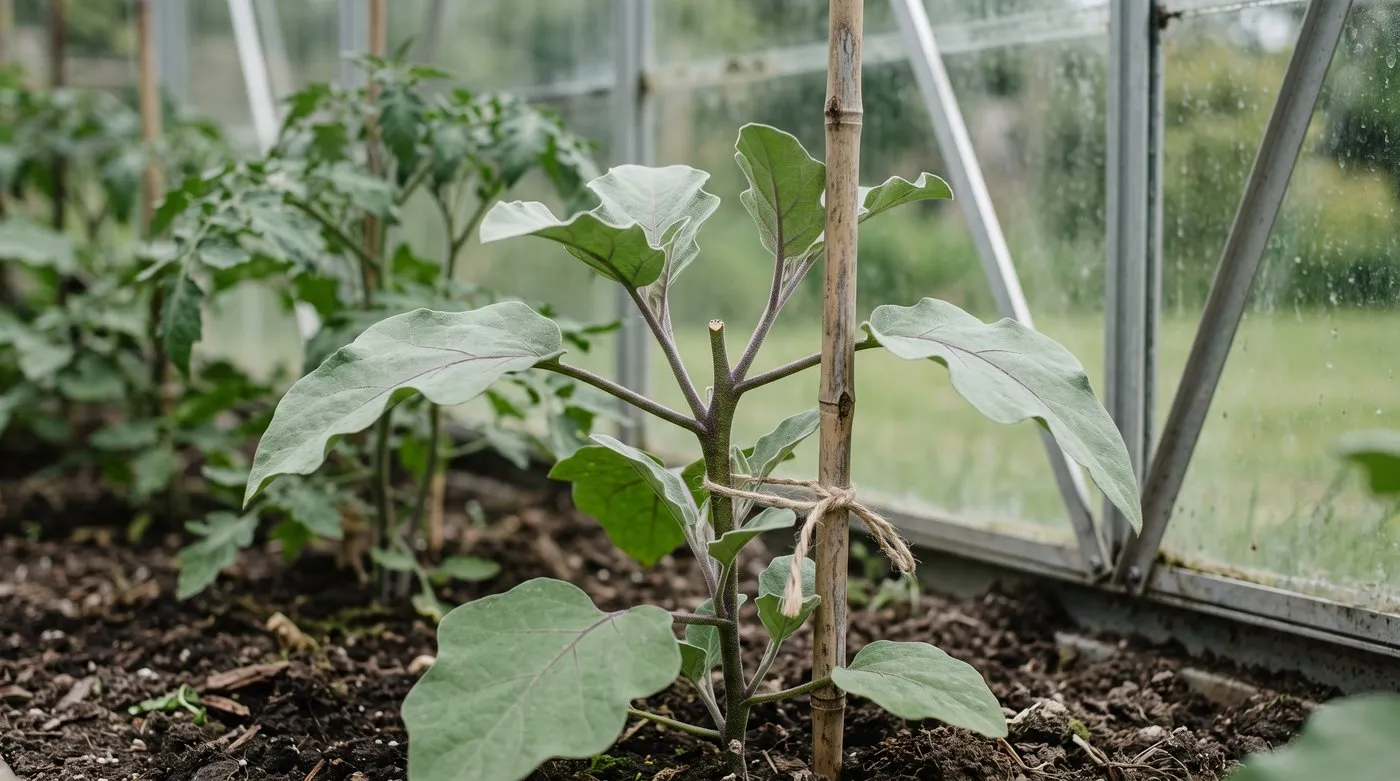
Once the tip is gone at about 30cm, side shoots grow from the leaf joints. More shoots means more flowers, and more aubergines.
Supporting the plant
Aubergines are heavy, and branches can snap under the weight. Push a sturdy cane in next to each plant when you plant it and tie the main stem loosely. As fruits swell, support the branches with string tied to the greenhouse frame.
Limiting fruit numbers
Let large varieties carry 5-6 fruits each. Once that many are growing, pick off any new flowers. The plant then puts its energy into those fruits rather than starting more it can’t finish. Slim Jim and other small types can carry plenty more.
Temperature and humidity
Aim for warm days and nights above 15C. Open vents and doors on hot days so the greenhouse doesn’t cook. Aubergines like damper air than tomatoes, so mist the leaves and wet the greenhouse floor in hot weather. Dry air makes flowers drop.
How to feed and water aubergines
Aubergines are hungry and thirsty. Steady watering and regular feeding from flowering onwards makes the difference between a few small fruits and a proper crop.
Watering
Water at the base, not over the leaves. Keep the compost evenly moist but not soggy. In a greenhouse in summer, that can mean every day, or twice a day in a heatwave. Uneven watering leads to dropped flowers, blossom end rot and bitter fruit.
Pots dry out faster than border soil, so check them morning and evening in hot weather. A saucer under each pot helps, but tip out any water still sitting there after an hour.
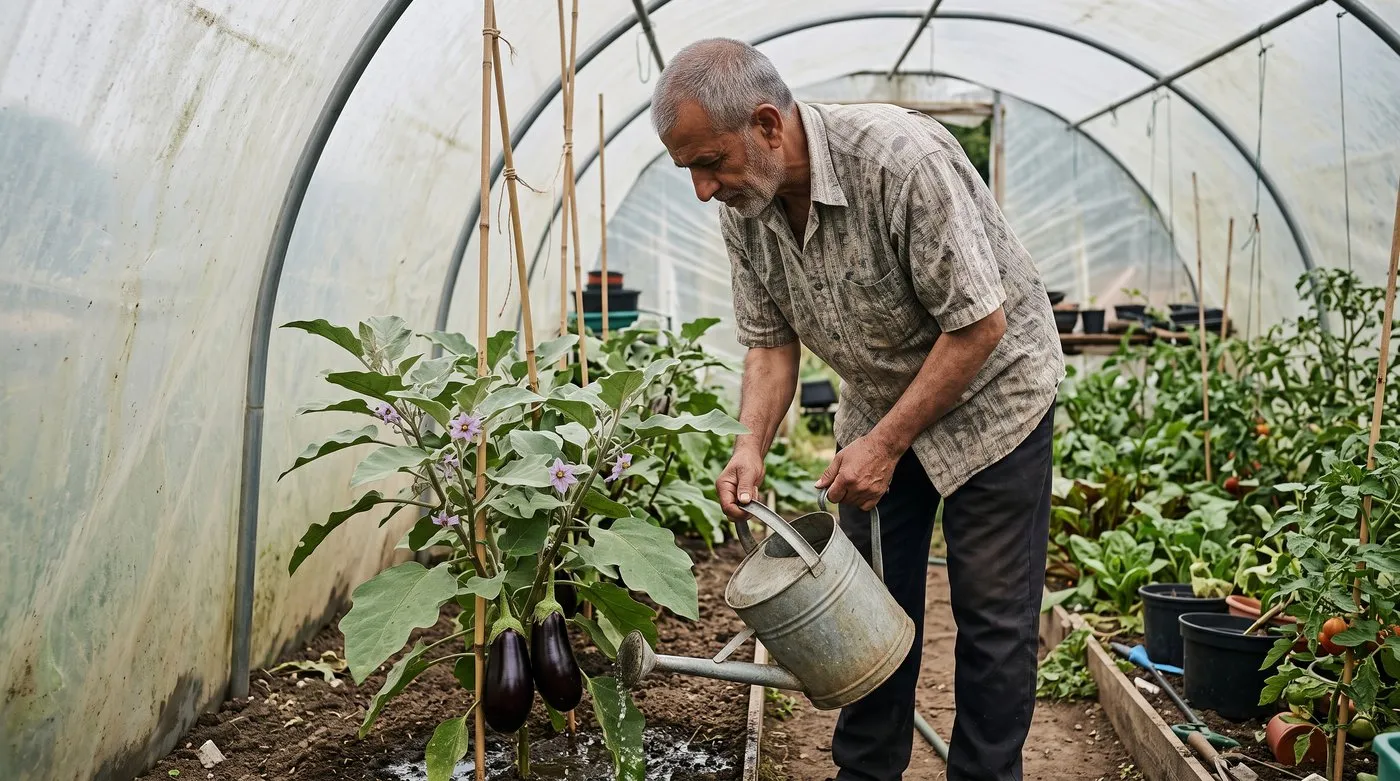
Water the compost, not the leaves, and keep it evenly moist. Big swings between dry and soggy lead to dropped flowers and blossom end rot.
Feeding
- Before flowering: a balanced liquid feed every two weeks.
- From the first flower: switch to a high-potash feed such as tomato feed, every week.
Tomato feed is perfect, so you can use the same bottle for both crops. Homemade compost is a great base for the growing mix, but it doesn’t replace liquid feeding once the fruits are forming.
Pollination
Aubergine flowers pollinate themselves, but in a still greenhouse they like a little help. Tap each flower cluster gently with a finger or pencil every day to shake the pollen loose. A small paintbrush works too, but tapping is usually enough.
Aubergine month-by-month growing calendar
Here’s the season from sowing to the last harvest. In northern England and Scotland, everything may run two or three weeks later.
| Month | What to do |
|---|---|
| February | Sow seeds in a heated propagator at 20-25C. Keep the compost moist |
| March | Pot on into 12cm pots when seedlings have four or five true leaves |
| April | Grow on in good light. Start hardening off if plants are going into an unheated greenhouse |
| May | Plant into the greenhouse border or big pots. Pinch out the tip at 30cm |
| June | First flowers appear. Switch to tomato feed. Mist the plants and tap the flowers |
| July | Fruits swelling. Support heavy branches. Pick off flowers once 5-6 fruits have set |
| August | Main harvest starts. Pick while the skin is glossy. Keep feeding |
| September | Last pickings. Harvest everything before the nights turn cold |
| October | Clear the old plants and tidy the greenhouse for winter |
Growing aubergines in containers
Pots are great for aubergines. You control the compost and drainage, and you can move them to follow the sun. No greenhouse? A large pot on a warm, sheltered patio can give a decent crop in a good summer.
Choosing the right pot
Use a pot at least 30cm across. Bigger is better, as it holds more water and dries out less. Make sure it has drainage holes, and stand it on pot feet or gravel so the base isn’t sitting in water.
Darker pots soak up more of the sun’s warmth, which aubergines enjoy.
Compost and planting
Fill the pot with rich, peat-free multipurpose compost. Mix in a little perlite for drainage and a handful of slow-release fertiliser. Plant one aubergine per pot and water it in well.
Pot care through the season
- Water every day in warm weather, twice a day in a heatwave.
- Feed with tomato feed every week from flowering.
- Pinch out the tip at 30cm and support the stem with a cane.
- Keep it to 4-5 fruits per pot, as the roots have less room.
- Move pots to the sunniest spot you have. Grouping them together helps keep them warm.
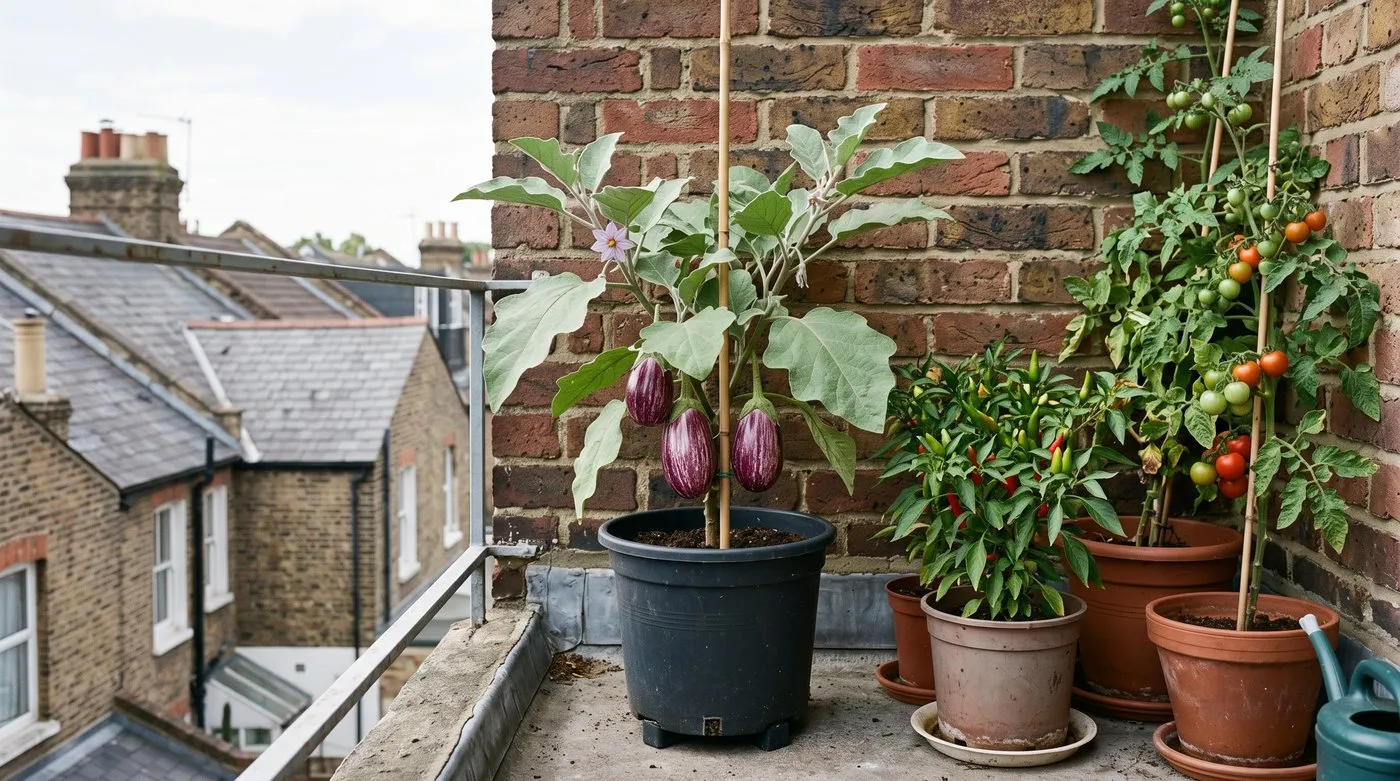
In a pot, four or five fruits is plenty for the roots to handle. Grouping pots against a warm wall helps them hold on to the heat.
How to deal with aubergine pests and diseases
Red spider mite and whitefly are the main pests under glass. Both love warm, dry air, just like aubergines, so keep an eye out.
Red spider mite
These tiny mites feed under the leaves and leave a fine, speckled yellow pattern on top. Bad attacks bring fine webbing between leaves. They love dry heat.
What to do:
- Mist plants and damp down the greenhouse floor. The mites hate damp air.
- Release a predatory mite, Phytoseiulus persimilis, from June.
- Pick off badly affected leaves and put them in the bin, not the compost.
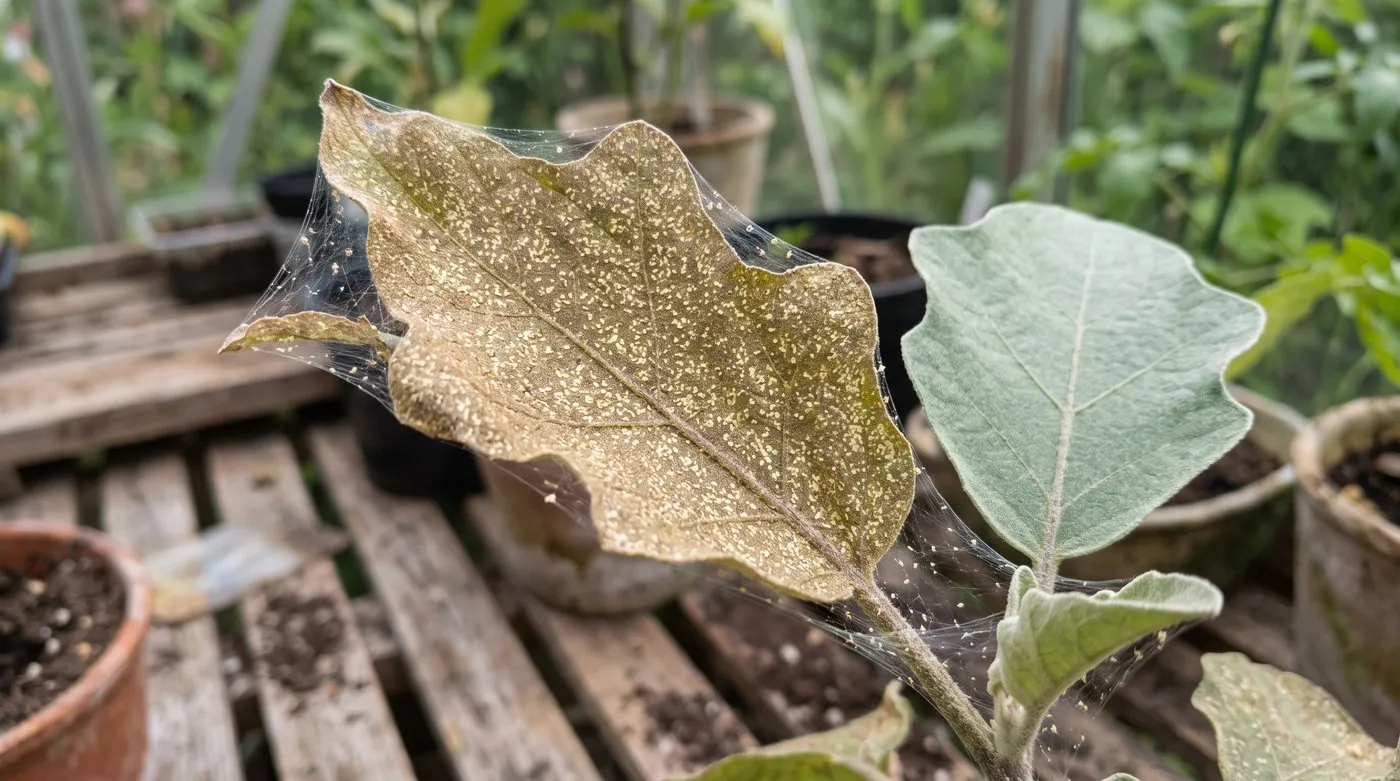
Fine pale speckles on top of the leaves are the first clue, with webbing in bad cases. Damping down the greenhouse floor makes life much harder for the mites.
Whitefly
Tiny white insects that fly up in a cloud when you brush the leaves. They suck sap and leave sticky honeydew, which turns black with sooty mould. Numbers can build up fast in a warm greenhouse.
What to do:
- Hang yellow sticky traps near the plants.
- Release Encarsia formosa, a tiny parasitic wasp, from May.
- Check new plants for whitefly before bringing them into the greenhouse.
- Keep the greenhouse ventilated, but avoid cold draughts.
Aphids
Greenfly and blackfly cluster on shoot tips and flower buds. Squash small groups with your fingers, or knock them off with a jet of water. Ladybirds and lacewing larvae are handy helpers.
Verticillium wilt
A soil-borne disease that makes plants wilt and yellow from the bottom up. There’s no cure. Use fresh compost each year, don’t grow aubergines in the same border soil year after year, and remove affected plants straight away.
Blossom end rot
A dark, sunken patch at the bottom of the fruit. It’s caused by uneven watering, which stops the plant taking up enough calcium. Keep the compost evenly moist and never let it dry out completely.
How to harvest aubergines

Timing is everything. Pick too early and the flesh is spongy. Pick too late and it’s full of bitter brown seeds.
Signs of readiness
- Glossy, taut skin is the main sign. It should really shine.
- Press gently with your thumb. If the skin springs back, it’s ready. If a dent stays, it’s overripe.
- Dull, matt skin means it’s past its best, with hard brown seeds inside.
- Check the green cap. It should sit snugly against the fruit.
How to pick
Cut the stem a few centimetres above the fruit with secateurs or a sharp knife. Don’t twist or pull, as the woody stems tear and the branch can get damaged. Wear gloves if your variety has prickles on the cap.
When to expect a harvest
Most greenhouse aubergines are ready from late July to September. Pick regularly to keep the plant setting new fruit.
Storage
Aubergines don’t keep long, so use them within a few days. Store them somewhere cool rather than in the fridge, which can spoil the flesh. Got a glut? Slice and freeze them for cooking in moussaka, ratatouille or baba ganoush.
Five common mistakes when growing aubergines
1. Sowing too late
Aubergines need a long season. Sow in April and the fruits won’t be ready until the weather is turning cold. Sow in February or March for a summer harvest. The RHS aubergine growing guide has more detail on timings.
2. Not giving enough warmth
Aubergines sulk in the cold and won’t set fruit. A cold spring in an unheated greenhouse leaves them stunted. Use a heated propagator for sowing, and if you have a greenhouse heater, set it to keep nights above 15C in spring.
3. Forgetting to pinch out
Left alone, an aubergine grows as one tall stem with fruit only at the top. Pinching out the tip at 30cm gives you side shoots, and each one flowers and fruits. It’s the step first-timers most often miss.
4. Letting too many fruits set
It’s tempting to keep every flower, but you end up with lots of small, poor fruits. Pick off flowers once 5-6 fruits have set on large varieties, and the rest grow bigger and tastier.
5. Picking too late
Fruits left past the glossy stage get hard, bitter seeds. Many people wait for supermarket size and miss the moment. Pick while the skin still shines. A smaller glossy aubergine beats a big dull one every time.
Now you’ve got aubergines sorted, read our guide on growing tomatoes in the UK for beginners, the perfect greenhouse partner crop.
Frequently asked questions
When should I sow aubergine seeds in the UK?
Sow indoors from mid-February to late March. Aubergines need a long, warm season, so an early start gives them time to flower and fruit before autumn. A heated propagator at 20-25C helps the seeds come up quickly.
Can I grow aubergines outdoors in the UK?
Only in a very sheltered, sunny spot, usually in southern England. They need warm nights to set fruit. A south-facing wall out of the wind can work in a hot summer, but a greenhouse, polytunnel or conservatory is far more reliable.
How many aubergines will one plant produce?
A healthy plant gives around 5-6 large aubergines. Keeping to that number helps each fruit grow bigger and tastier. Small-fruited varieties like Slim Jim carry many more, smaller fruits.
Why are my aubergine flowers dropping off?
Cold nights or dry air are usually to blame. Aubergines need warm nights to set fruit, and dry greenhouse air stops the flowers pollinating well. Mist the plants, damp down the greenhouse floor in hot weather, and tap the flowers gently each day.
What is the best aubergine variety for beginners?
Moneymaker F1 is a great first aubergine for UK growers. It’s a popular, reliable choice for an unheated greenhouse. Bonica F1 is another easy-going option that copes with cooler conditions.
How do I know when aubergines are ready to pick?
Pick when the skin is glossy and firm. Press gently with your thumb. If the skin springs back, it’s ready. Dull, matt skin means it’s overripe and full of bitter seeds. Cut the stem with secateurs rather than pulling.
Do aubergines grow well in containers?
Yes, aubergines are great in pots. Use a pot at least 30cm across filled with rich, peat-free compost. Water daily in warm weather and feed weekly with tomato feed once flowers open. A warm, sunny patio or greenhouse bench suits them best.
More grow-your-own guides
Our team produces practical UK gardening guidance from source research, contributor records and established horticultural practice. Editorial standards are overseen by Matt W.


