Key takeaways
- Sow about 6-8 weeks before your planting-out date, usually March or April
- Water the compost before sowing, then cover seeds to about twice their own depth
- Warmth gets seeds going, but seedlings need bright light as soon as they appear
- Prick out into small pots once the first true leaves open
- Harden plants off for about two weeks before planting out after the frosts
Sowing seeds indoors gives tender plants like tomatoes, chillies and courgettes a head start while it’s still too cold outside. All you need is a bright windowsill, a few trays and some compost.
This guide takes you from an empty tray to a plant ready for the garden. For what to sow each month, see our seed sowing calendar.
What you need to sow seeds indoors
You don’t need much. A bright windowsill, some trays or pots and the right compost will get you started.
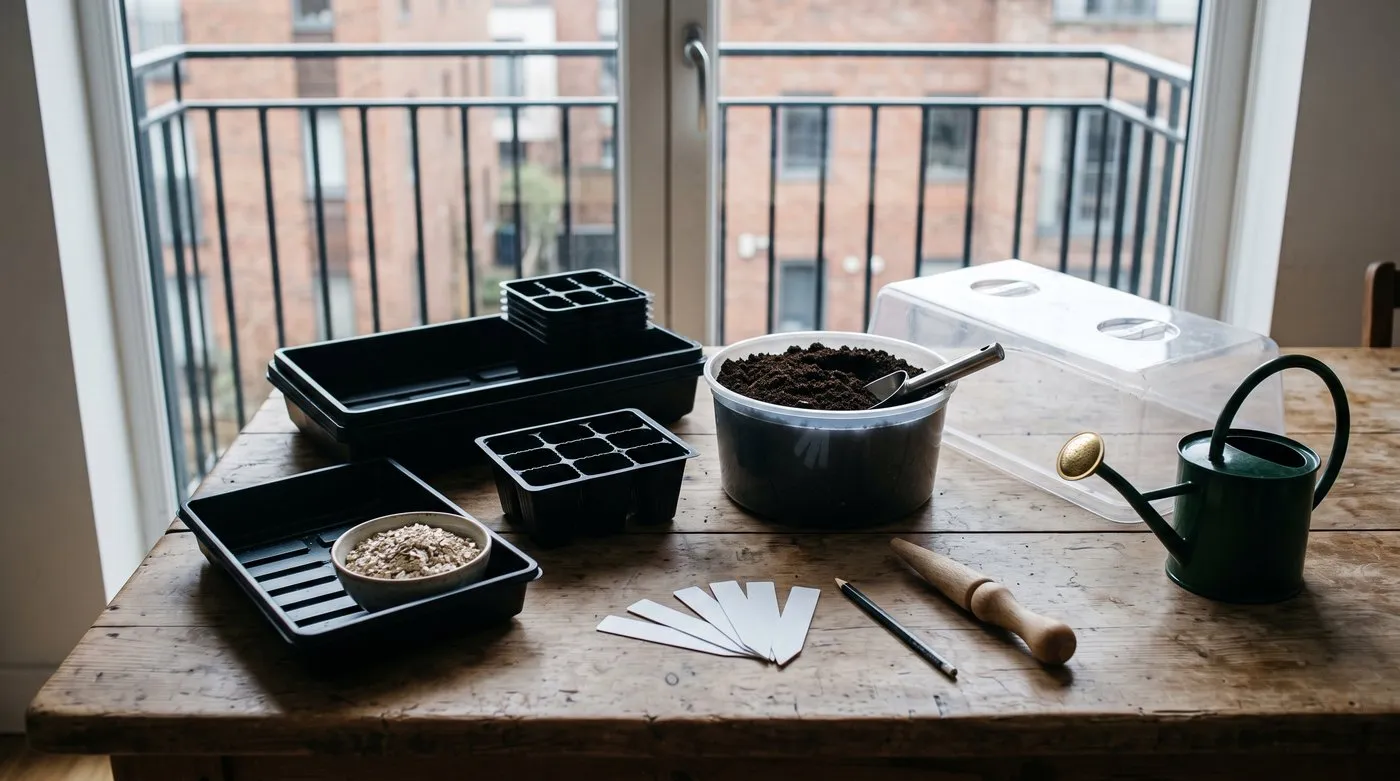
Trays, compost, labels and a gentle watering can. That’s really all you need to start.
Essentials:
- Seed trays, modules or small pots, washed clean.
- Seed compost for sowing. It’s fine and low in food, which suits tiny roots.
- Multipurpose compost for potting on later.
- A watering can with a fine rose, or a tray to water from below.
- Labels and a pencil. You won’t remember which tray is which by May.
- Clear lids or bags to keep the compost moist until seeds sprout.
Nice to have:
- A heated propagator gives steady warmth for heat-lovers like chillies.
- A grow light helps on dull days in late winter. Our guide to grow lights for seed starting explains the options.
- Vermiculite, a light, flaky mineral, for covering fine seeds.
Choose peat-free compost. Don’t use garden soil in pots indoors. It packs down, drains badly and brings in weed seeds and pests.
When to start seeds indoors
Sow 6-8 weeks before your planting-out date. Tender crops can’t go outside until the frosts are over, usually late May in much of the UK and a little later up north. So most are sown in March or April.
| Crop | Sow indoors | Notes |
|---|---|---|
| Chillies and peppers | January to March | Slow, so start early with gentle heat |
| Tomatoes | Late February to April | March is ideal on a windowsill |
| Aubergines | February to March | Like extra warmth |
| Basil | March to May | Hates cold, damp nights |
| Courgettes and squash | April to May | Grow fast, so don’t start too early |
| Sweetcorn | April to May | Sow in deep modules or pots |
| Runner and French beans | April to May | One large seed per pot |
Don’t jump the gun. Seedlings sown too early outgrow their pots and get leggy before it’s warm enough to plant out. Our table of seed germination temperatures gives the warmth each crop likes.
How to sow seeds step by step
1. Fill and firm the tray
Fill the tray to the top with seed compost, then firm it gently with the base of a pot. Leave the surface level and about 1cm below the rim. Don’t pack it hard, as roots need air.
2. Water before you sow
Water the compost before sowing, so you don’t wash tiny seeds out of place. Use a fine rose or stand the tray in water until the surface darkens. Let it drain. It should feel moist, not soggy.
3. Sow at the right depth
As a rule, cover seeds to about twice their own depth.
- Dust-fine seeds, such as begonia and lobelia, go on the surface uncovered. They need light to sprout.
- Small seeds, like tomato, lettuce and basil, get a light sprinkle of compost or vermiculite.
- Medium seeds, like courgettes, go about 1cm deep.
- Big seeds, like beans and sweetcorn, go 2-3cm deep.
Sow thinly. Crowded seedlings get leggy and are more likely to rot. Tipping fine seed from a folded piece of paper helps spread it evenly.

A folded piece of paper makes it easy to tap fine seed out a few at a time, so it doesn’t all land in one spot.
4. Cover, label and keep warm
Cover with a clear lid or bag to hold in moisture, and label each tray with the name and date. Put it somewhere warm, such as a propagator or a warm windowsill. Most seeds sprout well at about 18-21°C.
If you start seeds somewhere dark, like an airing cupboard, check them daily. Move them into the light the moment the first shoots appear, or they’ll go pale and spindly.
How to look after seedlings
Once seedlings appear, they need light more than anything.
- Take the lid off as soon as most have sprouted, to let air in.
- Give them the brightest spot you have. Turn trays every day so they grow straight.
- Cool them down a little. Once up, seedlings grow sturdier a few degrees cooler than they sprouted at.
- Water little and often from below. Stand the tray in water for a few minutes, then let it drain. Our guide to bottom watering seed trays shows how.
Tall, pale, floppy seedlings need more light. Our guide to leggy seedlings explains how to fix them. If seedlings suddenly collapse at the base, it’s damping off, a disease of wet, crowded trays. See our guide to damping off for how to prevent it.

Once most seeds are up, take the lids off. Fresh air helps keep damping off away.
How to prick out seedlings
Pricking out means moving seedlings from the tray into their own small pots. Do it once the first true leaves have opened. These come after the first simple seed leaves and look like the adult plant’s leaves.
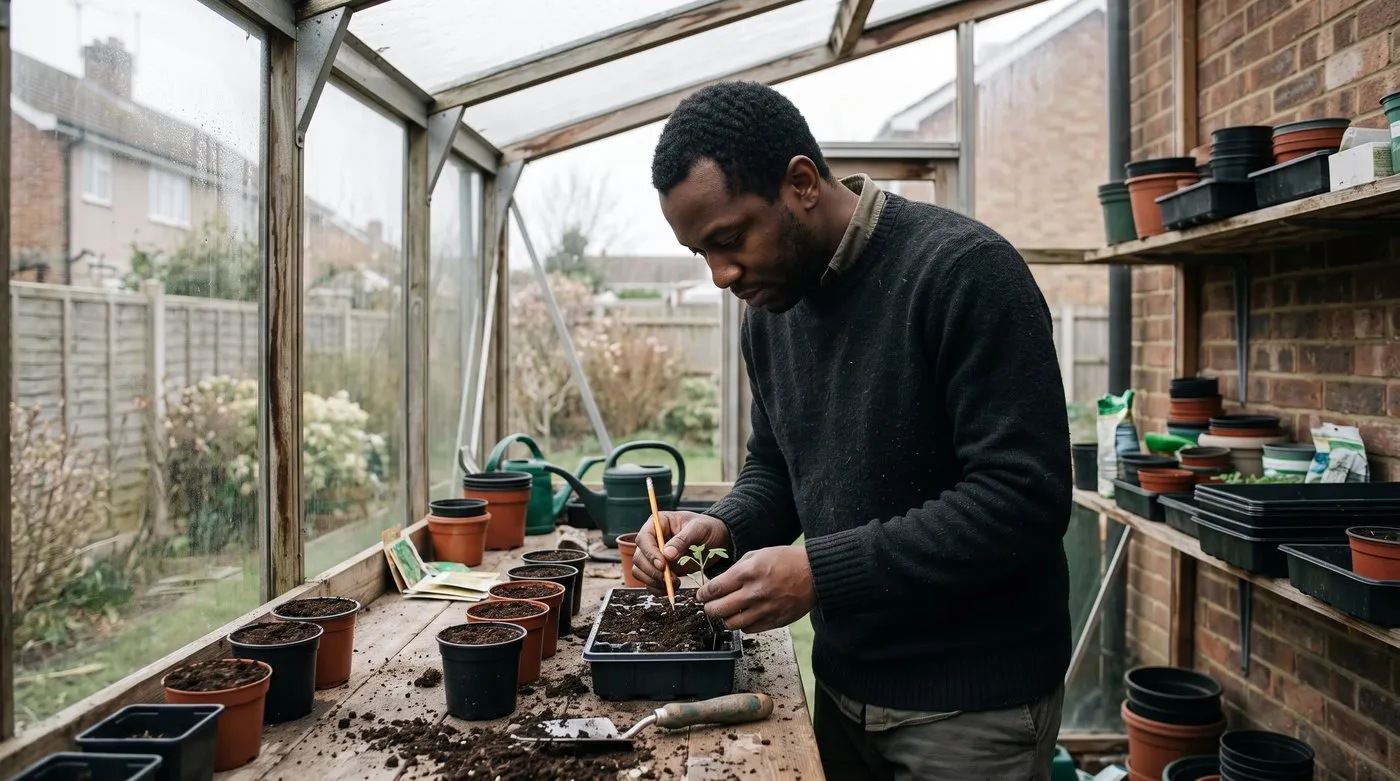
Hold seedlings by a leaf and lever them out from below. A torn leaf regrows; a squashed stem doesn’t.
- Water the tray an hour before, so the roots slide out easily.
- Fill 7-9cm pots with multipurpose compost and make a hole with a pencil.
- Ease each seedling out from below with a pencil or plant label.
- Hold it by a leaf, never the stem. A torn leaf regrows; a squashed stem doesn’t.
- Plant it a little deeper than before, up to its seed leaves, then firm gently and water.
Planting deeper helps a slightly leggy seedling stand up straight. Tomatoes even grow new roots along the buried stem.
When and how to pot on
Potting on means moving a plant into a bigger pot once roots fill its current one. Slide the plant out and look. Lots of white roots round the outside means it’s ready.
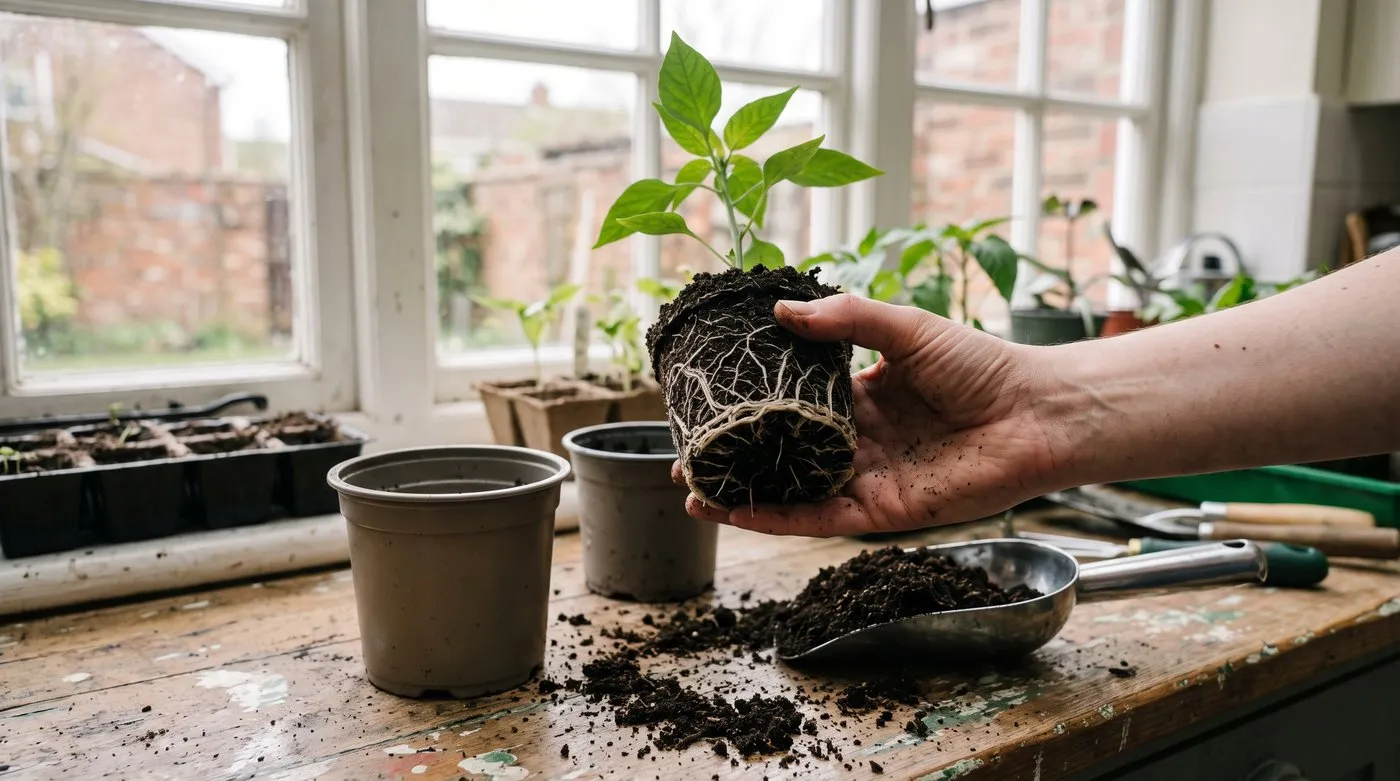
White roots round the outside means it’s time for the next pot size up.
Go up one size at a time, for example from a 9cm pot to a 12-13cm pot. A tiny plant in a huge pot sits in cold, wet compost and can sulk.
How to harden off seedlings
Hardening off gets indoor plants used to wind, sun and cooler nights before they go into the garden. Skip it and leaves can scorch and plants stall.
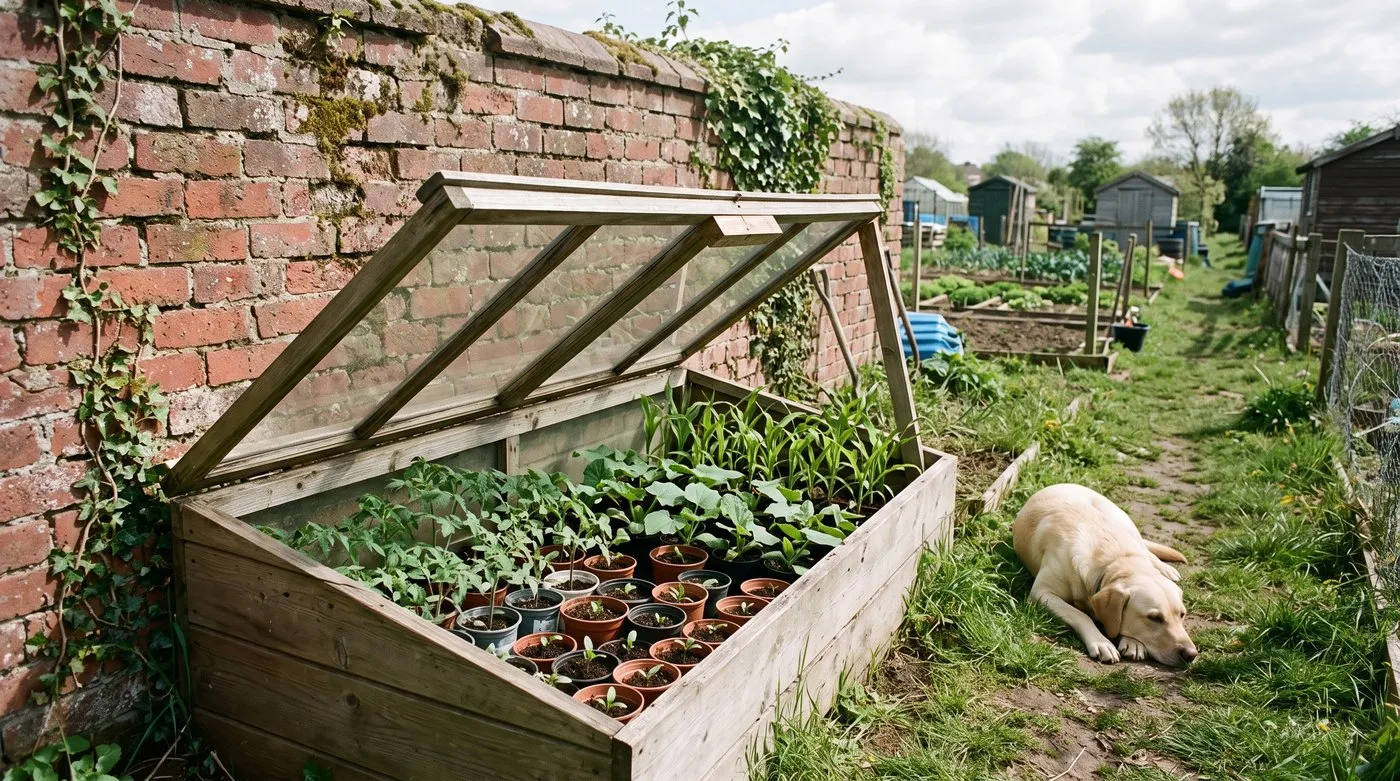
Open the cold frame by day and close it at night. Over a fortnight your plants toughen up for life outside.
Start about two weeks before you plan to plant out. Put plants outside in a sheltered, shady spot for a few hours a day at first. Over the fortnight, leave them out longer and in more sun. Then leave them out overnight for a few nights before planting. Bring them in if frost is forecast.
A cold frame makes this easy: open the lid by day and close it at night. Our guide to hardening off seedlings has a day-by-day plan.
Common seed-sowing problems and mistakes
- Seeds not coming up. Usually too cold, too wet or old seed. Check the temperature and try fresh seed.
- Overwatering. It’s the most common killer. Let the surface dry slightly between waterings.
- Too little light. A dim, north-facing windowsill makes weak, leggy seedlings. Use your brightest window or a grow light.
- Sowing too early. Plants outgrow their pots before it’s warm enough outside.
- Sowing too much. A few pots done well beat dozens of crowded trays.
- Skipping hardening off. Plants moved straight outside often scorch and stall.
For more step-by-step jobs, browse our how-to guides.
Frequently asked questions
When should I start seeds indoors in the UK?
About 6-8 weeks before you plan to plant them out. For tender crops going out in late May, that means March or April. Slow growers like chillies can start in January or February.
What temperature do seeds need to germinate?
Most vegetable and flower seeds sprout well at about 18-21°C. Chillies and peppers like it a bit warmer. Lettuce prefers cooler conditions and can struggle in real heat.
Should I use seed compost or multipurpose?
Seed compost is best for sowing because it’s fine and gentle. Sieved multipurpose works at a pinch. Use multipurpose for pricking out and potting on, once seedlings need more food.
Why are my seedlings tall and leggy?
They’re not getting enough light. Seedlings stretch towards the nearest window when it’s too dim or too warm. Move them to the brightest spot, turn trays daily or add a grow light.
When should I prick out seedlings?
When the first pair of true leaves has opened. These come after the first simple seed leaves and look like the adult plant’s leaves. Always hold seedlings by a leaf, never the stem.
What is hardening off?
It’s getting indoor-raised plants used to outdoor life gradually. Over about two weeks, put them outside for longer each day. Then leave them out at night before planting.
Now your seedlings are on their way, read our UK vegetable planting calendar to plan when each one goes out into the garden.
Our team produces practical UK gardening guidance from source research, contributor records and established horticultural practice. Editorial standards are overseen by Matt W.