
Key takeaways
- Adult butterflies need nectar, but caterpillars need specific food plants, so grow both
- Buddleia, marjoram, verbena bonariensis and sedum are among the best nectar plants
- A sunny nettle patch feeds small tortoiseshell, peacock, red admiral and comma caterpillars
- Plan flowers from March to October, with ivy as the last big feed of the year
- Pick single flowers in a warm, sheltered, sunny spot and add a flat stone for basking
- Skip insecticides altogether, as they kill caterpillars along with pests
The best plants for butterflies give adults nectar and give caterpillars something to eat. Most gardens only manage the first. Add a few caterpillar food plants and butterflies can breed with you, not just pass through.
This guide picks the top nectar flowers for each season, the food plants caterpillars need, and a simple sunny border to copy. Bees love many of the same flowers, but they have different favourites. Our guide to the best bee-friendly plants covers those.
What do butterflies need from a garden?
Sun, shelter, nectar and caterpillar food. Get those four right and butterflies will find you.
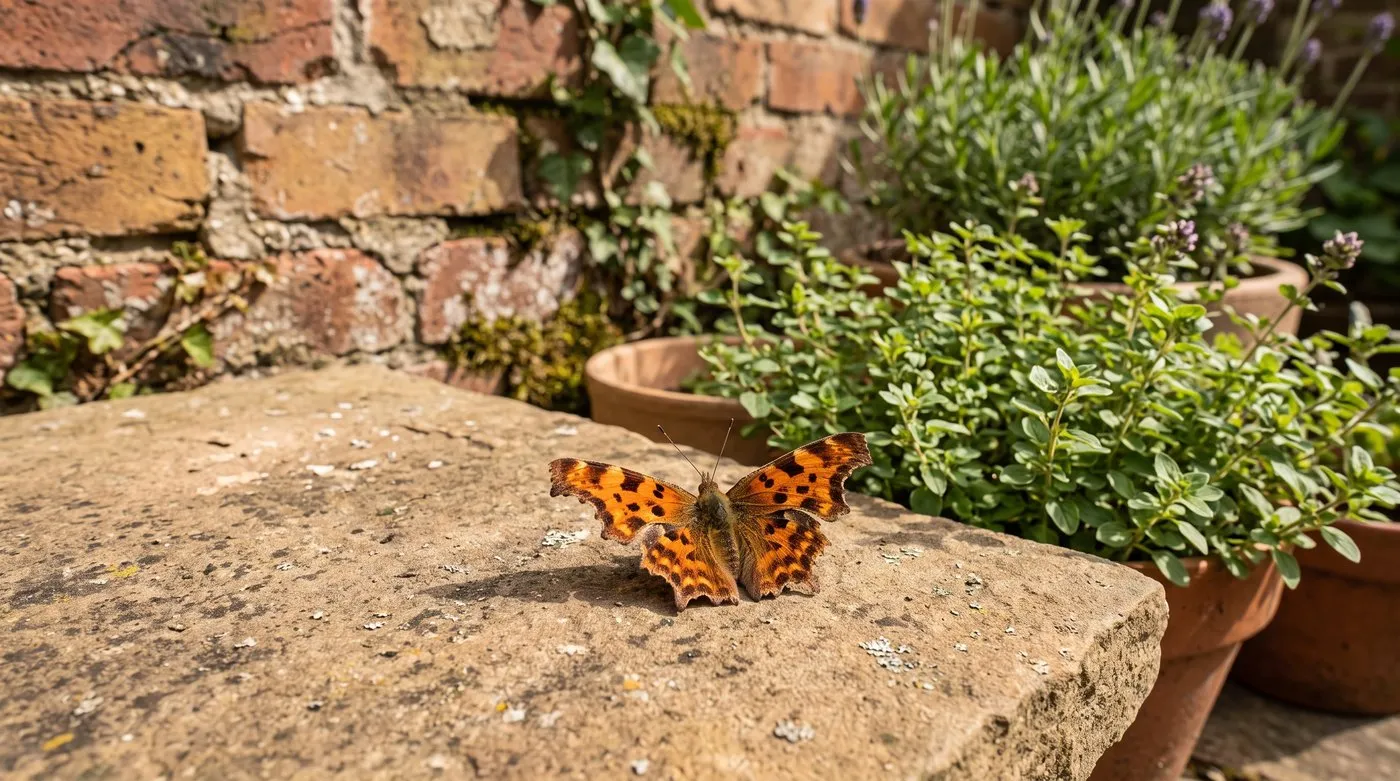
A sunny, sheltered spot with a flat stone gives butterflies somewhere to warm up before they feed.
Sun comes first. Butterflies need warmth to fly, so a shady border sees few visitors however well it’s planted. A south-facing spot backed by a wall, fence or hedge makes a lovely sun trap.
Shelter matters because butterflies struggle to feed in a breeze. Hedges and dense shrubs break the wind.
Nectar gives adults the energy to fly, find mates and lay eggs. Butterflies like flat or clustered flower heads they can land on.
Caterpillar food is the missing piece in most gardens. Each butterfly lays its eggs only on certain plants, and the caterpillars eat nothing else. No food plants means no next generation.
The top nectar plants for butterflies
Buddleia, marjoram, verbena bonariensis, lavender and sedum are the five to start with. Between them they cover June to October.
Buddleia (Buddleja davidii) is the classic butterfly bush. It flowers from July to September and pulls in peacocks, red admirals, small tortoiseshells and commas. Prune it hard in March to about 60cm to keep it compact. Deadhead through summer, as it self-seeds into walls and waste ground. Our guide to growing buddleja covers pruning and the best varieties.
Marjoram (Origanum vulgare) is a native herb with flat pink flower heads from July to September. Small butterflies such as gatekeepers, skippers and common blues love it. It’s happiest on poor, dry soil in full sun.
Verbena bonariensis carries little purple flower clusters on tall, wiry stems from July until the frosts. Butterflies sit and feed on it for ages. Plant it in groups and let it self-seed. See our guide to growing verbena bonariensis for tips on keeping it through winter.

Verbena bonariensis stands tall above the border, so butterflies can spot it from across the garden.
Lavender (Lavandula angustifolia) flowers from June to August. ‘Hidcote’ and ‘Munstead’ are reliable, compact choices. It needs sharp drainage and full sun.
Sedum (Hylotelephium spectabile) flowers from late August into October, just when other nectar runs short. ‘Herbstfreude’ (also sold as ‘Autumn Joy’) is the one you’ll see everywhere.

A row of lavender gives weeks of nectar in high summer, for butterflies and bees alike.
Best butterfly plants by season
Aim for something in flower from March to October. A gap in flowering is a gap in food.
Spring (March to May)
Butterflies that hibernate as adults wake hungry on the first warm days. Brimstones, peacocks, commas and small tortoiseshells need nectar fast.
- Aubrieta spills over walls with purple flowers from March.
- Wallflowers (Erysimum) flower from March to May. Perennial ‘Bowles’s Mauve’ flowers for months.
- Honesty (Lunaria annua) has purple or white flowers from April. Orange tips feed on it.
- Dandelions in an unmown corner are a free and very useful early feed.
Summer (June to August)
This is peak butterfly time. Buddleia, lavender, marjoram and verbena bonariensis do the heavy lifting.
- Field scabious (Knautia arvensis) has lilac pincushion flowers from June. Meadow browns and marbled whites visit.
- Red valerian (Centranthus ruber) flowers all summer on dry walls and banks.
- Bramble flowers are a favourite of gatekeepers and other browns, if you have a wild corner.
Autumn (September to October)
Late nectar fuels butterflies before winter. Peacocks and small tortoiseshells feed up before hibernating.
- Sedum carries on until October.
- Michaelmas daisies (asters) give flat landing pads into October.
- Ivy (Hedera helix) flowers from September to November. Leave some to flower on a fence or tree.
- Windfall fruit left on the lawn is a treat for red admirals and commas.

Sedum flowers just as summer fades, which makes it a lifeline for red admirals in September.
| Season | Nectar plants | Butterflies you may see |
|---|---|---|
| Spring (Mar-May) | Aubrieta, wallflower, honesty, dandelion | Brimstone, orange tip, peacock, comma |
| Summer (Jun-Aug) | Buddleia, lavender, marjoram, verbena, scabious | Small tortoiseshell, gatekeeper, painted lady, meadow brown |
| Autumn (Sep-Oct) | Sedum, Michaelmas daisy, ivy, windfall fruit | Red admiral, comma, peacock |
Caterpillar food plants that let butterflies breed
Nettles, grasses, holly, ivy and a few wildflowers feed the caterpillars of most common garden butterflies. Growing even one or two turns a feeding stop into a home.
Stinging nettles
Stinging nettles (Urtica dioica) feed the caterpillars of small tortoiseshell, peacock, red admiral and comma. Painted ladies sometimes use them too, though they prefer thistles.
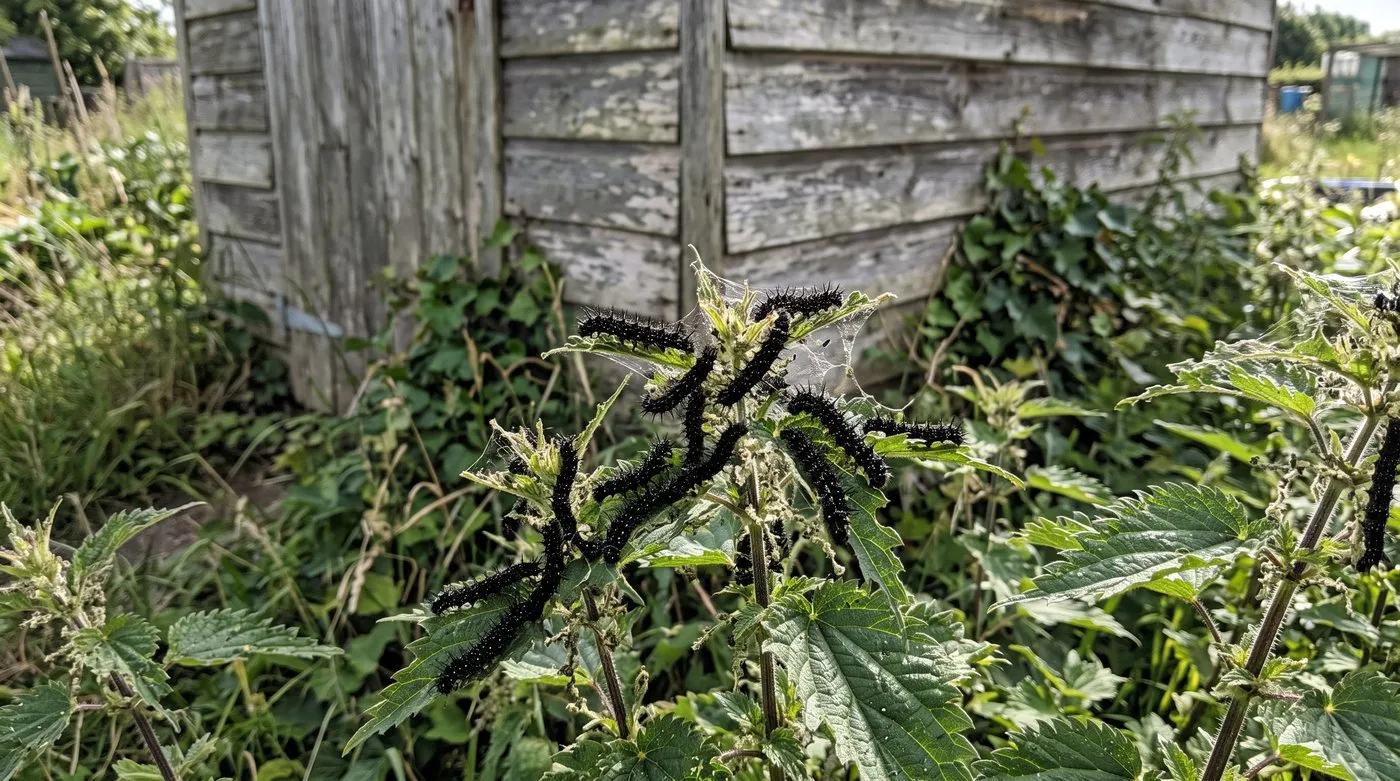
A busy nest of peacock caterpillars is the reward for leaving a sunny patch of nettles.
Grow nettles somewhere sunny, as butterflies lay their eggs on warm, sheltered patches. A corner behind the shed or compost bin is ideal. In late June or early July, cut part of the patch to the ground. The fresh regrowth suits later broods. Spare cuttings make a rich addition to the compost heap.
Other food plants worth growing
- Lady’s smock (Cardamine pratensis) and garlic mustard (Alliaria petiolata) feed orange tip caterpillars. Lady’s smock likes a damp patch of lawn.
- Buckthorn (Rhamnus cathartica) and alder buckthorn (Frangula alnus) feed brimstone caterpillars. Either fits into a native hedge.
- Holly and ivy feed holly blues. The spring brood lays on holly buds and the summer brood on ivy buds.
- Native grasses feed meadow brown, gatekeeper, ringlet and speckled wood caterpillars. Leave a strip of long grass uncut all summer.
- Bird’s-foot trefoil (Lotus corniculatus) feeds common blue caterpillars. It grows in short turf on poor soil.
- Sorrels feed small copper caterpillars. Leave them where they pop up.
A wildflower lawn is a handy way to grow grasses and bird’s-foot trefoil together.
Common garden butterflies and what they need
| Butterfly | Caterpillar food | Favourite nectar | When it flies |
|---|---|---|---|
| Small tortoiseshell | Stinging nettle | Buddleia, sedum, marjoram | Mar-Oct |
| Peacock | Stinging nettle | Buddleia, dandelion, marjoram | Mar-May, Jul-Sep |
| Red admiral | Stinging nettle | Buddleia, ivy, rotting fruit | Spring to Nov |
| Comma | Nettle, hop, elm, currants | Bramble, ivy, rotting fruit | Mar-Oct |
| Painted lady | Thistles, nettle | Buddleia, red valerian | May-Oct, varies yearly |
| Brimstone | Buckthorn, alder buckthorn | Dandelion, bluebell, knapweed | Mar-Oct |
| Orange tip | Lady’s smock, garlic mustard | Honesty, bluebell | Apr-Jun |
| Holly blue | Holly (spring), ivy (summer) | Bramble, holly | Apr-Sep |
| Meadow brown | Native grasses | Bramble, knapweed, scabious | Jun-Sep |
| Gatekeeper | Fine grasses | Bramble, marjoram, ragwort | Jul-Aug |
| Common blue | Bird’s-foot trefoil | Marjoram, clover | May-Sep |
What about the cabbage whites? Large and small white caterpillars feed on brassicas and nasturtiums. Net your cabbages with fine mesh and leave the rest alone. Our cabbage white butterfly guide has the details.
A simple sunny butterfly border to copy
A border of about 3m by 3m in full sun is plenty. Here’s one way to fill it.
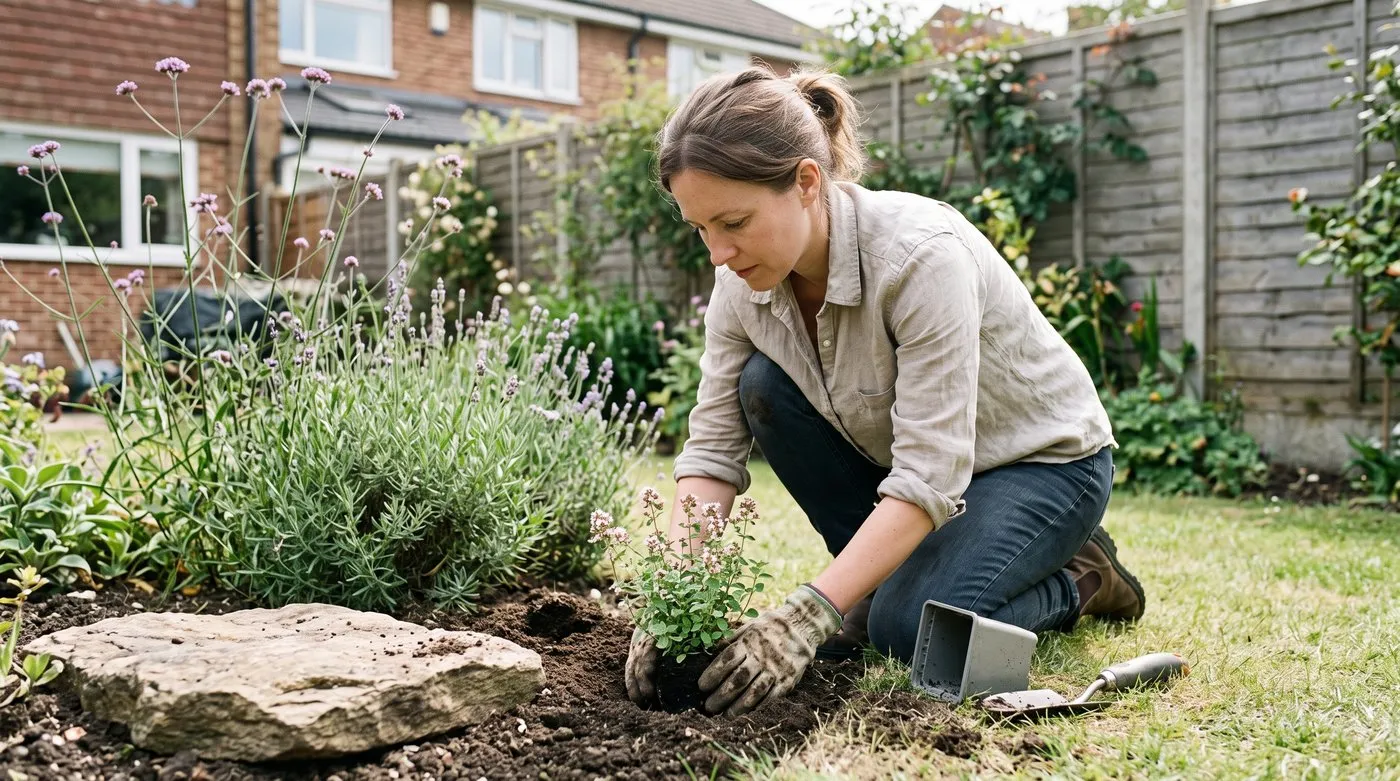
Low marjoram at the front, taller verbena and buddleia behind: a simple layout that feeds butterflies for months.
- Back: one buddleia, pruned hard each March, and three verbena bonariensis
- Middle: five lavender, three marjoram, three field scabious and one sedum ‘Herbstfreude’
- Front: aubrieta, a couple of wallflowers and bird’s-foot trefoil along the edge
- Nearby: a sunny nettle corner and a flat stone or two for basking
Butterflies bask with their wings open on cool mornings to warm up. Flat stones, paving slabs and bare soil in the sun all work. No room for a border? A few large pots of marjoram, lavender and verbena on a sunny patio still bring butterflies in.
Common mistakes when planting for butterflies
Planting only nectar flowers. Adults visit, but nothing breeds. Add nettles, grasses or another food plant.
Choosing double flowers. Extra petals block the nectar. Pick single flowers where you can see the centre.
Filling pots with bedding. Petunias, begonias and busy lizzies offer butterflies very little. Cosmos, marigolds (calendula) and nasturtiums look just as cheerful and feed insects.
Spraying insecticides. They kill caterpillars along with the pests, and organic sprays are no different. Accept a few nibbled leaves and let birds, ladybirds and wasps do the work.
Tidying too much. Long grass, nettles, ivy and fallen fruit all help butterflies. Leave a wild corner.
Rarer butterflies and recording what you see
Gardens help common butterflies most, but small changes help some scarcer ones too. Uncut grass on a warm, dry bank suits the wall brown. Sorrels on poor soil suit the small copper. If you live near woodland, our guide to rare woodland butterflies explains how to help them.
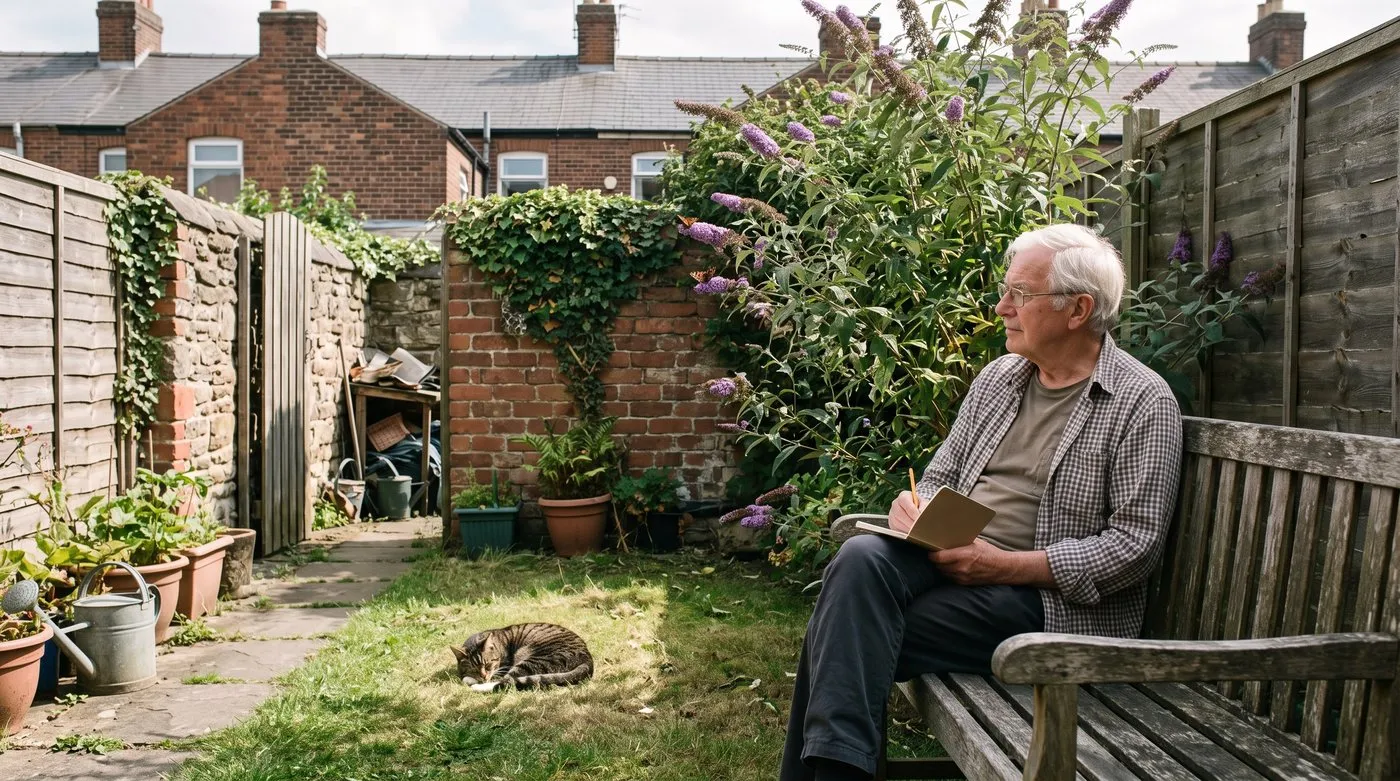
Fifteen minutes on a sunny bench is all the Big Butterfly Count asks, and the cat is welcome to join in.
Want to know who’s visiting? The Big Butterfly Count runs each summer. You spend 15 minutes counting butterflies in a sunny spot, and your results help track how they’re doing across the country.
Month-by-month butterfly garden calendar
| Month | What to look for | Jobs to do |
|---|---|---|
| March | Brimstones, peacocks and commas wake up | Prune buddleia hard. Plant aubrieta and wallflowers |
| April | Orange tips and holly blues | Leave lady’s smock and garlic mustard to flower |
| May | Painted ladies and red admirals arrive from abroad | Check nettles for caterpillar webs and tents |
| June | Meadow browns and skippers in long grass | Plant marjoram, scabious and verbena |
| July | Peak season, buddleia in flower | Deadhead buddleia. Cut part of the nettle patch |
| August | Gatekeepers and common blues | Keep deadheading. Do the Big Butterfly Count |
| September | Red admirals on sedum and fruit | Leave windfalls and seed heads |
| October | Last red admirals on ivy | Leave ivy to flower. Don’t tidy everything away |
Honeybees share many of these flowers. If you’d like to help them too, read our guide to helping honeybees in the garden. For more ways to bring wildlife in, browse our wildlife gardening guides.
Now you know what to plant, read our guide on how to create a wildlife garden to give butterflies and other visitors a home all year.
Frequently asked questions
What is the best plant for butterflies in the UK?
Buddleia is the best single nectar plant for UK butterflies. A bush in full flower from July draws peacocks, red admirals, small tortoiseshells and commas. Marjoram, verbena bonariensis and sedum come close behind.
Do butterflies need nettles?
Several of our commonest garden butterflies do. Small tortoiseshell, peacock, red admiral and comma caterpillars all feed on stinging nettles. Without nettles nearby, these butterflies can visit your flowers but can’t breed in your garden.
How do I attract butterflies to a small garden?
Plant a few nectar flowers in your sunniest, most sheltered spot. Marjoram, lavender and verbena bonariensis all grow well in pots. Add a flat stone for basking and avoid insecticides. Even a sunny patio can bring butterflies in.
When do butterflies appear in UK gardens?
The first ones fly on warm days in March. Brimstones, peacocks and commas wake from hibernation first. Numbers peak from July to August, and red admirals often fly well into October.
Are pesticides harmful to butterflies?
Yes, insecticides kill caterpillars and can harm adult butterflies. Organic sprays are no exception. Weedkillers also remove food plants such as nettles and wildflowers. Leave pest control to birds and other predators, and use netting where you need it.
What flowers do red admirals like?
Red admirals love buddleia, sedum and ivy flowers. In autumn they also feed on rotting windfall apples, pears and plums. Their caterpillars live on stinging nettles, folding the leaves into little tents.
Should I deadhead buddleia for butterflies?
Yes, deadheading keeps new flower spikes coming into September. Cut each faded spike back to the next pair of side shoots. It also stops buddleia seeding everywhere. Prune the whole bush hard in March.
Our team produces practical UK gardening guidance from source research, contributor records and established horticultural practice. Editorial standards are overseen by Matt W.


