
Key takeaways
- Red mason bees and leafcutter bees use bee houses; they are gentle and don't swarm
- Drill untreated hardwood with 6mm and 8mm holes about 15cm deep, closed at the back
- Bamboo, reed or cardboard tubes work too, as long as you can remove them
- Fix it firmly 1-1.5m up, facing south or south-east, in morning sun
- Avoid plastic and glass tubes, which trap damp and let the grubs go mouldy
- Keep it small and clean or replace the tubes every autumn
A bee house is a block of wood or a bundle of hollow stems that gives solitary bees somewhere to lay their eggs. You can make one in an afternoon, and it’s often busy within weeks of spring arriving.
What matters most is the detail: the hole size, smooth tunnels, a sunny spot and cleaning it once a year. Get those right and you’ll be raising your own red mason bees. This guide covers making one and looking after it. For the bees themselves and the flowers they need, see our solitary bees garden guide.
Which bees use a bee house?
Solitary bees use bee houses, not honeybees or bumblebees. In most UK gardens, two kinds do nearly all the moving in.
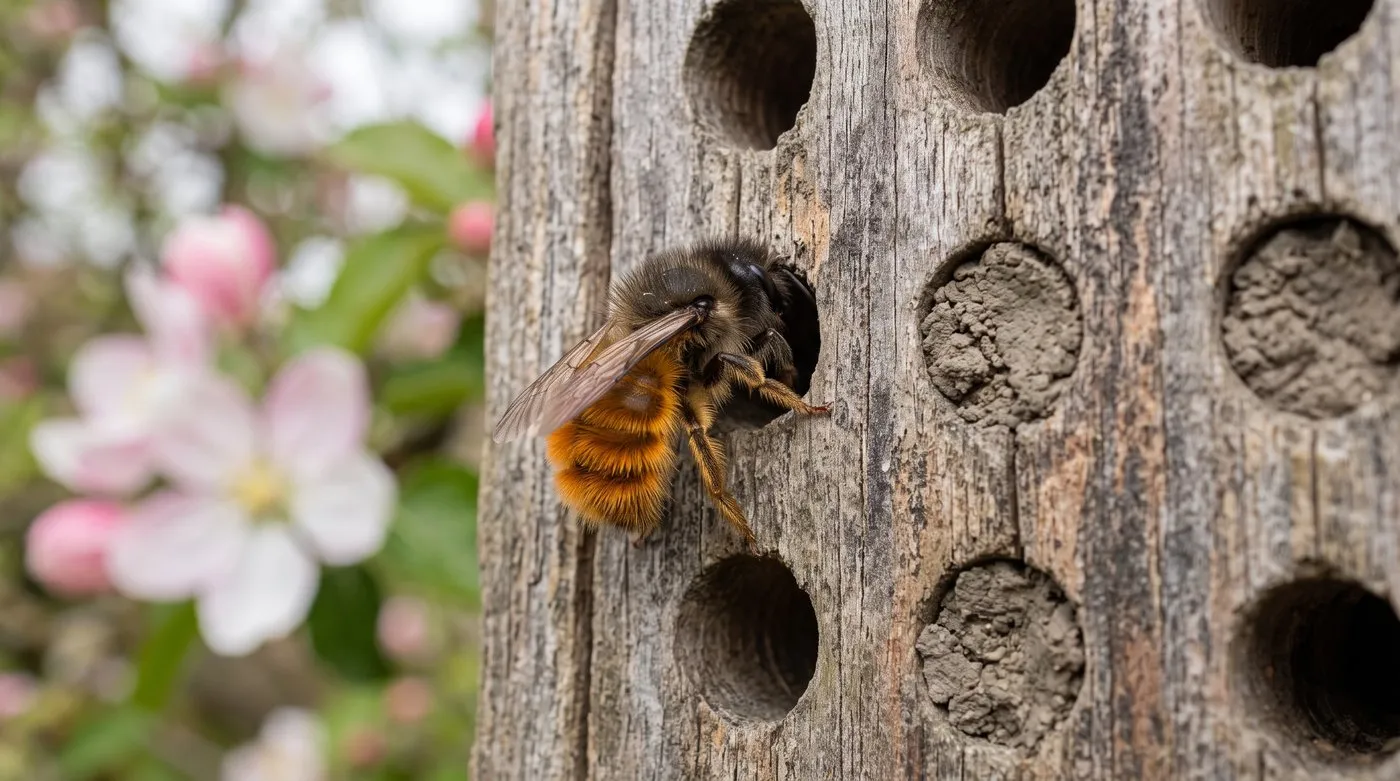
Red mason bees are the most common tenants. The hole only needs to be a little wider than the bee.
The red mason bee is the main tenant. It’s a fuzzy, ginger-brown bee that flies from about March to June. Each female fills a tube with pollen, lays an egg on it and seals it with a mud wall. She works alone, with no queen and no hive. Mason bees are excellent pollinators of fruit blossom, so they’re a great friend to have near apple and pear trees.
Leafcutter bees come along later, from June into August. They line their nests with neat discs cut from rose and other leaves. Those half-moon notches in your roses are their work, and the plant is fine.
Both are very gentle and don’t swarm. They will happily nest right beside a door or patio.
How to make a bee house from a hardwood block
A drilled block of untreated hardwood lasts for years and is easy to clean. Oak, beech or ash are ideal, at least 18cm deep.
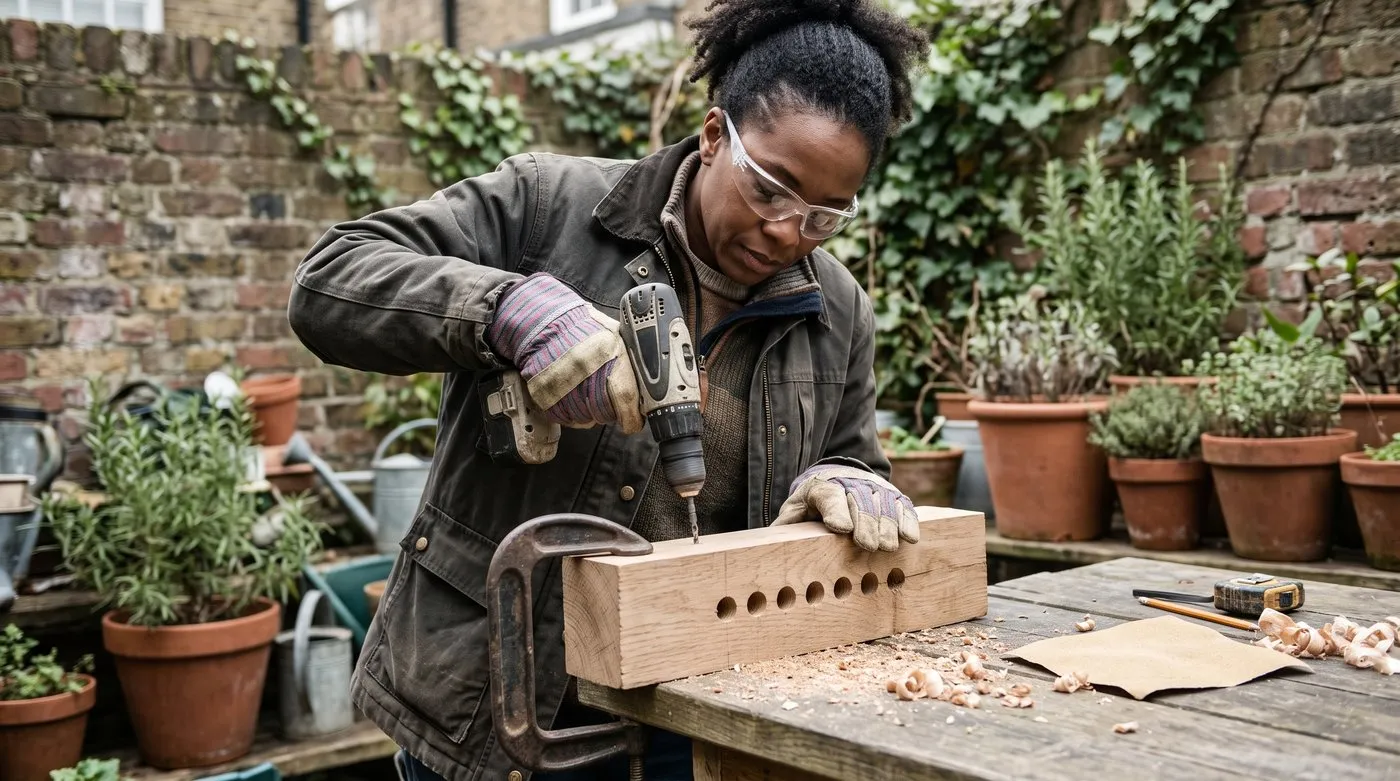
Drill most holes at 6mm and 8mm, about 15cm deep, and stop before you come out the back.
- Pick the wood. Never use treated, painted or preserved timber, as the chemicals can harm the grubs. Resinous softwood splinters as it dries, so skip that too.
- Drill the holes. Use mostly 6mm and 8mm bits. Drill about 15cm deep and space the holes 15-20mm apart. Don’t drill right through: the back must be closed.
- Keep them level. Drill straight in, or tilt very slightly upwards, so rain runs out rather than in.
- Smooth every hole. Run rolled sandpaper or a round file through each one. Bees avoid rough tunnels because splinters damage their wings.
- Add a roof. A sloping piece of timber that sticks out 4-5cm keeps rain off the front.
Smoothing the holes is the step most people skip, and it’s often why a house stays empty.
How to make a bee house from bamboo or reed tubes
No drill? Bundle up hollow stems instead. Bamboo canes, reed stems and cardboard nesting tubes all work.
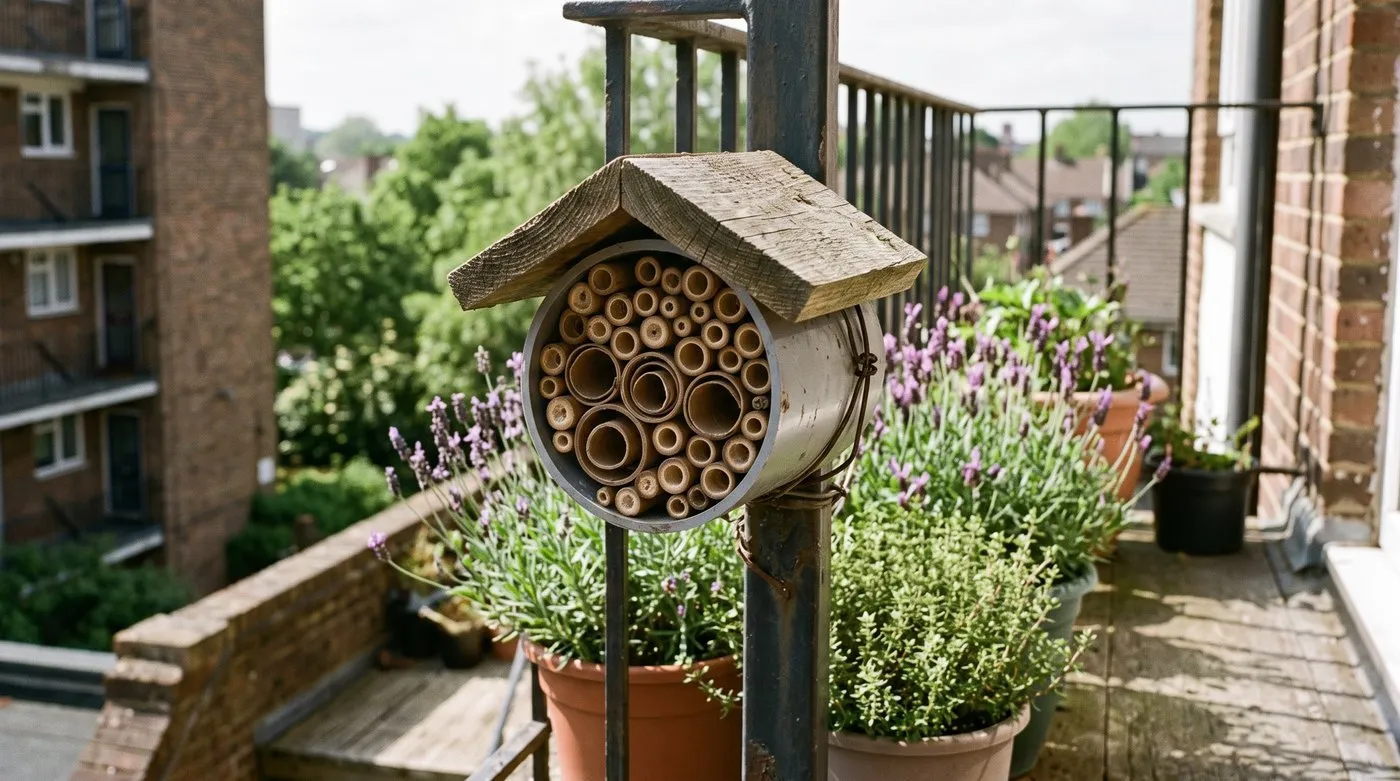
No drill needed. Pack hollow stems tightly into a tube or tin, and keep the open ends facing out.
Cut each stem to about 15cm, just behind a node (the solid joint) so the back stays closed. Aim for a mix of inside widths between 4mm and 10mm. Pack them tightly into a tin, a short length of drainpipe or a wooden frame, open ends facing out. Sand any sharp edges smooth.
Avoid plastic tubes and glass. They trap condensation, mould grows inside and the grubs die. Natural stems and card let moisture escape.
The guide to building a bug hotel covers bigger structures for beetles, ladybirds and other insects, if you’d like to go further.
Bee house design checklist
Most empty or failed bee houses come down to the same few details.
| Feature | Get it right | Get it wrong |
|---|---|---|
| Hole width | Mostly 6mm and 8mm | Over 10mm, which bees rarely use |
| Hole depth | About 15cm, closed at the back | Too shallow, or drilled right through |
| Inside finish | Smooth, no splinters | Rough and splintery |
| Material | Hardwood, bamboo, reed or card | Plastic or glass |
| Tubes | Removable for cleaning | Fixed in and impossible to clean |
| Roof | Overhangs by 4-5cm | No roof, so rain gets in |
A house that stays wet inside, or can’t be cleaned, causes more harm than good. Shallow holes are a problem too. Females are laid at the back of the tube, so short tubes mean mostly male bees.
Where to put a bee house
Face it south or south-east so it gets the morning sun. Solitary bees need to warm up before they can fly, so a sunny spot gets them going sooner. The same house on a shady north wall often stays empty.
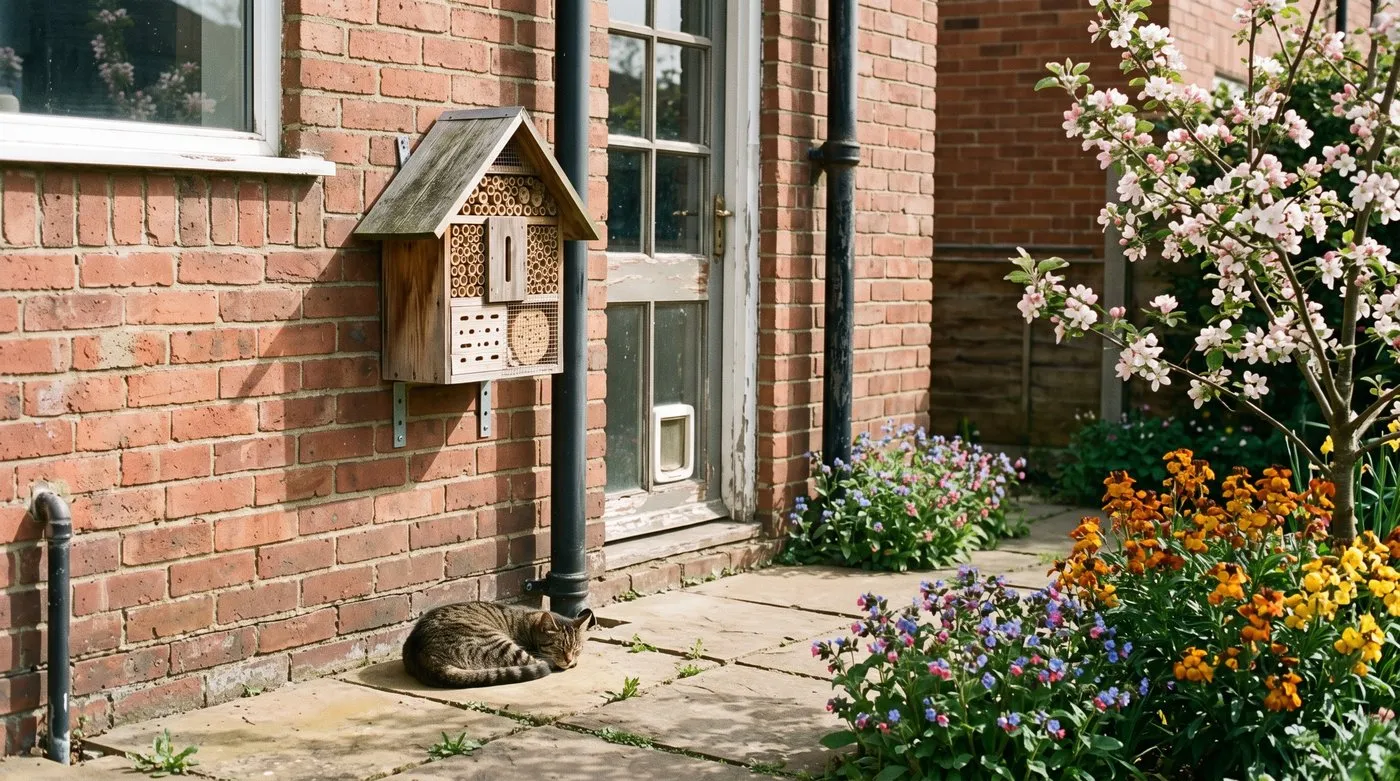
A sunny wall at about chest height, fixed firmly and close to flowers, is the spot bees like best.
- Fix it 1-1.5m off the ground, on a wall, fence or post.
- Fix it firmly so it can’t swing in the wind. Don’t hang it from a branch.
- Keep it out of driving rain, under an eave or overhang if possible.
- Put it near flowers, as the bees forage close to home.
Red mason bees also need mud to build their cell walls. Leave a patch of bare, damp soil nearby, or keep a shallow tray of clay soil wet in spring. Spring blossom and early flowers help too. Our list of early spring pollinator plants has plenty of ideas.
How to clean a bee house each year
Clean or renew a bee house once a year, in autumn or winter. Because a bee house packs lots of nests close together, pests build up fast if it’s left. Pollen mites, parasitic wasps and mould are the main problems.
The easiest approach is replaceable tubes. In autumn, move the filled tubes or block into a cool, dry, sheltered spot such as an unheated shed, so the young bees overwinter safely. Put them back out in early spring, next to a fresh set of tubes. Once the bees have hatched, throw the old cardboard tubes away and scrub drilled blocks before reusing them.
Some keen gardeners open the tubes in autumn, gently clean the mason bee cocoons and keep them cold until spring. It’s fiddly, and only works with tubes or blocks that split open.

The kind of giant, never-cleaned bee hotel to avoid. With this many nests packed together in the damp, pests spread faster than the bees can breed.
Keep your house small. Big walls of tubes look generous, but crowded nests spread mites and parasites. A modest house you clean every year does far more good.
Bee house calendar: what happens each month
| Month | What’s happening | What to do |
|---|---|---|
| January to February | Young bees asleep in their cocoons | Put up new houses and fresh tubes |
| March | Red mason bees come out | Keep the house in morning sun |
| April to May | Mason bees fill and seal tubes | Leave it alone. Keep a mud patch damp |
| June to August | Leafcutter bees nest | Leave it alone |
| September | Grubs feed inside the sealed cells | No action needed |
| October to December | New bees rest in cocoons | Move filled tubes to a cool, dry spot |
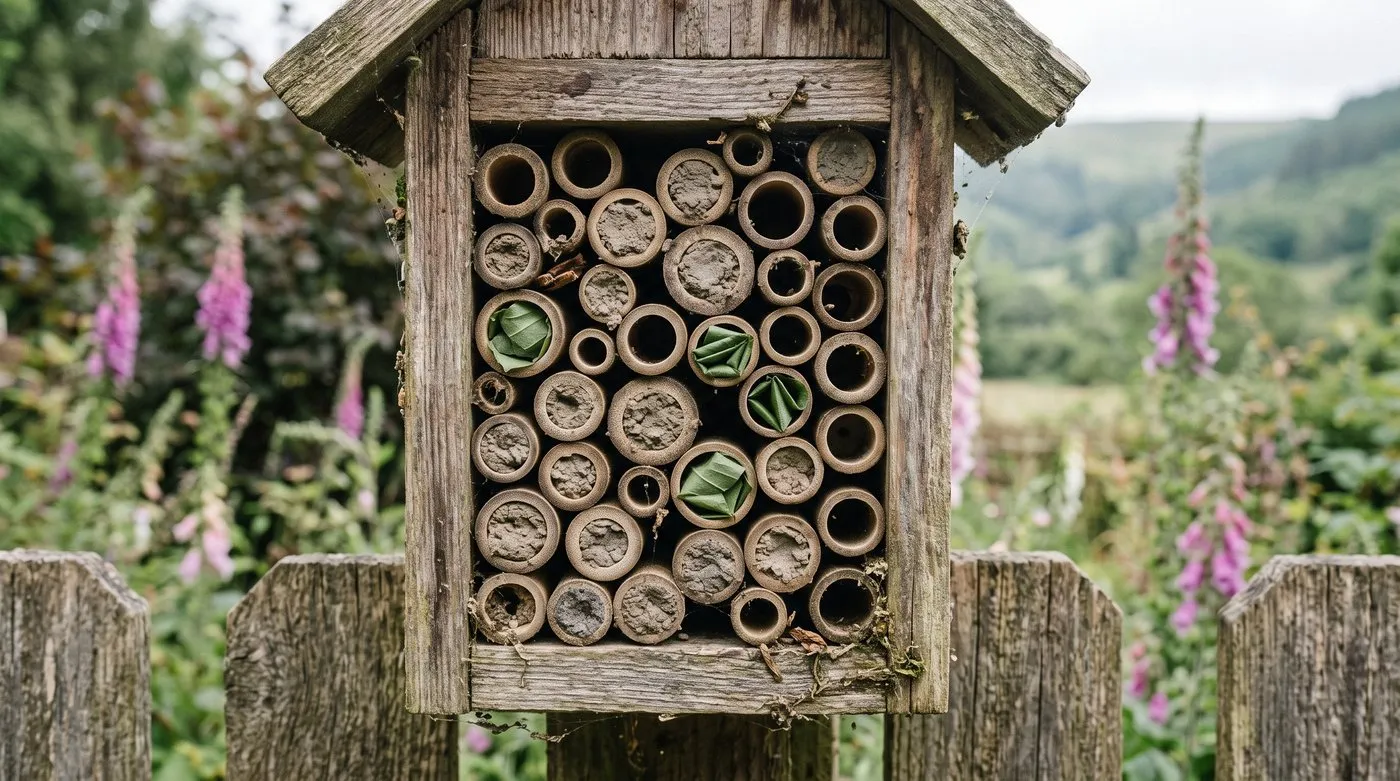
Mud caps mean mason bee nests and leafy plugs mean leafcutters. Leave sealed tubes alone until autumn.
Tubes plugged with mud in late spring are sealed mason bee nests, each holding a row of eggs and pollen. Leave them be. They’re doing exactly what you built the house for.
Common bee house mistakes
- Never cleaning it. Old tubes build up mites and parasites. Replace or clean them every year.
- Going too big. Huge bee hotels crowd nests together. Keep it small.
- Plastic tubes. They trap damp and the grubs go mouldy. Use wood, bamboo, reed or card.
- Rough holes. Bees avoid splintery tunnels. Smooth every hole.
- A shady or swinging spot. Cold or wobbly houses stay empty. Fix it firmly in morning sun.
- No mud nearby. Mason bees need wet soil to seal their nests.
The autumn bee plants list keeps food going late in the year. Bumblebees nest elsewhere, often in the ground, and the bumblebee species guide explains where. For more projects, visit the wildlife hub.
Now your bee house is up, read our guide to the best bee-friendly plants to keep its new residents well fed.
Frequently asked questions
What bees use a bee house in the UK?
Solitary bees, mainly red mason bees and leafcutter bees. They nest alone in tubes rather than in colonies, are very gentle and don’t swarm. Honeybees and bumblebees don’t use bee houses.
Which way should a bee house face?
South or south-east, so it gets the morning sun. Solitary bees need to warm up before they can fly. Fix it firmly 1-1.5m off the ground, sheltered from driving rain, near flowers.
What size holes does a bee house need?
Mostly 6mm and 8mm, with a few between 4mm and 10mm. Drill them about 15cm deep, smooth inside and closed at the back. A mix of sizes suits more kinds of bee.
Do you need to clean a bee house?
Yes, once a year, or mites, mould and parasites build up. Use tubes you can remove or replace. Swap cardboard tubes each year and clean drilled blocks before the bees come out in spring.
Are bee houses good or bad for bees?
Good, as long as they’re kept small and clean. A big, neglected bee hotel packs lots of nests together, so pests and diseases spread easily. A small house you look after, plus flowers nearby, is best.
When should I put up a bee house?
Put it up in late winter, before red mason bees appear in March. Autumn and winter are both fine. Once bees have moved in, leave it where it is until the following winter.
Our team produces practical UK gardening guidance from source research, contributor records and established horticultural practice. Editorial standards are overseen by Matt W.


