Key takeaways
- Birds need four things from a garden - food, water, shelter and a place to nest
- Sunflower hearts suit the widest range of garden birds and leave no husks
- Offer food at two levels, hanging feeders and a ground tray, for more kinds of bird
- A shallow bird bath, kept topped up and clean, brings birds in all year
- Berry shrubs and a thick native hedge give food and shelter you never have to refill
- Put nest boxes up by February, facing between north and east, away from feeders
Attracting birds to your garden comes down to four things: food, water, shelter and somewhere safe to nest. Get those right and you’ll see more birds, and more kinds, whatever the size of your plot.
You don’t need a big garden or lots of kit. A couple of feeders, a shallow dish of water and some thick, prickly planting go a long way. This guide covers each of the four in turn, with simple tips on where to put things and what to avoid. When you’re ready to go further, there are links to the detailed guides on feeding through the seasons and on attracting particular birds.
What do birds need from a garden?
Birds visit gardens that meet their daily needs and stay where they feel safe. The four basics are:
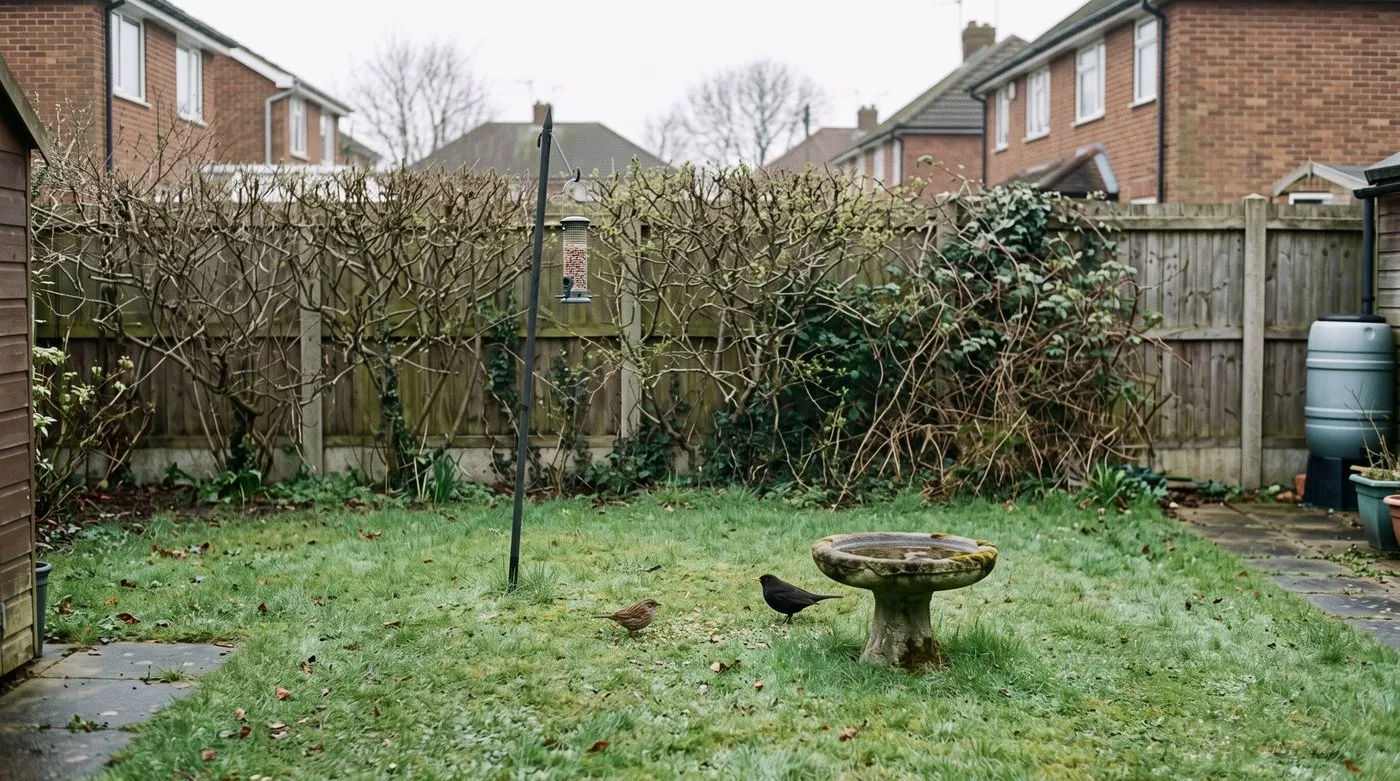
Food, water, shelter and a nest site don’t need much room. A hedge, a feeder and a bath already cover three of the four.
- Food: feeders for a quick start, plus plants that give berries, seeds and insects.
- Water: for drinking and bathing, all year round.
- Shelter: thick, prickly or evergreen plants to hide in and roost in.
- Nest sites: hedges, climbers and nest boxes.
Most gardens already have one or two of these. Look at what’s missing and start there. A garden with a hedge but no water, for example, will change quickly once you add a bird bath. Small changes add up, so don’t feel you have to do everything at once.
Setting up a bird feeding station
Feeders are the quickest way to bring birds in. Offer food at two levels and you’ll suit far more species.
- Hanging tube feeders for sunflower hearts suit tits, finches and sparrows. Metal ones last longer and are easier to clean.
- Fat ball cages suit tits, starlings and woodpeckers in winter. Always take fat balls out of their plastic nets, which can trap feet.
- Ground trays or a low bird table suit robins, blackbirds, dunnocks and thrushes, which don’t like hanging feeders.
- Nyjer feeders have tiny ports for goldfinches and siskins.
- Window feeders stick to the glass and are handy for flats and tiny gardens.
Hang feeders about 2m from a hedge or shrub. Birds can dash to cover, but cats can’t hide close enough to pounce. Put them at a height you can reach easily to refill and clean.
Gardener’s tip: Move your feeders a metre or two every few weeks. It stops droppings building up underneath, which helps keep disease down.

Different feeders bring in different birds. Tube feeders, a peanut mesh and a fat ball cage together suit tits, finches and more.
What food attracts the most birds?
Sunflower hearts are the best all-rounder. Almost every garden bird eats them, and with no husks there’s no mess. Build from there:
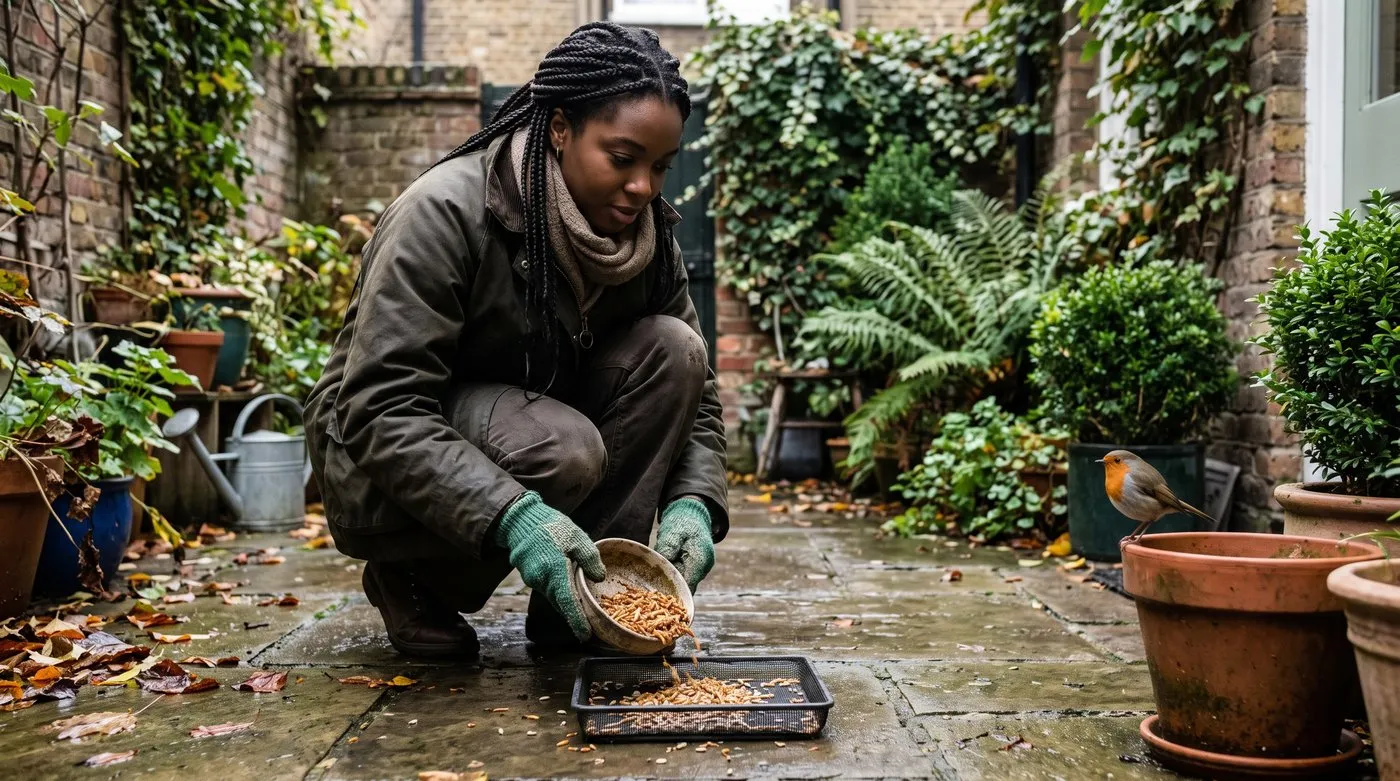
A low tray brings in robins, blackbirds and dunnocks, which don’t like hanging feeders. Soak dried mealworms first.
| Food | Birds it attracts | Best time |
|---|---|---|
| Sunflower hearts | Tits, finches, sparrows, robins, blackbirds | All year |
| Fat balls (no nets) | Tits, starlings, woodpeckers | Autumn to spring |
| Mealworms, soaked | Robins, wrens, blackbirds, dunnocks | All year, especially spring |
| Nyjer seed | Goldfinches, siskins | All year |
| Peanuts in a mesh feeder | Tits, nuthatches, woodpeckers | All year, never loose in spring |
Kitchen scraps help too: mild grated cheese, plain cooked rice, uncooked porridge oats and soft apples or pears.
Warning: Never put out milk, salty food, desiccated coconut, cooked porridge oats or mouldy food. Milk upsets birds’ stomachs, salt is harmful, and cooked oats can set hard around a beak.
The menu changes through the year. The bird feeding guide by season shows what to put out each month and how much.
Water for birds: drinking and bathing
A bird bath can bring in as many birds as a feeder. Birds need water every day, and bathing keeps their feathers in good shape for staying warm and flying.
Choose a bath with gently sloping sides and a rough surface for grip. The edges should be just a couple of centimetres deep, and no deeper than about 10cm in the middle. Stone or glazed ceramic is ideal. Put it in an open spot a couple of metres from cover, so birds can watch for cats while they splash.
Top it up and rinse it every couple of days, and give it a scrub with plain water each week. In frosty weather, melt the ice with warm (not boiling) water, or float a small ball on the surface overnight. Never add salt or antifreeze. The guide to bird bath placement and cleaning covers the details.

A wide, shallow stone bath is perfect for blackbirds and thrushes, which like to bathe low down.
Plants that attract birds all year
The right plants feed birds for free, year after year. They also bring in the insects that robins, wrens and tits feed to their chicks.
Berry shrubs for autumn and winter:
- Pyracantha has masses of orange or red berries, and its thorns keep cats out of nests.
- Holly gives evergreen shelter and red berries on female plants, if there’s a male nearby.
- Rowan ripens its berries early, from late summer.
- Hawthorn gives red haws in autumn and is a great nesting hedge.
- Crab apple holds small fruit well into winter for blackbirds and redwings.
- Cotoneaster berries are popular, but keep it within your garden, as some kinds spread into the wild.
Seed heads to leave standing over winter: teasels and sunflowers for goldfinches, plus ornamental grasses and other perennials for sparrows and finches.
Shelter and nest sites: a mixed native hedge of hawthorn, blackthorn and field maple is the best single thing you can plant for birds. Ivy on a fence or wall gives late berries, insects and nest sites too. Climbing roses and honeysuckle make thick, twiggy cover for nests.

Pyracantha feeds blackbirds and thrushes through autumn and winter, and its thorny stems make a safe place to nest.
Putting up nest boxes
Nest boxes give birds a safe place to raise chicks where old trees with holes are scarce. The size of the hole decides who moves in.
| Box type | Birds it suits |
|---|---|
| 25mm hole | Blue tits, coal tits, marsh tits |
| 28mm hole | Great tits, tree sparrows |
| 32mm hole | House sparrows, nuthatches |
| 45mm hole | Starlings |
| Open-fronted | Robins, pied wagtails, spotted flycatchers |
Put boxes up by February, or in autumn so they have time to weather. Face the hole between north and east, out of strong sun and the worst of the rain. Fix hole-fronted boxes about 2-4m up, tilted very slightly forward, and keep them away from feeders. Open-fronted boxes do best lower down, tucked into a climber or hedge.
Buy or make a box from untreated wood at least 15mm thick, with a small drainage hole in the base. Don’t add a perch, as it helps predators reach in. Clean old nests out in autumn, once the breeding season is well over.
Warning: It is an offence to damage or destroy an active bird nest. Leave hedge cutting until after August, and check carefully for nests before any trimming. The guide to when to cut hedges in the UK explains the timings.

A 25mm hole is just right for blue tits and keeps bigger birds out.
Keeping birds safe from cats, squirrels and sparrowhawks
Birds won’t stay where they feel unsafe, so a few small changes help.
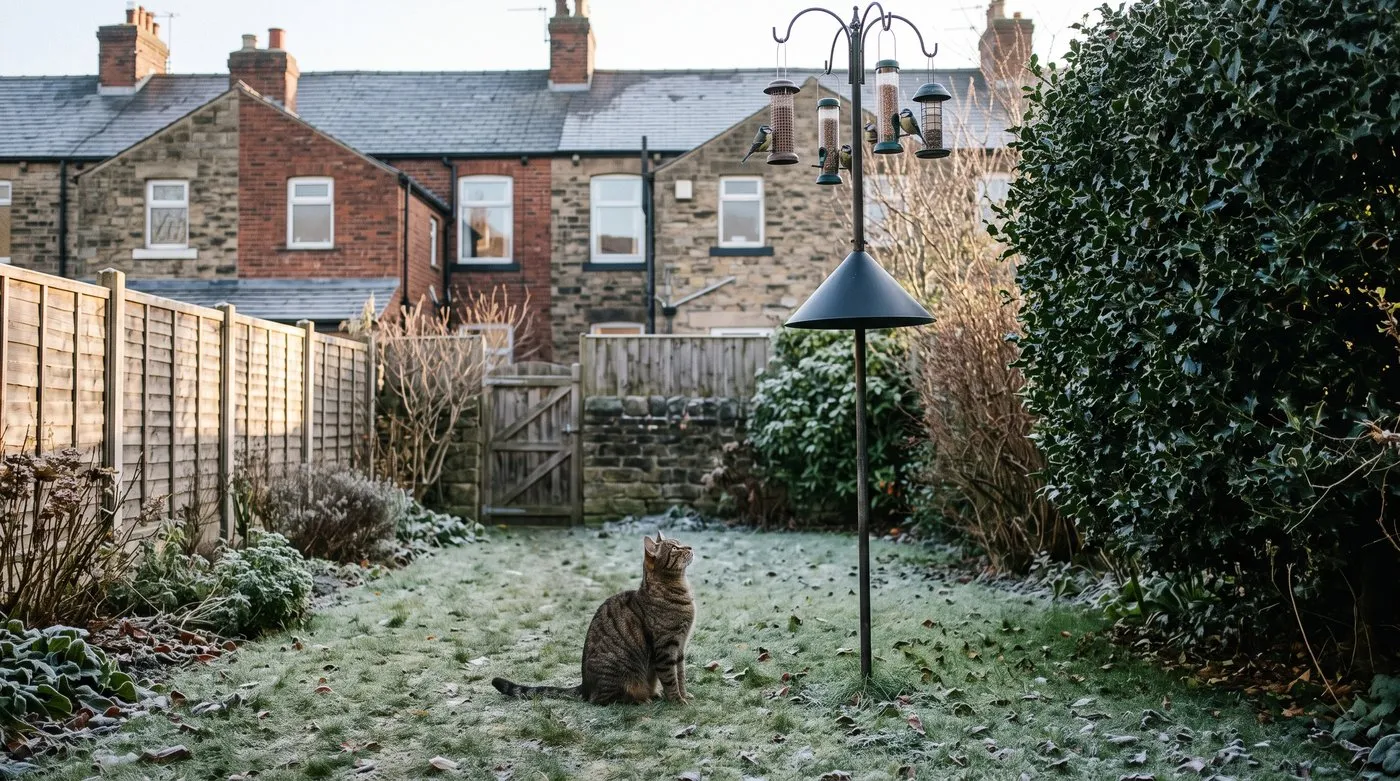
Feeders out in the open, with a baffle on the pole, leave a cat nowhere to hide and nothing to climb.
- Cats: keep feeders and baths in the open, about 2m from cover. A prickly plant under the hedge, such as holly or pyracantha, makes it harder for cats to lurk. If you have a cat, a bell collar and keeping it in at dawn and dusk both help.
- Grey squirrels: use a caged or weight-operated feeder. Squirrel baffles on feeder poles help too.
- Sparrowhawks: these are a natural part of garden life. If one visits often, move feeders a little closer to thick cover so small birds can dive for safety.
Month-by-month bird garden calendar
| Month | What to do |
|---|---|
| January | Feed every day and keep water ice-free. Join the RSPB Big Garden Birdwatch |
| February | Put up nest boxes. Keep winter feeding going |
| March | Hedge cutting stops. Offer soaked mealworms for nesting birds |
| April | Leave nest boxes alone. No loose peanuts while chicks are about |
| May | Keep soaked mealworms going for busy parents |
| June | Keep bird baths full in dry spells. Watch for fledglings |
| July | Keep feeding and watering. Many birds are moulting |
| August | Leave seed heads standing on perennials |
| September | Check hedges are clear of nests before trimming. Plant berry shrubs |
| October | Clean out nest boxes. Hang fat balls |
| November | Full winter feeding. Plant bare-root hedging |
| December | Keep feeders stocked and break ice daily |
Common mistakes when attracting birds
- Dirty feeders. Old food and droppings spread diseases such as trichomonosis, which has hit greenfinches hard. Clean feeders every week or two and rinse well. If you see sick, fluffed-up birds, stop feeding for at least two weeks. The guide to cleaning bird feeders shows how.
- Feeding on and off. Birds come to rely on a well-stocked feeder in cold weather. Once you start in winter, keep it going, and ask a neighbour to help if you go away.
- Feeders near windows. Birds can fly into the glass. Put feeders either within about 50cm of the window or well away from it, and add window stickers if strikes happen.
- Cheap seed mixes. Mixes heavy in wheat and split peas get flicked out and wasted. Look for mixes with sunflower hearts and millet.
- Tidying too much. Leave some leaf litter, seed heads and a log pile. They hold the insects that wrens and robins need.
Want to bring in a particular bird? There are step-by-step guides for robins, house sparrows and wrens. Explore more ideas in the wildlife section, then learn to name your visitors with the guide to identifying common UK garden birds.
Frequently asked questions
What food attracts the most birds in the UK?
Sunflower hearts suit the widest range of garden birds. Tits, finches, sparrows, robins and blackbirds all eat them, and there are no husks to sweep up. Add fat balls in winter and soaked mealworms for robins, wrens and blackbirds.
Should I feed birds all year round?
Yes, feeding all year helps, as long as you change the menu. Winter food gets birds through cold nights, and spring and summer food helps busy parents. Never put out whole peanuts in spring, as chicks can choke on them. Use a mesh feeder instead.
How long does it take for birds to find a new feeder?
It can take anything from a few days to several weeks. Birds are wary of new things. Put the feeder near a hedge or shrub, keep it filled and be patient. Scattering a little seed on the ground nearby can help them notice it.
Where should I put a bird bath?
Put it in an open spot a couple of metres from cover. Birds can then spot cats while they bathe, but still dash to safety. Keep it away from under feeders, where droppings fall in. Top it up and rinse it every couple of days.
When should I put up nest boxes?
By February at the latest, though autumn is even better. Birds start looking for nest sites in late winter. Face the hole between north and east, out of strong sun and the worst of the rain. Clean old nests out in autumn.
What plants attract birds to gardens?
Berry shrubs, seed heads and thick hedges attract the most birds. Pyracantha, holly, rowan, hawthorn and crab apple feed birds in autumn and winter. Teasels and sunflowers left standing feed finches. Native hedging and ivy give shelter and nest sites.
Our team produces practical UK gardening guidance from source research, contributor records and established horticultural practice. Editorial standards are overseen by Matt W.