Key takeaways
- Site the bath in the open, a couple of metres from cover, so birds can see cats coming
- Keep it shallow: about 2.5cm at the edge and no more than 10cm in the middle
- Add a few pebbles or flat stones so small birds and insects can stand safely
- Change the water every day or two and give it a proper scrub once a week
- Keep the bath away from feeders, where droppings and husks foul the water
- In frost, float a ball or add warm water, and never use salt, antifreeze or glycerine
The best place for a bird bath is an open spot a couple of metres from cover, with shallow water and clean surfaces. Get those right and blackbirds, robins, sparrows and tits will soon be splashing about. Get them wrong and the bath sits empty, or spreads disease between the birds you want to help.
This guide covers where to put a bird bath, how deep to fill it, how to keep it clean, and how to look after it in frost and hot spells. It’s all simple once you know the tricks. For feeders, see our separate guide to cleaning bird feeders.
Where to put a bird bath in your garden
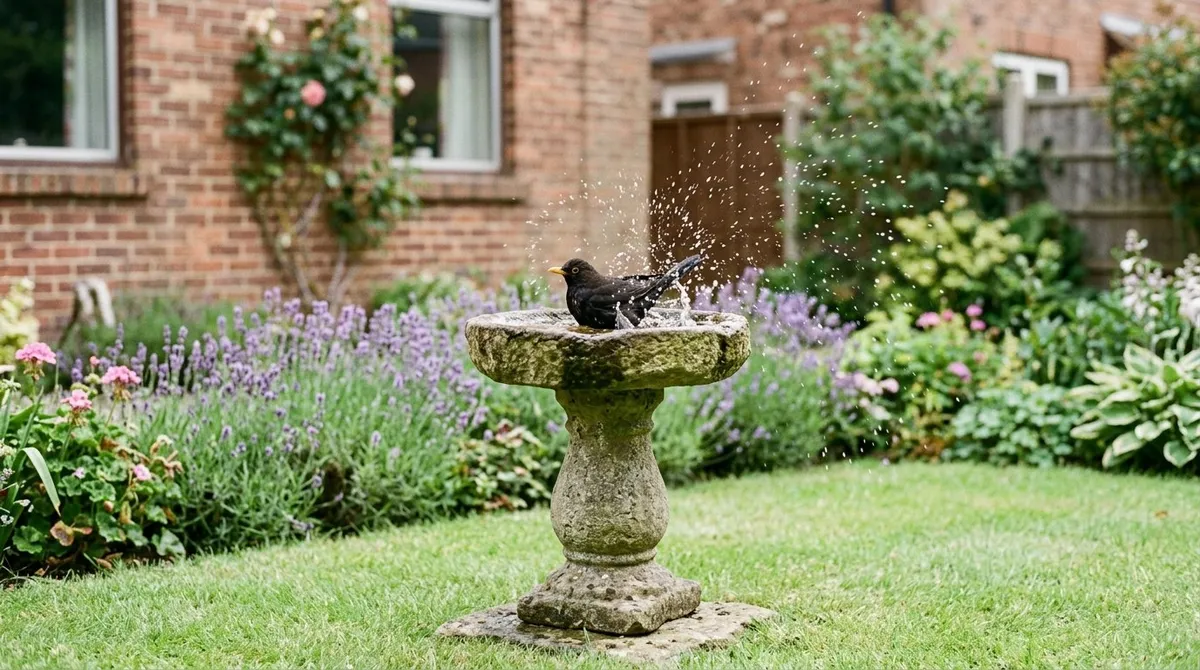
Put it in an open spot a couple of metres from a shrub, hedge or tree. That gap matters. Birds can see a cat coming, yet still have cover close enough to dash to if a sparrowhawk appears.
Don’t tuck the bath right against dense shrubs. A cat can hide there and pounce. Birds feel this, and they won’t settle at a bath with thick cover at the rim.
Keep it away from busy paths, doors and the washing line. A soaking-wet bird flies poorly for a minute or so, so it wants a calm spot. A quiet bit of lawn or border is ideal. If you can, place it where you can see it from a window. Watching birds bathe is half the fun, and a good chance to identify your garden birds.
Part shade helps too. Water in full sun warms up and goes green quickly in summer. Dappled shade for part of the day keeps it cooler and fresher for longer.
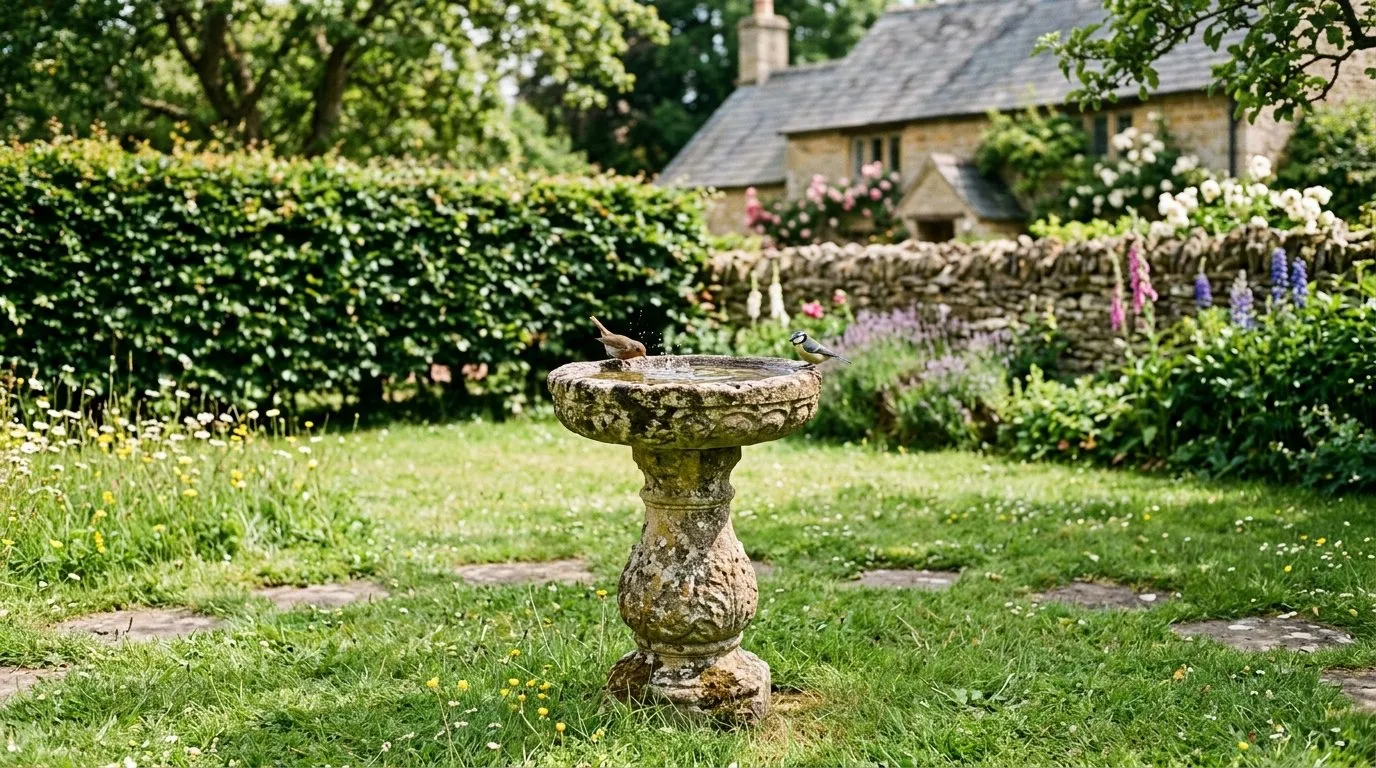
Open lawn all round, with a hedge a few strides away. Birds can see trouble coming and still reach cover fast.
Pedestal or ground-level bath?
Both work, and many gardens have one of each. A pedestal bath keeps birds up off the ground, which helps where cats are about. A ground-level dish suits blackbirds, thrushes and dunnocks, which like to bathe low down. Hedgehogs will drink from it too, which is a bonus if you’re making a hedgehog-friendly garden. Give a ground dish a clear area all round so nothing can creep up on it.
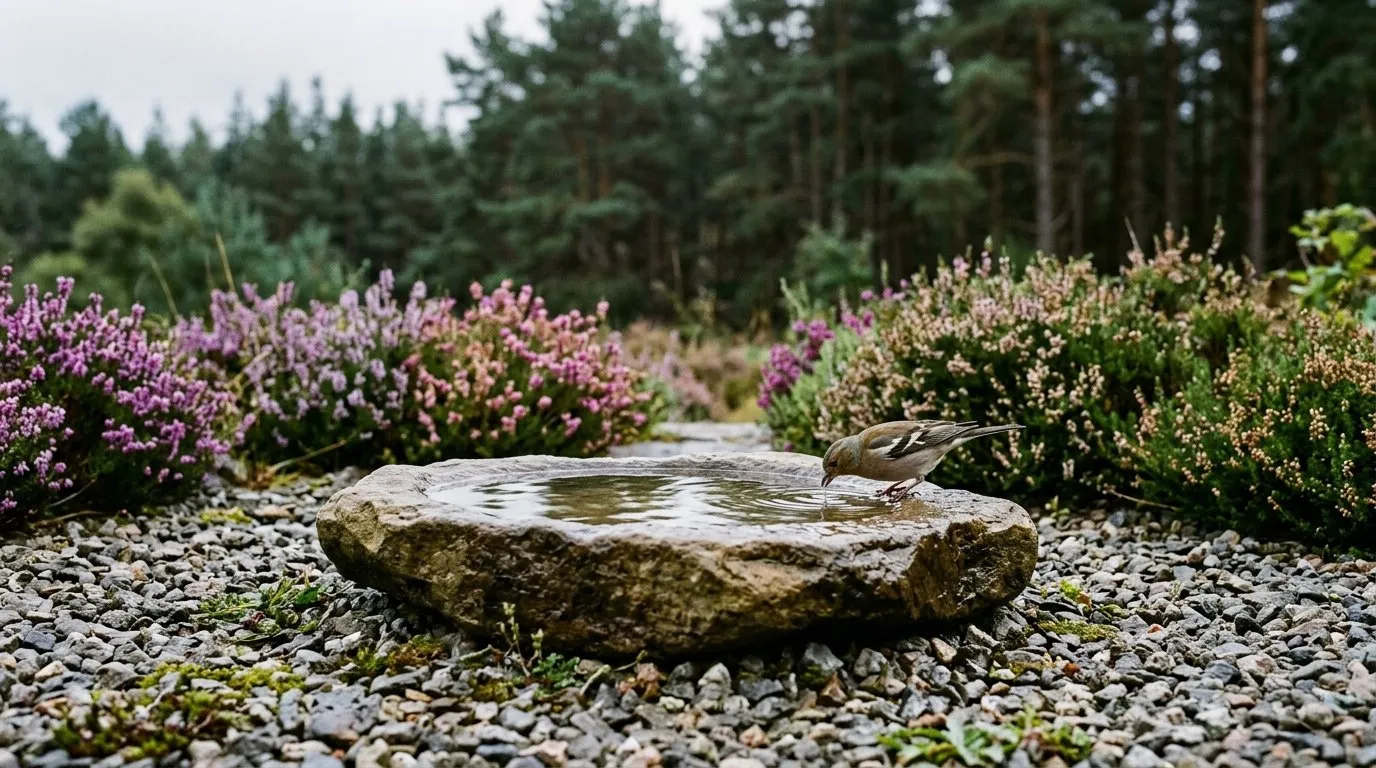
A shallow stone dish at ground level suits birds like chaffinches, and hedgehogs can drink from it at night.
How deep should a bird bath be?
About 2.5cm at the edge, sloping to no more than 10cm in the middle. Birds bathe by wading in, so a gentle slope matters more than the size of the bowl.
Deep, steep-sided bowls are risky for fledglings and put off small birds. Many ornamental baths are made to look nice rather than to be used, so check before you buy.
Grip matters as much as depth. A smooth, glazed bowl is slippery, and birds won’t stay where they can’t get a footing. Stone, concrete and unglazed pottery all give a better grip.
The easy fix for any bath is a handful of pebbles or flat stones in the water. Pile some up towards one edge like a little beach. Small birds get a shallow place to stand, and bees and other insects can drink without drowning.
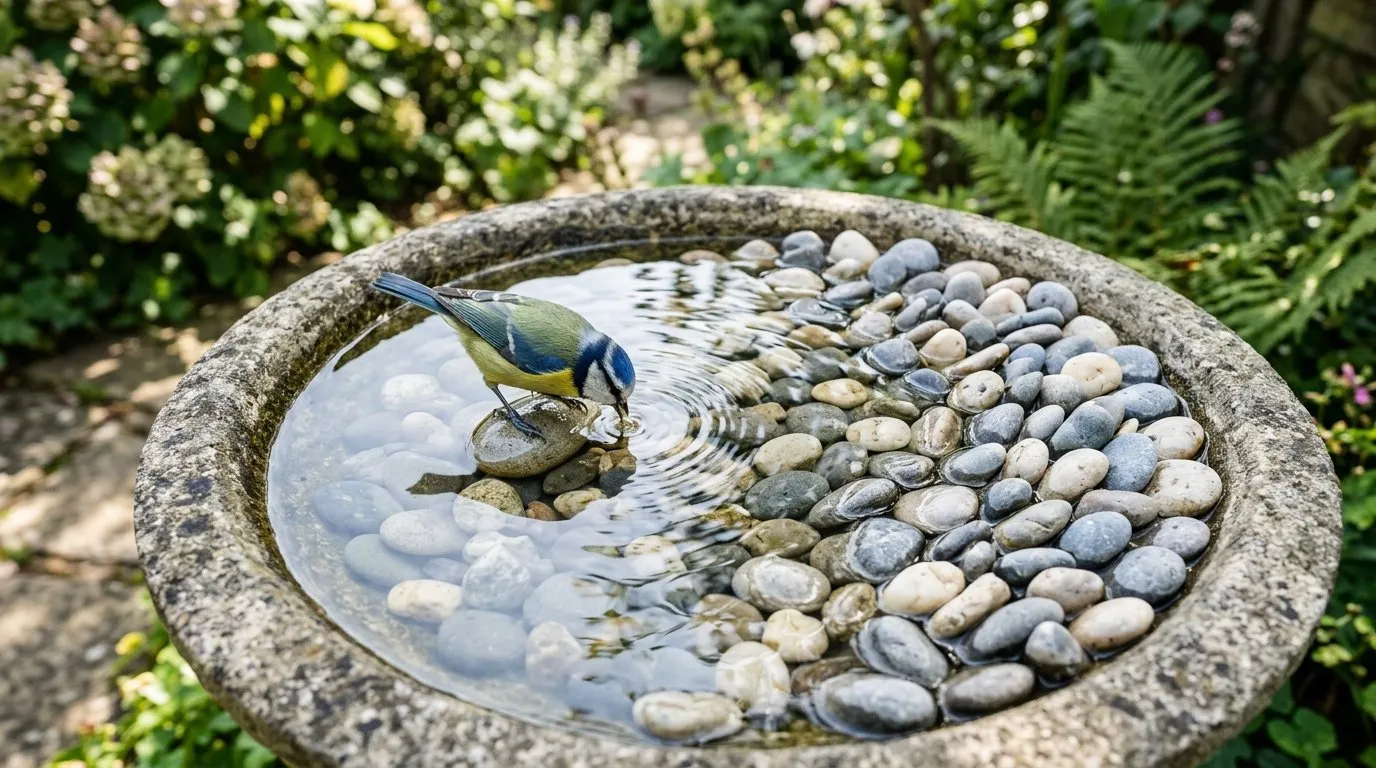
Pebbles give small birds like this blue tit a safe, shallow place to stand, and help insects climb out.
Does moving water attract more birds?
Yes. Birds notice the sound and sparkle of moving water from further away, and moving water stays fresher for longer.
There are three easy ways to add movement:
- A dripper: anything that drips slowly onto the surface, even a bottle with a tiny hole hung above the bath.
- A small solar fountain: a floating pump that sends up a little jet when the sun’s out. It needs a sunny spot to work well.
- A mains pump: steady flow all day, if you have an outdoor socket fitted safely by an electrician.
A fountain is a bonus, not a must. A clean, shallow, still bath is far better than a dirty one with a pump.
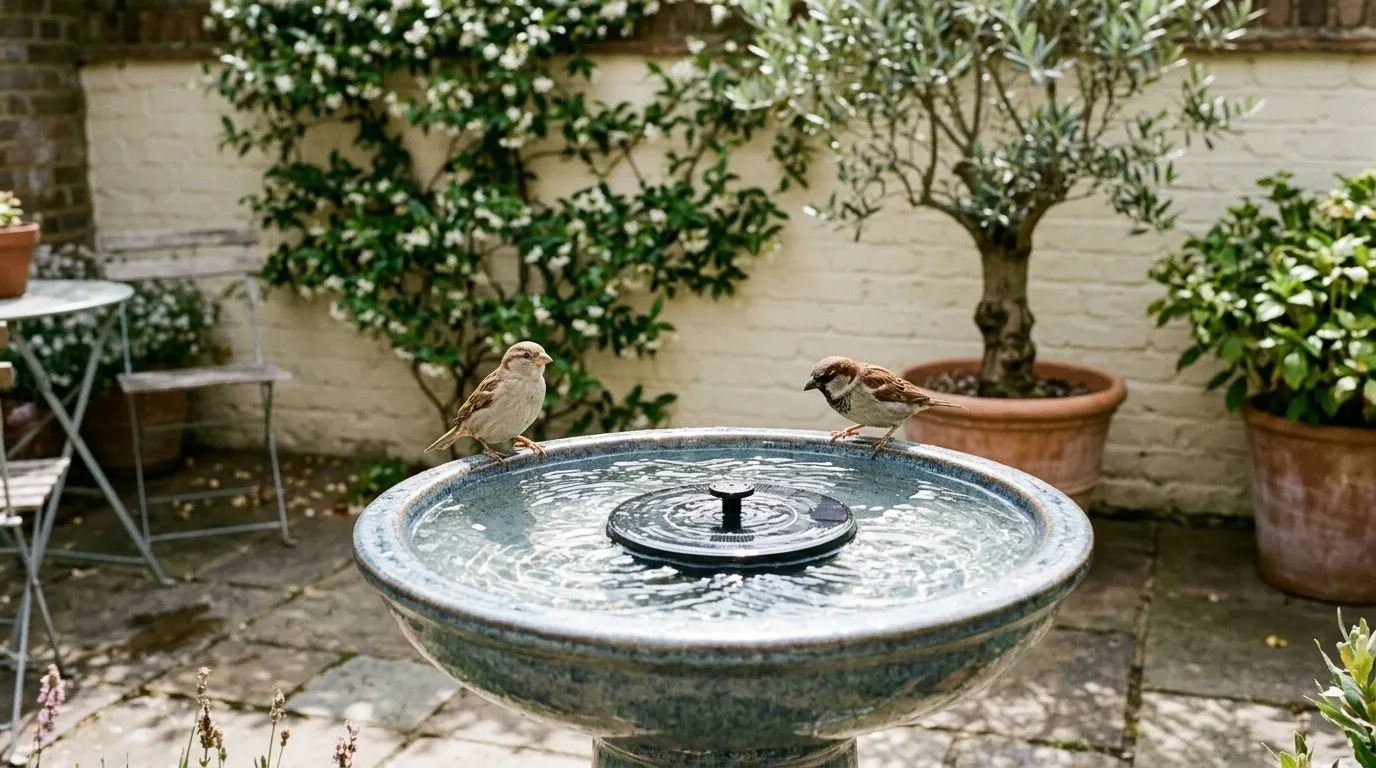
A floating solar fountain adds gentle movement that catches birds’ attention, even on a small city patio.
How to clean a bird bath
Change the water every day or two and give the bath a proper scrub once a week. In hot weather, or when it’s busy, scrub every few days.
A bath collects droppings, feathers and saliva in a small amount of water. That’s how disease passes from bird to bird, so cleaning really matters.
- Empty the old water onto a border.
- Scrub off algae and droppings with a stiff brush you keep just for the bath.
- Wash with hot water and a disinfectant made for bird baths and feeders, mixed as the label says.
- Rinse well, two or three times, so no cleaner is left.
- Let it dry in the air if you have time. Drying helps kill germs.
- Refill with fresh water.
Wear rubber gloves and wash your hands afterwards. Clean the bath outdoors, not in the kitchen sink.

A weekly scrub with a brush kept just for the bath stops the green film and germs building up.
Can a dirty bird bath make birds ill?
Yes. Shared water can spread diseases such as trichomonosis, which has hit greenfinches and chaffinches hard. It’s caught through saliva and food dropped at feeders and water. Infected birds struggle to swallow and slowly starve.
The parasite doesn’t survive long once things dry out, so emptying and drying the bath helps a lot. Keep the bath away from feeders, too. If it sits under one, husks, droppings and dribbled food fall straight into the water. Our seasonal bird feeding guide shows how to set up a feeding station with space between things.
Signs of a sick bird: fluffed-up feathers, sitting still, drooling or food stuck round the beak, and struggling to swallow. If you see this, stop putting out water and food straight away. Clean everything thoroughly, then leave it for at least two weeks before starting again. The Garden Wildlife Health project has advice and a form for reporting sick birds.
Our guide to the RSPB’s bird feeding advice explains how to feed safely when disease is about.
Keeping a bird bath ice-free in winter
Birds need water in winter for drinking and keeping their feathers in good order. A frozen bath leaves them stuck, so keep a hole open in cold snaps.
Float a light ball, such as a table-tennis ball. The breeze keeps it bobbing, which helps stop thin ice forming. Or pour on warm water each morning to melt the surface. Use warm rather than boiling water, as boiling water can crack a cold stone or ceramic bath.
Never add salt, antifreeze or glycerine. They can poison birds or damage their feathers, and a bird with soggy feathers can’t stay warm. Keep the water plain.
A handy trick is to line the bowl with a loose sheet of plastic overnight. In the morning, lift out the ice in one piece and refill.
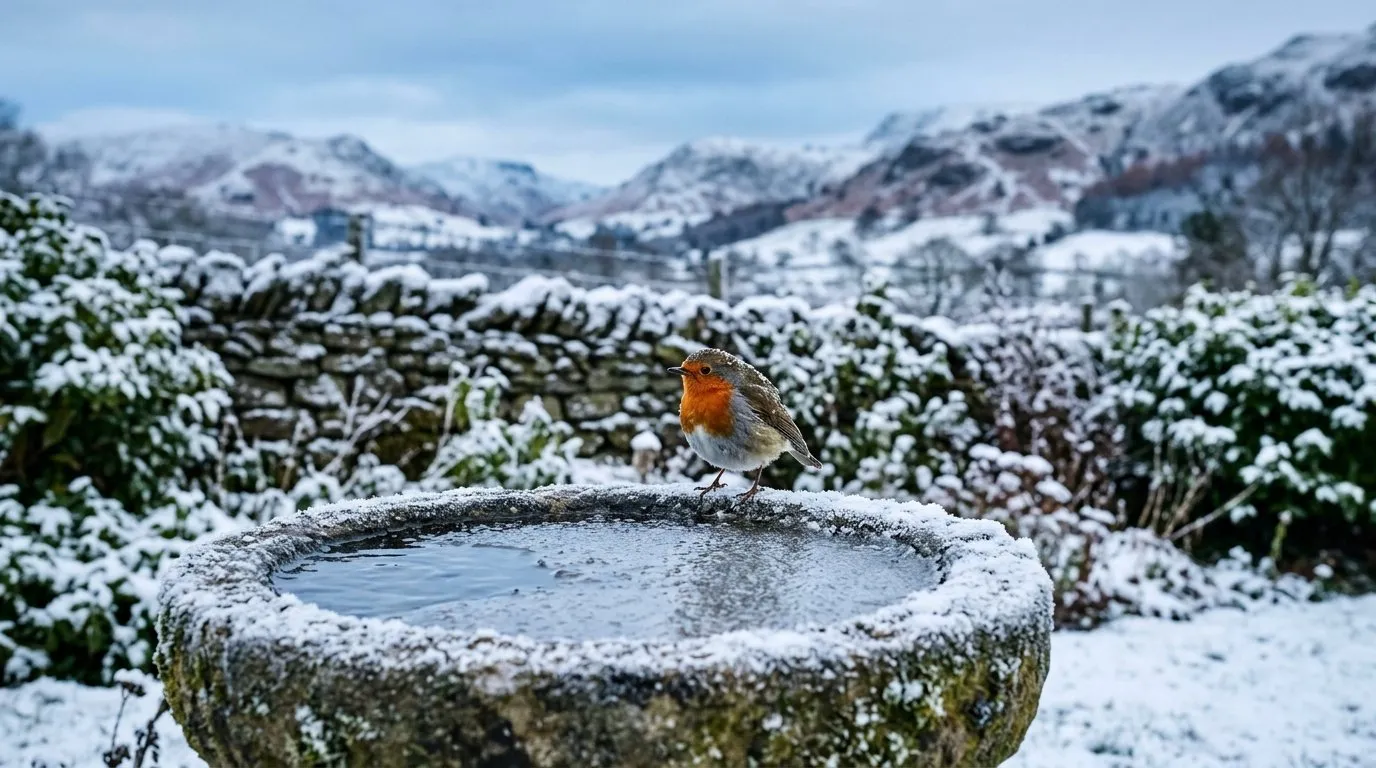
Ice cuts birds off from water when they need it most. A morning top-up of warm water keeps this robin going.
Bird baths in hot, dry weather
In a hot spell, water can matter more to birds than food. Puddles dry up, so your bath may be the only water nearby.
Top it up every day, or twice a day in a heatwave, as shallow water dries out fast. Scrub more often, because warm water goes green quickly. A second shallow dish in the shade is a big help. Our guide to helping garden birds in a heatwave has more ideas for water and shade.
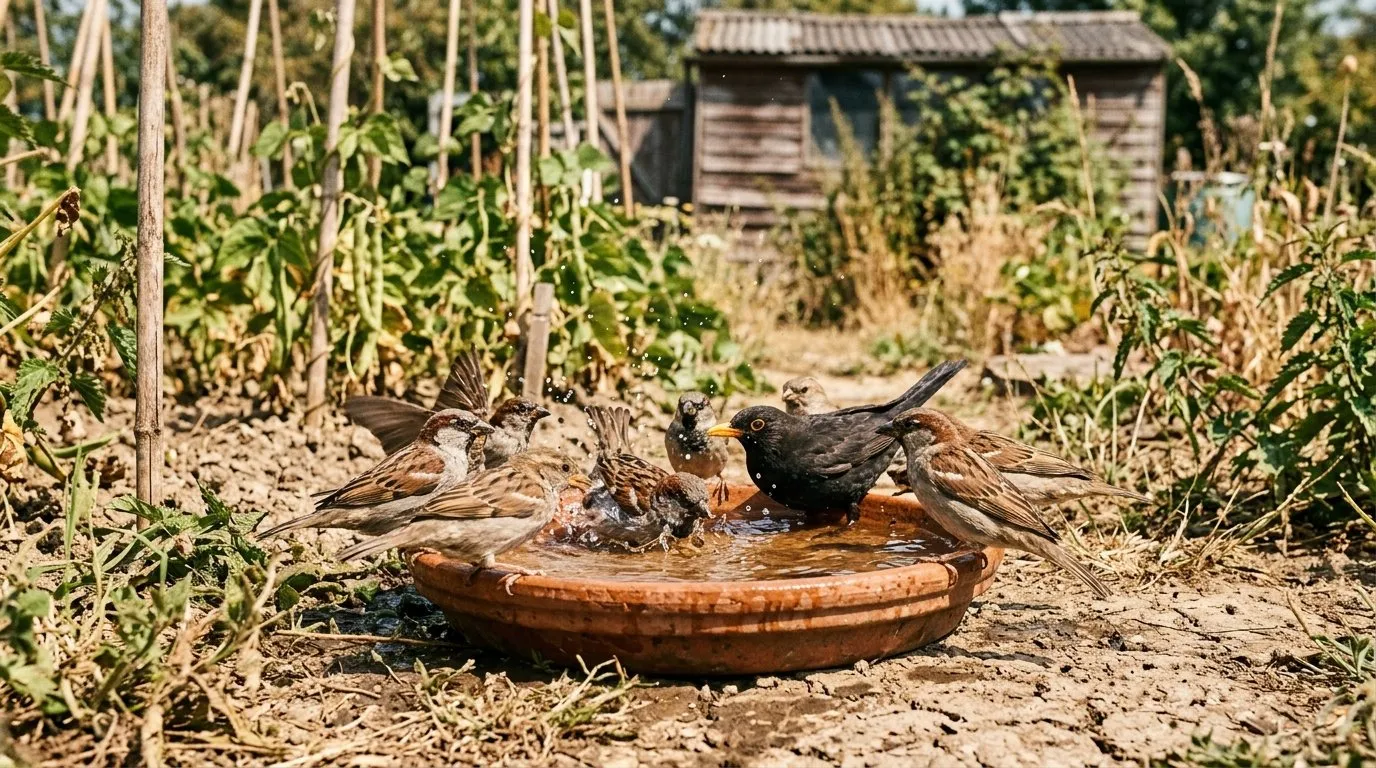
On a hot day, even a simple terracotta saucer of clean water draws a crowd.
Which type of bird bath is best?
A pedestal bath plus a ground dish covers most gardens. Choose by your space and how many cats you have nearby.
| Type | Good for | Watch out for |
|---|---|---|
| Pedestal | Open lawns, gardens with cats | Choose a shallow bowl with a rough surface |
| Ground-level dish | Blackbirds, thrushes, hedgehogs | Needs open ground round it so cats can’t creep up |
| Hanging bath | Balconies and small yards | Holds little water, so refill often |
| Bath with solar fountain | Drawing birds in from further away | Needs sun, and the pump needs cleaning too |
Bird bath care through the year
| Month | What to do |
|---|---|
| January | Keep a hole open in the ice each morning. Keep scrubbing weekly |
| February | Check stone and ceramic baths for frost cracks |
| March | Algae starts again as days lengthen. Keep up weekly scrubs |
| April | Birds bathe a lot before nesting. Add pebbles ready for fledglings |
| May | Move the bath into part shade if it’s going green fast |
| June | Top up in warm spells. Keep it well clear of feeders |
| July | Top up daily in hot weather. Scrub every few days |
| August | Watch for sick finches. Clean thoroughly and often |
| September | Moulting birds bathe often. Keep the water fresh |
| October | Scoop out fallen leaves, which foul the water fast |
| November | Get a floating ball ready for the first frosts |
| December | Melt ice with warm water. Never add salt or antifreeze |
Common bird bath mistakes
- Too deep or too slippery. Add pebbles or flat stones for a shallow, grippy edge.
- Hidden among shrubs. Cats can lie in wait. Move it into the open, with cover a couple of metres away.
- Right under a feeder. Droppings and husks fall in. Move one of them a few metres away.
- Topping up without emptying. Old water keeps the dirt and germs. Empty, scrub, then refill.
- Salt or antifreeze in winter. Both harm birds. Use warm water or a floating ball.
Now your bath is sorted, read our guide on how to attract birds to your garden to make the rest of the garden just as welcoming. You’ll find more ideas in our wildlife gardening guides.
Frequently asked questions
Where is the best place to put a bird bath?
In an open spot a couple of metres from a shrub or hedge. Birds can see cats coming but still dash to cover. Part shade keeps the water cooler and slows algae. Keep it away from busy paths and feeders.
How deep should a bird bath be?
About 2.5cm at the edge and no more than 10cm in the middle. Gently sloping sides let small birds wade in and out. If your bath is deeper, add pebbles or flat stones to make shallow standing spots.
How often should you clean a bird bath?
Change the water every day or two and scrub it weekly. In hot weather or when lots of birds use it, scrub every few days. Always empty the old water rather than just topping up.
What can I use to clean a bird bath?
Hot water, a stiff brush and a disinfectant made for bird baths. Follow the label, then rinse several times so nothing is left behind. Keep the brush just for the bath, and let it dry before refilling if you can.
How do I stop my bird bath freezing?
Float a small ball on it or add warm water each morning. A table-tennis ball moving in the breeze helps keep a hole open in thin ice. Use warm, not boiling, water, as boiling water can crack a cold bath.
Can I put antifreeze or salt in a bird bath?
No, never. Salt, antifreeze and glycerine can poison birds or damage their feathers. Wet feathers can’t keep a bird warm on a cold night. Keep the water plain and clear the ice by hand.
Why do birds ignore my bird bath?
It’s usually too deep, too slippery or in the wrong spot. Add pebbles for grip and a shallow edge. Move it away from dense cover where cats lurk, and away from noisy paths. New baths can take a few weeks to be found.
Our team produces practical UK gardening guidance from source research, contributor records and established horticultural practice. Editorial standards are overseen by Matt W.