Key takeaways
- The new advice is RSPB guidance, not a legal ban, and you can still feed birds
- Pause seed and peanuts from 1 May to 31 October
- Retire bird tables, window trays and any feeder with a flat tray
- Clean feeders weekly and hang them somewhere new after each clean
- Only put water out if you can change it every day
- Small amounts of suet, fat balls and mealworms are fine all year
The RSPB has changed its garden bird feeding advice, and the headlines made it sound bigger than it is. It is guidance, not a ban. In short: no seed or peanuts from May to October, no bird tables, and a weekly clean and move for every feeder. This guide explains what changed, why, and exactly what to do with your feeders now.
What does the new RSPB advice actually say?
The RSPB now asks gardeners to “feed safely, feed seasonally”. It is advice, not law, and you can still feed birds all year. The changes are about how and when you feed, so feeders spread less disease.
There are four main points:
- Pause seed and peanuts from 1 May to 31 October. The RSPB calls this the close season.
- Retire flat feeders. That means bird tables, window trays and tube feeders with a wide tray at the base.
- Clean feeders at least once a week, then hang them somewhere new and clear up any mess underneath.
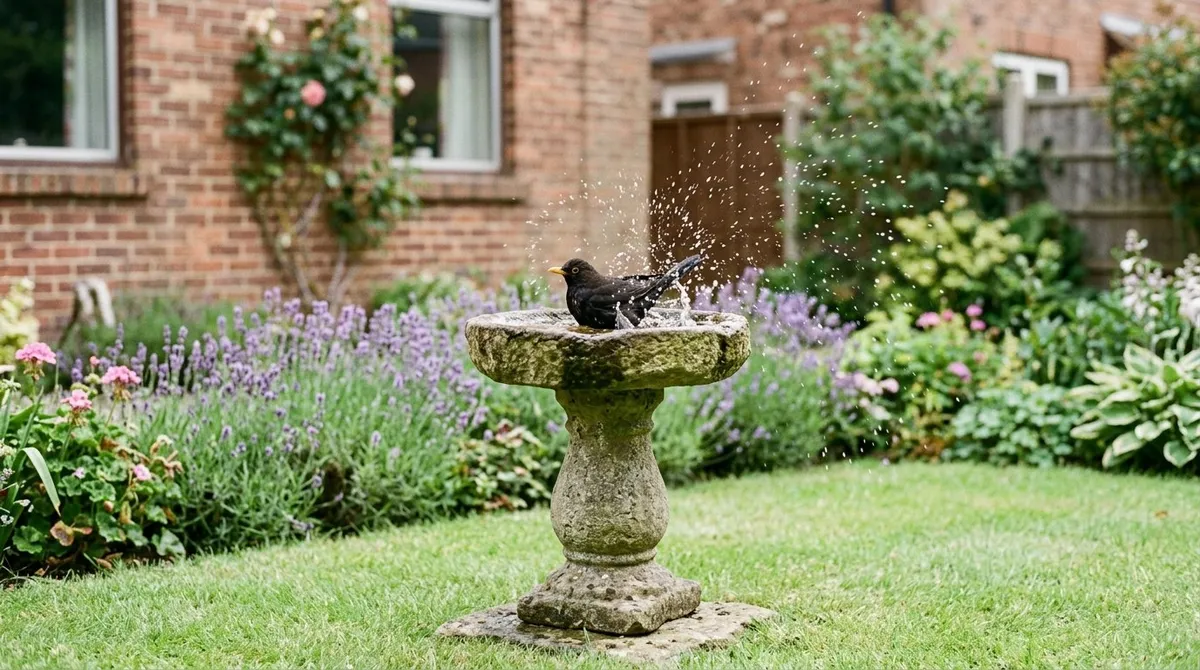
- Only offer water you can change daily, using fresh tap water, and scrub the bath weekly.
Small amounts of mealworms, suet and fat balls are fine all year round. The RSPB has also stopped selling bird tables, and it no longer sells seed and peanuts between May and October.

The bird table’s open tray is exactly the kind of flat surface the RSPB now asks you to retire. Tube feeders without a tray can stay.
Why has the RSPB changed its advice?
The change is about disease, mainly trichomonosis in finches. Greenfinches have declined steeply since this disease reached British birds, and they are now on the UK Red List. Chaffinches have been hit too.
Trichomonosis is caused by a tiny parasite that lives in a bird’s mouth and throat. A sick bird struggles to swallow and drops soggy food back onto trays, tables and the ground. The next bird picks it up there, or from a shared bird bath.
The parasite does not last long once it dries out. That is why flat surfaces, damp spilt seed and stale water are the problem. Fewer birds crowding together in the warmer months gives it fewer chances to spread. Winter is when birds need extra food most, so that is when feeding helps the most.
What should I do with my feeders now?
Switch to a short weekly routine and the right kind of feeder. None of it costs much. Doing it every week is what counts.
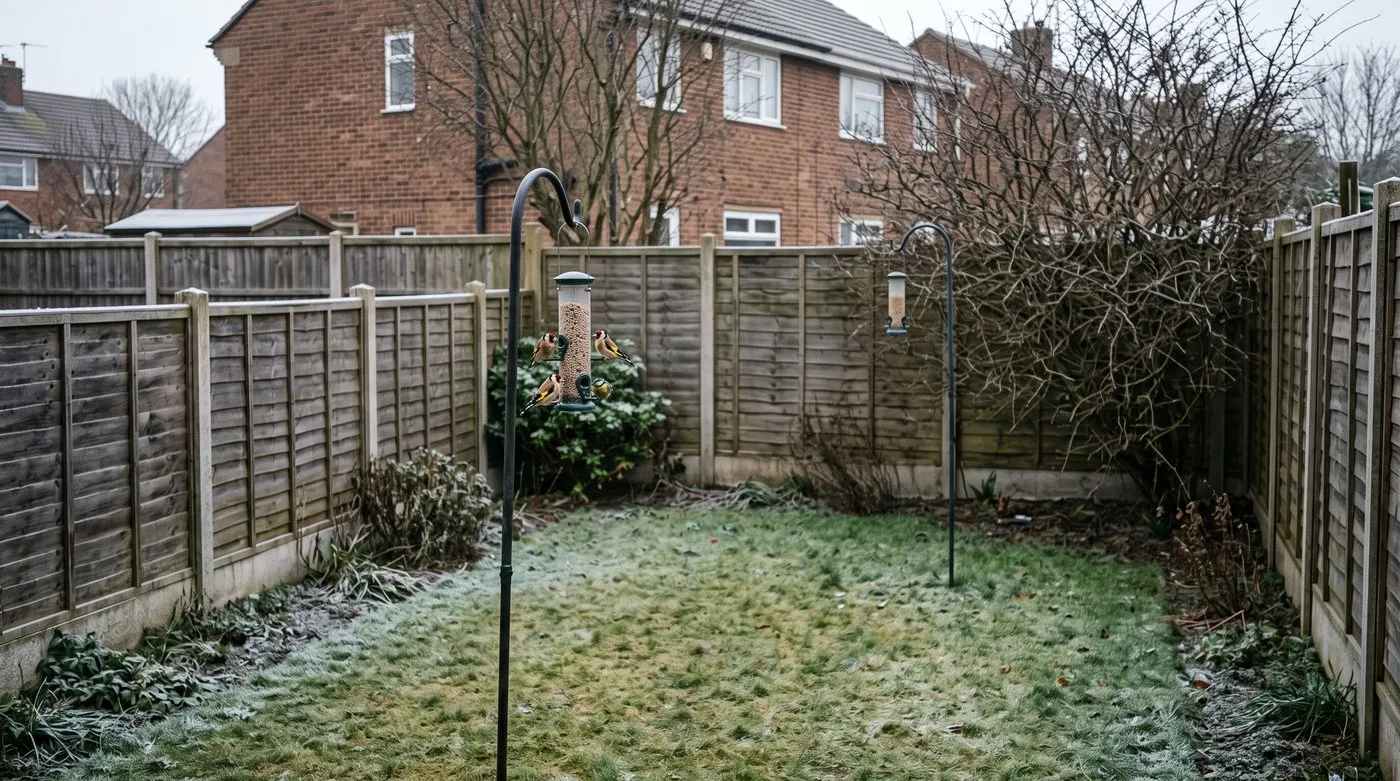
Two or three feeders spread around the garden keep birds from crowding together, which is the whole point of the new advice.
- From 1 May to 31 October, take seed and peanuts off the menu. Offer small amounts of suet, fat balls or mealworms instead if you like.
- Retire the bird table. Pull the tray off any tube feeder that has one.
- Use fewer feeders. Two or three spread around the garden beat a busy cluster in one spot.
- Clean every feeder weekly, then hang it somewhere new.
- Sweep up spilt food under feeders so nothing damp builds up.
- Change bird bath water daily and give it a scrub each week.
For water in hot spells, see the guide to helping garden birds in a heatwave. If grey squirrels raid your feeders once seed goes back out, the squirrel-proof bird feeders guide covers baffles and cages.
Which feeders to keep and which to retire
Keep tube and mesh feeders, and retire anything with a flat surface. A flat surface collects droppings, rain and dropped food. It becomes a shared plate where one sick bird can infect the rest.
| Feeder type | Keep or retire? | Why |
|---|---|---|
| Bird table | Retire | Food and droppings sit on the flat top |
| Window tray feeder | Retire | Flat tray holds old food |
| Tube feeder with a base tray | Remove the tray | The tube is fine on its own |
| Tube seed feeder, no tray | Keep | Food stays inside the tube |
| Mesh peanut or fat ball feeder | Keep | Drains and dries well |
| Scattering food on the ground | Avoid | Food sits and spoils where birds walk |
Your old bird table can live on as a plant stand. You lose nothing in the birds you see, and the feeding area stays far cleaner.
How to clean bird feeders the new way
Clean feeders outdoors once a week with hot soapy water and a wildlife-safe disinfectant, then rinse and dry fully. Scrub the ports and perches with a bottle brush, because dried droppings shelter germs from the disinfectant.
Warning: Wear gloves and keep a separate bucket and brush for feeders. Never clean them in the kitchen sink, and wash your hands afterwards.
Let feeders dry completely before you refill them, as damp seed is what keeps the parasite going. A spare set of feeders lets one set dry while the other is out. Then hang the clean feeder in a new spot, a few metres from the old one. The bird feeder cleaning guide walks through disinfectants, drying and bird bath care step by step.

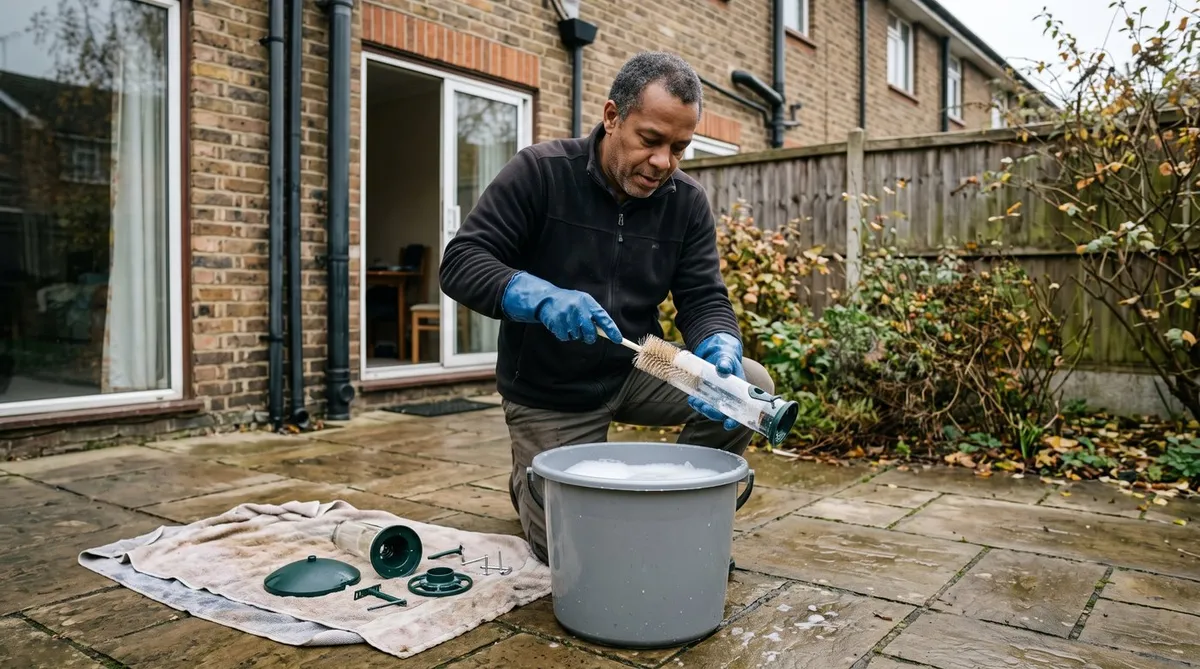
Outdoor tap, gloves and a brush kept just for feeders. A weekly scrub like this is the heart of the new advice.

Left unwashed, a feeder soon looks like the one on the right. Mouldy seed caked round the ports is where disease passes between birds.
What to do if you see a sick bird
Take your feeders down, clean them and stop feeding for a few weeks. A sick bird at a feeder means the feeder can now pass disease on. A short break lets birds spread out.
A bird with trichomonosis often sits fluffed up and sleepy, with wet or matted feathers round the beak. It may drool, struggle to swallow or bring food back up. It is often slow to fly off when you get close.
If you see one:
- Take every feeder down, not just the one it was using.
- Clean and disinfect them all, then store them away.
- Keep any bird bath clean and changed daily, or empty it for a while.
- Report sick or dead birds to Garden Wildlife Health, a project the RSPB, BTO, ZSL and Froglife run together.

A finch that sits puffed up and won’t move off the feeder may be unwell. Time to take the feeders down for a few weeks.
What to feed through the year
Seed and peanuts from November to April, and small amounts of suet, fat balls and mealworms all year. Whatever you offer, keep it fresh and put out only what birds clear in a day or two. Buy in small bags so food doesn’t sit and go mouldy.
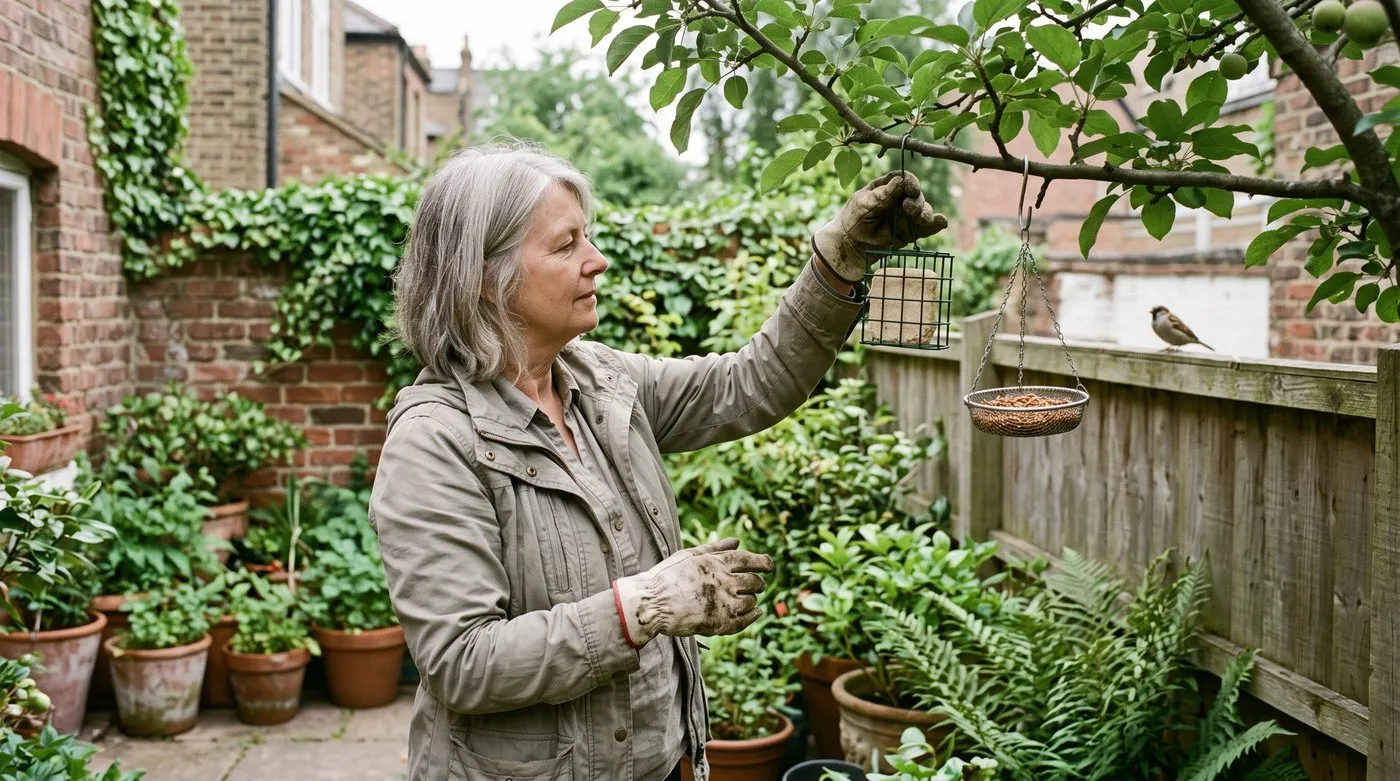
From May to October a small suet block or a few mealworms is all you need to put out. Little and often keeps it fresh.
| Food | When | Notes |
|---|---|---|
| Sunflower hearts and seed mixes | 1 November to 30 April | Use tube feeders, no trays |
| Peanuts | 1 November to 30 April | Always in a mesh feeder, never loose |
| Nyjer seed | 1 November to 30 April | A goldfinch favourite |
| Suet and fat balls | All year, small amounts | Take nets off fat balls, or use a cage feeder |
| Mealworms | All year, small amounts | Fresh, and only what gets eaten |
| Mouldy or stale food | Never | Throw it away |
| Milk, salty scraps, cooked porridge | Never | Milk upsets birds and salt is harmful |
For ideas on what to offer as the seasons turn, the bird feeding guide by season goes month by month. Not sure who is visiting? Try the guide to identifying common UK garden birds.
Common mistakes with the new rules
Most problems at feeders come down to a few easy-to-fix habits.
- Topping up without cleaning. Fresh seed poured onto old, damp seed soon goes mouldy. Empty, clean and dry first.
- Never moving feeders. Droppings and spilt food build up underneath. Move each feeder a few metres after every clean.
- Carrying on after spotting a sick bird. Take everything down and pause for a few weeks.
- Putting out too much. A pile of food that sits for days goes damp. Little and often is better.
- Assuming you must stop feeding altogether. You don’t. Winter feeding with clean feeders is still welcome.
Plants, shelter and water help birds all year, with or without feeders. The guide to attracting birds to your garden covers hedges, berries and nest boxes, and the wildlife hub has more ideas.
Frequently asked questions
Are the new RSPB bird feeding rules a legal ban?
No, they are guidance, not law. You can still feed garden birds. The RSPB is asking people to change how and when they feed, so feeders spread less disease.
Why has the RSPB changed its bird feeding advice?
To slow disease spreading where birds crowd together at feeders. Trichomonosis has hit greenfinches hard, and it passes between birds on shared food, water and flat surfaces. Feeding less in the warmer months and keeping feeders clean cuts that risk.
Can I still feed birds in summer under the new rules?
Yes, but leave out seed and peanuts from 1 May to 31 October. Small amounts of mealworms, suet and fat balls are still fine. Put out only what birds clear in a day or two, and keep cleaning and moving feeders weekly.
What bird feeders does the RSPB now advise against?
Anything with a flat surface, including bird tables and window trays. Food and droppings collect on flat surfaces, where the next bird eats them. Tube and mesh feeders without a tray are the better choice.
What should I do if I see a sick bird at my feeder?
Take all your feeders down, clean them and stop feeding for a few weeks. That lets birds spread out so the disease has less chance to pass on. Report sick or dead birds to Garden Wildlife Health, and keep any bird bath clean and changed daily.
When can I put seed and peanuts out again?
From 1 November, through to the end of April. Winter is when birds benefit most from extra food. Keep cleaning and moving feeders weekly through the winter too.
Get your feeders ready for winter
With seed back on the menu from November, now is a good time to give every feeder and bird bath a proper clean. The guide to placing and cleaning a bird bath covers the water side, and the winter wildlife garden guide helps birds and other visitors through the cold months.
Our team produces practical UK gardening guidance from source research, contributor records and established horticultural practice. Editorial standards are overseen by Matt W.