Key takeaways
- Clean feeders once a week, and more often in warm, damp weather
- Do it outdoors with kit you keep just for the job, wearing rubber gloves
- Scrub ports and perches, use a wildlife-safe disinfectant, then rinse well
- Let feeders dry completely before refilling, as damp seed helps disease spread
- Hang the clean feeder in a new spot a few metres from the old one
- If a bird looks sick, take everything down and stop feeding for a few weeks
Clean your bird feeders once a week: take them apart, scrub them, disinfect, rinse and let them dry fully. That simple routine is one of the best things you can do for garden birds. Dirty feeders spread disease, and finches suffer most.
This guide walks through how to clean a bird feeder, what to use, and what to do if a sick bird turns up. The RSPB has recently changed its feeding advice too. Our guide to the RSPB bird feeding rules explains what’s new.
Why dirty bird feeders spread disease
Feeders bring lots of birds to one small spot. Droppings, saliva and spoiled seed build up there, and germs pass from bird to bird.
Trichomonosis is the big worry. It’s caused by a tiny parasite and hits greenfinches and chaffinches hardest. Infected birds can’t swallow properly and slowly starve. It spreads when birds share food and water, especially damp seed and dirty perches.
Salmonella and avian pox spread in a similar way. Salmonella can also pass to people and pets, which is why feeder cleaning stays out of the kitchen.
The good news is that clean, dry feeders hugely reduce the risk. The parasite behind trichomonosis doesn’t last long once things dry out.

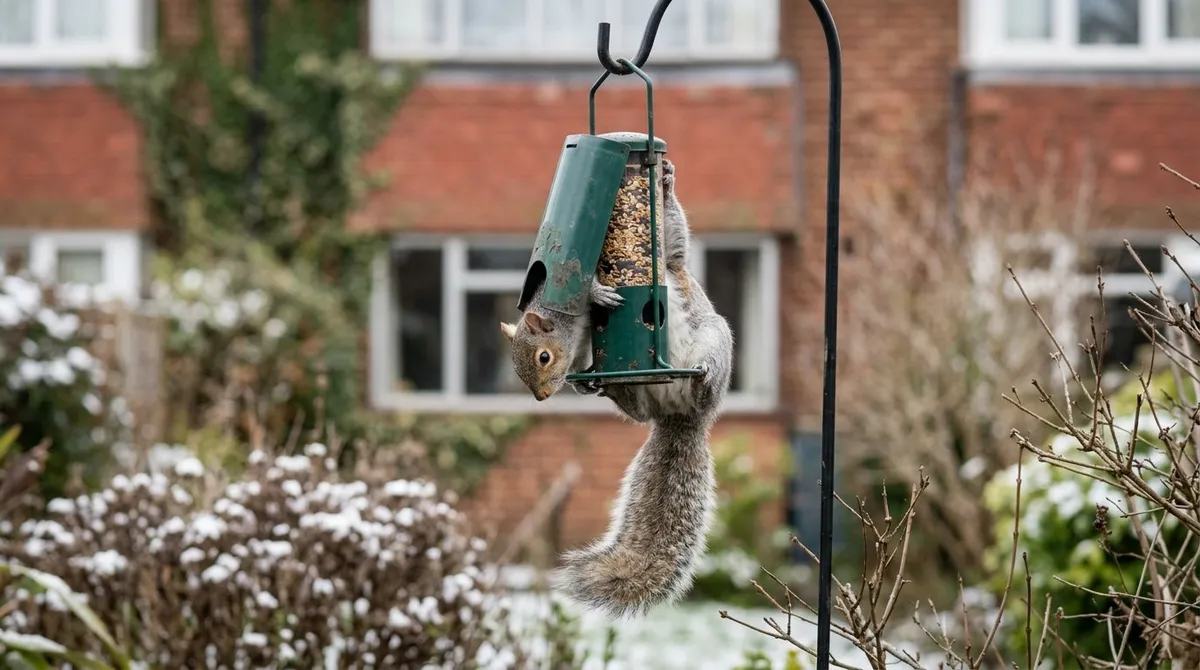
Perches like these collect old husks and droppings. A weekly scrub stops them passing germs from bird to bird.
What you need to clean bird feeders
Keep a small kit just for the birds, and store it away from kitchen things.
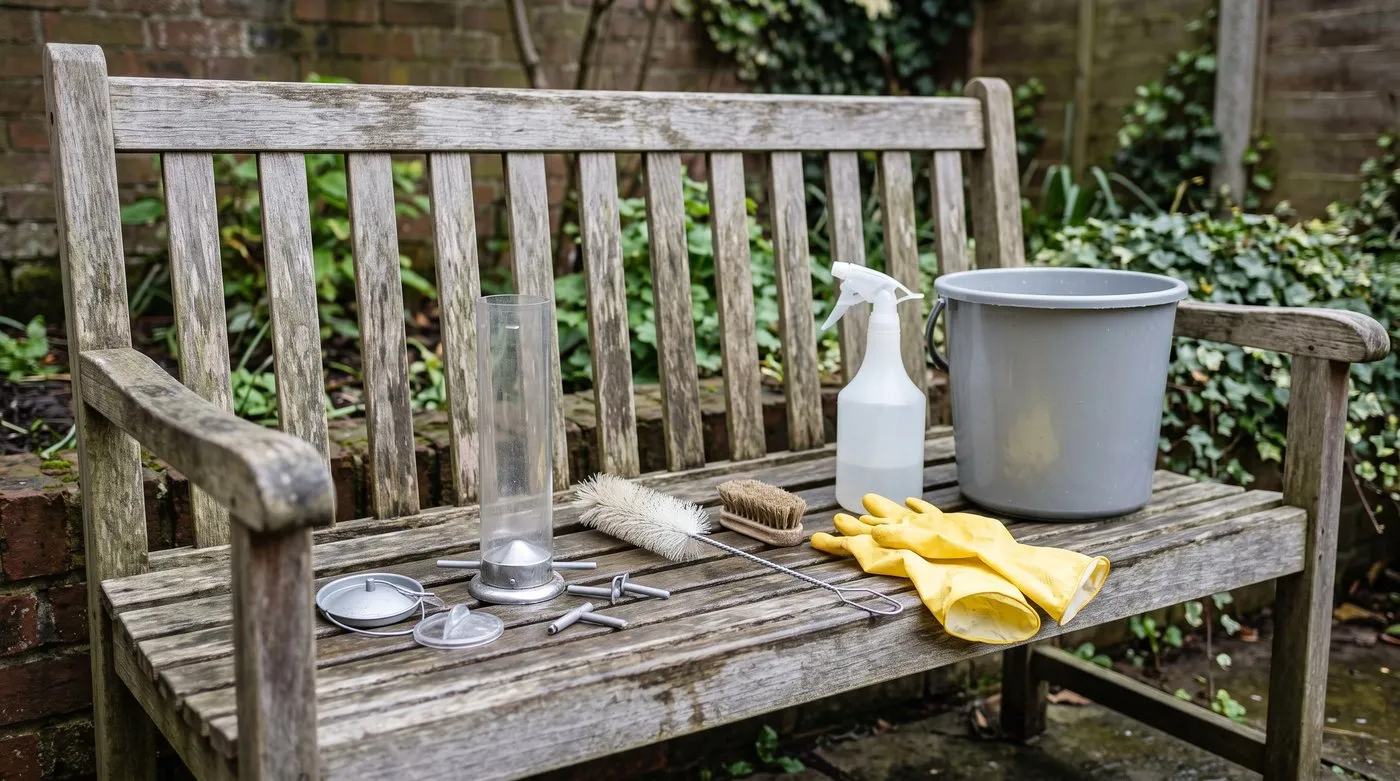
Take the feeder fully apart so the brush can reach every port and perch.
- Rubber gloves
- A bucket or old washing-up bowl used only for this job
- A long bottle brush for tube feeders, plus a small brush for ports and perches
- Hot soapy water
- A wildlife-safe disinfectant, sold for bird feeders and baths
- A hose or watering can of clean water for rinsing
A spare set of feeders is handy. One set can dry while the other is out.
How to clean a bird feeder step by step
- Take the feeder down and tip old seed into the general waste, not back into the bag.
- Take it apart. Remove the lid, base, perches and ports so you can reach every corner.
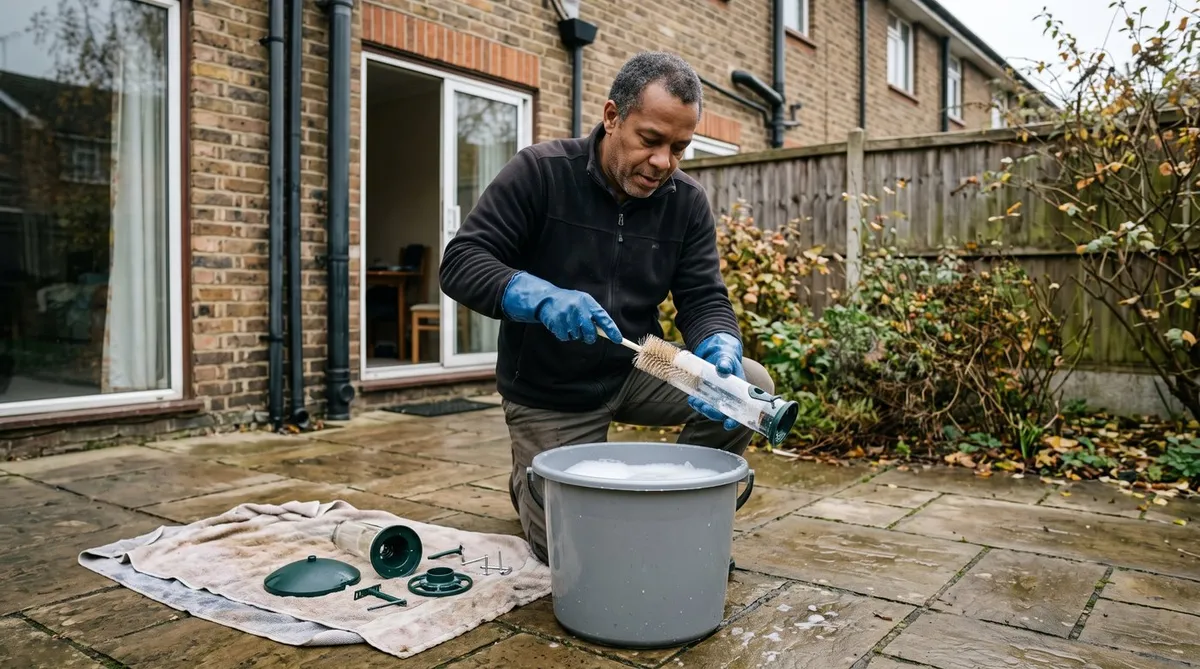
- Wash everything outdoors in hot soapy water. Scrub inside the tube with the bottle brush, and scrub every port and perch.
- Disinfect. Use a wildlife-safe disinfectant exactly as the label says, including how long to leave it.
- Rinse very well with clean water so nothing is left behind.
- Let it dry completely. Leave it in the air, ideally in the sun. Damp feeders make seed go mouldy.
- Refill and rehang in a fresh spot a few metres away from where it was.
- Clean up underneath. Sweep or rake up husks and droppings below the old spot.
- Wash your hands thoroughly when you’ve finished.
Fat ball and suet feeders need the same care. Peanut feeders need checking often, as damp nuts go mouldy and mouldy nuts can be harmful to birds.
Why moving feeders helps
Droppings and spilled seed build up under a feeder that never moves. Moving it to a new spot a few metres away after each clean spreads the mess out. It gives the ground below a chance to recover.
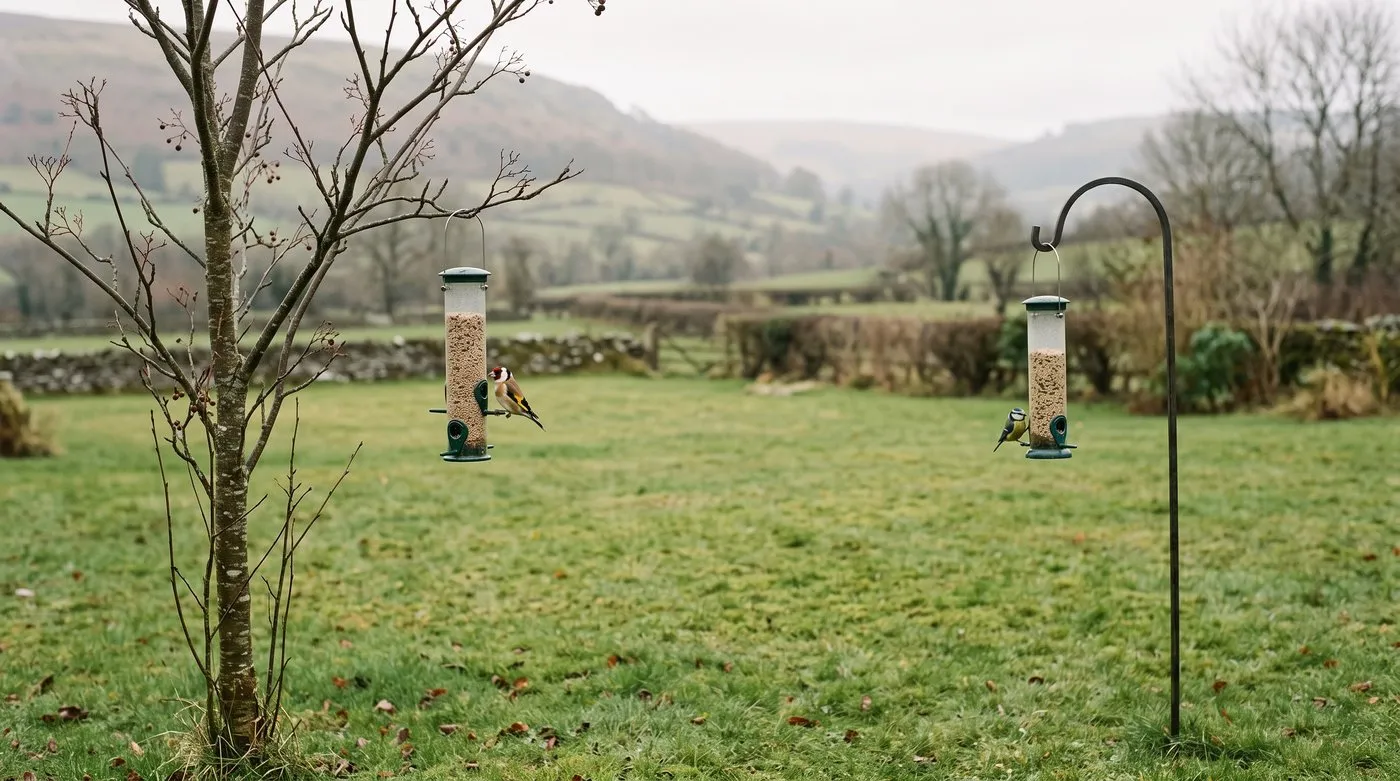
Spacing feeders out means fewer birds crowd one spot, so germs have less chance to spread.
Try hanging feeders in two or three spots around the garden and rotating between them. Spacing feeders apart, rather than bunching them together, also helps. Fewer birds crowd in one place, so disease has less chance to pass on.
Bird tables and flat trays collect droppings in the food. The RSPB now advises against them, so tube and mesh feeders are the better choice.
Keep the bird bath clean too
Birds share water just as they share food, so a dirty bath can spread disease. Change the water every day and scrub the bath weekly. If you can’t change it daily, it’s better not to put water out at all.
Keep baths away from feeders, so husks and droppings don’t fall in. Our bird bath placement and cleaning guide covers siting, depth and winter care.

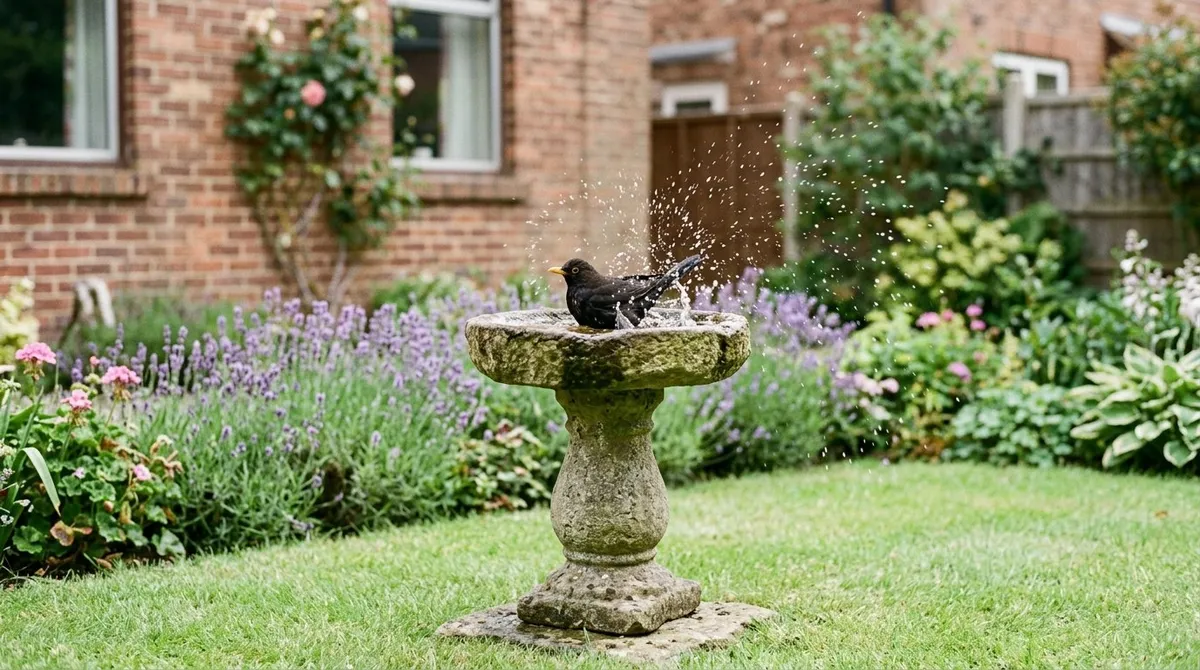
Fresh water every day keeps a bird bath safe. Sparrows will happily queue for it.
What to do if you see a sick bird
Take all your feeders down straight away, clean them and stop feeding for a few weeks. A sick bird means germs are already on your feeders. A break lets birds spread out, which slows the disease down.
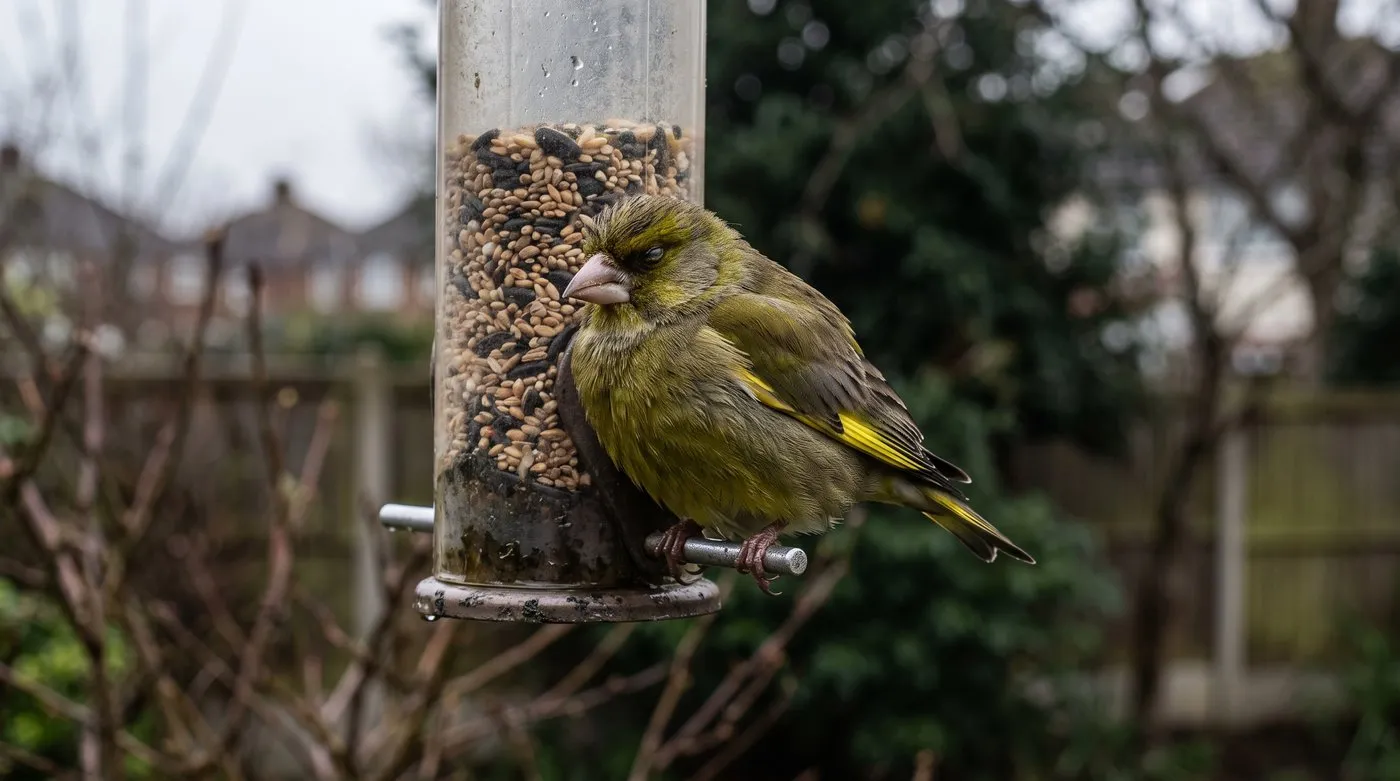
A fluffed-up finch that won’t fly off when you approach may be ill. Take the feeders down for a few weeks.
Signs of a sick bird:
- Fluffed-up feathers and a hunched look
- Sitting still and not flying off when you come close
- Drooling, wet feathers round the face or food stuck to the beak
- Trouble swallowing, or seed dropping straight back out
What to do next:
- Take down every feeder and tip out the seed.
- Clean and disinfect them all, then store them away.
- Empty the bird bath, or change it daily if you keep it going.
- Report sick or dead birds to Garden Wildlife Health, a partnership including the BTO and RSPB.
- Wait a few weeks before feeding again, and only start once you’ve seen no more sick birds.
If you find a dead bird, pick it up with gloves or a bag over your hand. Wash your hands well afterwards.
Common bird feeder cleaning mistakes
Topping up without cleaning. New seed on top of old, damp seed keeps the problem going. Empty, clean and refill.
Cleaning in the kitchen sink. Some bird germs can pass to people. Clean outdoors with kit kept just for the birds.
Skipping the rinse. Leftover disinfectant isn’t good for birds. Rinse until nothing remains.
Refilling while damp. Wet seed goes mouldy fast. Let everything dry fully first.
Putting out too much food. Seed that sits for days goes stale and soggy. Put out what birds will clear in a day or two.
Bird feeder cleaning through the year
| Season | What to do |
|---|---|
| Winter (Dec-Feb) | Busiest time for feeders. Clean weekly and check seed after wet spells |
| Spring (Mar-Apr) | Keep cleaning weekly. Watch for sick finches as the weather warms |
| Summer (May-Aug) | Pause seed and peanuts in line with RSPB advice. Small amounts of suet or mealworms are fine. Change bath water daily |
| Autumn (Sep-Nov) | Deep clean feeders before winter. Restart seed feeding from November |
Our seasonal bird feeding guide explains what to put out each month. To get to know your visitors, try our guide to identifying common garden birds.
Now your feeders are clean, read our guide on how to attract birds to your garden for planting and shelter ideas that help birds beyond the feeder. Browse more wildlife gardening guides too.
Frequently asked questions
How often should I clean bird feeders?
Once a week is the usual advice. Clean more often in warm, damp weather, when seed spoils fast. Tip out any wet or mouldy seed whenever you spot it, and brush droppings off the ground underneath.
What is trichomonosis in garden birds?
It’s a disease caused by a tiny parasite that hits finches hardest. Greenfinches and chaffinches are worst affected. Sick birds look fluffed up and sleepy, drool and struggle to swallow. It spreads through food and water birds share.
What should I clean bird feeders with?
Hot soapy water and a wildlife-safe disinfectant. Scrub every surface with a bottle brush, then rinse very well with clean water. Let the feeder dry fully before refilling. Use the disinfectant exactly as the label says.
Should I stop feeding birds in summer?
The RSPB now suggests pausing seed and peanuts from May to October. Small amounts of suet, fat balls and mealworms are fine. Whatever you put out, keep feeders clean and move them regularly.
I saw a sick bird at my feeder. What should I do?
Take all your feeders down straight away. Clean and disinfect them, then stop feeding for a few weeks so birds spread out. Report sick or dead birds to Garden Wildlife Health. Keep any bird bath clean and changed daily.
Can I clean bird feeders in the dishwasher or kitchen sink?
No, keep bird feeder cleaning out of the kitchen. Some bird diseases, such as salmonella, can pass to people. Clean feeders outside with a bucket and brushes you use for nothing else, and wash your hands afterwards.
Our team produces practical UK gardening guidance from source research, contributor records and established horticultural practice. Editorial standards are overseen by Matt W.