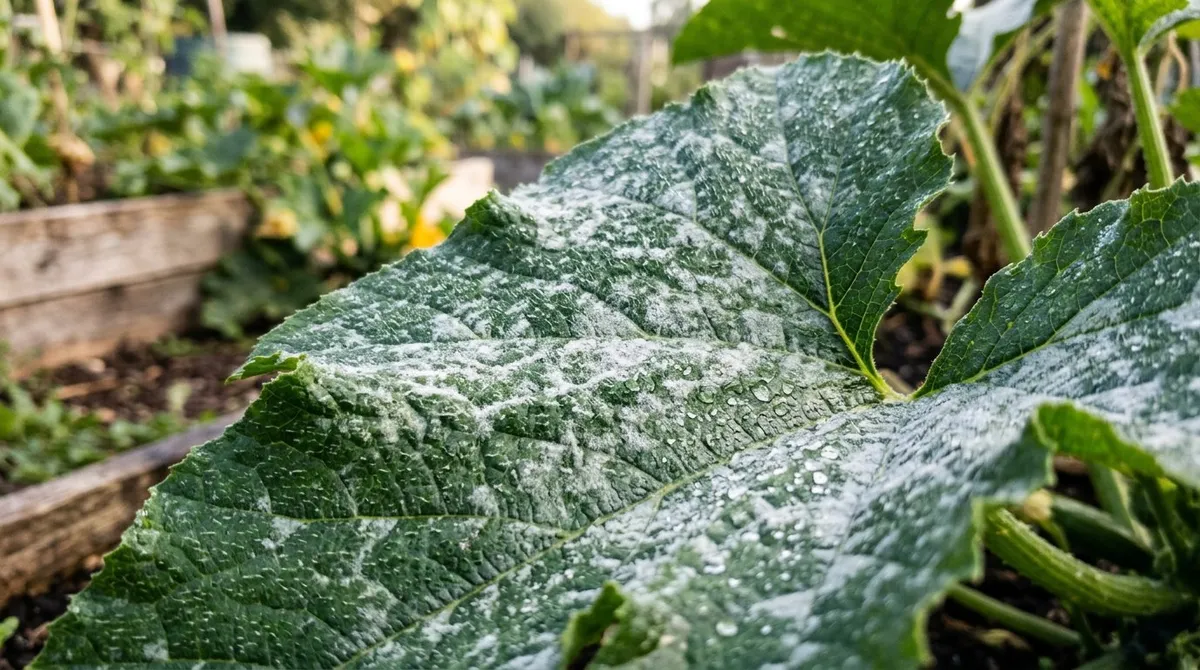
Powdery mildew affects over 400 plant species in UK gardens, caused by host-specific fungi in the order Erysiphales. Infection peaks between May and September when temperatures reach 15-27C with humidity above 40%. Roses, courgettes, apples, peas, and cucumbers are the most commonly affected UK garden plants. Organic treatments include milk spray (40% milk to 60% water), potassium bicarbonate at 5g per litre, and sulphur-based fungicides.
Key takeaways
- Powdery mildew thrives at 15-27C and does not need wet leaves to infect plants
- Milk spray (40% milk to 60% water) reduces infection by up to 90% in trials
- Each plant species is attacked by a different mildew fungus that cannot cross-infect
- Spacing plants 90cm apart and watering at soil level are the two most effective preventions
- Potassium bicarbonate at 5g per litre is an effective organic fungicide approved for UK gardens
- Resistant rose varieties like 'Olivia Rose Austin' and 'Desdemona' rarely develop mildew
powdery mildew fungal disease plant disease organic gardening rose care vegetable growing
Our team produces practical UK gardening guidance from source research, contributor records and established horticultural practice. Editorial standards are overseen by Matt W.