Key takeaways
- Oedema is a watering disorder, not a pest or disease, so it does not spread
- Corky bumps form when roots take up water faster than leaves release it
- Pelargoniums, tomatoes, peppers and brassicas are the worst affected
- Damp, dull, still greenhouse air on cool days is the main trigger
- Fix it by watering less, ventilating more and improving light
- New growth clears in one to two weeks, but marked leaves stay scarred
Oedema is one of the most misread plant problems in UK greenhouses. Raised corky bumps appear on the undersides of leaves, and the natural reaction is to reach for a pest spray or a fungicide. Neither does anything, because oedema is not a pest or a disease. It is a watering disorder, caused by the plant taking up more water than it can lose. This guide explains exactly what oedema is, which plants get it worst, and how fast it clears once you change how you water. You will learn to tell it apart from pests and fungus, and to stop it returning.
The bumps look alarming but the plant is not sick in the usual sense. Once you understand the cause, oedema is one of the easiest problems to fix.
What oedema is and why the bumps form
Oedema is a physiological disorder, which means it comes from the plant’s own water balance, not from any organism. The corky bumps are the plant’s cells, swollen and burst, then healed over with scar tissue.
The mechanism is simple. Roots take up water faster than the leaves can release it through transpiration. Water builds up in the leaf cells until they swell and rupture. The plant seals the damage with corky, suberised tissue, which forms the raised bumps and blisters you see, usually on the undersides of leaves and on leaf stalks.
This happens when the soil is wet but transpiration is slow. On a warm, bright, breezy day, leaves lose water fast and the balance stays even. On a dull, cool, humid, still day, especially in a closed greenhouse, the leaves lose almost nothing while the wet roots keep pumping water up. The result is oedema. Because no pest or fungus is involved, the bumps never spread, which is the key to telling oedema apart from real diseases like those in our guide to common tomato diseases.
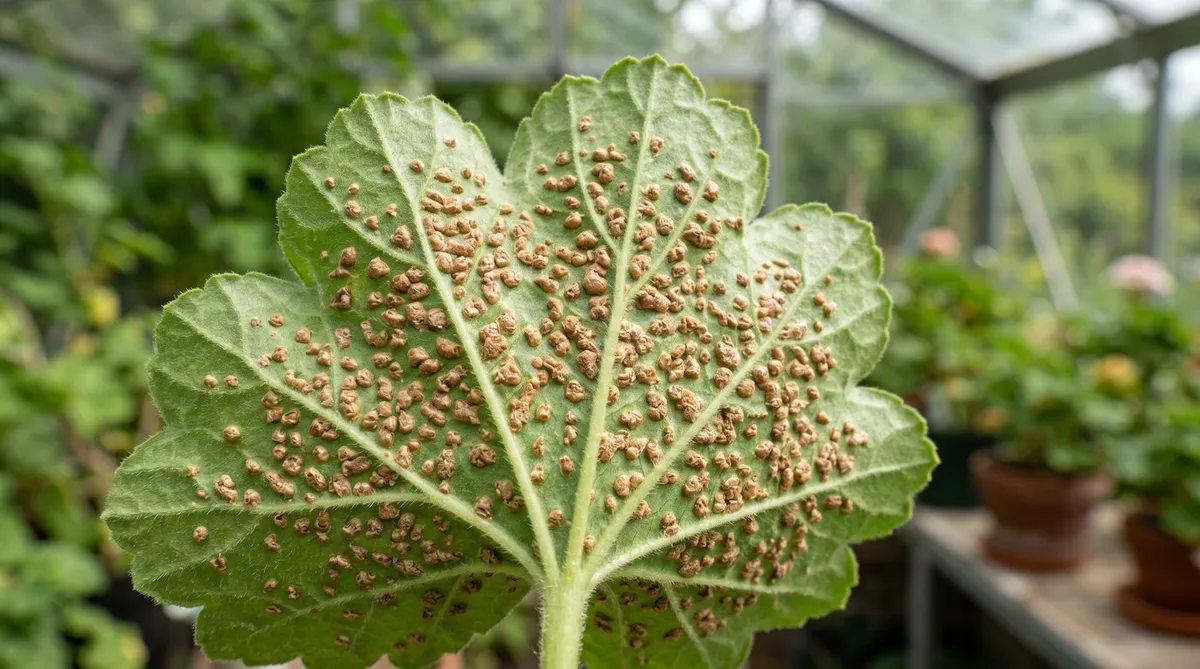
 Classic oedema on a pelargonium. The corky bumps sit on the leaf underside, the plant’s response to wet roots and still air.
How to tell oedema apart from pests and disease
The single most useful skill is ruling out pests and fungus. Many gardeners spray for the wrong thing because the bumps look like an infestation. Three checks settle it.
First, look for any organism. Oedema has no insects, eggs, webbing, spores or powdery growth. If you find any of those, the problem is something else. Second, check the pattern. Oedema appears on the lower leaves and undersides, on several plants at once that share the same wet, still conditions, not spreading outward from one infected point. Third, feel the bumps. Oedema bumps are firm and corky, part of the leaf, not a creature sitting on the surface.
Gardener’s tip: Rub a suspect bump gently with a fingertip. A pest such as scale lifts off or squashes. An oedema bump is part of the leaf and will not move, because it is the plant’s own scar tissue. This one test rules out most pest confusion in seconds.
The disorder is often mistaken for rust, downy mildew or scale. Rust leaves orange spores on your finger, downy mildew shows fuzzy growth on the underside, and scale insects lift off. Oedema does none of these. For a fungal disease that does spread, see our guide to powdery mildew treatment.
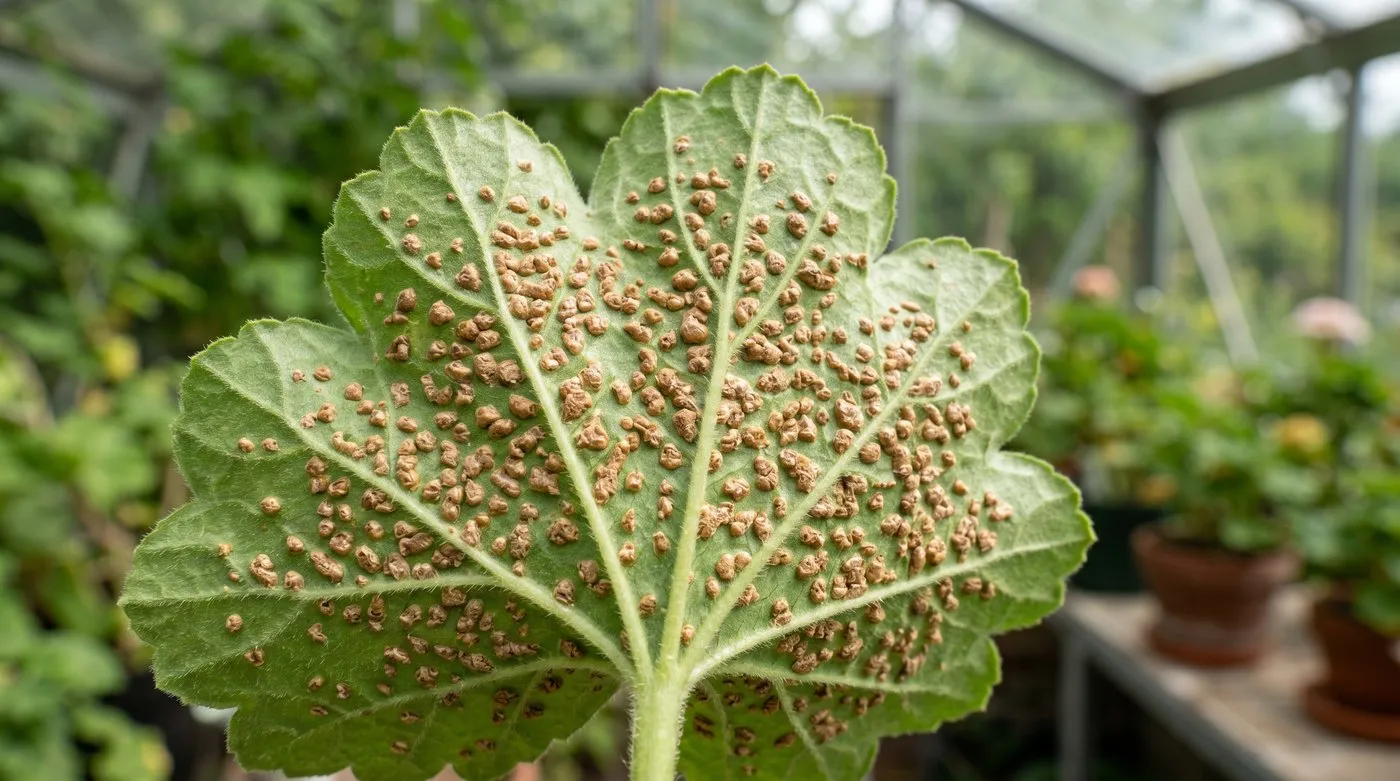
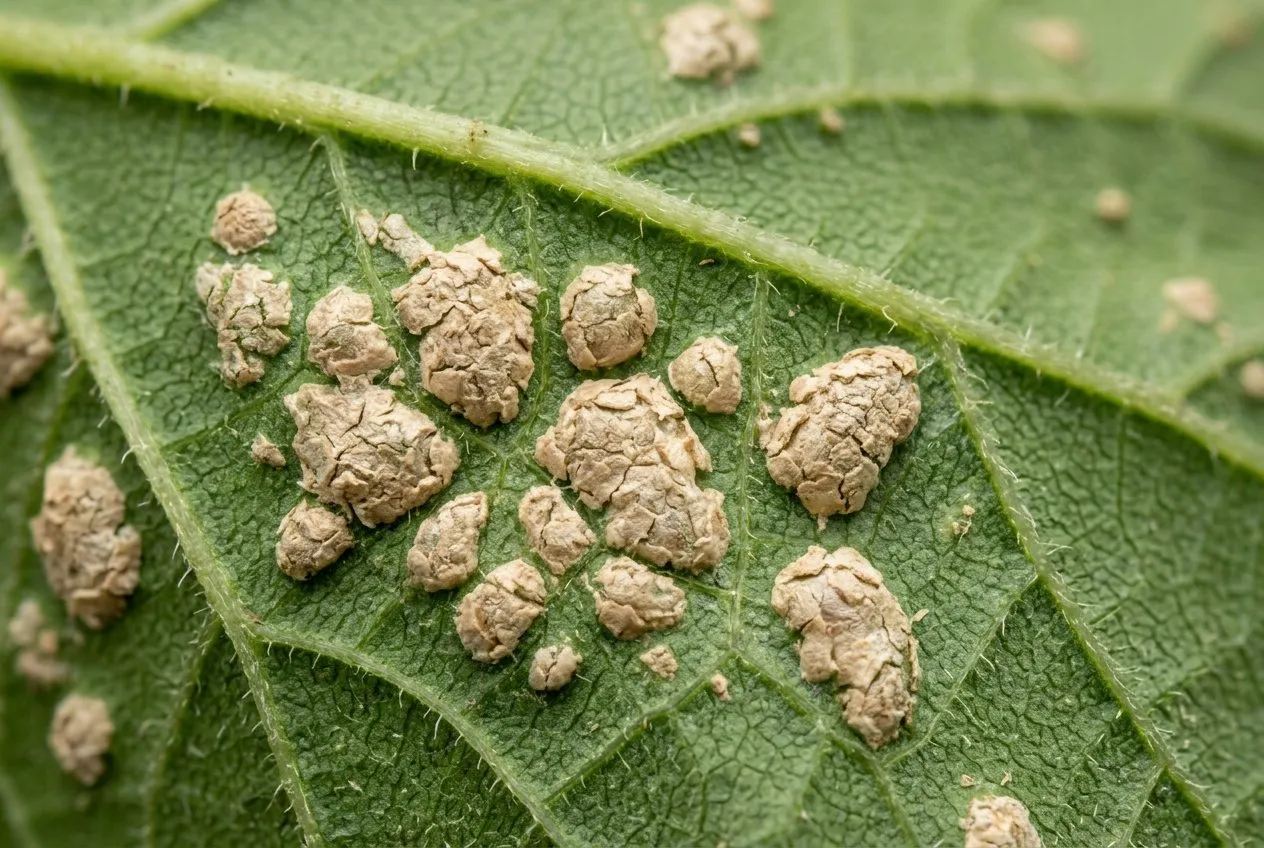 A close look confirms oedema. The bumps are firm, corky and part of the leaf, with no insects, webbing or spores.
Which greenhouse crops and plants get oedema most
Some plants are far more prone than others. Knowing the usual sufferers helps you spot oedema fast and watch the right plants in risky weather.
Pelargoniums, the bedding geraniums, are the classic example and show oedema readily on leaves and stalks. Among edibles, tomatoes, peppers and aubergines all get it in a damp, dull greenhouse, as do brassicas such as cabbage, cauliflower and broccoli. Succulents, camellias, begonias, fuchsias and grapevines also show it.
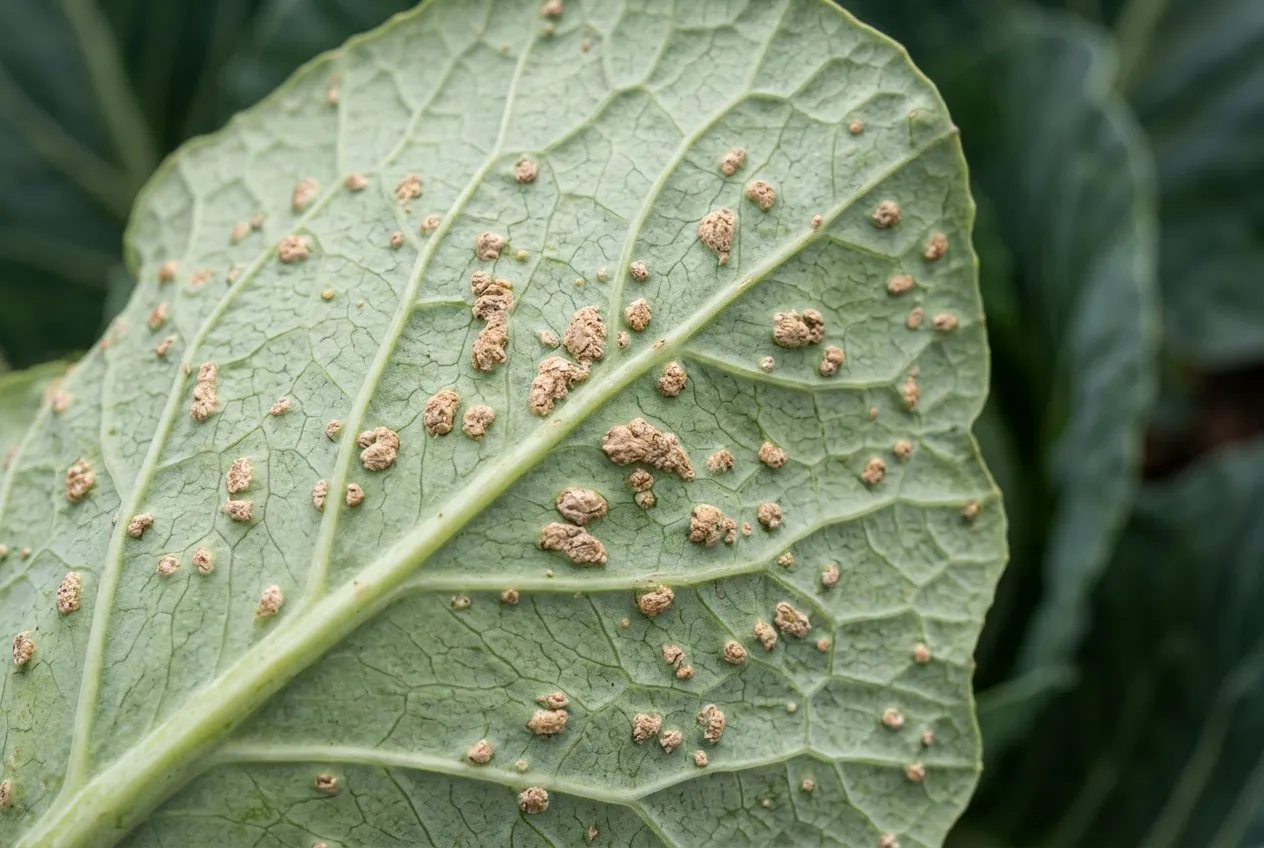 Brassicas like cabbage and cauliflower show oedema too. The corky bumps follow wet roots and damp, still air.
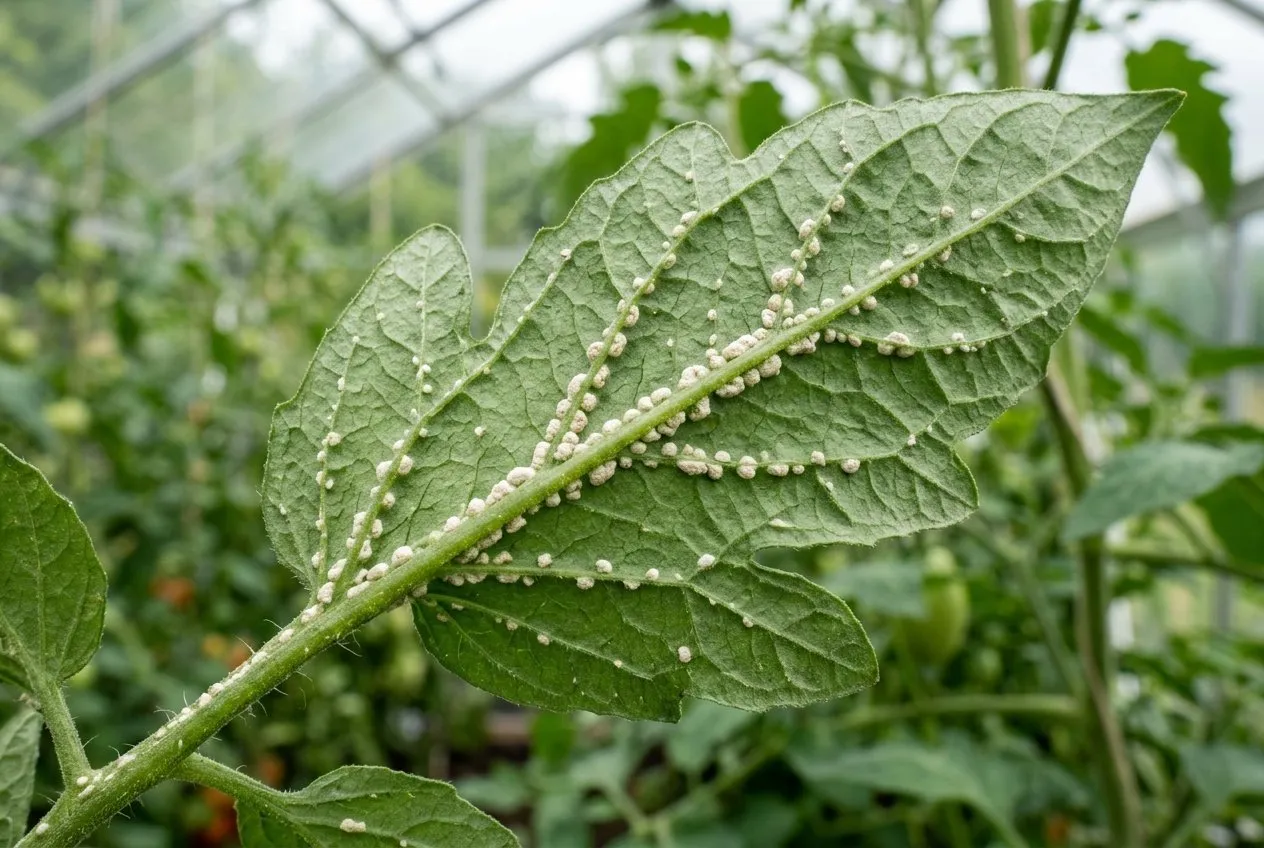 Tomatoes show oedema as pale raised bumps along the leaf underside. A signal that the plant is too wet for the conditions.
Oedema triggers and fixes compared
This table ranks the causes of oedema by how much they contribute, and pairs each with the fix that works. Tackle the biggest contributors first.
| Trigger | How much it contributes | Why it matters | The fix | Role |
|---|---|---|---|---|
| Wet roots from over-watering | High | Drives excess water into the leaves | Water less, only in the morning | Primary control |
| Still, humid air | High | Stops leaves losing water | Ventilate, open vents and doors | Primary control |
| Dull, low light | Moderate | Slows transpiration | Improve light, clean the glass | Supporting |
| Cool temperatures | Moderate | Reduces water loss | Avoid watering on cool days | Supporting |
| Evening watering | Moderate | Leaves roots wet overnight | Switch watering to morning | Easy win |
The gold standard fix is balancing water in against water out. The fastest single change is to water in the morning and ventilate hard, so leaves can transpire through the day rather than sitting wet and still. No spray, feed or fungicide treats oedema, because nothing is attacking the plant. Improving the conditions is the only cure. Our guide to greenhouse watering systems covers timing water correctly.
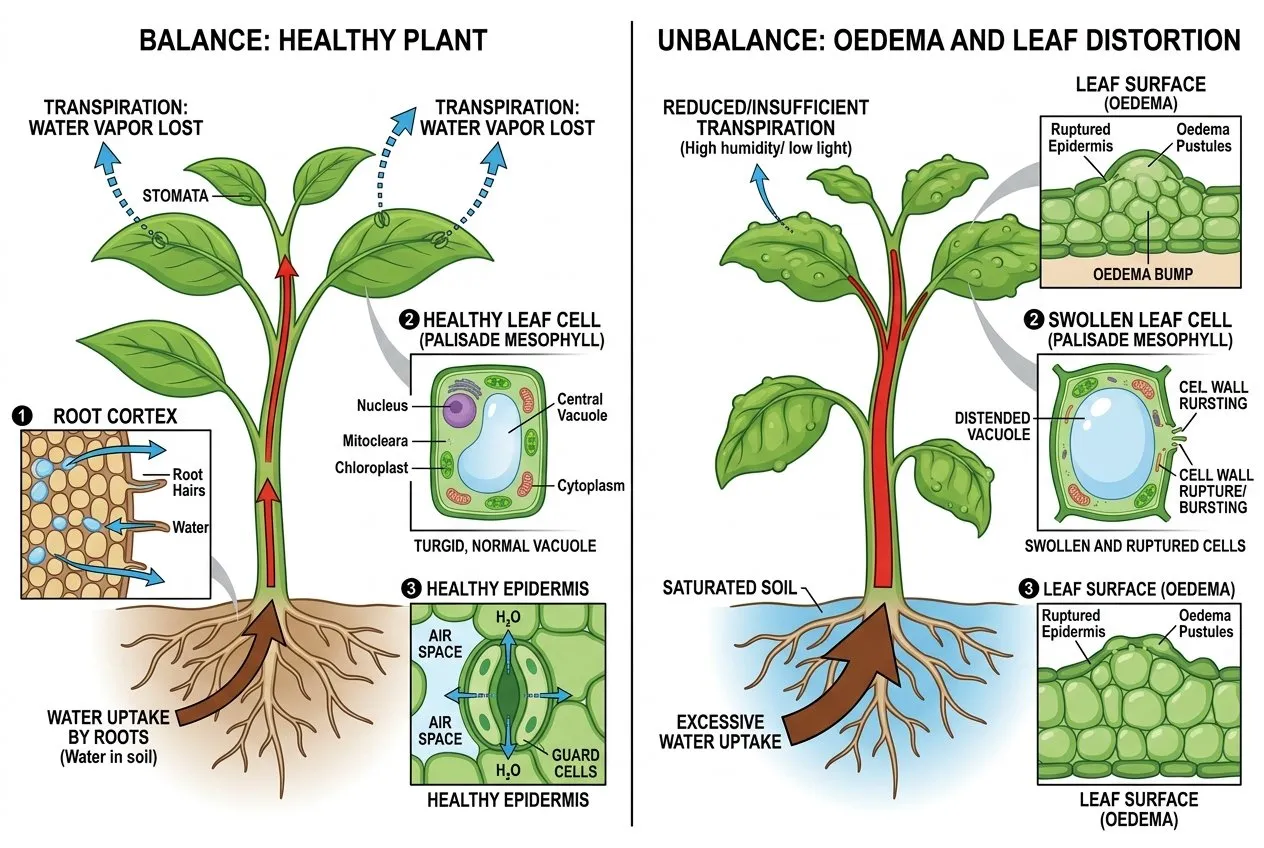 The water balance behind oedema. When roots take up more than leaves can lose, cells swell and burst into corky bumps.
How fast oedema clears once you fix the cause
Clean new growth follows within one to two weeks. The fresh leaves emerge smooth, with no bumps, because the water balance is restored. This new growth is the proof that the fix has worked.
The catch is that the damaged leaves never recover. The corky bumps are permanent scar tissue. Those leaves keep photosynthesising and are worth leaving on the plant, but they stay marked for life. Do not strip them off in a panic, as removing healthy leaf area only stresses the plant further. Judge success by the clean new growth, not by the old leaves clearing, which they will not.
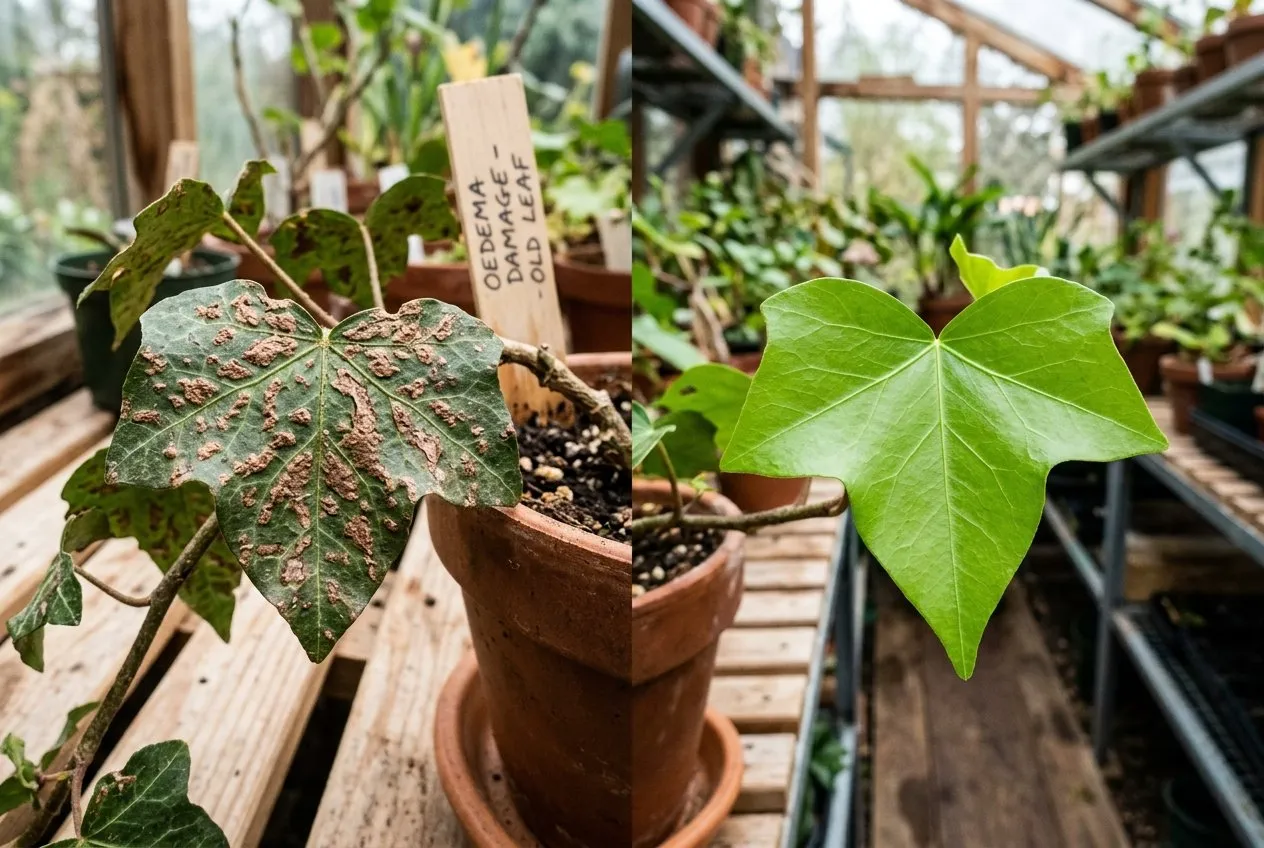 Recovery shows in new growth. The old leaf stays scarred, but the smooth new leaf proves the watering fix has worked.
A seasonal plan to prevent oedema
Oedema is most likely in spring and autumn, when greenhouse air is damp and dull but watering carries on. This calendar keeps plants in balance through the UK year.
| Month | Action |
|---|---|
| January | Water sparingly, ventilate on mild days, keep glass clean for light |
| February | Avoid watering on dull cold days, check pelargoniums for early bumps |
| March | Switch to morning watering as growth restarts, open vents by day |
| April | Watch tomatoes and peppers after dull spells, ventilate well |
| May | Peak risk month, water in the morning only, vents open day and night in mild weather |
| June | Warm bright weather lowers risk, keep airflow moving |
| July | Maintain ventilation, water to need not routine |
| August | Continue morning watering, damp down floors rather than soaking pots |
| September | Risk rises again as nights cool, cut back evening watering |
| October | Reduce watering sharply, ventilate whenever mild and dry |
| November | Water only to prevent shrivelling, keep air moving on mild days |
| December | Minimal watering, never on dull cold days, maintain light |
Morning watering works because it gives the plant a full day of light and airflow to transpire the water it takes up, rather than sitting wet and still through a cool night. Pair it with good ventilation and oedema rarely returns.
 Ventilation is half the cure. Open vents and a propped door keep air moving so leaves can lose the water roots take up.
Common mistakes when dealing with oedema
Most oedema is made worse by treating it as the wrong problem. These are the errors that waste time and money.
- Spraying for pests or fungus. No organism is involved, so sprays do nothing. Look for the wet, still conditions instead.
- Stripping off marked leaves. The scarred leaves still work and removing them stresses the plant. Leave them and judge recovery by new growth.
- Watering in the evening. Wet roots overnight on a cool day is the classic trigger. Switch watering to the morning.
- Keeping the greenhouse closed. Still, humid air stops leaves losing water. Open vents and doors whenever the weather allows.
- Watering on dull, cool days. Transpiration almost stops, so the roots overfill the leaves. Hold off watering until conditions improve.
Frequently asked questions
What causes oedema on plant leaves?
Roots take up water faster than the leaves can release it. The leaf cells swell, burst, and heal as corky bumps. It happens when soil is wet but the air is cool, dull and still. No pest or fungus is involved, so oedema never spreads between plants.
Is oedema a disease and will it spread?
No, oedema is a physiological disorder, not a disease. It does not spread between plants or leaves. Each affected leaf reacts to its own water balance. Correcting watering and ventilation stops new bumps forming. The disorder cannot be passed on like a fungus or virus.
How do I get rid of oedema on my plants?
Water less and only in the morning, then ventilate to move the air. Improve light and avoid watering on dull, cool days. New growth comes clean within one to two weeks. The bumps already formed are permanent scars and will not disappear.
Which plants get oedema most?
Pelargoniums, tomatoes, peppers and brassicas get it most in UK gardens. Succulents, camellias, begonias and grapevines also show it. Greenhouse plants suffer more than outdoor ones. Any plant can get oedema if its roots take up far more water than the leaves lose.
Will oedema-damaged leaves recover?
No, the corky bumps are permanent scar tissue on that leaf. The leaf keeps working but stays marked. Recovery shows in clean new growth, not in the old leaves. Once conditions improve, fresh leaves emerge without bumps within a week or two.
Is oedema the same as a pest or fungus?
No, no insect or fungus is involved in oedema. There are no eggs, webbing, spores or pests to find. The bumps are the plant’s own swollen cells. If you see insects or powdery growth, the problem is something else, not oedema.
Now you can recognise oedema and fix it by changing how you water. For another leaf problem with a non-pest cause, read our guide to chlorosis and yellow leaves, or browse the full problems section for more plant diagnosis.
Our team produces practical UK gardening guidance from source research, contributor records and established horticultural practice. Editorial standards are overseen by Matt W.