Key takeaways
- Early morning, about 5am to 9am, is the best time to water in the UK
- Early evening is a fine second choice, as long as you keep the leaves dry
- Midday watering loses the most water to the sun and wind
- Always aim the water at the soil around the roots, not over the leaves
- Pots and hanging baskets can need watering morning and evening in a heatwave
- A tap timer set for dawn does the job before you are even up
The best time to water the garden in the UK is early morning, ideally between about 5am and 9am. The cool air means little water is lost, the roots get a drink before the day warms up, and the leaves dry quickly. Early evening is the next best time. Midday is the worst.
This guide is all about timing: when in the day to water and why it makes a difference. For how much to give, which tools to use and how to save water, see our guide on how to water your garden properly.
Why early morning is the best time to water
Early morning watering loses the least water and sets plants up for the day. The air is cool, the sun is low and there is usually little wind. Water soaks down to the roots instead of drying off the surface.
By the time the sun is high, the plant has had its drink and is ready for the heat. A well-watered plant copes far better with a hot afternoon. If plants wilt in the afternoon, they probably ran dry overnight.
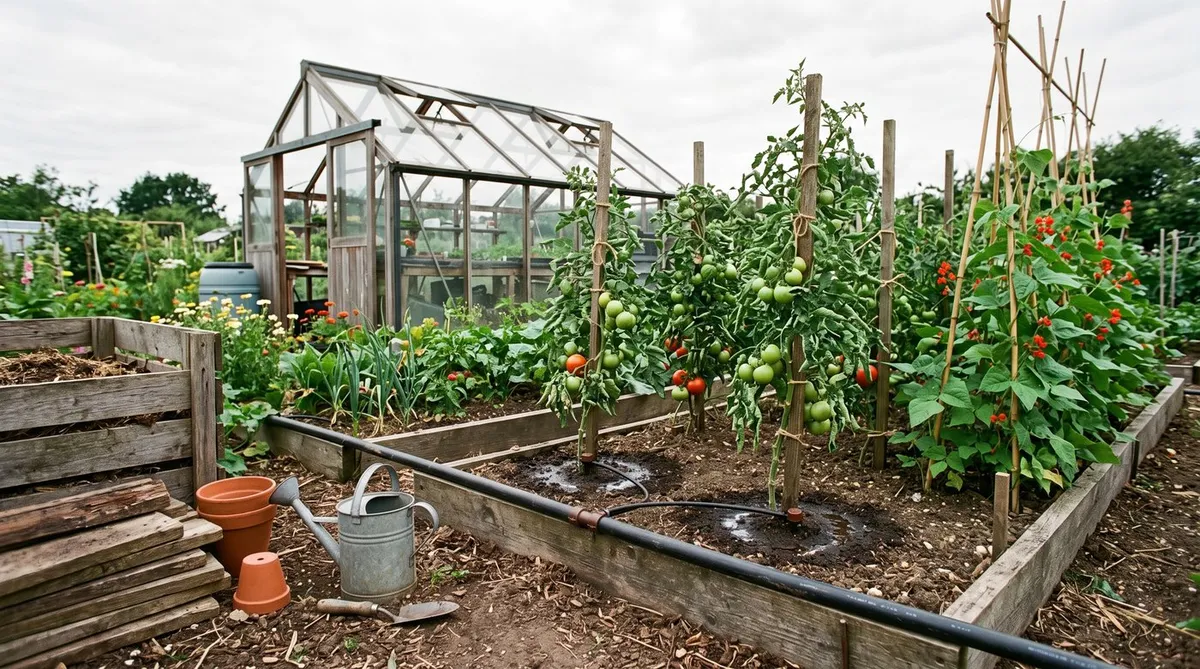
The other big win is dry leaves. Any splashes dry off quickly in the morning sun, so fungal spores and slugs get little chance.

Morning splashes dry off soon after sunrise, so fungal spores don’t get a damp spot to settle in.
Is it OK to water plants in the evening?
Yes. Evening watering is a good second choice, and for many people it’s the only practical time. From about 6pm to 8pm the sun is low and the air is cooling, so little water is lost. In a heatwave, an evening soak gives plants all night to take the water up.
The catch is wet leaves overnight. Leaves that stay damp until morning give diseases such as tomato blight, potato blight and rose black spot a head start. Damp ground after dark also suits slugs, which feed at night.
So if you water in the evening, water the soil around each plant and keep the leaves as dry as you can. Water early enough that the surface has a chance to settle before dark.

Leaves left wet all night are a gift to slugs. Water the soil, not the plant, if you water after work.
Why midday is the worst time to water
Midday is the worst time because so much water dries off before it reaches the roots. A quick splash in hot sun only wets the top of the soil, which dries again within the hour. That trains roots to stay shallow.
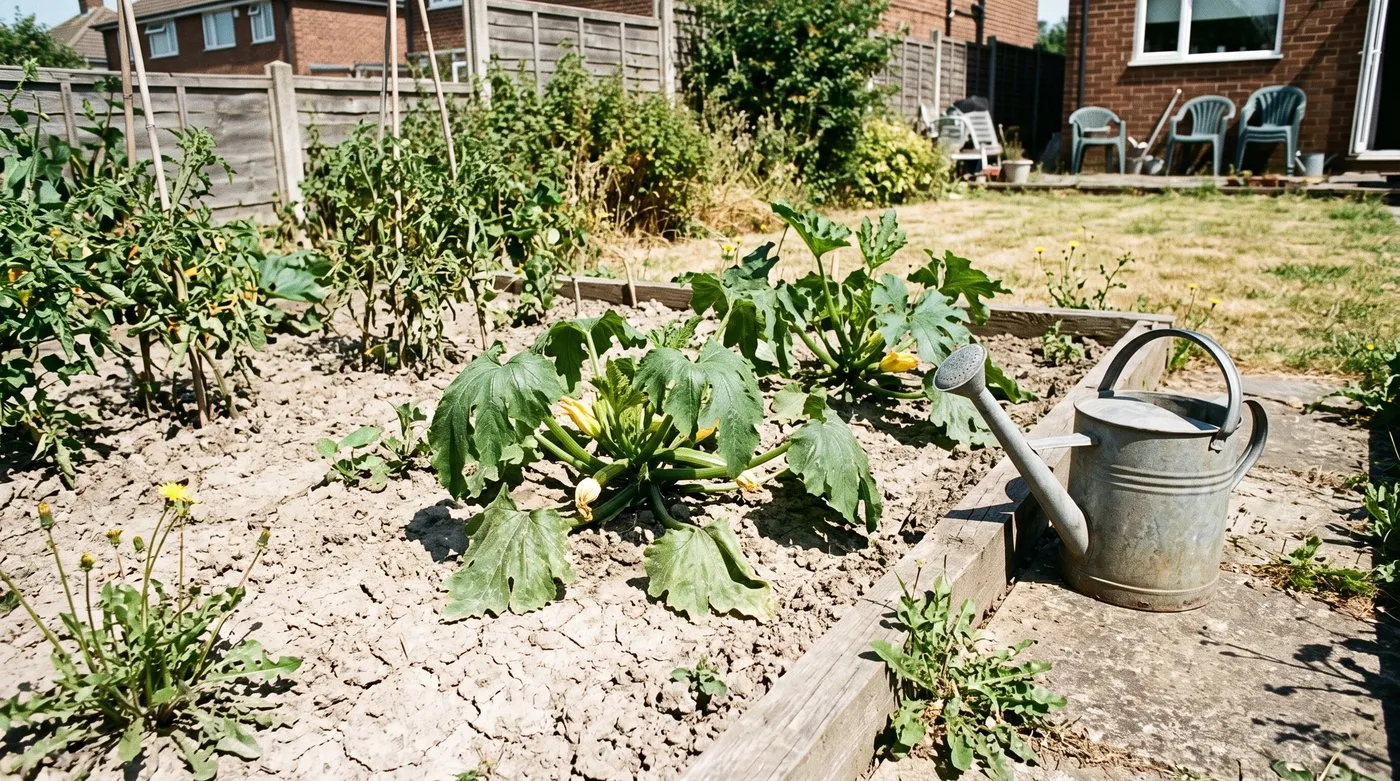
A midday splash barely wets this crust before it dries again. Save the can for early tomorrow morning.
You may have heard that water droplets scorch leaves in bright sun, like tiny magnifying glasses. That’s largely a myth on ordinary garden leaves. Our guide to common gardening myths has more like this.
One exception: if a plant is badly wilting at midday, water it. A collapsing plant needs help more than perfect timing.
Morning, evening or midday: how they compare
This table sets the options side by side for a warm UK summer day.
| When | Water lost to the sun | Disease and slug risk | Verdict |
|---|---|---|---|
| Early morning (about 5am to 9am) | Low | Low, leaves dry fast | Best choice |
| Early evening (about 6pm to 8pm) | Low | Higher if leaves stay wet | Good second choice |
| Midday (late morning to mid-afternoon) | High | Low | Emergency only |
| Late at night | Low | High, everything wet till morning | Avoid if you can |
Morning wins on everything except convenience. Evening is fine for anyone who leaves the house early, as long as the water goes on the soil.
Does the best time change for lawns, pots and greenhouses?
The rule stays the same everywhere: morning first, soil not leaves. A few spots need a little extra thought.
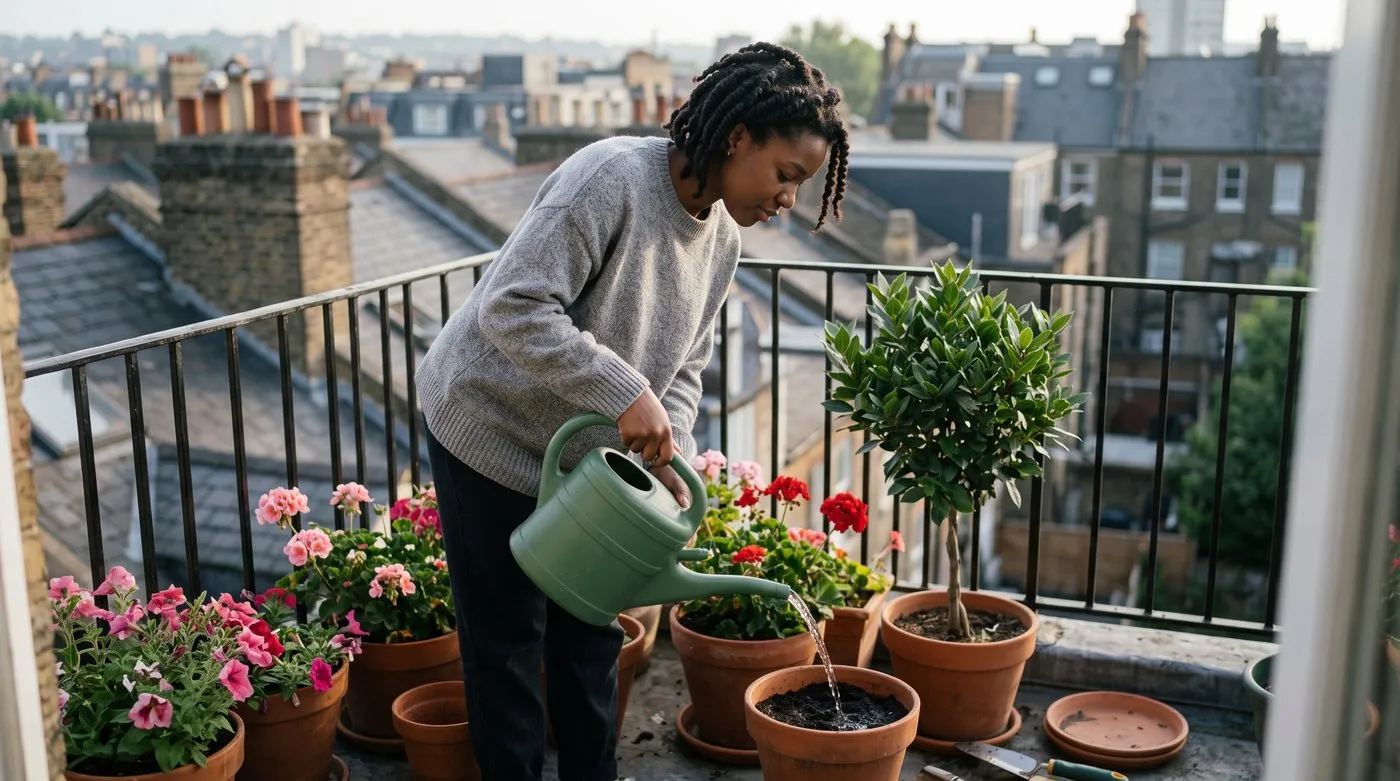
Pots dry out fastest of all. A morning drink straight onto the compost sees them through a hot day.
Lawns and borders. Give a deep soak once or twice a week in dry spells, ideally in the morning. Deep watering draws roots down, so plants cope better with drought. A daily sprinkle does the opposite. For grass, see our guide on how often to water a lawn, as established lawns often recover from browning without any watering.
Pots and hanging baskets. Compost in containers dries out fast. Water them every morning in summer, and check again in the evening during a heatwave. If a pot feels light or the compost has shrunk from the sides, it needs a drink straight away.
Greenhouses. A closed greenhouse heats up fast on a sunny morning. Water early so plants are ready before the heat builds. Damping down the floor on hot days helps cool the air too.
New plants. Fresh plantings have small roots. Water them every day or two in dry weather for the first few weeks, preferably in the morning.
Water at the base, not over the leaves
Watering at the base of the plant is the most useful habit after good timing. Overhead watering wets the leaves, wastes water and can splash disease spores about. Take the rose off the can, or lay the hose at soil level, so the water goes where the roots are.
Gardener’s tip: Water tomatoes, courgettes, squash and roses at the base only. Wet leaves in humid weather help blight and black spot take hold, whatever time of day you water.
A cut-down plastic bottle or short piece of pipe sunk next to thirsty plants channels water straight down to the roots. A seep hose or drip irrigation kit does the same job across a whole bed. Add a tap timer and the dawn watering happens while you’re still asleep.

Pour at the base with the rose off. The water reaches the roots and the leaves stay dry.
When does watering time matter most through the year?
Timing matters most from late spring to late summer. In cool, damp months most outdoor plants need little or no watering at all.
| Month | How much watering | Timing tip |
|---|---|---|
| March to April | Little, mostly new plants | Any time of day is fine in cool weather |
| May | Rising as beds dry out | Switch to morning watering |
| June to July | High | Early morning; pots may need an evening top-up too |
| August | High | Early morning; watch for hosepipe bans |
| September | Easing off | Morning, as nights get cooler |
| October to February | Very little outdoors | Water greenhouse plants sparingly, in the morning |
In a dry summer your water company may bring in a hosepipe ban. You can still use a watering can, ideally filled from a water butt. Our guide to gardening during a hosepipe ban explains what is and isn’t allowed.
Rainwater from a butt is free and most plants like it. Mulching beds with 5cm of bark or compost also keeps the soil moist for longer, so you water less often whatever the hour.
Common watering mistakes to avoid
Watering in the heat of the day. Much of the water dries off before it soaks in. Move the job to early morning and the same can goes much further.
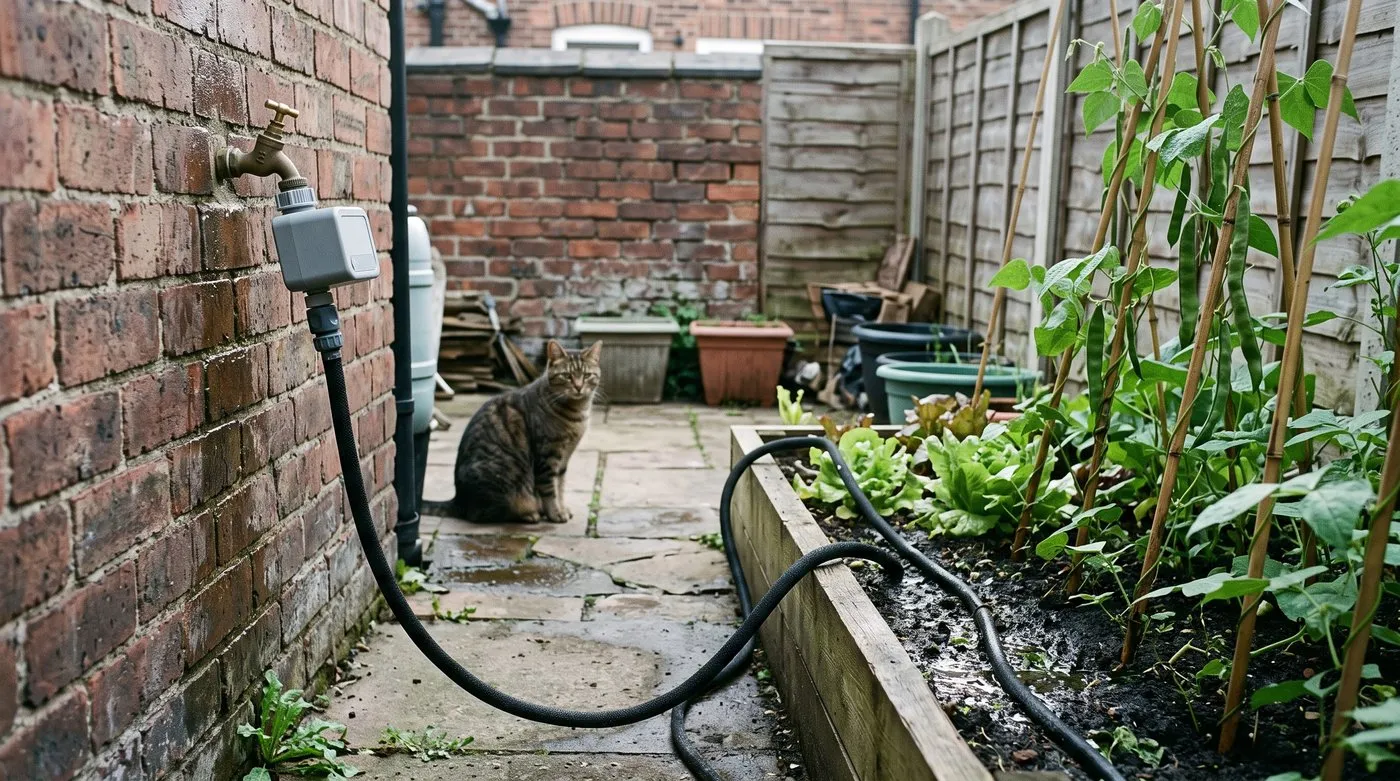
A tap timer runs the watering at dawn for you. Pause it when rain is forecast so the roots don’t sit wet.
Soaking the leaves in the evening. Wet leaves overnight suit slugs, blight and black spot. Water the soil if you water late.
Little and often. A daily sprinkle wets only the surface and keeps roots shallow. A deep soak once or twice a week is better for beds and borders.
Leaving a timer running in the rain. Check the forecast and pause automatic systems when rain is due. Overwatered roots can rot.
Forgetting the pots. Rain often runs off the leaves and misses the compost. Check containers even after a shower.
Frequently asked questions
Is it better to water plants in the morning or evening?
Morning is better, but evening is a good second choice. Both lose little water to evaporation. Morning wins because leaves dry quickly in the sun, so slugs and fungal diseases get less of a chance. If you can only water after work, aim the water at the soil and keep the leaves dry.
What time of day should you water a garden in the UK?
Water between about 5am and 9am for the best results. The air is cool, so the water soaks in rather than drying off. If mornings are impossible, water from about 6pm to 8pm instead and keep the leaves dry. Avoid the middle of a hot, sunny day.
Why should you not water plants in the midday sun?
Mostly because much of the water dries off before it soaks in. The idea that water droplets scorch leaves like tiny lenses is largely a myth. The real problem is waste, and a quick splash that only wets the surface. If a plant is wilting badly at midday, water it anyway.
How often should I water my garden in hot weather?
Give established beds a deep soak once or twice a week. Pots and hanging baskets need much more, often every day and sometimes twice a day in a heatwave. Deep, less frequent watering helps border roots grow down. A light daily sprinkle keeps roots near the surface, where they dry out first.
Does watering in the evening cause slugs?
It can make slug damage worse. Slugs feed at night and love damp ground, so a wet bed after dusk suits them perfectly. Watering in the morning lets the surface dry before nightfall. If you water in the evening, water the base of plants rather than soaking the whole bed.
Can I water with a sprinkler at night?
It is best avoided. A sprinkler wets every leaf, and they stay wet until morning. That suits slugs and diseases such as blight and black spot. Run sprinklers on lawns in the early morning instead, or use a seep hose under a mulch for beds.
Now you know when to water, read our guide to watering in hot weather to keep your plants going through a heatwave, or browse more how-to guides.
Our team produces practical UK gardening guidance from source research, contributor records and established horticultural practice. Editorial standards are overseen by Matt W.