Key takeaways
- A hosepipe ban stops mains water through a hose, not watering itself
- Watering cans filled from the tap are allowed
- Rainwater from water butts and bath or shower water are fine to use
- Water pots, new plants and fruiting veg first; leave the lawn
- Exemptions vary, so read your own water company's ban notice
- The maximum fine on conviction is £1,000
A hosepipe ban doesn’t stop you watering your garden. It stops you using mains water through a hose. Watering cans, rainwater from butts and used bath water are all still fine. With a bit of planning, you can keep pots, veg and new plants going right through a ban.
This guide explains what a ban covers, how to water legally and which plants to look after first. For setting your garden up to need less water in any summer, see the year-round guide to garden water conservation.
What does a hosepipe ban mean?
A hosepipe ban is officially called a Temporary Use Ban. Water companies can bring one in when reservoirs, rivers or groundwater run low. Each company decides when to start and end its own ban, and you’ll be told before one begins. In 2026, ten water companies in England had bans in force, covering about 30 million people. Our UK gardening statistics page lists each ban and when it started.
The ban stops you using mains water through a hosepipe for certain jobs around the home. It doesn’t stop you watering. It restricts the hose, and only when the water comes from the mains.
That one point decides almost everything. A can filled at the tap is fine. A hose fed from your water butt is fine. A hose on the outside tap is not.
What you can do in a hosepipe ban
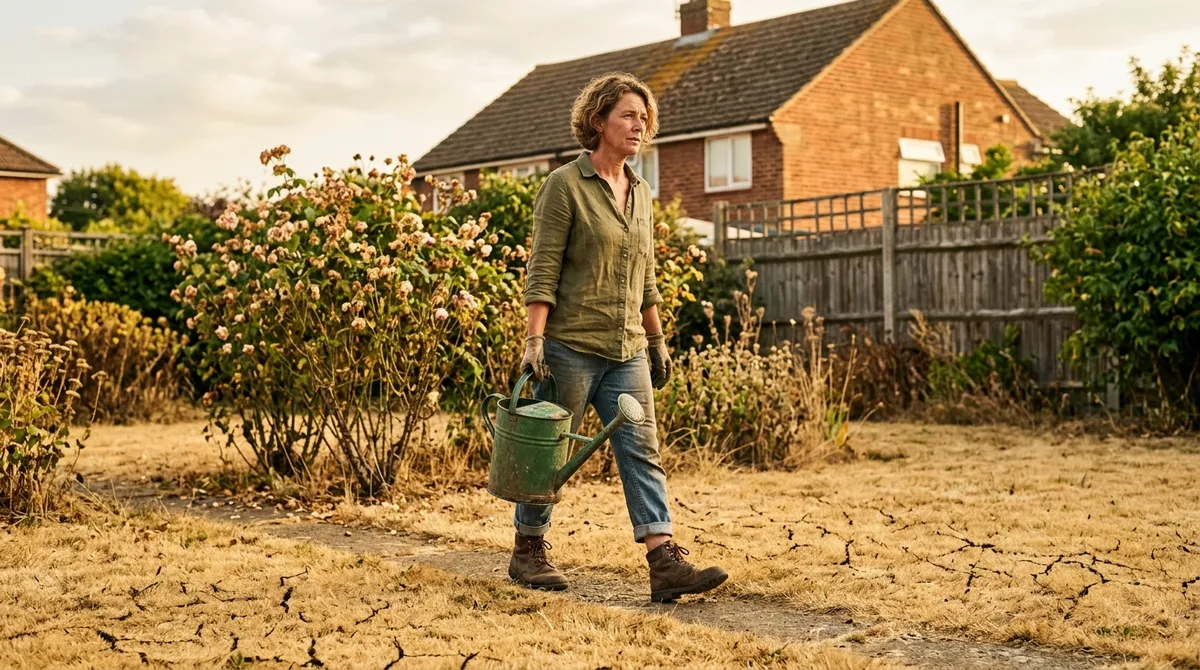
You can keep watering, as long as no mains-fed hose is involved.
- Use a watering can or bucket, even if you fill it from the tap.
- Use rainwater from water butts or tanks in any way you like, including a hose or drip line fed from the butt.
- Use grey water, such as used bath, shower or basin water.
- Wash the car with a bucket and sponge.
- Use any exemptions your water company lists, such as for blue badge holders.
Exemptions vary between companies and between bans. Some allow limited watering of new plants or new turf, or drip systems that meet certain conditions. Always read your own company’s notice before relying on one.
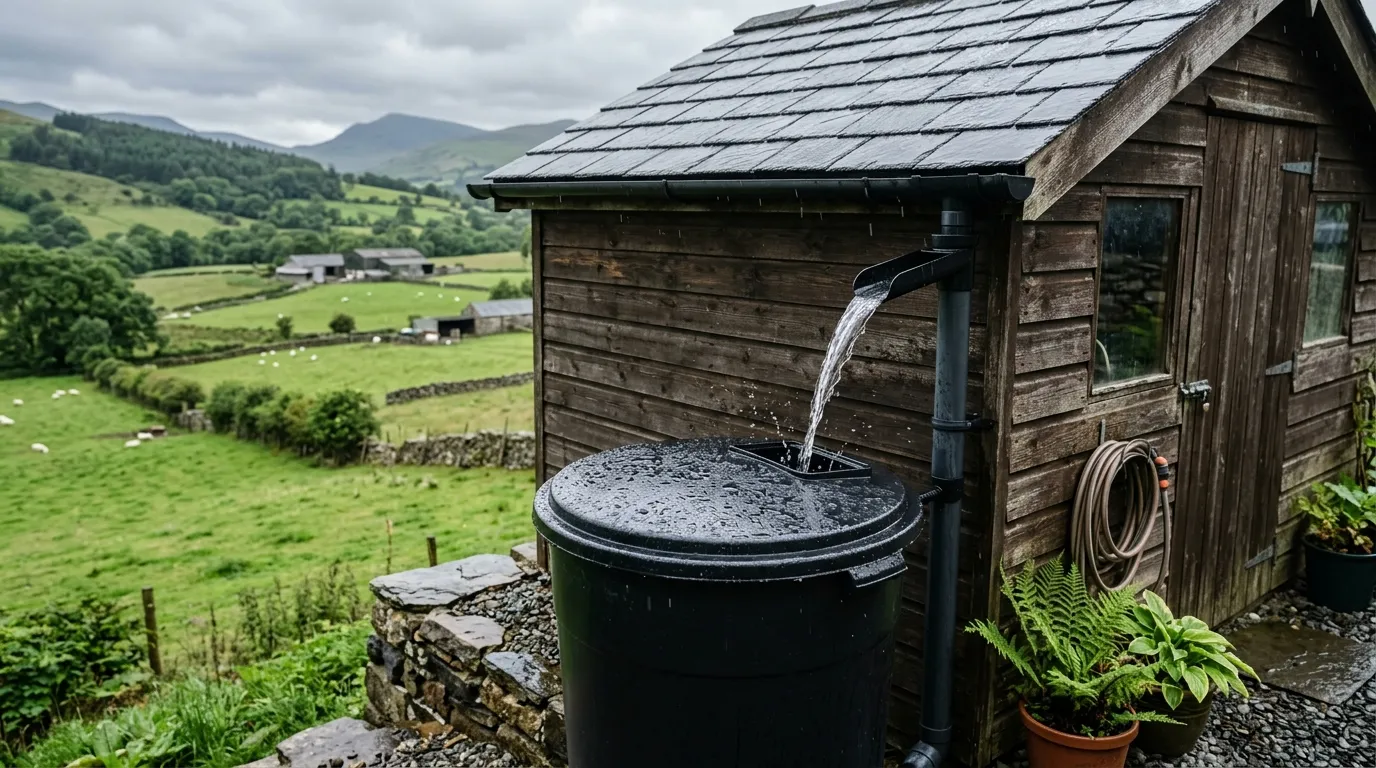
Rainwater you collect yourself isn’t covered by the ban, so a full water butt is gold in a dry summer.
What you can’t do in a hosepipe ban
The ban covers using a hose on mains water for jobs such as:
- watering a garden or allotment
- using a sprinkler
- filling or topping up a paddling pool, hot tub or swimming pool
- filling a pond or fountain, though some notices allow ponds with fish
- cleaning patios, paths, walls or windows
- cleaning a car or boat
Mains-fed automatic watering systems are usually covered too, unless your notice says otherwise. If you’re unsure, check your water company’s website. They publish the full list and any exemptions when a ban starts.
Which plants to water first in a hosepipe ban
Carrying cans is hard work, so put the water where it counts. Water in this order:
- Pots, hanging baskets and growing bags. They dry out fastest and can’t reach deeper water.
- Fruiting veg, such as tomatoes, courgettes and beans, especially when flowering and setting fruit.
- Plants put in this year, including young trees, shrubs and hedges.
- Salads and leafy crops, which bolt or turn bitter when dry.
- Established borders, only if plants are badly wilting in the evening.
- The lawn: never. An established lawn goes brown but recovers when the rain returns.
Water early in the morning or in the evening, and pour slowly at the base of each plant. A thorough soak every few days does more good than a splash every day. The guide to watering in hot weather covers which plants need the most during a heatwave.
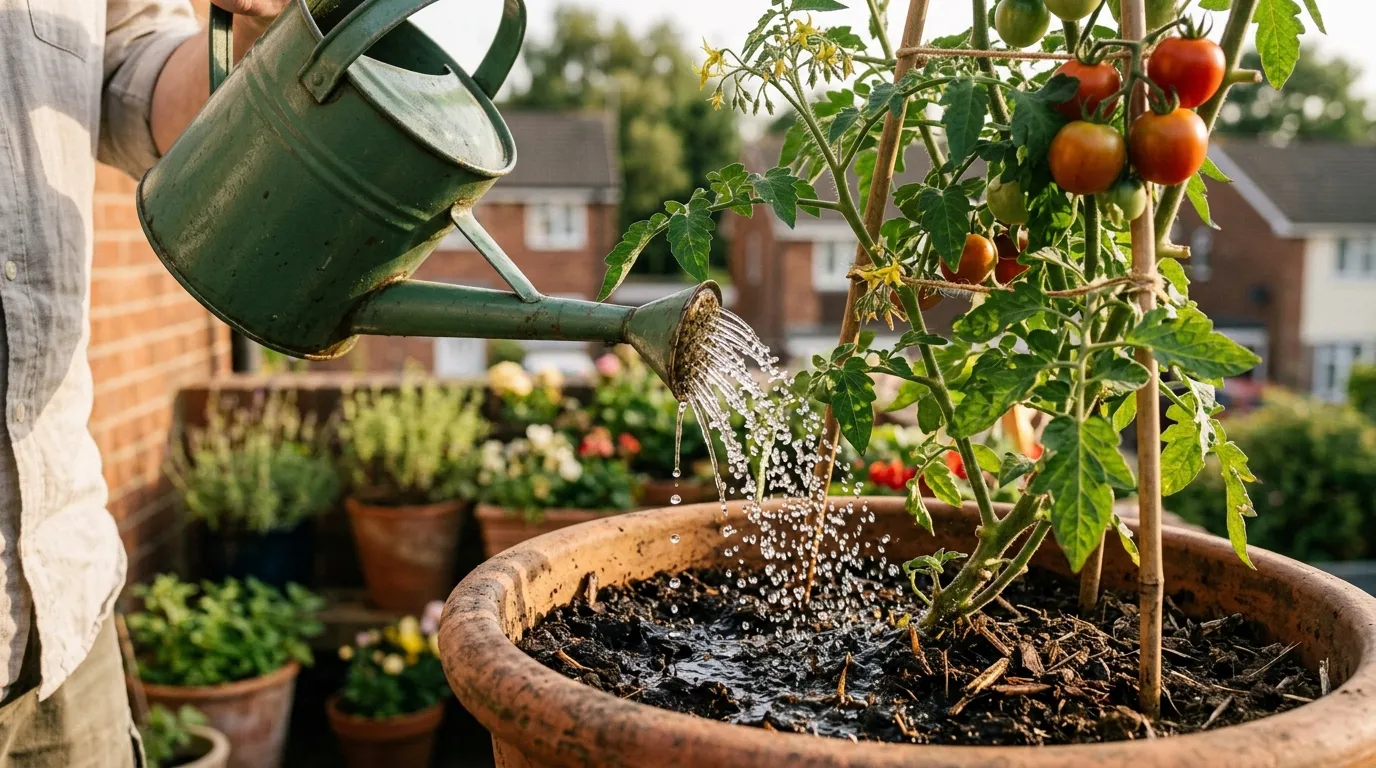
Pots of tomatoes come near the top of the list. Soak the compost slowly so the water reaches the roots.
Water butts and tanks: your best friend in a ban
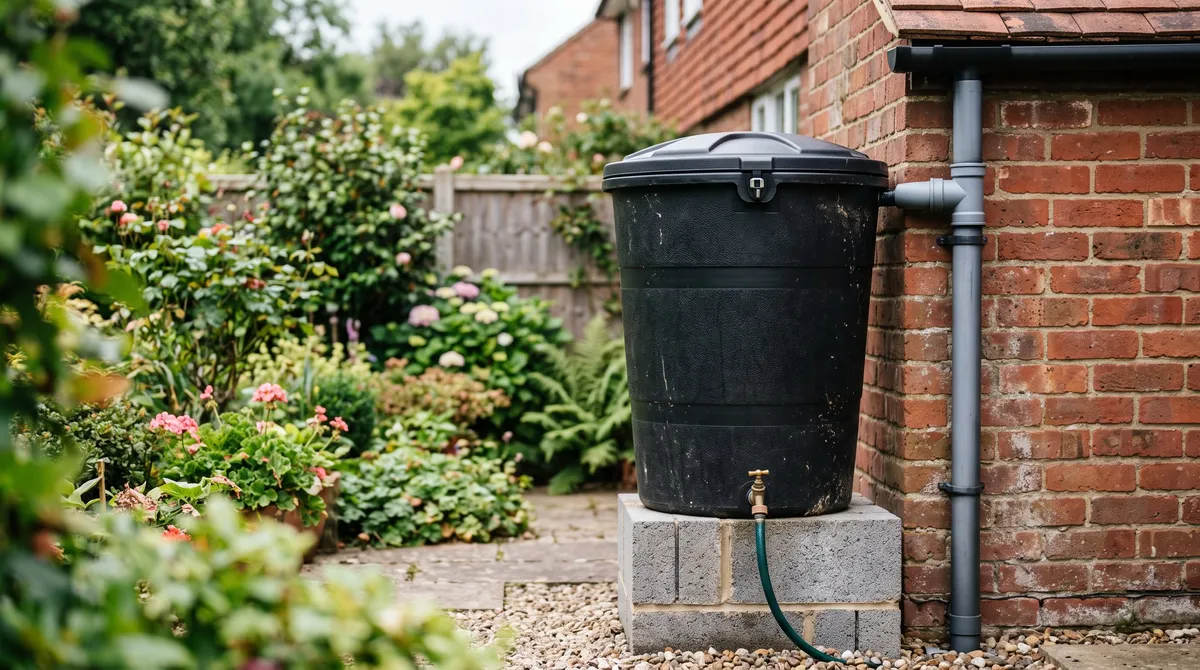
Rainwater you collect yourself is outside the ban. Every butt you fit before summer means more water to use freely.
- Fit butts to every downpipe you can: house, garage, shed and greenhouse.
- Link two or three butts together so the overflow from one fills the next.
- Raise them on a stand so a can fits under the tap.
- Keep lids on to stop leaves and mosquito larvae getting in.
Some gardeners with large plots use a 1,000-litre tank known as an IBC. If you do, use one that has only held food-safe contents, and screen it with trellis or planting. The guide to installing a water butt shows how to fit a diverter, and rainwater harvesting covers bigger set-ups.
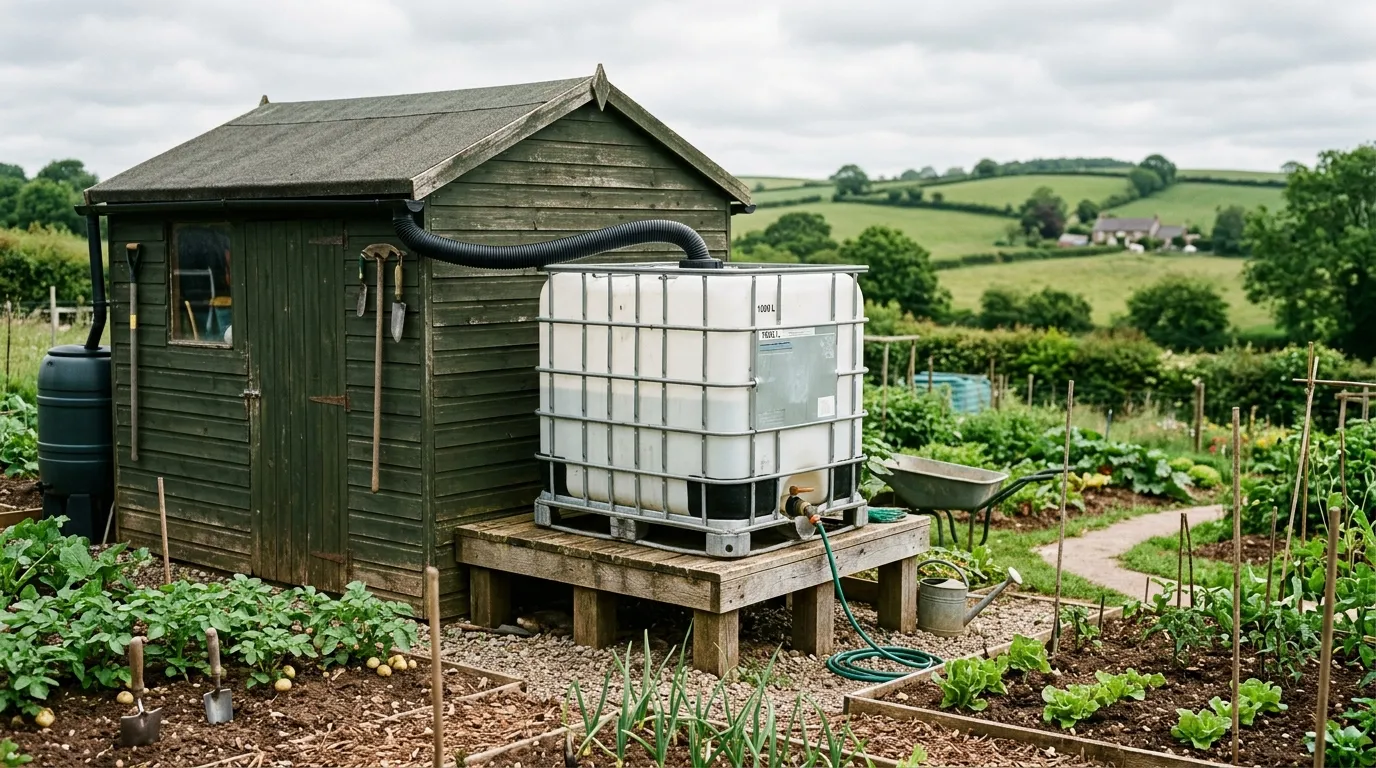
An IBC tank on a sturdy stand holds far more than a single butt, which helps on a busy veg plot.
Drip irrigation from a water butt
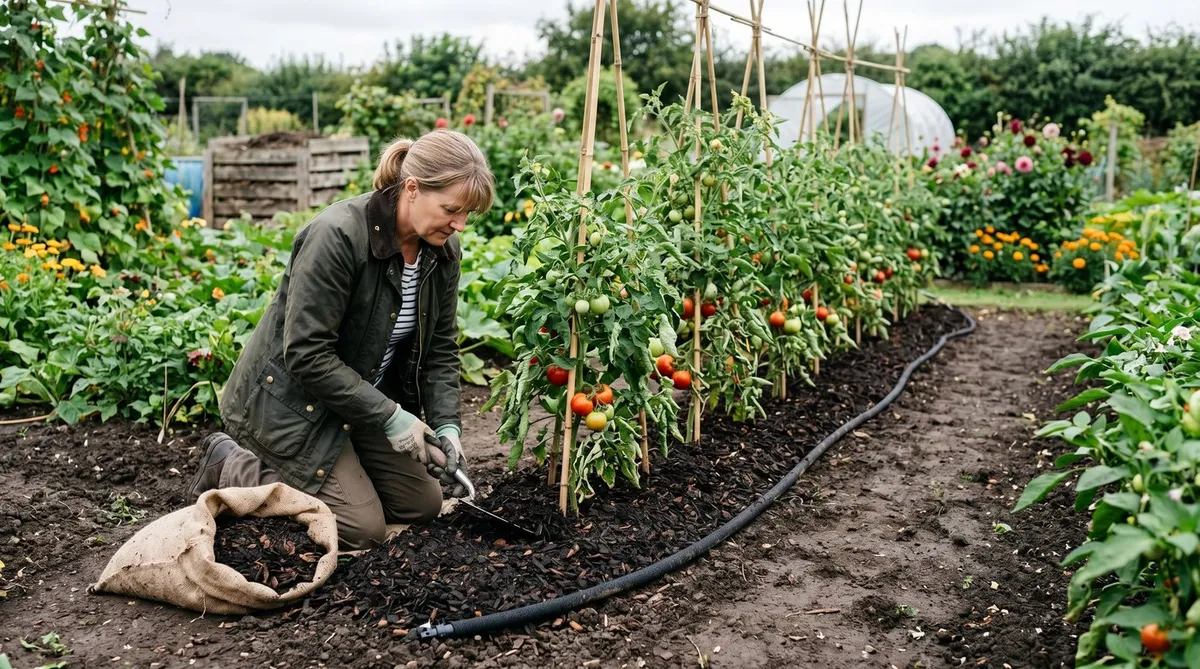
A drip line fed from a water butt is a handy way to water during a ban, because the water isn’t from the mains. Raise the butt on a stand or blocks so gravity pushes the water along. Fit a simple filter at the outlet to stop the drippers clogging.
Run the line along a raised bed or row of pots, with a dripper at each plant. Turn it on in the evening and check the soil the next morning. Cover the bed with mulch to keep the water in. The guide to drip irrigation kits compares the options.
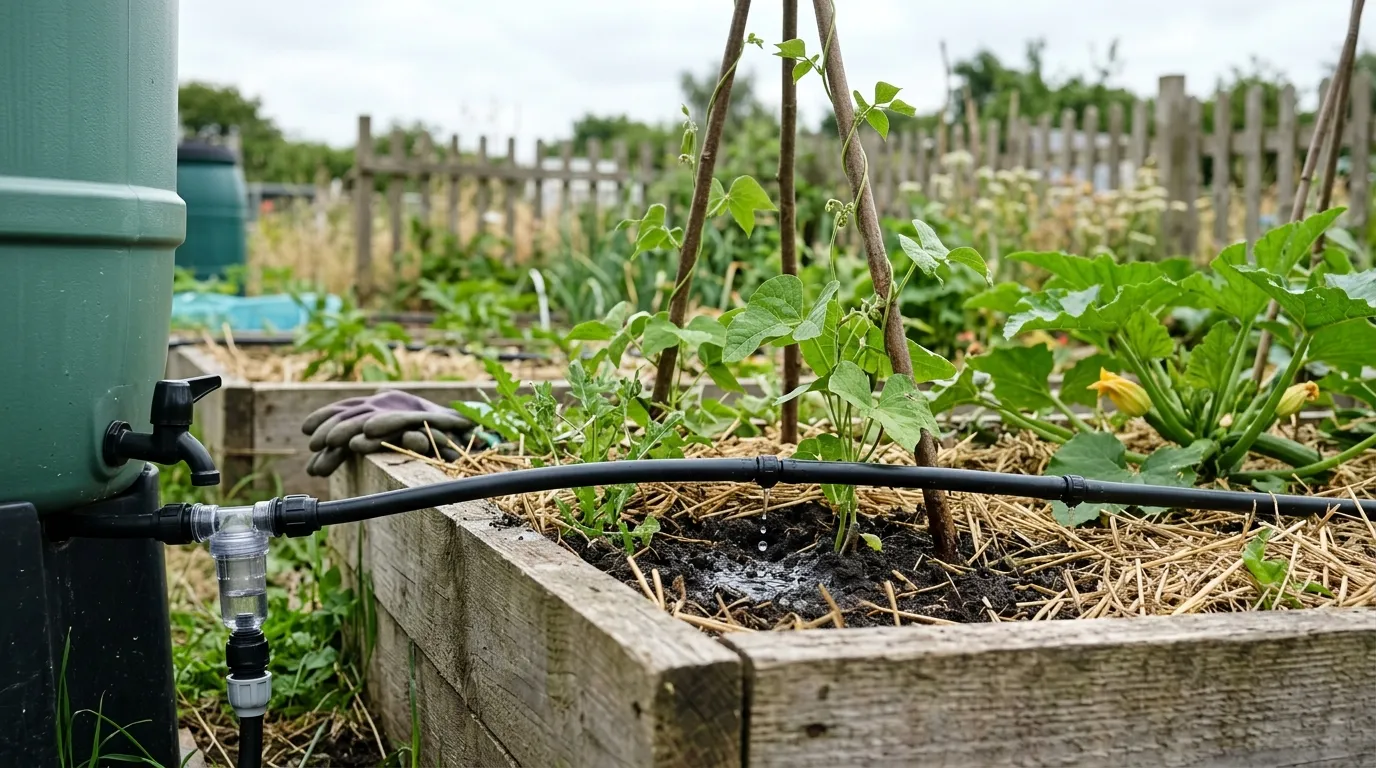
A drip line fed by gravity from a water butt waters beans and courgettes slowly, with straw mulch holding the moisture in.
Using grey water in a hosepipe ban
Grey water is used water from the bath, shower and bathroom basin. It’s allowed in a ban and would only go down the drain otherwise.
- Use it on ornamentals, shrubs and fruit trees, poured on the soil, not the leaves.
- Keep it off salads, herbs and other crops you eat raw.
- Use it the same day. Stored grey water soon smells.
- Skip water with bleach, disinfectant or strong cleaners, and avoid washing machine and dishwasher water.
- Spread it around the garden rather than pouring it on the same spot each time.
A bucket in the shower and a bowl for bath water are all you need.
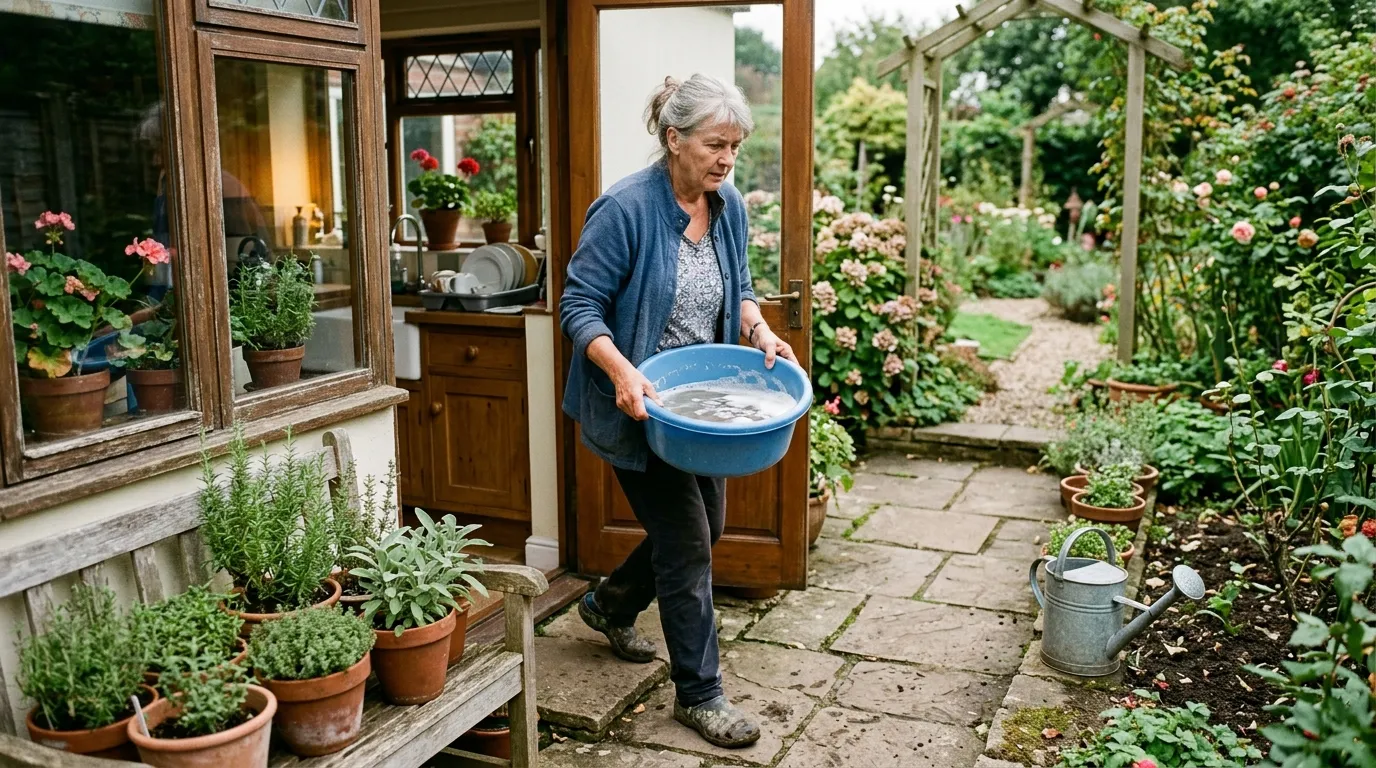
A bowl or bucket makes it easy to carry used bath or basin water out to the borders. Pour it on the soil, not the leaves.
Mulch to make every can go further
A 5-8cm layer of mulch over damp soil slows evaporation and keeps roots cool. It means each can you carry lasts longer.
Use bark on borders, and garden compost or leaf mould on veg beds. Straw works well around strawberries and courgettes. Always mulch after rain or a thorough watering, never over dry soil, or you’ll seal the dryness in. Keep it a few centimetres clear of stems.
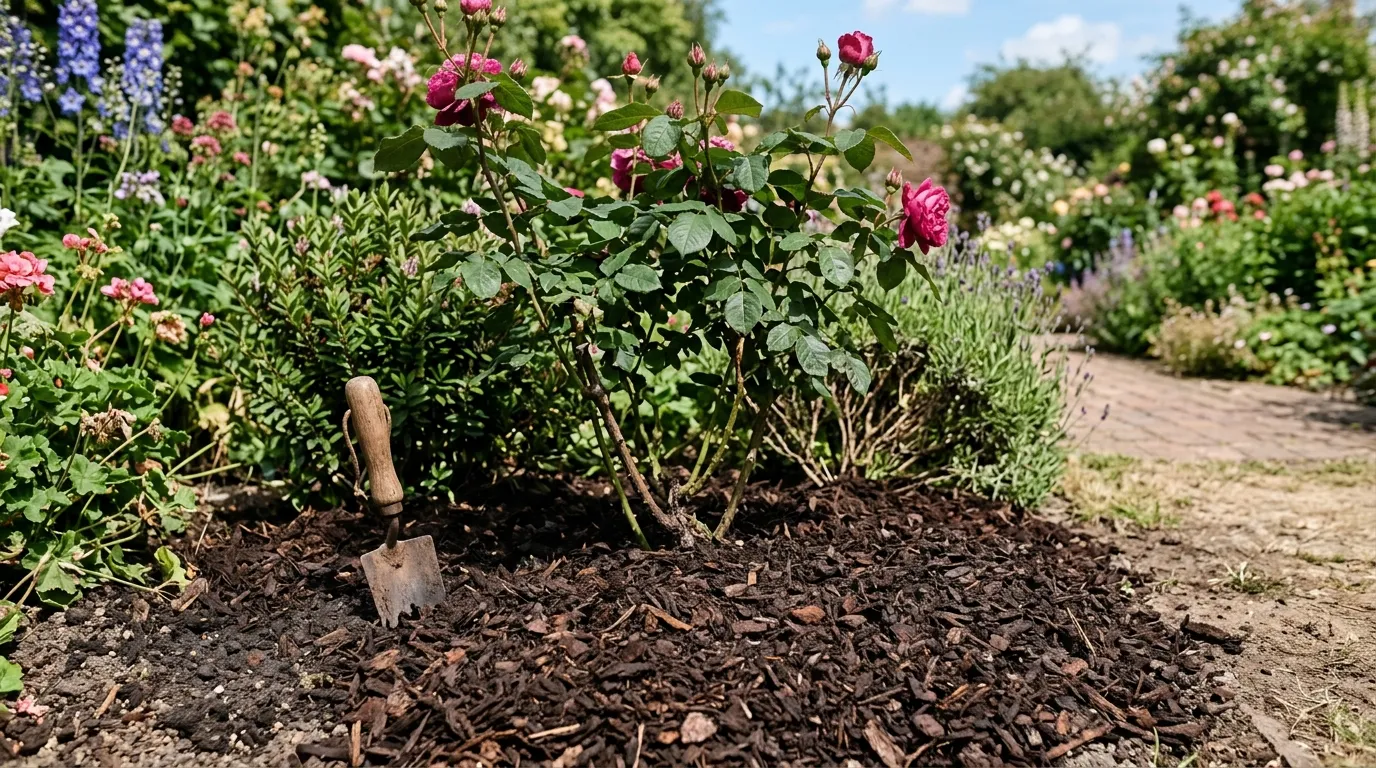
A thick layer of bark over damp soil helps a border hold onto water through a dry spell.
Getting ready before a ban
The best time to prepare is before the summer starts.
| Month | Job |
|---|---|
| Autumn and winter | Fit new water butts and link them so they fill on winter rain |
| March and April | Clear gutters and check butt lids and taps. Set up drip lines from butts |
| April and May | Mulch beds after rain, while the soil is damp |
| June | Group pots together in light shade. Check your water company’s website for drought news |
| July and August | Water by can in the morning or evening. Reuse bath water. Leave the lawn |
| September | Plant drought-tolerant plants while the soil is warm |
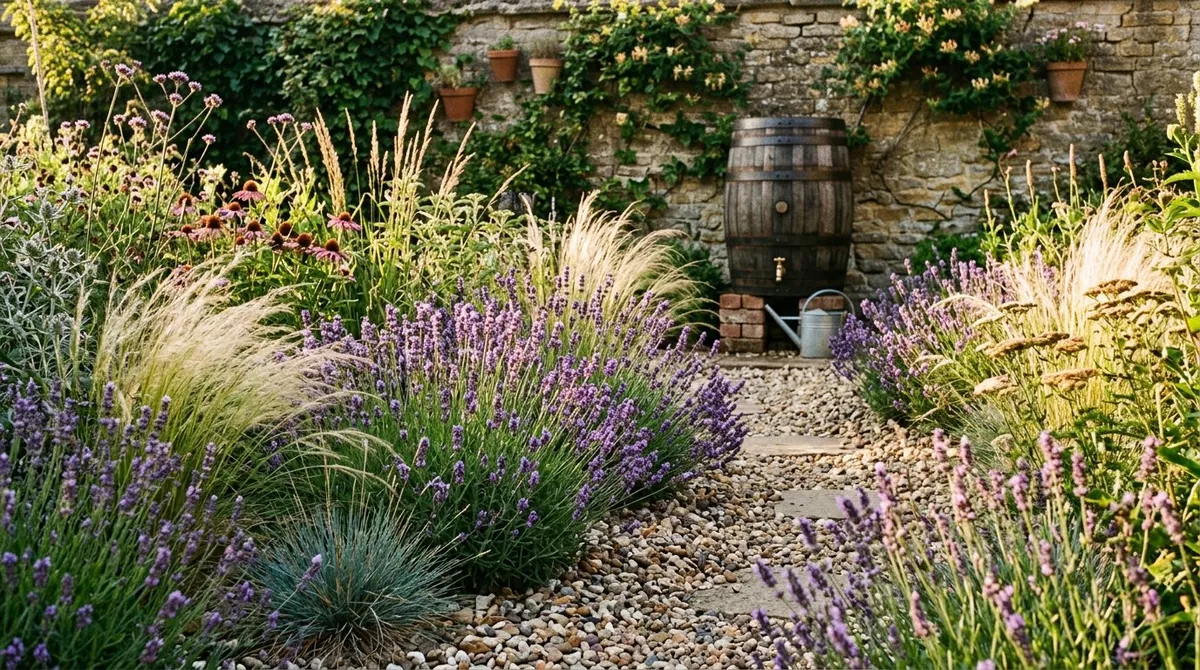
For plants that cope with dry summers, see the list of drought-tolerant plants.
Common hosepipe ban mistakes
- Watering the lawn. It recovers by itself. The guide to lawn drought recovery explains what to do when the rain comes.
- Assuming the ban means no watering at all. A can from the tap is fine. Keep your pots alive.
- Using a hose on the outside tap “just quickly”. It’s still against the ban.
- Watering at midday. More is lost to evaporation. Water early or late.
- Watering a little and often. A deeper soak every few days lasts longer.
Frequently asked questions
Can I water my garden during a hosepipe ban?
Yes, with a watering can, even if you fill it from the tap. What’s banned is using mains water through a hosepipe or sprinkler. Rainwater from a butt and used bath or shower water are fine too.
Is a water butt allowed in a hosepipe ban?
Yes, rainwater you’ve collected isn’t covered by the ban. The ban only applies to mains water from your water company. You can use water butt water in a can, or through a hose or drip line run from the butt.
Can I use grey water on my garden during a hosepipe ban?
Yes, used bath, shower and basin water is fine on ornamentals. Use it the same day and pour it on the soil. Avoid water with bleach or strong cleaners, and keep it off salads, herbs and other crops you eat raw.
What is the fine for breaking a hosepipe ban?
The maximum fine on conviction is £1,000. Water companies usually start with reminders and warnings. Breaking the ban is still an offence, so it’s simplest to stick to cans, butts and grey water.
Can I fill a paddling pool during a hosepipe ban?
Not with a hosepipe on mains water. Filling paddling pools with a hose is one of the banned uses. You can fill a small pool with buckets or a watering can, but go easy on the water.
Can I water new plants and trees during a hosepipe ban?
Yes, with a watering can or rainwater. Some water companies also allow limited hose use for newly planted areas or for blue badge holders. Check your own company’s ban notice for the exact exemptions.
How long do hosepipe bans usually last?
Usually until water levels recover, often after autumn rain. Some bans last a few weeks, others several months. Your water company announces when a ban starts and when it’s lifted.
For more ways to keep plants going on less water, read the guide to water-efficient gardening, or browse more how-to guides.
Our team produces practical UK gardening guidance from source research, contributor records and established horticultural practice. Editorial standards are overseen by Matt W.