
Key takeaways
- A water butt and diverter kit is a simple DIY job with a hacksaw and drill
- Rainwater is soft, so acid-loving plants like camellias and blueberries do better on it than hard tap water
- One butt fills fast and empties fast, so link two or three together
- Raise the butt on a stand so a watering can fits under the tap
- Use tap water for seedlings, as stored rainwater can carry disease
- Keep a lid on, fit a leaf filter and give the butt a scrub each autumn
Catching rainwater is one of the simplest, most useful things you can do in a garden. A basic setup is cheap, quick to fit and gives you free water all summer.
Every time it rains, the water on your roof runs straight down the drain. Even a small shed roof catches a surprising amount. Grab some of that and your plants (and your water bill, if you’re on a meter) will thank you.
Why is rainwater better than tap water for plants?
Rainwater is soft and slightly acidic. Tap water in much of the UK, especially the south and east of England, is hard and full of lime.
That makes a difference in a few ways:
- Acid-loving plants hate hard water. Rhododendrons, camellias, blueberries, azaleas and pieris turn yellow between the veins if they get hard tap water all the time. The lime stops them taking up iron.
- It’s kinder to pots. Plants in containers get watered a lot, so the lime in hard water builds up faster.
- It’s free. Every can you fill from a butt is one less from the tap.
For lawns and general borders, it doesn’t matter much. For growing roses, acid-lovers, pots and greenhouse crops, it really helps.
One exception: use tap water for seedlings and young plants under cover. Water stored in a butt can carry the fungi that cause damping off.
How much rainwater can you collect?
Plenty. Here’s a quick sum: roof area in square metres x yearly rainfall in millimetres x 0.8 gives you litres. The 0.8 allows for splashes and evaporation.
| Roof | How much you’ll catch |
|---|---|
| Garden shed | Enough to fill a butt many times a year |
| Greenhouse | Plenty for the plants inside |
| Single garage | Several butts’ worth |
| Half a semi-detached house | Far more than most people can store |
| Whole detached house | Enough for a big garden or allotment |
The west of the UK gets far more rain than the south-east, so your numbers will vary. But almost everywhere, one decent downpour fills a butt. The limit is nearly always storage, not rain.
What size water butt do you need?
Pick your butt by the size of your garden, what you grow and where it will go. Too small and it overflows every shower, then runs dry in a dry spell.
| Type | Size | Best for |
|---|---|---|
| Slim wall-mounted | About 100 litres | Balconies and small patios |
| Standard barrel | About 200 litres | Small gardens |
| Large barrel | About 350 litres | Medium gardens and allotments |
| Two linked butts | About 400 litres | Medium gardens |
| IBC tank (reused) | About 1,000 litres | Allotments and big gardens |
| Underground tank | 1,000 litres and up | Big gardens, hidden storage |
 A 200-litre water butt on a shed downpipe. Link a second one alongside and you double your storage.
Linking water butts in series
Linking butts is easy and well worth it. A linking kit joins them near the base with a short pipe. When the first butt fills, water flows into the next. Stand them at the same height on a level base, and you’ve got one big store with a tap on each.
How to fit a water butt and diverter kit
You don’t need a plumber. All you need is a hacksaw, a drill and a diverter kit.
Step by step
- Put the butt in place on a flat, level base. A stand or a few bricks raising it about 30cm lets a watering can fit under the tap.
- Mark the diverter height on the downpipe, level with the butt’s inlet. The diverter must sit at or above the inlet, never below.
- Cut the downpipe with a hacksaw at the mark, taking out the section the kit’s instructions say.
- Fit the diverter and connect the hose to the butt inlet. Tighten the hose clips.
- Fit a tap near the bottom of the butt if it doesn’t have one. Drill the hole and fit the tap with a rubber washer on each side.
- Test it by pouring water into the gutter. Check every joint for drips.
Most kits fit standard 68mm round downpipes. For 65mm square pipes, pick up a square-to-round adapter from a builder’s merchant.
 A diverter kit on a round downpipe. The hose carries rainwater straight into the butt.
Gardener’s tip: Fit a leaf guard or mesh filter at the top of the downpipe. Leaves rotting in a butt turn into smelly sludge and block the tap.
How much money does it save?
If you’re on a water meter, every can of rainwater is money saved. A butt is cheap to buy, and in a dry summer it can pay for itself fairly quickly. Even if you’re not on a meter, it’s a handy supply right where you need it, and it helps when hosepipe bans come in.
The rules on rainwater harvesting
Collecting rain from your own roof for the garden needs no licence or permit.
A few things to know:
- Above-ground water butts don’t need planning permission
- Big underground tanks involve digging and building work, so check with your installer or council before you start
- Conservation areas may have rules about large visible tanks, so check with your council
- Shared downpipes on terraces or flats may need the freeholder’s OK before you change them
- Using rainwater indoors, such as for flushing toilets, needs a separate plumbing system that meets the water fittings rules, so use a qualified installer
For watering the garden, you’re good to go.
Should you get an underground tank?
Underground tanks suit gardeners who want a lot of storage but don’t have room for a row of butts. They’re also hidden from view.
| Water butts | Underground tank | |
|---|---|---|
| Storage | Small to medium | Large |
| Cost | Low | High |
| Fitting | Easy DIY job | Professional, a day or two |
| Upkeep | Yearly clean, easy to reach | Pump needs replacing now and then |
| Frost | Tap can freeze | Protected by the soil |
| Looks | On show | Out of sight |
| Pressure | Gravity only | Pump gives good pressure |
A tank makes sense for a big veg garden, an allotment or a greenhouse with auto-watering that gets through a lot of water. For most gardens, a few linked butts are better value.
 An underground tank holds lots of water out of sight. Fitting is usually a job for a professional.
Common mistakes to avoid
1. Only having one butt
One butt overflows after a heavy shower and runs dry within a week of watering. Link two or three together. A second butt doesn’t cost much and makes a big difference.
2. Putting the butt too low
Without a stand raising it at least 30cm, you can’t get a watering can under the tap. A higher butt also gives a little more flow.
3. Forgetting the overflow
Every butt needs an overflow pipe taking spare water away from the house. Otherwise water pools against the wall and can cause damp. Send it to a drain, a soakaway or a garden pond.
4. Skipping the leaf filter
Leaves rotting in the water make a rotten-egg smell and block taps. Fit a mesh guard where the water comes in.
5. Never cleaning it
Empty, scrub and rinse each butt in late autumn. Clear the sludge from the bottom and check the tap washer and hoses. It only takes a few minutes and keeps algae and smells away.
Rainwater jobs month by month
| Month | What to do |
|---|---|
| January | Check stands and fittings after winter storms. Thaw frozen taps gently. |
| February | Order new butts or linking kits before the spring rush. |
| March | Fit new butts and diverters before the growing season. Test the taps. |
| April | Butts should be full from spring rain. Start using it on borders and pots. |
| May | Keep an eye on levels. Water borders and containers with rainwater. |
| June | Busy month. Save the tap for when butts run dry. Put edibles and new plants first. |
| July | Lots of watering, not much rain. Use stored water wisely and mulch beds. |
| August | Butts may run low. Put edibles and new plants first. |
| September | Autumn rain refills the butts. Water new autumn plantings. |
| October | Watering winds down. |
| November | Empty and scrub the butts. Check tap washers. Put the lids back on tightly. |
| December | Wrap exposed taps and pipes to protect them from frost. |
Making the most of your rainwater
Catching it is half the job. Using it well makes it last through the driest weeks.
- Water the base of plants, not the leaves, so the water goes where the roots are.
- Water in the morning, before it gets hot, so less is lost to evaporation.
- Mulch your beds with 7-10cm of compost or bark to keep moisture in the soil.
- Keep thirsty plants together. Tomatoes, cucumbers, courgettes and runner beans drink far more than shrubs. Grow them near the butt to save your arms.
- Use a watering can, not a hose. You’ll put the water exactly where it’s needed, and a hose empties a butt in minutes.
- Put edibles and new plants first. Settled shrubs, trees and perennials rarely need watering in a normal UK summer.
Our guide to watering your garden properly has more on how much water different plants need.
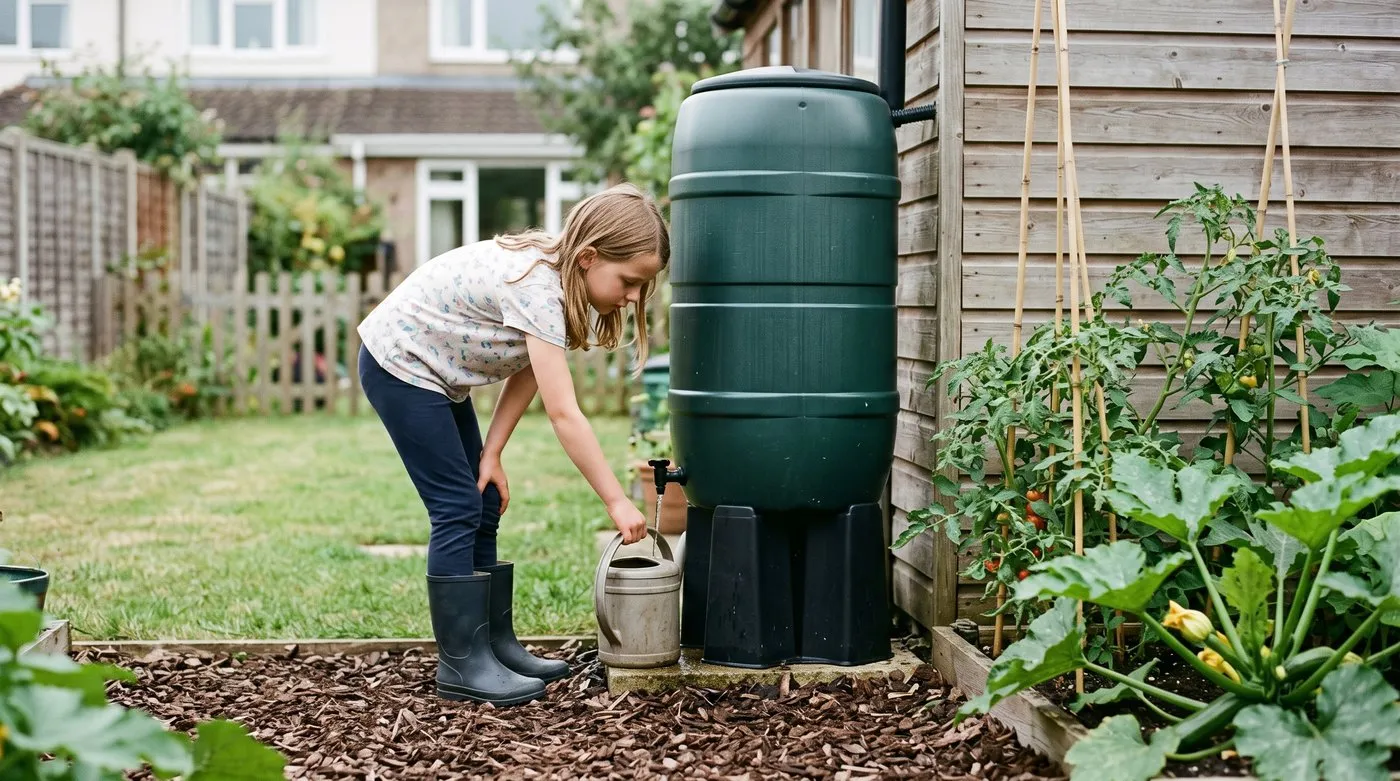
Grow thirsty crops close to the butt and use a can rather than a hose. You’ll put every drop right where the roots need it.
Rainwater for ponds and water features
Rainwater is great for topping up garden water features and wildlife ponds. Tap water can contain chlorine and nutrients that feed algae, while rainwater doesn’t.
Top up a pond little by little rather than all at once. A big rush of water can change the temperature quickly, which stresses fish and pond life.
Now you’re catching free water, read our guide to water-efficient gardening to make every drop go further.
Frequently asked questions
Is rainwater harvesting legal in the UK?
Yes, collecting rain from your own roof is perfectly legal. You don’t need a licence or permit to use it in the garden. Ordinary water butts don’t need planning permission. For a big underground tank, check with your installer or council first.
How much rainwater can I collect from my roof?
Far more than you can store. Multiply the roof area in square metres by your yearly rainfall in millimetres, then by 0.8, to get litres. Even a small shed roof fills a water butt many times a year, so storage is usually the limit, not rain.
What size water butt do I need for my garden?
Start with a 200-litre butt for a small garden. Bigger gardens do better with two or three butts linked together. Large gardens and allotments may want an IBC container or an underground tank.
Why is rainwater better than tap water for plants?
It’s soft and slightly acidic, while tap water in much of the UK is hard. Acid-loving plants like rhododendrons, camellias and blueberries do much better on rainwater. It’s also free, which is hard to argue with.
How do I connect a water butt to my guttering?
Use a diverter kit on your downpipe. Mark the pipe level with the butt’s inlet, cut it with a hacksaw, fit the diverter and connect the hose to the butt. No plumbing skills needed. Most kits fit standard 68mm round downpipes.
Do water butts attract mosquitoes?
Only if you leave them uncovered. Use a butt with a tight-fitting lid and fit mesh over the inlet. Give it a clean once a year in late autumn too.
Can I use rainwater in a greenhouse?
Yes, for established plants like tomatoes and cucumbers. A butt next to the greenhouse keeps water at a gentle temperature. Use tap water for seedlings, as stored rainwater can carry disease. For automated greenhouse watering, a rain-fed header tank works well.
How long does collected rainwater last in a water butt?
For months, if you look after it. Keep the lid on, the butt out of strong sun and scrub it once a year. A green tinge in summer won’t harm plants. If it smells bad, drain it, scrub it out and let it refill.
Our team produces practical UK gardening guidance from source research, contributor records and established horticultural practice. Editorial standards are overseen by Matt W.


