Key takeaways
- A 5-8cm mulch over damp soil keeps moisture in
- A water butt on a downpipe gives you free rainwater
- Water deeply once or twice a week, at the base of plants
- Compost helps sandy soil hold water and clay soil drain
- Lavender, rosemary, sedum and grasses cope well with dry spells
You can keep a lovely garden going on much less water. Hosepipe bans are becoming more common in dry summers, so it pays to be ready.
Saving water doesn’t mean letting plants suffer. It’s about a few simple habits that keep plants healthy. Most of them save you time and money too.
Why saving water matters in UK gardens
Summer is when gardens need water most, and when it rains least. Some parts of the UK, especially the south-east, are surprisingly dry.
A sprinkler or hose left running uses a huge amount of water, much of it lost to the air. Smarter watering keeps plants happy for a fraction of that. Building a garden that copes with less means you’re not caught out by the next dry summer.
Mulching: the easiest win
Mulching is the best single thing you can do. A 5-8cm layer over bare soil slows water loss, smothers thirsty weeds and feeds the soil as it rots down.
Best mulch materials
| Material | Holds moisture | Cost | Notes |
|---|---|---|---|
| Garden compost | Very well | Free if homemade | Best all-rounder |
| Well-rotted manure | Very well | Often free from stables | Let it rot down first |
| Bark chips | Well | Low | Lasts a few years |
| Straw | Well | Low | Great around strawberries |
| Leaf mould | Very well | Free | Takes a year or two to make |
| Gravel | Fairly well | Varies | Good for Mediterranean plants |
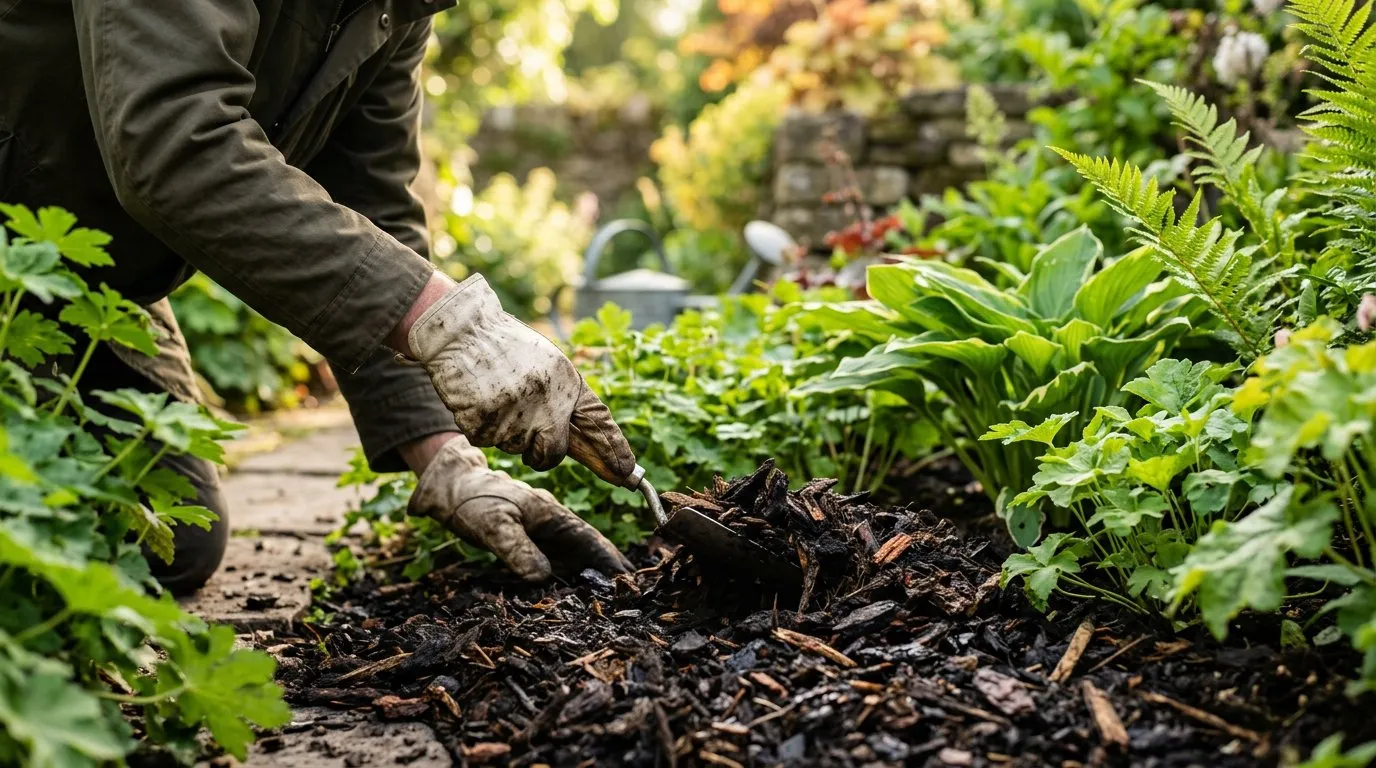 A good layer of mulch cuts down on watering. Spread it in spring while the soil is still damp.
Spread mulch in spring when the soil is damp. Keep it a little way back from plant stems so they don’t rot. Top it up each year as it breaks down. Our guide on making compost helps you make your own supply.
Rainwater harvesting
Collecting rainwater is free, and it’s there when you need it.
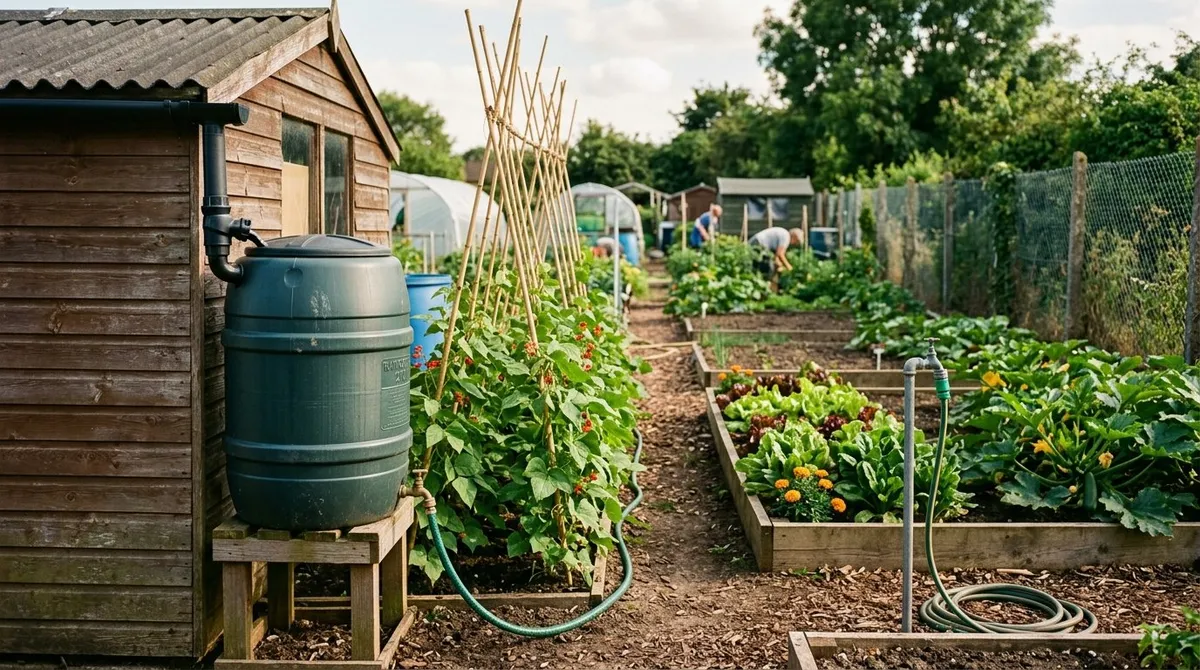
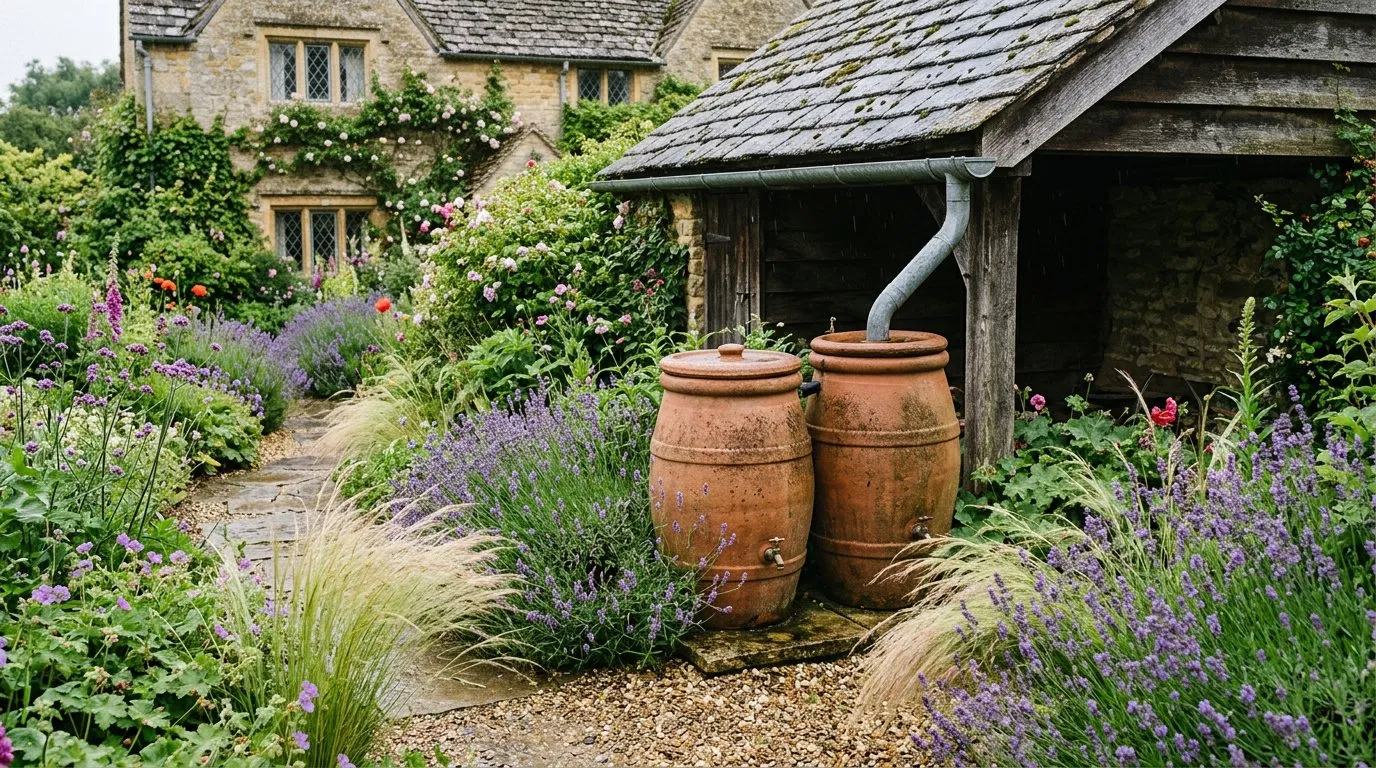 Water butts on a shed roof quietly fill up all year, ready for summer.
Water butts
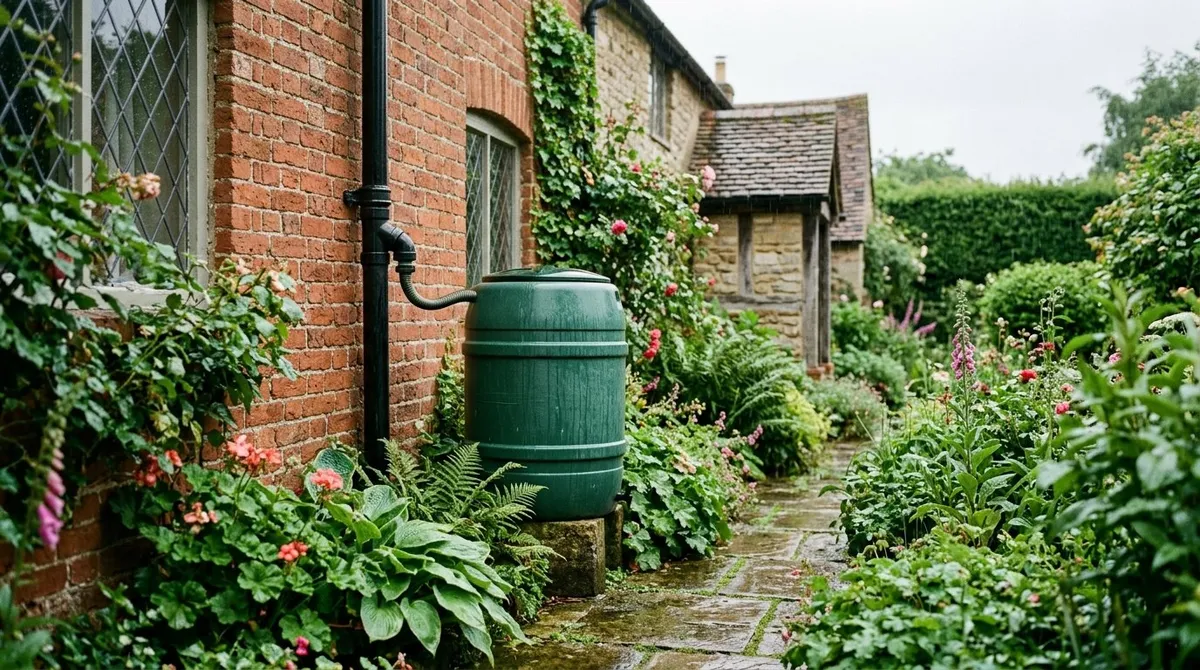
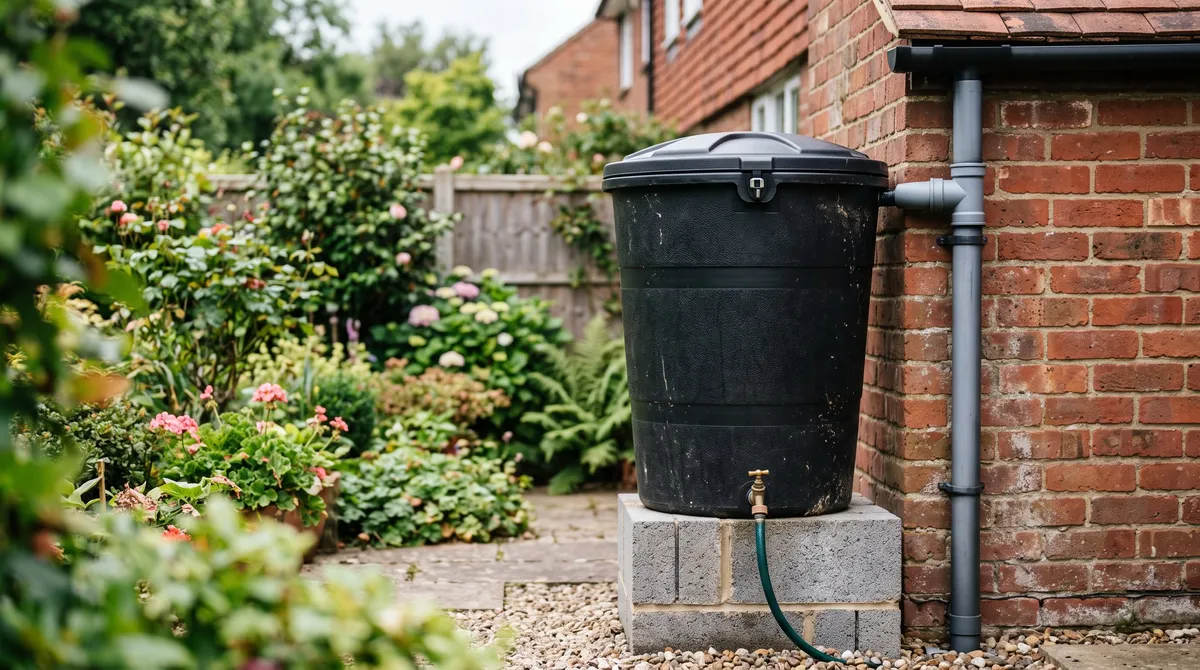
A water butt on a shed, greenhouse or house downpipe fills up quickly in a good shower. Stand it on a stand so a watering can fits under the tap. Slimline ones tuck neatly against walls and fences.
Going bigger
Link a few water butts together for more storage. In larger gardens, an underground tank holds much more.
Tip: Keep a lid on your water butt to stop algae and mosquitoes. Clear out leaves and debris in autumn.
Improving soil to hold water
Organic matter is the answer for every kind of soil. Sandy soil drains too fast, and clay holds water but gets waterlogged.
Dig in or spread 5-8cm of compost or well-rotted manure each year. In sandy soil, it acts like a sponge and holds water where roots can reach it. In clay soil, it opens things up so water drains and air gets in.
Over a few years, you’ll notice the soil stays moist for longer after rain.
Watering the smart way
How you water matters as much as how often.
Water the roots, not the leaves
Aim water at the soil at the base of each plant. Sprinklers lose lots of water to the air before it reaches the roots. Use a watering can without the rose, a seep hose or a leaky pipe along the beds.
Water deeply but less often
A deep soak once or twice a week beats a light sprinkle every day. Deep watering gets roots growing down into moist soil. A daily splash keeps roots near the surface, where they dry out fast.
Water in the morning if you can
Morning is the best time. It’s cool, less water is lost, and plants are ready for the heat of the day. Evening is the next best time, but keep the water on the soil, not the leaves.
Water what needs it most
Not everything needs the same attention:
- Seedlings and new plants: every day or two until they settle
- Fruiting crops (tomatoes, beans, courgettes): steady watering helps stop problems like blossom end rot
- Leafy crops (lettuce, spinach): dry spells make them bolt
- Established shrubs and perennials: rarely need watering after their first year
- Lawns: go brown in a drought but bounce back when the rain returns, so don’t bother watering an established lawn
Choosing drought-tolerant plants
Plants that cope without extra water are the long-term answer. Our guide to drought-tolerant plants has lots more ideas.
Mediterranean plants are naturally good at dry conditions:
- Lavender: loves poor, dry soil and full sun
- Rosemary: needs almost no watering once settled
- Sedum: fleshy leaves store water, and bees love the flowers
- Ornamental grasses: deep roots find water other plants can’t reach
- Thyme: creeping types make lovely ground cover
- Echinacea: a prairie plant that copes with dry summers
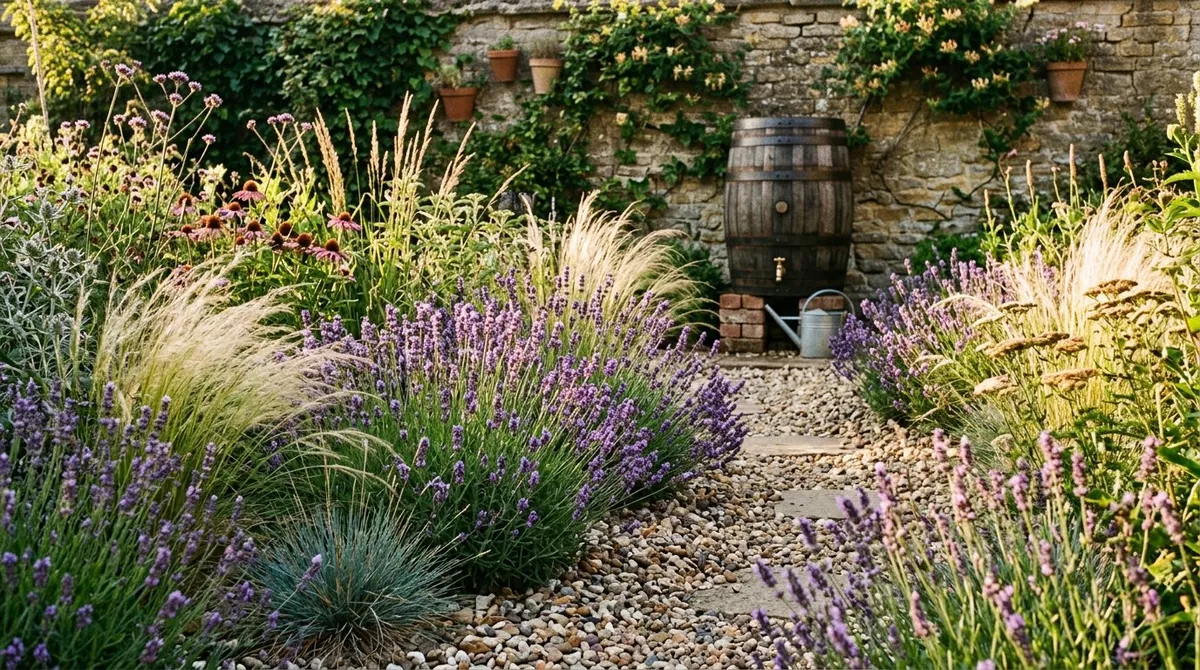
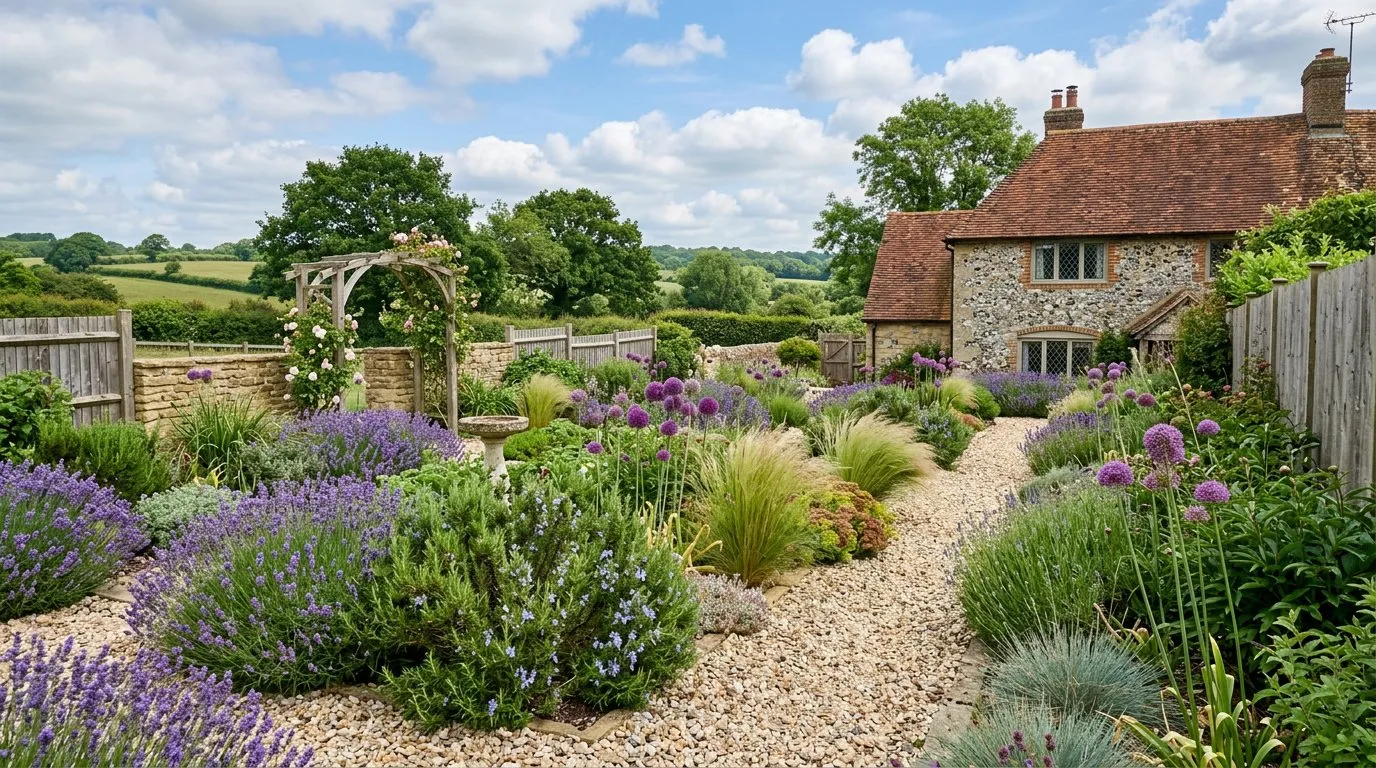 A gravel garden of tough, sun-loving plants needs hardly any watering once it’s settled.
Native wildflowers cope with dry spells too. A mini wildflower meadow needs no watering once it’s going, and the bees will thank you.
Designing a garden that needs less water
Group plants by thirst
Put thirsty plants together and drought-lovers together. That way you water only the bits that need it.
Use shade cleverly
Let taller plants shade lower ones. Lettuce at the foot of a runner bean wigwam stays cooler, needs less water and is slower to bolt.
Shrink the lawn
Lawns are thirsty. Swap unused patches of grass for ground cover plants, gravel or new beds.
Ready to choose some tough plants? Our guide to drought-tolerant plants for UK gardens has plenty that thrive on very little.
Related reading: A pond holds rainwater and brings in wildlife. See our guide to fitting a pond liner properly.
Frequently asked questions
How do I reduce water use in my garden?
Mulch your beds, collect rainwater and water at the roots. Spread 5-8cm of compost or bark over damp soil. Fit water butts to shed and greenhouse downpipes. Water at the base of plants, ideally in the morning. Choose tough plants and dig in compost each year.
When is the best time to water the garden?
Early morning is best. It’s cool, so less water is lost, and plants are set up for the heat of the day. Evening is fine too if that suits you, but aim at the soil rather than the leaves.
How often should I water my garden in summer?
A deep soak once or twice a week suits most established plants. That’s better than a light sprinkle every day, as it gets roots growing down deep. New plants need watering every few days until they settle in.
Are water butts worth it?
Yes, they’re cheap and fill up quickly in a good downpour. Rainwater is free, and lime-hating plants like blueberries prefer it to tap water in hard-water areas. It’s also there for you if a hosepipe ban comes in.
What plants need the least water?
Lavender, rosemary, sedum, ornamental grasses and thyme need very little once settled. Native wildflowers and most established trees and shrubs also cope well with dry spells. Give them a year to get their roots down first.
Does mulch really save water?
Yes, it really does. A 5-8cm layer of bark, compost or straw slows water loss from the soil. It also keeps roots cool, smothers thirsty weeds and feeds the soil as it breaks down.
Our team produces practical UK gardening guidance from source research, contributor records and established horticultural practice. Editorial standards are overseen by Matt W.