Key takeaways
- A mini meadow works in a couple of square metres, a strip along a fence or a big pot
- Pick a sunny spot; wildflowers do best on poor, low-fertility soil
- Sow UK native seed in autumn or spring, about 4-5g per square metre
- Add yellow rattle, sown fresh in autumn, to weaken vigorous grass
- Cut once a year in late summer, leave the cuttings a few days, then rake them off
You don’t need a field to grow a wildflower meadow. A sunny patch of a couple of square metres, a strip along a fence or even a big pot can become a mini meadow. Give it poor soil, sow native seed in autumn or spring, and cut it once a year. In return you get a changing show of flowers and plenty of bees, hoverflies and butterflies.
This guide is for small spaces. If you want to convert a whole lawn, see the guide to turning a lawn into a wildflower meadow, or the guide to a low, mowable wildflower lawn.
How small can a mini meadow be?
As small as you like. Even a tiny patch of native flowers gives insects food. Good small spots include:
- A corner of the lawn, about 2-6 square metres
- A strip along a fence, wall or path, 50cm-1m wide
- A raised bed you’d otherwise leave empty
- A large pot or half-barrel on a patio or balcony
Bigger patches look more meadow-like, but every little bit helps wildlife.

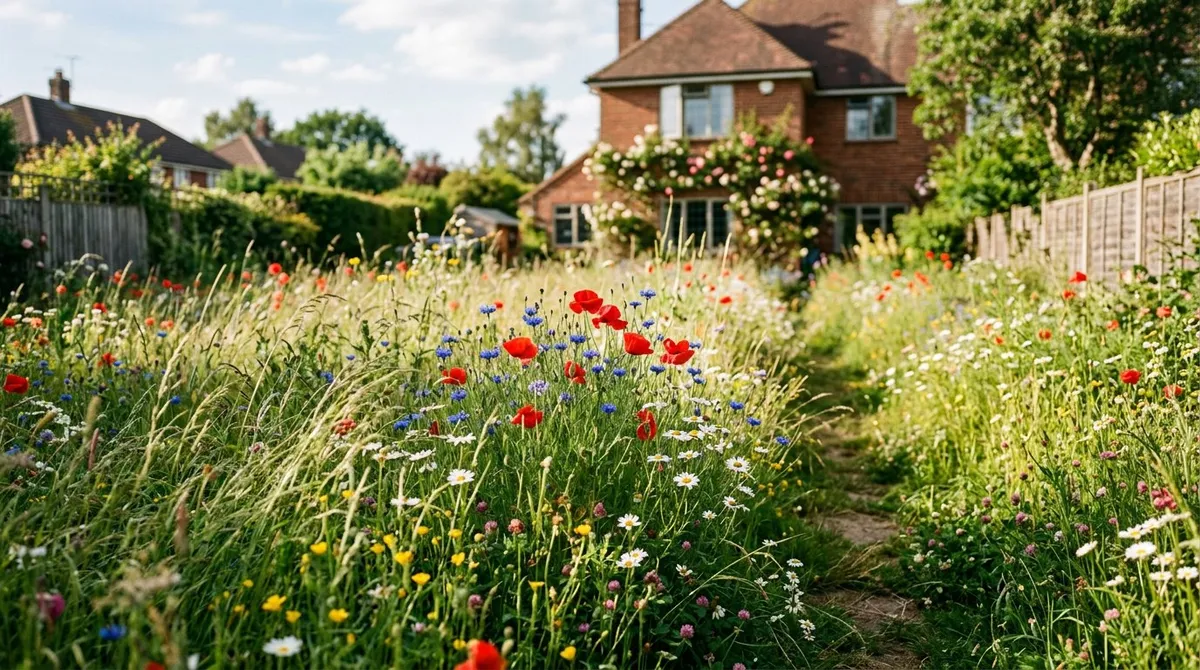
A small meadow corner next to a mown lawn. A neat edge makes it look deliberate, not neglected.
Choosing the best spot for a mini meadow
Pick somewhere with full sun for most of the day. A south or west-facing spot is ideal. Few meadow flowers do well in deep shade.
Poor soil matters more than anything. On rich garden soil, grasses and weeds grow so strongly that they smother the wildflowers. So for a mini meadow:
- Don’t add compost, manure or fertiliser.
- Strip off turf and the top few centimetres of rich topsoil if you can.
- Avoid ground that stays wet. Damp spots need a different, wetland mix.
Perennial meadow or cornfield annuals: which to sow?
There are two kinds of wildflower seed mix, and they behave quite differently.
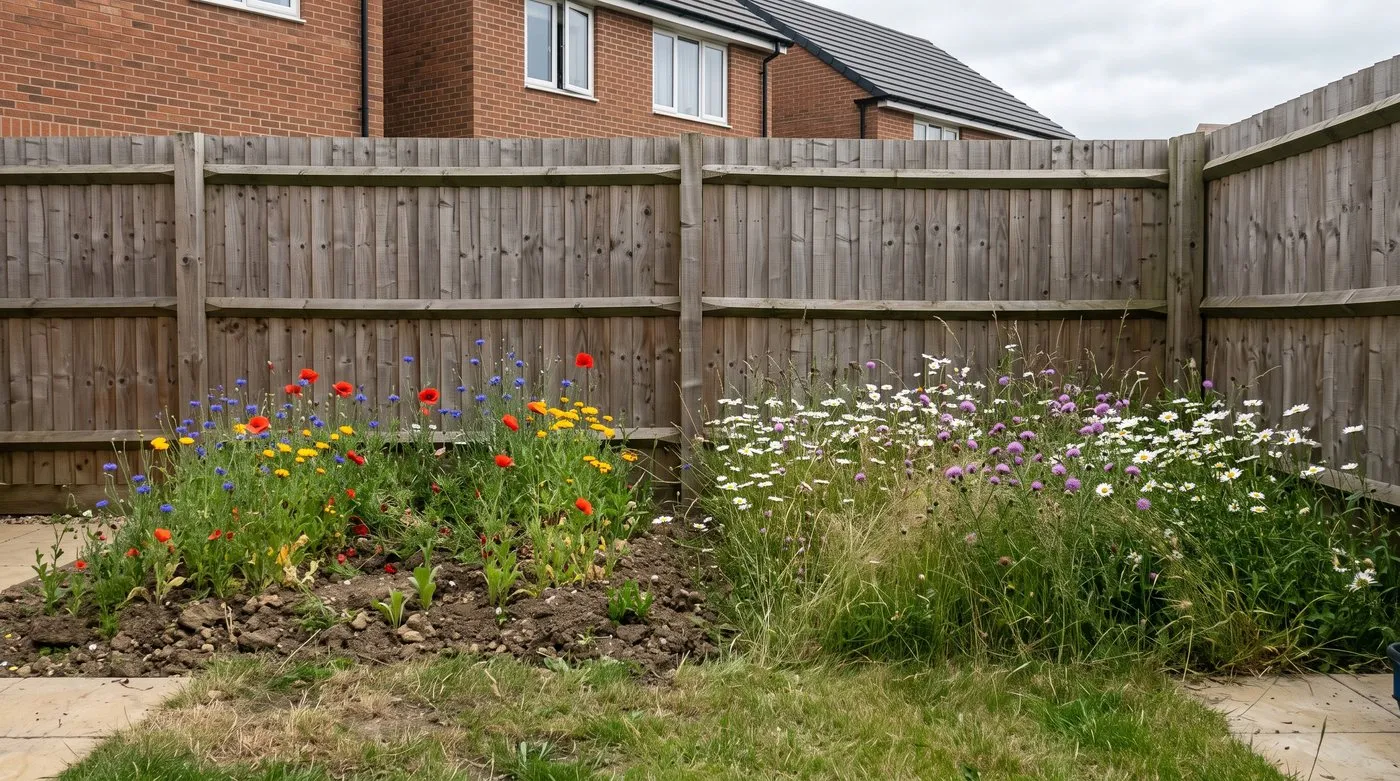
Annuals give a bright show in year one, while a perennial meadow takes longer but comes back better every year.
| Perennial meadow mix | Cornfield annual mix | |
|---|---|---|
| Typical flowers | Ox-eye daisy, knapweed, scabious, bird’s-foot trefoil | Poppies, cornflowers, corn marigold, corncockle |
| First summer | Slow, few flowers | Bright, quick show |
| Later years | Gets better each year | Fades unless you dig and re-sow |
| Soil | Poor, undisturbed | Freshly dug, any soil |
| Best for | A permanent patch | Pots, raised beds or a quick show |
Many gardeners sow both: annuals for colour in year one, perennials for the long term. Corncockle seeds are poisonous, so leave it out if young children or pets might nibble seed heads.
How to sow a mini meadow from bare ground
The best time is September or October, though March to April also works. The guide to when to sow wildflower seeds explains the pros and cons of each.
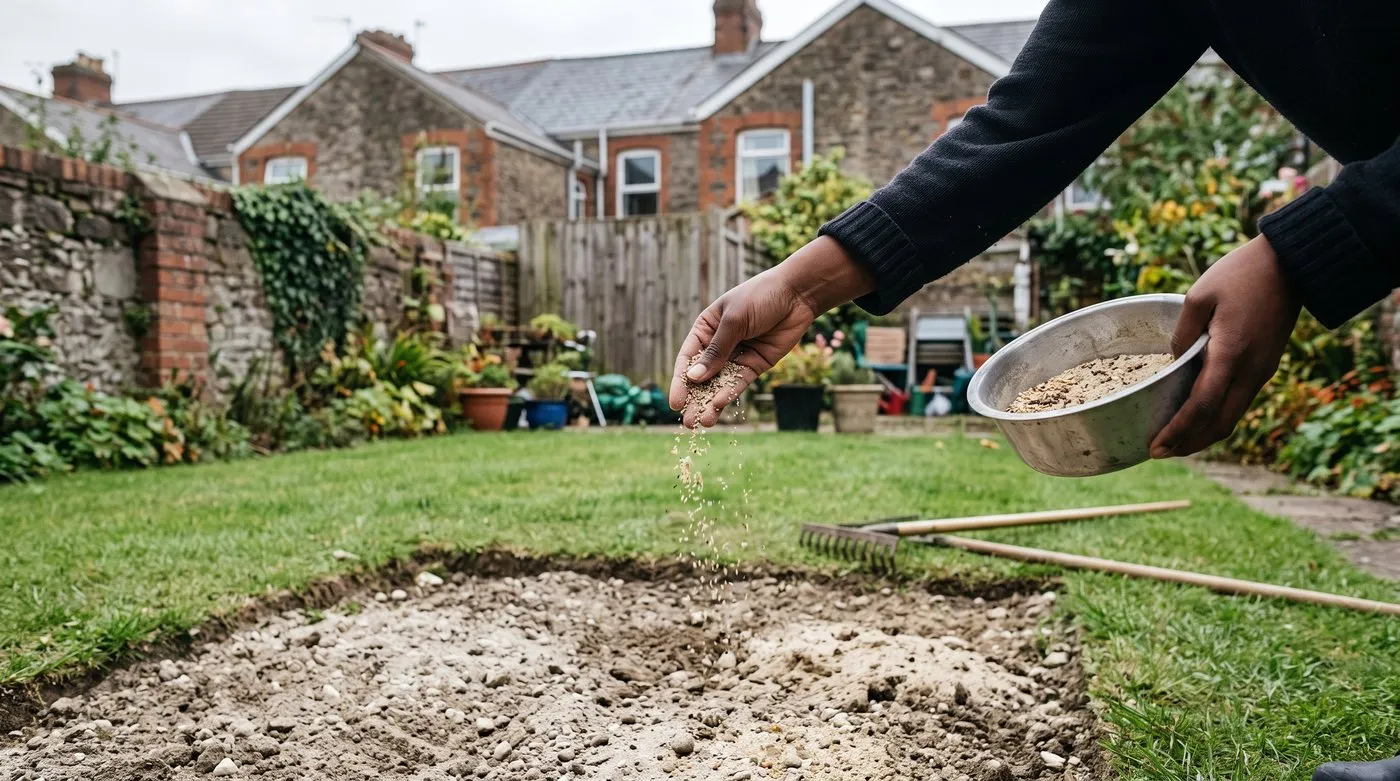
Mixing the seed with sand helps you spread it evenly. Press it in afterwards, but don’t bury it.
- Clear the patch. Strip the turf and the top 5-10cm of topsoil. Or cover the area with black plastic for a few months to kill the grass, then rake off the dead growth.
- Rake to a fine surface. Remove stones, roots and weeds, then firm lightly by treading.
- Mix the seed with dry sand, about one part seed to four parts sand. It’s easier to spread evenly.
- Scatter it at about 4-5g of seed per square metre. Sow half going one way and half going across.
- Press it in by treading or with the back of a rake. Don’t bury it, as many wildflower seeds need light.
- Water in dry spells if you sow in spring.
Weed out any docks, thistles or other tough weeds while they’re small.
Turning a patch of lawn into a mini meadow
If you’d rather not strip turf, you can convert a patch of grass more slowly.
- Stop mowing the patch from spring.
- Cut it in late summer and rake off all the cuttings.
- Plant wildflower plug plants through the grass in autumn, about 5-8 per square metre.
- Sow yellow rattle seed into short, scratched grass in autumn.
- Repeat the late-summer cut and clear-up every year.
This takes two or three years to look good, but it needs less digging.
Yellow rattle: the grass-weakening helper
Yellow rattle is a native annual that feeds partly off grass roots. It weakens the grass and makes room for other wildflowers. That makes it the most useful single plant for a meadow on grassy ground.
Sow it fresh in September to November, as the seed needs winter cold to germinate and doesn’t keep well. Scatter it onto short grass where the soil shows through. The guide to growing yellow rattle has the full method.

Yellow rattle weakens the grass around it, so other wildflowers get a chance.
Making a mini meadow in a pot or raised bed
A large pot, half-barrel or raised bed makes a lovely mini meadow on a patio or balcony. Choose a container at least 30cm deep with drainage holes.
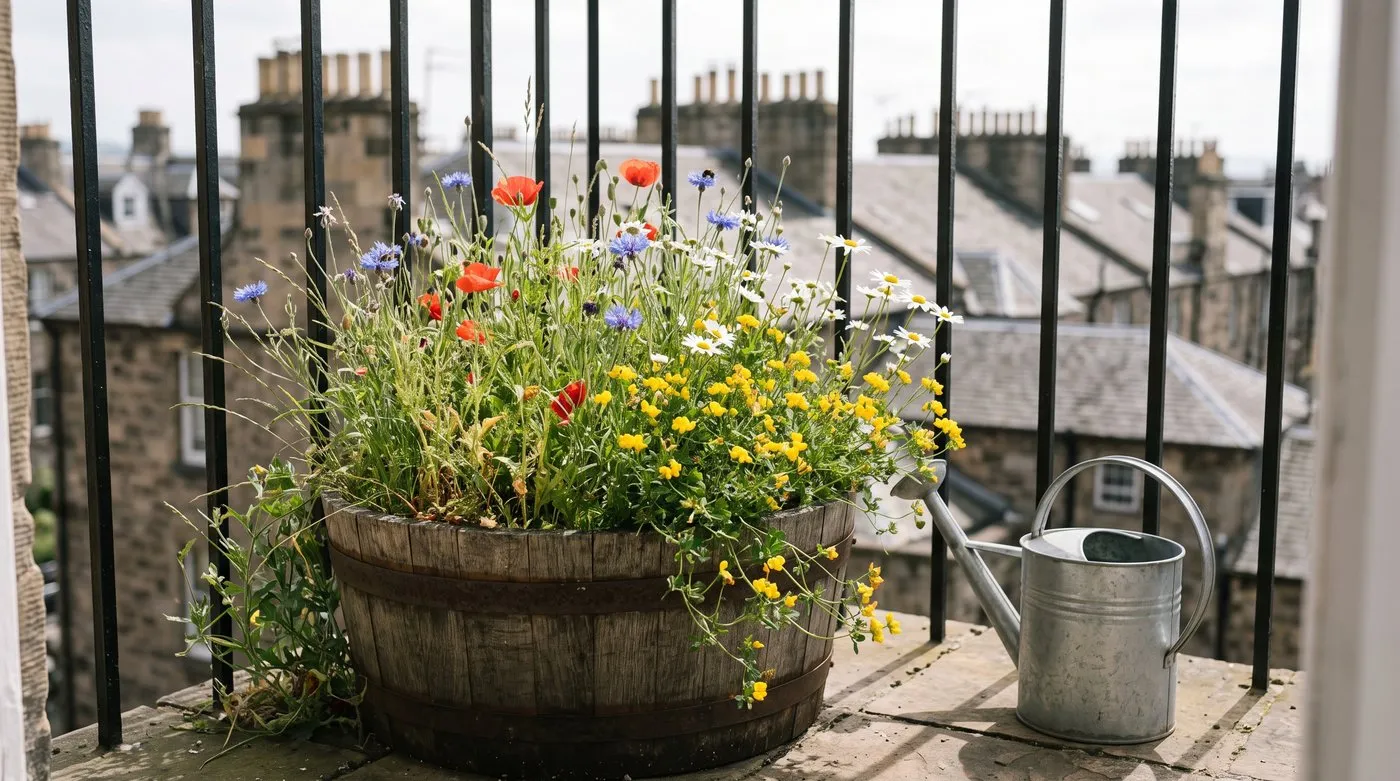
No garden? A big pot or half-barrel on a balcony makes a cheerful little meadow for bees.
- Easiest: sow a cornfield annual mix in spring into peat-free compost mixed with some grit or garden soil. Expect flowers from early summer.
- Longer-lasting: plant a few perennial wildflower plugs, such as ox-eye daisy, bird’s-foot trefoil, self-heal and field scabious.
- Care: water in long dry spells. Don’t feed. Cut back in late autumn and re-sow annuals each spring.
Best wildflowers for a small meadow
| Wildflower | Height | Flowers | Good to know |
|---|---|---|---|
| Ox-eye daisy | 40-60cm | June to August, white | The classic meadow daisy |
| Field scabious | 40-80cm | July to September, lilac | Loved by butterflies |
| Common knapweed | 40-80cm | July to September, purple | A favourite of bees |
| Bird’s-foot trefoil | 10-30cm | June to September, yellow | Low and spreading |
| Self-heal | 10-20cm | June to September, purple | Good for edges and pots |
| Wild carrot | 40-80cm | June to August, white | Lacy flat heads |
| Cowslip | 15-25cm | April to May, yellow | Early colour |
Buy UK native seed of UK origin from a specialist supplier. Cheap mixes sometimes contain non-native plants. The wildflower identification guide helps you name what comes up.
Looking after a mini meadow through the year
| Month | What to do |
|---|---|
| September to October | Main sowing time. Sow yellow rattle |
| November to February | Leave it alone |
| March to April | Spring sowing time. Pull out tough weeds |
| May to July | Enjoy the flowers. Don’t cut, feed or water |
| Late July to September | Cut once the flowers have set seed. Leave the cuttings a few days, then rake them off |
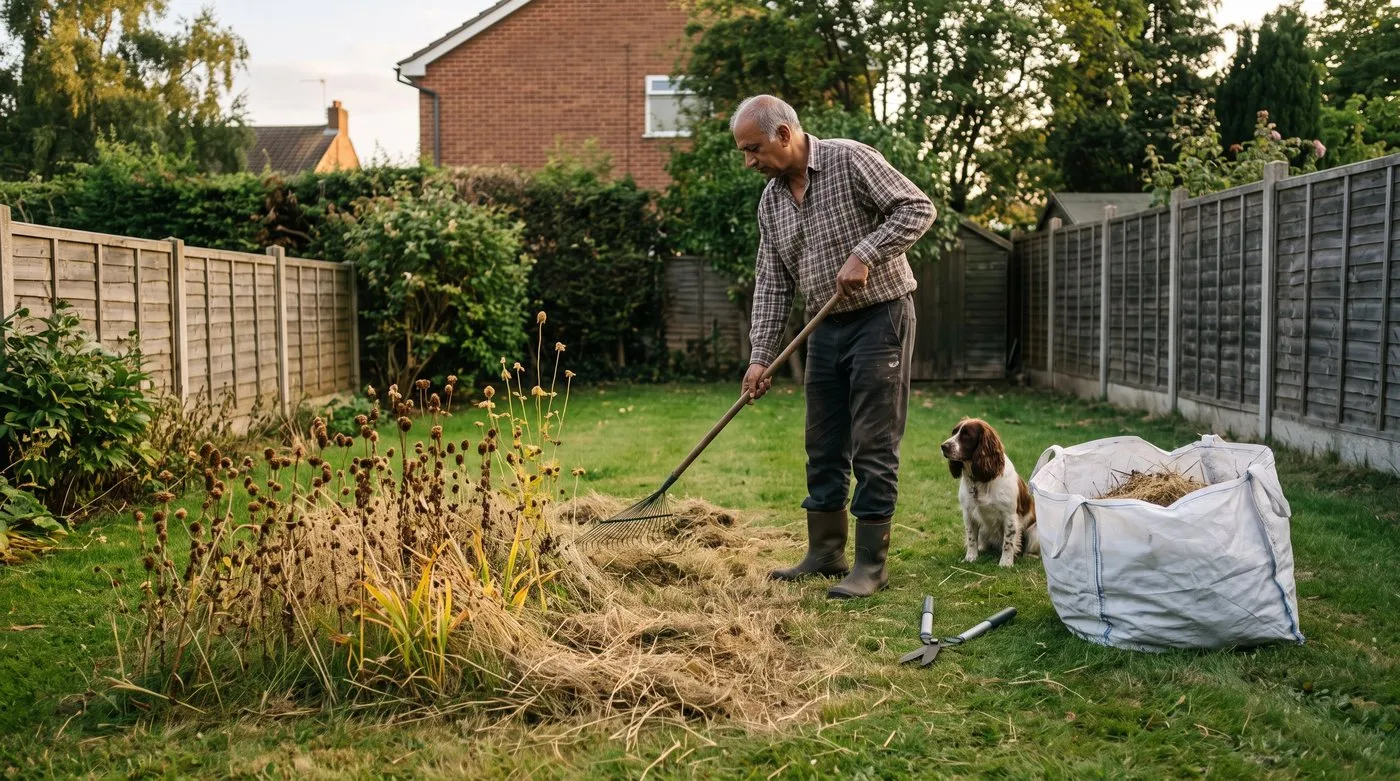
After the late-summer cut, leave the hay a few days to drop its seed, then rake it all away.
The yearly cut is the only big job. Use shears or a strimmer and cut to about 5-8cm. Always take the cuttings away, or they rot down and make the soil richer. The guide on when to cut a wildflower meadow goes into the timing in more detail.
What to expect in the first three years
- Year one: if you sowed annuals, you’ll get a bright show. Perennials mostly grow roots and leaves.
- Year two: ox-eye daisies, knapweed and scabious start flowering. Yellow rattle begins to thin the grass.
- Year three onwards: perennials take over, and the meadow settles in and gets richer each year.
A mini meadow can be the first step towards rewilding more of your garden. You’ll find more ideas in the wildlife section.
Common mistakes with mini meadows
- Sowing on rich soil. Strip the topsoil or pick a poorer spot.
- Feeding or adding compost. It helps the grass, not the flowers.
- Leaving the cuttings. Rake them off after a few days.
- Expecting perennials to flower in year one. Add annuals for first-year colour.
- Sowing yellow rattle in spring. It needs autumn sowing and winter cold.
Now your mini meadow is planned, read the guide to rewilding your garden for more ways to give wildlife a home.
Frequently asked questions
How big does a wildflower meadow need to be?
It can be as small as you like. A couple of square metres, a narrow strip along a fence or a large container will still bring in bees, hoverflies and butterflies.
When should I sow wildflower seeds?
September to October is best for perennial meadow mixes. Many native seeds, including yellow rattle, need winter cold to germinate. Spring sowing from March to April works too, and suits cornfield annual mixes.
Why are my wildflowers not growing?
Usually the soil is too rich. On fertile ground, grasses and weeds smother the wildflowers. Strip the top few centimetres of soil, add yellow rattle and never feed the area.
What wildflowers grow best in a small UK meadow?
Ox-eye daisy, knapweed and field scabious are among the most reliable. Bird’s-foot trefoil, self-heal and wild carrot also do well. Buy UK native seed from a UK-sourced supplier.
Do I need to mow a wildflower meadow?
Cut it once a year in late summer, after the flowers have set seed. Leave the cuttings for a few days so the seed drops, then rake them off to keep the soil poor.
Can I turn part of my lawn into a mini meadow?
Yes, but lawns are usually too rich for a quick result. Either strip the turf and sow, or stop mowing a patch and plant wildflower plug plants into the grass with yellow rattle.
Our team produces practical UK gardening guidance from source research, contributor records and established horticultural practice. Editorial standards are overseen by Matt W.