Key takeaways
- Autumn, September to October, is the best time for perennial meadow mixes
- Yellow rattle must be sown in autumn, as it needs winter cold to germinate
- Spring, March to April, suits annual cornfield mixes that flower the same summer
- Sow onto bare, weed-free ground and never add fertiliser or compost
- Press seed onto the surface rather than burying it
- Perennial meadows take two or three years to look their best
The best time to sow wildflower seeds in the UK is autumn, from September to October. Many native wildflowers need a winter of cold before they’ll germinate, and autumn sowing gives them that naturally. Spring, from March to April, is the other window and suits annual cornfield flowers best.
This guide helps you choose the right time for the mix you’ve got, then sow it so it actually comes up. If you’re turning a lawn into meadow, our guide to creating a wildflower lawn covers the bigger job.
Autumn or spring: which is best for wildflowers?
It depends on the mix. Perennial meadow mixes do best sown in autumn. Annual cornfield mixes do well either way, and are often sown in spring.
| Autumn sowing | Spring sowing | |
|---|---|---|
| When | September to October | March to April |
| Best for | Perennial meadow mixes, yellow rattle | Annual cornfield mixes |
| First flowers | Next summer | Annuals the same summer |
| Watering | Rain usually does it | May need watering in dry spells |
| Watch out for | Wet, cold clay | Dry spells and fast weeds |
If you’re unsure, check the packet. Most seed suppliers say which season suits their mix.
Why autumn is best for most wildflower seeds
Lots of native wildflower seeds won’t germinate until they’ve been through a cold, damp winter. Gardeners call this cold stratification. In the wild, seed drops in late summer, sits on the ground all winter and comes up in spring.
Sow in autumn and you copy that. The seed sits in cold, damp soil until spring, then comes up at the right time. Cowslips and many other perennials germinate far better this way. Autumn sowing also means the rain does your watering for you.
Yellow rattle is the big one to sow in autumn. It’s a meadow annual that feeds off grass roots and weakens the grass, giving other wildflowers room. It needs a winter’s cold to germinate, so sow it from late August to November and no later. Our guide to growing yellow rattle explains how to get it going.

Yellow rattle weakens vigorous grass so other wildflowers can get going. Sow it in autumn, as it needs winter cold to germinate.
When to sow wildflower seeds in spring
Spring sowing works well from March to April, once the soil has dried a little and started to warm. In the north and Scotland, aim for April.
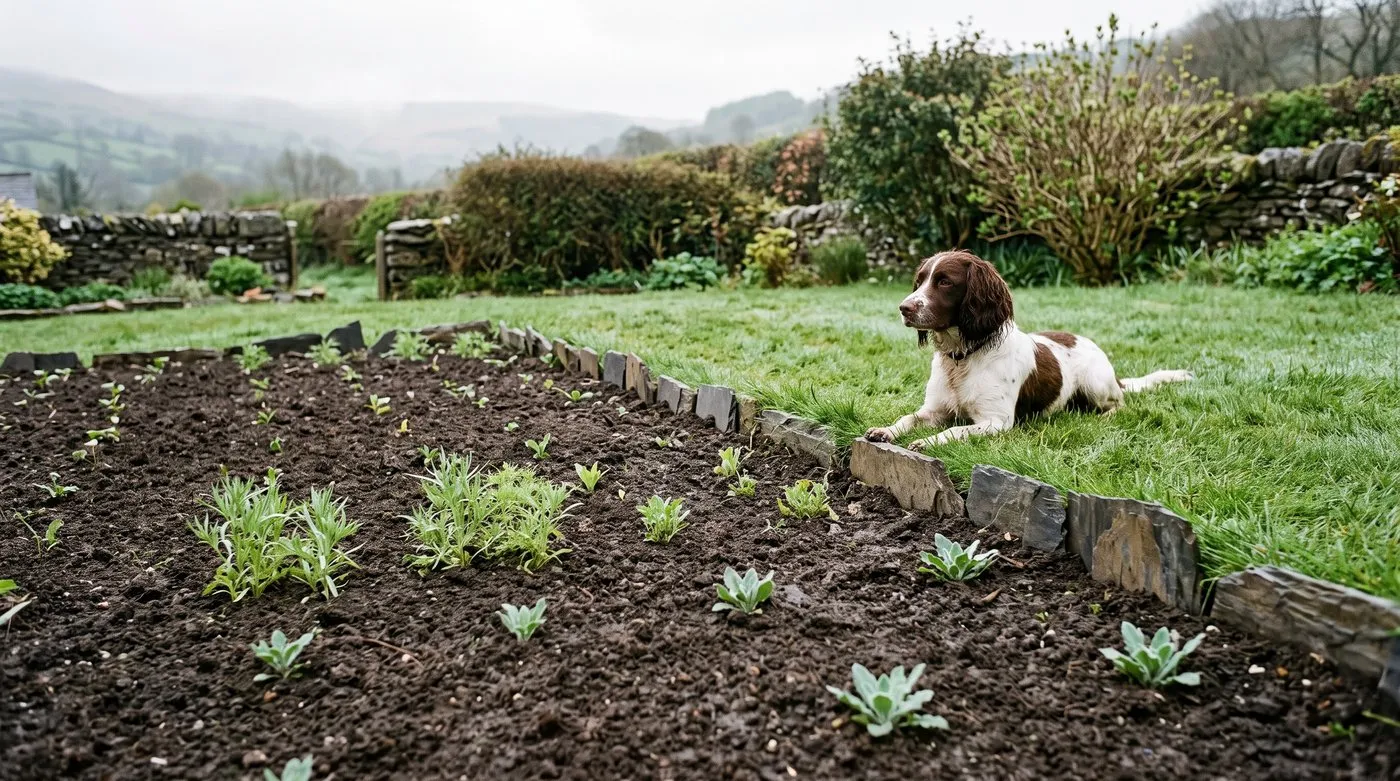
Annual cornfield mixes sown in March or April come up quickly and flower the same summer.
Spring is ideal for annual cornfield mixes. Poppies, cornflowers, corn marigolds and corncockle come up quickly and flower the same summer. They’re great for quick colour, new gardens or a pot or two on a patio. Our guide to growing cornflowers covers one of the easiest.
Perennial mixes can be sown in spring too. Expect some seed to come up straight away and some to wait until the following spring, after its first winter. Water spring sowings in dry spells for the first few weeks.
Warning: Corncockle seeds are poisonous if eaten. Keep seed packets away from children and pets.
How to prepare the ground for wildflower seeds
Bare, weed-free and poor is what you want. Preparation matters more than which mix you buy.
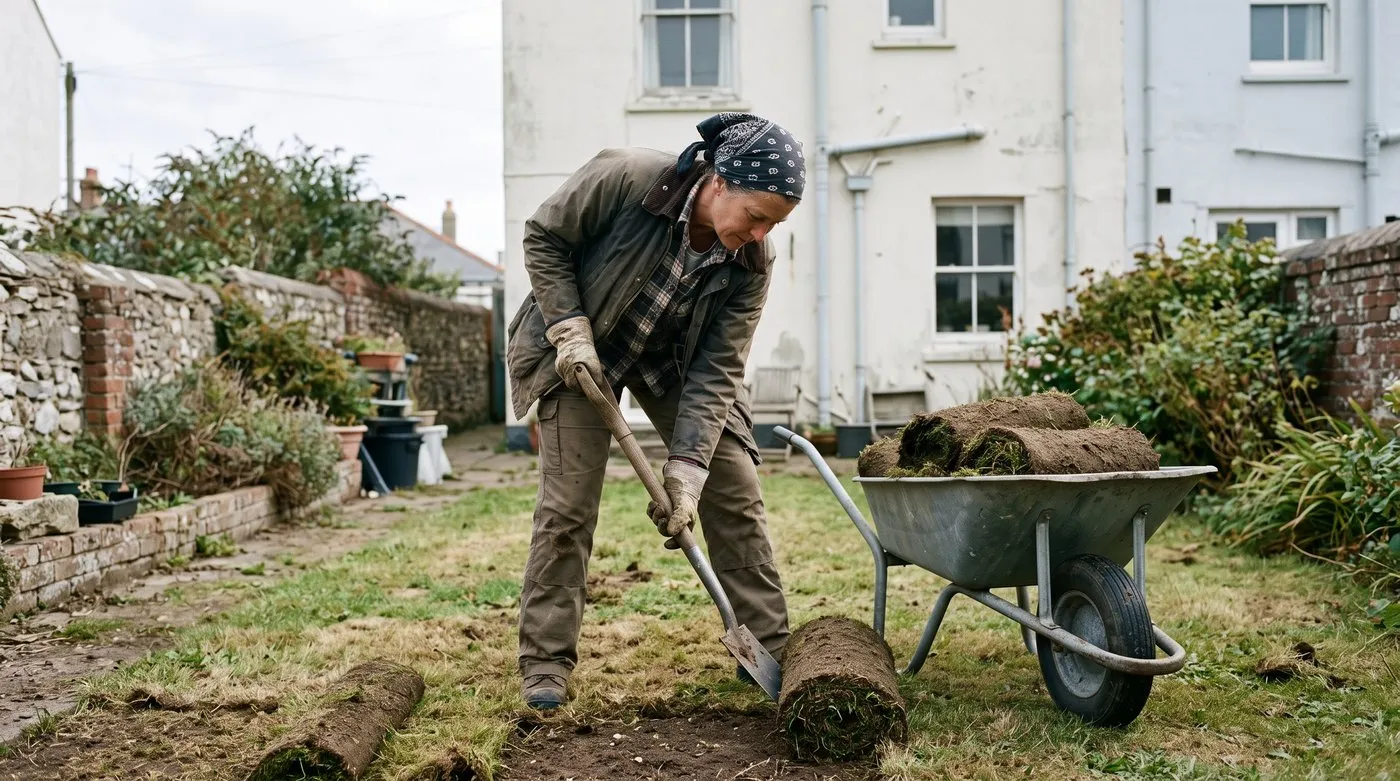
Strip off the turf before sowing. Wildflower seed needs bare ground, not a lawn to compete with.
Wildflowers grow happily in poor soil, where grasses are weaker. Rich soil grows thick grass and weeds that smother wildflower seedlings.
- Clear the ground. Strip off any turf and pull out perennial weeds such as docks and nettles, roots and all.
- Lower the fertility if you can. On rich garden soil, taking off the top few centimetres of topsoil helps a lot.
- Don’t feed. No fertiliser, compost or manure, ever.
- Make a fine, firm seedbed. Rake it level, then tread it or roll it until your footprints barely show.
Leaving prepared ground for a few weeks and hoeing off the first flush of weeds before you sow gives the wildflowers a cleaner start.
How to sow wildflower seeds so they come up
Scatter thinly, press in and don’t cover. That’s the whole secret.
Wildflower seed is tiny and sown very thinly, so follow the rate on the packet. Mix the seed with a few handfuls of dry sand. It bulks the seed up so it spreads evenly, and you can see where you’ve been.
Split the mix in half. Scatter one half walking up and down the area, then the other half walking across it. Then press the seed onto the surface by treading over it on a board or rolling it.
Don’t rake the seed in or cover it. Many small wildflower seeds need light to germinate. If the weather is dry after sowing, water gently with a fine rose.

Mixing seed with dry sand helps you scatter it evenly. Press it in afterwards but don’t cover it.
Choosing native wildflowers for your soil
Pick a mix that suits your soil and you’re halfway there. Most UK seed suppliers sell mixes for clay, chalk and sandy soils.
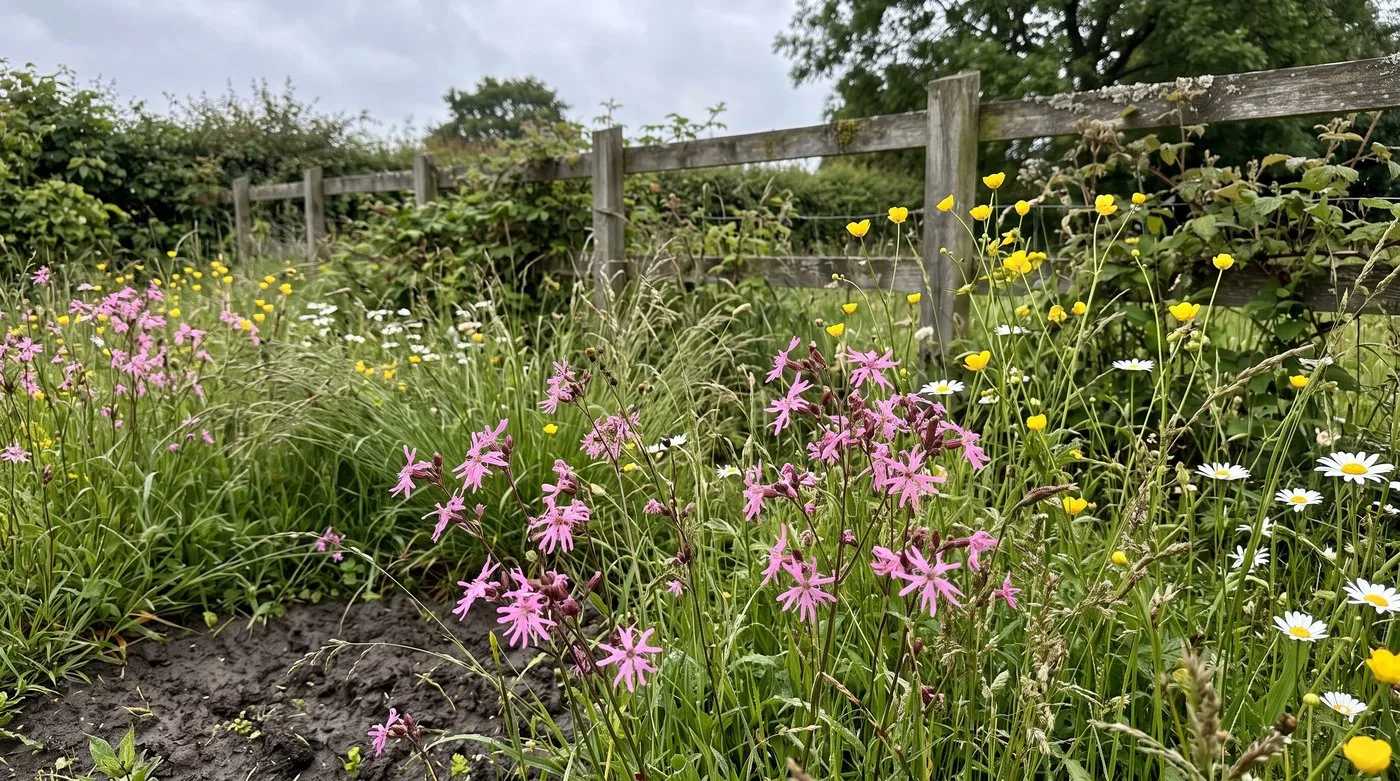
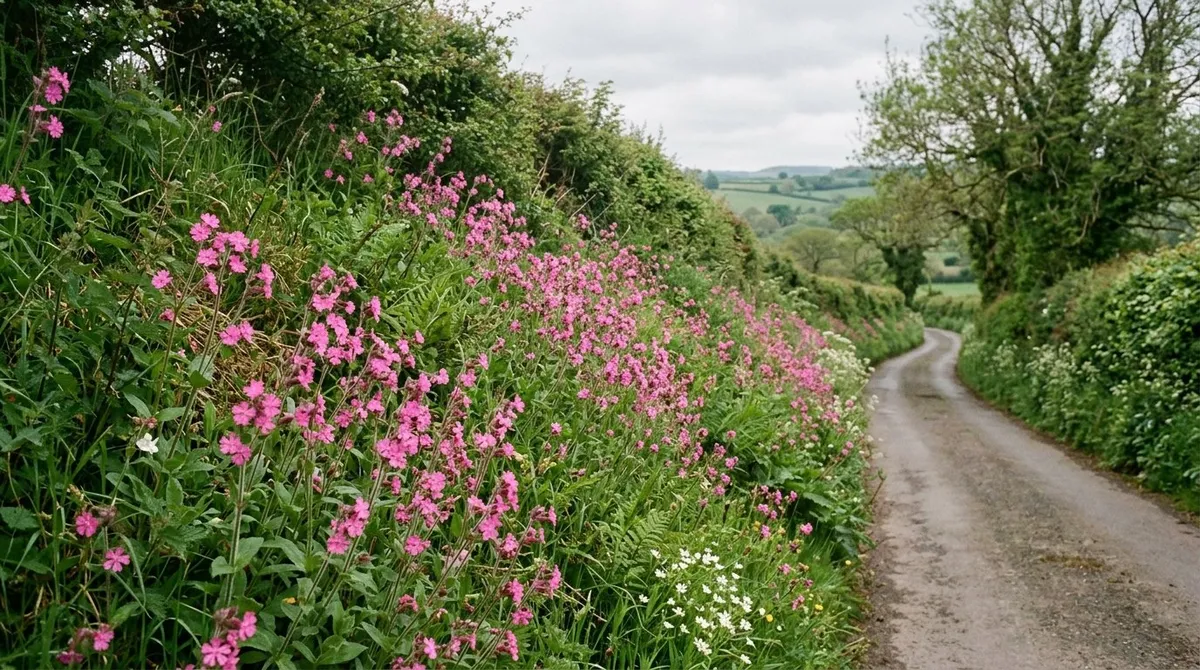
On damp clay, ragged robin, meadow buttercup and ox-eye daisy are all happy. Pick a mix made for your soil.
- Clay and damp soils: ox-eye daisy, meadow buttercup, knapweed, red clover and ragged robin.
- Chalk and free-draining soils: field scabious, wild marjoram, viper’s bugloss and wild carrot.
- Sandy soils: bird’s-foot trefoil, viper’s bugloss and corn marigold.
- Partial shade: red campion copes with dappled shade at the edge of hedges and trees. See our guide to growing red campion.
Choose seed of UK native origin where you can. It’s the best match for our wildlife and conditions.
Annual vs perennial wildflower mixes
Annual and perennial mixes behave very differently, so it helps to know which you’ve got.
Annual mixes flower the first summer, then die. They need bare, freshly dug soil to come back, so you’ll need to rake or dig the patch each autumn or spring and re-sow.
Perennial mixes start slowly. Year one can look sparse and weedy. By year two or three you’ll have a proper meadow that comes back every year with one cut in late summer. Many people sow a little annual mix with a perennial one, for colour while the perennials settle in.

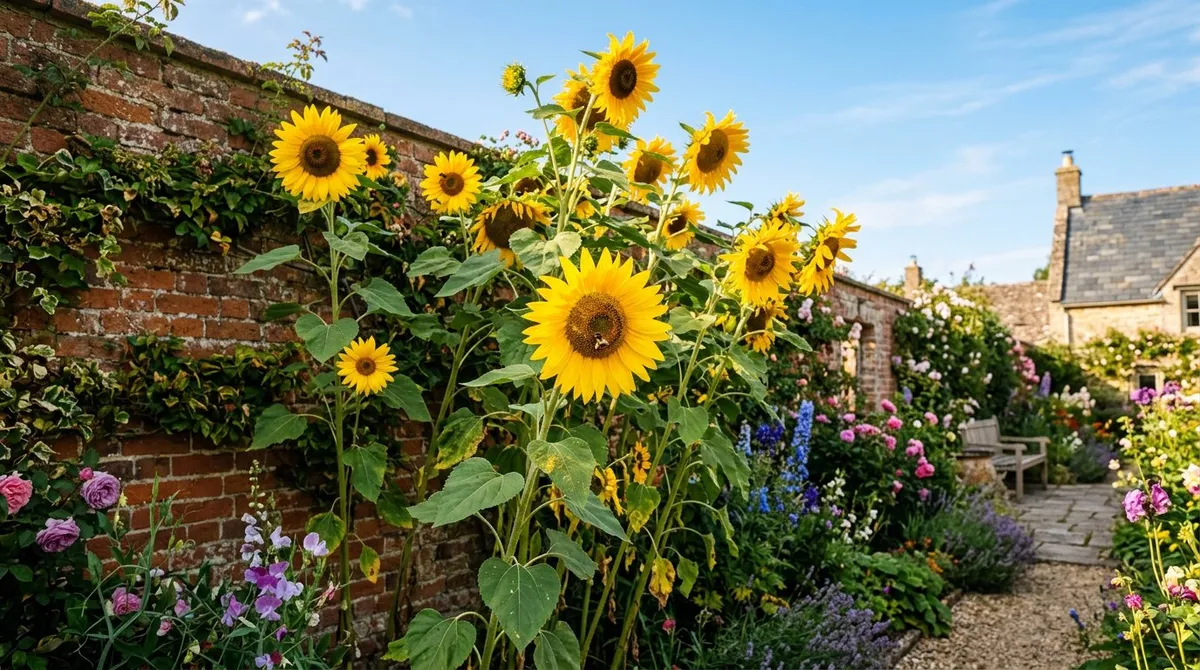
A strip of annual cornfield flowers gives quick colour in the first summer. Perennial mixes take a couple of years to fill out.
Wildflower sowing calendar month by month
This calendar shows what to do through the year for a new wildflower patch.
| Month | What to do |
|---|---|
| January to February | Choose a mix to suit your soil. Order seed |
| March | Prepare the ground. Sow annual mixes in mild southern gardens |
| April | Main spring sowing everywhere. Water in dry spells |
| May to June | Pull out docks, nettles and thistles. Annuals start to flower |
| July | Enjoy the flowers. Don’t cut yet |
| August | Strip turf and prepare ground for autumn sowing. Late August, start sowing yellow rattle |
| September | Main autumn sowing month. Cut established meadows and remove the cuttings |
| October | Last good month for autumn sowing |
| November | Last chance for yellow rattle. Leave sown areas alone |
| December | Nothing to do. The cold is doing its work |
Our guide on when to cut a wildflower meadow covers the yearly cut in more detail.
Common wildflower sowing mistakes
Most failed wildflower patches come down to one of these.
- Sowing into rich soil. Grass and weeds win. Strip the turf, skim the topsoil and never feed.
- Burying the seed. Press it in and leave it uncovered.
- Sowing into grass. Seed scattered on a lawn rarely takes. Clear bare patches first.
- Sowing yellow rattle in spring. It needs a winter’s cold, so autumn only.
- Giving up in year one. Perennial meadows look scruffy at first. Give them two or three years.
For a bigger project, see our guide to turning a lawn into a wildflower meadow, or our rewilding guide for more ways to help wildlife. You’ll find more ideas in our wildlife hub.
Frequently asked questions
When is the best time to sow wildflower seeds in the UK?
September to October is best for most meadow mixes. Many native seeds need a winter’s cold to germinate. Annual cornfield mixes do just as well sown in March or April.
Can I sow wildflower seeds in spring?
Yes, March to April works well, especially for annuals. Perennial seeds sown in spring may come up patchily, with some waiting until the next spring.
Can I scatter wildflower seeds on existing grass?
Rarely with much success. Lawn grass crowds out the seedlings. Cut it short and rake out bare patches first, or sow yellow rattle to weaken the grass.
Do wildflower seeds need to be covered with soil?
No, most should be pressed onto the surface and left uncovered. Many small wildflower seeds need light to germinate, so burying them stops them coming up.
Why are my wildflower seeds not germinating?
Rich soil, buried seed or dry weather are the usual causes. Some perennial seeds also need a winter’s cold, so a spring sowing may wait a year.
How much wildflower seed do I need?
Follow the sowing rate on the packet. Wildflower seed is sown very thinly, so mixing it with dry sand helps you spread it evenly.
How long until wildflowers flower from seed?
Annuals flower the first summer after sowing. Perennial meadow plants usually flower from their second year and look their best in year two or three.
Got a small space? Read our guide to creating a mini meadow for a wildflower patch that fits any garden.
Our team produces practical UK gardening guidance from source research, contributor records and established horticultural practice. Editorial standards are overseen by Matt W.