Key takeaways
- Cut an established meadow once a year, from late July to September
- Wait until yellow rattle pods rattle when you shake them
- Leave about 8-10cm of stubble, and use a scythe or a brushcutter with a metal blade
- Let the hay lie for a few days, then rake off every bit and take it away
- New perennial meadows need several short cuts in their first year
- Leave a strip uncut over winter for insects, and move it each year
The best time to cut a wildflower meadow in the UK is late summer, from late July to September, once the flowers have dropped their seed. Leave the hay lying for a few days, then rake it all off. That one yearly cut keeps the grass weak and the wildflowers coming back. Here’s how to time it, which tools to use, and what to do in a meadow’s first year.
When should you cut a wildflower meadow?
Cut an established meadow once a year, between late July and September. The trick is waiting until the main flowers have set seed, and yellow rattle has dropped its seed too.
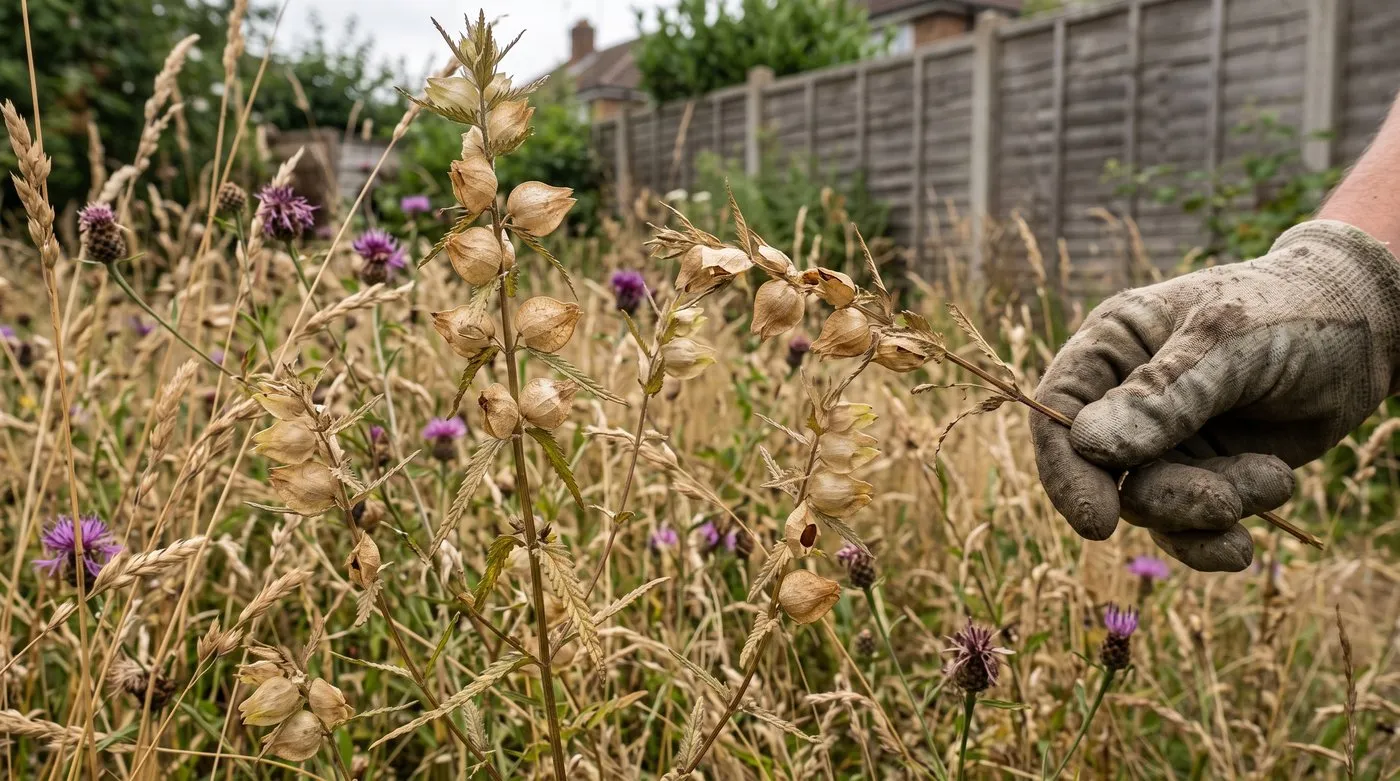
When the pods turn papery brown and the seeds rattle as you shake them, the meadow is ready to cut.
Yellow rattle is the native annual that weakens grass in most garden meadows. It flowers from May to July, then its seeds ripen inside dry, papery pods. Walk the meadow and shake a few stems. If the seeds rattle, it’s time to cut. If the pods are still green and quiet, wait another week or two.
Choose a dry spell with a few dry days forecast, as wet hay is heavy work and rots quickly. Meadows in the south of England are usually ready earlier than those in the north and in Scotland. The yellow rattle guide covers sowing and spreading it if your meadow has none yet.
Is it better to cut a meadow in June or August?
For most garden meadows, August wins. A June cut takes off flowers and yellow rattle before they have dropped seed. Do that a couple of years running and the rattle can disappear.
The old “cut in late June” advice comes from farm hay meadows, which were cut for good-quality hay rather than for wildflowers. In a garden, a late summer cut lets the flowers seed and gives bees, butterflies and grasshoppers the longest season.
There is one exception. A meadow on rich soil that is mostly coarse grass, with little rattle, can be cut earlier to strip fertility. Once rattle settles in, switch to the late summer cut.
How to cut a meadow in its first year
A newly sown perennial meadow needs several short cuts in its first year, not one late cut. Fast weeds such as fat hen and groundsel shoot up first. Cutting them back lets light reach the slower wildflower seedlings below.
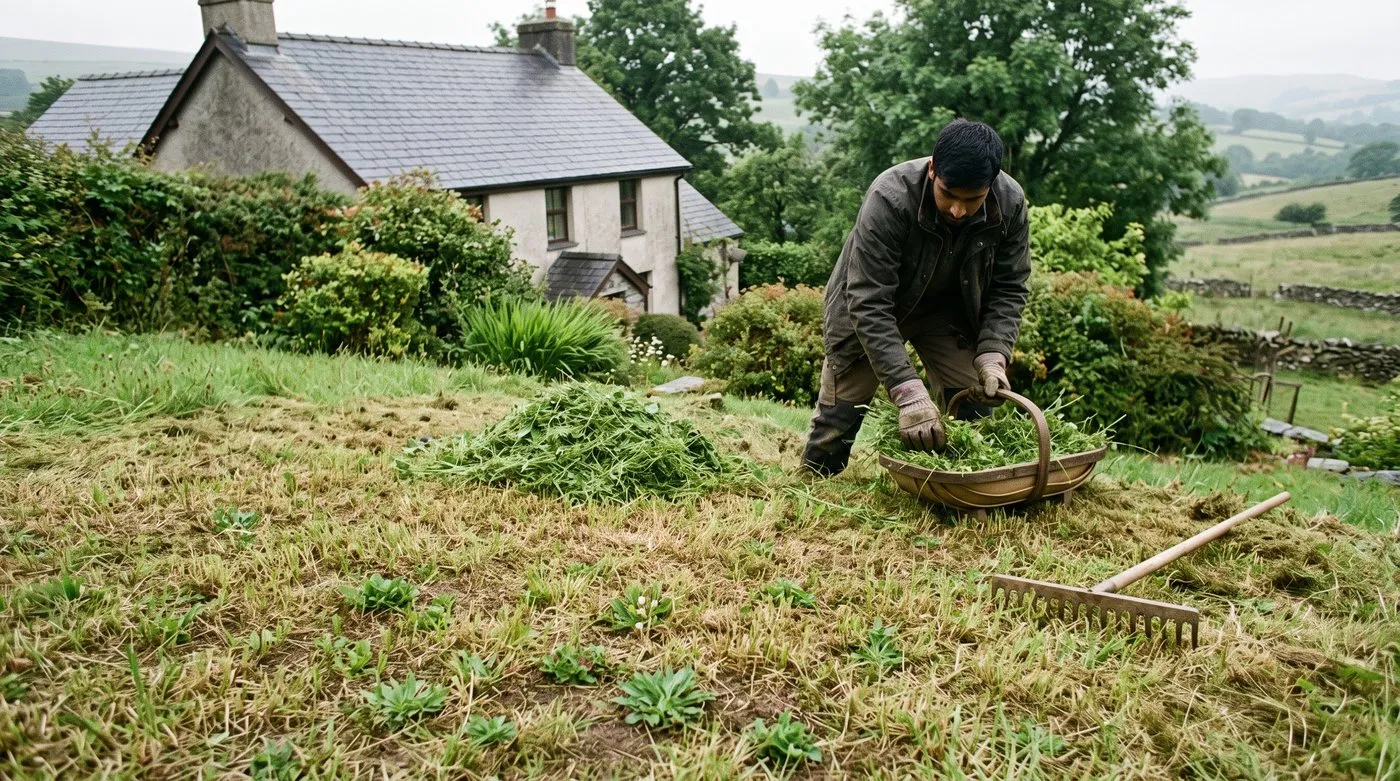
In a meadow’s first year, short cuts like this hold back fast weeds so the young wildflower rosettes get the light.
Whenever growth reaches about 10-15cm, cut it back to around 5cm. Rake off the clippings every time. From the second year, switch to the usual once-a-year cut in late summer.
Cornfield annual mixes are different. Poppies, cornflowers and corn marigolds flower in their first summer and then die. Leave them to flower, clear them in autumn once they have seeded, and lightly dig the ground to get the next lot going. The guide to making a wildflower meadow from a lawn explains the difference between the two types.
Which tool is best for cutting a wildflower meadow?
A scythe or a brushcutter with a metal blade suits most garden meadows. Both cut tall, tough stems cleanly and leave the hay in rows you can rake. The best choice depends on the size of the meadow and how much noise you mind.
| Tool | Best for | Good to know |
|---|---|---|
| Scythe | Small to medium meadows | Quiet and gentle on wildlife, but takes practice and a sharp blade |
| Brushcutter with metal blade | Most garden meadows | Quick and handles thick stems. Wear eye and ear protection |
| Strimmer with nylon line | Small patches | Struggles with thick stems and tangles in long growth |
| Hired flail mower | Large meadows | Fast, and chops the hay finely |
| Rotary lawnmower | Autumn regrowth only | Can’t cope with long summer growth and tends to scalp |
A scythe is lovely to use once you get the hang of it. The cut is slow enough for frogs and insects to move away. A brushcutter is quicker for most people. Many petrol strimmers take a metal blade attachment, but check your machine’s manual first.

A scythe swings low and steady, laying the hay in neat rows. It’s quiet, and frogs and insects have time to get out of the way.
How to cut a wildflower meadow, step by step
Cut on a dry day, leave 8-10cm of stubble, let the hay lie, then rake it all off.
- Walk through first. Go slowly so frogs, toads and other animals can move away. Check long tussocks and edges for hedgehogs.
- Set your height. Aim for about 8-10cm of stubble. Much lower can damage wildflower rosettes.
- Cut from the middle outwards, or from one side across. That gives animals a way out rather than trapping them in a shrinking patch.
- Leave the hay for a few days. Somewhere between one and seven dry days lets seed drop back onto the ground.
- Rake off every bit. A wooden hay rake or a sturdy spring-tine rake works well.
- Take the hay away. Put it on a compost heap away from the meadow or in your green waste bin. Never spread it back on the meadow.
Removing the hay is the whole point. Left in place, it rots down and feeds the soil, and rich soil helps grass smother wildflowers.

After a few dry days the hay is light and easy to rake. Every armful you take away keeps the soil poor, which is what wildflowers like.
What to do after the main cut
Mow the regrowth once or twice in autumn and take the clippings away. This copies the grazing that follows a traditional hay cut. It keeps the grass short going into winter and leaves bare gaps where yellow rattle and other seeds can sprout.
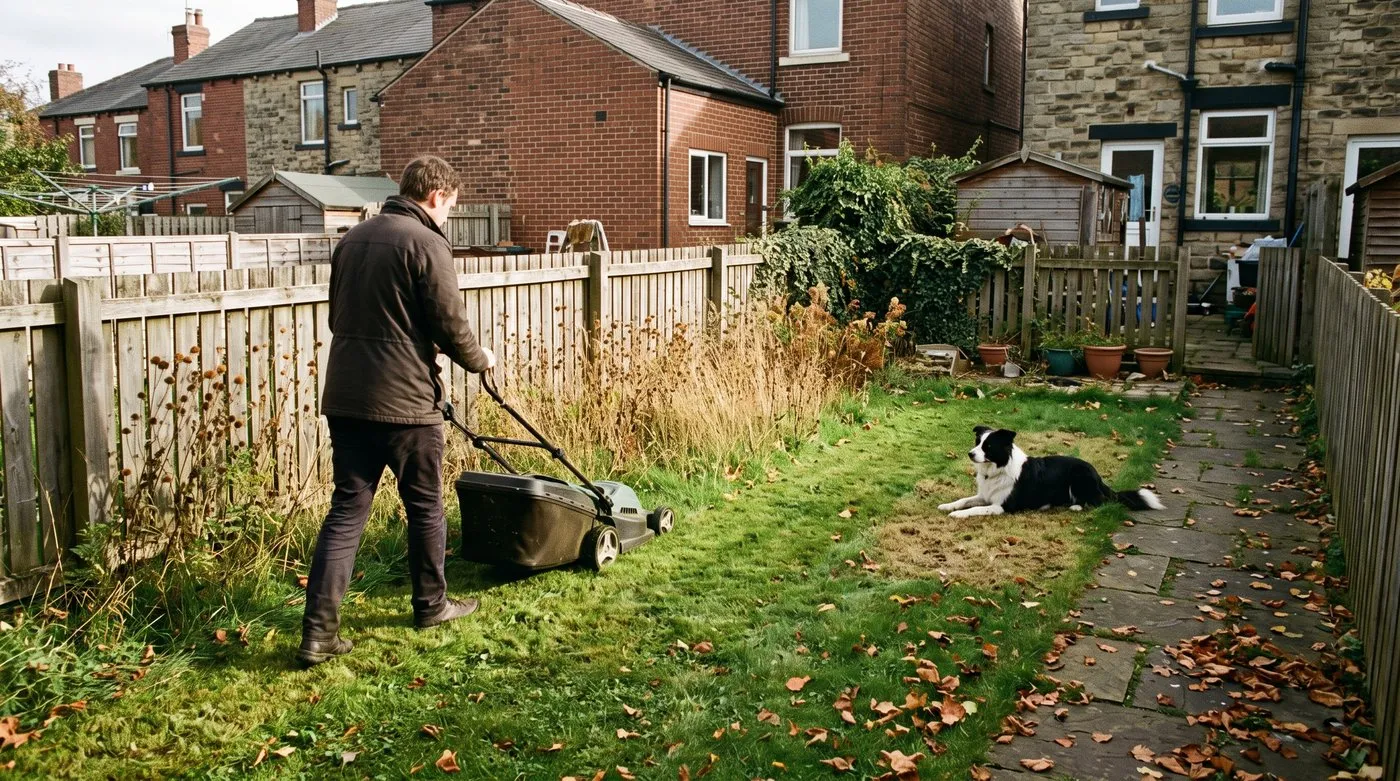
A short autumn mow with the clippings collected keeps the grass in check and opens gaps for yellow rattle to sprout.
Autumn is also the time to sow yellow rattle if you need more, or to plant wildflower plugs into gaps. The guide to when to sow wildflower seeds has the timings.
Leave some meadow uncut for wildlife
Leave a strip or corner uncut over winter, and move it each year. Insects shelter in hollow stems and seed heads through the cold months. Seed-eating birds such as goldfinches visit too.
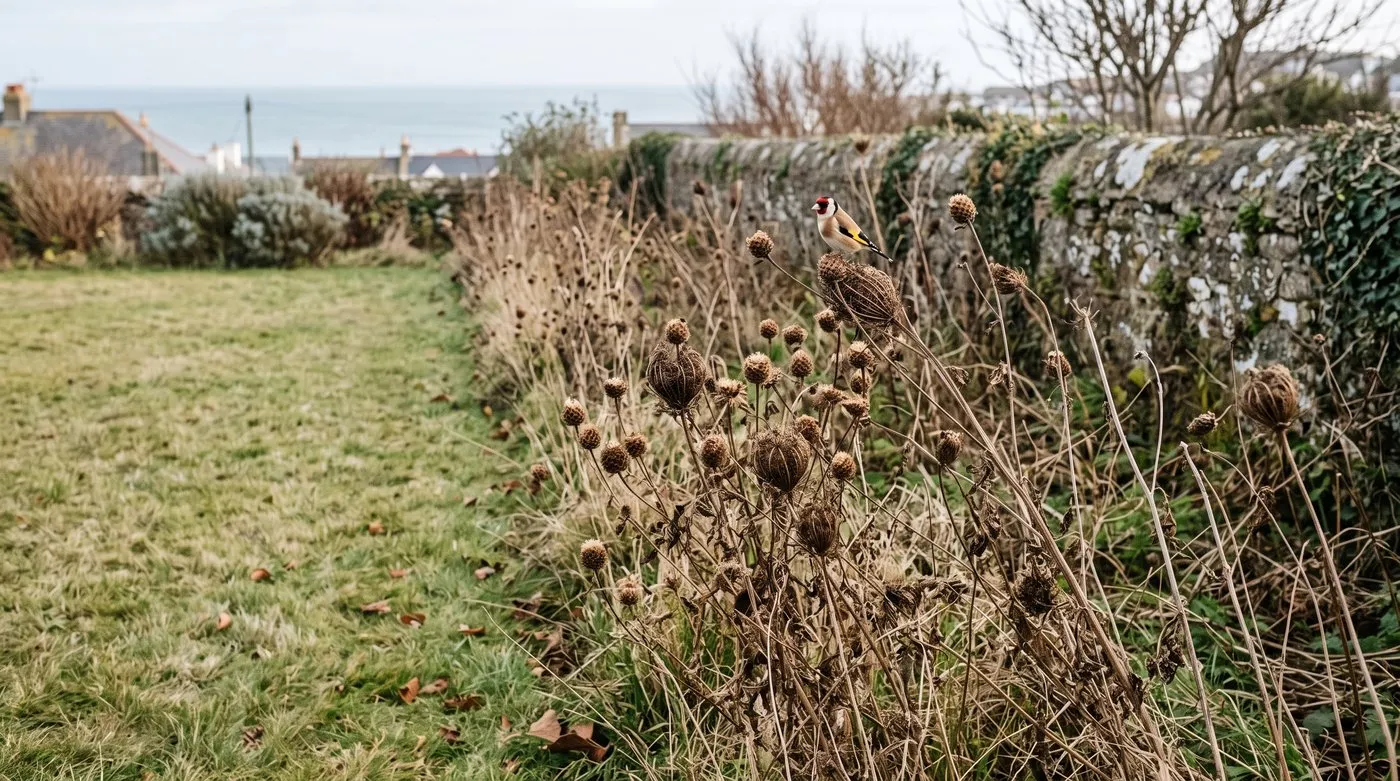
A strip left standing over winter gives insects hollow stems to shelter in and gives goldfinches seed heads to pick at.
A mown path through the meadow makes a natural edge for your uncut strip. Tall umbellifers such as wild carrot look great left standing into autumn. Cut the strip the following year, and leave a different one.
If you share the garden with hedgehogs, the guide to making a hedgehog-friendly garden covers safe strimming and cutting habits.
What if you miss the meadow cut?
One missed year is easy to put right. Cut and rake off in autumn instead, then go back to the usual late summer cut next year. The meadow may look a bit grassier for a while.
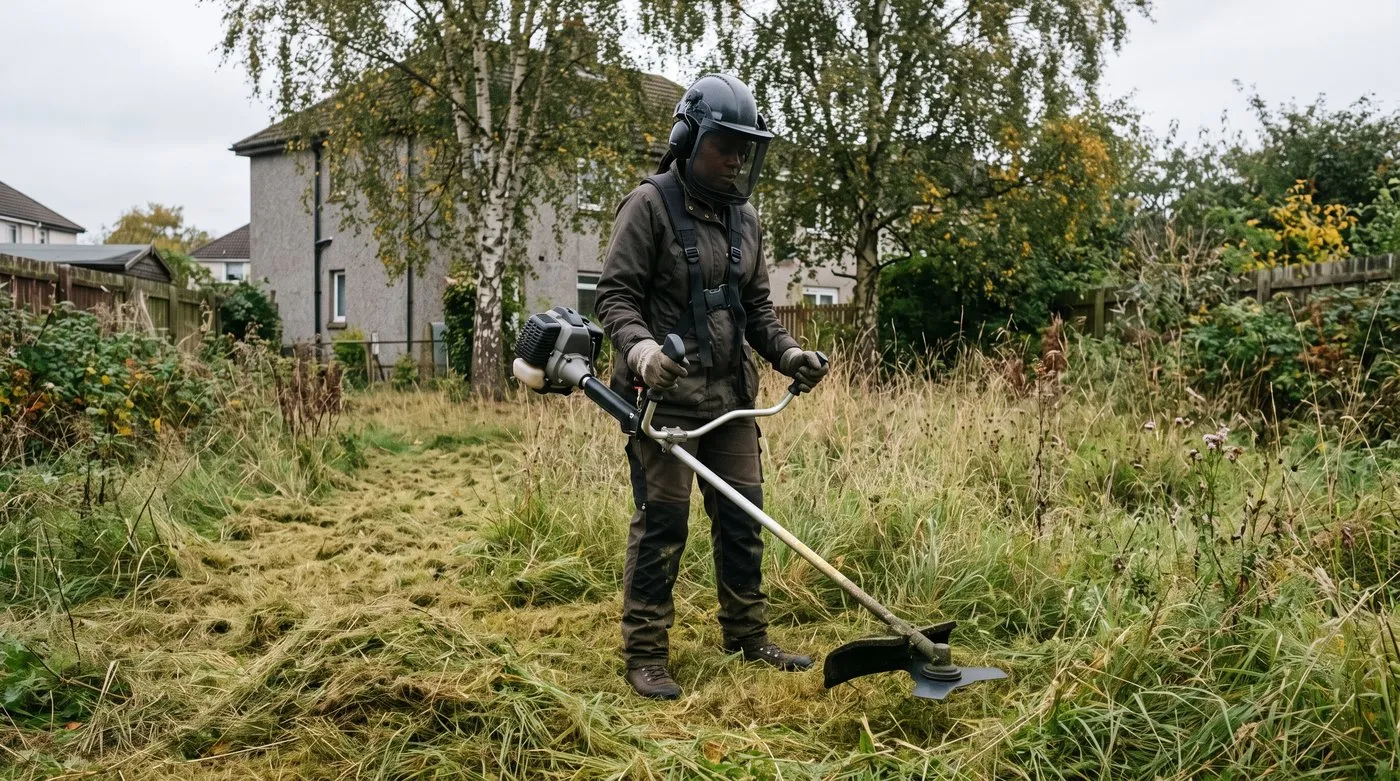
A meadow that has missed a cut or two turns tussocky and grassy. A bladed brushcutter makes short work of it, then rake everything off.
After two or more missed years, coarse grasses thicken up and shade out the wildflowers. Cut and rake hard in autumn, mow the regrowth short, and sow fresh yellow rattle onto bare patches. Back on the yearly late summer cut, most meadows recover over a few seasons.
Common meadow cutting mistakes
- Cutting too early. A June cut takes off seed before it drops. Wait for the rattle test.
- Leaving the hay on the meadow. It feeds the grass. Always rake off and remove it.
- Cutting too short in summer. Scalping damages wildflower rosettes. Keep to about 8-10cm.
- Cutting in the wet. Wet hay mats down and is hard to rake. Wait for a dry spell.
- Cutting everything at once. Leave a strip standing over winter for insects.
Wildflower meadow cutting calendar
This calendar is for an established meadow. Northern and Scottish meadows often run a week or two later.
| Month | What to do |
|---|---|
| January to March | Leave the meadow alone. Plan any new plug planting |
| April to June | Let it grow and flower. Pull docks and thistles by hand if needed |
| July | Start the rattle test in the south. Cut late in the month if seed has dropped |
| August | Main cutting month for most gardens. Leave hay a few days, then rake off |
| September | Last chance for the main cut in the north. Sow yellow rattle onto bare patches |
| October | Mow the regrowth short and rake off. Plant wildflower plugs |
| November | Final short mow if growth is still going. Leave the uncut strip standing |
| December | Leave the uncut strip for wildlife over winter |
For a smaller space, the same timings work in a mini meadow. The wildlife hub has more ideas for bringing nature into your garden.
Frequently asked questions
When should I cut my wildflower meadow in the UK?
Cut it once a year, between late July and September. Wait until most flowers have set seed and yellow rattle pods rattle when shaken. In the south that is often late July or August, and in the north it can be a couple of weeks later.
Should I cut my wildflower meadow in June or August?
August is better for most garden meadows. A June cut takes off flowers and yellow rattle before they have dropped seed. Late summer gives them time to seed and gives insects longer to use the flowers.
How short should I cut a wildflower meadow?
Leave about 8-10cm of stubble. Much shorter can damage the low leaves of perennial wildflowers. Later in autumn you can mow the regrowth shorter to open up the turf before winter.
Do I need to remove the cut grass from a wildflower meadow?
Yes, always rake off and remove the hay. Left on the ground, it rots down and feeds the soil, which helps grass crowd out wildflowers. Let it lie for a few days first so seed can drop, then rake it up and compost it elsewhere.
What is the best tool for cutting a wildflower meadow?
A scythe or a brushcutter with a metal blade. Both cut tall, tough stems cleanly. A strimmer with nylon line copes with small patches, and a hired flail mower suits big areas. Avoid ordinary rotary lawnmowers on the long summer growth.
How do I look after a wildflower meadow in its first year?
Cut a newly sown perennial meadow short several times in its first year. Whenever growth reaches about 10-15cm, cut it back to around 5cm and rake off the clippings. This holds back fast weeds while the slower wildflowers settle in.
What happens if I miss the wildflower meadow cut?
One missed year is easy to put right. Cut and rake off in autumn instead, then go back to the usual late summer cut. After several missed years, coarse grasses take over, so cut and rake hard and sow fresh yellow rattle in autumn.
Enjoy the meadow next summer
With the cut done and the hay raked off, your meadow is set up for next year. Find out which bees will be visiting with the UK bumblebee species guide.
Our team produces practical UK gardening guidance from source research, contributor records and established horticultural practice. Editorial standards are overseen by Matt W.