Key takeaways
- Wild carrot is a native biennial that makes leaves in year one and flowers in year two
- Sow direct in September-October or March-May, as the taproot hates being moved
- Poor, dry, sunny soil gives sturdier plants than rich ground
- Flat white flowerheads feed hoverflies, solitary bees and beetles from June to September
- Let some heads set seed for a self-sustaining patch, or cut them to stop it spreading
- Learn to tell it from poison hemlock, which has a smooth, purple-blotched stem
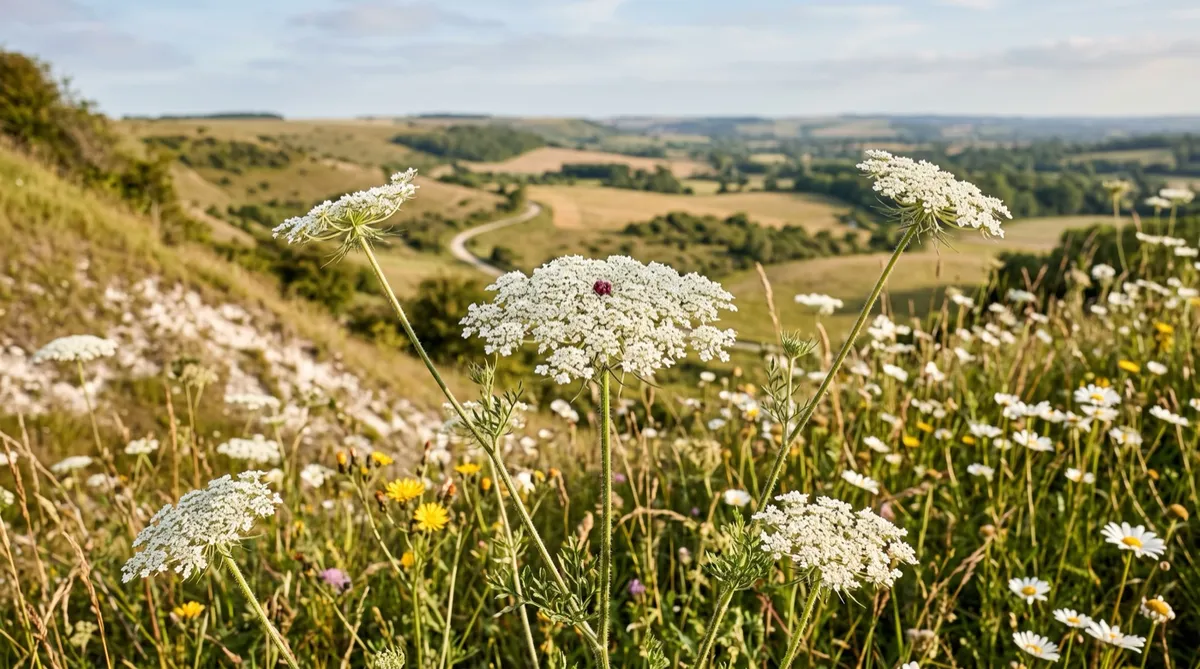
Wild carrot is one of the prettiest native wildflowers you can grow, and one of the easiest. Also called Queen Anne’s lace, it carries flat, lacy white flowerheads from June to September. Sow it on poor, sunny ground, leave it alone, and the hoverflies and bees will soon find it.
It is the wild ancestor of the kitchen carrot, though its root is thin, white and woody. Gardeners grow it for its flowers and its wildlife value. This guide covers sowing, care, self-seeding and, importantly, how to tell it from its poisonous lookalikes.
What does wild carrot look like?
Wild carrot (Daucus carota) has a flat, round flowerhead, 5-10cm across, made of hundreds of tiny white flowers. In the middle there is often a single dark red or purple floret. That little dot is the easiest way to recognise it.
Underneath each flowerhead is a ruff of feathery, forked bracts. The stems are ridged and hairy, and the leaves are finely divided like carrot tops. Crush a leaf and it smells of carrot.
It is a biennial. In year one it makes a low rosette of leaves. In year two it sends up branching stems 60-100cm tall, flowers, sets seed and dies. After flowering, each head curls inwards into a cupped bird’s nest seedhead.
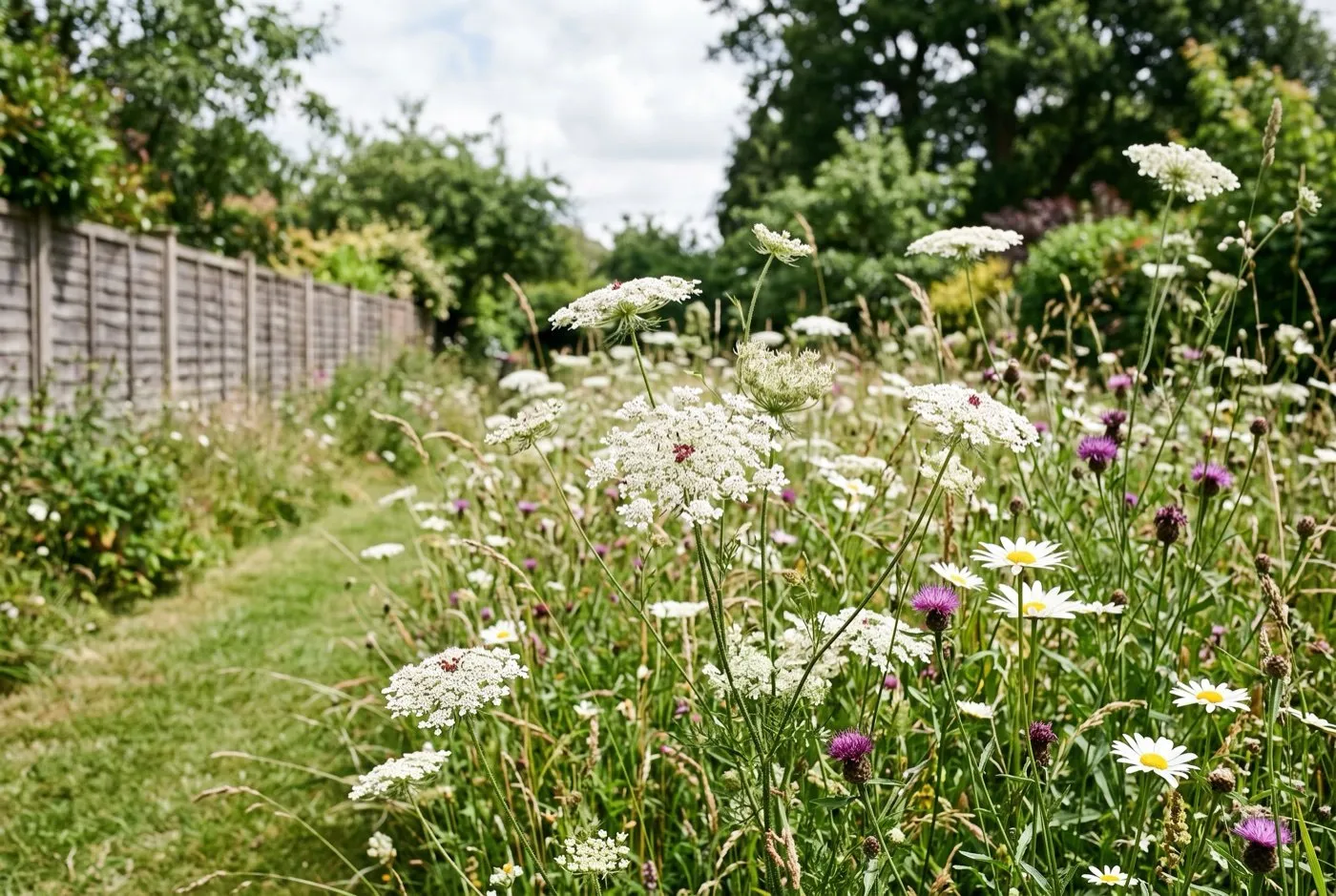
Wild carrot looks at home in a small garden meadow, threading through daisies and knapweed.
Where does wild carrot grow best?
Wild carrot loves full sun and poor, free-draining soil. In the wild it grows on chalk downs, coastal cliffs, dunes and road verges across much of England and Wales.
That tells you how to grow it. Rich, moist soil gives a soft, floppy plant with fewer flowers. Thin, dry ground gives sturdy, well-branched plants. If you garden on chalk or sand, you’re already set. On heavy clay, add grit or grow it in a raised, gritty patch.
It is perfect for a sunny wildlife corner or a small wildflower meadow. The Wildlife Trusts page on wild carrot has more on where it grows wild.
How and when to sow wild carrot
Sow wild carrot direct, where you want it to flower. Its long taproot hates being moved, so modules give weaker plants.
There are two sowing windows:
- September to October is the most natural timing. Seedlings sit as small rosettes over winter and flower the next summer.
- March to May works too. Plants may flower later the same year, or wait until the following summer.
To sow:
- Clear weeds and rake the soil to a fine surface. Don’t add compost or fertiliser.
- Scatter the seed thinly, or sow in shallow drills.
- Barely cover the seed with a sprinkling of soil and firm gently.
- Keep the soil moist until seedlings appear, usually in two to three weeks.
- Thin seedlings to about 20-30cm apart.
If you’re sowing into an existing meadow or grass, scrape away patches of turf first so the seed reaches bare soil. The guide to when to sow wildflower seeds covers timings for a whole mix.
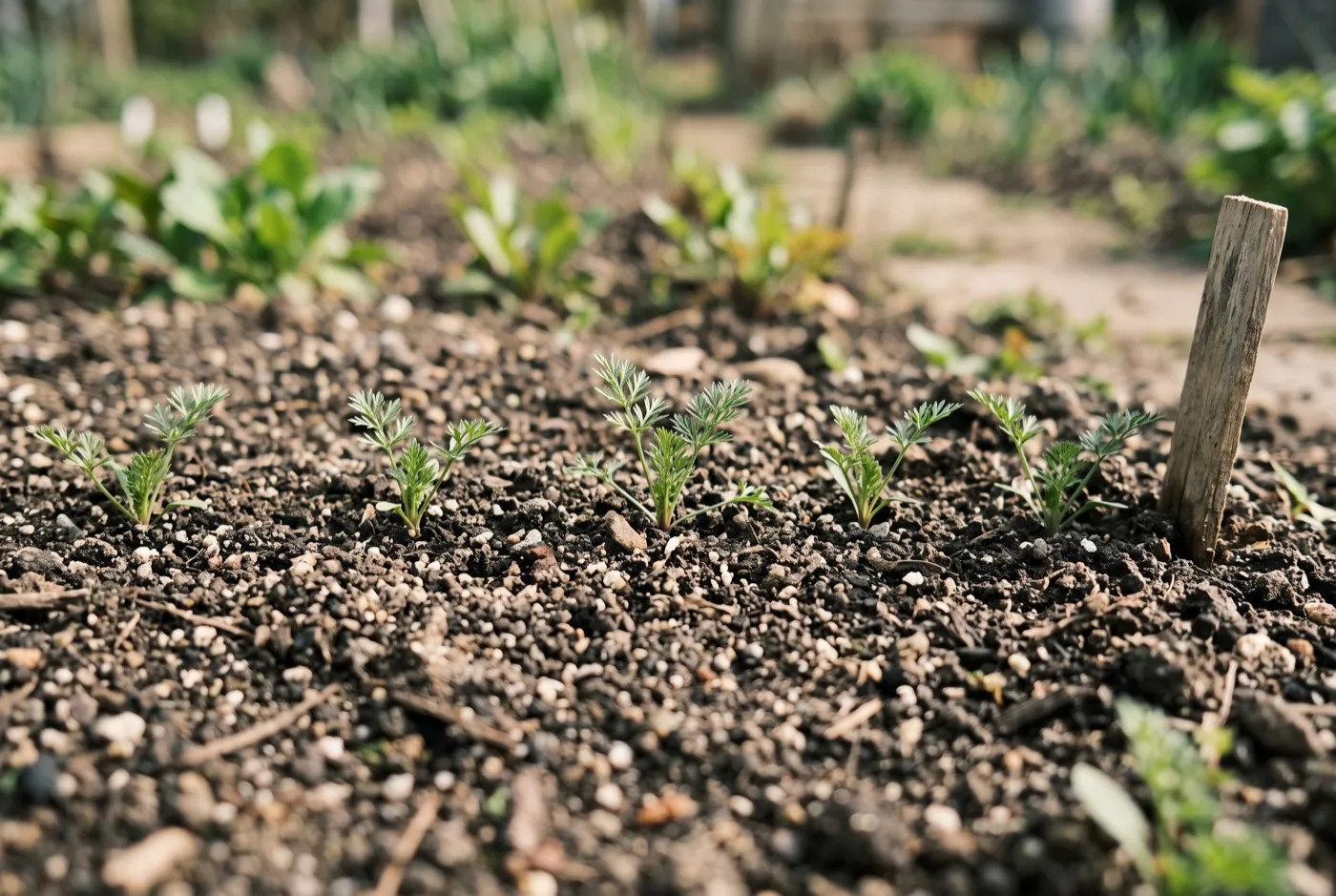
Feathery seedlings sown where they will flower. Thin them so each has room to make a strong taproot.
How to look after wild carrot
Wild carrot needs very little once it’s growing.
- Watering: water seedlings in dry spells until they’re established. After that, leave them alone except in a long drought.
- Feeding: don’t. Rich soil makes it soft and floppy.
- Support: usually not needed on poor soil. Plants growing close together hold each other up.
- Weeding: keep vigorous weeds and grasses back while seedlings are small.
Gardener’s tip: The sap can make sensitive skin blister in sunlight. Wear gloves and long sleeves if you’re cutting lots of stems, and wash your hands afterwards.
Is wild carrot good for wildlife?
Yes, it’s one of the best native flowers for insects. The flat, open flowerheads make an easy landing pad for hoverflies, solitary bees, small wasps and beetles. Many of these can’t reach into deep, tube-shaped flowers.
Hoverfly larvae eat aphids, so a patch of wild carrot helps your garden in more ways than one. Leave the seedheads standing into winter, and they feed birds and shelter insects. The guide to UK native plants for gardens suggests other natives to grow alongside it.
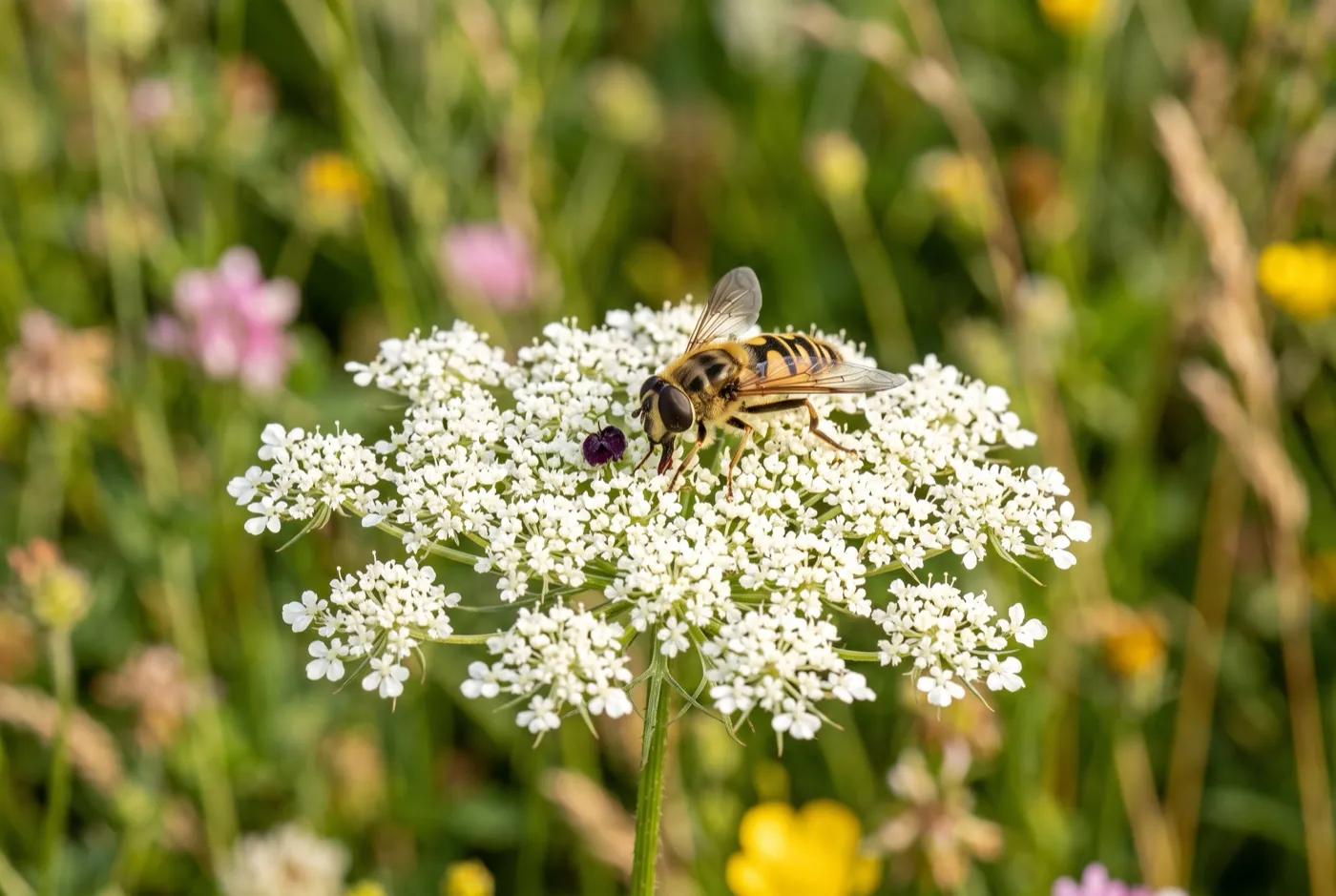
Flat flowerheads suit hoverflies and solitary bees, which can’t reach into deep, tubular flowers.
How to tell wild carrot from poison hemlock
Several plants in the carrot family look alike, and some are very poisonous. Never eat any wild umbellifer, and check carefully before cutting one from a verge or meadow.
Poison hemlock (Conium maculatum) is the main lookalike. It has a smooth, hairless stem with purple blotches, and it smells foul and mousy when crushed. It is usually much taller, often over 1.5m.
Hemlock water-dropwort (Oenanthe crocata) is another very poisonous relative. It grows beside water, in ditches and stream banks, where wild carrot doesn’t.
| Check | Wild carrot | Poison hemlock |
|---|---|---|
| Stem | Hairy, ridged, all green | Smooth, hairless, purple blotches |
| Smell of crushed leaf | Carrot | Foul and mousy |
| Under the flowerhead | Ruff of forked, feathery bracts | No obvious feathery ruff |
| Centre of flowerhead | Often one dark floret | No dark floret |
| Height | Usually 60-100cm | Often 1.5m or more |
| Where it grows | Dry grassland, coast, verges | Damp waste ground, ditches, roadsides |
If any one of these checks doesn’t match, treat the plant as dangerous and leave it. Wear gloves when handling any plant you’re unsure of. The wildflower identification guide covers more native flowers.
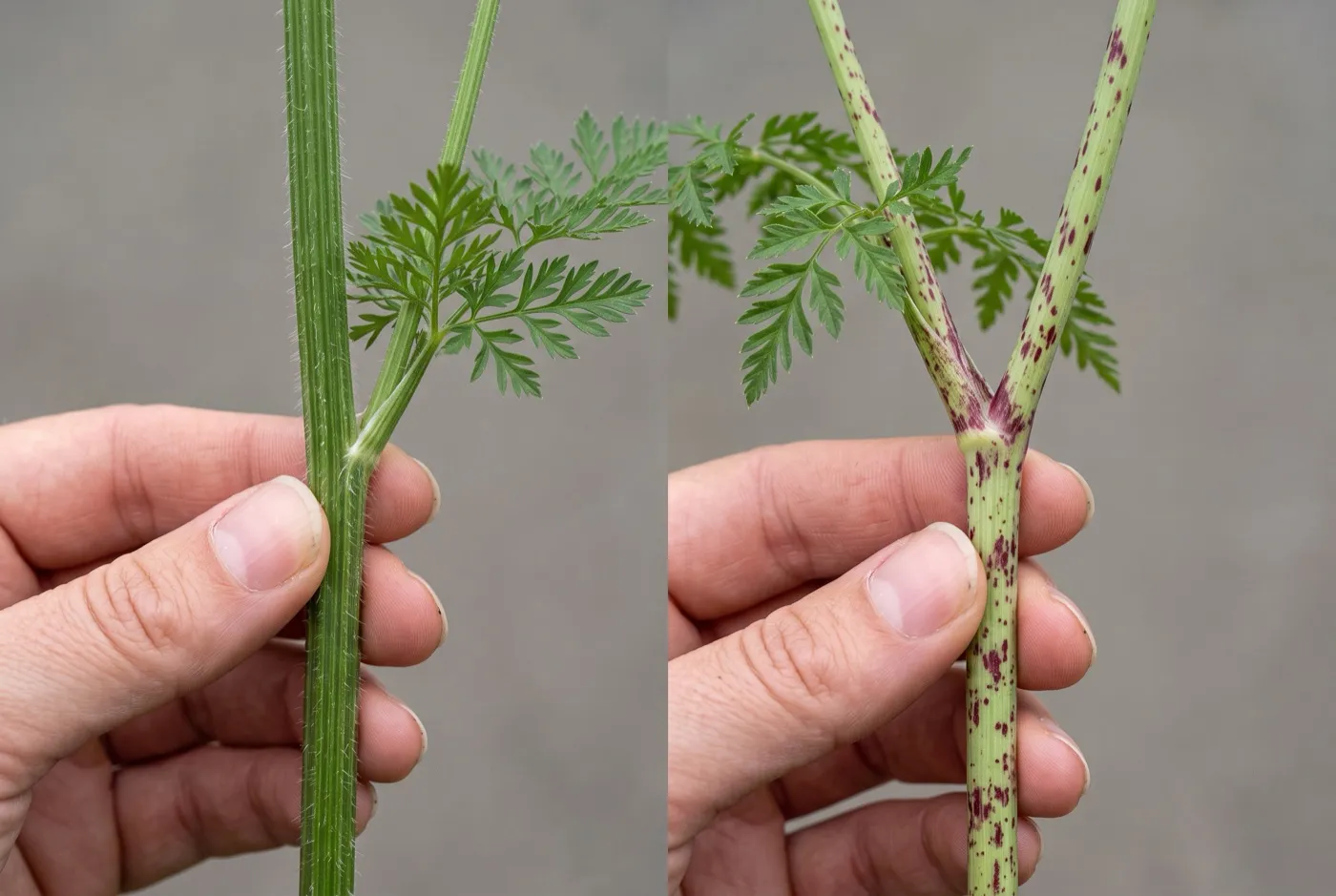
Wild carrot’s stem is hairy and all green (left). Poison hemlock’s is smooth with purple blotches (right).
Native wild carrot or ‘Dara’?
Both are the same species, but they suit different jobs.
Native wild carrot is white with a dark centre. It’s the one for meadows, wild patches and wildlife planting. Buy seed of UK-native origin if you can.
‘Dara’ is a garden selection with pink, plum and burgundy flowerheads. It is grown mainly as a cut flower, often from a spring sowing. The guide to growing Daucus ‘Dara’ covers it in detail, from sowing to cutting.
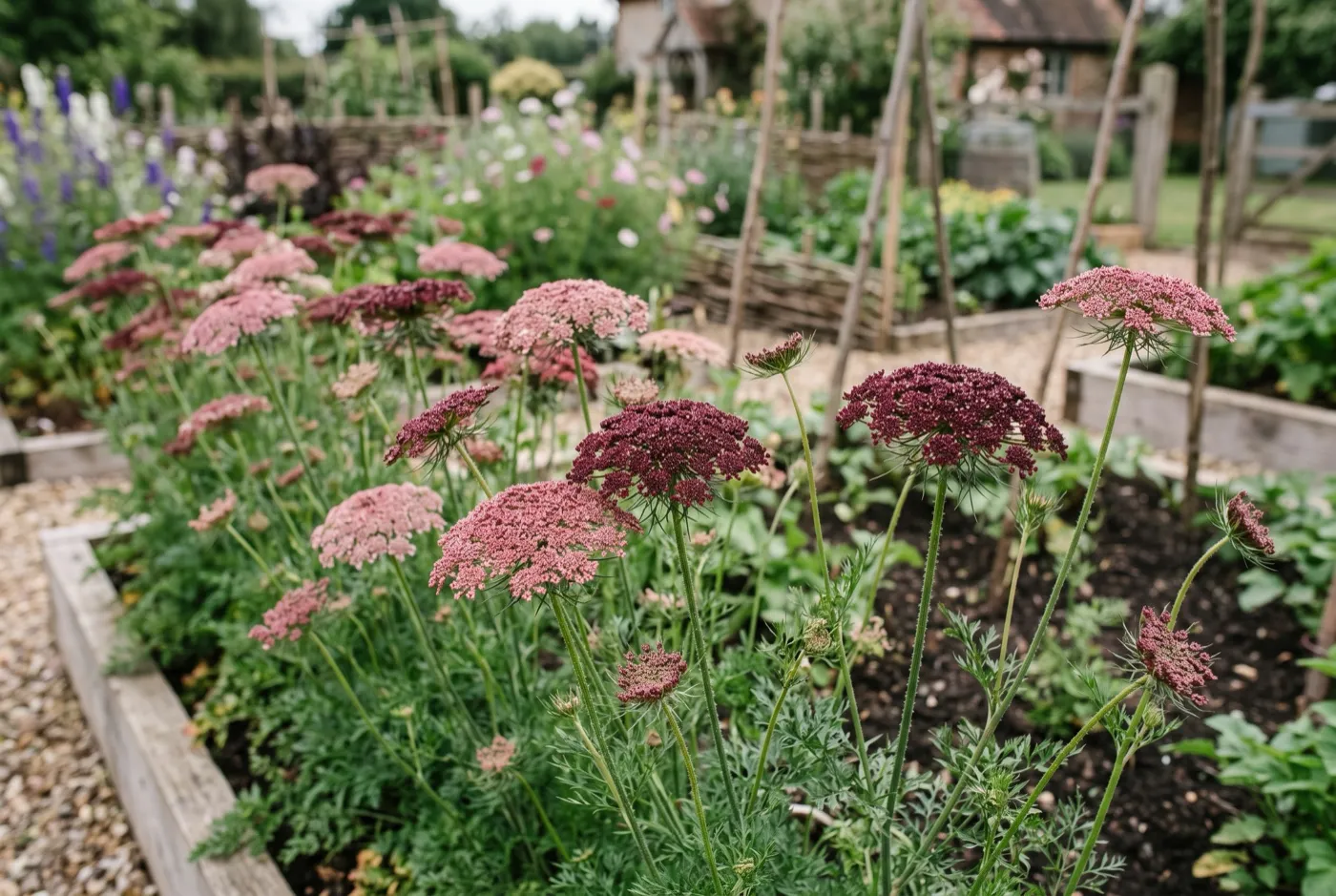
‘Dara’ brings the same lacy shape in shades of pink and plum, perfect for the vase.
Native wild carrot makes a good cut flower too. Cut stems in the cool of the morning, when the heads are fully open but fresh. Stand them in deep, cool water for a few hours before arranging.
Managing self-seeding
Wild carrot self-seeds freely. In a meadow or wild corner, that’s great: let the heads ripen and drop seed, and the patch keeps itself going.
Because it’s a biennial, a lasting patch needs two generations at once: rosettes for next year and flowering plants for this year. Let a few plants set seed every year and you’ll never need to sow again.
In a border, cut off the flowerheads once they fade, before the seed ripens. Pull unwanted seedlings while they’re small, before the taproot gets deep. The guide to self-seeding plants has more on managing free-seeders.
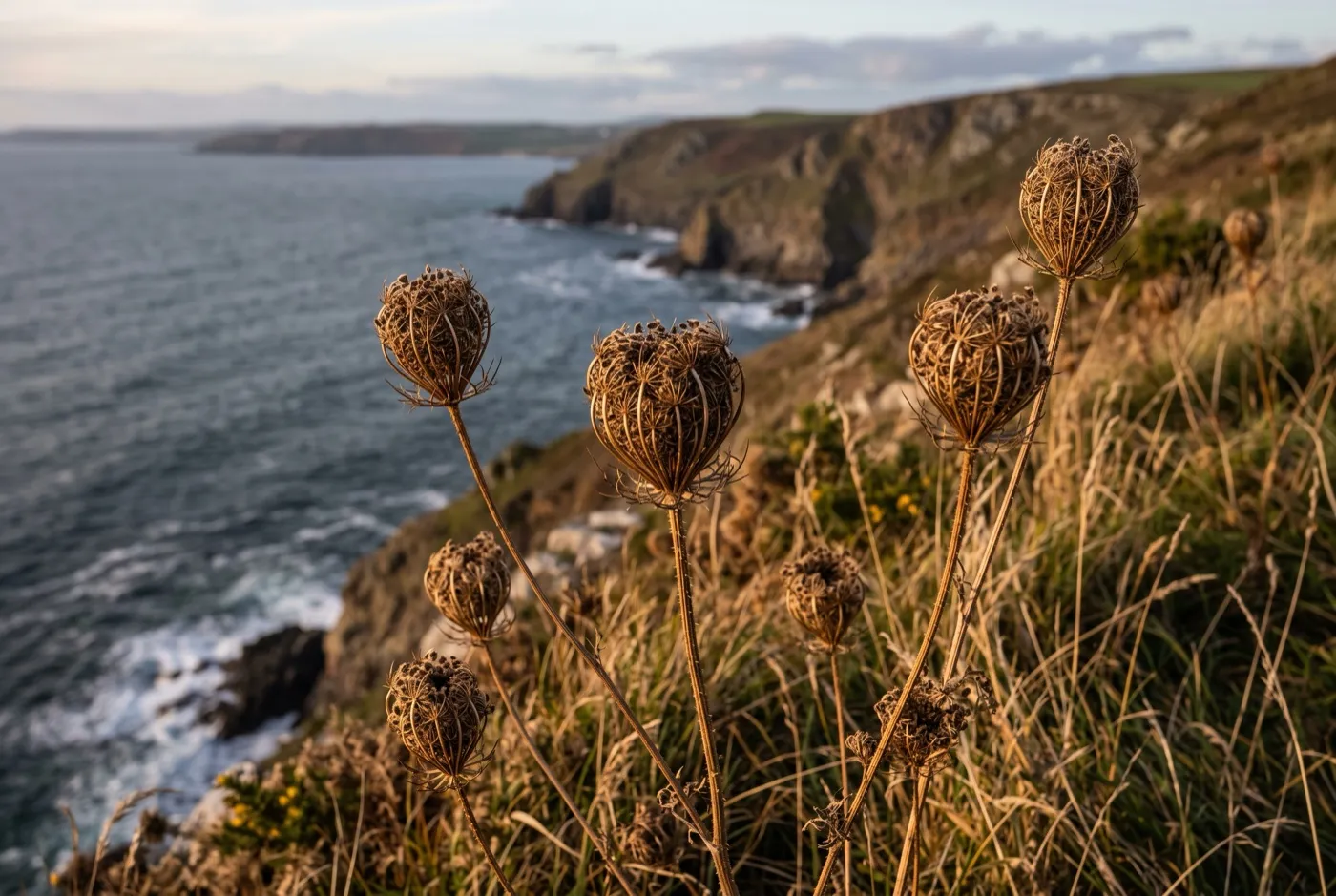
After flowering, the heads curl into bird’s nest shapes. Leave some to seed the next generation.
Wild carrot calendar
| Month | What to do |
|---|---|
| January-February | Order seed. Choose a sunny, poor patch |
| March-May | Sow direct. Thin seedlings to 20-30cm |
| June | First flowers on second-year plants |
| July-August | Peak flowering. Cut for the vase or leave for insects |
| September | Flowering fades. Leave some seedheads. Autumn sowing begins |
| October | Finish autumn sowing. Collect ripe seed if you want it |
| November-December | Leave seedheads standing for birds and insects |
Common mistakes with wild carrot
- Sowing into rich soil. Compost and feed make it tall and floppy. Keep it lean.
- Raising it in modules. The taproot kinks and plants sulk. Sow direct.
- Expecting flowers in year one. Autumn and early spring sowings mostly flower the following summer.
- Cutting wild umbellifers without checking. Always rule out hemlock first.
- Letting it seed everywhere in a border. Deadhead before seed ripens if you want it tidy.
Frequently asked questions
Is wild carrot the same as Queen Anne’s lace?
Yes, they are two names for the same plant, Daucus carota. The lacy white flowerhead gives it the Queen Anne’s lace name. Folklore says the dark floret in the middle is a drop of the queen’s blood, pricked while making lace.
How do I tell wild carrot from poison hemlock?
Look at the stem and smell a crushed leaf. Wild carrot has a hairy, all-green stem and smells of carrot. Poison hemlock has a smooth stem with purple blotches and a nasty mousy smell. Wild carrot also has a ruff of forked bracts under the flowerhead. If in any doubt, leave it alone.
When should I sow wild carrot seed?
Sow direct in September-October or March-May. Autumn sowings sit as small rosettes over winter and flower the following summer. Spring sowings may flower later the same year or the next. Barely cover the seed and keep the soil moist until seedlings appear.
Can you sow wild carrot in modules?
Direct sowing is much better. Wild carrot makes a long taproot that kinks in a module and hates being moved. If you must start it under cover, use deep root trainers and plant out while the seedlings are very small.
Is wild carrot good for pollinators?
Yes, it is excellent for wildlife. The flat, open flowerheads are easy for hoverflies, solitary bees and small beetles to feed on. Seedheads left standing feed birds and give insects winter shelter.
Will wild carrot take over the garden?
It self-seeds freely, but it is easy to control. In a meadow that’s a bonus. In a border, cut the flowerheads before the seed ripens, and pull unwanted seedlings while they are small.
What is the difference between wild carrot and ‘Dara’?
‘Dara’ is a coloured garden selection of the same plant. Native wild carrot is white with a dark centre and suits meadows and wildlife areas. ‘Dara’ has pink, plum and burgundy flowerheads and is grown mainly as a cut flower.
Ready to make room for more natives? The guide to turning a lawn into a wildflower meadow shows how to give wild carrot plenty of company. Browse more ideas on the wildlife hub.
Our team produces practical UK gardening guidance from source research, contributor records and established horticultural practice. Editorial standards are overseen by Matt W.