Key takeaways
- Persicaria flowers from July to the first frosts with crimson or pink bottlebrush spikes
- Garden bistorts are well-behaved clumps, not Japanese knotweed
- Avoid Persicaria wallichii, Himalayan knotweed, which is listed on Schedule 9
- It loves moist soil, heavy clay included, in sun or part shade
- 'Firetail' and 'Superba' hold the RHS Award of Garden Merit and are good first choices
- Divide every three to four years in spring or autumn to keep it flowering well
Persicaria is one of the easiest late-summer perennials you can grow, especially on heavy, damp soil. Slim crimson or pink spikes rise above leafy clumps from July and keep coming until the first frosts. Bees love them.
People often hesitate because of its old common name, knotweed. That name puts gardeners off a whole group of well-behaved border plants. This guide clears that up, then covers the best varieties, planting, care and keeping clumps in bounds.
What is persicaria and why is it sold as Bistorta?
Persicaria is a group of hardy perennials grown for their bottlebrush flower spikes. The garden forms come mostly from damp meadows and streamsides in the Himalayas. That’s why they’re so tough and so fond of moisture.
Botanists have moved the main garden species into the genus Bistorta. So Persicaria amplexicaulis is now Bistorta amplexicaulis, Persicaria bistorta is Bistorta officinalis, and Persicaria affinis is Bistorta affinis. Nurseries use either name, sometimes both. The common name, bistort, covers them all.
Is persicaria the same as Japanese knotweed?
No. They’re in the same plant family, but Japanese knotweed is Reynoutria japonica, a different plant altogether. It has deep, spreading underground stems and tall bamboo-like canes. Garden persicarias form clumps with shallow roots you can lift with a spade.
If you’re worried about a plant in your garden, our Japanese knotweed identification guide shows how to tell them apart.
Warning: Avoid Persicaria wallichii, sold as Himalayan knotweed or Polygonum wallichii. It is listed on Schedule 9 of the Wildlife and Countryside Act, which makes it an offence to plant it in the wild or let it spread there. It forms dense thickets from spreading roots. If a plant swap offers an unnamed “giant persicaria”, say no thanks.
Our guide to banned plants in UK gardens covers the other plants on that list.
Which persicaria varieties are best?
For a long-flowering border plant, start with ‘Firetail’. For damp ground, add ‘Superba’. For ground cover, try Persicaria affinis.
| Variety | Height | Colour | Flowers | Habit |
|---|---|---|---|---|
| ’Firetail’ (AGM) | About 1.2m | Bright crimson | July to October | Steady clump |
| ’Fat Domino’ | About 1m | Deep red | July to October | Steady clump |
| ’Rosea’ | About 1m | Pale pink | July to October | Steady clump |
| Bistort ‘Superba’ (AGM) | 75-90cm | Soft pink | Late spring to summer, then odd spikes | Spreads on damp soil |
| P. affinis ‘Darjeeling Red’ (AGM) | About 25cm | Pink ageing to red | Summer to early autumn | Low spreading mat |
| ’Red Dragon’ | About 1m | Small white flowers, purple leaves | Late summer | Steady clump |
‘Superba’, the common bistort, flowers earlier than the rest, with fat pink pokers from late spring. It’s the one for properly wet ground.
Persicaria affinis is a low ground-cover mat. Its pink spikes age to red, and the leaves turn russet in winter. ‘Donald Lowndes’ is another good variety.
‘Red Dragon’ (Persicaria microcephala) is grown for its leaves: purple with a silver chevron, on red stems. Part shade gives the best colour.
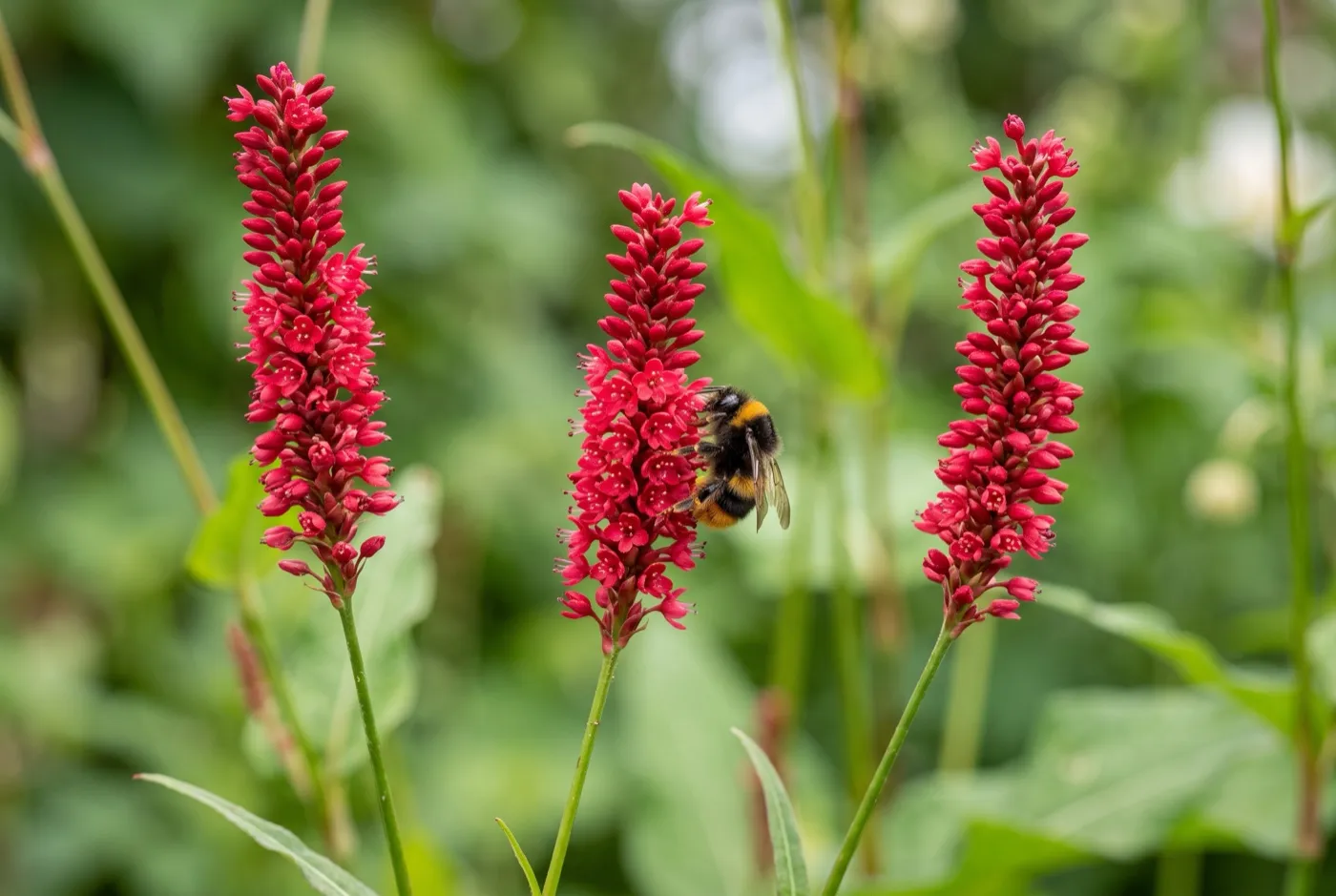
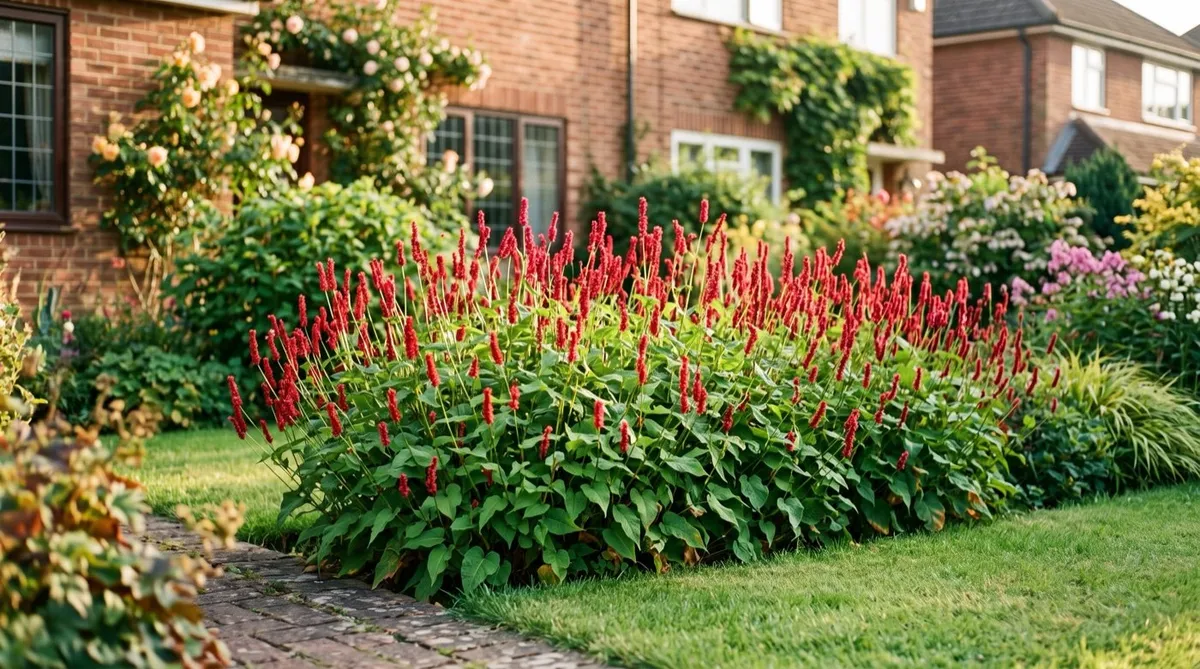
Each ‘Firetail’ spike is packed with tiny flowers, and bees work them for weeks.
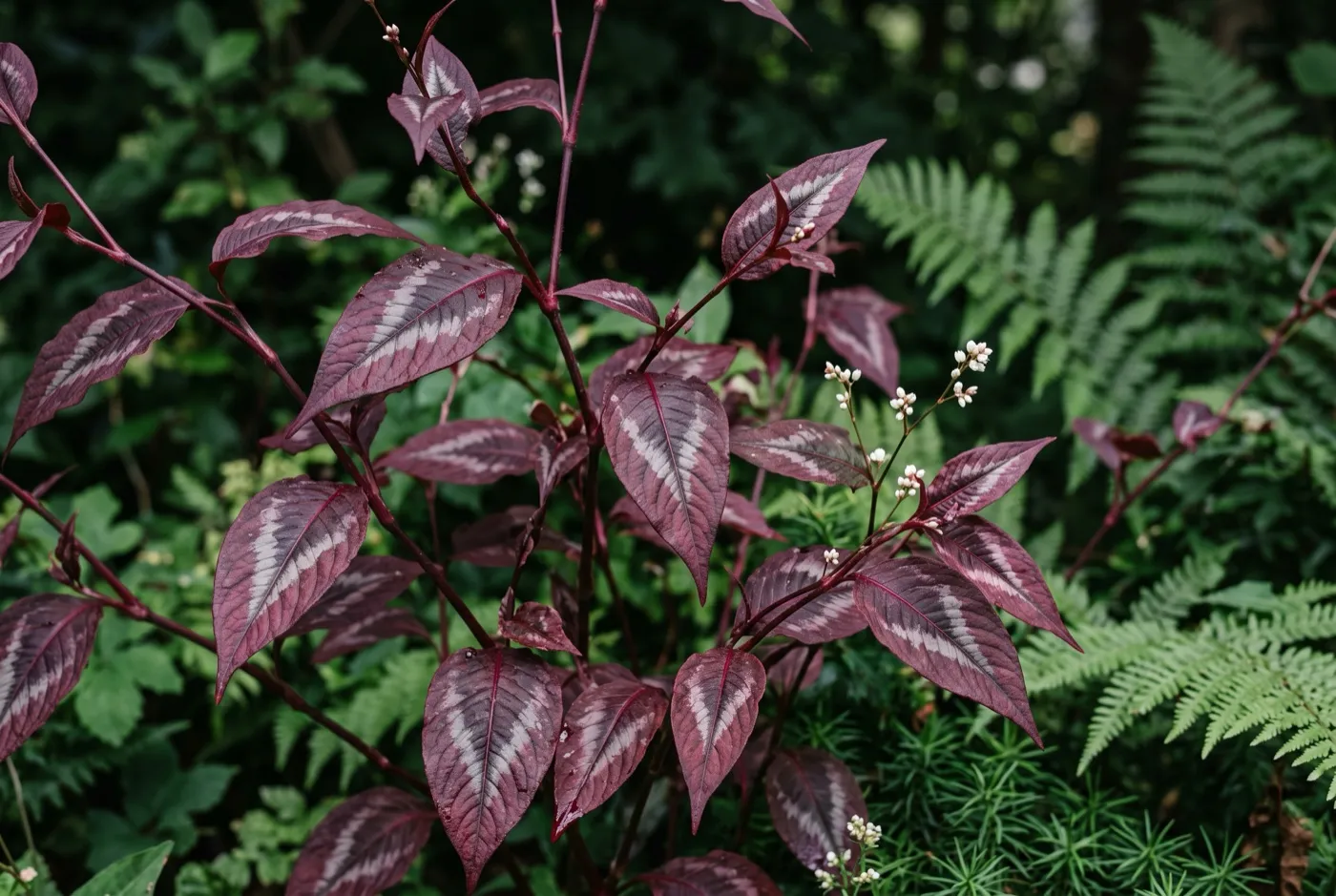
‘Red Dragon’ is all about the leaves, and a bit of shade brings out the best colour.
Where does persicaria grow best?
Persicaria grows best in moist soil in sun or part shade. That makes it a gift for heavy clay, where Mediterranean plants sulk.
Moisture decides the display. On damp soil, ‘Firetail’ flowers for months. On dry, thin soil it scorches and stops early. ‘Superba’ is happy with its feet properly wet, at a pond edge or in ground that floods in winter. It’s one of the most useful plants for wet and boggy soil.
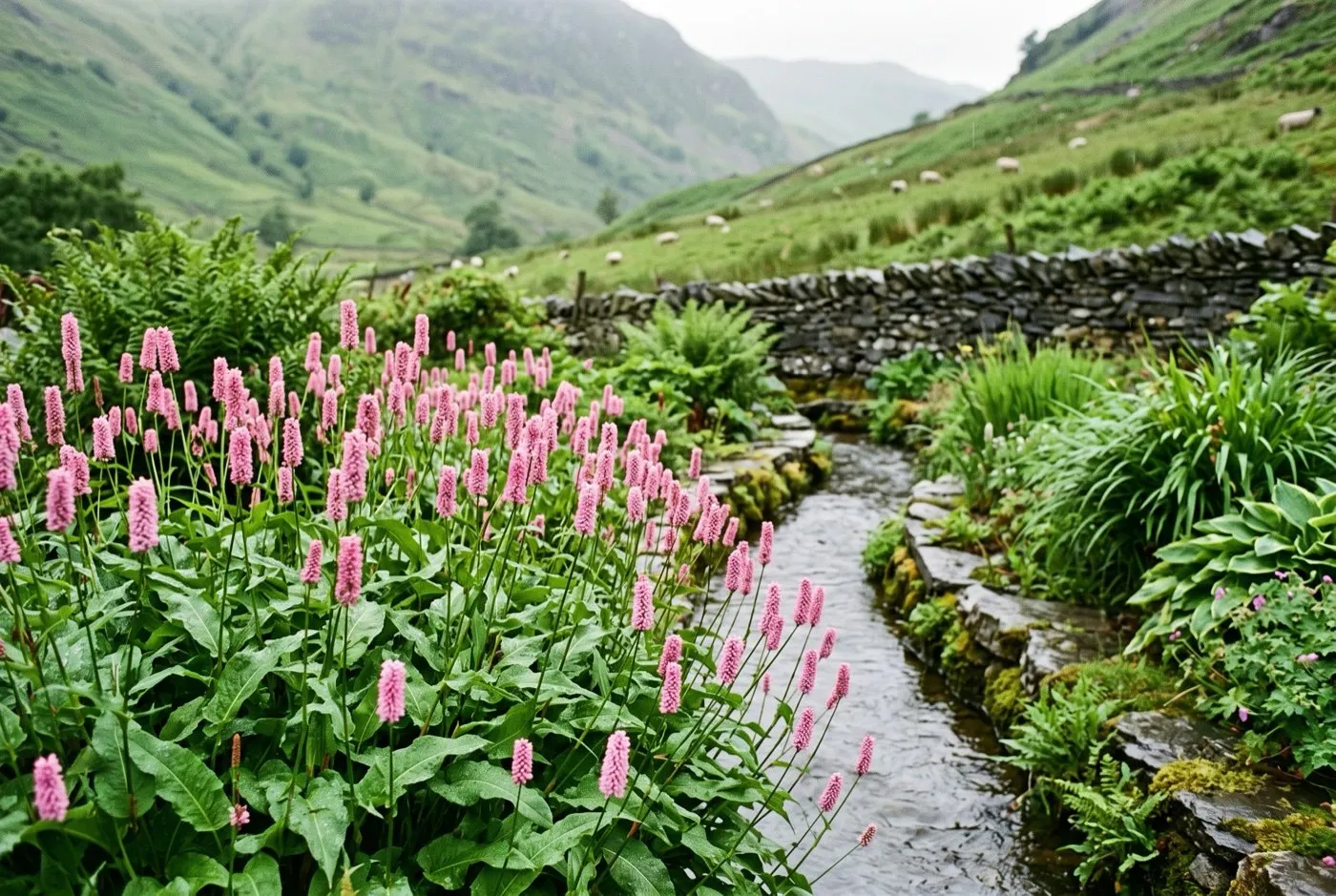
‘Superba’ loves wet feet, so a streamside or soggy corner suits it perfectly.
How and when to plant persicaria
Plant in spring or autumn, about 60cm apart for the taller types. Dig a hole twice the width of the rootball and add a bucket of garden compost on poor ground. Set the crown level with the soil, water in well, then mulch 5cm deep, keeping the mulch off the crown.
That mulch matters more for persicaria than most perennials. It holds in the moisture that keeps it flowering into autumn. Water new plants weekly in dry spells through their first summer.
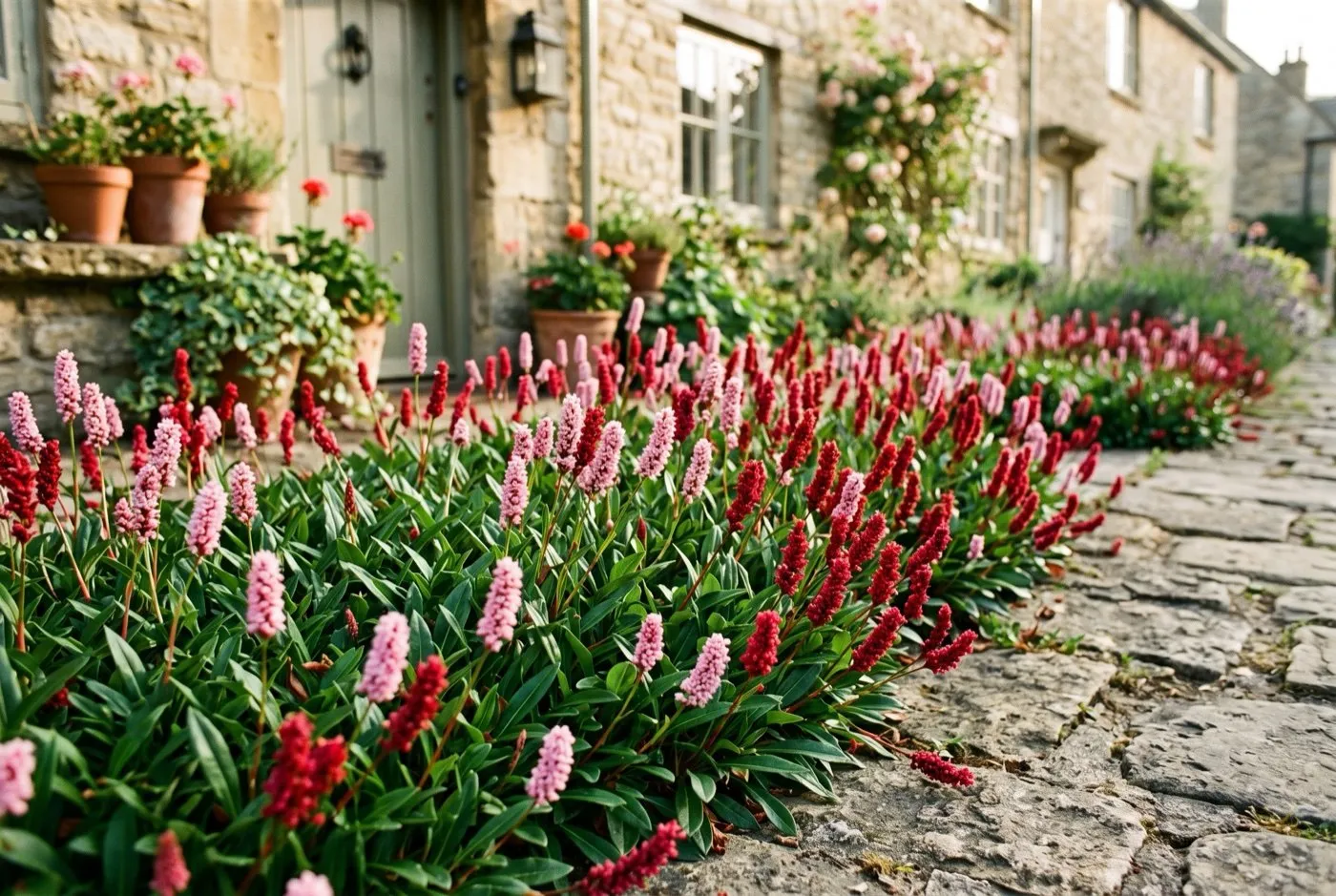
Persicaria affinis is perfect for softening a path edge, with pink and red spikes on the same mat.
Persicaria care through the year
Persicaria needs very little care. Leave the stems standing over winter, as the rusty seedheads look great in frost and birds pick at them. Cut everything to the ground in late February or March.
Tall border types don’t need staking or the Chelsea chop. Their stems hold themselves up.
| Month | Task |
|---|---|
| January | Leave seedheads standing |
| February | Cut all old growth to the ground late in the month |
| March | Mulch 5cm deep. Divide congested clumps as shoots appear |
| April | Plant new clumps. Water new plants in dry weeks |
| May | ’Superba’ starts flowering |
| June | P. affinis starts flowering. Water first-year plants in dry spells |
| July | ’Firetail’ and other amplexicaulis types begin |
| August | Peak flowering. Water in long dry spells |
| September | Plant and divide on lighter soils |
| October | Flowering carries on until frost |
| November | Leave everything standing for winter |
| December | Check P. affinis hasn’t crept over small neighbours |
When and how to divide persicaria
Divide every three to four years, in early spring or autumn. It keeps flowering strong, stops the clump spreading too far and gives you free plants. Named varieties need dividing rather than growing from seed to come true.
Lift the whole clump. Split it with two forks back to back, or a sharp spade. Replant the lively outer pieces and compost the old woody middle. On heavy soil, spring is better, as plants restart into warming ground.
Persicaria fits the same session as other perennials to divide in late spring.
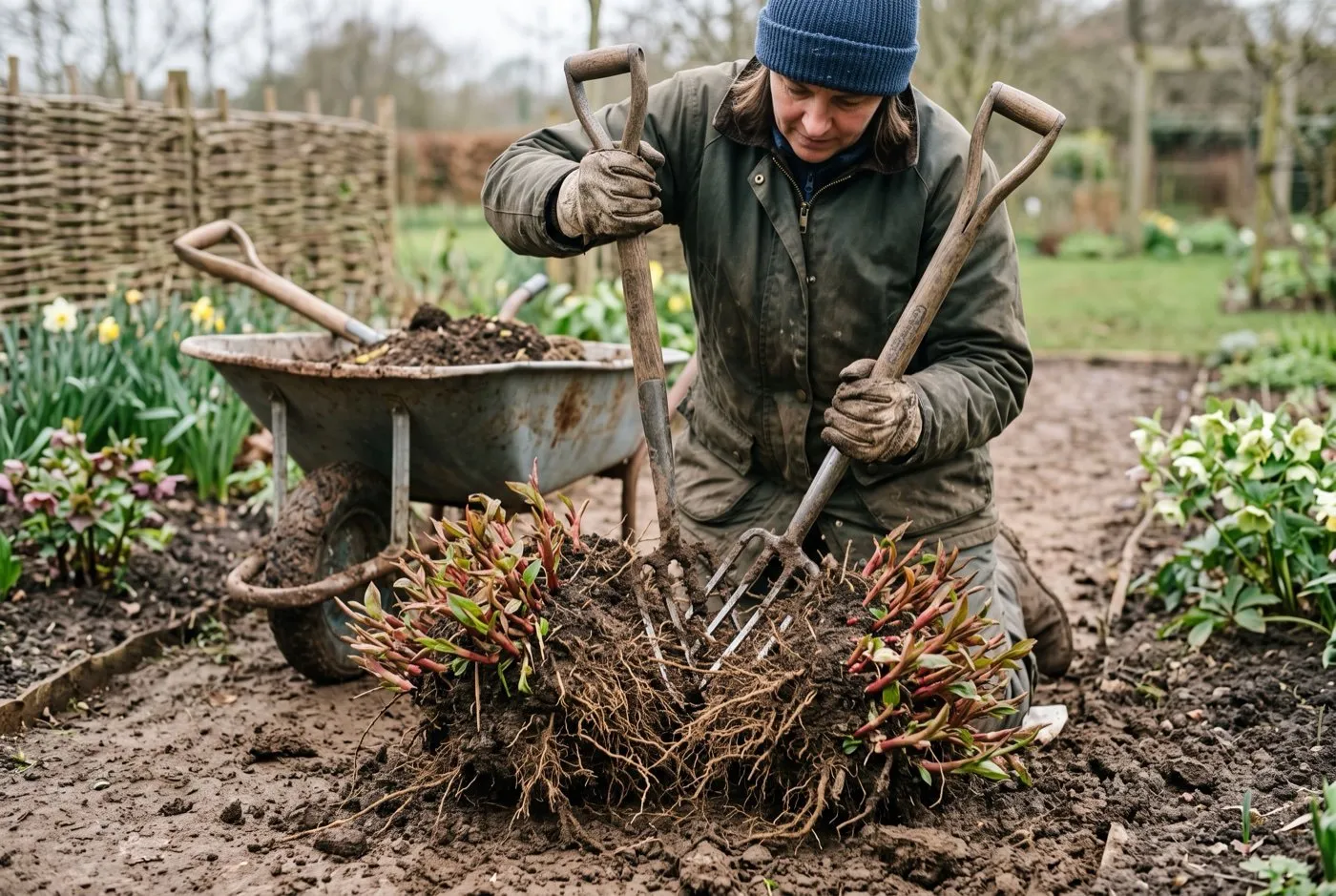
Two forks back to back make light work of a big clump. Keep the outer pieces and compost the woody middle.
Does persicaria spread? Keeping it in bounds
Garden persicarias spread slowly and shallowly, and a spade sorts them out in minutes.
- Border types such as ‘Firetail’ slowly widen. Divide them every few years to keep them in their space.
- Persicaria affinis spreads as a surface mat, rooting as it goes. That’s great for ground cover, but keep it away from small alpines. Trim the edge once a year and pull up stray rooted stems.
- Self-seeding is rarely a problem. If seedlings bother you, cut off spent spikes in October.
Persicaria in prairie-style planting
Persicaria amplexicaulis is a favourite in prairie-style planting. The upright spikes hold their shape and colour for months, then stand as seedheads into winter.
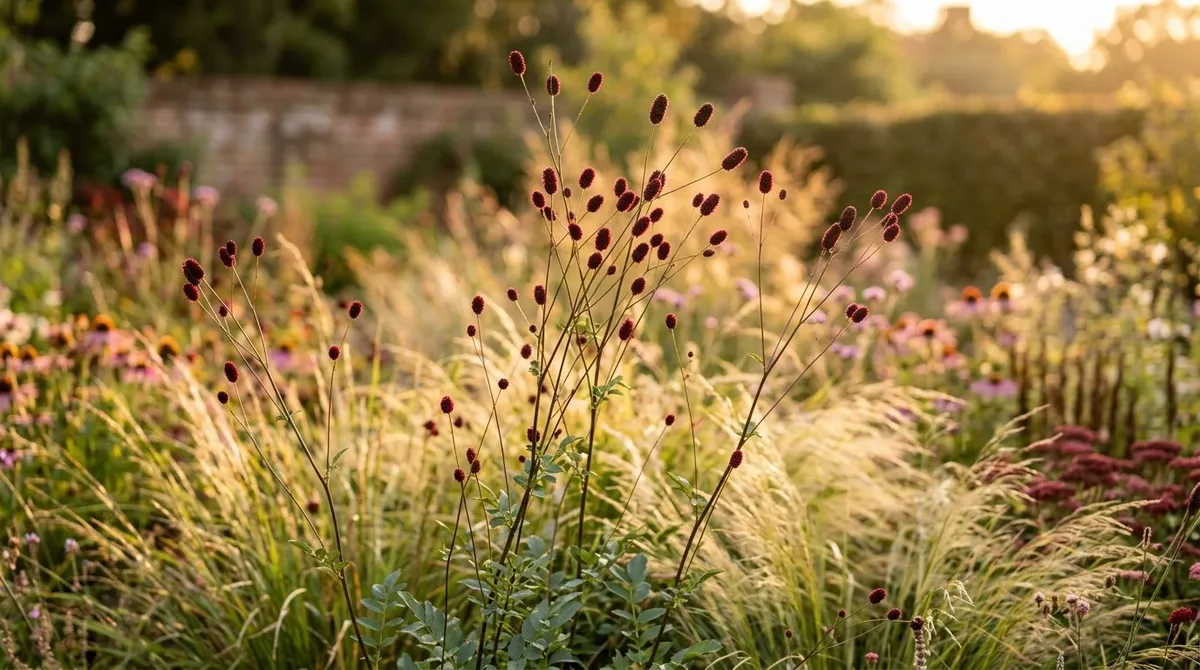
Pair it with grasses such as calamagrostis, molinia or deschampsia, so the spikes flicker through the stems. It also suits rudbeckia, echinacea, sanguisorba and late asters, which like the same moist soil. You don’t need lots of space. A 3m border with one grass, one persicaria and one daisy, repeated, works well.

Persicaria, grasses and asters together give a border colour and movement right through autumn.
Common persicaria mistakes
- Avoiding it because of the name. Garden bistorts are well-behaved clumps. The knotweed link is family only.
- Planting in dry, thin soil. You’ll get scorched leaves and a short season. Improve the soil and mulch, or choose a drought-tolerant plant.
- Letting P. affinis loose among small plants. Give it a path or kerb to run against.
- Never dividing. Old clumps go woody in the middle and flower less.
- Cutting it all down in autumn. You lose winter seedheads. Wait until late February.
For more help planning this kind of border, read our guide to prairie planting, or browse the growing hub.
Frequently asked questions
Is persicaria the same as Japanese knotweed?
No, garden persicaria is a different plant from Japanese knotweed. They are in the same family, but Japanese knotweed is Reynoutria japonica, with deep, spreading roots and tall bamboo-like canes. Garden persicarias form clumps with shallow, fibrous roots that lift out with a spade.
Is persicaria invasive in the UK?
Garden persicarias are not, with one exception. Persicaria wallichii, Himalayan knotweed, is listed on Schedule 9 of the Wildlife and Countryside Act, so don’t grow it. Border types like ‘Firetail’ slowly widen, and Persicaria affinis spreads as a low mat. A spade keeps both in check.
Does persicaria prefer sun or shade?
Either works, as long as the soil stays moist. Persicaria amplexicaulis flowers best in sun on damp soil and still does well in part shade. ‘Red Dragon’ has its best leaf colour with some shade. Full sun on thin, dry soil is the combination to avoid.
Should persicaria be cut back in autumn or spring?
Cut it back in late winter or early spring. Leave the stems and seedheads over winter, as they look good in frost and give birds something to pick at. Cut everything to the ground in late February or March, before new growth appears.
How often should you divide persicaria?
Every three to four years, in early spring or autumn. Lift the clump, split it with two forks back to back or a sharp spade, and replant the lively outer pieces about 60cm apart. Division keeps it flowering well and gives you free plants.
Why is my persicaria not flowering?
Dry soil is the usual cause. Persicaria needs moist roots to keep flowering through late summer. Deep shade also cuts flowering. Mulch 5cm deep in spring, water in long dry spells, and move it if it sits in heavy shade.
Can persicaria grow in pots?
Yes, but stick to compact types. Persicaria affinis makes a good mat in a wide pot, and smaller amplexicaulis varieties suit a large container. Use loam-based compost and keep it damp all summer. Tall varieties dry out too fast in pots.
Our team produces practical UK gardening guidance from source research, contributor records and established horticultural practice. Editorial standards are overseen by Matt W.