
Key takeaways
- Plant tulip bulbs 15-20cm deep from mid-October to late November
- Bulbs need winter cold to flower, so leave pots outside
- Species tulips come back for years, while most hybrids fade after 2-3 seasons
- Tulip fire is the main disease, so plant late and don't reuse affected spots
- Use pots at least 30cm deep with 2 parts compost to 1 part grit
- Lift hybrid bulbs once the leaves die back in June and store them somewhere warm and dry
Tulips are the stars of the British spring garden. From little species tulips in March to tall Darwin hybrids in May, they give weeks of colour just as the garden wakes up. Together with daffodils, they’re the backbone of spring bulb planting.
Growing tulips well comes down to three things: timing, depth and drainage. Get those right and you’ll have lovely flowers. Here’s how to choose, plant, grow in pots, keep them coming back and dodge disease. For plants to grow alongside, see our cottage garden planting plan.
Choosing the right tulip type
Pick Darwin hybrids or species tulips if you want them to come back, and other types for one bright season. Tulips are sorted into groups by flower shape and flowering time. You don’t need to know them all, but these are the ones you’ll find in UK shops.
Single early tulips flower from late March in mild areas, at 25-40cm, with classic cup-shaped flowers. ‘Apricot Beauty’ and ‘Purple Prince’ are popular.
Double early tulips have frilly, peony-like flowers packed with petals. They stand 25-35cm tall and flower in April. Try ‘Monsella’ (yellow with red streaks) or ‘Foxtrot’ (pink).
Triumph tulips are the biggest group, flowering in mid to late April at 35-50cm. They’re the go-to for spring bedding. ‘Negrita’ (purple) and ‘Jan Reus’ (deep red) are lovely.
Darwin hybrid tulips have the biggest flowers, on stems up to 70cm tall. They’re the best of the big tulips for coming back, often for several years if planted deep. Try ‘Apeldoorn’ (red), ‘Golden Apeldoorn’ (yellow) or ‘Pink Impression’.
Lily-flowered tulips have pointed, curved-back petals and an elegant shape. ‘Ballerina’ (orange and scented), ‘White Triumphator’ and ‘Merlot’ flower in late April and May at 45-60cm.
Parrot tulips have frilled, ruffled petals in bold colours. ‘Black Parrot’ and ‘Estella Rijnveld’ are show-stoppers, but their heavy heads can snap in wind, so give them shelter or grow them for cutting.
Species tulips are the wild tulips and close relatives. They’re smaller, usually 10-25cm, but they come back far better than big garden hybrids. Tulipa sylvestris, T. sprengeri, T. clusiana ‘Lady Jane’ and T. tarda all return year after year in the right spot.
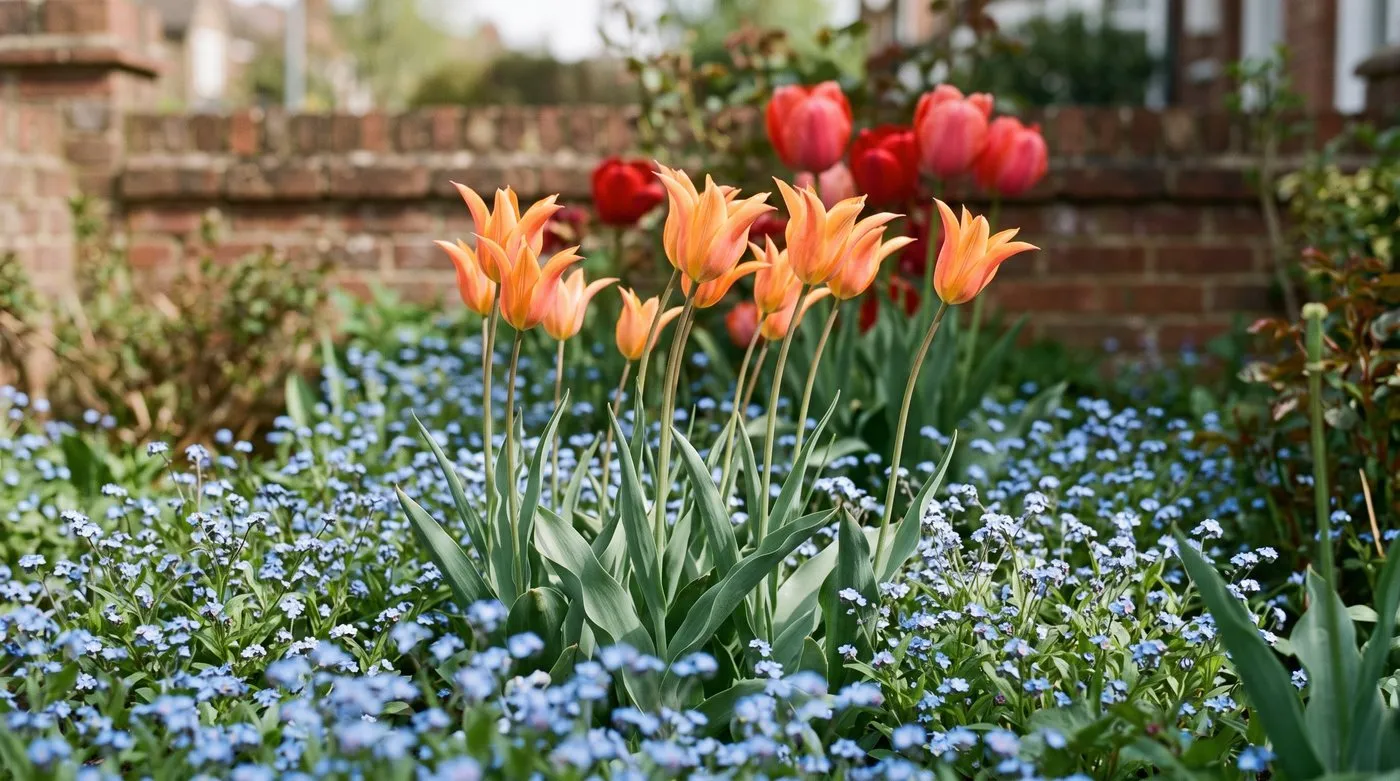
Lily-flowered tulips have pointed, curved-back petals and suit borders and vases. For tulips that come back, pick Darwin hybrids or species types.
Tulip type comparison
| Type | Height | Flowers | Comes back? | Best for |
|---|---|---|---|---|
| Single early | 25-40cm | Late March to April | Rarely | Pots, early colour |
| Double early | 25-35cm | April | Rarely | Sheltered beds, cutting |
| Triumph | 35-50cm | Mid to late April | Sometimes | Bedding, borders |
| Darwin hybrid | 50-70cm | April to May | Often | Borders |
| Lily-flowered | 45-60cm | Late April to May | Sometimes | Borders, cutting |
| Parrot | 40-55cm | Late April to May | Rarely | Sheltered spots, cutting |
| Species | 10-25cm | March to June | Yes, for years | Rockeries, grass |
Handy tip: for tulips that come back, stick to Darwin hybrids and species tulips. Treat the rest as seasonal colour and buy fresh bulbs each autumn.
When to plant tulips in the UK
Plant from mid-October to late November. That’s later than daffodils, crocuses and most other spring bulbs, which go in from September. Planting later helps avoid tulip fire, the worst tulip disease in Britain. Our guide on when to plant tulip bulbs in the UK has more on timing around the country.
Bulbs planted in cold soil come up later, giving the disease less chance to strike in mild, damp autumn weather. In most of England the soil has cooled enough by late October. In mild southern and coastal gardens, early November is often better.
November is the main tulip planting month in most UK gardens.
Is it too late to plant tulips in December or January?
No, not if the bulbs are still firm. Tulips planted in December, or even January, usually still flower. They may be a week or two later, with slightly shorter stems.
Check the bulbs first, and throw out any that are soft, mouldy or shrivelled. Plant at the usual 15-20cm. If the ground is frozen or soggy, plant into pots of gritty compost and leave them outside so they still get the cold. Plant the whole potful out in spring, or enjoy them in the pot. Bulbs left until February or March rarely flower well, so plant everything by mid-January.
Choosing a spot
Tulips want full sun, at least 6 hours a day. Light shade under deciduous trees is fine, as the branches are still bare in spring. Avoid deep shade from buildings or evergreens.
Drainage matters most. Tulip bulbs rot in soggy soil. On heavy clay, dig in a bucket of sharp grit per square metre, or grow them in raised beds and pots. Sandy and loamy soils suit them just as they are.
Don’t plant where tulip fire appeared in the last 3 years. The RHS tulip fire page explains that it can linger in the soil for years, so move your tulips around.
How to plant tulip bulbs
Getting the soil ready
Fork over the soil to a spade’s depth, about 25cm, and pull out weeds and big stones. On heavy or average soil, work in a bucket of horticultural grit per square metre. After planting, a mulch of garden compost improves the soil over time, but don’t pack compost right around the bulbs.
Don’t add fertiliser at planting. The bulb already holds all it needs for its first flowers.
Depth and spacing
Plant 15-20cm deep, from the base of the bulb, which is about three times the bulb’s height. Deep planting:
- Protects bulbs from frost.
- Helps tall stems stay upright in wind.
- Helps them come back, rather than splitting into small bulbs that don’t flower.
Space bulbs 10-12cm apart for a natural look in borders, or about 8cm for a packed display. Plant at least 7-9 of the same variety together. A single bulb here and there looks a bit lost.
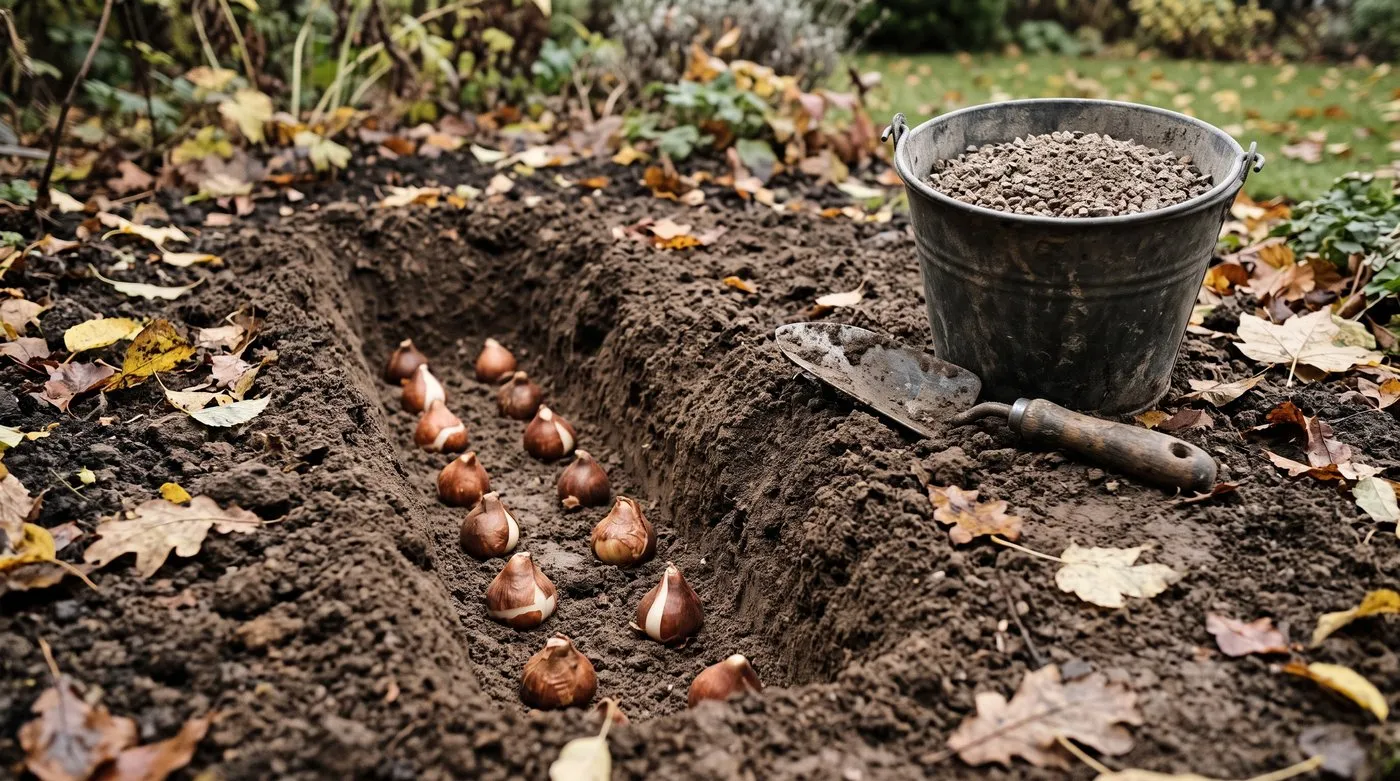
Plant 15 to 20cm deep, about three times the bulb’s height. Deep bulbs stand up better to wind and are more likely to flower again.
How to plant
- Dig a flat-bottomed hole or trench 15-20cm deep.
- Set bulbs pointy end up. If you can’t tell, lay them on their side and the shoot will find its way.
- Space them evenly.
- Fill back with soil and firm gently with the back of a rake.
- Water lightly if the soil is dry, then leave them be unless it’s very dry for a long time.
- Mark the spot with a label so you don’t dig into them later.
Handy tip: for a relaxed cottage garden look, gently toss a handful of bulbs onto the bed and plant each one where it lands.
How do you stop squirrels digging up tulip bulbs?
Peg chicken wire flat over the soil after planting. Squirrels find bulbs by smell and by loose, freshly dug soil, and the wire stops them digging.
Take the wire off when shoots appear in late winter, or use mesh with holes big enough for shoots to grow through. In pots, lay mesh over the compost or top with coarse gravel. Pick up any papery bulb skins after planting, as they leave a scent trail. Firm the soil well so the bed doesn’t look freshly dug. Deep planting helps too. Mice and pheasants dig up bulbs in some gardens, and the same wire stops them.
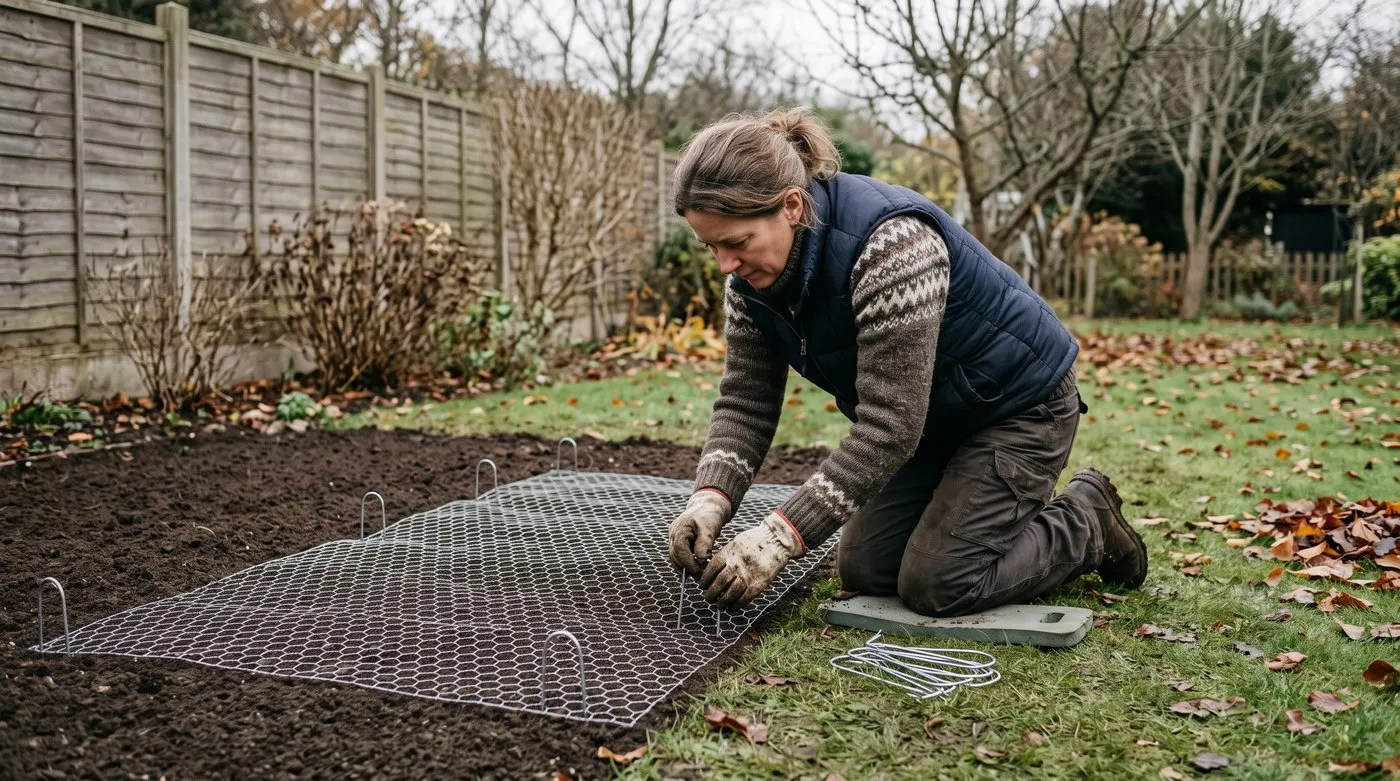
Peg chicken wire flat over the bed and pick up any bulb skins. Lift the wire when shoots appear in late winter.
Growing tulips in containers
Use pots at least 30cm deep, filled with gritty compost, and leave them outside over winter. Pots give you perfect drainage, and you can move them centre stage when the flowers open.
Choosing pots
Pick containers at least 30cm deep so you can plant at the right depth, with drainage holes. Terracotta, stone and thick plastic all work. Terracotta dries out faster, which suits tulips nicely.
A pot 30cm wide and deep holds 7-9 bulbs. A half-barrel or big trough can take 20-30 for a real show.
Compost mix
Mix 2 parts multipurpose compost to 1 part grit or perlite. Neat multipurpose compost stays too wet and can rot the bulbs over winter.
Lasagne planting
Layer different bulbs at different depths for flowers from late winter to May. Put the biggest, latest bulbs at the bottom and the small, early ones on top.
Bottom layer (20cm deep): Darwin hybrid or lily-flowered tulips (May).
Middle layer (15cm deep): Triumph tulips or daffodils (April).
Top layer (8cm deep): crocuses or grape hyacinths (late winter to early spring).
Place bulbs so they don’t sit right on top of the ones below. Water once, then leave the pot outside all winter, as tulips need the cold. Only water again if the compost dries right out.

Biggest, latest bulbs go at the bottom and small early ones on top. Leave the pot outside all winter, as tulips need the cold.
Looking after potted tulips
Move pots somewhere sunny as shoots appear in spring. Water when the top 3cm of compost is dry. Give one half-strength tomato feed when the buds show. After flowering, snap off the dead flowers but leave the leaves to die back. Most hybrid tulips in pots are best treated as a one-season show. Plant them out in a border afterwards, or compost them.
Naturalising tulips in grass and borders
Species tulips are the ones that settle in and spread. Plant them in grass or borders and let the leaves die back each year. Big hybrid tulips rarely last more than a few years in grass, as they can’t compete with the turf.
Best species tulips for naturalising
- Tulipa sylvestris: the wild tulip, found growing wild in parts of Britain though not truly native. Nodding yellow flowers on 30cm stems. It spreads underground and can be shy to flower. Copes with light shade under deciduous trees.
- Tulipa sprengeri: the last tulip to flower, often into June. Red flowers on 40cm stems. It seeds itself freely and is the easiest species tulip to grow from seed.
- Tulipa clusiana ‘Lady Jane’: dainty white and pink striped flowers at 25cm. Best in a sunny, well-drained spot.
- Tulipa tarda: clusters of starry yellow and white flowers just 10cm tall. Perfect for rockeries and gravel. Fully hardy.
How to naturalise them
Plant species tulips in autumn, 10-15cm deep, in groups of 15-20. In grass, use a bulb planter to lift neat plugs of turf. In borders, plant among perennials that will grow up and hide the fading leaves.
The key rule: don’t mow or remove the leaves for at least 6 weeks after flowering. The leaves feed the bulb for next year. In a lawn, that means leaving a patch unmown until mid-June, so choose a spot under a tree or along a boundary where longer grass looks natural.
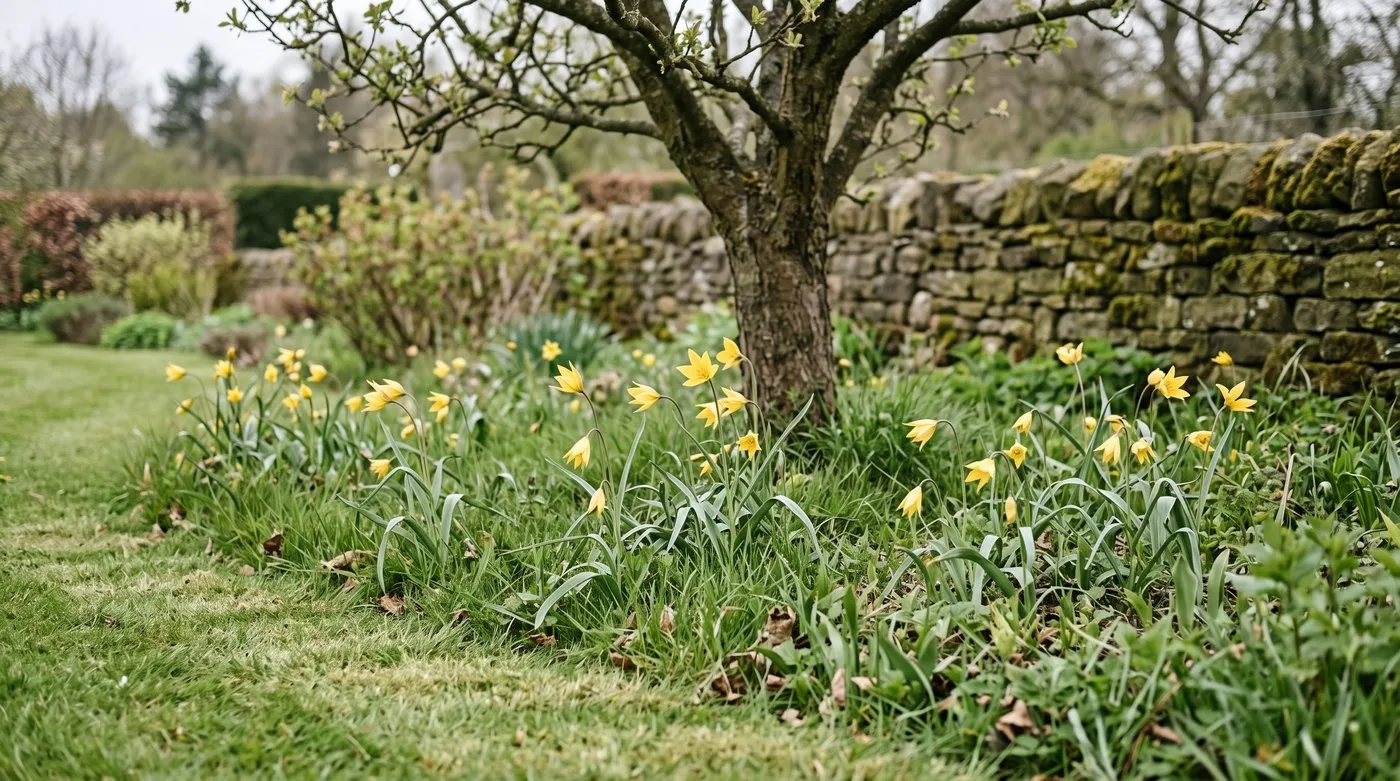
Species tulips like these settle in and spread. Leave the grass unmown for six weeks after flowering so the leaves can feed the bulbs.
What should you do with tulips after flowering?
Snap off the dead flowers and leave the leaves to die back for about six weeks. The leaves feed the bulb for next year, and removing the seed pod stops the plant wasting energy.
Snap the flower head off just below the seed pod, leaving the stem and leaves. A high-potash feed, such as tomato feed, every two weeks until the leaves yellow helps bulbs you want to keep. Then choose:
- Leave them in: best for species tulips and Darwin hybrids in well-drained soil.
- Lift and store: best for hybrids in heavy soil, or where you need the space for summer bedding.
- Compost them: fine for tulips grown as a one-season show, especially in pots.
Don’t tie or knot the leaves while they’re green, as that cuts off the bulb’s food supply.
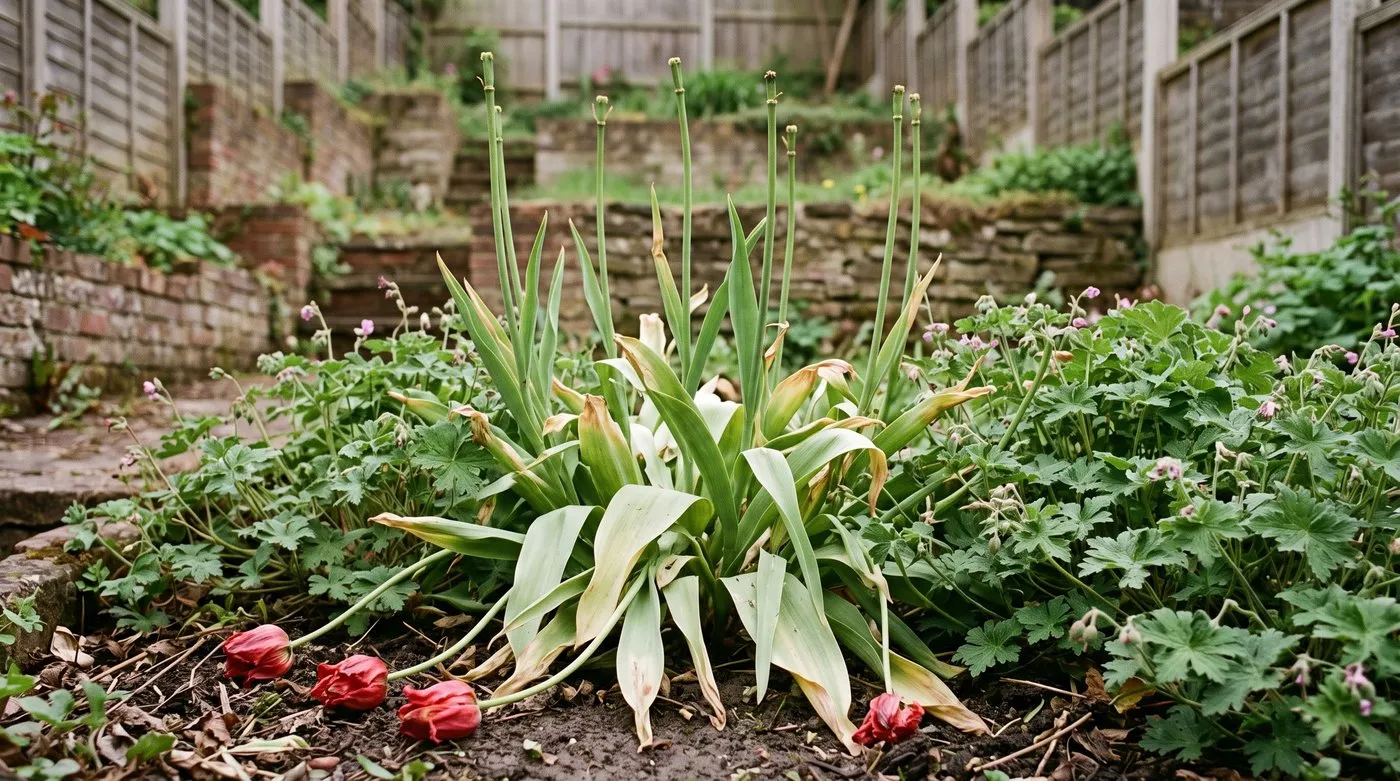
Snap off the flower head but leave the stem and leaves. They feed next year’s bulb for about six weeks.
Month-by-month tulip care calendar
| Month | What to do |
|---|---|
| January | Check stored bulbs and throw out any soft ones |
| February | Spread a thin layer of compost over planted beds |
| March | Watch for shoots. Protect species tulips from slugs with wildlife-friendly pellets |
| April | Enjoy the main show. Stake tall parrot and lily-flowered tulips if wind is forecast |
| May | Snap off dead flowers. Leave the stems and leaves alone |
| June | Leaves yellow and die. Lift hybrid bulbs once the leaves are fully brown |
| July | Clean lifted bulbs and dry them somewhere warm and airy for 2-3 days |
| August | Store dry bulbs in paper bags or open trays somewhere warm. Check them monthly |
| September | Order new bulbs and plan your colours |
| October | Start planting from mid-October once the soil cools |
| November | Finish planting. The best month in most of the UK |
| December | Water pots if they dry out in mild spells |
Lifting and storing tulip bulbs
Lift hybrid tulips in June once the leaves have browned, then dry and store them somewhere warm until autumn. Left in the ground year after year, most hybrids split into small bulbs that give leaves but no flowers, especially in heavy, wet soil.
When to lift
Wait until the leaves have gone fully yellow or brown, usually mid to late June. Don’t cut green leaves, as the bulb still needs them.
How to lift and store
- Fork the bulbs out gently, starting 15cm from the stems so you don’t spear them.
- Shake off loose soil. Don’t wash them.
- Pull off dead leaves and loose outer skins.
- Throw out any bulbs that are soft, mouldy or have dark spots, which could be tulip fire.
- Dry them on a wire rack or open tray somewhere warm and airy for 2-3 days.
- Store in paper bags, net bags or open trays somewhere warm, dark and airy. The RHS tulip growing guide suggests about 18-20°C. Avoid sealed plastic bags, which trap moisture.
- Check them monthly and remove any mouldy ones.
Keep bulbs away from fruit. Ripening apples and other fruit give off a gas that can damage the flower bud inside the bulb.
Species tulips don’t need lifting. Leave them in the ground.
Tulip fire and other diseases
Tulip fire
Tulip fire is the main tulip disease in the UK, and it loves cool, wet springs. Leaves get brown, scorched-looking patches, shoots come up twisted and stunted, and flowers can grow grey mould. It spreads fast in crowded plantings in damp weather.
There’s no spray for home gardeners, so prevention is everything:
- Plant late, in November, when the soil is cold.
- Move your tulips around, waiting at least 3 years before planting tulips where tulip fire struck.
- Space bulbs 10-12cm apart so air can move.
- Bin infected plants straight away. Don’t compost them.
- Water the soil, not the leaves.
- Buy from good suppliers who check their bulbs.
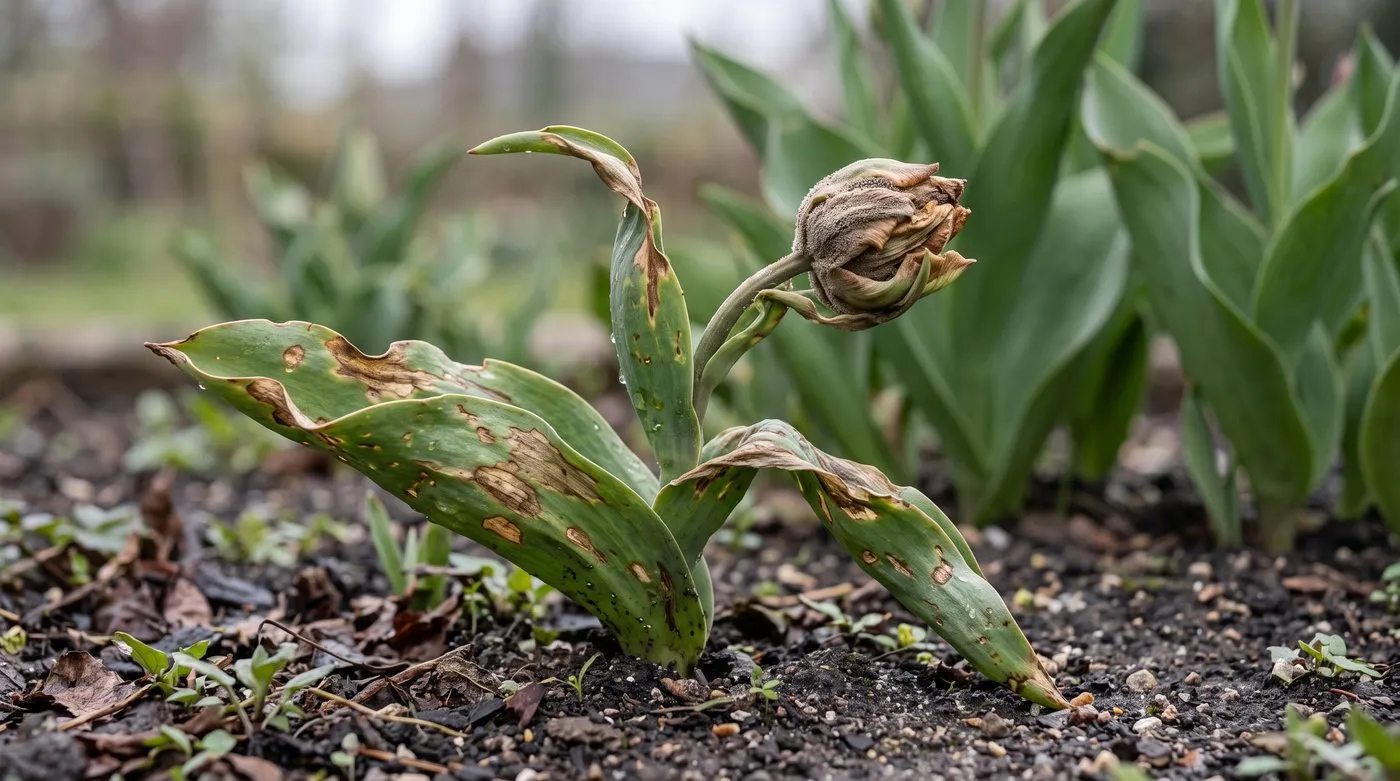
Brown scorched patches and twisted shoots point to tulip fire. Bin the plant, don’t compost it, and plant tulips elsewhere for three years.
Tulip breaking virus
This virus causes streaks of colour in the petals. The famous striped tulips of the 17th-century Dutch tulip craze were caused by it. It weakens plants and is spread by aphids. Today’s striped tulips get their pattern from breeding, not the virus. Pull out any tulips with unexpected streaks and keep aphids in check.
Bulb rot
Several soil fungi make bulbs soft and mushy, in storage or in soggy ground. Good drainage, deep planting and drying bulbs well before storing prevent it. Throw out affected bulbs straight away.
Common mistakes when growing tulips
Planting too shallow
The most common mistake. Shallow bulbs are more at risk from frost and disease, and rarely come back. Always plant 15-20cm deep. If in doubt, go deeper.
Planting too early
It’s tempting to plant tulips in September with the daffodils. But in warm September soil, tulip fire can attack young shoots before the cold arrives. Wait until mid-October at the earliest.
Removing the leaves too soon
Cutting or tying the leaves after flowering starves the bulb. Give them about 6 weeks, and only remove the dead flower heads.
Cramming pots
Too many bulbs in a small pot means smaller flowers and shorter stems. Leave 2-3cm between bulbs, even in a packed pot.
Ignoring drainage
Tulips come from places with dry summers and cold winters. Wet UK winters rot bulbs in heavy, soggy clay. If puddles hang around for more than an hour after heavy rain, add grit or use pots.
Soil preparation for different conditions
Tulips grow in every UK soil type, but heavy clay needs the most help.
Clay soil: Work in sharp grit, about a bucket per square metre, before planting. Add a 5cm layer of grit in the bottom of each hole for the bulbs to sit on, so water doesn’t pool around them. A raised bed is another easy answer. Our guide to improving clay soil has more long-term ideas.
Sandy soil: Great for tulips. It drains well and warms up quickly in spring. It’s not very rich, so add a layer of garden compost each autumn.
Chalky soil: Tulips are happy on chalk, and it drains well. Thin chalky soil may need watering in a dry spring.
Loam: Perfect. Plant straight in, no extra work needed.
Companion planting with tulips
Forget-me-nots, wallflowers, late-starting perennials and grasses all make lovely partners. Good companions hide the fading tulip leaves and keep the border full afterwards.
Forget-me-nots make a blue carpet under tulips. Sow them in the same bed in March or April the year before, and they’ll seed themselves from then on.
Wallflowers add scent and warm colours alongside mid-season tulips. Plant bare-root wallflowers in October, at the same time as the bulbs.
Late-starting perennials such as hostas, hardy geraniums and Japanese anemones push up fresh leaves just as the tulip leaves fade. Alliums planted at the same time flower straight after the tulips in May and June. For drama above the tulips, plant tall Crown Imperial fritillaria at the back of the border.
Ornamental grasses such as Hakonechloa and Stipa tenuissima add movement among the tulip stems and hide the yellowing leaves. For more planting ideas, see our small garden design ideas.
Tulips for cutting
Triumph, lily-flowered and parrot tulips make the best cut flowers. They usually last about a week in a vase, and they keep growing and bending after cutting, which is part of their charm.
Varieties to try: ‘Queen of Night’ (deep purple-black), ‘Ballerina’ (orange and scented) and ‘White Triumphator’ are florist favourites.
When to cut: when the bud is fully coloured but not yet open. Cut in the early morning.
How to cut: use a sharp, clean knife or secateurs. Leave some leaves on the plant if you want the bulb to flower again. Put them straight into cool, clean water, and change it every couple of days.
In the vase: tulips like a cool room. They bend towards the light, so turn the vase each day. Top up the water daily, as they’re thirsty.
Fancy a small cutting garden? Our guide to sowing seeds indoors shows you how to start annual cut flowers early.
Now you’ve got the hang of tulips, read our guide on how to grow alliums in the UK to keep the bulb show going into June.
Frequently asked questions
When should I plant tulip bulbs in the UK?
Plant them from mid-October to late November. That’s later than most spring bulbs, and it helps avoid tulip fire disease. Wait until the soil has cooled down. November is a perfect month for planting tulips in most of the UK.
How deep should I plant tulip bulbs?
Plant them 15-20cm deep, counting from the base. That’s about three times the height of the bulb. Deep planting protects them from frost, helps tall stems stay up and helps them come back next year. Shallow bulbs give smaller flowers.
Can I leave tulip bulbs in the ground all year?
Species tulips can stay in the ground for good. They come back each spring for years. Most big hybrid tulips fade after 2-3 years if left in. For hybrids, lift the bulbs once the leaves die back in June and replant in autumn.
Why did my tulips not flower this year?
Planting too shallow is the most common reason. Shallow bulbs often give leaves but no flowers. Too much shade, soggy soil, not enough winter cold and overcrowding can also stop them flowering.
How do I grow tulips in pots?
Use a pot at least 30cm deep with drainage holes. Fill with 2 parts multipurpose compost to 1 part grit, and plant bulbs 15cm deep, 2-3cm apart. Water once, then only when the compost dries out. Leave the pot outside over winter and move it somewhere sunny in spring.
What is tulip fire and how do I prevent it?
Tulip fire is a fungal disease that loves cool, wet springs. It causes brown scorched patches on leaves, twisted shoots and grey mould on flowers. Plant late, in November, give bulbs space, and don’t plant tulips where tulip fire appeared in the last 3 years. Bin infected plants straight away.
Which tulip varieties come back every year in the UK?
Species tulips are the most reliable at coming back. Tulipa sylvestris, T. sprengeri, T. clusiana and T. tarda all settle in well. Among the bigger tulips, Darwin hybrids such as ‘Apeldoorn’ and ‘Oxford’ return better than most, especially when planted deep.
Our team produces practical UK gardening guidance from source research, contributor records and established horticultural practice. Editorial standards are overseen by Matt W.


