
Key takeaways
- Plant bulbs in October or November, three times as deep as the bulb is tall
- Give them full sun and soil that drains well, as wet ground rots them
- Fully hardy, so leave them in the ground all year
- Flowers from May to July, then seedheads that last into winter
- Plant among low perennials to hide the fading leaves
Ornamental alliums are cousins of onions, garlic and chives, grown for their flowers rather than the kitchen. You get perfect purple, white or pink balls held high above the border from May into July. If you already grow tulips or daffodils, alliums carry the colour on into early summer.
Best of all, they ask for very little. Plant them once in autumn and they come back year after year. They’re fully hardy, and slugs and rabbits tend to leave them alone. Even the faded seedheads look great through autumn and winter. For the full autumn planting timetable, see our guide on when to plant spring bulbs in the UK.
Which allium varieties are best for UK gardens?
There are lots of alliums, but a handful are the real garden favourites.
Purple Sensation is the most popular. It grows to about 90cm with deep purple balls in late May. It holds the RHS Award of Garden Merit and spreads well. Pick this one for big impact with little fuss.
Globemaster has some of the biggest heads, up to 20cm across on 1m stems. It flowers in June, a little later than most, and also holds the Award of Garden Merit. The violet heads look amazing with silver-leaved plants.
Allium christophii grows just 50cm tall but carries huge, starry, silvery-purple heads. Its dried seedheads are the best of the bunch for winter, often lasting into January. Lovely at the front of a border.
Allium sphaerocephalon, the drumstick allium, has small egg-shaped heads that turn deep burgundy in late June and July. At about 60cm, it weaves beautifully through grasses and perennials.
Allium giganteum is the giant, up to 1.5m tall with bright purple balls in June. Plant groups of five or seven at the back of a big border.
Mount Everest is a lovely white allium, about 1m tall with clean white heads in late May and June. It looks great with blue delphiniums.
Allium varieties at a glance
| Variety | Height | Head size | Colour | Flowers | Best use |
|---|---|---|---|---|---|
| Purple Sensation | 90cm | Medium | Deep purple | Late May | Borders, pots |
| Globemaster | 1m | Very large | Violet | June | Star plant in a border |
| A. christophii | 50cm | Very large | Silvery purple | May-June | Front of border, drying |
| A. sphaerocephalon | 60cm | Small, oval | Burgundy | June-July | Through grasses |
| A. giganteum | 1.5m | Medium | Bright purple | June | Back of a big border |
| Mount Everest | 1m | Medium | White | Late May-June | Mixed borders |

Allium Purple Sensation with lavender in a cottage border. It’s the allium you’ll see most often in British gardens.
When to plant allium bulbs
Plant allium bulbs from mid-October to November, the same time as tulips. The soil should be workable, not soggy or frozen.
There’s no need to wait, so plant them as soon as they arrive. Just don’t leave them sitting in the shed past the end of November, as they start to dry out.
Mix a few varieties for a longer show. Purple Sensation and A. christophii start things off in May. Globemaster and A. giganteum follow in June, and drumstick alliums finish in late June and July. Our spring gardening jobs guide has reminders for when your alliums start poking through.
Allium month-by-month calendar
| Month | What to do |
|---|---|
| September | Buy bulbs early, as popular ones sell out |
| October | Plant bulbs deep in sunny, well-drained soil |
| November | Finish planting. Add a light mulch on very cold sites |
| December-February | Nothing to do, the bulbs are resting |
| March | First shoots appear. Watch for slugs on early ones |
| April | Stems shoot up. Stake A. giganteum in windy spots |
| May | Purple Sensation and A. christophii flower |
| June | Globemaster and A. giganteum flower. Drumsticks start |
| July | Drumsticks at their best. Leave seedheads standing |
| August | Leaves have died back. Mark crowded clumps to divide |
| September | Divide crowded clumps. Order more bulbs |
How to plant allium bulbs
Alliums need three things: full sun, soil that drains well, and the right planting depth. Get those right and the rest is easy.

Planting alliums in October, each bulb set three times its own height deep.
Depth: Plant each bulb three times as deep as it is tall. A 5cm bulb goes in with its base 15cm down.
Spacing: Plant bulbs 15-20cm apart for a natural drift. Skip straight rows and plant in odd-numbered groups of five, seven or nine.
Drainage: Alliums rot in soggy soil. If your ground stays wet in winter, use a raised bed or put a good handful of grit in each hole.
Partners: The tricky bit with alliums is their leaves. They look fine in spring but start yellowing as the flower stem grows. Plant alliums among low perennials that grow up to hide them, like catmint, hardy geraniums, Salvia nemorosa or low grasses. This fits perfectly into a cottage garden planting plan.
Alliums also look lovely after the taller bells of Crown Imperial fritillaria, which finish just as alliums open. For a change of shape, foxtail lilies send tall spires above allium heads in June and like the same sun and sharp drainage.
Bees and hoverflies love allium flowers, so they sit happily with other bee-friendly garden plants.
Looking after alliums
Once they’re in, alliums need almost nothing from you.
Watering: Water once after planting. After that, bulbs in the ground rarely need watering except in a very dry spring. Too much water is a bigger danger than too little. The RHS allium growing guide is a good extra read.
Feeding: On poor soil, a little balanced granular feed in spring helps. On ordinary garden soil, skip it. Avoid high-nitrogen feeds, which give you leaves instead of flowers.
Deadheading: Up to you. Snip off faded flowers if you don’t want seedlings, as some kinds seed freely. If you’d like seedheads for winter or drying, leave them on. Those of A. christophii and Globemaster are well worth keeping.
Lifting: No need. Alliums are fully hardy and happiest left alone. Clumps bulk up over the years. If flowering drops off in a crowded clump, divide it in September.
Allium seedheads for winter

Globemaster and drumstick alliums weaving through grasses and perennials in a mixed border.
After flowering, allium heads dry on their stems, fading from green to a warm, papery brown. A. christophii heads turn into lovely starry shapes, and Globemaster balls often hold together into November.
Leave them standing. They catch frost and low winter sun, and finches and other small birds eat the seed. Cut them down in early March before new growth starts, or just let new shoots grow up through them.
For more on planting for wildlife, see our guide to companion planting, which covers good combinations for pollinators and pest control.
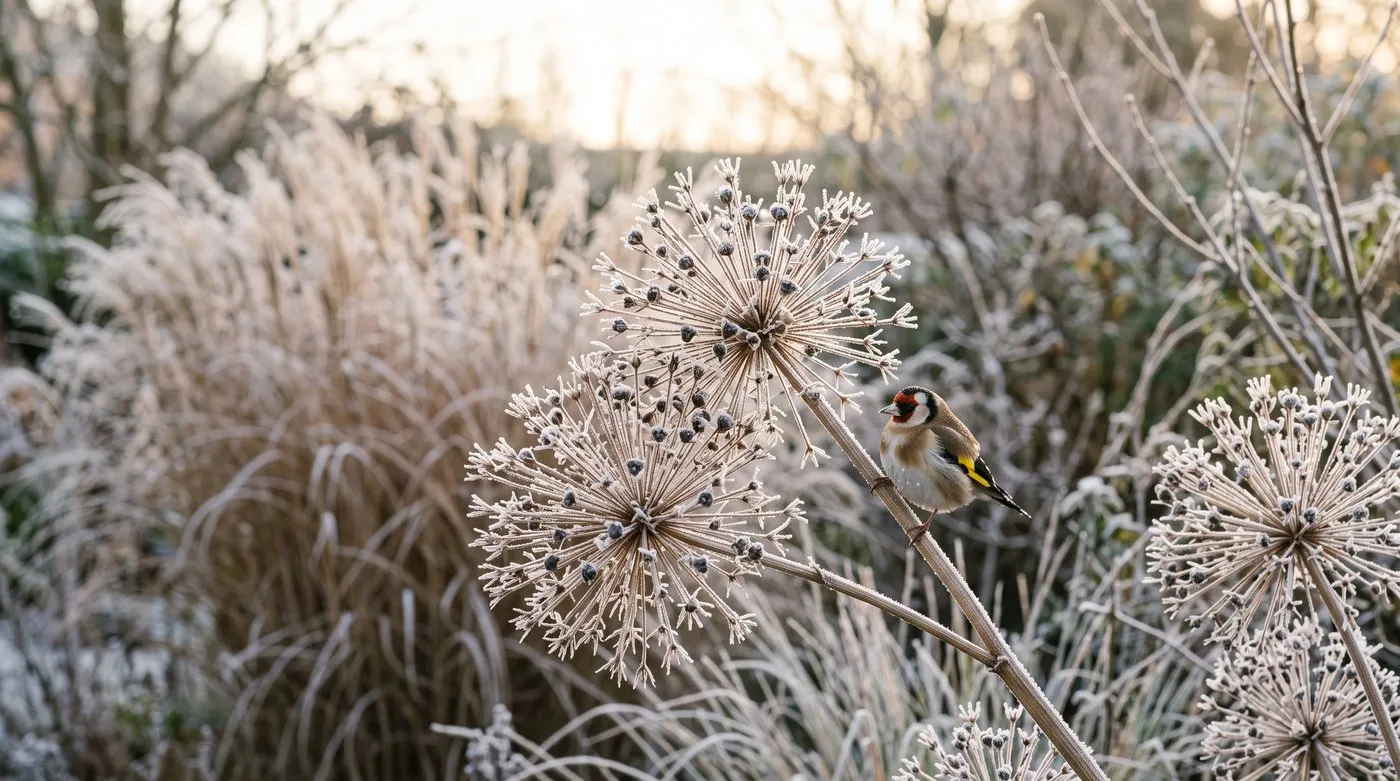
Leave allium seedheads standing over winter. They catch the frost beautifully, and finches pick at the seeds on cold days.
What can go wrong with alliums?
Not much. Alliums are one of the easiest bulbs you can grow.
Bulb rot is the main problem, and it’s almost always down to wet soil. If bulbs don’t come up in spring, dig down and look. Rotten bulbs are soft and dark. Improve the drainage with grit or a raised bed, or move them somewhere sunnier and drier.
Allium leaf miner is a small fly whose maggots tunnel through the leaves in spring. Ornamental alliums usually suffer less than leeks and onions, but the damage can look messy. If it’s been a problem before, cover new shoots with insect mesh in March.
White rot is a soil-borne disease that can stay in the ground for many years. If you’ve had it in your onions, garlic or leeks, don’t plant ornamental alliums in the same spot. Our guide to growing onions explains how to spot it.
Self-seeding can be generous with drumstick alliums and A. christophii. Seedlings take a few years to flower. If you’d rather they didn’t spread, snip off the heads before the seeds ripen.
Ready for more autumn planting? Our guide on when to plant spring bulbs in the UK covers every bulb in one place.
Related articles:
- When to plant spring bulbs in the UK
- How to grow tulips in the UK
- How to grow daffodils in the UK
- Bee-friendly garden plants
- Companion planting guide
Frequently asked questions
When should I plant allium bulbs in the UK?
In October or November, before the ground freezes. That gives the roots time to settle before winter. October is ideal in most of the UK, and November is fine too. Don’t plant into waterlogged or frozen soil.
How deep should I plant allium bulbs?
Three times as deep as the bulb is tall. So a 5cm bulb goes in with its base 15cm down. Deep planting helps tall varieties like Allium giganteum stay upright. Measure from the bottom of the hole.
Do alliums come back every year?
Yes, they’re reliable perennials in UK gardens. They’re fully hardy and don’t need lifting. Most varieties slowly bulk up into bigger clumps over the years. Leave them undisturbed for the best show.
Why do allium leaves die back while the plant is still flowering?
It’s completely normal and not a disease. Allium leaves often yellow as the flower stems grow. To hide them, plant alliums among mid-height perennials like catmint, hardy geraniums or salvia, which fill in around the base just as the flowers open.
Can I grow alliums in pots?
Yes, shorter ones like drumstick alliums and Allium christophii do well. Use a pot at least 30cm deep with drainage holes. Fill it with two parts multipurpose compost to one part grit. Plant bulbs 15cm deep, water once, and keep the pot in a sunny spot.
Which alliums are best for cutting and drying?
Allium christophii, Globemaster and Purple Sensation are all great picks. They last well in a vase. To dry, cut the heads once the seed pods have formed and hang them upside down somewhere dry and airy for a few weeks. Dried heads keep their shape for a long time.
Do alliums attract pollinators?
Yes, bees and hoverflies love them. Bumblebees, honeybees, hoverflies and butterflies all visit the flowers. Later-flowering kinds like drumstick alliums keep food coming into midsummer.
Our team produces practical UK gardening guidance from source research, contributor records and established horticultural practice. Editorial standards are overseen by Matt W.


