Key takeaways
- Foxtail lilies flower in June and July on spikes about 1m to 2.5m tall
- Plant bare crowns in September or October, in full sun and very well-drained soil
- Spread the brittle roots flat on a mound of sharp sand or grit, bud about 5-10cm down
- Wet winter soil rots the crown, so raise it up or add grit on heavy clay
- Stake tall spikes while they are still short, and mark where crowns are
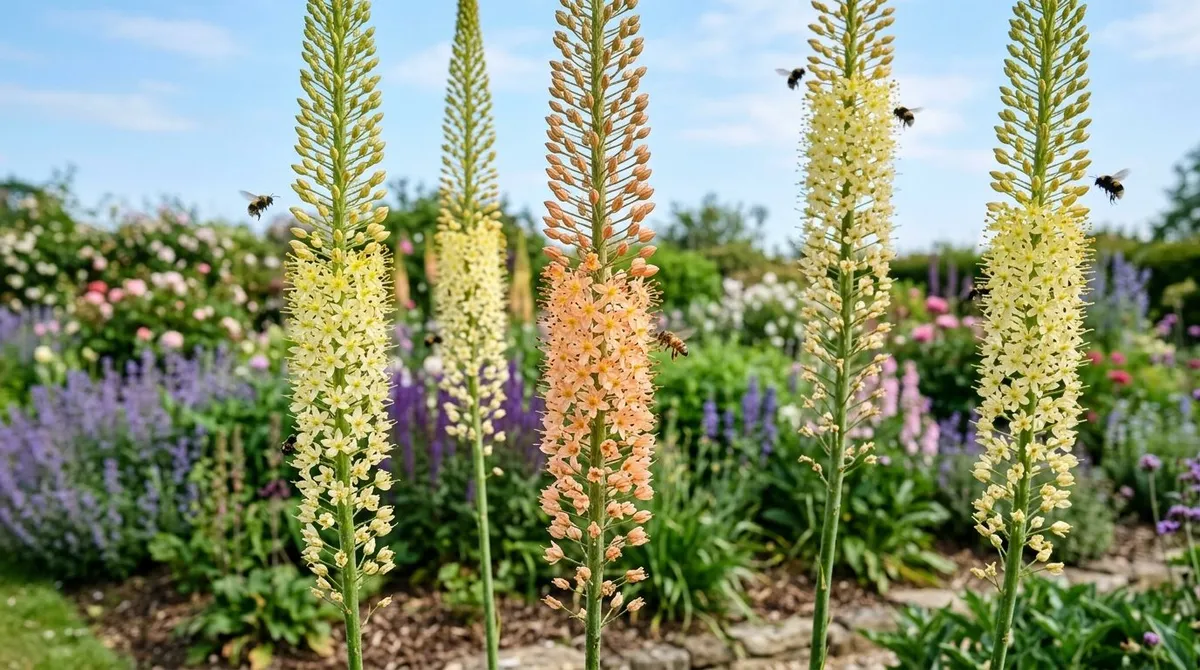
Eremurus, the foxtail lily, gives you some of the tallest, most dramatic spikes in the summer garden. Each spike is packed with hundreds of tiny starry flowers that open from the bottom up. Bees love them.
They come from dry, sunny steppes in Central Asia. So two things matter most in a British garden: sharp drainage and a sunny, fairly sheltered spot. Get those right and a crown comes back every year. This guide covers choosing a variety, planting the odd starfish-shaped crown, staking and getting it through a wet winter. For a quick explainer on how its crown differs from a true bulb, see bulbs, corms, tubers and rhizomes explained.
Which foxtail lily should you grow?
Pick by height first. The giant Eremurus robustus can top 2.5m and needs a big border. Shorter types around 1-1.5m suit most gardens and stand up to wind far better.
| Variety | Height | Flower colour | Good for |
|---|---|---|---|
| E. robustus | About 2.5m | Soft pink | Back of a large, sheltered border |
| E. himalaicus | About 1.5-2m | White | Earliest to flower, late May to June |
| E. stenophyllus | About 1m | Golden yellow | Smaller gardens, windier spots |
| ’Cleopatra’ | About 1.2-1.5m | Orange | Strong colour in a sunny border |
| ’Romance’ | About 1.2-1.5m | Salmon pink | Soft colour with grasses |
If you only grow one, try E. stenophyllus. It is shorter and sturdier than the giants, and the yellow spikes show up from across the garden.
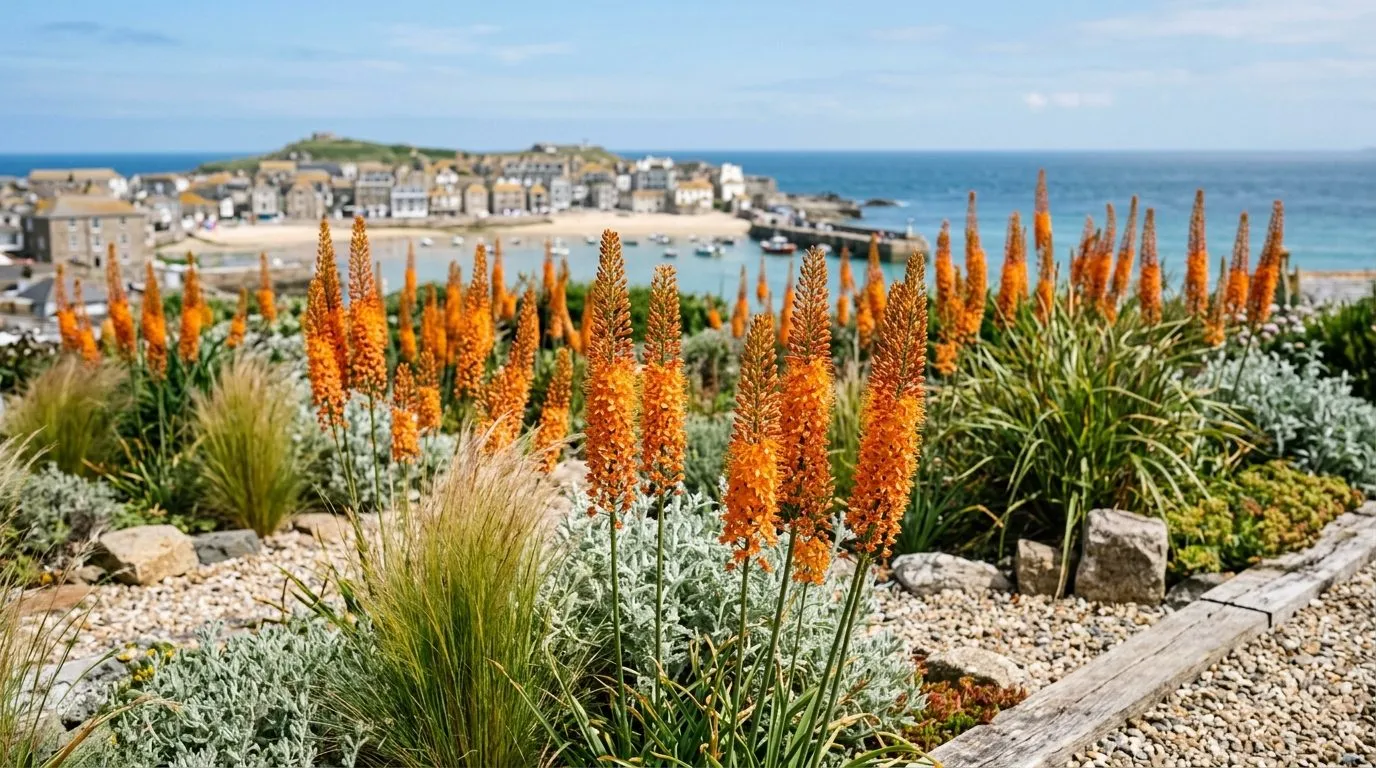
Foxtail lilies love a hot, gravelly spot like this. Seaside gardens with free-draining soil suit them well.
Why drainage matters so much
Eremurus dies from wet, not cold. The crown is a brittle “starfish” of fleshy roots around a central bud. If it sits in cold, wet soil all winter, the roots soften and rot.
On light, sandy or stony soil, you are off to a good start. On heavy clay, plant on a generous mound of grit and sand, or in a raised bed or slope where water runs away. The guide to improving clay soil explains how to open up heavy ground first. A sunny gravel garden is about as close to its native home as you’ll get.
How to plant an Eremurus crown
Plant bare crowns in September or October, so the roots settle before winter. Pot-grown plants can go in during spring.
- Choose your sunniest spot, ideally with a wall or hedge for shelter.
- Dig a wide, shallow hole, about 30cm across.
- Put a layer of sharp sand or grit in the bottom and shape it into a low mound.
- Sit the crown on top, bud upwards. Spread the roots out flat like a starfish.
- Cover so the bud sits about 5-10cm below the surface. Use soil mixed with grit.
- Firm gently and water once to settle it.
- Mark the spot with a cane straight away.
Space crowns about 45-60cm apart, or wider for the giant types. Handle them gently, as the roots snap easily.

Spread the roots out flat over the grit. They run sideways like a starfish, so dig wide rather than deep.
Where to plant foxtail lilies
Give them full sun for most of the day. In shade the spikes are weak, lean and flower poorly.
Shelter matters too, because a tall spike catches the wind. A sunny bed backed by a wall or hedge is ideal. They look great rising out of lower plants such as grasses, sea hollies and alliums, which also hide the leaves as they fade. For partners that like the same dry conditions, see the guide to drought-tolerant plants.
Staking tall spikes
Stake tall varieties in all but the most sheltered gardens. A long spike with a heavy flower head can snap in a summer gust.
Push a sturdy cane in beside each spike while it is still short, in May. Angle it in a little away from the crown so you miss the roots. Tie the stem loosely with soft twine every 30cm or so as it grows. Shorter types such as E. stenophyllus often need no support in a sheltered spot.
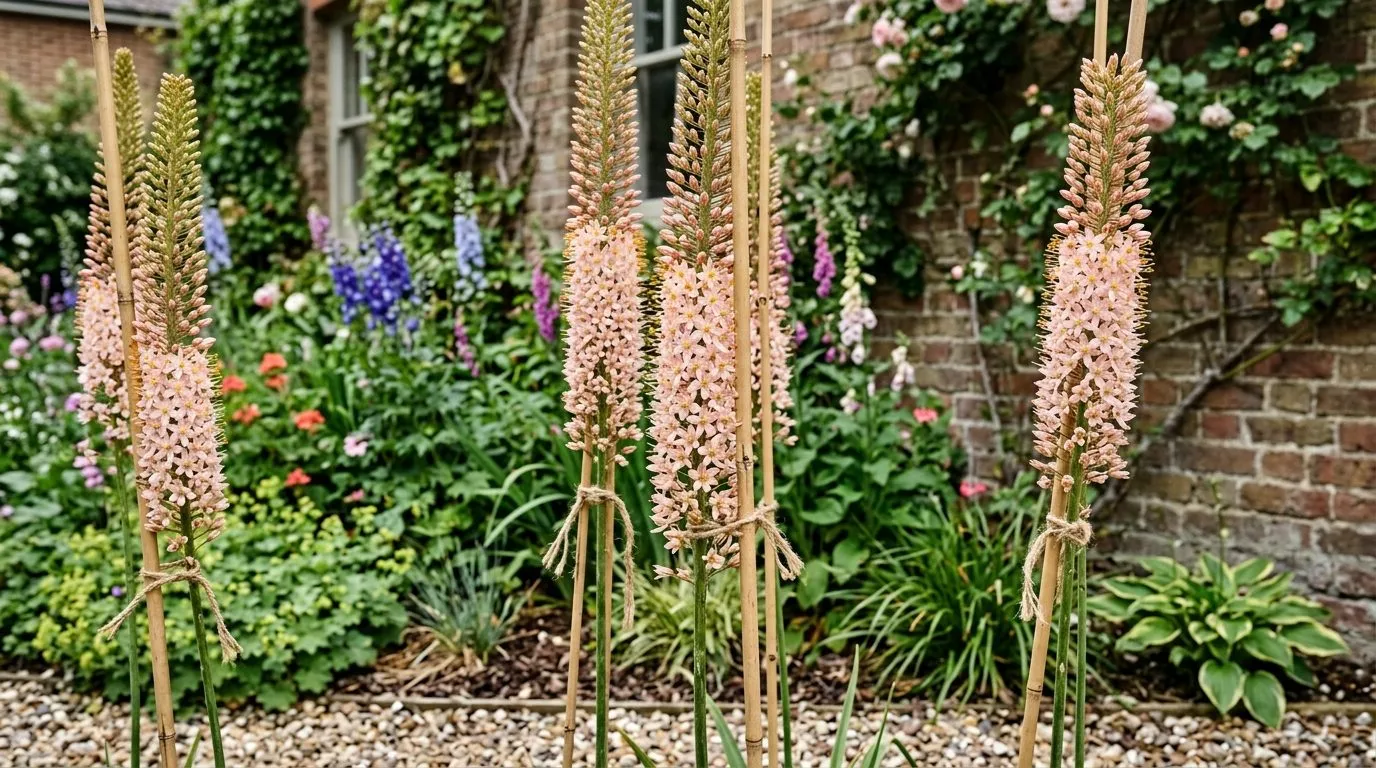
Tie spikes loosely to canes as they grow. Doing it early is far easier than rescuing a bent stem later.
Feeding and early spring care
Foxtail lilies don’t need much feeding. A sprinkle of general fertiliser as the leaves appear in spring is plenty on poor soil. Too much nitrogen gives soft, floppy growth.
The fat new shoots appear early, often in March. They are a favourite with slugs, and a late frost can scorch them. A ring of grit helps with drainage and makes the shoots easier to watch. On frosty nights, cover them with fleece. The guide to getting rid of slugs has more ways to protect them.
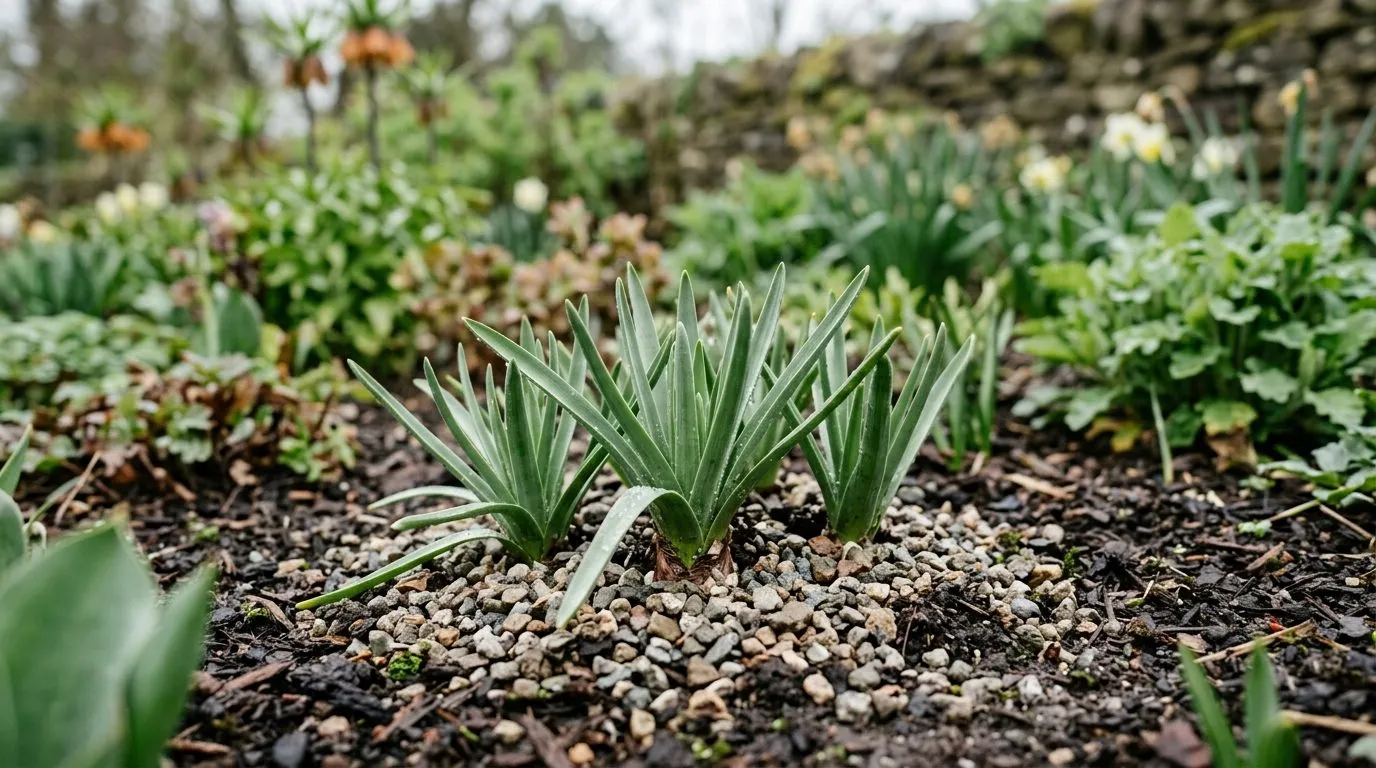
The strappy leaves come up early in spring. Keep an eye out for slugs and late frosts on fresh shoots.
Why the leaves die back in summer
Don’t panic when the leaves turn yellow and die back, even as the plant flowers. This is normal. The crown goes dormant by late summer and there is nothing to see until next spring. That is why a marker cane matters. It stops you spearing the crown with a fork in autumn.
Once the flowers fade, you can cut the spike off or leave it for the seed heads. Bees and hoverflies will have had a feast by then.
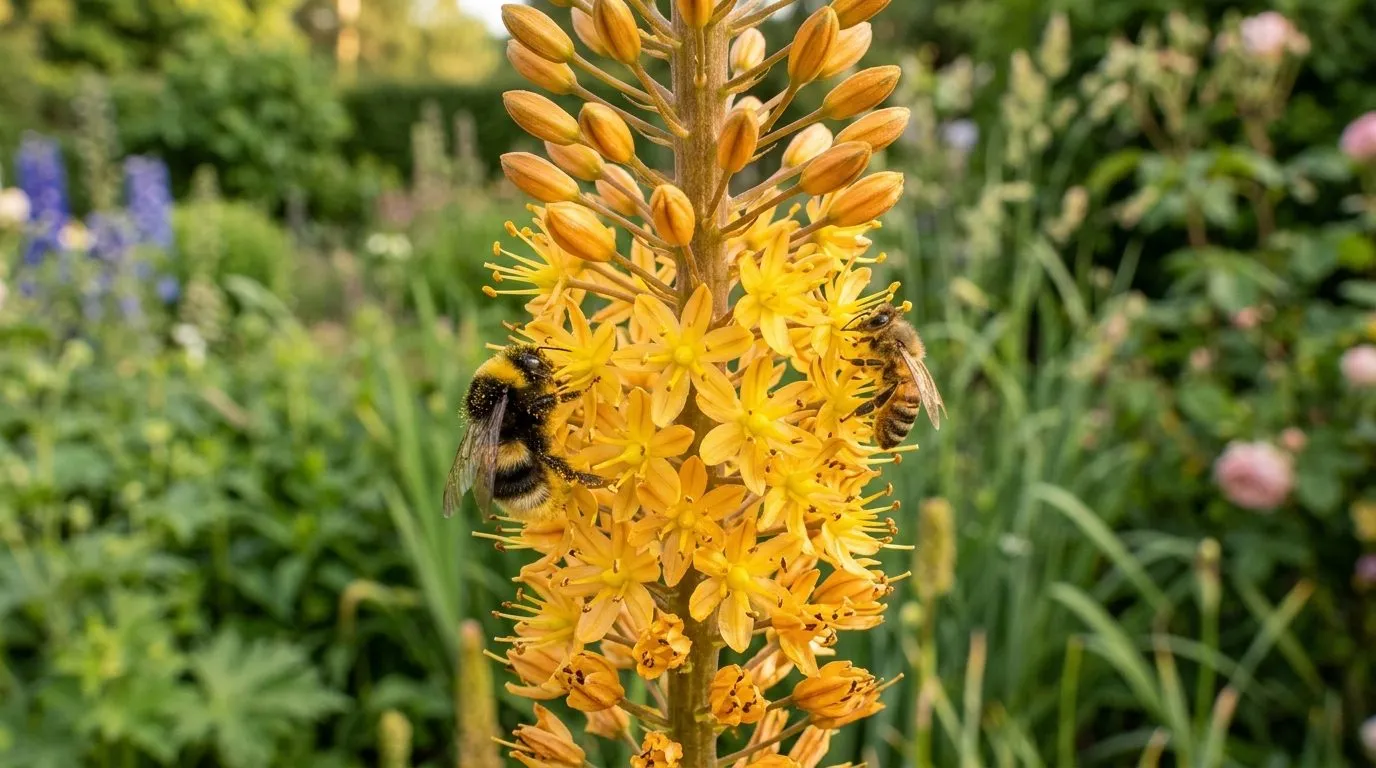
The flowers open from the bottom up over a few weeks. Bees work their way up the spike as it goes.
Dividing and growing from seed
Divide congested crowns in late summer, as the leaves die back. Lift the whole crown with a fork, digging well out from the centre. Gently pull apart pieces that each have a bud and some roots. Replant straight away on grit. Divided crowns often skip flowering for a year.
You can also sow fresh seed in autumn in gritty compost and leave the pot outside for the winter cold. It is cheap but slow, as seedlings take several years to flower.
Growing Eremurus in pots
A pot gives you full control of drainage, which helps on wet clay. Use a wide, deep pot with good drainage holes. Fill it with a loam-based compost such as John Innes No 3, mixed with plenty of grit. Pick a shorter variety.
In winter, move the pot against a sheltered wall or into a cold greenhouse to keep off the worst of the rain.
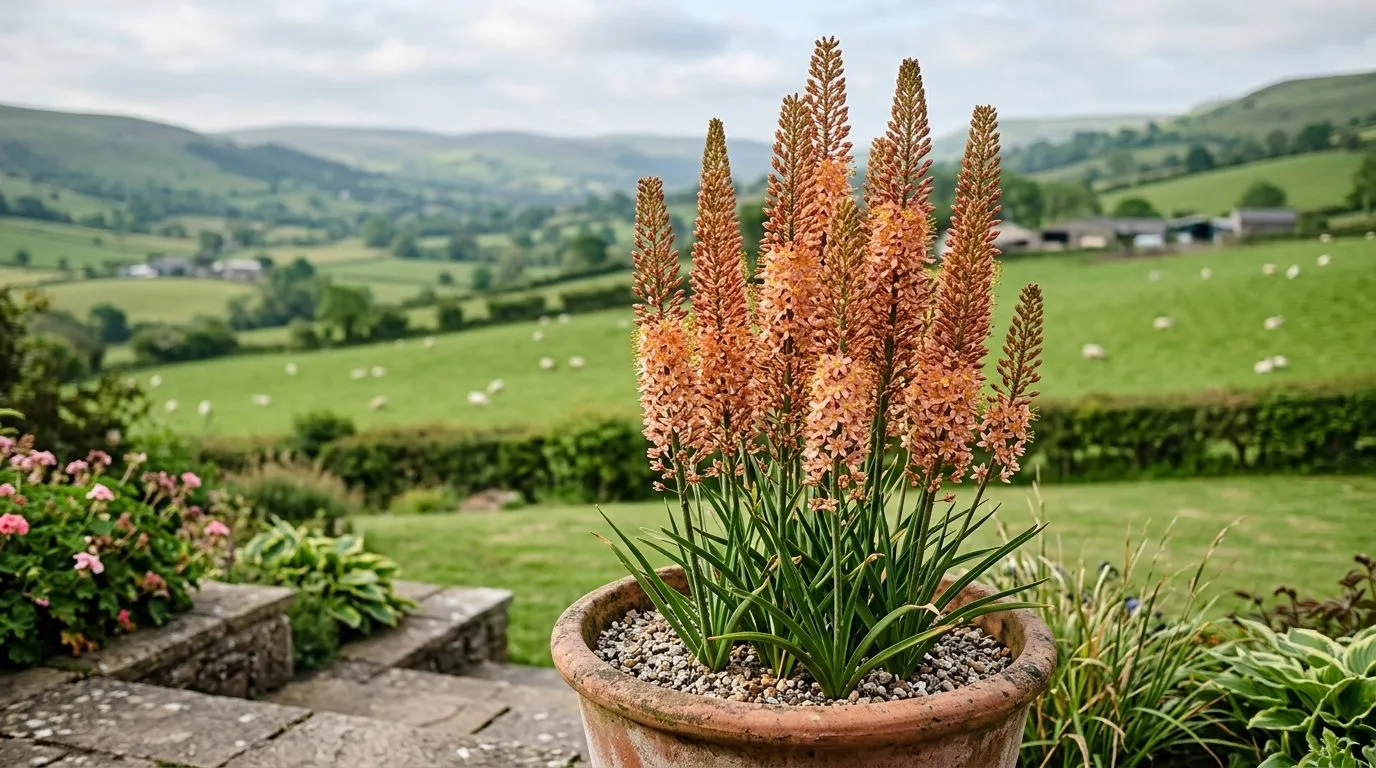
A wide pot of gritty compost keeps the crown dry. Shorter varieties are far less top-heavy.
Foxtail lily calendar
| Month | What to do |
|---|---|
| March | Shoots appear. Check for slugs and fleece on frosty nights |
| April | Light feed if needed. Push canes in beside tall types |
| May | Tie in spikes as they grow |
| June | Main flowering for most varieties |
| July | Later varieties flower. Cut spent spikes or leave for seed |
| August | Leaves die back. Divide congested crowns |
| September | Plant new crowns on grit |
| October | Finish planting. Keep crowns on clay as dry as you can |
| November to February | Leave alone. Keep markers in place |
Common mistakes with foxtail lilies
- Planting too deep. A deeply buried crown sulks or rots. Keep the bud about 5-10cm down.
- Planting in wet clay. Without grit and a raised spot, the crown sits wet and rots over winter.
- Too much shade. It needs full sun to flower well.
- Forgetting where it is. The crown vanishes in summer, so mark it before you lose it.
- Staking too late. Put canes in while spikes are short.
Frequently asked questions
Why is my Eremurus not flowering?
Usually it is too shady, too wet or planted too deep. It needs full sun and a shallow, well-drained spot. Newly moved or divided crowns often skip a year, and seed-raised plants take several years to flower.
Will Eremurus survive winter in the UK?
Yes, the crown copes with cold as long as it stays fairly dry. Wet winter soil is what rots it. On heavy clay, plant on grit in a raised spot, or grow it in a gravel garden.
How deep do you plant Eremurus crowns?
Plant shallowly, with the bud about 5-10cm below the surface. Dig a wide hole, make a mound of sharp sand or grit and spread the roots over it. The roots run outwards, not down.
Is a foxtail lily a real lily?
No, it isn’t a true lily. Foxtail lily and desert candle are common names for Eremurus. It belongs to the asphodel family, not the lily family.
How do you stake a foxtail lily?
Put a tall cane in beside each spike while it is still short. Push it in a little away from the crown to miss the roots. Tie the stem loosely as it grows.
Can you grow Eremurus in pots?
Yes, if the pot is wide and very free-draining. Use a gritty, loam-based compost and a shorter variety. Move the pot somewhere sheltered from winter rain.
Foxtail lilies look wonderful with round allium heads at their feet, so read the guide to growing alliums next. There’s more inspiration in the plants hub.
Our team produces practical UK gardening guidance from source research, contributor records and established horticultural practice. Editorial standards are overseen by Matt W.