
Key takeaways
- Curry plant is a silver ornamental shrub, not the curry leaf used in Indian cooking
- Plant in full sun and gritty, free-draining soil. It loves dry spots once settled
- Wet winter soil is what kills it, so add grit or plant on a mound on clay
- Trim off faded flowers in late summer and shape the plant in spring
- Never cut into old, bare wood, as it rarely regrows from there
- Take cuttings in summer so you always have a spare plant
Curry plant is a small, silver-leaved shrub whose leaves smell just like curry powder when you brush past. Give it full sun and gritty, free-draining soil, trim it once or twice a year, and it stays a neat silver mound for years. It flowers in summer with clusters of mustard-yellow buttons.
The name catches people out, though. Curry plant (Helichrysum italicum) is grown for looks and scent, not for cooking. And the one thing that kills it in a British garden is wet soil in winter. Get those two points sorted and it’s an easy, tough plant.
Is curry plant the same as curry leaf?
No. Helichrysum italicum is the curry plant, a low silver shrub from the dry hills of southern Europe. It’s grown in UK gardens for its foliage and smell.
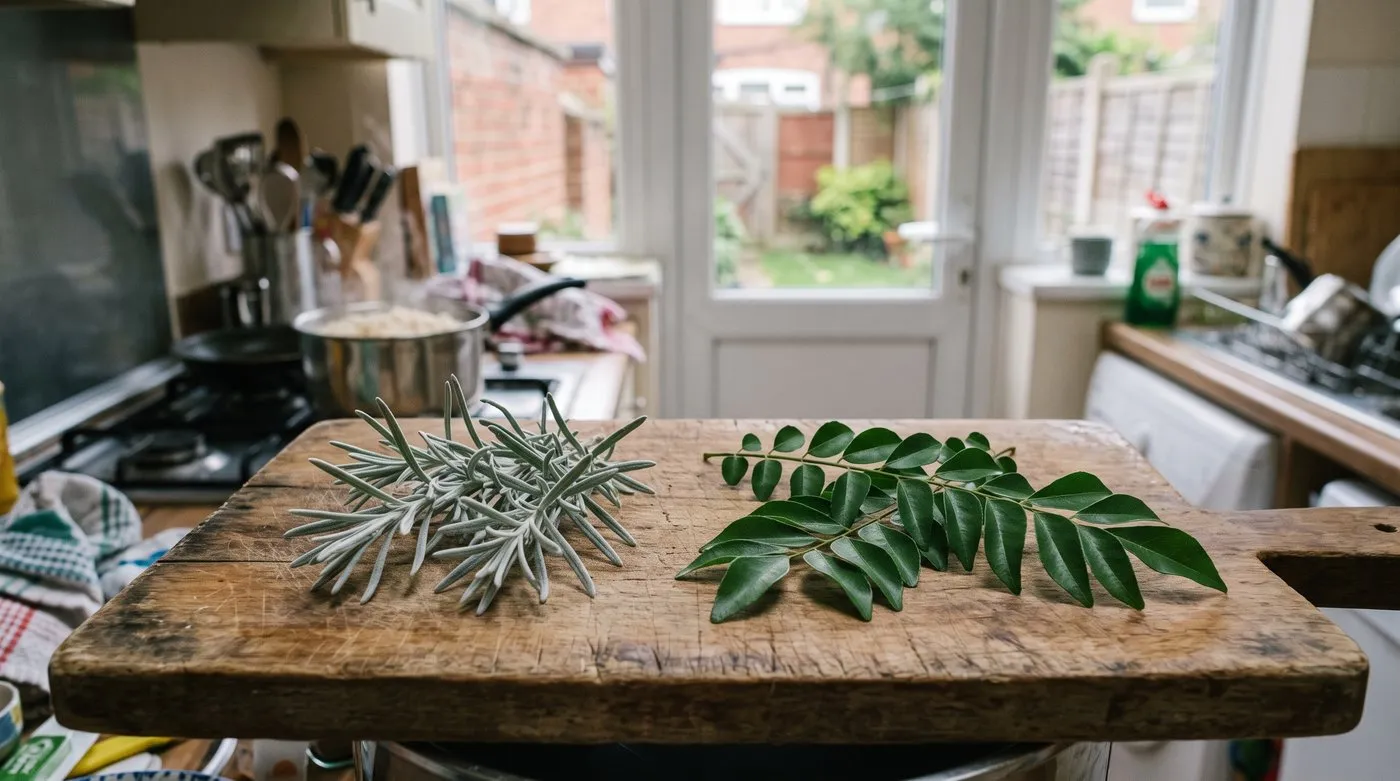
Silver and needle-thin on the left, glossy and green on the right. Only the green curry leaf belongs in the pot.
The plant you want for real curries is Murraya koenigii, the curry leaf tree. Its glossy green leaves are used in South Indian cooking. It’s tender, so in the UK it lives in a pot indoors for most of the year. If you came here to cook, the guide to curry leaf plant care is the one you need.
You can use a sprig of curry plant to scent food. Pop a 5cm sprig into rice or a stew while it cooks, then lift it out before serving, as you would a bay leaf. Don’t eat the leaves or use them in place of curry leaves in a recipe. They taste bitter and medicinal.
Where to plant curry plant
Plant curry plant in full sun and poor, gritty, free-draining soil. The sunnier and drier, the happier it is.
- Sun: a bright, open spot keeps the leaves silver and the plant compact. In shade it goes green, soft and floppy.
- Soil: sandy and chalky soils suit it well. The guide to plants for sandy soil shows the kind of company it likes.
- Clay: dig in plenty of grit, plant on a slight mound and mulch with gravel. A raised bed or a big pot is often easier.
- Feeding: none. Rich soil makes soft, leggy growth.
It’s at home in a gravel garden, a dry border or a seaside garden. The silver leaves cool down hot colours and look lovely next to purples.

Plenty of grit and a gravel top layer keep the crown dry. A raised bed is a handy fix on heavy soil.
How to stop curry plant dying in winter
Curry plant copes with ordinary UK frosts. What kills it is cold, wet soil sitting around the roots, which rots them by late winter.
So drainage is everything. On heavy ground, raise the plant on a mound of gritty soil and keep a gravel mulch around the crown. Rake fallen leaves off the plant in autumn so it doesn’t stay damp. In a very wet or cold garden, a plant in a pot can move against a house wall or under the eaves for winter.
Don’t cut curry plant back hard in autumn. The leafy growth helps shelter the crown through winter. Wait until spring to shape it.
Gardener’s tip: Take a few cuttings each summer. They root easily, so you’ll always have a young plant ready if an old one doesn’t make it through a bad winter.

Wind, salt and stony soil don’t bother it. It’s soggy ground that curry plant can’t stand.
How and when to trim curry plant
Trim curry plant twice a year: a light tidy after flowering, then a shaping trim in spring. Without it, the plant soon goes bare at the base and sprawls.
- In late summer, when the yellow flowers fade, snip off the old flower stems.
- In spring, once you see fresh shoots appearing, trim the plant back into a neat dome.
- Cut only into the soft, leafy growth, and leave some leaves on every stem.
- Never cut into the old, bare wood at the base. It rarely regrows from there.
If a plant has already gone woody and leggy, it’s kinder to replace it with a young one from a cutting. The same rules apply to lavender, which goes bare in just the same way when it’s left untrimmed.

Snip into the soft, leafy growth only. Stay above the bare wood at the base and it will bush out nicely.
How to take curry plant cuttings
Take cuttings of this year’s shoots in summer. Curry plant roots easily, so it’s simple to keep a spare.
- Choose healthy shoots that are firm at the base but still soft at the tip.
- Cut 8-10cm pieces just below a leaf joint.
- Strip the leaves from the lower half.
- Push them around the edge of a pot of gritty compost.
- Keep them out of hot sun and only just moist.
Most root within a few weeks. Pot them up on their own, keep them in a cold frame or porch for their first winter and plant out in spring. The guide to plant propagation covers the method in more detail, and the RHS guide to semi-ripe cuttings is also helpful.

A tray of summer cuttings like this gives you plenty of spares for winter insurance, or to share.
Growing curry plant in a pot
A pot is a great way to grow curry plant on heavy clay, because you control the drainage. Choose a terracotta pot at least 30cm across with good drainage holes.
Mix plenty of grit or perlite into peat-free compost. Stand the pot on feet so water runs straight out. Put it on a sunny patio or by a warm wall. Water only when the top few centimetres are dry, and hardly at all from October to March. Never leave the pot standing in a saucer of water.

Pot feet let water drain away freely. That’s the secret to keeping a potted curry plant alive through winter.
Curry plant through the year
| Month | What to do |
|---|---|
| March and April | Trim into a neat dome once new shoots appear |
| May | Plant new plants and rooted cuttings |
| June and July | Flowers open. Water first-year plants in dry spells |
| July and August | Take cuttings |
| August and September | Snip off faded flower stems |
| October | Top up the gravel mulch. Clear fallen leaves from the crown |
| November to February | Keep the crown dry. Move pots to a sheltered spot |
Common mistakes with curry plant
- Planting in wet clay. Roots rot over winter. Add grit, plant on a mound and mulch with gravel.
- Skipping the trim. The plant goes bare and woody. Trim after flowering and again in spring.
- Cutting into old wood. Bare stems rarely regrow. Stay in the leafy growth.
- Too much care. Rich soil, feeding and lots of water give soft, floppy growth. Curry plant likes it tough.
- Using it as a curry leaf. It’s for scent only. Grow Murraya koenigii for cooking.
Looking for good partners? Curry plant pairs well with other sun-lovers from the drought-tolerant plants list. For another tough, silvery-green shrub to grow beside it, read the guide to growing rosemary, or browse more ideas in the plants hub.
Frequently asked questions
Can you cook with curry plant?
Only for scent, and you take it out before eating. A sprig in rice or a stew adds a mild curry aroma. The leaves themselves taste bitter, so remove the sprig like a bay leaf. For real curry leaves, grow Murraya koenigii instead.
Is curry plant the same as the curry leaf plant?
No, they are completely different plants. Curry plant is Helichrysum italicum, a silver shrub grown for looks and scent. The curry leaf plant is Murraya koenigii, a tender tree whose green leaves flavour Indian cooking.
Is curry plant hardy in the UK?
Yes, in most of the UK, as long as the soil drains well. Cold rarely kills it, but wet winter soil rots the roots. Add grit on clay and keep a spare plant from cuttings in case of a hard, wet winter.
Why is my curry plant going woody and leggy?
It usually hasn’t been trimmed, or the soil is too rich. Trim off old flowers in late summer and shape it each spring. Never cut into bare wood. If it has gone very woody, replace it with a young plant grown from a cutting.
How do you propagate curry plant?
Take cuttings of this year’s shoots in summer. Snip 8-10cm pieces just below a leaf joint, strip the lower leaves and push them into gritty compost. Keep them out of hot sun and they usually root within a few weeks.
Does curry plant need watering?
Only in its first summer and in long dry spells. Once settled, it copes well with drought and prefers dry roots. Too much water, especially in a pot with poor drainage, makes it yellow and collapse.
Our team produces practical UK gardening guidance from source research, contributor records and established horticultural practice. Editorial standards are overseen by Matt W.


