Key takeaways
- Leaf drop below 10C is dormancy, not death: stems stay green and reshoot in April
- Pot culture only in the UK: 30cm-plus pot, 60% peat-free compost, 20% grit, 20% perlite
- Outside in full sun once days hold above 15C, back indoors by late September
- Feed fortnightly from April to September with a high-nitrogen or seaweed feed
- Never pick more than a third of the leaves at once; surplus freezes well for 6 months
Why Your Curry Leaf Plant Drops Its Leaves Below 10C
The leaf shed that panics new owners is built into the plant. A curry leaf plant is semi-deciduous: in its native climate it holds leaves year round, but under chill stress it cuts its losses and drops them. Once air temperatures sit below 10C for more than a few days, the leaflets yellow within 5 to 7 days. An abscission layer then forms at the base of each leaf stem, and by day 14 a light touch brings whole pinnate leaves off.
This is a survival response, not a death spiral. The plant withdraws sugars into the stems and roots, shuts down water demand, and waits.
Curry Leaf or Curry Plant? Two Very Different Species
The single most common mistake in this country happens at the garden centre till. UK nurseries sell a silver Mediterranean shrub labelled curry plant, and it is not the plant you cook with.
The impostor is Helichrysum italicum. It carries narrow, needle-like silver leaves about 35mm long, takes -10C without complaint, and smells strongly of curry when brushed. The scent is where the usefulness ends. Nobody seasons a dal with it. If silver foliage and winter hardiness are what you actually want, our guide to the ornamental curry plant covers growing the Helichrysum on its own merits.
The real thing is Murraya koenigii, a member of the citrus family. Its leaves are glossy, dark green and pinnate, with 11 to 21 paired leaflets per stem, and the curry aroma only releases when a leaflet is crushed or hits hot oil. It is tender, hates frost, and is rarely stocked by mainstream garden centres.
Check the label for Murraya koenigii or Bergera koenigii before paying. If the foliage is silver and the plant sits outside on the hardy shrub benches in March, it is the Helichrysum, whatever the sign says.
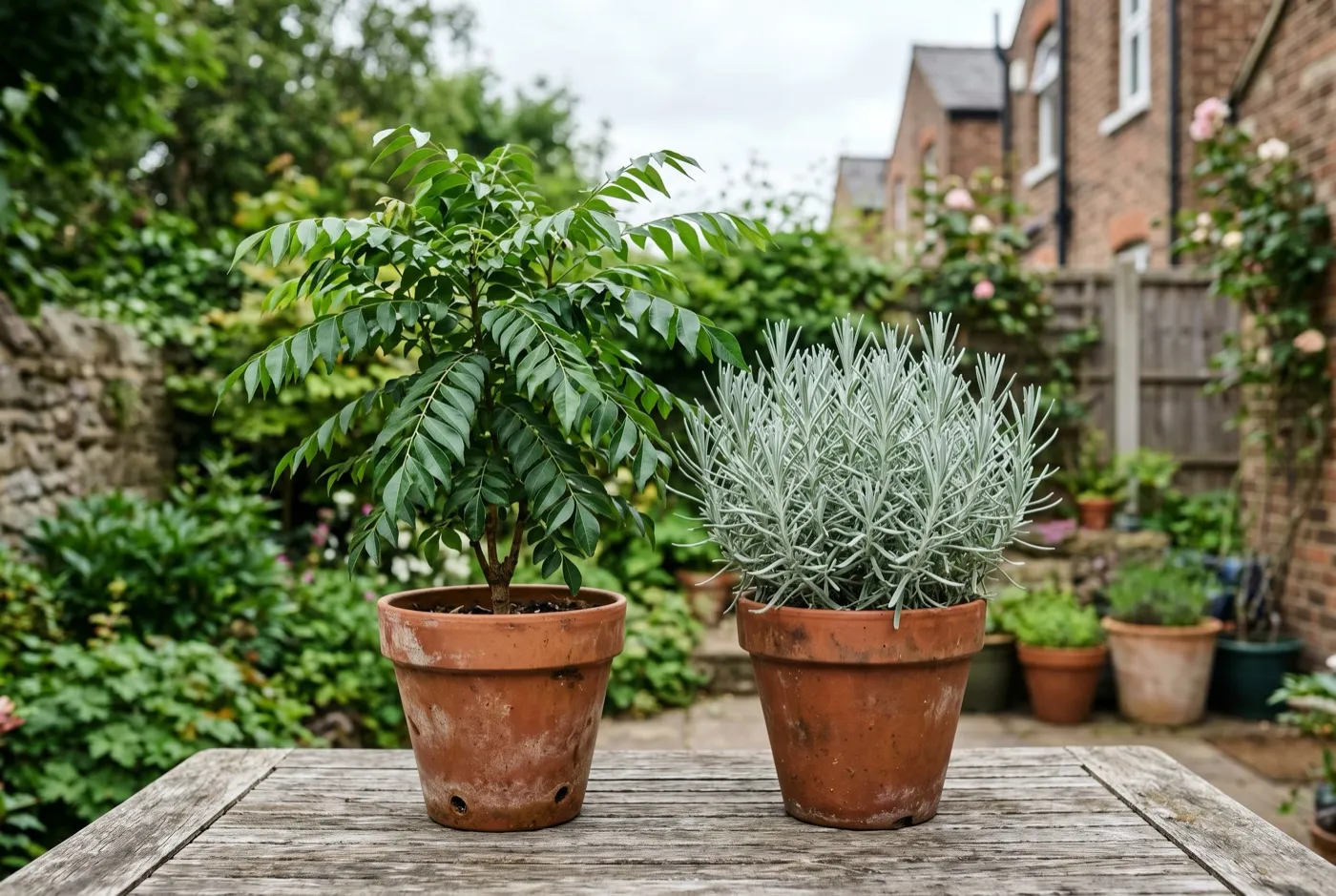 The diagnostic pairing: true curry leaf (left) has glossy green pinnate leaflets, while the silver Helichrysum “curry plant” (right) is an unrelated hardy shrub with no kitchen use.
Where to Buy a Curry Leaf Plant in the UK
Sourcing takes a little effort because supermarkets and big chains rarely stock the true plant. Three routes work.
Specialist herb nurseries are the most reliable. Several UK growers list Murraya koenigii online, usually as plants one to two years old in 9cm to 1 litre pots. Expect to pay £12 to £25, and order between May and August so the plant travels in warmth.
Indian grocers are the bargain route. Some sell rooted cuttings or suckers in spring for £5 to £10, often passed on from a wholesaler or a customer’s mature tree. Inspect the roots: you want white tips, not brown mush.
The Right Pot and Compost Mix
In the UK this is pot culture only. Planting out is a death sentence the first frosty night, and a pot lets you chase the sun in summer and carry the plant indoors in autumn.
Start with a pot at least 30cm across for a plant of two years or older, in terracotta for weight and breathability. The roots demand sharp drainage, so a bag of multipurpose on its own will not do. Our mix is 60% peat-free compost, 20% horticultural grit and 20% perlite by volume. That ratio drains a full watering in under a minute yet holds enough moisture for two to three days of summer growth.
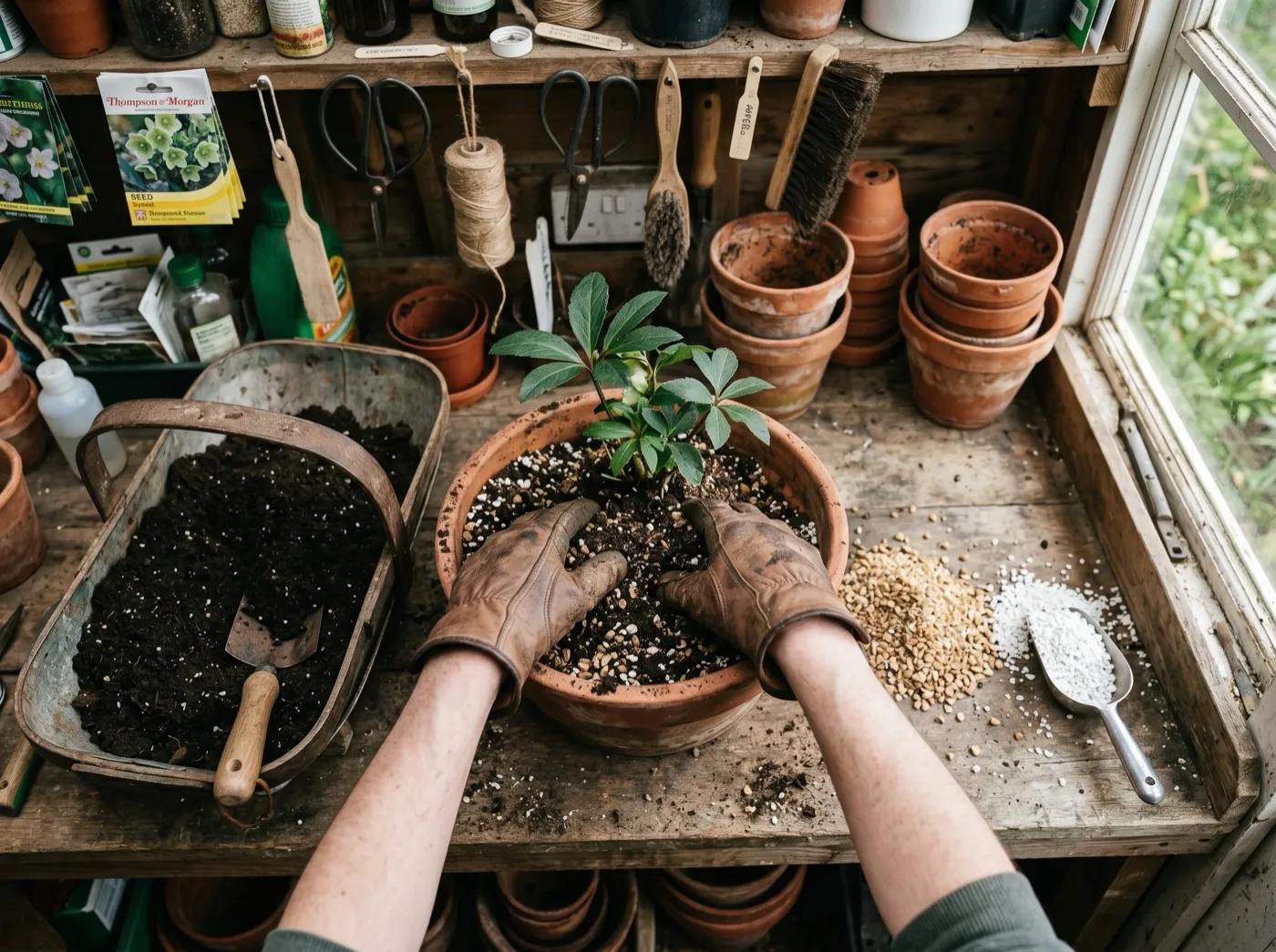 The 60-20-20 mix laid out before repotting: peat-free compost for nutrition, grit and perlite for the sharp drainage this citrus relative demands.
Summer Care: Sun, Feeding and Pruning
Summer is when the plant earns its keep. Move it outside once daytime temperatures hold above 15C, which means June in most of the UK and late May along the south coast. Give it the sunniest, most sheltered spot you have: a south-facing patio against a brick wall is perfect. Acclimatise it over a week, starting with three days in light shade.
Water when the top 3cm of compost feels dry, roughly every two to three days in July. Feed fortnightly from April to September with a high-nitrogen liquid feed or seaweed extract, because leaves are the crop and nitrogen drives leaf. The RHS lists Murraya as a conservatory shrub for exactly this warm-summer, frost-free regime.
Pruning matters more than people expect. Left alone, this is a tree that wants to reach 2m and beyond, 4 to 6m in southern India. For a pot, pinch out the growing tips every few weeks through summer. Each pinch forces two or three side shoots, which doubles the leaf harvest and keeps the plant bushy at a manageable 1 to 1.2m. It shares this pinch-to-bush habit with lemongrass grown in pots, which sits beside it on our patio all summer.
Where Should a Curry Leaf Plant Spend Winter?
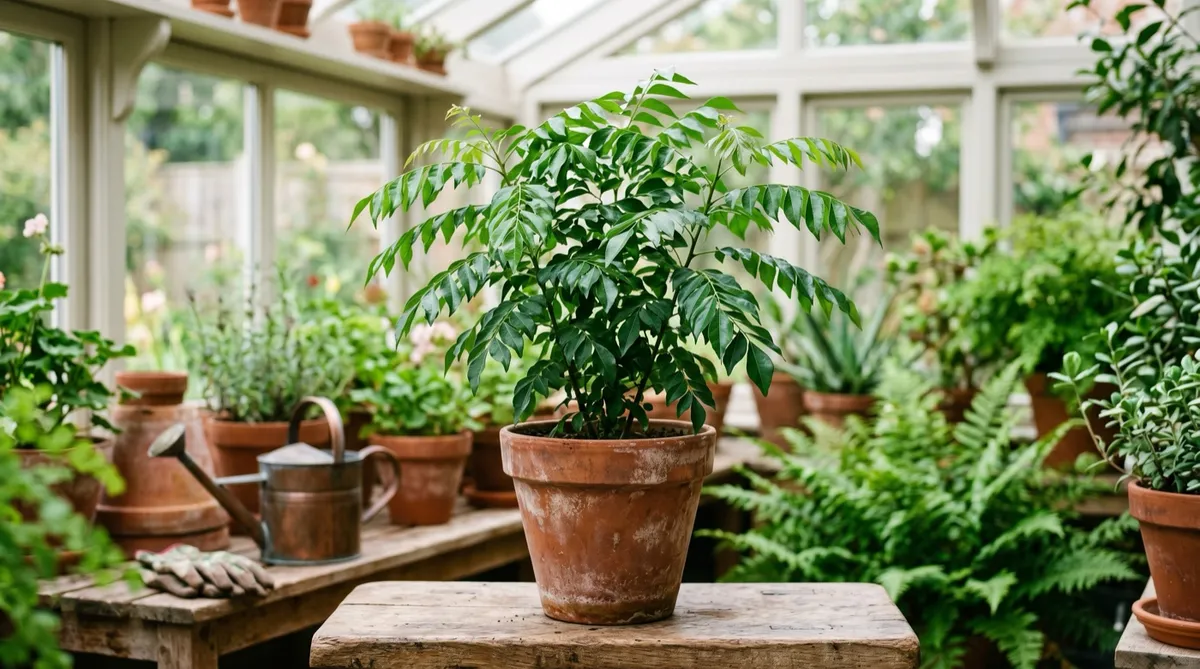
The heated conservatory is the gold standard because it pairs winter light with a 12C-plus floor, so the plant barely registers dormancy. Other warmth-loving pot plants overwinter on the same bench; our conservatory houseplants guide covers good companions, and an indoor coffee plant is happy on the same terms.
Cut watering right back wherever it stands: every three to four weeks, a small drink, no more. Never feed and never repot between October and March.
What Happens Inside the Plant During Winter Dormancy
Understanding the dormancy sequence stops you killing a living plant. It runs in four measurable stages.
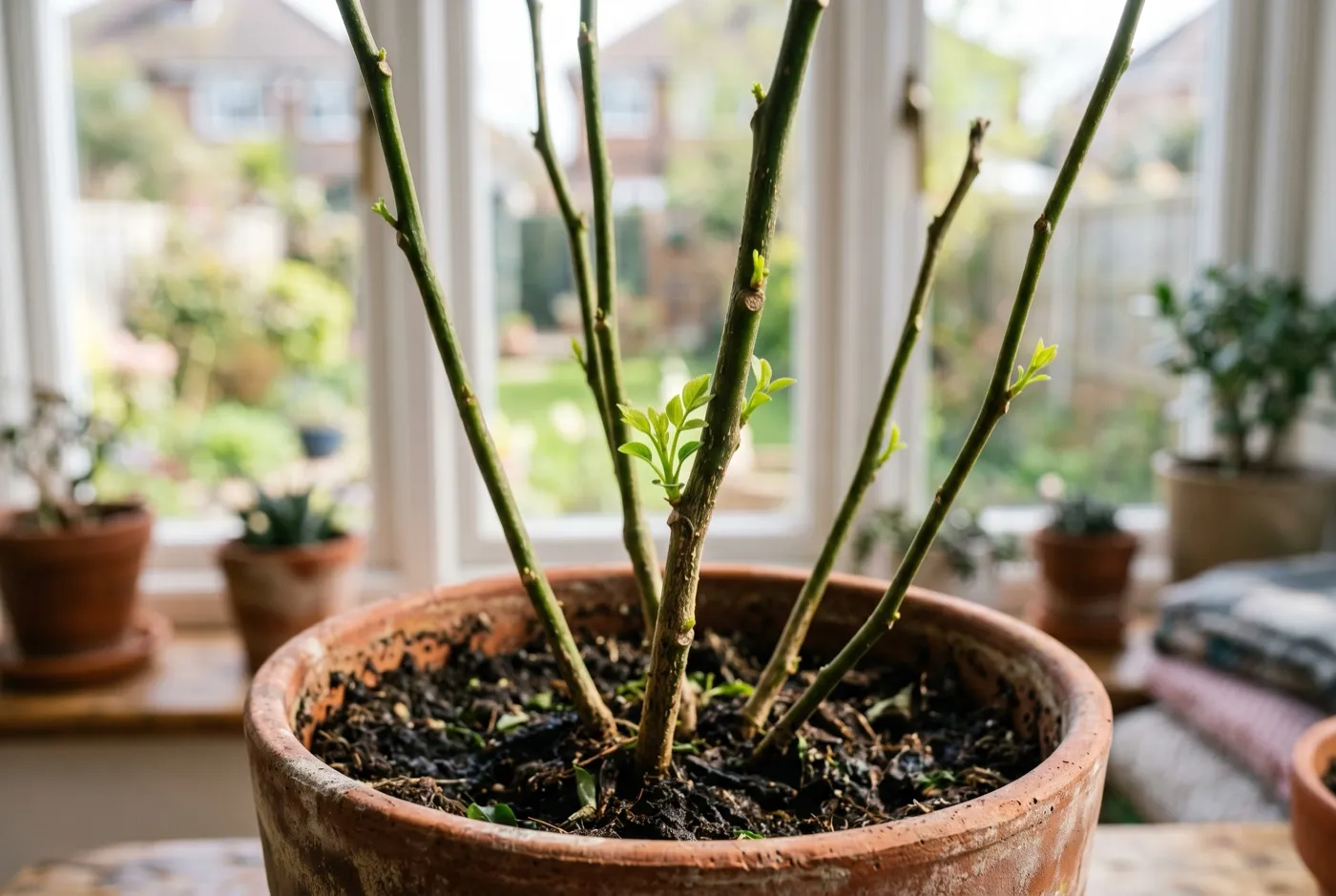 Stage 3 into stage 4: the stems stayed green through a leafless winter and new shoots broke from the nodes on 14 April.
Month by Month: A Curry Leaf Care Calendar
This calendar assumes a plant indoors for winter and on a patio for summer, anywhere in the UK.
| Month | What to do |
|---|---|
| January | Hold at 10-15C in bright light. Water once, lightly, if compost is bone dry |
| February | Scratch-test stems if leafless. Check leaf undersides for spider mite weekly |
| March | Light levels rise: move to the brightest window. Still no feed |
| April | Bud break. First fortnightly feed mid-month. Repot every second year, one size up |
| May | Harden off outside on days above 15C, bring in at night. Pinch first tips |
| June | Outside full time in full sun. Water every 2-3 days, feed fortnightly |
| July | Peak growth. Pinch tips, pick leaves, never more than a third at once |
| August | Keep feeding and picking. Remove flower buds to push leaf production |
| September | Last feed early in the month. Indoors by late September, before nights hit 10C |
| October | Cut watering to every 3-4 weeks. No feed, no repotting until spring |
| November | Expect yellowing below 10C. Let leaves fall: do not strip them yourself |
| December | Bare stems are normal. Keep above 10C, ignore the urge to water weekly |
Spider Mite and Scale: Fixing the Dry Air That Invites Them
Two pests account for nearly every indoor problem on this plant, and both trace back to one root cause: dry winter air. Central heating drops living room humidity to 30-40%, and spider mite breeds fastest in exactly those conditions, completing egg to adult in 8 to 14 days at 21C. The first signs are pale stippling on leaflets and fine webbing where leaf stems meet.
Scale insects are the second invader: brown 3-4mm bumps fixed along stems and leaf midribs, leaving sticky honeydew below. Wipe them off with a cotton bud dipped in soapy water, repeating weekly for a month to catch the crawlers.
Treat the air, not just the pest, or both come straight back. Stand the pot on a pebble tray topped up with water, group plants together, and give the foliage a tepid shower in the bath once a month through winter. Those three steps hold humidity near the leaf surface above 50%, which slows mite breeding to a crawl. If an infestation is already established, the predator-and-spray sequence in our spider mite control guide works just as well on a windowsill as under glass.
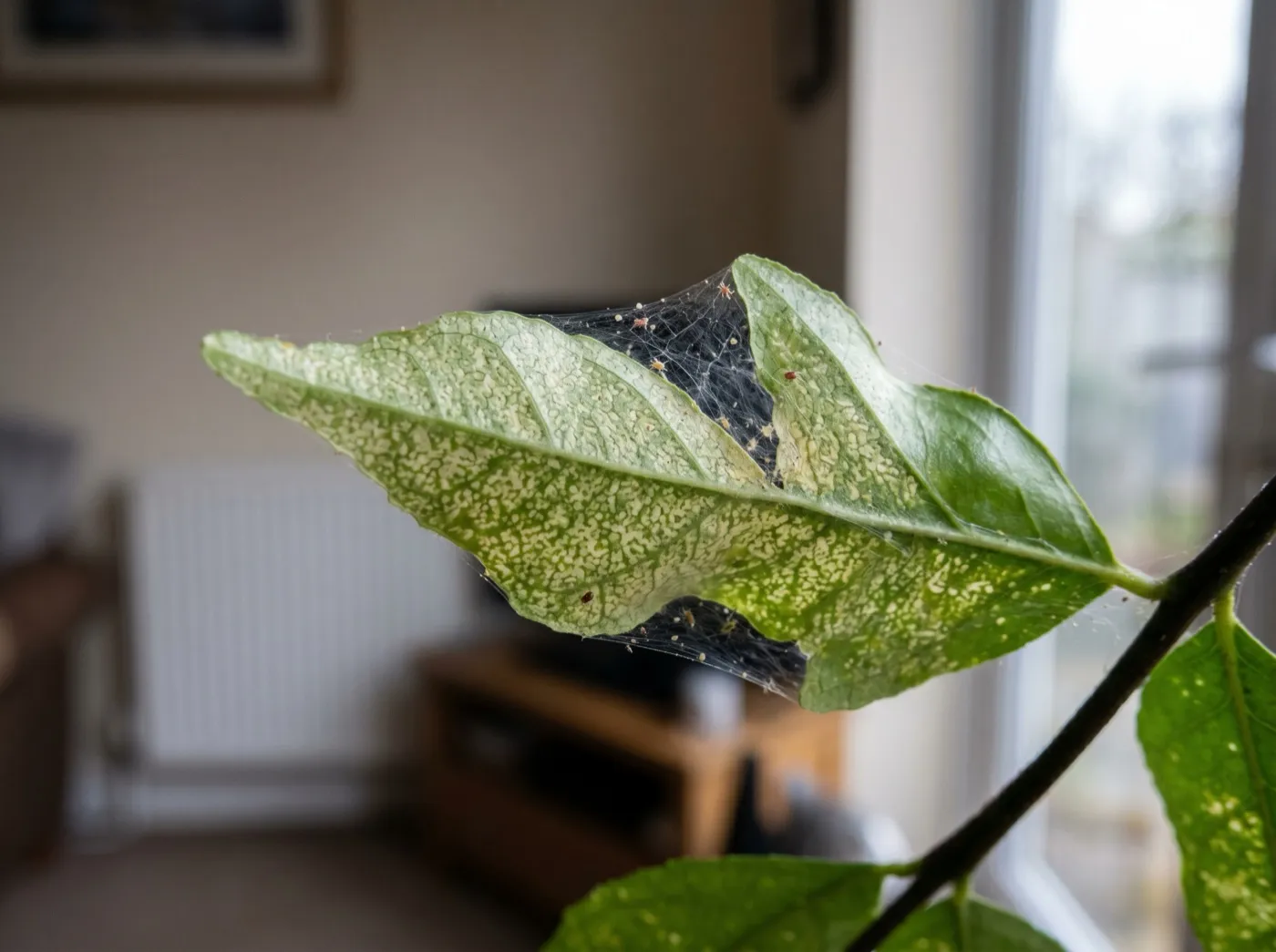 The tell-tale pairing of stippled leaflets and fine webbing: spider mite arrives within weeks once central heating drops room humidity below 50%.
Harvesting Leaves Without Weakening the Plant
Picking technique decides how much a pot-grown plant can give. The rule is simple: never remove more than a third of the leaves at once. A plant stripped harder than that stalls for three to four weeks while it rebuilds, and a small plant may sulk for the rest of the season.
Take whole pinnate stems, not individual leaflets, snapping them off where they meet the main stem. Start with the oldest, lowest stems, which the plant would shed first anyway. A healthy 1m plant in midsummer gives a good picking of 8 to 10 stems every fortnight.
Fresh leaves hold their aroma for about a week in the fridge. For winter, freezing beats drying by a distance: dried curry leaves lose most of their volatile oils within weeks, while frozen leaves keep nearly their full flavour for around 6 months and go into hot oil straight from the bag. Bag whole stems flat, squeeze the air out, and label by month. The same flat-bag method works for most soft herbs, as covered in our guide to freezing fresh herbs.
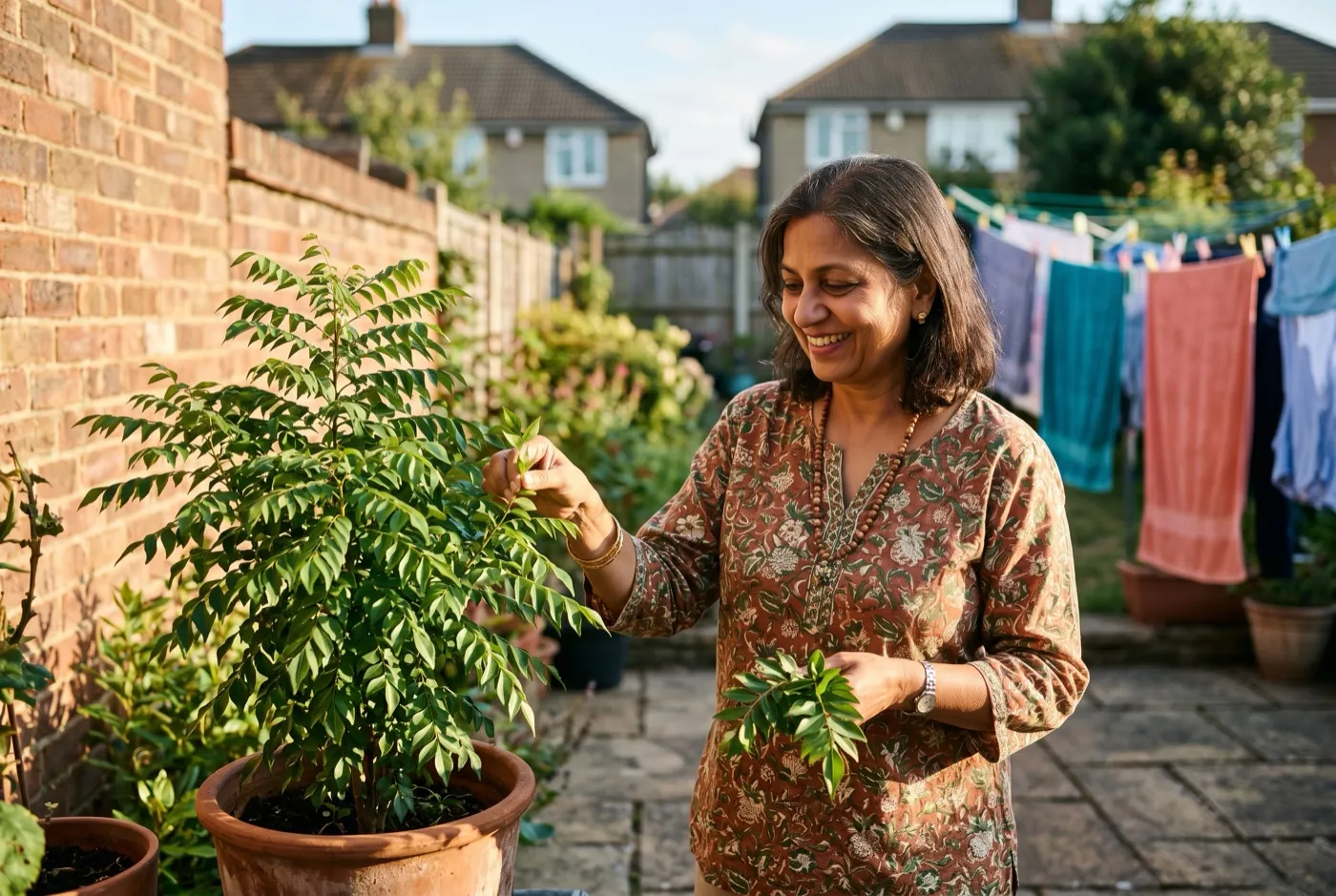 A midsummer picking: whole stems snapped from low on the plant, with at least two thirds of the canopy always left in place.
Common Mistakes
- Binning a leafless plant in December. Leaf drop below 10C is dormancy. The owner assumes death and throws away a living plant. Scratch-test a stem for green before any plant goes in the bin.
- Watering a dormant plant weekly. Water demand falls by around 90% after leaf shed, so the compost stays sodden and roots rot. Water every three to four weeks between October and March, no more.
- Buying Helichrysum by mistake. The silver “curry plant” on the hardy benches is unrelated and useless in cooking. Check the label says Murraya koenigii or Bergera koenigii.
- Overwintering in an unheated greenhouse. Glass alone holds maybe 2-3C above outside temperatures, nowhere near the 10C floor this plant needs. Our porch plant died at a logged 4C; a greenhouse is colder still.
- Repotting or feeding in winter. Dormant roots cannot use either. Fresh compost turns into a cold wet collar and feed salts scorch idle roots. Save both jobs for April.
Frequently asked questions
Why is my curry leaf plant dropping its leaves?
Cold below 10C triggers the leaf drop: it is dormancy, not death. The plant is semi-deciduous under chill stress and sheds leaves to sit out winter. Scratch a stem with a fingernail: green underneath means it is alive. New shoots appear from April once temperatures climb past 15C.
Can a curry leaf plant survive outside in the UK?
No, a curry leaf plant cannot survive a UK winter outdoors. It tolerates nothing below about 5C for long, and frost kills it outright. Grow it in a pot, stand it out in full sun for summer, and bring it indoors by late September.
Is curry plant the same as curry leaf plant?
No, curry plant (Helichrysum italicum) is a different, unrelated species. It is a hardy silver-leaved shrub that smells of curry but has no kitchen use. The true curry leaf plant is Murraya koenigii, a tender citrus relative with glossy green pinnate leaves. Check the label before buying.
How do I overwinter a curry leaf plant in the UK?
Keep it indoors at 10-15C in bright light from late September. Water roughly every three to four weeks, just enough to stop the compost baking dry. Never feed or repot between October and March. A heated conservatory is ideal; a kitchen windowsill works in most homes.
How many curry leaves can I pick at once?
Never take more than a third of the leaves in one picking. Remove whole pinnate leaf stems, starting with the oldest, lowest ones. Heavy stripping weakens a pot-grown plant for weeks. Surplus leaves freeze well in a bag for around 6 months and cook straight from frozen.
Where can I buy a curry leaf plant in the UK?
Specialist herb nurseries and some Indian grocers sell rooted plants. Expect to pay between £12 and £25 for a plant one to two years old. Seed is only worth sowing fresh, because viability collapses within four to six weeks of the berries ripening.
Once your curry leaf plant is settled into its summer-out, winter-in rhythm, the obvious next step is the rest of the home curry garden: our guide to growing chilli peppers follows the same pot-and-windowsill approach. Or browse the full plants section for more tender and indoor growing guides.
Our team produces practical UK gardening guidance from source research, contributor records and established horticultural practice. Editorial standards are overseen by Matt W.