Key takeaways
- Abutilon flowers from early summer into autumn on fast-growing, maple-leaved shrubs
- Large-flowered hybrids are tender, so grow them in pots and bring them in before the first frost
- A. megapotamicum and 'Kentish Belle' can live outside on a warm, sheltered wall in milder areas
- Give every type full sun, shelter from cold wind and sharp drainage
- Feed pots with a high-potash tomato feed from June for more flowers
- Prune in April, never in autumn
Abutilon gives you hanging bell flowers from early summer well into autumn. It’s also called Indian mallow or flowering maple, thanks to its maple-shaped leaves. The one thing to get right is hardiness. Some types are tender and live in a pot or conservatory. Others will grow outside on a warm wall, and one becomes a small tree.
This guide helps you pick the right type, find it a good spot and keep it going through a British winter.
Which abutilon should you grow?
Four groups cover almost every abutilon sold in UK garden centres. Knowing which one you have is the key to keeping it alive.
Large-flowered hybrids (sold as Abutilon x hybridum or A. pictum) have the biggest bells, in orange, red, yellow and pink. ‘Canary Bird’ is clear yellow and ‘Nabob’ a deep red. They are tender and die in frost.
Abutilon megapotamicum is a lax, trailing plant from Brazil. Its small flowers have a red cup, yellow petals and dark anthers, hanging like tiny lanterns. It’s tougher than the hybrids and loves a warm wall.
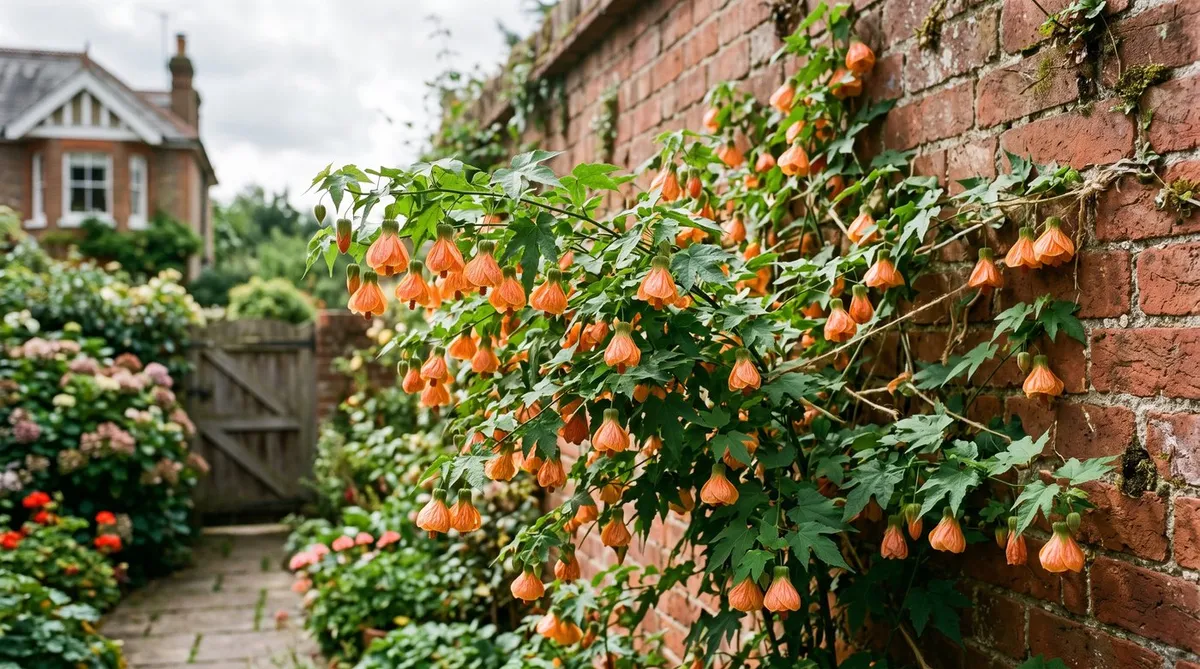
‘Kentish Belle’ is a popular shrub with apricot-orange bells on dark stems. It also suits a warm, sheltered wall.
Abutilon vitifolium (now often labelled Corynabutilon) is the hardiest and largest. It’s a fast, fairly short-lived shrub reaching 4-5m, with vine-shaped leaves and open mauve or white saucers in early summer.
| Type | Flowers | Hardiness | Best grown |
|---|---|---|---|
| Large-flowered hybrids | Big bells, many colours | Tender | Pots, conservatory |
| A. megapotamicum | Small red and yellow lanterns | Borderline hardy | Warm wall |
| ’Kentish Belle’ | Apricot-orange bells | Borderline hardy | Warm wall |
| A. vitifolium | Mauve or white saucers | Hardiest | Sheltered border |
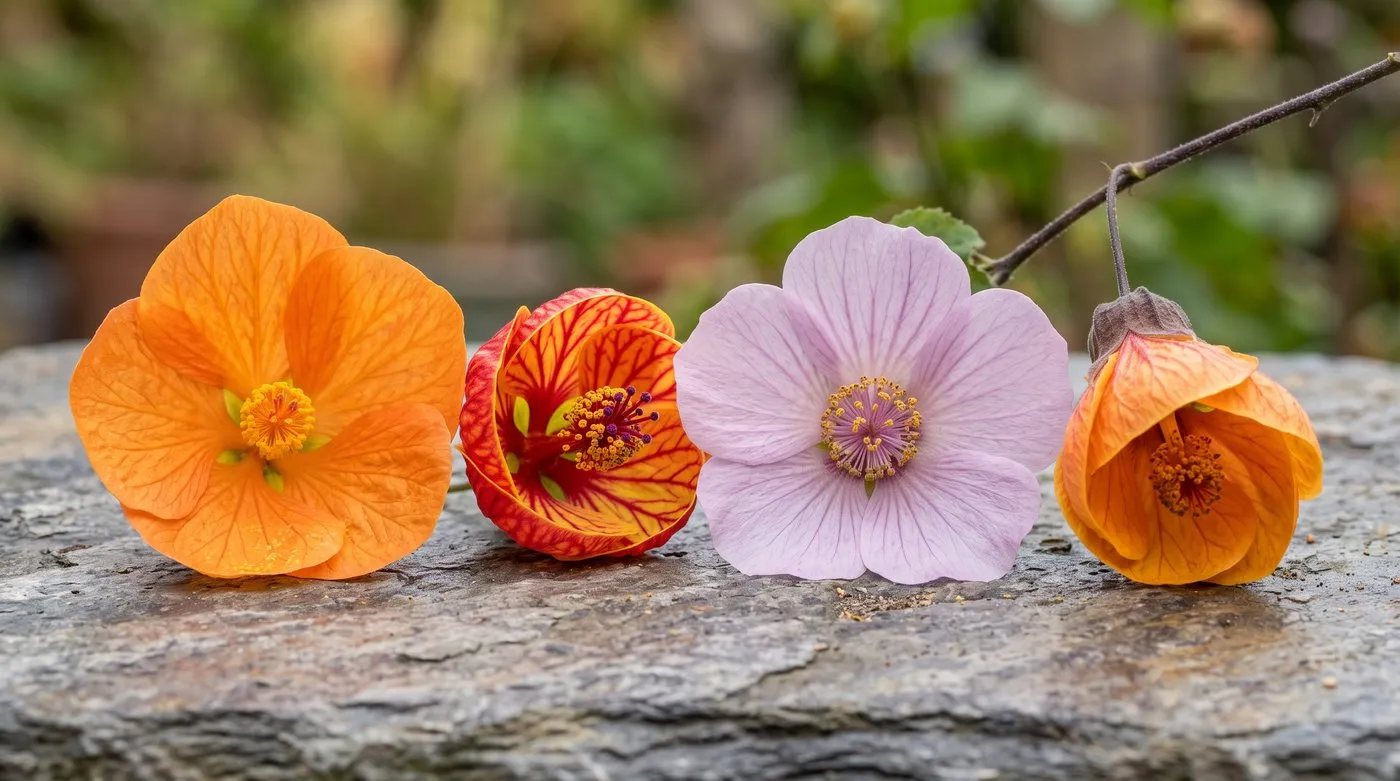
Abutilon flowers vary a lot, from wide saucers to hanging bells. Check the label so you know how much cold yours can take.
Where to plant abutilon outside
Abutilon needs three things: sun, shelter and sharp drainage. Get these right and even borderline types have a good chance.
A south or west-facing wall is ideal. It soaks up heat by day and keeps off cold winds, which shred soft new growth. Plant about 30cm out from the wall base, where the soil is less dry.
The soil must drain freely. Abutilon roots rot in cold, wet ground. On heavy clay, dig in grit and plant on a slight mound. A sunny, gravelly Mediterranean-style planting scheme suits it well.
In cold, exposed gardens, stick to pots. For more plants with a similar exotic look that cope outside, see the guide to hardy exotic plants for UK gardens.

Tie the long stems of A. megapotamicum to wires on a warm wall. The shelter helps it through winter.
Growing tender abutilon in pots
Pots are the easiest way to enjoy the big-flowered hybrids in most of the UK. You can wheel them under cover the moment frost is forecast.
Use a loam-based compost such as John Innes No. 2, with a few handfuls of grit mixed in. Start a young plant in a pot about 20cm across and move it up a size as it fills out. Stand it outside in a sunny, sheltered spot from late May or June.
Feeding makes the difference. Give a high-potash tomato feed every week from June to September. High-nitrogen feeds give lush leaves and few flowers. Water freely in summer, but don’t leave the pot sitting in a saucer of water.
Pinch out the growing tips of young plants a couple of times in spring to make them bushy. It’s the same trick used for growing fuchsias, another summer pot favourite.
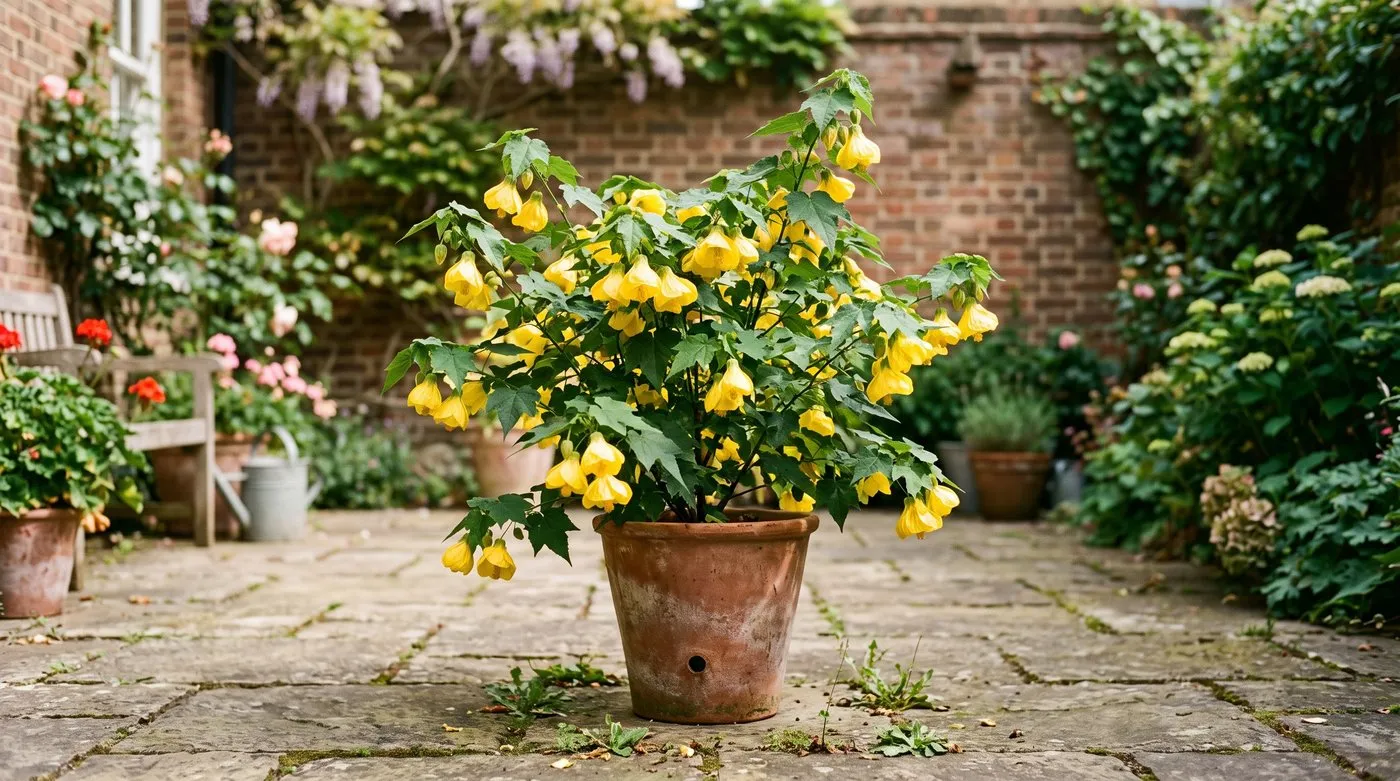
A yellow hybrid in a terracotta pot. Grown like this, it can go under glass as soon as frost threatens.
How to overwinter abutilon
Tender hybrids won’t survive frost, so bring them in before the first one, usually in October. Wall types outside need a little help too.
For pots, choose a frost-free, bright spot at 5-10°C: a conservatory, cool greenhouse or porch. Water just enough to stop the compost drying out completely. Wet, cold compost rots the roots. Stop feeding until March. Some leaf drop is normal.
In March, water a little more, start feeding again and tidy any dead growth. Harden the plant off and move it outside once frosts have finished. The guide to overwintering tender plants covers other plants you can bring in alongside it.
For wall plants, spread a thick mulch of bark or leaf mould over the roots in November. Cover the top with fleece when a hard frost is forecast. The frost protection guide explains how to use fleece well.
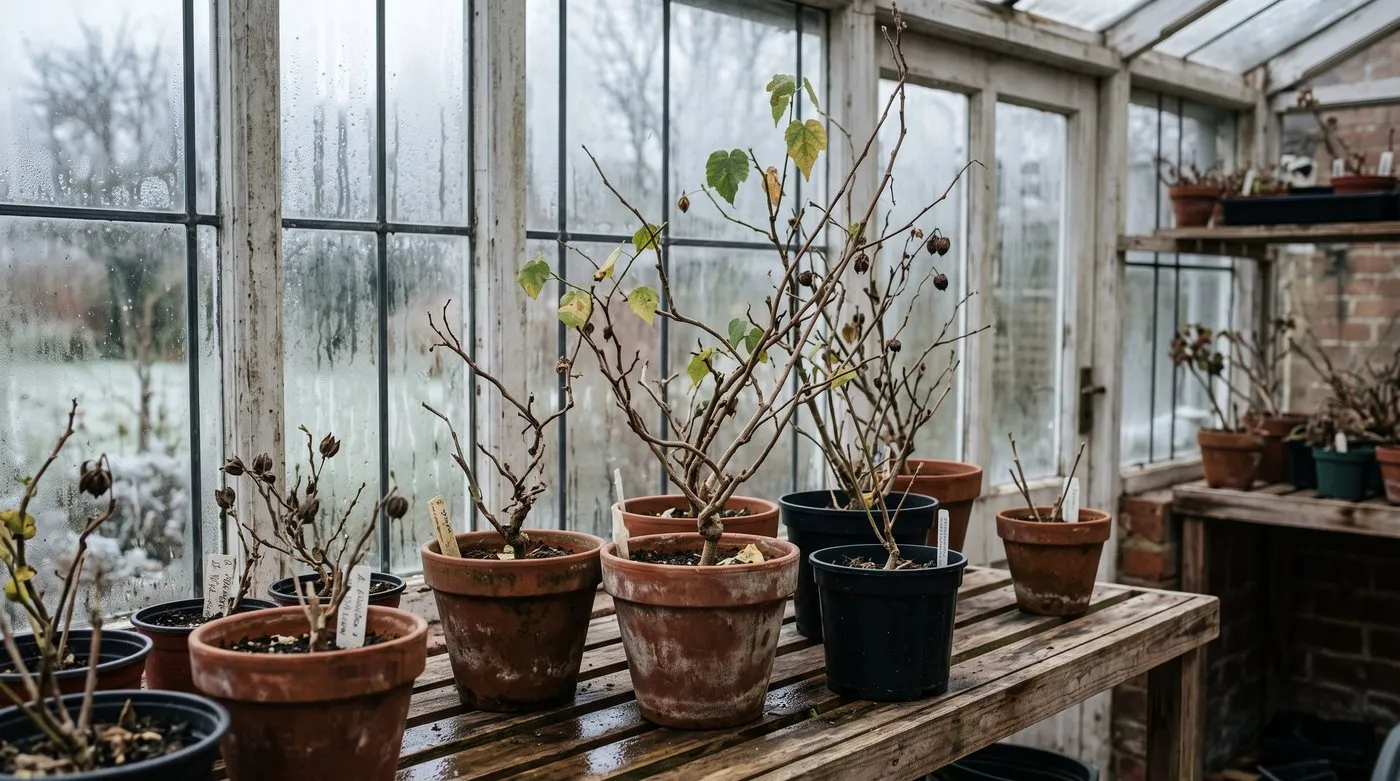
Kept cool, bright and nearly dry, tender plants may drop leaves in winter. They leaf up again once the light returns in spring.
Gardener’s tip: Take a few semi-ripe cuttings in August as a back-up. Small rooted cuttings are easy to keep on a cool windowsill.
How to prune abutilon
Prune abutilon in April, as new growth starts. It flowers on this year’s shoots, so spring pruning keeps it bushy and full of buds.
- Cut any frost-damaged tips back to live, green wood.
- Shorten leggy or crossing stems by up to a third.
- Tie long stems of A. megapotamicum to wires rather than cutting them hard.
- Cut pot plants back by up to half before they go outside, if they’ve got leggy.
Don’t prune in autumn. It encourages soft shoots that frost kills, and the old stems help shelter the plant. Training wall types onto horizontal wires keeps them neat. The guide to training climbing plants shows how to fix wires.
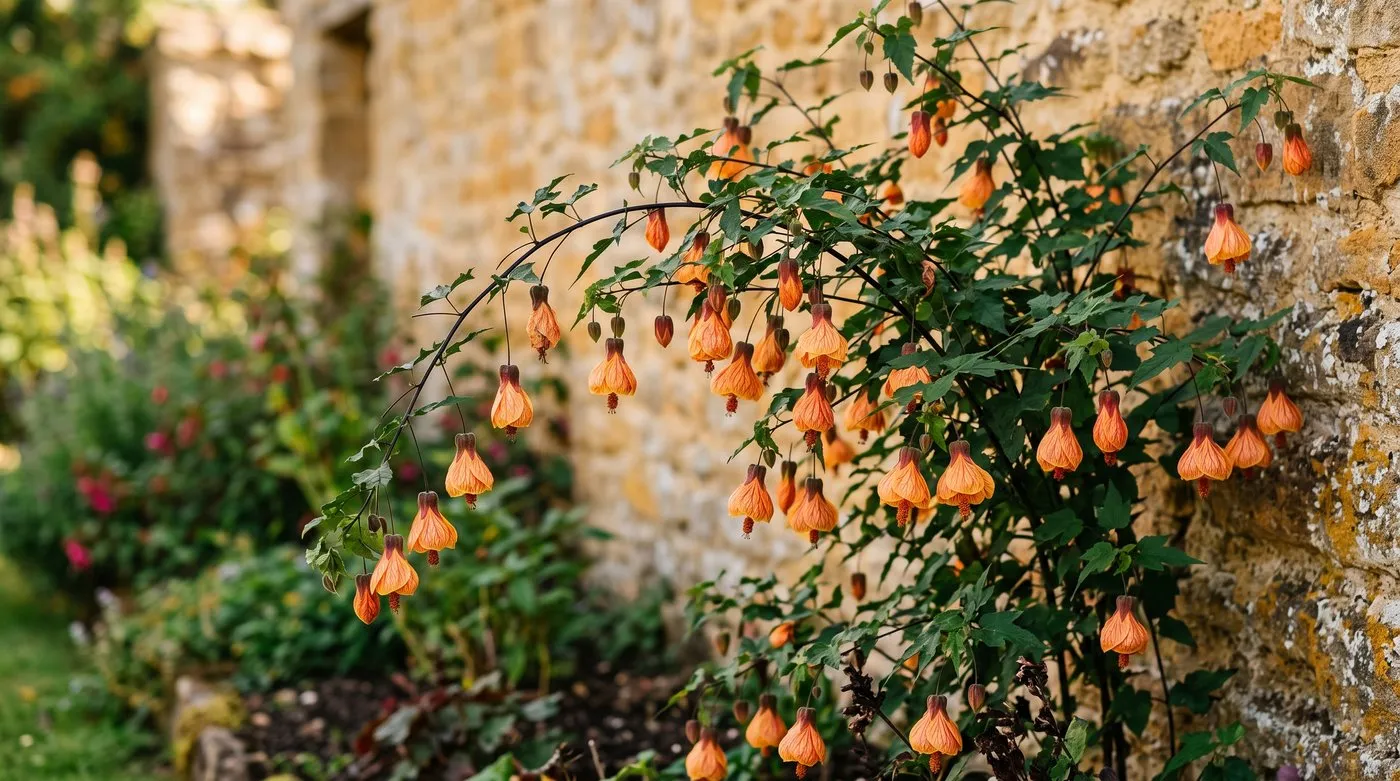
‘Kentish Belle’ against a warm stone wall. A light trim in April keeps it tidy and flowering.
Abutilon care calendar
| Month | Task |
|---|---|
| January to February | Keep tender pots frost-free and nearly dry. Check fleece on wall plants |
| March | Water pots a little more and start feeding |
| April | Prune all types. Repot pot plants if needed |
| May | Harden off tender pots and move them out after the last frost. Tie in wall growth |
| June to August | Flowering. Feed pots weekly with high-potash feed. Water well. Take cuttings in August |
| September | Still flowering. Stop feeding at the end of the month |
| October | Bring tender pots under glass before the first frost. Mulch wall plants |
| November to December | Fleece wall plants in hard frosts. Keep indoor plants cool and nearly dry |
Abutilon pests under glass
Outdoors, abutilon has few pests. Under glass, two pests cause most of the trouble.
Glasshouse whitefly gather under the leaves and fly up in a cloud when you knock the plant. They leave sticky honeydew, which then grows black sooty mould. The tiny parasitic wasp Encarsia formosa is a good biological control in a conservatory. Introduce it early, before numbers build. The greenhouse whitefly guide has more ways to deal with them.
Red spider mite loves hot, dry air. It causes fine pale mottling on leaves and, in bad cases, webbing over the tips. Damp down the floor and mist on hot days, as the mites dislike moist air. The predatory mite Phytoseiulus persimilis clears bigger outbreaks.
Good ventilation and space between plants prevent more trouble than any spray.
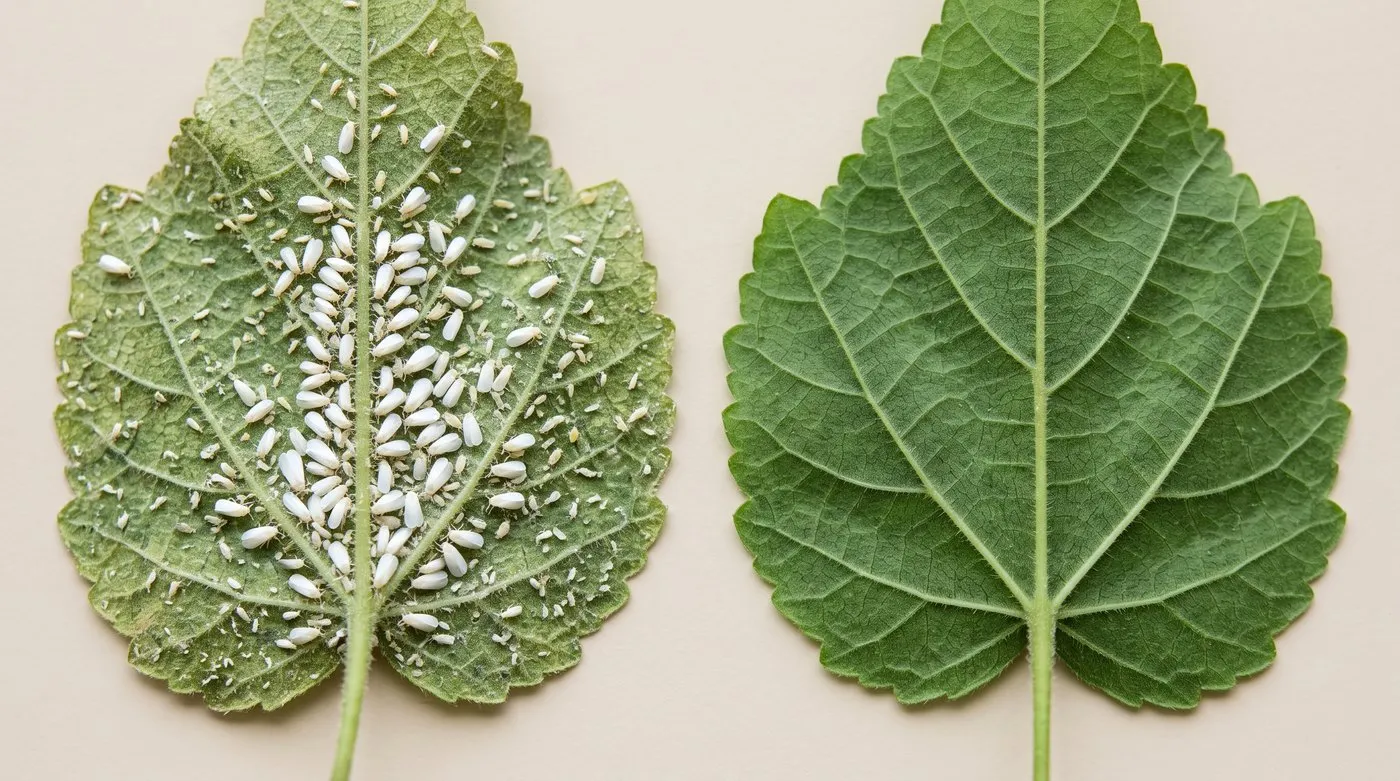
Turn a few leaves over each week under glass. Whitefly are much easier to stop before they build up.
Common mistakes with abutilon
- Leaving a tender hybrid outside in winter. It dies in the first frost. Find out which type you have and bring tender ones in.
- Planting in a cold, windy spot. Even the tougher types struggle in the open. Choose a warm, sheltered wall.
- Wet, heavy soil. Cold, waterlogged roots rot. Add grit and plant on a mound.
- Too much nitrogen. You’ll get leaves, not flowers. Use a high-potash tomato feed instead.
- Pruning in autumn. Wait until April, when new growth starts.
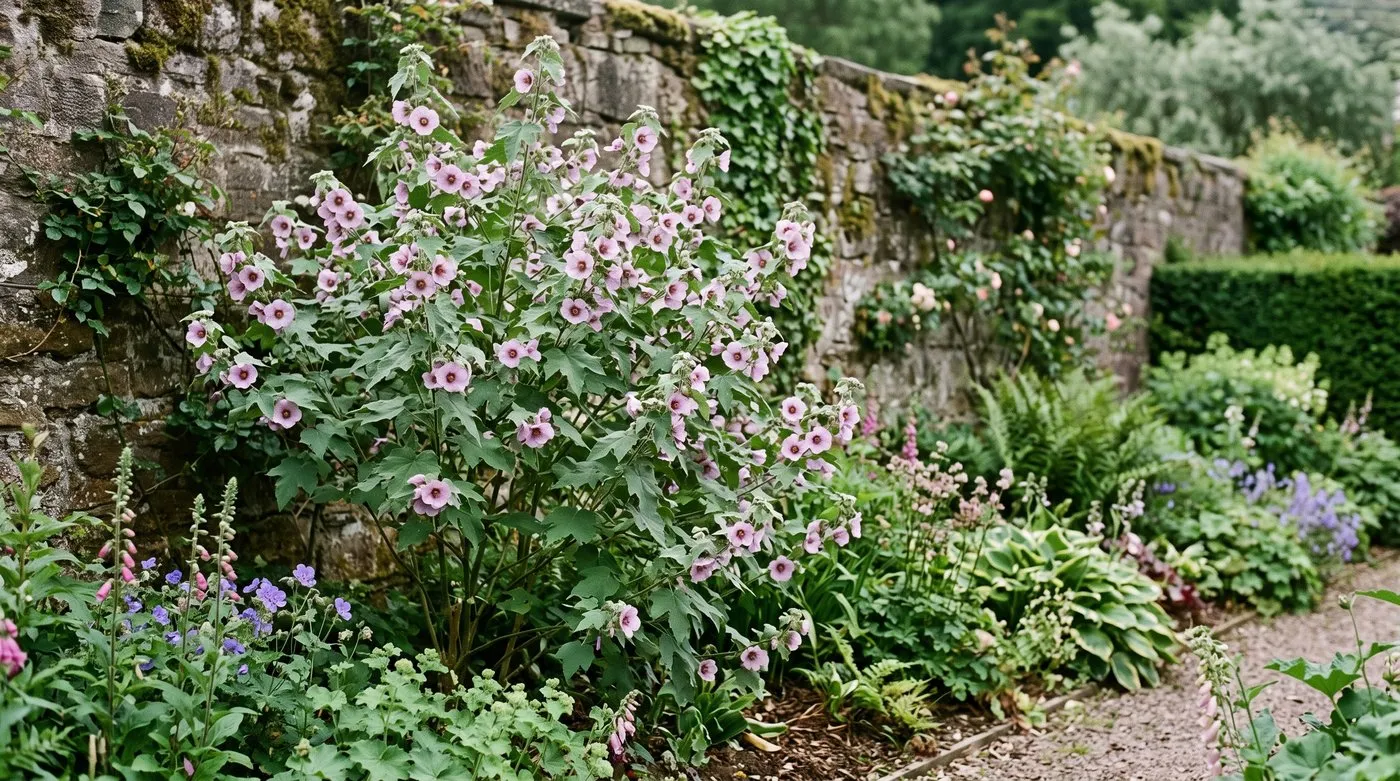
A. vitifolium grows fast but doesn’t live long, so keep a cutting or two going as a replacement.
If you like big mallow flowers but want something fully hardy, try growing lavatera, the tough tree mallow. For more ideas, browse the plants section.
Frequently asked questions
Is abutilon hardy in the UK?
Some types are, some are not. Large-flowered hybrids such as ‘Canary Bird’ and ‘Nabob’ are tender and need frost-free winter cover. A. megapotamicum and ‘Kentish Belle’ usually survive on a warm, sheltered wall in milder areas. A. vitifolium is the hardiest. Check the label before you plant.
Where is the best place to plant abutilon?
Full sun against a warm south or west-facing wall. The wall gives off stored heat on cold nights and keeps off the wind. Plant in free-draining soil. Tender hybrids are better in a pot you can move under glass for winter.
Why is my abutilon not flowering?
Usually too little sun or too much nitrogen. Abutilon needs a bright, sunny spot to flower well. A high-nitrogen feed gives lots of leaf and few bells. Move it into more light and switch to a high-potash tomato feed from June.
How do you overwinter abutilon?
Bring tender types under glass before the first frost. Keep them at 5-10°C, water just enough to stop the compost drying out, and stop feeding. For wall types left outside, mulch the roots and cover the top with fleece in hard frosts.
Is abutilon the same as Chinese lantern?
No, they are different plants. Abutilon is sometimes called Chinese lantern because of its dangling bells. The plant usually sold as Chinese lantern is Physalis alkekengi, grown for its papery orange seed cases.
When should I prune abutilon?
Prune in April as new growth starts. Cut frost-damaged tips back to live wood and shorten leggy stems by up to a third. Pot plants can be cut back harder before they go outside. Avoid autumn pruning, which leaves soft growth for frost to kill.
What pests attack abutilon under glass?
Whitefly and red spider mite are the main ones. Whitefly cluster under the leaves and fly up when you knock the plant. Red spider mite causes pale mottling and fine webbing in hot, dry air. Check weekly, keep the air moist and use biological controls.
Our team produces practical UK gardening guidance from source research, contributor records and established horticultural practice. Editorial standards are overseen by Matt W.