Key takeaways
- Crinum x powellii is the hardiest crinum and the one to grow outside in the UK
- Plant in spring with the bulb's long neck at or just above the soil surface
- The foot of a sunny, south-facing wall gives the warmth and drainage it needs
- Fragrant pink or white trumpets open in August and September
- Leave clumps alone, as crinum flowers best when it isn't disturbed
- All parts are poisonous if eaten, so keep bulbs away from pets and children
Crinum lilies are big, bold bulbs with clusters of fragrant pink or white trumpets in late summer. In the UK, grow Crinum x powellii outdoors at the foot of a sunny wall, and keep the tender kinds in pots. Plant the bulb with its long neck at soil level, then leave it alone. It flowers best once it has settled in and filled out.
They are a lovely late show for a hot border, opening in August and September as many summer flowers fade. This guide covers choosing the right crinum, planting the huge bulb, getting it through winter and why some clumps refuse to flower.
Which crinum should I grow?
For a border, grow Crinum x powellii. It is an old hybrid and the hardiest crinum, happy outdoors in most of the UK if the soil drains well. The tender species need frost-free winters, so grow those in pots.
Crinum x powellii has long, strappy, arching leaves. Tall stems carry clusters of scented, pink trumpets in late summer. ‘Album’ is the pure white form, which looks wonderful against dark brick.
| Crinum | Hardy outside? | Flowers | Best grown |
|---|---|---|---|
| Crinum x powellii | Yes, in a warm, well-drained spot | Pink, Aug to Sep | At the foot of a sunny wall |
| Crinum x powellii ‘Album’ | Yes, in a warm, well-drained spot | White, Aug to Sep | Pale schemes, against dark brick |
| Crinum moorei | Only in very mild, sheltered gardens | Pale pink, late summer | Large pot, frost-free in winter |
| Crinum asiaticum | No | White, spidery | Pot in a heated conservatory |

Pink Crinum x powellii and its white form ‘Album’. Both are tough enough for a warm UK border.
How to plant a crinum bulb
Plant crinum in spring, with the bulb’s long neck at or just above the soil surface. The fat, rounded base goes underground. The bulbs are huge, often the size of a grapefruit, so it’s easy to bury them too deep.
- Choose the sunniest, most sheltered spot you have.
- Dig a hole deep and wide enough for the bulb and its roots.
- On heavy soil, fork a good layer of grit into the bottom of the hole.
- Mix some well-rotted compost into the soil you dug out. Crinum likes rich soil that doesn’t stay wet.
- Set the bulb in with the neck pointing up, at or just above soil level.
- Backfill, firm gently and water in well.
Mark the spot with a short cane. The clump dies down in winter, and it’s easy to stab the bulb with a fork while weeding.

The fat base goes in the ground and the long neck stays up in the air. That keeps water off the crown.
Why a south-facing wall suits crinum
The foot of a south-facing wall gives crinum two things it loves: warmth and dry winter soil. Brick soaks up heat in the day and gives it back at night. The ground at the base of a wall also dries out faster after rain.
It’s the mix of cold and wet that harms crinums in winter, more than cold alone. A warm, free-draining spot keeps the bulb sound and helps it build up flowers for next summer. A sunny south-facing border is the next best thing if you don’t have a suitable wall.
Growing tender crinums in pots
Grow tender crinums such as Crinum moorei and Crinum asiaticum in large, deep pots. Use gritty, free-draining compost, and plant with the neck above the surface.
Stand the pot in full sun on a sheltered patio or terrace from early summer. Water well while it’s growing and give a liquid feed every couple of weeks in summer. Before the first frost, move the pot into a frost-free greenhouse, conservatory or cool porch.

A big pot on a warm terrace suits the tender crinums. Move it under cover before the first frost.
How to get crinum through winter
Protect young outdoor plants with a dry mulch, and keep potted tender crinums frost-free and almost dry.
Outdoor Crinum x powellii:
- In late autumn, when the leaves flop, clear away any soggy, rotting foliage.
- Heap a loose, dry mulch over the crown, such as bark chips or dry bracken.
- In a very hard frost, add a layer of fleece on top.
- In early spring, pull the mulch back gradually.
Do this for the first couple of winters. Established clumps at a warm wall rarely need it. Avoid wet, dense mulches such as grass clippings, which hold water against the neck and cause rot.
Potted tender crinums:
- Move the pot under cover in early October.
- Stop feeding and cut back watering as the leaves yellow.
- Water just enough to stop the bulb shrivelling.
- In spring, water more and bring the pot back into the light.

A dry, airy mulch keeps the worst of the cold off young crowns. Pull it back as spring arrives.
Why won’t my crinum flower?
Crinum that won’t flower is usually too young, recently moved or short of sun. Young bulbs may only make leaves for a year or two while they settle in.
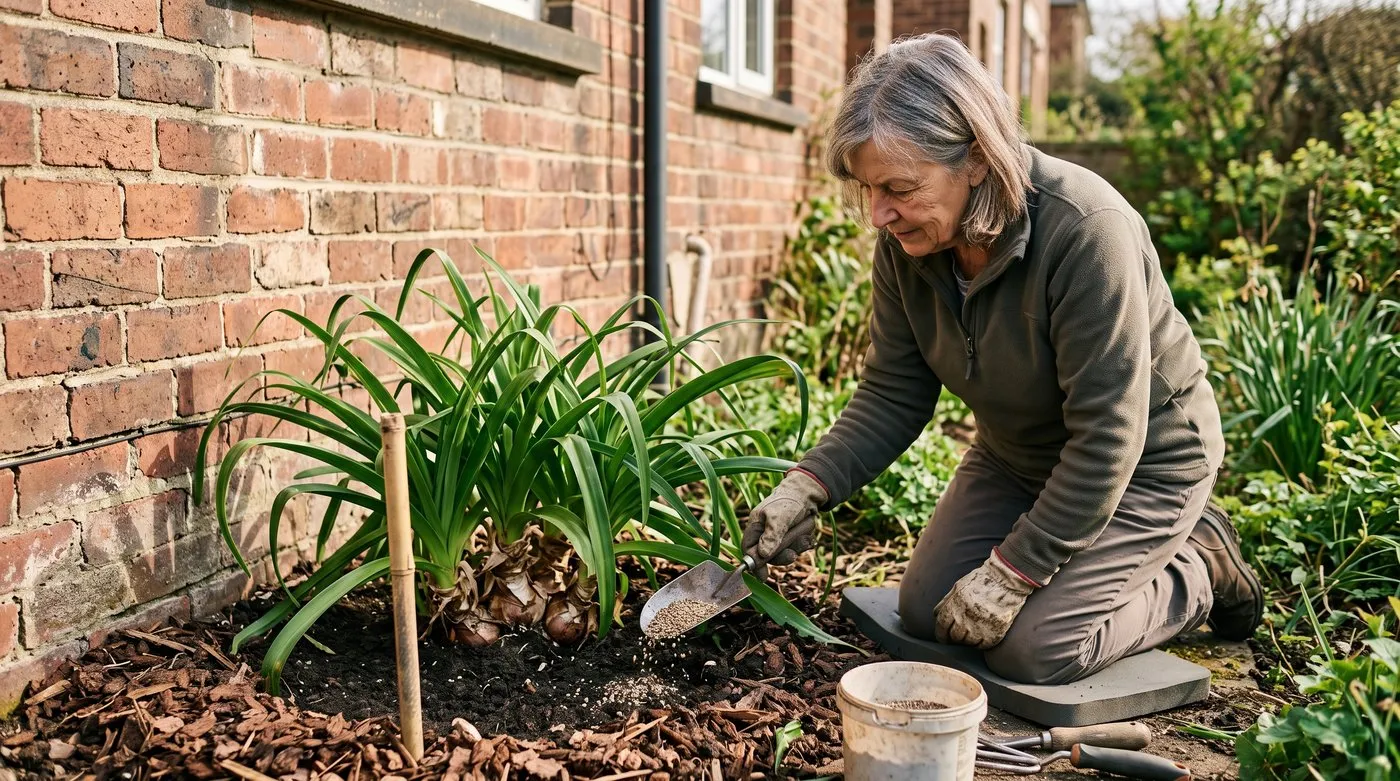
A spring sprinkle of sulphate of potash, full sun and no digging are what get a sulky crinum flowering.
Crinum has thick, fleshy roots that hate being disturbed. Every time a clump is lifted or split, it puts its energy into new roots rather than flowers. So plant it once, in the right place, and leave it. Older, crowded clumps often flower best, just like agapanthus.
Shade is the other common cause. Crinum needs full sun to ripen the bulb for next year’s flowers. A spot that loses the afternoon sun behind a fence will give you lots of leaves and not much else. A sprinkle of sulphate of potash in spring helps too.
Crinum care through the year
| Month | What to do |
|---|---|
| March | Pull back winter mulch. Sprinkle sulphate of potash around the clump |
| April | Plant new bulbs. Bring potted crinums back into growth |
| May | Protect new shoots from slugs |
| June | Water in long dry spells |
| July | Feed potted crinums every couple of weeks |
| August | Flowers open. Cut off faded flower stems |
| September | Flowering continues. Water pots less |
| October | Move tender crinums under cover before the first frost |
| November | Mulch young outdoor plants with a dry mulch |
| December to February | Keep pots just moist and frost-free. Leave outdoor bulbs alone |
Designing with crinum in a hot border
Crinum makes a fine late-summer star in a hot, dry border. Its strappy leaves hold their shape all summer, then the trumpets arrive in August, just when a border needs a lift.
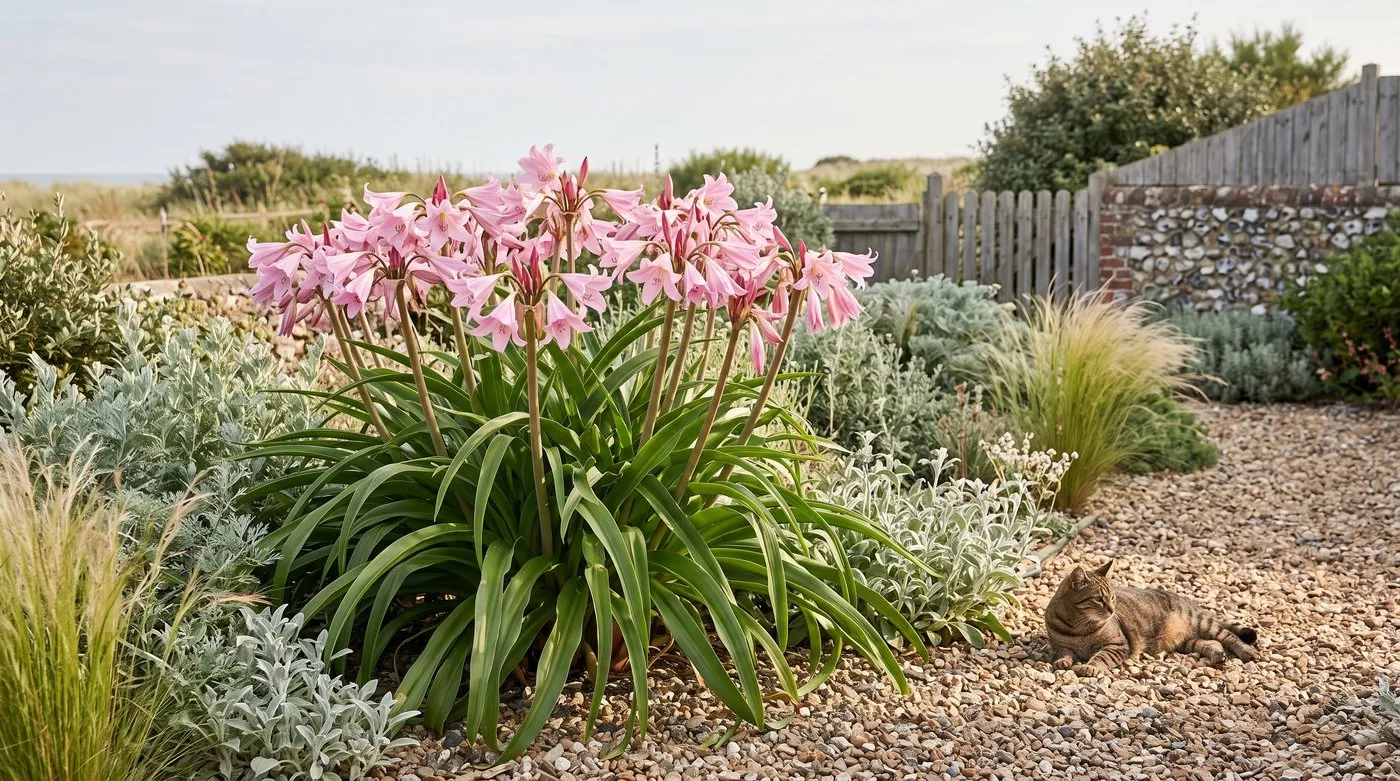
Gravel, grasses and silver leaves make a sunny home for crinum. Keep cats and dogs from digging at the bulbs.
Grow it with grasses and silver-leaved plants that like the same sun and drainage. It fits a Mediterranean planting scheme beautifully, where gravel and reflected heat suit it well. Pair it with autumn-flowering nerines, which take over as the crinum fades.
Give each clump room, as a mature one can spread to 60cm or more. Plant only low, shallow-rooted plants around it, so you never need to dig near the bulb. When you lift tender bulbs for winter, as in the guide to storing flower bulbs, leave crinum exactly where it is.
Safety note: All parts of crinum are poisonous if eaten, especially the bulb. Wear gloves when handling bulbs, and keep lifted ones away from children, cats and dogs.
Common mistakes with crinum
- Burying the neck. It’s tempting with such a big bulb, but a buried neck can rot. Keep it at or just above soil level.
- Planting in shade. You’ll get plenty of leaves and few flowers. Give it full sun.
- Dividing too often. Crinum sulks for years after being split. Only divide a clump that is clearly overcrowded.
- Wet, heavy soil. Winter wet rots bulbs. Add grit or plant at the foot of a wall.
- Leaving tender types out. Crinum moorei and Crinum asiaticum need frost-free winters in most of the UK.
Like the look of bold, exotic bulbs? Try eucomis, the pineapple lily, for another late-summer show, or find more ideas in the plants hub. For crinum’s dramatic indoor relative, read the guide to growing amaryllis.
Frequently asked questions
Is Crinum x powellii hardy in the UK?
Yes, it is hardy in most of the UK in well-drained soil. It is the hardiest crinum and the one to grow outdoors. Give it a hot, sheltered spot such as the foot of a south-facing wall. In cold or wet gardens, mulch the crown for the first couple of winters.
How deep do you plant crinum bulbs?
Plant so the bulb’s long neck sits at or just above soil level. The fat base of the bulb goes underground. Burying the neck traps water and can cause rot. Add grit to the bottom of the hole on heavy soil.
Why won’t my crinum flower?
Usually it is too young, recently moved, or in too much shade. Newly planted bulbs can take a couple of years to settle. Give it full sun, feed with sulphate of potash in spring and leave the clump alone.
When do crinum lilies flower in the UK?
They flower in August and September. Clusters of fragrant pink or white trumpets open on stout stems, after many summer bulbs have finished. A warm wall can bring them on a little earlier.
Can you grow crinum in pots?
Yes, and pots are the best way to grow the tender kinds. Use a large, deep pot of gritty compost and move it somewhere frost-free for winter. Crinum x powellii grows in big pots too, but flowers more freely in the ground.
Are crinum lilies poisonous?
Yes, all parts are poisonous if eaten, especially the bulb. They can make people, cats and dogs ill. Wear gloves when handling bulbs, as the sap may irritate skin, and keep lifted bulbs out of reach.
Our team produces practical UK gardening guidance from source research, contributor records and established horticultural practice. Editorial standards are overseen by Matt W.