
Key takeaways
- Plant bulbs indoors in October or November for flowers around Christmas
- Choose big, firm bulbs, as bigger bulbs give more flower stems
- Water sparingly until the shoot appears, as soggy compost rots bulbs
- Keep the leaves after flowering and feed with tomato food until late summer
- Give the bulb a cool, dry rest for about eight weeks to flower again
- Amaryllis is poisonous to cats and dogs, so keep it out of reach
Amaryllis is one of the most cheerful bulbs you can grow. Huge trumpet flowers open on tall stems just weeks after planting, bringing big colour to a windowsill when the garden is having a rest. Plant in autumn, keep it warm and bright, and enjoy the show.
When to plant amaryllis in the UK
Plant indoor amaryllis bulbs in October or November for flowers around Christmas. At normal room warmth they usually flower six to ten weeks after planting. Plant later and they’ll flower in January or February.
For a longer show, plant a few bulbs a couple of weeks apart. You’ll have flowers on the windowsill from December into March.
 Leave the top third to half of the bulb above the compost. It helps stop the base rotting.
How to plant amaryllis bulbs
Pick a heavy pot just a little wider than the bulb. Amaryllis likes a snug pot, and a heavy clay or ceramic one stops the tall stems tipping over.
Stand the roots in lukewarm water for a couple of hours before planting. It perks them up after months in storage.
Use two parts peat-free multipurpose compost to one part perlite. Good drainage really matters, as amaryllis bulbs rot quickly in wet compost.
Set the bulb so the top third sits above the compost. Firm the compost gently around the roots. Water lightly once and put the pot on your warmest, brightest windowsill.
Then hold off watering until you see the green shoot. Watering too much before the roots get going is the most common way to lose a bulb. Our guide to repotting houseplants has more on pots and compost.
Which amaryllis varieties grow best in the UK?
There are lots to choose from: classic singles, fluffy doubles, and spidery, more unusual types.
| Variety | Type | Flower colour | Best for |
|---|---|---|---|
| Red Lion | Single | Deep scarlet | Classic Christmas red |
| Apple Blossom | Single | White with a pink blush | Soft, pretty displays |
| Minerva | Single | Red with a white star | Bold two-tone |
| Cherry Nymph | Double | Cherry red | Long-lasting flowers |
| Nymph | Double | White with pink veins | Weddings, elegant rooms |
| Papilio | Butterfly | Green and red | Something unusual |
| Chico | Spidery | Green with red stripes | Modern interiors |
| A. belladonna | True amaryllis | Soft pink | Outdoors, by a warm wall |
For beginners, Red Lion and Minerva are reliable and forgiving. If you like layered bulb pots, a smaller amaryllis makes a lovely centrepiece.
 A few varieties grown together show off the range of colours and shapes.
Growing amaryllis outdoors
Most amaryllis on sale are tender and won’t survive a British winter outside. Keep those as houseplants.
Amaryllis belladonna, the belladonna lily, is the one to try outside. It sends up pink flowers on bare stems in late summer and autumn, before its leaves appear. Some keen growers also try the hardier Hippeastrum x johnsonii in very mild, sheltered spots, but it’s a gamble.
Give outdoor bulbs the warmest spot you have: the foot of a sunny, south-facing wall with free-draining soil. Plant in spring and add a deep mulch of bark or straw in October. A warm brick wall gives them valuable extra shelter on cold nights.
Caring for amaryllis after flowering
What you do after flowering decides how well it flowers next year. This is where most people slip up.
Once all the flowers have faded, cut the flower stalk off about 5cm above the bulb. Keep every leaf. The leaves feed the bulb for next year’s flowers.
From March to July, feed every two weeks with a liquid tomato food at half strength. It helps the bulb build next year’s flower buds.
Move the pot outside to a sunny patio once frosts are over in May. Keep watering and feeding through summer.
In late August, start watering less. In early September, stop watering and move the pot somewhere cool, dark and dry, like a garage, shed or cold spare room. The leaves will yellow and die back. Leave them until they’re brown and come away easily.
This rest of about eight weeks helps the bulb get ready to flower again. Our guide to the best indoor plants for UK homes has more on light and warmth for houseplants.
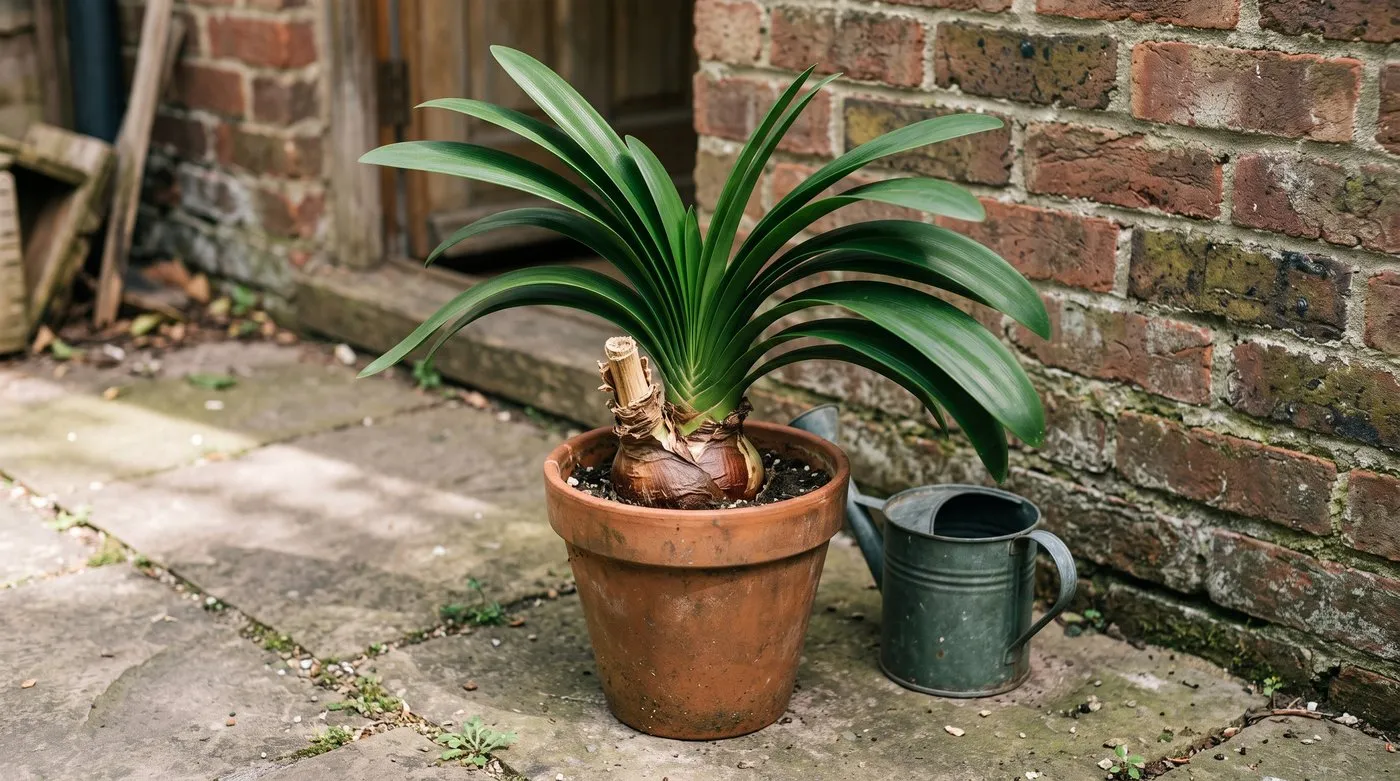
After flowering, cut the stalk but keep every leaf. A summer outside with regular feeding is what builds next winter’s flowers.
Amaryllis through the year
This is the yearly routine for amaryllis grown indoors in a heated home.
| Month | What to do | Tip |
|---|---|---|
| October | Buy and plant bulbs | Choose big, firm bulbs. Soak the roots first |
| November | Watch for growth | Water lightly once the shoot appears |
| December | Flowers open | Turn the pot daily for straight stems. A cooler room makes flowers last longer |
| January | Later bulbs flower | Cut faded stalks to 5cm. Keep the leaves |
| February | Leaves keep growing | Move to the brightest window |
| March | Start feeding | Tomato food every two weeks, half strength |
| April | Keep feeding | Repot only if roots fill the pot, one size up |
| May | Move outside | Sunny, sheltered spot after the last frost |
| June-July | Summer growing | Keep feeding. Water when the top of the compost is dry |
| August | Water less | Last feed early in the month |
| September | Rest time | Stop watering. Move somewhere cool, dark and dry |
| October-November | Wake it up | Bring into the warm and water lightly |
The key times are March to July, for feeding, and the autumn rest.
Common amaryllis problems
Red blotch shows as red streaks or spots on leaves and stalks. It spreads in damp conditions. Remove affected bits, keep air moving and avoid splashing the leaves. If a bulb is badly affected, throw it away so it can’t spread.
Bulb rot happens when bulbs sit in soggy compost. The base goes soft and brown and smells sour. Use free-draining compost with perlite, water only when the top of the compost is dry, and tip out water left in the saucer.
Narcissus bulb fly sometimes attacks bulbs left outside in summer. Its grubs hollow out the bulb. Cover pots with fine mesh from May to July. For bugs indoors, see our guide to houseplant flies.
Floppy stems happen when there isn’t enough light, especially in a warm room. Give the plant your brightest windowsill, turn the pot a quarter turn each day and tie the stem to a cane if needed.
No flowers next year is almost always down to too little summer feeding or no rest. Follow the routine above. A bulb that misses a year often flowers again once it gets the full treatment.
 Pots resting on their sides in a cool, dark shed. This break helps the bulbs flower again.
How to choose good amaryllis bulbs
Buy from a specialist bulb supplier if you can. They sell bulbs by size and store them well. Cheap bulbs are often small.
Size matters most. Bigger bulbs give more flower stems, so pick the largest you can afford.
Check the bulb before you plant. The skin should be dry and papery, not mouldy or soft. The flat base should be firm and dry, and the roots plump and pale. Avoid bulbs with red streaks on the skin, which can be a sign of red blotch.
Waxed amaryllis bulbs make pretty gifts, but the wax stops them rooting or being watered. Treat them as a one-off decoration. For flowers year after year, buy unwaxed bulbs.
Amaryllis and other winter bulbs
Amaryllis isn’t the only way to brighten a winter windowsill. Here’s how it compares.
| Bulb | Flowers | Light | Flowering again | Flower size | Scent |
|---|---|---|---|---|---|
| Amaryllis | Dec-Mar | Bright | Medium (needs feeding and a rest) | Very large | None |
| Hyacinth | Dec-Feb | Bright | Easy (plant outside afterwards) | Medium spike | Strong and sweet |
| Paperwhite narcissus | Nov-Jan | Bright | Hard (usually thrown away) | Small | Strong |
| Cyclamen | Oct-Mar | Cool and bright | Medium (summer rest) | Small | Light, in some |
| Indoor crocus | Jan-Mar | Bright and cool | Easy (plant outside) | Small | None |
For sheer wow factor, nothing beats amaryllis. For scent, hyacinths win. For flowers that last for months, try cyclamen.
For colour outside while your amaryllis blooms indoors, see our guide to winter-flowering plants. Hellebores and winter jasmine are lovely picks.
Frequently asked questions
Can you grow amaryllis outdoors in the UK?
Most can’t, as the usual gift amaryllis isn’t frost hardy. Keep those indoors. The true belladonna lily, Amaryllis belladonna, is the one to try outside. Plant it at the foot of a warm, sunny wall in free-draining soil and mulch it before winter.
When should I plant amaryllis bulbs in the UK?
Indoors, any time from October to December. They usually flower six to ten weeks after planting, so October or early November suits Christmas. Plant a few a couple of weeks apart for flowers through winter. Keep the pot somewhere warm and bright. Hippeastrum isn’t frost hardy, so it’s grown as a houseplant in the UK.
How do I get my amaryllis to flower again?
Keep it growing after it flowers. Cut off the faded flower but keep the leaves. Feed with tomato food every couple of weeks through spring and summer. In late summer, stop watering and let the leaves die back. Rest the bulb somewhere cool and dry for about eight weeks, then start watering again.
Why is my amaryllis growing leaves but no flowers?
The bulb probably didn’t store enough energy last year. That happens if it isn’t fed after flowering or the leaves are cut off too soon. A rest that’s too short can also stop flowers. Feed regularly through summer with tomato food, then give the bulb a dry rest of about eight weeks.
Are amaryllis poisonous to cats and dogs?
Yes, all parts are poisonous, especially the bulb. Eating it can cause vomiting, drooling and diarrhoea. Keep pots well out of reach of pets, and remember waxed bulbs are just as harmful. Call a vet straight away if you think a pet has eaten any of it.
How big should an amaryllis bulb be?
As big as you can find. Bulbs around 30cm round or more usually give at least two flower stems. Smaller bulbs may give only one. Specialist suppliers often sell bulbs by size, while cheaper ones may not say. Choose firm, heavy bulbs with no soft spots or mould.
What is the difference between amaryllis and hippeastrum?
Hippeastrum is the proper name for the big bulb sold as amaryllis. True amaryllis, Amaryllis belladonna, is a different plant from South Africa. It has smaller pink flowers and blooms outdoors in late summer and autumn in sheltered UK gardens. The two are close relatives in the same plant family.
Further reading
Our team produces practical UK gardening guidance from source research, contributor records and established horticultural practice. Editorial standards are overseen by Matt W.


