
Key takeaways
- Plant hyacinth bulbs from September to November, about 10-15cm deep, for flowers in March and April
- Choose a sunny, well-drained spot or a pot of gritty compost, as bulbs rot in wet soil
- For Christmas flowers, plant prepared bulbs in September and keep them cool and dark for about ten weeks
- On a hyacinth glass, the bulb sits just above the water, never in it
- Wear gloves to handle bulbs, and keep hyacinths away from cats and dogs
- After flowering, leave the leaves to die back so the bulb can flower again
Hyacinths are hardy spring bulbs with fat, highly scented flower spikes. Plant them in autumn, about 10-15cm deep, in sunny, well-drained soil or pots, and they’ll flower in March and April. You can also grow them indoors for Christmas using prepared bulbs and a little patience.
A single pot by the back door scents the whole path. They’re easy to grow, but they do need a cold spell to flower and soil that never stays soggy.
Warning: Hyacinths are toxic to cats and dogs, and the bulbs can irritate skin. Wear gloves when planting, and keep bulbs where dogs can’t dig them up or chew them.
When to plant hyacinth bulbs outdoors
Plant hyacinth bulbs outdoors from September to November. September and October are ideal, giving bulbs time to root before winter. Later plantings in November usually still flower, just a little later.
Hyacinths often go in at the same time as daffodils. Unlike tulips, they don’t need to wait for colder soil. The guide to when to plant spring bulbs has dates for other bulbs too.
How to plant hyacinths in the garden
Hyacinths need sun or light shade and well-drained soil. They flower well under deciduous trees, which are still bare in early spring. Avoid deep shade and wet ground, as bulbs rot in soggy soil.
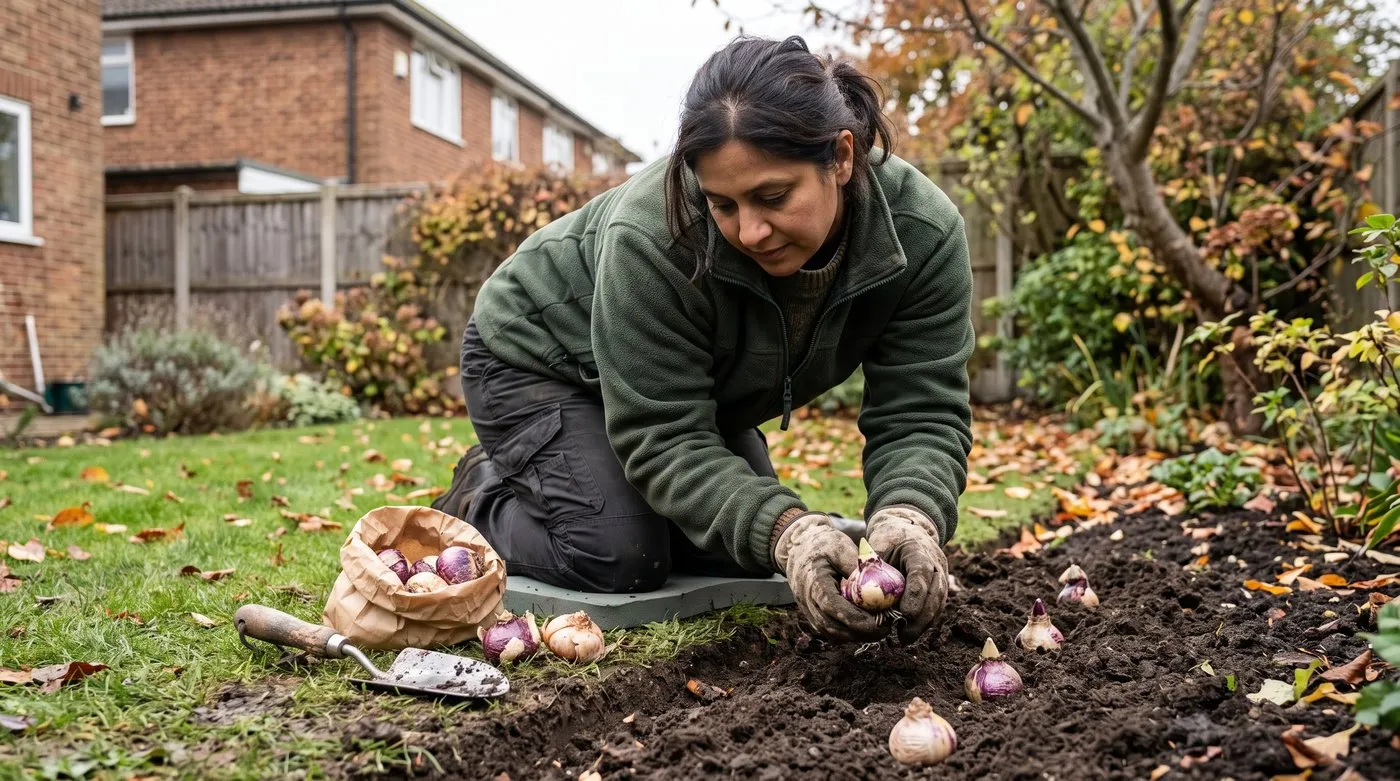
Gloves on, pointed ends up, and a gap of about 8-10cm between bulbs. That’s all there is to it.
- Wear gloves, as the bulb skins can make some people itch.
- On heavy clay, dig in some grit or plant in a raised bed.
- Plant bulbs pointed end up, about 10-15cm deep. That’s roughly two to three times the bulb’s height.
- Space them about 8-10cm apart.
- Cover, firm gently and water if the soil is dry.
Plant in groups of at least five of one variety. A single hyacinth looks a bit lonely. Choose a spot out of strong wind, as the heavy spikes can snap or flop. They grow happily on chalky soil too.

Hyacinths at the front of a border, with tulips and daffodils behind. Plant in groups for the best show.
Growing hyacinths in pots
Hyacinths are brilliant in pots and window boxes. Their compact size suits small spaces, and you can move them near a door to enjoy the scent.
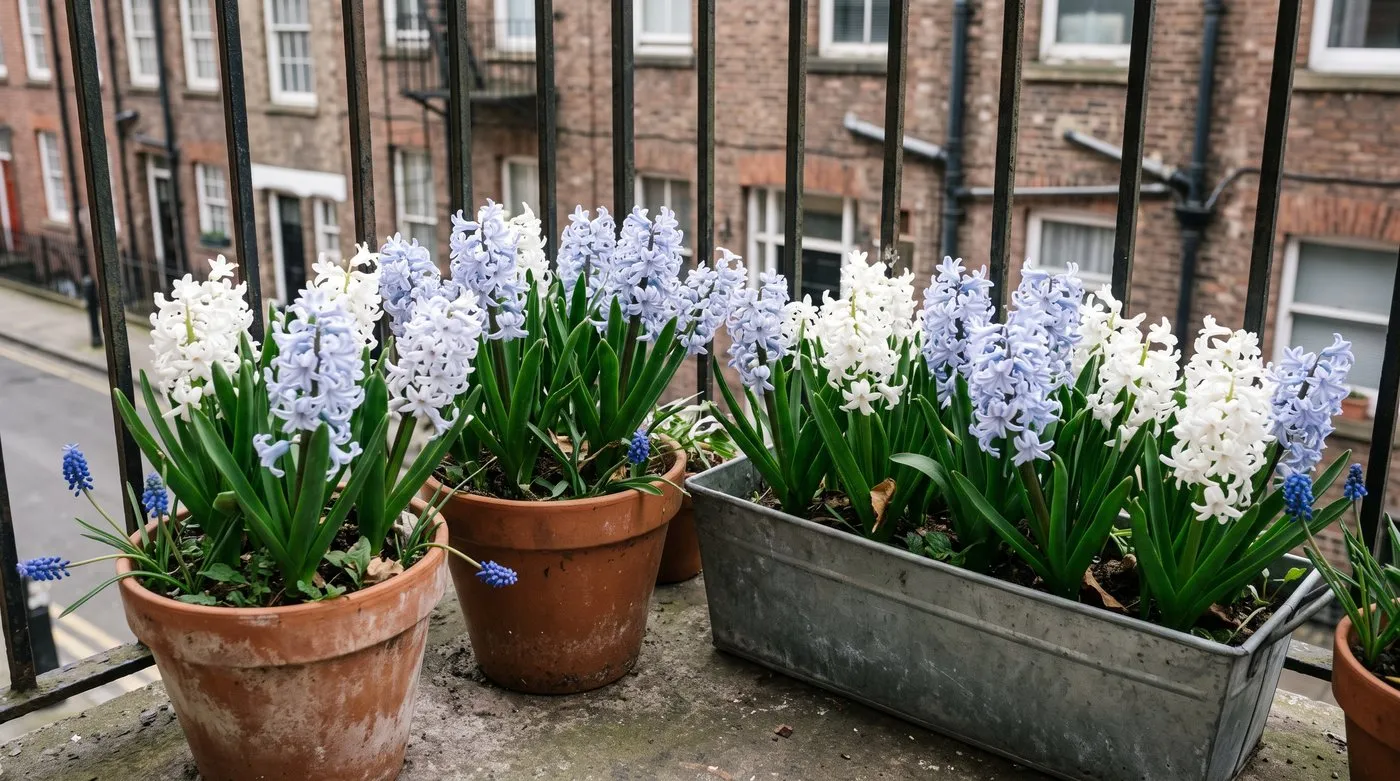
Hyacinths are perfect for small spaces. Put pots where you’ll catch the scent as you walk past.
Use a pot at least 20cm deep with drainage holes. Fill it with multipurpose compost mixed with about a third grit. Plant the bulbs close together, almost touching, with their tips just below the surface. Leave pots outside over winter, as hyacinths need the cold to flower well.
Hyacinths also work well in layered pots with other bulbs. The guide to bulb lasagne planting shows how to stack them for months of colour.
Best hyacinth varieties for UK gardens
All garden hyacinths are forms of Hyacinthus orientalis. They come in blues, purples, pinks, whites, yellows and apricots, and almost all are well scented.
| Variety | Colour | Good to know |
|---|---|---|
| ’Delft Blue’ | Soft lilac-blue | A reliable classic, strongly scented |
| ’Blue Jacket’ | Deep navy blue | Rich colour, strong scent |
| ’Pink Pearl’ | Deep rose pink | Bright and cheerful in borders |
| ’Anna Marie’ | Soft pink | Popular for pots and forcing |
| ’Carnegie’ | White | Neat spikes, lovely indoors |
| ’Woodstock’ | Deep beetroot purple | Dramatic dark colour |
| ’Jan Bos’ | Deep pink-red | Bright and bold |
| ’City of Haarlem’ | Pale primrose yellow | Flowers a little later than most |
| ’Gipsy Queen’ | Apricot-salmon | An unusual warm colour |
Bulbs sold as “prepared” have been specially treated so they flower early indoors. Buy these for Christmas flowers. Ordinary bulbs are fine for the garden and for later flowers indoors.

From deep purple to pale yellow, there’s a hyacinth for every colour scheme.
How to force hyacinths for Christmas
You can have hyacinths in flower indoors at Christmas by giving prepared bulbs an early, controlled winter.
- In September, plant prepared bulbs in a pot of bulb fibre or gritty compost, tips showing. Or set them on hyacinth glasses.
- Water the pot once, lightly.
- Put it somewhere cool and dark, about 5-9°C, such as a shed, garage or cold room.
- Check every couple of weeks. Keep the compost just moist, never wet.
- After about ten weeks, once shoots are a few centimetres tall, bring them into a cool, bright room.
- After a week or so, move them somewhere warmer to flower.
Don’t rush them into warmth. Bulbs brought in too early often give short, stunted or loose spikes. For a run of flowers, start a new pot every few weeks. The guide on how to force bulbs for indoor flowers covers other bulbs too.
Using a hyacinth glass
A hyacinth glass has a narrow waist that holds a single bulb above water. It’s a lovely way to watch roots grow, and children love it.
- Fill the glass with water to just below the cup.
- Sit the bulb in the cup so its base is just above the water, not touching it.
- Keep it cool and dark, as for pots.
- Top up the water as needed, keeping the gap. Change it if it turns cloudy.
- When roots fill the glass and the shoot is a few centimetres tall, bring it into the light.

Roots reach down into the water while the bulb stays dry above it. Bulbs sitting in water tend to rot.
What to do with hyacinths after flowering
Snap or cut off the faded flower spike, but leave the leaves. They feed the bulb for next year. Let them die back naturally over about six weeks, and don’t tie or fold them. The guide to spring bulb care after flowering explains why.
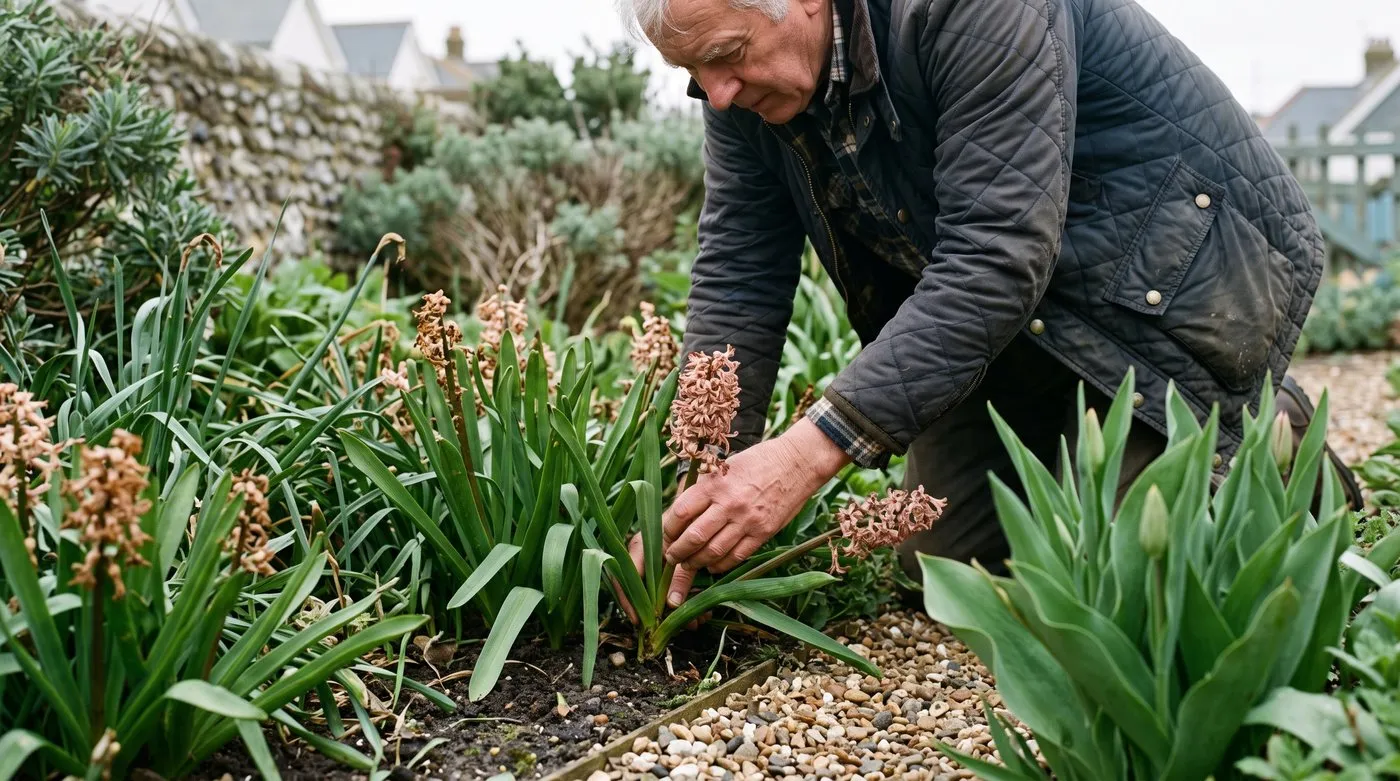
Snap off the old flower spike but keep the leaves. They feed the bulb for next spring.
In the garden, hyacinths can usually stay in the ground for years. After the first year, the spikes become looser and smaller, which many people like for a more natural look. For a showy, dense display every year, add fresh bulbs each autumn.
Forced bulbs won’t force well a second time. Once flowering is over, keep the leaves growing in a cool, bright spot, then plant the bulbs in the garden. They may skip a year, then flower more lightly in later springs.
If you need to lift bulbs, wait until the leaves have yellowed. Brush off the soil, let them dry, and store them in paper bags somewhere dry and airy until autumn.
Hyacinth growing calendar
| Month | What to do |
|---|---|
| September | Plant prepared bulbs for Christmas and keep them cool and dark. Start planting outdoors |
| October | Main planting time for gardens and pots |
| November | Last outdoor planting. Check forcing bulbs for shoots |
| December | Bring forced bulbs into a cool, bright room, then into warmth to flower |
| January to February | Pots stay outside. Forced bulbs finish flowering |
| March to April | Outdoor hyacinths flower. Deadhead faded spikes |
| May to June | Let leaves die back. Plant out forced bulbs. Lift bulbs if needed |
Common hyacinth problems and mistakes
Rotten bulbs. Soft, brown bases mean the bulb sat too wet: in soggy soil, an overwatered pot, or a glass with the bulb touching the water. Rotten bulbs won’t recover. Improve drainage before replanting.
Short or stunted spikes indoors. The bulbs were brought into warmth too soon. Wait until shoots are a few centimetres tall and give them a cool, bright week first.
Floppy stems. Heavy spikes lean over, especially in wind or warm rooms. Plant in a sheltered spot, or support pots with thin canes or small wire rings.
Dug-up bulbs. Squirrels sometimes dig up newly planted bulbs. The guide to stopping squirrels digging up bulbs has ways to protect them.
Itchy hands. The bulb skins contain tiny crystals that irritate skin. Wear gloves when planting and wash your hands afterwards.
Plants to grow with hyacinths
Hyacinths flower between the earliest bulbs and the main tulip season, so they link a spring display together. Good partners include:
- Grape hyacinths (muscari), whose small blue spikes suit pink or white hyacinths. See the guide to growing muscari.
- Daffodils, which flower alongside or just before them.
- Forget-me-nots, which fill gaps with a haze of soft blue.
- Tulips, which take over as hyacinths fade. The guide to growing tulips covers planting.
Frequently asked questions
When should I plant hyacinth bulbs outdoors in the UK?
Plant them from September to November. September and October are ideal, as bulbs have time to root before winter. Choose a sunny spot with well-drained soil. Bulbs planted later in November still usually flower, just a little later.
How do I force hyacinths for Christmas?
Plant prepared bulbs in September, then keep them cool and dark. A shed or garage at about 5-9°C is ideal. After about ten weeks, once shoots are a few centimetres tall, bring them into a cool, bright room. They usually flower a few weeks later.
What is a hyacinth glass and how does it work?
It’s a vase with a narrow waist that holds one bulb above water. The base of the bulb sits just above the water, not in it. Roots grow down into the water while the shoot grows up. Keep it cool and dark until the shoot is a few centimetres tall.
Can I plant forced hyacinths outside after flowering?
Yes, once the flowers fade. Cut off the flower spike, keep the leaves, and plant the bulb outside in a sunny spot. It may skip a year while it recovers. Flowers in later years are usually smaller and looser than the first.
How deep should hyacinth bulbs be planted outdoors?
About 10-15cm deep, pointed end up. That’s roughly two to three times the height of the bulb. Go towards the deeper end on light, sandy soil. Space bulbs about 8-10cm apart for a full display.
Why are my hyacinths smaller in their second year?
Big first-year spikes come from large, specially grown bulbs. In a garden, bulbs usually settle down to looser, smaller spikes after the first year. They still flower and smell lovely. For a showy display every year, plant some fresh bulbs each autumn.
Are hyacinths poisonous to cats and dogs?
Yes, hyacinths are toxic to cats and dogs, the bulbs especially. Dogs that dig up and chew bulbs are most at risk. Keep bulbs out of reach while you plant, and contact your vet if a pet eats any part.
Now your hyacinths are planned, read the guide to when to plant tulip bulbs to keep the spring colour going, or browse more plant guides.
Our team produces practical UK gardening guidance from source research, contributor records and established horticultural practice. Editorial standards are overseen by Matt W.


