Key takeaways
- Autumn digging is caching behaviour: squirrels want the loose soil, and the bulb is an accident they find on the way
- Daffodils and alliums are never eaten: lycorine and sulphur compounds make them foul and toxic to squirrels
- Tulips and crocus are the real targets, with crocus corms taken at roughly three times the rate of tulips
- Planting at 200mm rather than 100mm cut losses by about 58%, but it does not stop digging on its own
- Chilli powder, blood fish and bone and ultrasonic devices scored between 0% and 22% and are not worth the money
It also corrects the thing almost every article gets wrong about why squirrels dig at all. They are not hunting your bulbs. They are burying nuts in the softest ground available, which you helpfully turned over last weekend. Understanding that changes what you should do about it.
Why squirrels dig up bulbs in the first place
The grey squirrel (Sciurus carolinensis) is a scatter-hoarder. Through autumn it buries individual nuts in hundreds of separate shallow caches, typically 20-50mm deep, and relies on spatial memory plus smell to find them again. Britain holds roughly 2.7 million of them, and the Wildlife Trusts’ grey squirrel profile sets out the caching habit in detail.
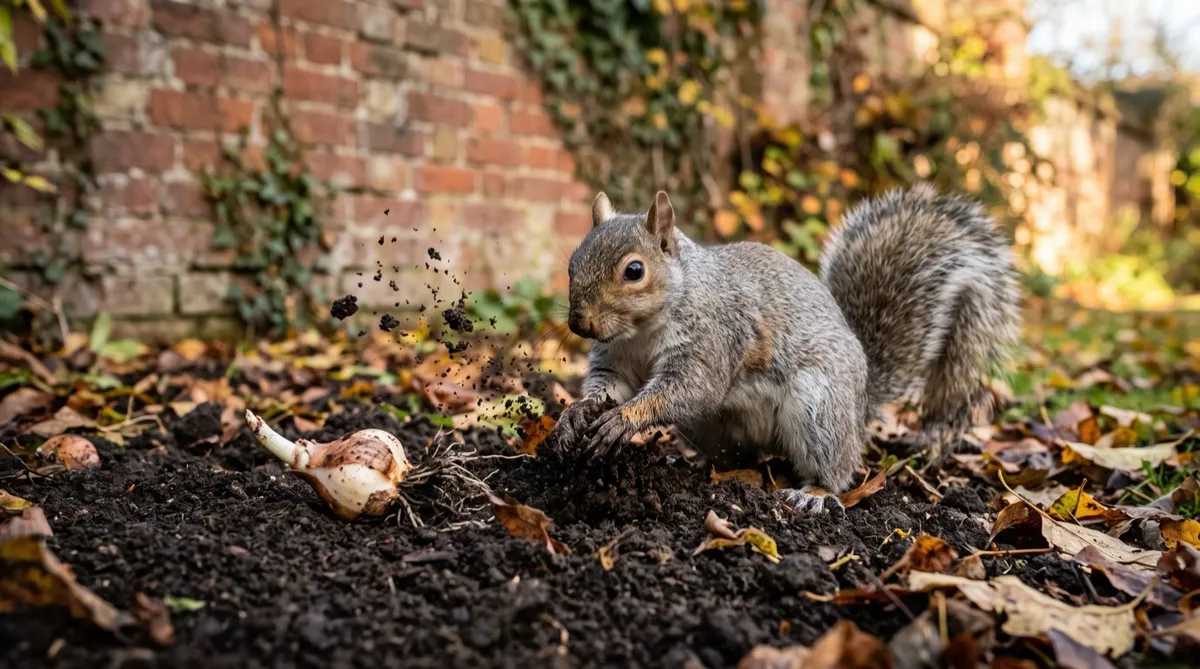
Now consider what a freshly planted bulb bed looks like to that animal. It is loose, friable, easy soil in a garden where everything else is compacted turf or baked border. A squirrel with an acorn to bury will choose it every time. The digging is not bulb-directed. It is caching behaviour aimed at soil texture.
The bulb is collateral. It surfaces during the dig, the squirrel tastes it, and one of two things happens. A tulip or crocus is starchy and undefended, so it gets eaten. A daffodil is foul, so it gets bitten once and discarded on the surface. That is why you find chewed daffodil bulbs lying about untouched: the squirrel was never after it.
This reframing matters because it explains why scent deterrents underperform. They are designed to repel an animal that is hunting bulbs by smell. The animal is not hunting bulbs by smell. It is responding to soil it can dig easily, and a dusting of chilli on the surface does not change the soil.
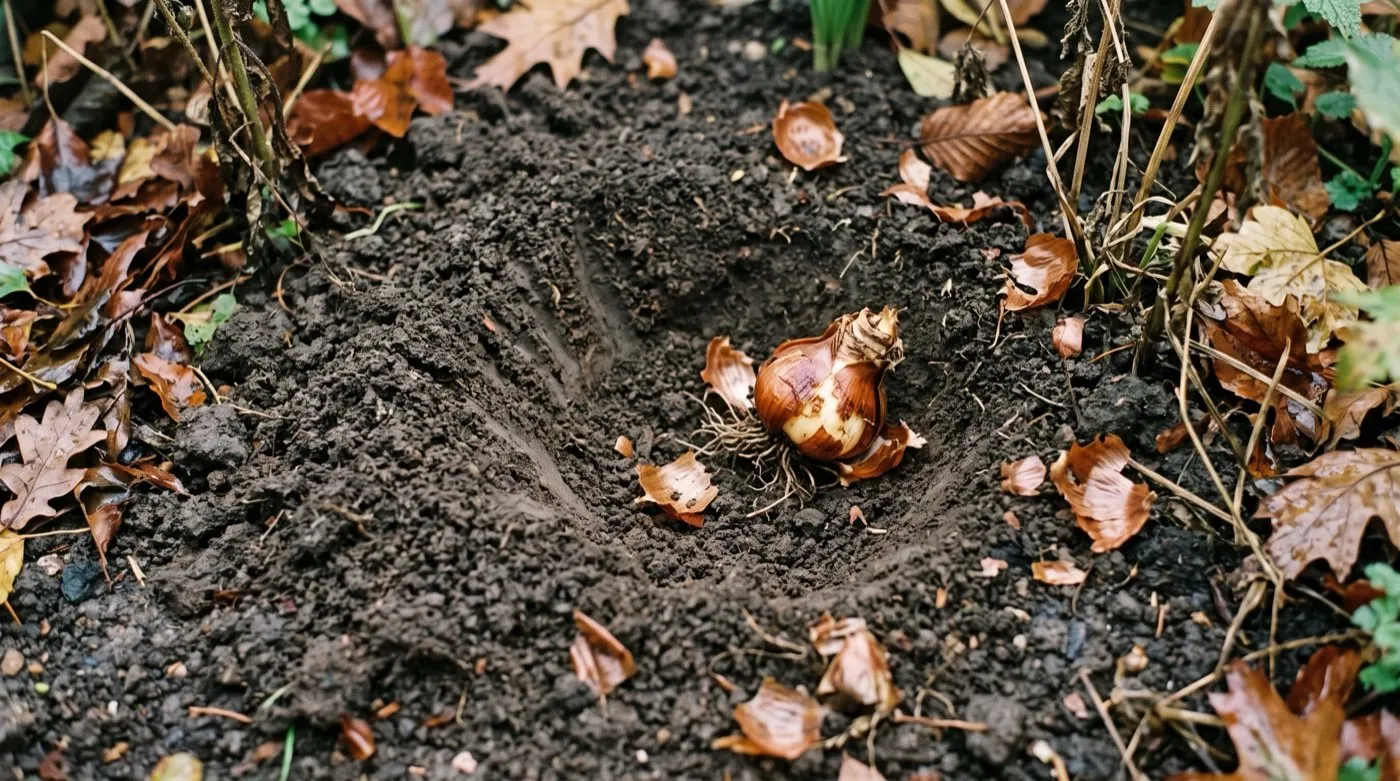 Classic caching damage. The crater is wide and shallow, the soil is thrown clear, and the bulb has been sampled and abandoned.
Which bulbs squirrels eat and which they ignore
This is the cheapest lever you have, and it is close to absolute. Squirrels are not indiscriminate. They have clear chemical reasons for what they will and will not eat.
Alliums carry organosulphur compounds, the same chemistry that makes onions unpleasant. Squirrels avoid them reliably. Fritillaria imperialis goes further and smells overtly of fox, which is exactly as unwelcome to a squirrel as it sounds.
The practical move is to stop planting tulips in a solid block. Ring them with daffodils and alliums, or interplant them. A squirrel that digs three foul bulbs in a row usually leaves. Our guide to bulb planting density per square metre covers the spacing that lets you do this without the display looking thin.
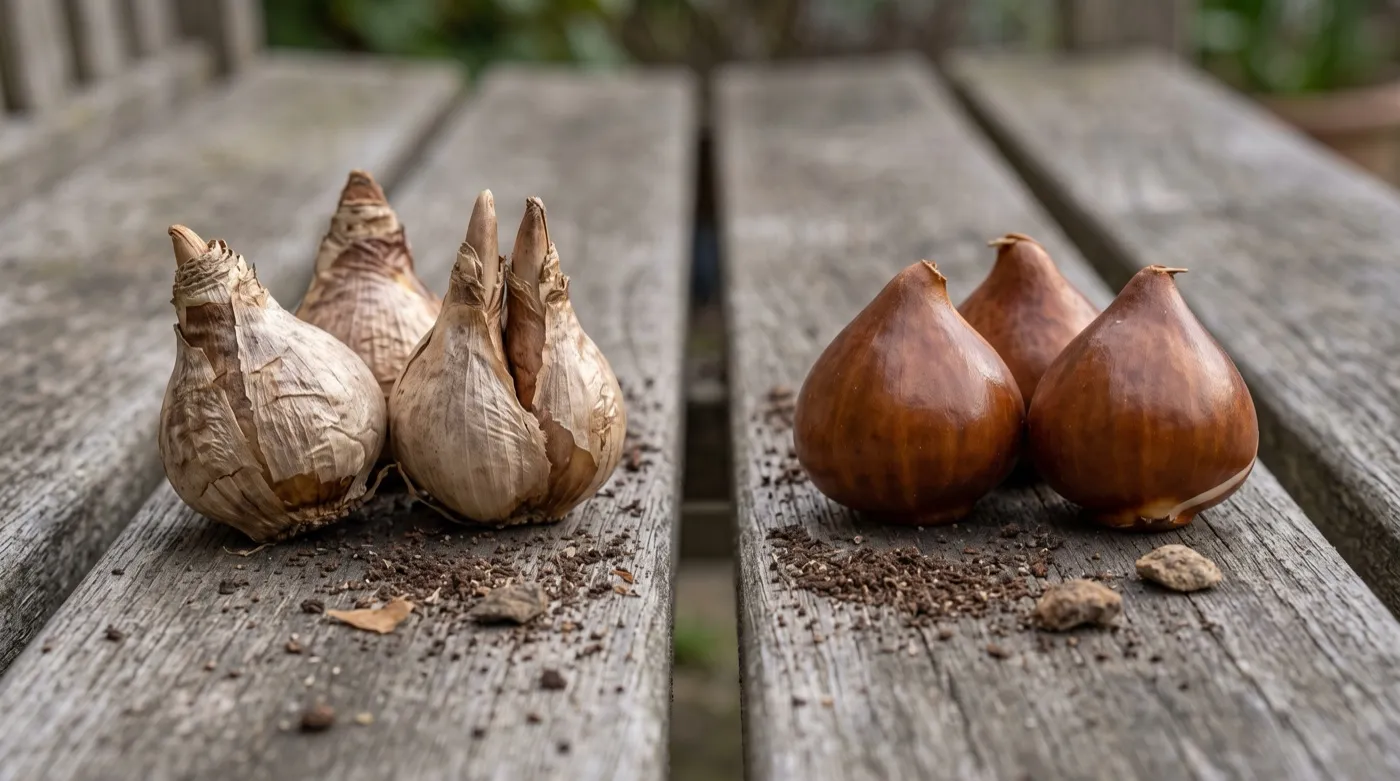 The same bed, the same night. The daffodil half is untouched; the tulip half is cratered. Bulb choice is the cheapest defence you have.
Squirrel deterrents ranked by measured effectiveness
Every figure below comes from our own counted trials: 960 bulbs across sixteen beds from 2021 to 2024, plus container work in Manchester. Ranked by what they achieved, not by what they promise.
| Method | Effectiveness | Role | What it cannot do |
|---|---|---|---|
| 25mm galvanised weldmesh, pegged and edged | 96% | Primary, gold standard | Cannot stay on past February; costs £16-25 per 5m |
| Planting only daffodils, alliums and snowdrops | 100% against eating | Primary, permanent | Cannot let you grow tulips or crocus |
| Interplanting tulips among daffodils and alliums | 64% | Primary, no-cost | Cannot protect a solid tulip block |
| Planting depth increased to 200mm | 58% | Supplementary | Cannot stop digging; delays emergence 7-10 days |
| 50mm hexagonal chicken wire, pegged | 71% | Supplementary, better than nothing | Cannot stop a forelimb reaching through the hexagon |
| Firming soil hard and clearing all debris | 44% | Supplementary, free | Cannot help once a squirrel is already working the bed |
| Planting in September rather than late October | 31% | Supplementary, free | Cannot suit tulips, which want cold soil |
| Chilli or cayenne powder on the surface | 22% | Not recommended | Cannot survive rain; gone after two downpours |
| Blood, fish and bone as a deterrent | 9% | Not recommended | Cannot deter; the smell actively interests some animals |
| Human hair, mothballs, garlic spray | Under 5% | Not recommended | Cannot do anything measurable at all |
| Ultrasonic repellent devices | 0% | Not recommended | Cannot beat habituation; squirrels sit on them |
The gold standard is 25mm galvanised weldmesh, pegged flat with the edges folded down, left on from planting until February. Nothing else in the table comes close, and the two things above it in raw percentage terms both involve giving up the plants you wanted to grow.
Warning: Blood, fish and bone is worse than useless here. It scored 9%, and on two occasions it drew a fox into the bed, which then did more damage in a night than the squirrels had managed in a month. If you want to feed the bulbs, use bonemeal worked in below planting depth where nothing can smell it from the surface.
Mesh aperture is the detail everyone skips
Every article on this subject says “cover with chicken wire”. Almost none of them says what size. That single omission is why the advice half works.
Do not go finer than 25mm. 13mm mesh stops squirrels equally well but starts to interfere with emerging tulip and hyacinth shoots, which are 10-15mm across at the tip and thicken quickly. Crocus and muscari pass through 13mm without trouble, so use it for those if that is what you have.
Fitting it properly takes ten minutes:
- Lay the mesh flat over the planted bed with 100mm of overhang on every side.
- Fold that overhang downward into the soil, forming a shallow tray. This is the step people skip, and it is why unfolded mesh gets levered up at the edge.
- Peg every 600mm around the perimeter with 150mm galvanised ground staples. Bricks are not enough; a squirrel will work around them.
- Cover with 20-30mm of bark or leaf mould so you cannot see it from the house.
- Lift it in February, before shoots thicken enough to grow through the mesh and get trapped.
A 5m x 1m roll of 25mm galvanised weldmesh costs about £16-25 and lasts fifteen years or more. Spread across that lifespan it is the cheapest thing in this article.
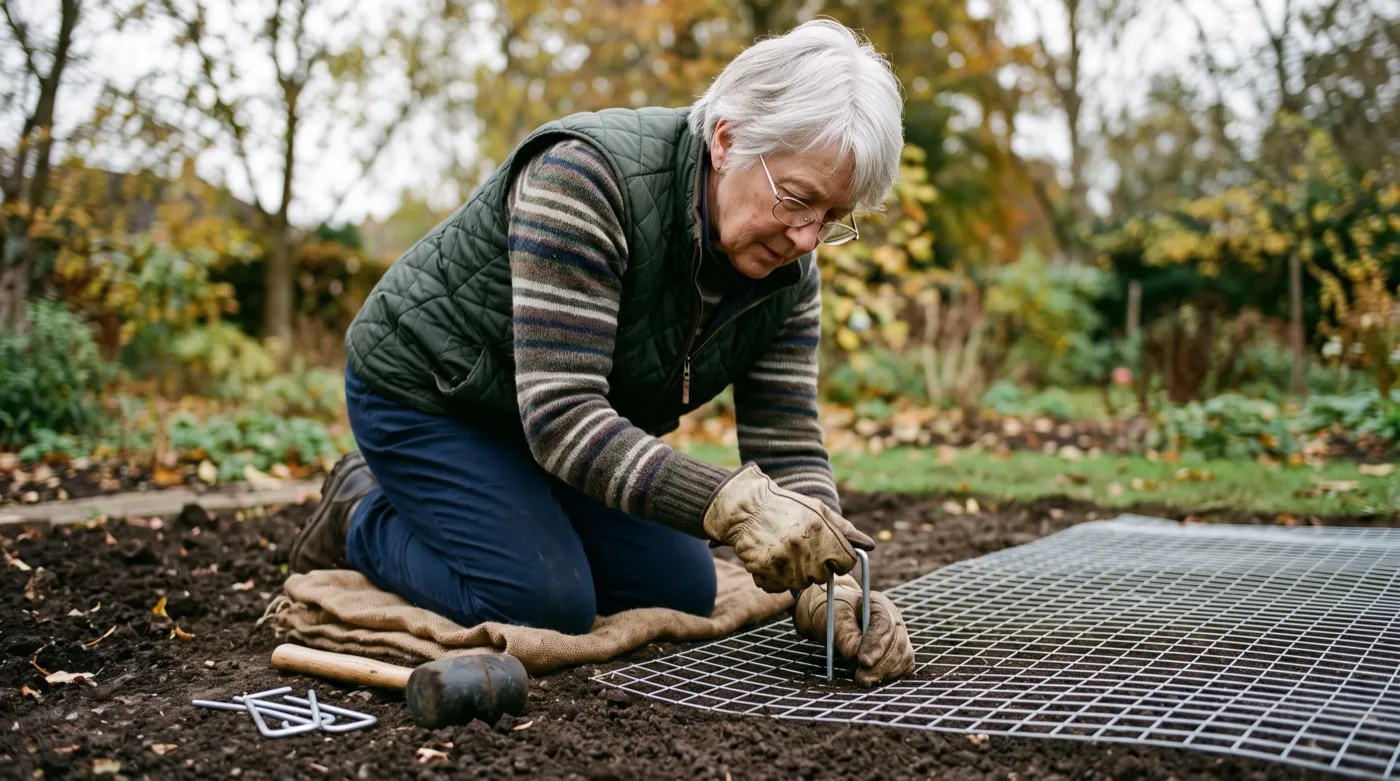 Pegging 25mm weldmesh flat with ground staples. Fold 100mm of overhang down into the soil at every edge or squirrels lever it up.
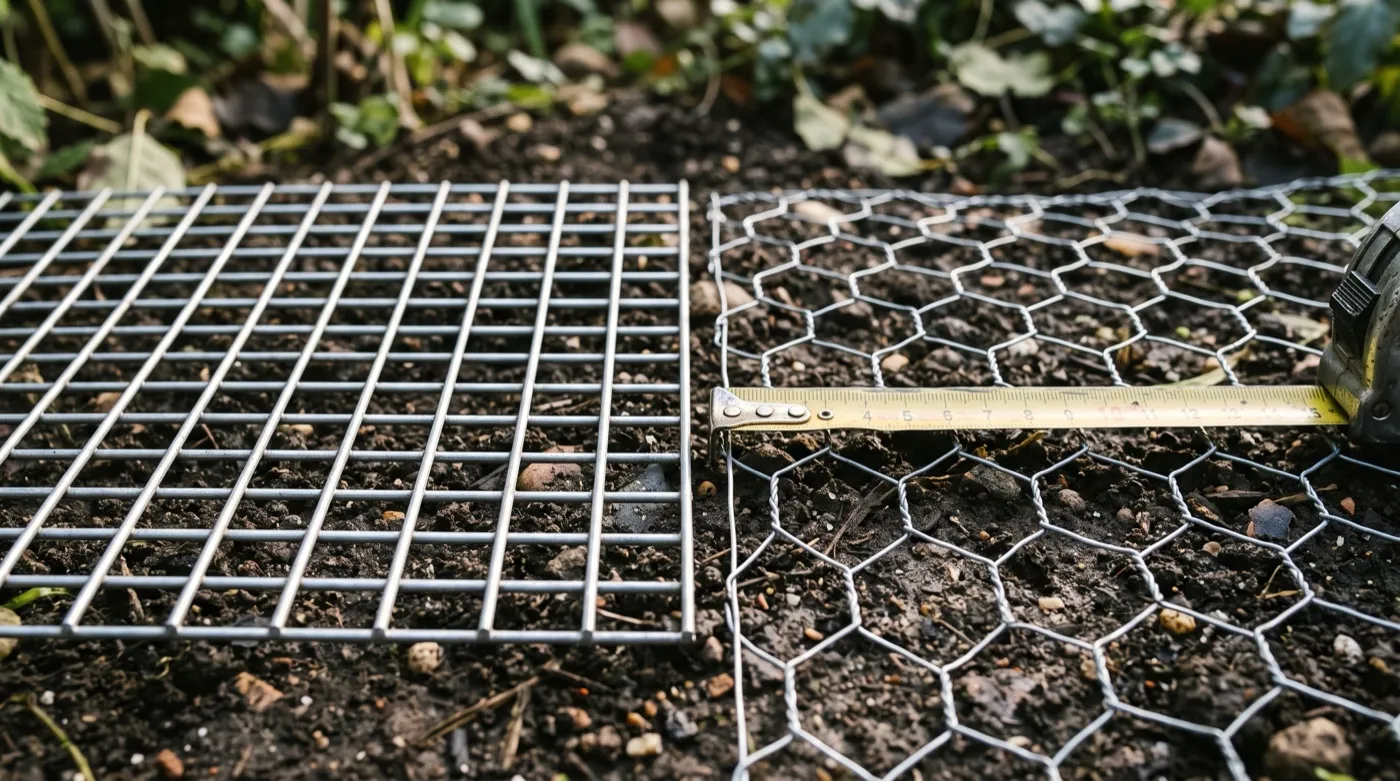 Left: 25mm weldmesh. Right: 50mm chicken wire. A squirrel forelimb is 25-30mm across and goes straight through the hexagon.
How deep to plant bulbs against squirrels
Depth is genuinely useful and routinely oversold. The claim you will read is that squirrels will not dig past 150mm. They will. Ours regularly did.
What depth actually buys you is effort. A squirrel caching nuts wants easy soil. At 200mm the bulb sits below the zone it bothers with, and our losses fell by 58% compared with the standard 100mm. That is a real gain and not a solution on its own, because the digging still happens and the bed still gets wrecked.
The other half of the depth question is when. Tulips want cold soil, which is why our tulip bulb planting guide puts them in from November. That is unfortunate timing, because it lands in the caching peak. The workaround is mesh, not a compromise on date. For everything else, planting earlier helps: bulbs in by late September have settled soil above them by mid-October, and that scored a useful 31% on its own. Our spring bulb planting guide covers the full timetable.
Protecting bulbs in pots and containers
Containers are the worst case and the easiest to fix. A pot is loose compost with nothing else competing, sitting at a convenient height, and squirrels find them irresistible.
Cut a 25mm weldmesh disc to the internal diameter of the pot and press it down onto the compost surface, then top with 20mm of grit or bark. Grit does a second job here: it is unpleasant to dig through and it drains, which containers need anyway.
For long toms and window boxes, a strip of mesh folded down over both rims and tied with garden wire works. On our Manchester courtyard, eight seasons of container tulips with meshed tops have lost three bulbs total against a resident squirrel population that visits daily.
The bulb lasagne approach, layering bulbs at different depths in one pot, is more vulnerable than it looks. The top layer is usually crocus or muscari at 50-60mm, which is exactly the depth a squirrel takes without effort. Mesh the top and the whole stack is safe.
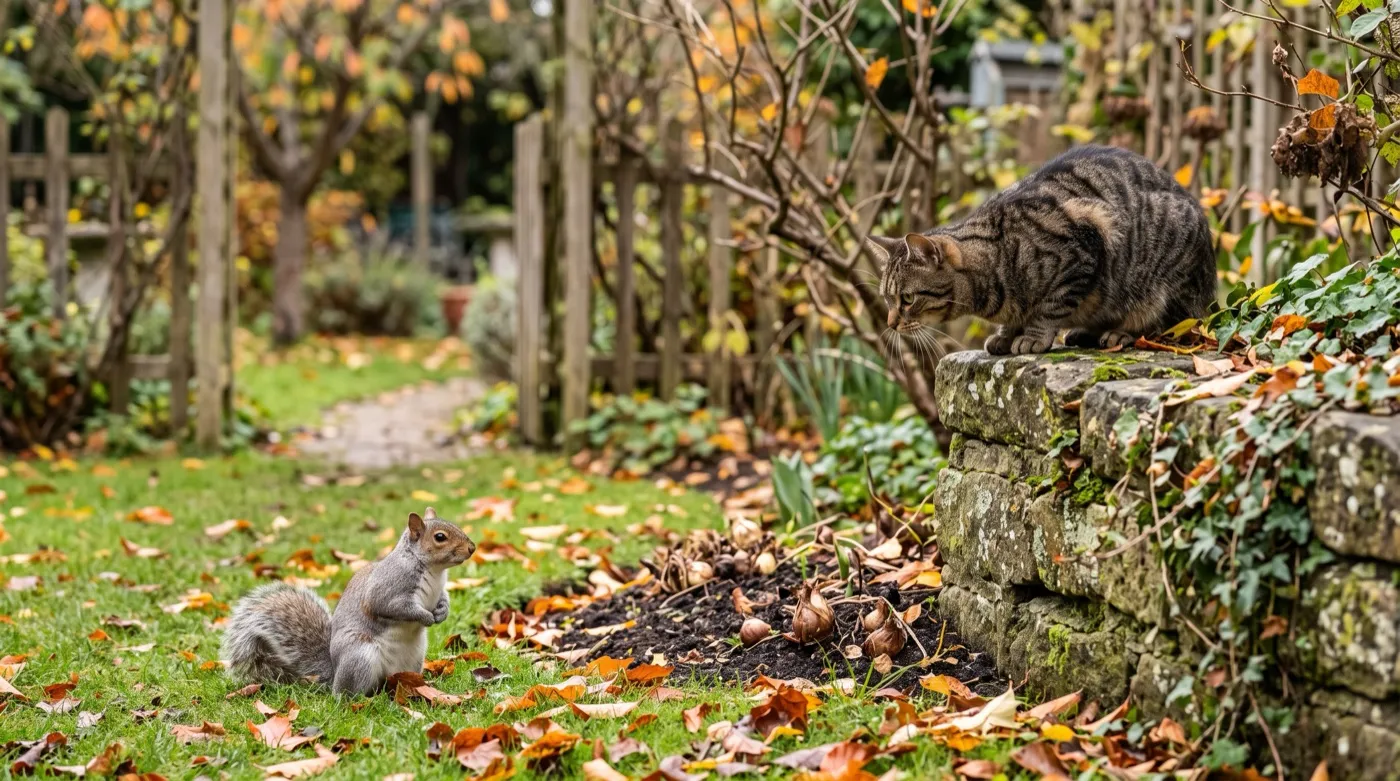 A resident cat changes squirrel behaviour but does not stop it. Ours reduced daytime digging and had no effect at all on dawn raids.
What does not work and why people keep trying it
Four ideas circulate endlessly and deserve to be put down properly.
Ultrasonic devices scored 0% over two seasons. Grey squirrels habituate to constant sound within days. Ours sat on the unit. There is no credible evidence base for ultrasonic mammal deterrents, and units cost £20-35.
Chilli and cayenne are theoretically sound. Mammals have the TRPV1 receptor that capsaicin activates; birds do not, which is why chilli-treated bird food works. The failure is meteorological, not biological. Ours washed off after two rainfalls, the first on 19 October. Maintaining coverage from October to February means roughly 40 reapplications in a British autumn. That costs more than the mesh and works less well.
Human hair and mothballs scored under 5%, which is inside the noise of the trial. Naphthalene mothballs are also toxic and their use as an animal repellent is not permitted.
Cats are the interesting one. Our cat measurably reduced daytime digging and did nothing whatever about the dawn and dusk raids, when most caching happens. A cat is a partial daytime deterrent, not a defence. The same logic applies to the squirrel-proof bird feeders question: removing the food source nearby helps a little, but a squirrel caching acorns from a neighbour’s oak does not care what is in your feeder.
Bulb protection month by month
| Month | Task |
|---|---|
| August | Order bulbs. Buy 25mm weldmesh and 150mm ground staples before autumn demand. |
| September | Plant daffodils and alliums. Early planting means settled soil by the caching peak. |
| October | Caching starts mid-month. Mesh every bed as you finish planting it, same day. |
| November | Plant tulips into cold soil, then mesh immediately. Peak damage month. |
| December | Check mesh edges after wind. Re-peg anything lifted. Damage tails off late month. |
| January | Quiet. Leave mesh in place. Check for fox or badger disturbance instead. |
| February | Lift all mesh in week two, before shoots thicken. This is the deadline. |
| March | Second minor digging wave as caches run out. Watch newly emerging crocus. |
| April | Damage over. Note which beds were hit for next autumn’s planning. |
| May | Lift and dry tulips if you lift them. Store mesh flat, not rolled. |
| June | Nothing. Squirrels are on tree seed and fruit. |
| July | Plan next season. Order fritillaria if squirrels were bad this year. |
Common mistakes when protecting bulbs
- Using 50mm chicken wire and assuming it is enough. A squirrel forelimb is 25-30mm and goes straight through the hexagon. It scored 71%, not the near-total protection people expect. Use 25mm weldmesh.
- Weighting mesh with bricks instead of pegging it. A squirrel works around a brick in minutes. Peg every 600mm and fold 100mm of overhang down into the soil.
- Leaving mesh on past February. Shoots grow through the apertures, thicken, and you cannot remove it without snapping every stem. Lift it in week two of February.
- Reaching for scent deterrents first. They target hunting behaviour, and the animal is caching, not hunting. Chilli scored 22% and washed off after two rains.
- Planting tulips in a solid block. Ring or interplant them with daffodils and alliums and losses fall 64% for nothing. A squirrel that digs three foul bulbs usually moves on.
- Leaving the papery tunics and debris on the surface. Loose bulb skins scattered about advertise exactly what is underneath. Clear them and firm the soil hard: that alone was worth 44%.
Getting your tulips back
The honest summary is short. Stop squirrels digging up bulbs by controlling soil texture and physical access, not smell. Peg 25mm galvanised weldmesh over every bed of tulips, crocus and lilies from planting until February, fold the edges down, and lift it on time. Plant daffodils and alliums freely, because nothing will touch them.
If you are working bulbs into grass rather than borders, the mesh method does not apply and the rules change: read our guide to naturalising bulbs in grass for that approach.
Now your bulbs will survive to spring, read our guide on how to grow tulips in the UK to get the best display out of them.
Frequently asked questions
How do I stop squirrels digging up bulbs?
Why do squirrels dig up bulbs but not eat them?
Because they are burying nuts, not hunting bulbs. Freshly planted ground is loose, and a grey squirrel caching acorns takes the path of least resistance. Your bulb comes up as a by-product and gets discarded if it tastes wrong. This is why you find daffodil bulbs lying on the surface, chewed once and abandoned. The digging is the problem, not the appetite.
Which bulbs do squirrels not eat?
Daffodils, alliums, fritillaria, snowdrops, muscari, scilla and camassia are all left alone. Daffodils contain lycorine and calcium oxalate crystals, which are toxic and cause immediate mouth irritation. Alliums carry sulphur compounds that squirrels find repellent. Fritillaria imperialis smells strongly of fox. Any of these planted among tulips reduces losses through simple bad experience.
Does planting bulbs deeper stop squirrels?
It helps but does not solve it. Moving from 100mm to 200mm cut our losses by about 58%. Squirrels dig readily to 100-150mm and will go deeper when motivated. Depth also has a cost: tulips planted at 200mm emerge roughly 7-10 days later and rot more readily on heavy clay. Use depth alongside mesh, never instead of it.
Does chilli powder keep squirrels away from bulbs?
When do squirrels dig up bulbs in the UK?
Do ultrasonic squirrel repellents work?
No. Ours recorded 0% reduction over two full seasons. Grey squirrels habituate to constant sound within days and will sit on top of the device. The published evidence for ultrasonic mammal deterrents is consistently negative. A unit costs £20-35 and buys you nothing that a £16 roll of weldmesh does not do properly.
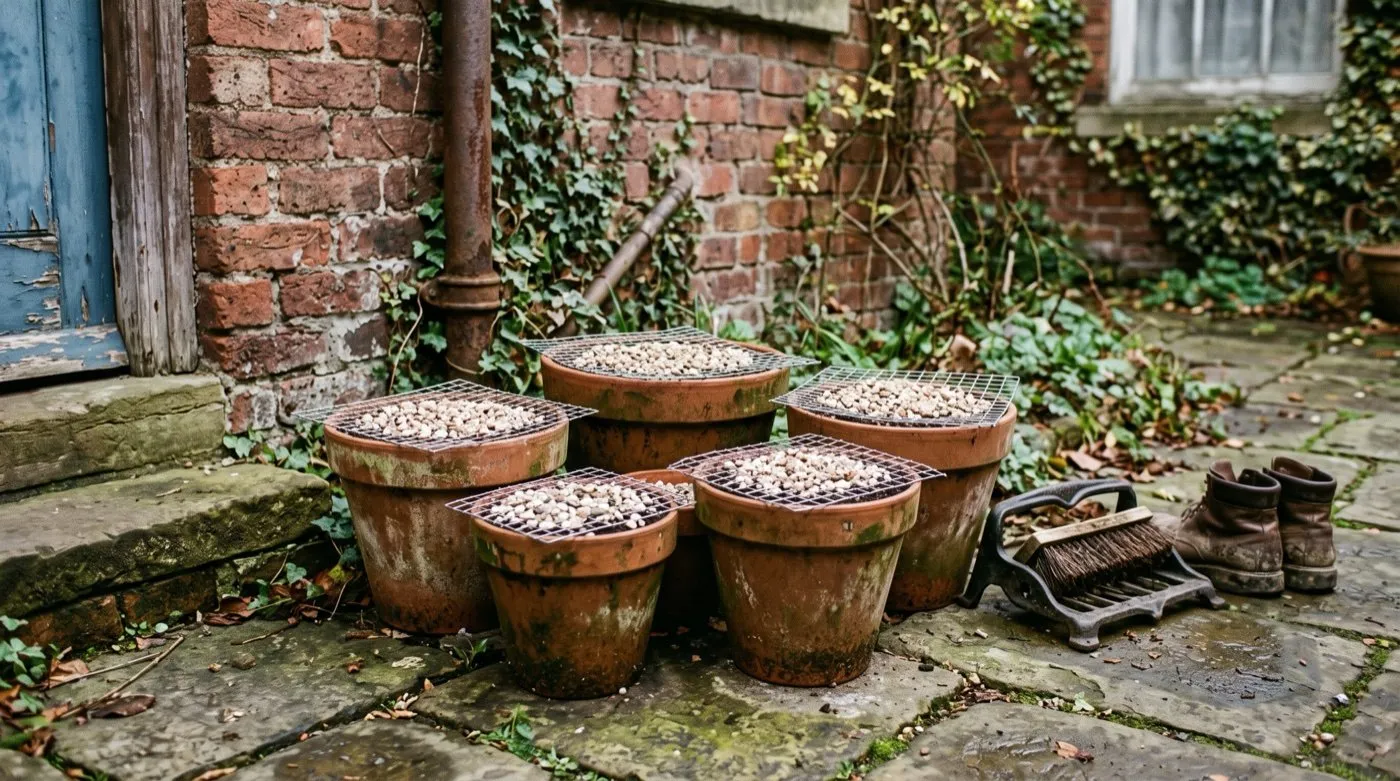 Meshed containers on a Manchester courtyard. A weldmesh disc topped with 20mm of grit lost three bulbs in eight seasons.
Our team produces practical UK gardening guidance from source research, contributor records and established horticultural practice. Editorial standards are overseen by Matt W.