Key takeaways
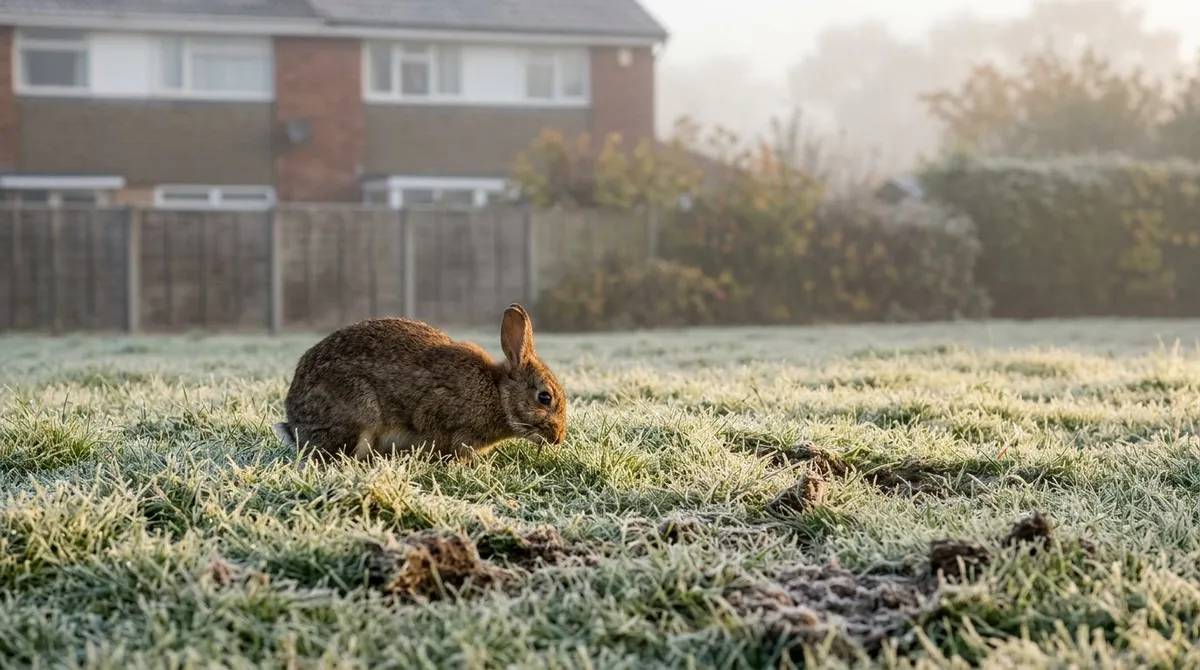
- Rabbits scrape lawns to feed and mark territory, mostly from dusk to dawn
- A proper rabbit fence is the only reliable long-term fix
- Use netting with holes no bigger than about 3cm, so young rabbits can't squeeze through
- Bury the bottom of the netting or turn it outwards along the ground so rabbits can't dig under
- Repellents wash off in rain and only buy time while you fence
- Fence first, then repair the lawn, or the new grass gets eaten
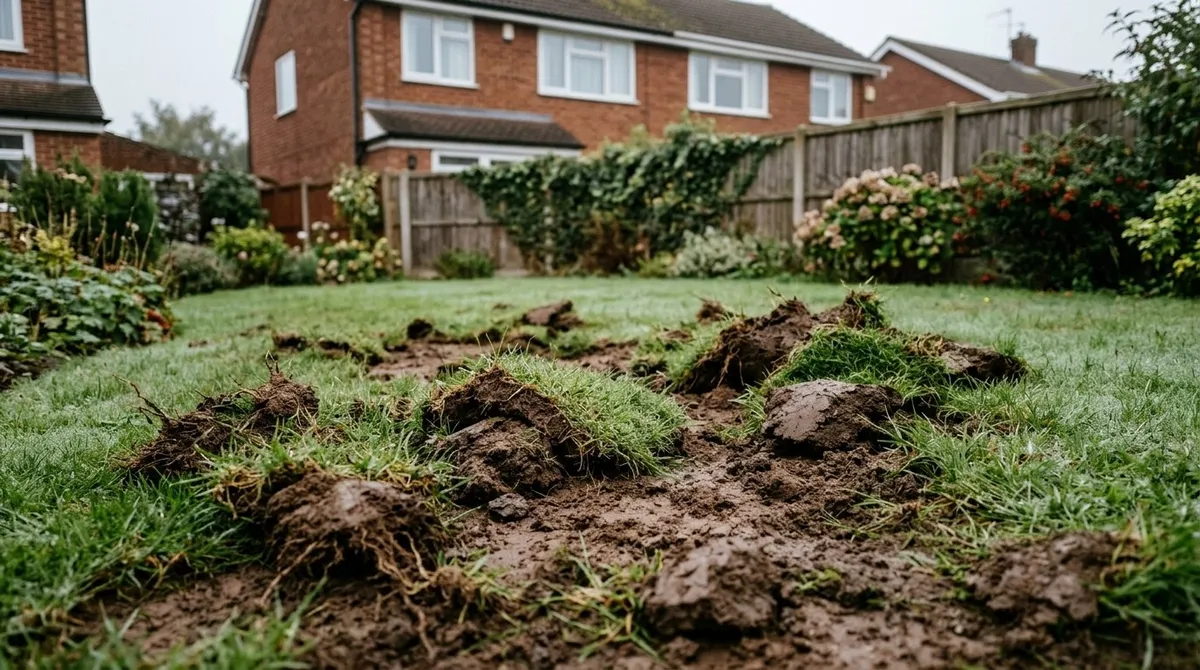
Rabbits can wreck a lawn in no time. They nibble it down, scrape bare patches and leave droppings everywhere. Most people try a spray first, watch it wash off in the next shower and decide nothing works.
The truth is simpler. A properly built fence keeps rabbits out for good. Repellents and gadgets only buy a few quiet weeks. This guide shows how to confirm it’s rabbits, how to build a fence they can’t get through or under, and how to repair the lawn afterwards.
How to tell rabbit damage from other diggers
Rabbit damage looks like shallow scrapes in the turf, grass nibbled right down to the base, and clusters of small round droppings. Scrapes are loose, scratched patches, often near a hedge or fence.
Other diggers leave different signs:
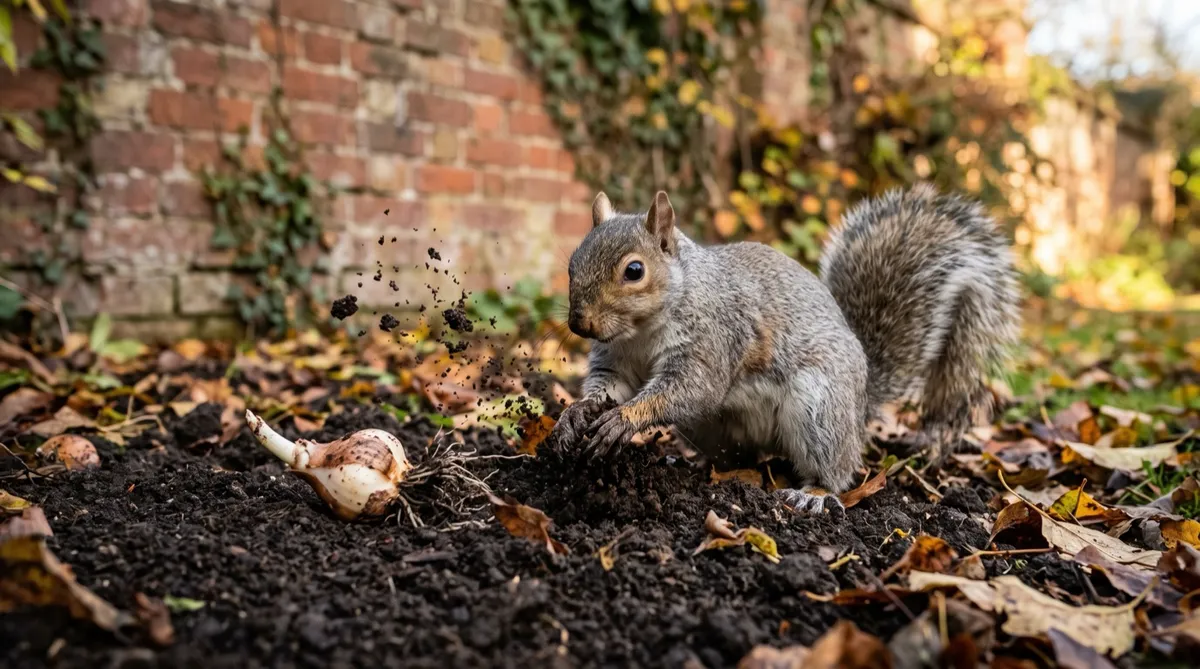
- Foxes dig single, deeper holes when hunting grubs.
- Moles push up heaps of loose soil from underneath.
- Badgers roll back wide strips of turf overnight. See the guide to stopping badgers digging up the lawn.
If you’ve found small neat holes rather than scrapes, the guide to small holes in the lawn overnight covers all the usual suspects.
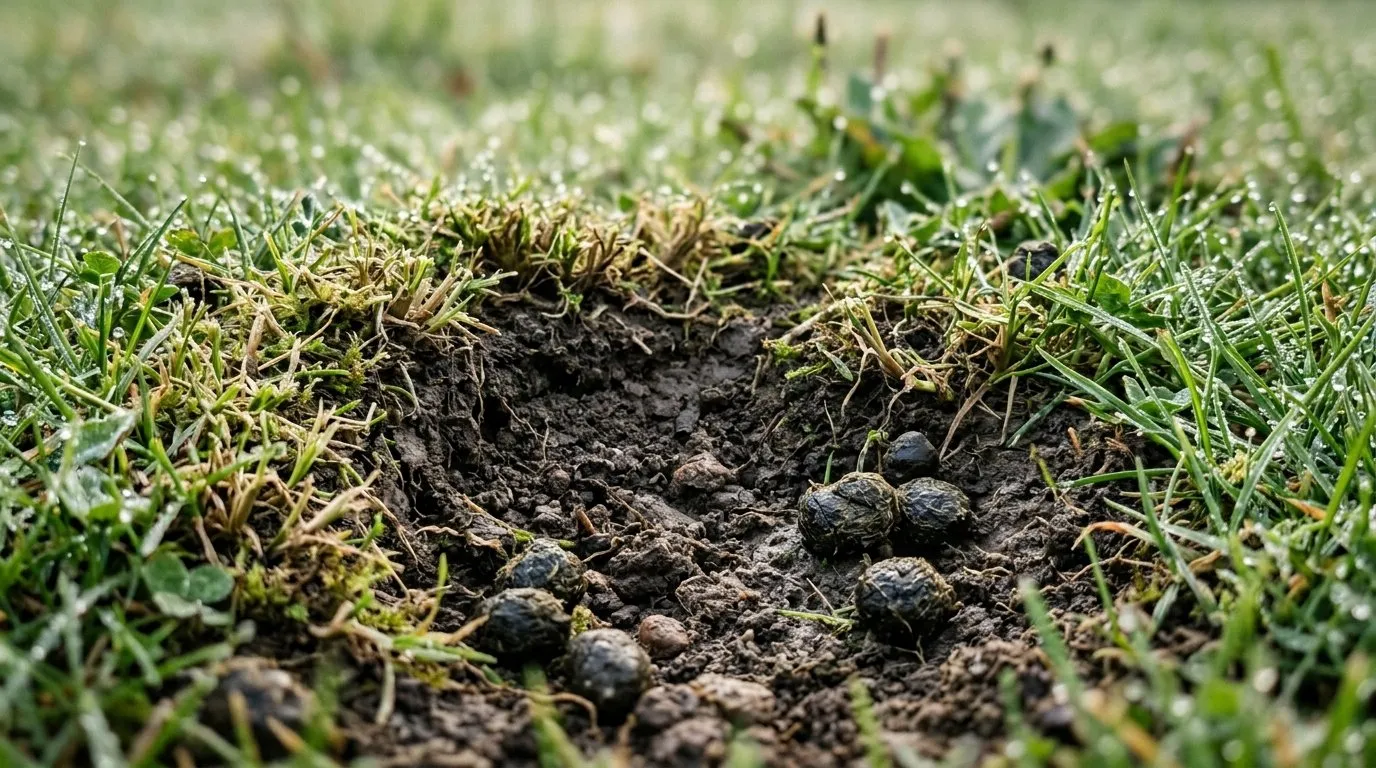
Shallow scrapes with droppings left in them are a classic rabbit sign.
Why rabbits scrape and dig your turf
Rabbits dig for three reasons:
- Feeding. They graze grass down to the base and scratch at the surface for roots and new shoots.
- Marking territory. They make scrapes and leave droppings and urine in them as a scent signal.
- Nesting. Females dig short burrows to raise young, mostly in spring and summer.
That’s why spraying one patch rarely helps. Your lawn is part of the rabbits’ feeding area, so they work across all of it. Rabbits live in groups and breed quickly from late winter to summer, so where you see one, more soon follow.
The rabbit fence that actually works
A properly built rabbit fence is the answer. Built wrong, rabbits get straight through or under it.
- Mesh: galvanised wire netting with holes no bigger than about 3cm. Young rabbits squeeze through anything bigger.
- Height: at least 90cm above ground.
- Base: bury the bottom 15-30cm, or turn the bottom 15cm outwards along the ground, towards the rabbits.
The outward flap is the part most people skip. A rabbit digs straight down at the base of a fence. When it hits the buried wire, it gives up. Laying the flap in a shallow trench is far easier than digging a deep one. Pin it down, then cover it with soil or turf.
Fix the netting firmly to posts and check gates too. Rabbits find any gap, especially under a gate. The RHS rabbit advice has more detail on fencing.
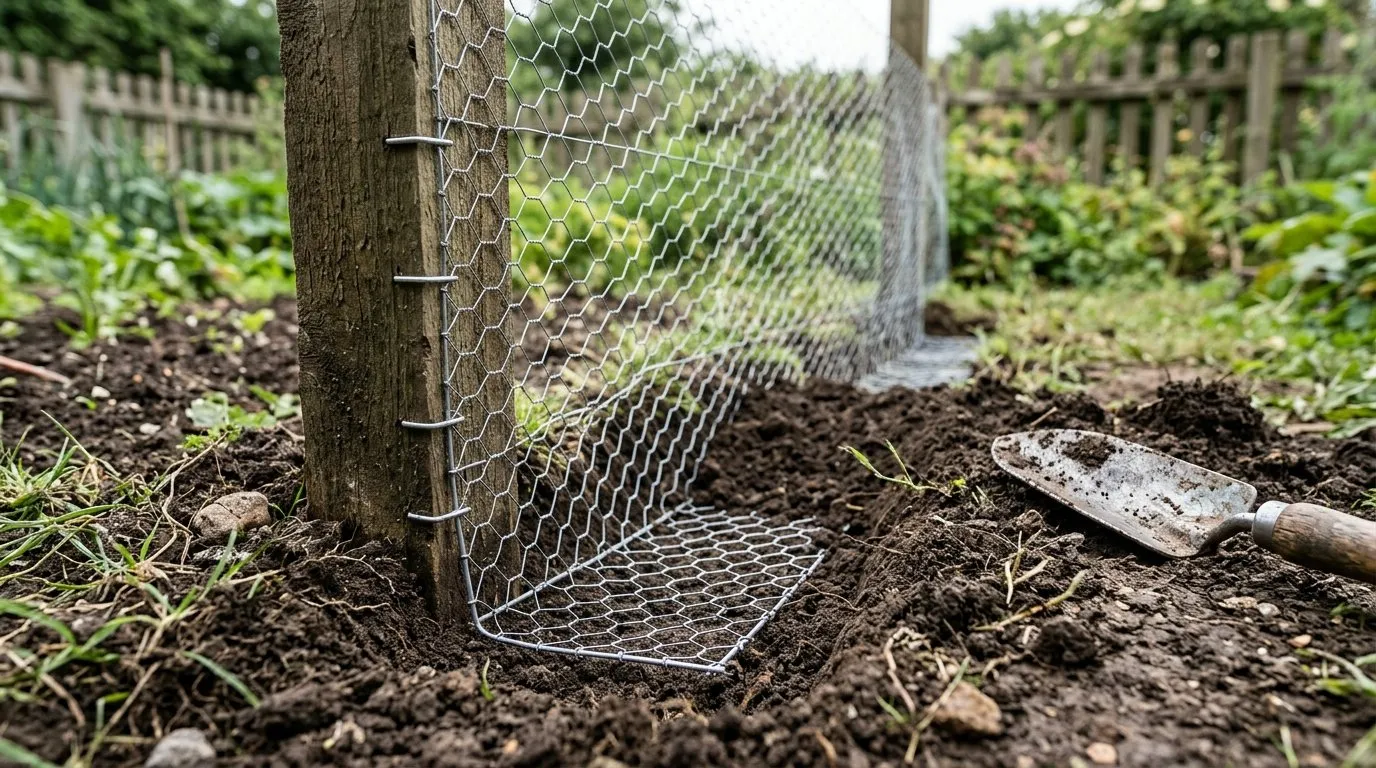
Turning the bottom of the netting outwards stops rabbits digging under the fence.
Why most rabbit fences fail
No buried base. Netting stapled to posts at ground level is easy to dig under. Rabbits find the way in within days.
Mesh too big. Chicken wire or stock fencing with large holes stops adult rabbits, but lets young ones through. By late summer you have rabbits inside the fence.
Gaps at gates and corners. A small gap under a gate is all a rabbit needs. Run netting along the bottom of gates too.
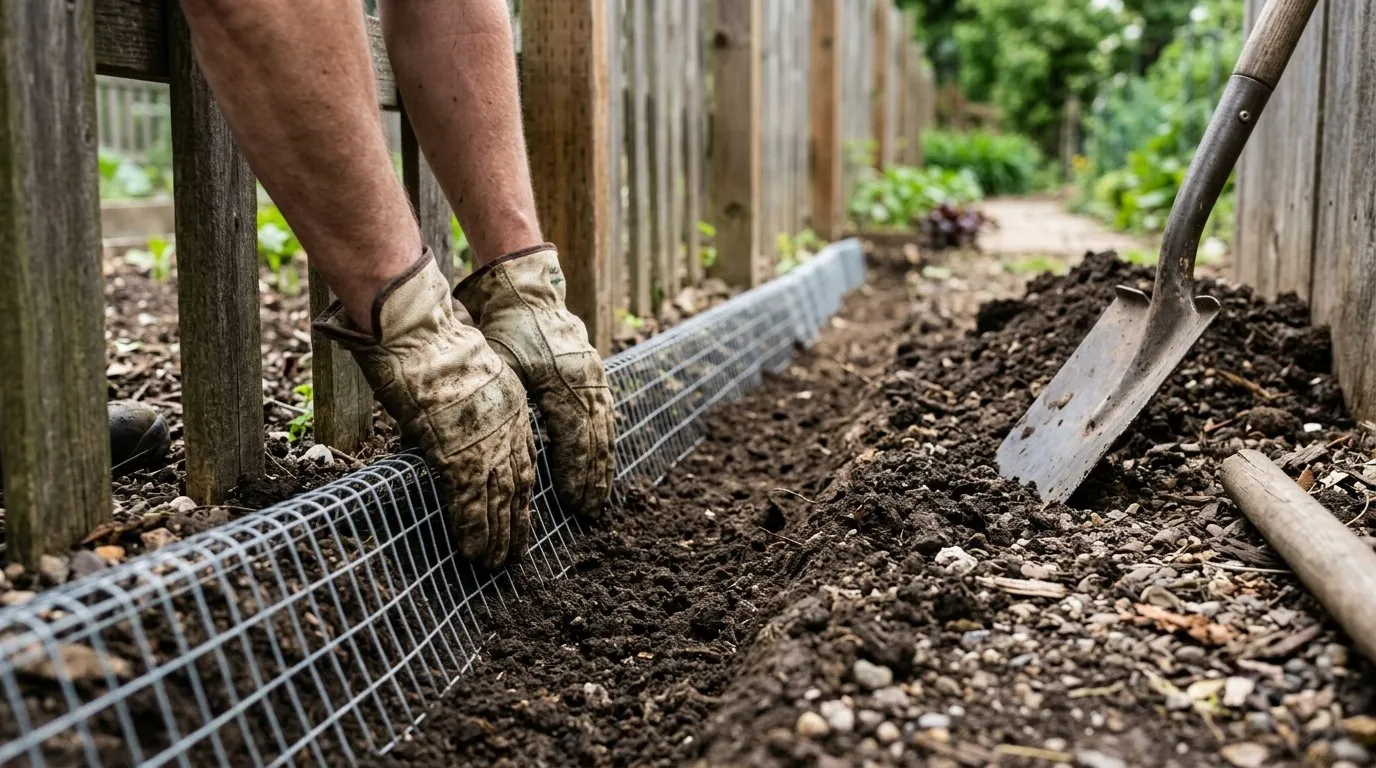
Lay the bottom of the netting in a shallow trench and backfill it, so rabbits can’t dig beneath.
Electric fencing for larger plots
Where a buried fence along a long boundary isn’t practical, electric netting works well. It suits big gardens, smallholdings and plots backing onto fields.
Buy netting made for rabbits and follow the maker’s guidance for setting it up and for the energiser. Keep the grass under it short. Long grass touching the netting drains the charge and leaves gaps. Electric netting is also handy for protecting a veg patch for a season.
Put a warning sign on electric fencing where people walk by, and keep children and pets away from it.

Electric netting is a quick way to protect a bigger plot. Keep the grass under it trimmed short.
Do rabbit repellents work?
Only a little, and never for long. They’re worth using only as a stopgap while you put a fence up.
| Method | How well it works |
|---|---|
| Rabbit fence with buried base | The reliable long-term fix |
| Electric rabbit netting | Works well on larger plots |
| Clearing cover such as brambles and log piles near the lawn | Helps a little |
| Approved animal repellents | Short-term, wash off in rain |
| Scent granules and scaring devices | Little effect, rabbits soon ignore them |
Approved taste repellents make plants taste bitter. They wash off in rain, so you’ll need to reapply often in a wet spell. Choose a product sold as an animal repellent and follow the label. Don’t use it on crops you’ll soon eat.
Skip home-made garlic or chilli sprays. They aren’t approved for use as repellents and rarely change what rabbits do.
How to repair a rabbit-damaged lawn
Fence first, then repair. New grass shoots are the tastiest food in the garden, so patching the lawn while rabbits still visit is a waste of seed.
- Clear and firm. Remove droppings and loose dead turf. Tread the soil level and rake the top to a fine crumb.
- Choose your seed. A hard-wearing mix with ryegrass recovers fastest.
- Sow. Scatter seed over bare patches between March and October, when the soil is warm enough to grow.
- Cover lightly. Sprinkle a thin layer of sieved soil or compost over the seed to hold moisture and hide it from birds.
- Keep it moist. Water in dry spells until the new grass is growing well.
Wait until you’ve seen no new scrapes for a couple of weeks before sowing. The guide to fixing a patchy lawn covers overseeding in more detail.
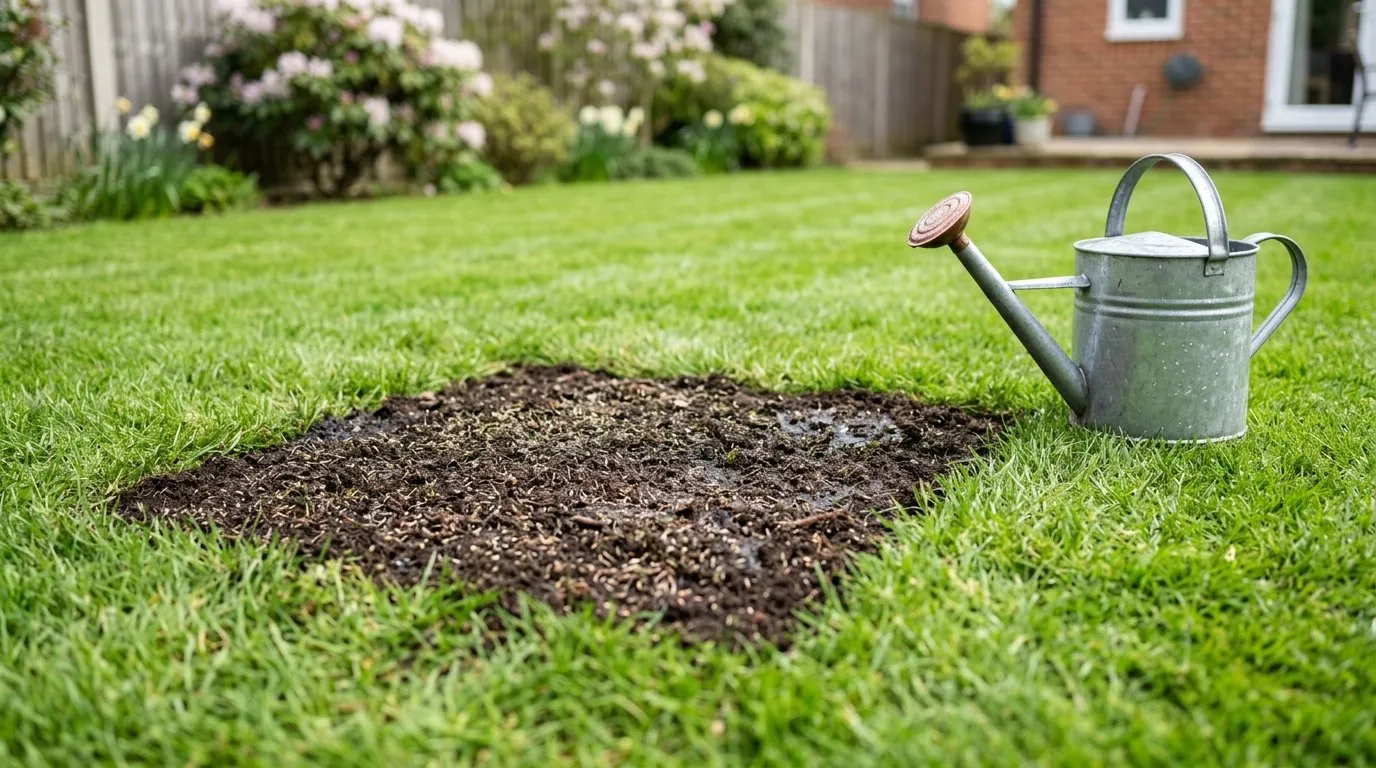
Once the fence is up, sow the bare patches and keep them moist until the new grass is growing well.
Plants rabbits tend to leave alone
You can make the lawn edge less tempting with plants rabbits usually avoid. Aromatic and tough-leaved plants are the best bets.
Good choices include lavender, catmint, euphorbia, bergenia and ornamental alliums. No plant is completely rabbit-proof, though, and hungry rabbits will try young plants. Protect new plantings with a wire guard until they’re established. The guide to rabbits, deer, pigeons and badgers covers protecting the rest of the garden. If you have pets, bear in mind lavender, catmint, euphorbia and alliums aren’t pet-safe if chewed.

Aromatic edging such as lavender and catmint is less tempting to rabbits than soft grass.
Common mistakes that let rabbits win
Spraying instead of fencing. Repellent is quick and cheap but washes off. Use it only while the fence goes up.
Skipping the buried base. Rabbits dig under ground-level netting in days. Always bury it or turn it outwards.
Reseeding too early. Fresh shoots vanish overnight while rabbits still get in. Finish the fence first.
Forgetting the gate. A gap under a gate undoes the whole fence. Check it as carefully as the rest.
Walk your boundary at dawn after rain before you build. Fresh prints, droppings and flattened grass show exactly where rabbits are getting in. For sturdy boundaries, the garden fence ideas guide is a good starting point.
Frequently asked questions
Why do rabbits dig holes in my lawn?
Rabbits scrape lawns to feed and to mark their territory. They nibble grass down to the base and scratch at the surface for roots and shoots. Scrapes often have droppings left in them as a scent marker. Most of it happens between dusk and dawn.
What is the best way to stop rabbits digging up a lawn?
A properly built rabbit fence is the only reliable long-term fix. Use wire netting with small holes, at least 90cm high, with the bottom buried or turned outwards. Repellents and scaring devices only buy time.
What mesh size keeps rabbits out?
Use netting with holes no bigger than about 3cm. Larger holes let young rabbits squeeze through in late spring and summer. Galvanised wire netting sold as rabbit netting is the usual choice.
Do rabbit repellents actually work?
They help a little but never solve the problem alone. Repellents wash off in rain and need reapplying often. Choose a product approved as an animal repellent and follow the label. Use it only while you put up a fence.
How deep do I need to bury rabbit fencing?
Bury the bottom 15-30cm of netting, or turn it outwards along the ground. An outward flap pointing towards the rabbits stops them digging under. Rabbits dig straight down at the fence, hit the wire and give up.
Will an electric fence stop rabbits?
Yes, electric netting works well on larger or rural plots. Choose netting made for rabbits and follow the maker’s setup guidance. Keep grass trimmed underneath, or it drains the charge and leaves gaps.
How do I repair a lawn after rabbit damage?
Fence first, then overseed the bare patches. Firm and rake the soil, sow a hard-wearing grass seed mix between March and October and keep it moist until the grass is growing well. Repairs only last once rabbits can’t get back in.
Are rabbits or another animal digging my lawn?
Rabbits leave shallow scrapes, nibbled grass and small round droppings. Foxes dig single deeper holes. Moles push up heaps of soil from below. Badgers roll back wide strips of turf.
Now the rabbits are out, keep the grass strong with the lawn care calendar. There’s more help in the lawn care hub.
Our team produces practical UK gardening guidance from source research, contributor records and established horticultural practice. Editorial standards are overseen by Matt W.