
Key takeaways
- Clean, angled bites on low plants point to rabbits; torn, ragged shoots higher up point to deer
- Brassica leaves stripped to the ribs in winter are the classic sign of wood pigeons
- Lifted turf, snuffle holes and dung pits are badger signs; badgers and their setts are protected by law
- Rabbit fencing needs to be about 1.2m high with the bottom 30cm turned outwards at ground level
- Deer need a 1.5-1.8m fence with no gaps; pigeons need netting held taut and clear of the leaves
- Fence or net a protected core for veg and fruit, and let the rest of the garden be shared with wildlife
Something has been eating your veg, and you didn’t see who. In most UK gardens, the bigger culprits are rabbits, deer, wood pigeons or badgers. Each leaves different clues, and each needs a different fix. Work out which one you have first, then you can protect your plants without wasting money.
Quick guide: which animal is it?
Start with the height of the damage and how the plant has been eaten.
| Clue | Most likely | Next check |
|---|---|---|
| Clean, angled cuts on low shoots and seedlings | Rabbit | Small round droppings nearby |
| Torn, ragged shoots, often higher than 50cm | Deer | Two-toed hoof prints, frayed bark |
| Brassica leaves stripped to the ribs | Wood pigeon | Grey feathers, birds about at dawn |
| Turf lifted in patches, shallow scrapes | Badger | Dung in small pits, worn paths |
| Small neat holes in the lawn overnight | Often birds, squirrels or bees | Look for grubs under the turf |
A cheap trail camera on a likely entry point for a few nights takes the guesswork out.
How to spot rabbit damage
Rabbits feed at dawn and dusk. They bite with sharp front teeth, so stems end in a clean, angled cut. Damage stays low, usually below about 50cm. Their droppings are small, round pellets, often in little piles.
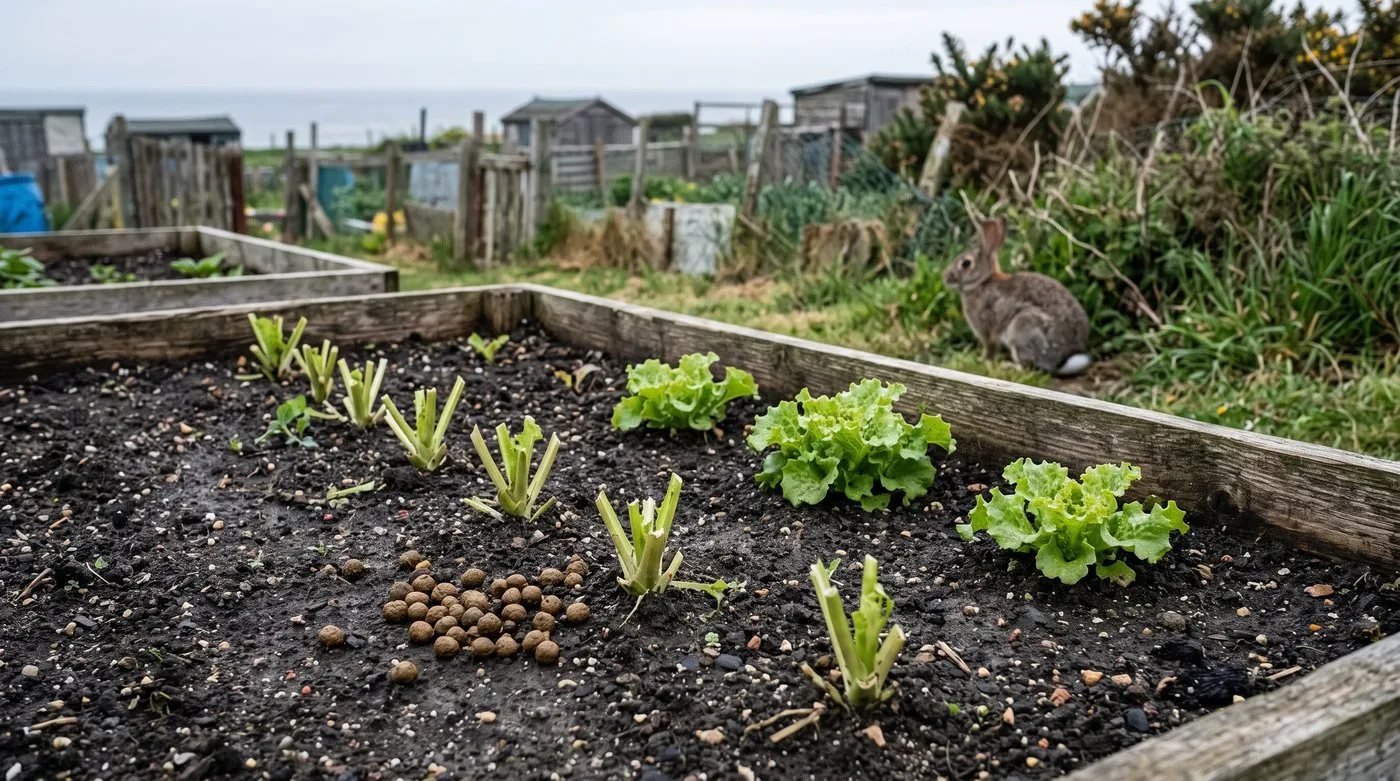
Neat, low cuts and little round droppings say rabbit. Deer would leave ragged, torn leaves instead.
They love lettuce, peas, beans, young brassicas and carrot tops. In winter they also gnaw the bark of young fruit trees and shrubs.
Keeping rabbits out
- Fence: Use wire netting about 1.2m high with holes no bigger than about 2.5cm, so young rabbits can’t squeeze through.
- Seal the base: Turn the bottom 30cm of netting outwards along the ground and bury or peg it. Rabbits dig at the fence line, hit the mesh and give up.
- Gates: Make sure there is no gap underneath.
- Young trees: Fit a spiral or mesh tree guard to protect the bark.
Some plants are usually left alone, such as daffodils, alliums, foxgloves, hellebores, lavender and euphorbia. No plant is completely rabbit-proof, but they are good for unfenced edges. If rabbits are digging up the grass rather than eating plants, see the guide to stopping rabbits digging up your lawn.
How to spot deer damage
Deer have no top front teeth, so they tear rather than bite. Shoots look ragged and frayed. Damage often reaches higher than a rabbit could manage. Look for two-toed hoof prints in soft soil and small, oval droppings.
In late summer and autumn, male deer rub their antlers on young trees. This leaves shredded bark hanging in vertical strips.

Ragged, torn shoots and bark hanging in strips are tell-tale deer damage, quite different from a rabbit’s clean bite.
The deer you are most likely to meet are roe deer and the small, hunched muntjac. Fallow deer turn up near woodland, and red deer in parts of Scotland and the south-west.
Keeping deer out
A fence is the only reliable answer. Muntjac need about 1.5m with the base pinned down, as they push underneath. Roe deer need at least 1.5m, and 1.8m is safer. Fallow and red deer need 1.8m or more. Gates must be just as tall. Mesh tree guards protect single young trees where a full fence isn’t practical.
The guide to keeping deer out of the garden covers fence heights, gates and deer-resistant planting in detail.
How to spot wood pigeon damage
Wood pigeons strip leaves right down to the ribs, leaving just the stalks and veins. Brassicas are their favourite, especially cabbage, kale, sprouts and sprouting broccoli in winter. They also pull up pea seedlings in spring and peck at soft fruit in summer.
Look for grey feathers caught on stems, droppings on paths and birds lifting off the bed when you appear early in the morning.

Leaves eaten back to the ribs and a pigeon watching from the edge: a classic winter brassica raid.
Keeping pigeons off
Netting is the only defence that works on its own. Stretch it taut over hoops or a frame, well clear of the leaves. If the net sags onto the plants, pigeons stand on it and peck through. Peg or weigh down the edges so birds can’t walk underneath.
Scarers, reflective tape and fake birds may work for a week or two before pigeons get used to them. Use them alongside netting, not instead of it. The guide on how to get rid of pigeons in the garden has more options. If they are pecking at the lawn rather than your veg, see what wood pigeons eat on your lawn.

Keep the net taut and well above the crop, and weigh down the edges so pigeons can’t walk underneath.
How to spot badger activity
Badgers dig for worms and grubs, especially leatherjackets and chafer grubs in lawns. They leave turf rolled back in patches, small scrapes called snuffle holes and long grooves where they have pushed their snout through soft soil. They also dig small pits along their routes and use them as toilets.
Other signs include well-worn paths, gaps pushed under fences and coarse grey hairs caught on wire. Foxes dig smaller, untidier holes and don’t use dung pits.

Turf lifted in patches like this usually means a badger has been after grubs beneath the lawn.
Living with badgers
Badgers and their setts are protected by law. You must not harm a badger or damage, block or disturb an active sett. So the answer is to protect your plants, not to move the badger.
- Fence the veg patch with strong welded mesh, buried or turned out at the base. Badgers are powerful diggers, so chicken wire won’t last.
- Deal with lawn grubs and the digging usually stops. The guide to stopping badgers digging up your lawn explains how.
- Clear windfalls and secure compost bins so there is less to tempt them.
The guide to deterring badgers safely and legally covers what you can and can’t do.
Protect a core, share the rest
You don’t need to fortify the whole garden. Fence or net a protected core for the things you can’t easily replace: veg beds, soft fruit and young trees. Let the rest of the garden be shared with wildlife.
- Protected core: Rabbit netting buried at the base keeps out rabbits, and stronger welded mesh copes with badgers too. Net brassica and pea beds, and put soft fruit in a fruit cage.
- Shared edge: Lawns, borders of tough plants and a wild corner. Accept a bit of digging and nibbling here.
- Wildlife gaps: Leave a 13cm by 13cm hole at the base of boundary fences in the shared part so hedgehogs can pass through.

A netted veg area next to a relaxed wildlife edge: protect what you need and share the rest.
Common mistakes
- Guessing the culprit. Rabbit netting won’t stop deer, and a deer fence with big gaps at the bottom won’t stop rabbits.
- Fences that are too low or too coarse. Rabbits slip through large mesh, and deer clear a short fence easily.
- Netting resting on the crop. Pigeons simply feed through it.
- Relying on scarers alone. Animals get used to them within weeks.
- Blocking a badger sett. It is against the law. Protect your plants instead.
For other garden pests, visit the pest control hub.
Now you know who has been visiting, read how to make a hedgehog highway so the wildlife you do want can still get in.
Frequently asked questions
How can I tell if rabbits or deer are eating my plants?
Rabbits bite cleanly; deer tear. Rabbits leave a neat, angled cut on low stems, usually below about 50cm. Deer have no top front teeth, so shoots look ragged, and damage often reaches well above rabbit height.
What is the best fence height to keep rabbits out of a UK garden?
About 1.2m high, using wire netting with small holes. Turn the bottom 30cm outwards along the ground and bury or peg it, so rabbits can’t dig under. Check regularly for gaps, especially under gates.
Are badgers protected in the UK?
Yes, badgers and their setts are protected by law. You must not harm a badger or damage, block or disturb an active sett. If badgers are a nuisance, protect your plants and lawn instead, and seek advice before doing anything near a sett.
What stops wood pigeons eating cabbages and kale?
Netting held clear of the plants is the reliable answer. Stretch it tightly over hoops or a frame so pigeons can’t land on it and peck through. Peg down the edges and tighten any sagging net.
Which deer cause problems in UK gardens?
Roe deer and muntjac are the most common garden visitors. Fallow deer turn up near woodland, and red deer in parts of Scotland and the south-west. Muntjac need about a 1.5m fence with a sealed base; larger deer need 1.8m or more.
Do scent repellents keep rabbits and deer away?
They may help for a short while, but not for long. Rain washes them off and animals get used to them. Use them as a stop-gap while plants establish, and rely on fencing for lasting protection.
Our team produces practical UK gardening guidance from source research, contributor records and established horticultural practice. Editorial standards are overseen by Matt W.


