Key takeaways
- Blackfly are tiny matt-black aphids that crowd the soft tips of bean plants
- They build up fast from May, peaking in late May and June
- Pinch out broad bean tips once the first pods set, and bin the infested tops
- Ladybirds, hoverflies and lacewings usually catch up if you don't spray
- Ants farm blackfly for honeydew and chase predators off, so watch for them
- Autumn and early spring sowings of broad beans flower before the worst attacks
Black bean aphid, better known as blackfly, is the tiny black aphid that smothers broad bean tips in late spring. Pinch out the tips once the first pods have set, rub or hose off what’s left, and let ladybirds and hoverflies finish the job.
It’s one of the most common pests on the veg plot, but it’s easy to keep in check once you know when to act. This guide covers broad beans and runner beans. For greenfly and other aphids on roses and shrubs, see our general guide on how to get rid of aphids.
How to identify black bean aphid
Blackfly are about 2mm long, soft and matt black or very dark olive. They pack tightly onto the soft growing tips and the undersides of young leaves. Most are wingless, but you’ll also see a few winged ones that fly off to start new colonies.
They feed on lots of plants besides beans, including nasturtiums, dahlias, beetroot, spinach and poppies. Ants often run up and down the stems, collecting the sticky honeydew the aphids make.

Up close, blackfly are small, soft and matt black. You’ll usually see them packed tightly together on the youngest growth.
Why do blackfly appear so suddenly in May?
They spend the winter as eggs on shrubs such as spindle and guelder rose. In spring, winged females fly off to find soft new growth, and broad beans are a favourite.
Once they land, they don’t need to mate. Each female gives birth to live young, which soon have young of their own. That’s why a few aphids can become a heaving colony in a couple of weeks. Numbers peak in late May and June, just as broad beans flower and runner beans start climbing.
In autumn, winged aphids fly back to the shrubs to lay eggs for next year.
What damage does blackfly do?
- Stunted tips. Shoots curl, stop growing and the flowers can fail, so you get fewer pods.
- Sticky leaves and sooty mould. Honeydew drips onto the leaves below, and a black mould grows on it.
- Viruses. Blackfly can spread bean viruses, which cause mottled, twisted leaves and poor crops.
On broad beans, the damage is worst in the top 10-20cm where the flowers are. On runner beans, colonies often start low down and on the flower stalks. If your runner beans aren’t setting pods, our guide to runner bean pests and problems covers other causes too.
How to pinch out broad bean tips
Pinching out is the best way to deal with blackfly on broad beans. It removes the colony in one go and helps the plant fill its pods.
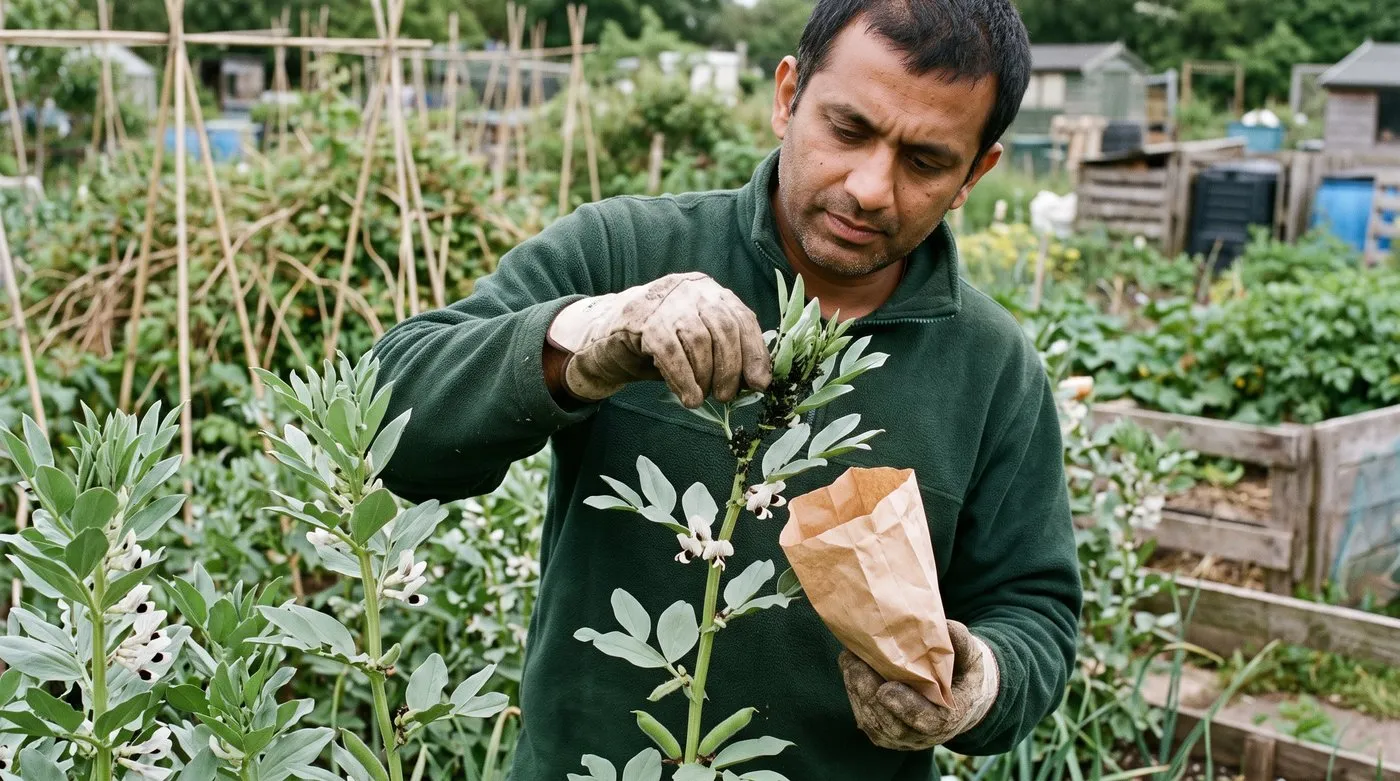
Once the first pods have set, pinch off the top of each broad bean and bag it up. The blackfly go with it.
- Wait until the first pods have set at the bottom of the plant.
- Pinch off the top 7-10cm of each main shoot with your fingers or scissors.
- Bag and bin infested tips. Don’t drop them on the soil or compost them, or the aphids crawl back.
- Check side shoots a week later and pinch any new colonies.
Clean tips without blackfly are tasty. Steam or stir-fry them like spinach. Our guide on how to grow broad beans covers the rest of the season.
Which predators eat blackfly?
Plenty of garden wildlife eats blackfly. If you don’t spray, predators usually catch up within a couple of weeks.
- Ladybird larvae look like tiny grey-black crocodiles with orange spots. They eat aphids all day. Our guide to ladybirds helps you spot the larvae so you don’t mistake them for pests.
- Hoverfly larvae are small, pale maggots on the leaves near colonies. See our hoverflies guide for flowers that bring the adults in.
- Lacewing larvae are fast-moving hunters that work in cooler weather too.
- Tiny parasitic wasps lay eggs inside aphids, which turn into pale brown, papery “mummies”.
- Birds such as blue tits pick colonies off stems.

A ladybird larva like this one gets through a lot of blackfly. Leave it to work and hold off any spraying.
Why are there ants on my broad beans?
Ants farm blackfly for their sweet honeydew. They guard the colony and chase away ladybirds and other predators, so colonies grow faster.
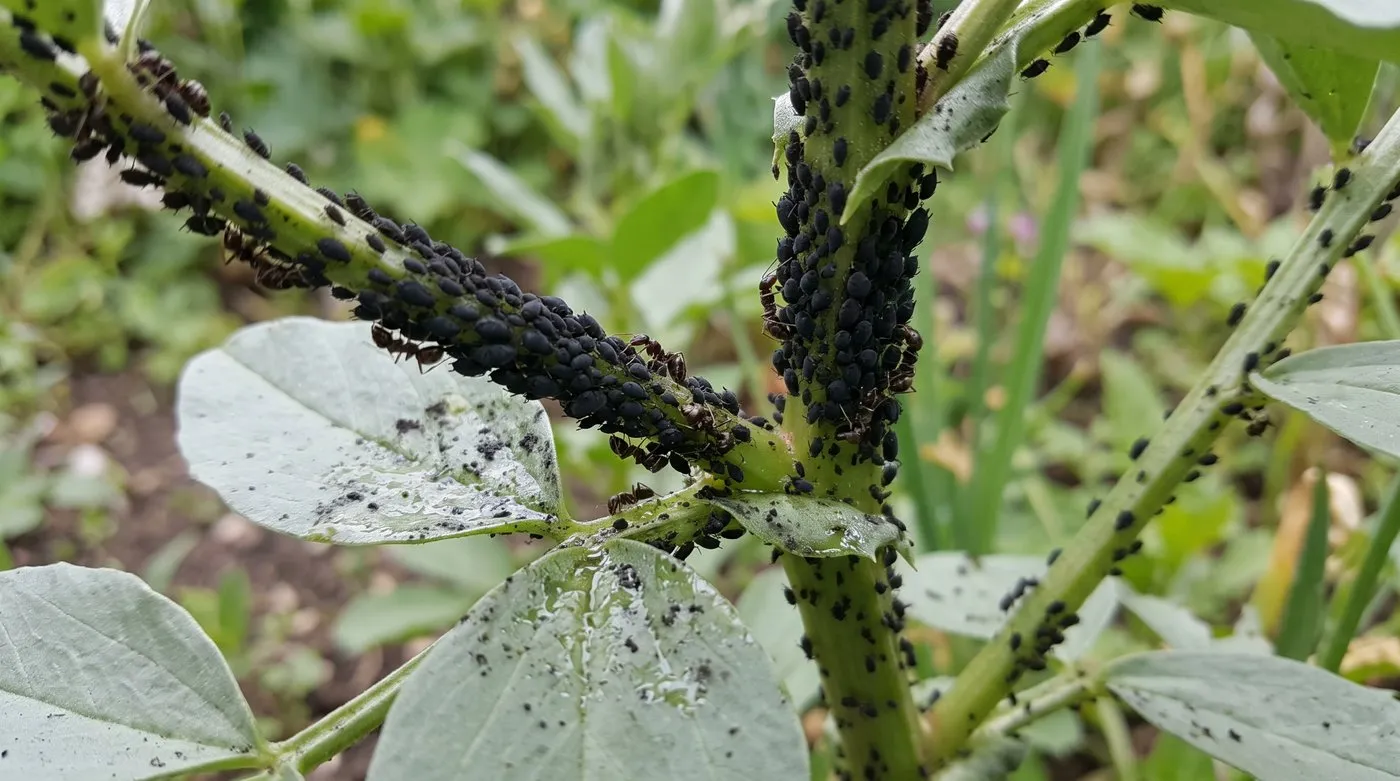
Ants tending blackfly for their honeydew keep ladybirds away. A grease band round the stem stops them climbing up.
A sticky grease band wrapped round the base of each stem, or the bottom of the cane, stops ants climbing up. That lets the predators get back to work. Our guide on ants in the garden has more ideas.
Should you spray black bean aphid?
Usually not. Pinching, rubbing off, hosing and predators deal with most outbreaks.
On plants you can’t pinch, such as runner beans and dahlias, squash colonies with your fingers or knock them off with a firm jet from the hose on a dry morning.
Home-made sprays such as soapy water, washing-up liquid or garlic aren’t legal to use as pesticides in the UK. If a colony really is running away on a plant, use an approved product for the job, such as one based on fatty acids, and follow the label. Spray in the evening when bees aren’t flying, and keep off open flowers. Avoid broad insecticides, as they kill the ladybirds and hoverflies too.
Sow early to beat blackfly
No broad bean is resistant, but timing makes a big difference. Plants that flower before late May usually get through the worst attacks.
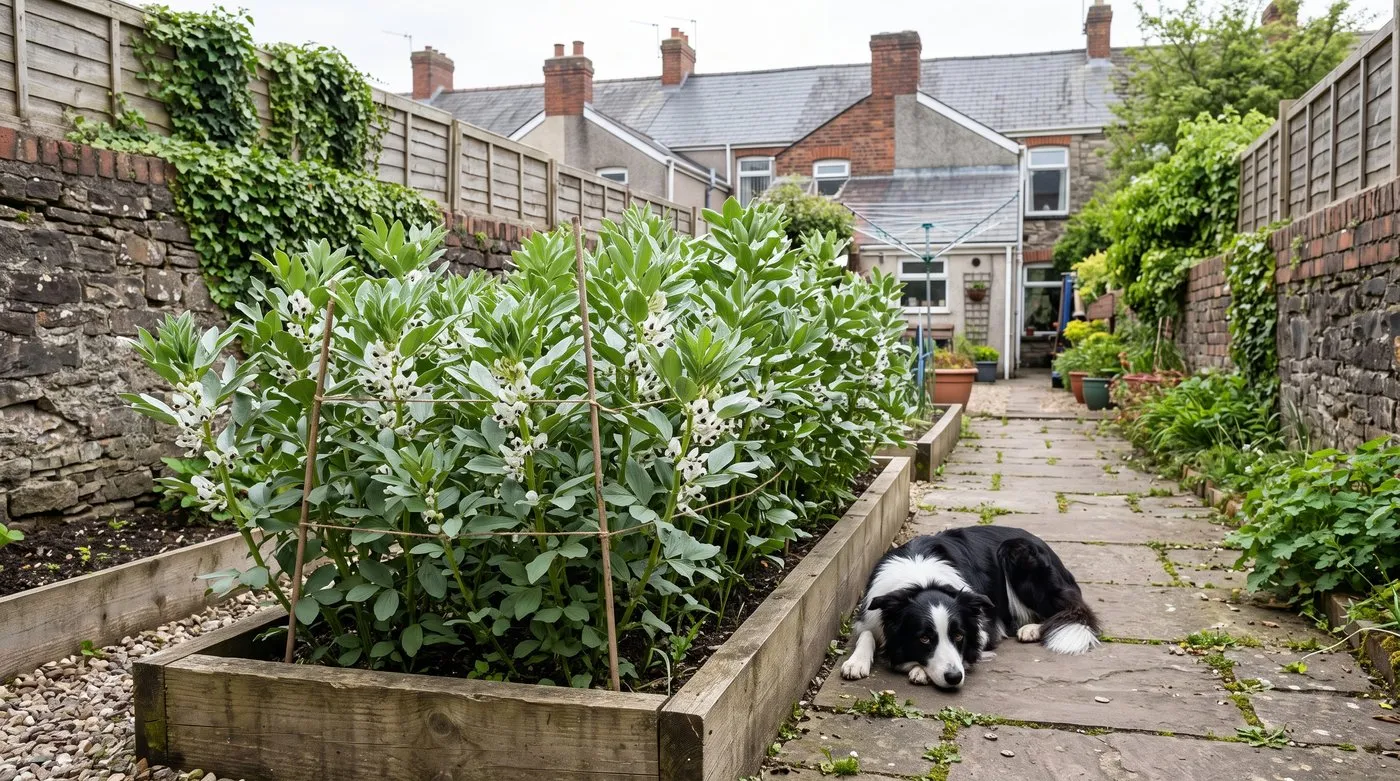
Autumn-sown broad beans are already flowering in early May, well before blackfly reach their peak.
| Sowing | When | Example varieties |
|---|---|---|
| Autumn | October to November | ’Aquadulce Claudia’ |
| Early spring | February to March, under cover or outside in mild spells | ’The Sutton’, ‘Witkiem Manita’ |
| Late spring | April onwards | Any, but expect more blackfly |
Our guide on when to plant broad beans covers sowing times for different parts of the UK.
Blackfly through the year
| Month | What to do |
|---|---|
| March to April | Sow broad beans early. Check overwintered plants for the first aphids |
| May | Check tips every few days. Rub off early colonies. Look out for ants |
| Late May to June | Peak time. Pinch out broad bean tips once pods set. Leave predators alone |
| July to August | Check runner beans, dahlias and nasturtiums. Hose off colonies |
| September to October | Blackfly fly back to shrubs. Clear old bean plants and plan autumn sowings |
Common mistakes with blackfly
- Pinching too early. You lose flowers. Wait until the first pods have set.
- Composting infested tips. The aphids crawl back. Bin them.
- Spraying when ladybirds are already there. You kill the predators and the blackfly bounce back.
- Ignoring ants. They protect colonies from predators.
- Sowing late. Late plants flower right in the peak blackfly season.
For more chemical-free ideas across the plot, browse our pest control hub.
Frequently asked questions
What is the fastest way to get rid of blackfly on broad beans?
Pinch out and bin the infested tips. Then rub or hose off any clusters left lower down. Leave ladybirds and hoverflies to mop up the rest.
Should I pinch out broad bean tips?
Yes, once the first pods have set. Blackfly love the soft tip, so removing it takes away their favourite spot. It also helps the plant put its energy into the pods. Clean tips can be cooked like spinach.
Do nasturtiums attract blackfly away from beans?
Sometimes, but don’t rely on it. Nasturtiums often get blackfly too, so some gardeners grow them as a decoy. Check them often and cut out heavily infested stems so they don’t become a nursery.
Which broad bean varieties avoid blackfly?
No variety is resistant, but sowing time helps. Autumn-sown ‘Aquadulce Claudia’ and early spring sowings of ‘The Sutton’ or ‘Witkiem Manita’ usually flower before blackfly peak.
Can I use soapy water on blackfly?
No, home-made sprays aren’t legal to use as pesticides in the UK. Rub or hose blackfly off instead. If you must spray, use an approved product and follow the label.
Why are there ants all over my blackfly?
Ants are farming them for honeydew. They protect the colony from ladybirds and other predators. A sticky grease band round the base of the stem helps keep them off.
Now you can deal with blackfly, read our organic pest control guide for more ways to protect your crops without chemicals.
Our team produces practical UK gardening guidance from source research, contributor records and established horticultural practice. Editorial standards are overseen by Matt W.