Key takeaways
- Apply to your council, parish or town council, or the allotment association that runs the site
- Waiting lists range from weeks in some areas to years in busy cities
- Ask for a half plot and try less popular sites to get one sooner
- In England and Wales, six or more residents can ask their council to provide allotments
- Always view a plot before you accept, checking water, sun, soil and access
- Grow in pots or join a community garden while you wait
To get an allotment, apply to whoever runs your nearest site. That’s usually the local council, sometimes a parish or town council, or a private allotment association. You’ll probably join a waiting list. The wait can be weeks or years depending on where you live, so apply early and grow something at home in the meantime.
This guide covers how to apply, how to get a plot sooner, your right to ask for allotments, what to check when you view a plot and how to make the most of the wait. Once you have the keys, the guide to starting an allotment takes over.
How to apply for an allotment
1. Find out who runs your local sites. Search for “[your council name] allotments”, or use the GOV.UK allotment service. Many sites are council-run. Others are run by parish or town councils, or by self-managed allotment associations.
2. Fill in the application. Most councils have an online form. Others take email or phone applications. You’ll give your name, address and contact details, and often your preferred sites.
3. Join the waiting list. Some councils tell you your place in the queue. Others just say they’ll be in touch. If you hear nothing for a few months, a polite email to check you’re still on the list is worth sending.
4. View and accept the offer. When a plot comes up, you’ll be asked to view it and decide within a set time. Read the tenancy agreement before you sign.
Look beyond the council too. Private and association-run sites don’t always appear on council lists. The National Allotment Society can help you find sites near you.
How long is the allotment waiting list?
It depends hugely on where you live. Some rural and small-town sites have plots free right now. Busy cities, especially London, can have lists that run for years. Most waits run from 18 months to 4 years, and 63% of councils in APSE’s 2025 survey said people wait more than 18 months. Our UK gardening statistics have the latest figures, including allotment sites per 100,000 people by region.
Ways to get a plot sooner:
- Ask for a half plot. Smaller plots come up more often and suit most beginners anyway. The guide to half plots and plot-sharing explains how they work.
- Apply to more than one site. Less popular sites, further from housing or with fewer facilities, often have shorter lists. You can ask to move later.
- Say yes to a scruffy plot. Overgrown plots are often turned down, so they come round again quickly. They’re hard work, but very doable.
- Offer to share. Some plot holders are happy to share a plot with a newcomer.
- Visit the site. Plot holders and committee members often know before anyone else when a plot is coming free.
Your right to ask for allotments
In England and Wales, councils have a legal duty to provide allotments where there’s demand, under the Small Holdings and Allotments Act 1908. If six or more people on the electoral register ask in writing, the council must take the request into account. There’s no fixed deadline, though, and finding land can take time.
Statutory allotment sites are also protected. A council can’t sell one or use it for something else without government consent.
Scotland has its own rules, with councils required to keep waiting lists and work to keep waits down. If you think your council isn’t meeting its duty, the National Allotment Society can advise.
What to check when you view an allotment plot
View the plot before you accept. Take a trowel and, if you can, go around midday.
- Sun. Veg needs plenty of sun. Note shade from trees, hedges or buildings, especially on the south side.
- Water. Find the nearest tap or trough. Carrying cans a long way gets old fast in July. The allotment water supply guide has workarounds.
- Soil. Dig a small hole. Dark, crumbly soil with worms is ideal. Heavy clay is hard work but fertile. Sandy soil drains fast and needs plenty of compost.
- Weeds. Nettles often mean rich soil. Brambles are hard work but clear. Couch grass, bindweed and mare’s tail are the tough ones.
- Rubbish. Old carpet, glass, rubble or buried junk all need clearing first. Ask whether the last tenant left anything behind.
- Access and security. Check the gate, parking and how far you’ll carry things. A site with a locked gate and busy neighbours is safer.
- Neighbours. Tidy neighbouring plots and friendly faces are a great sign.
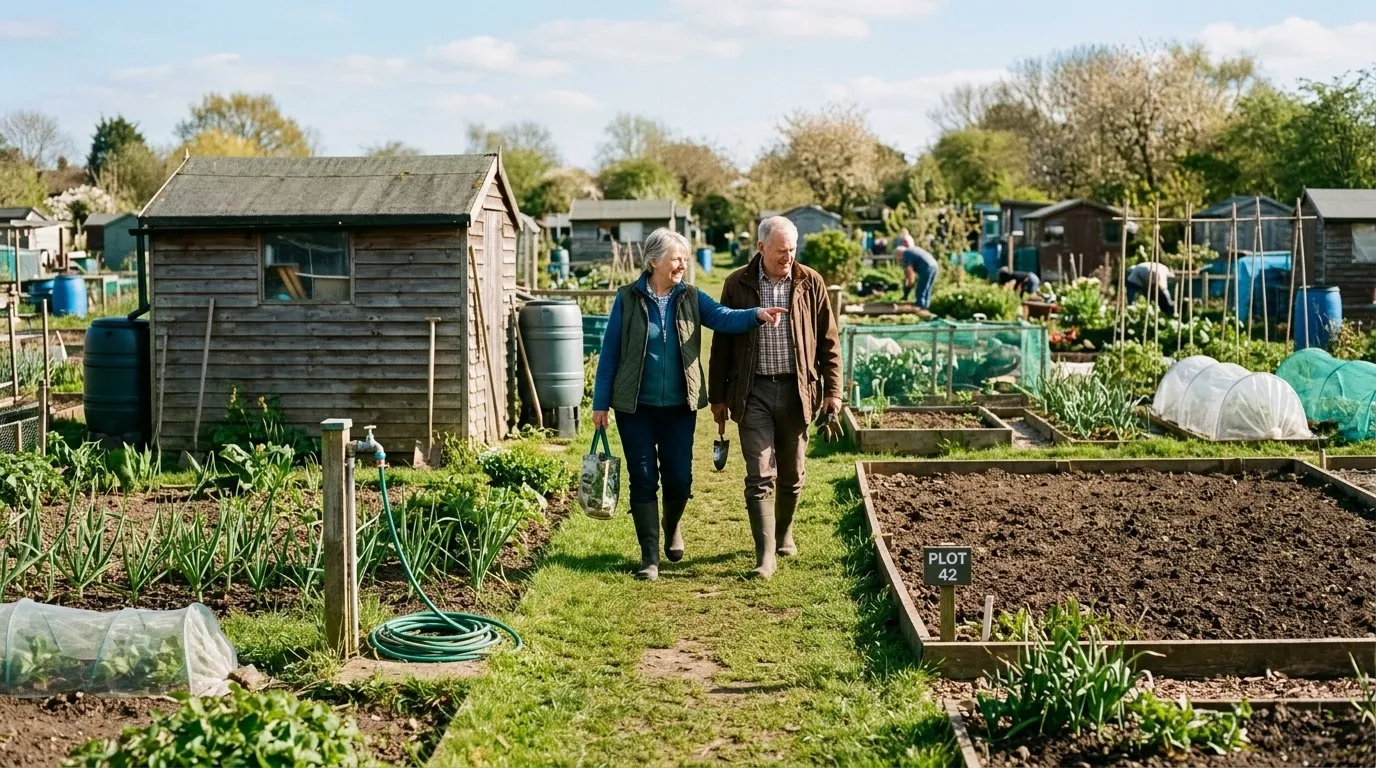
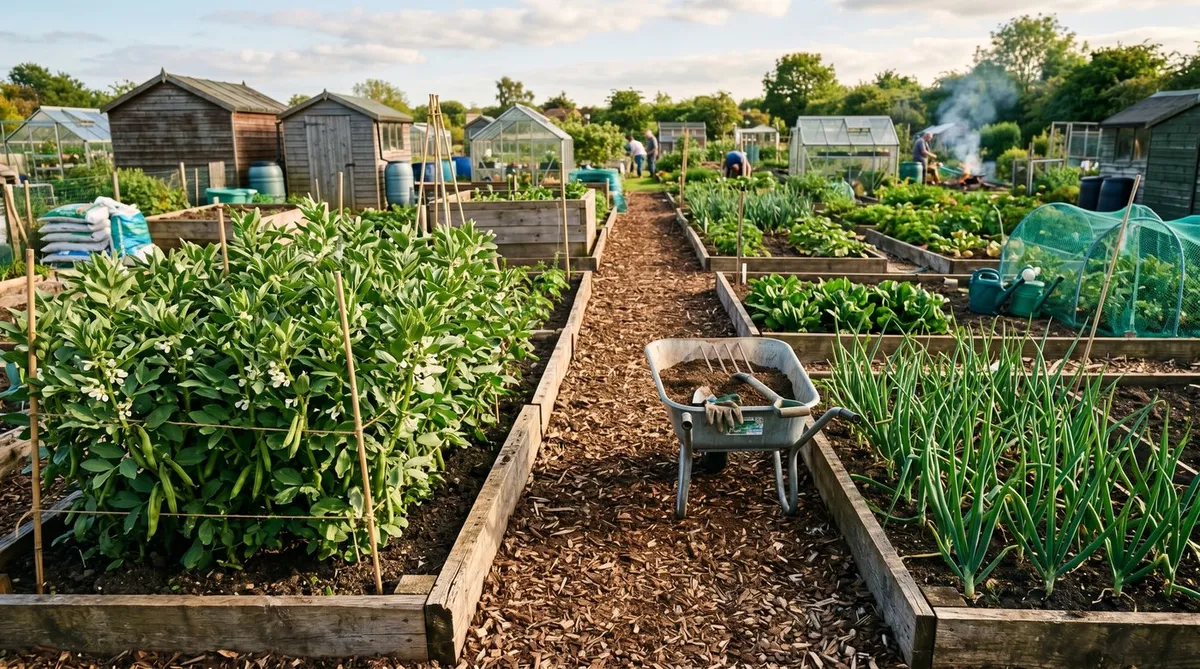
Walk the site before you say yes. Note the tap, the sun and the state of the soil.
Ask for a copy of the site rules too. Most cover sheds, bonfires, hosepipes, pets and keeping the plot cultivated. The allotment rules guide explains the common ones.
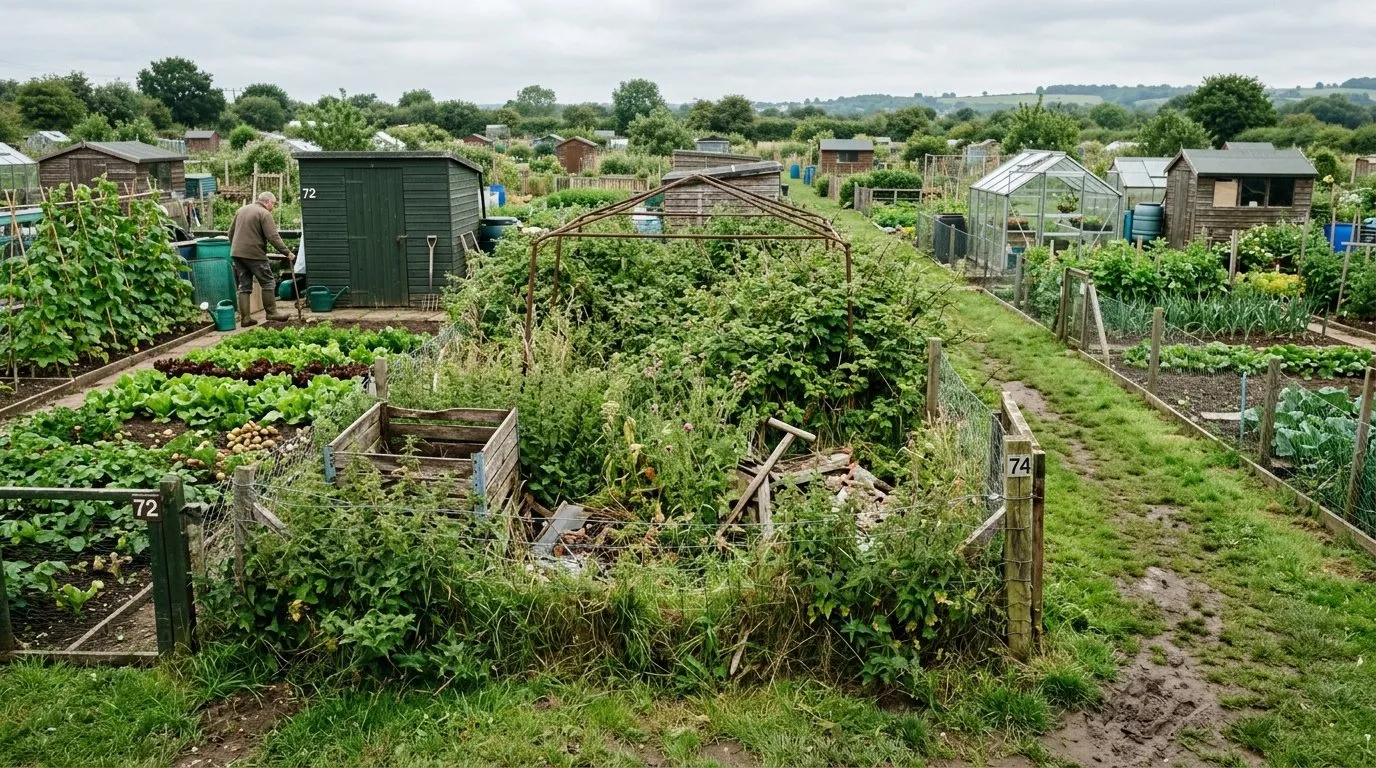
Don’t be put off by a jungle. Most new plots look like this, and they clear a section at a time.
What to do while you wait for an allotment
The wait is a good time to build skills and kit.
Grow in pots at home
You don’t need an allotment to grow food. A sunny patio, balcony or doorstep can grow tomatoes, salad leaves, herbs, chillies, runner beans and strawberries. Learning to sow, water and spot pests now means a flying start later. The container veg guide covers the easiest crops.
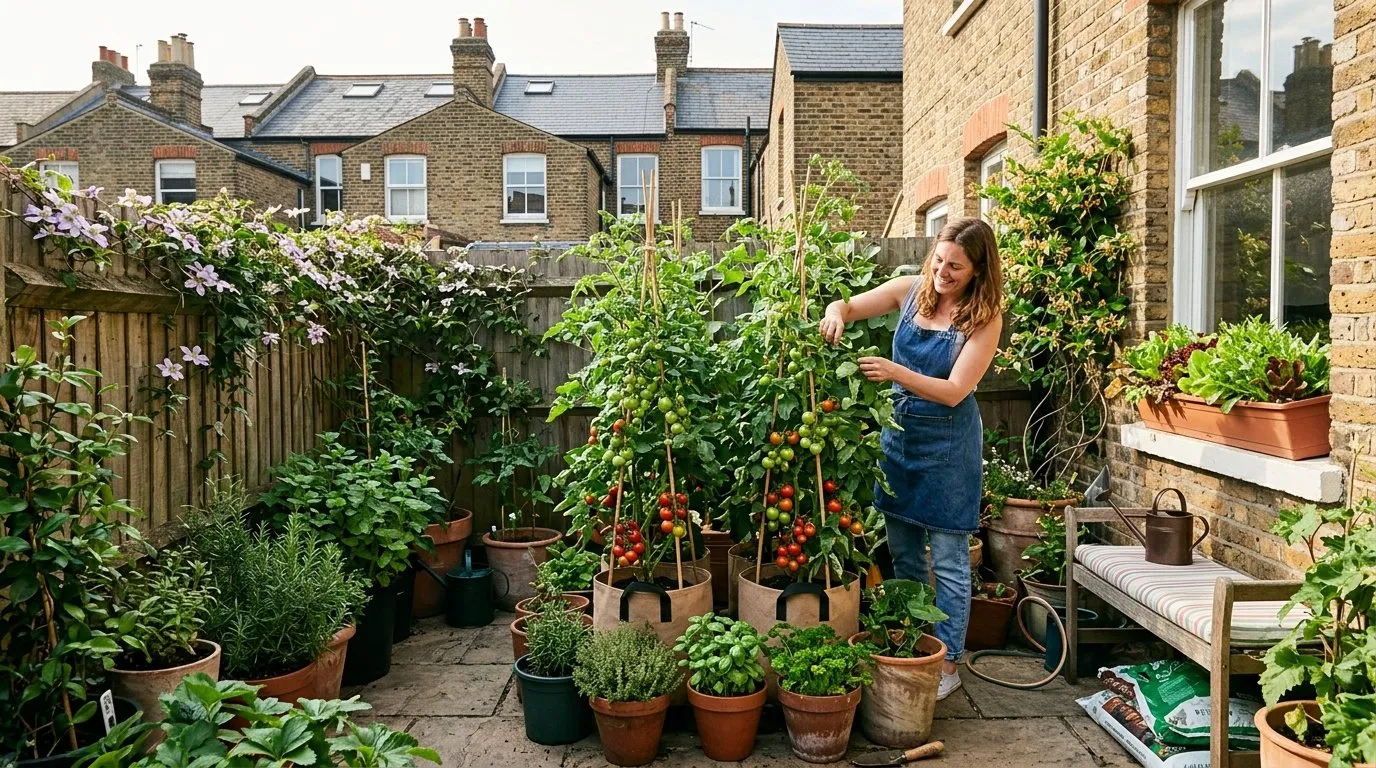
A patio full of pots teaches you most of what you’ll need on a plot.
Join a community garden
Community gardens are shared growing spaces run by volunteers, charities or housing groups. Many welcome newcomers straight away, with tools and friendly help. Search for “community garden” plus your town, or ask the charity Social Farms & Gardens.
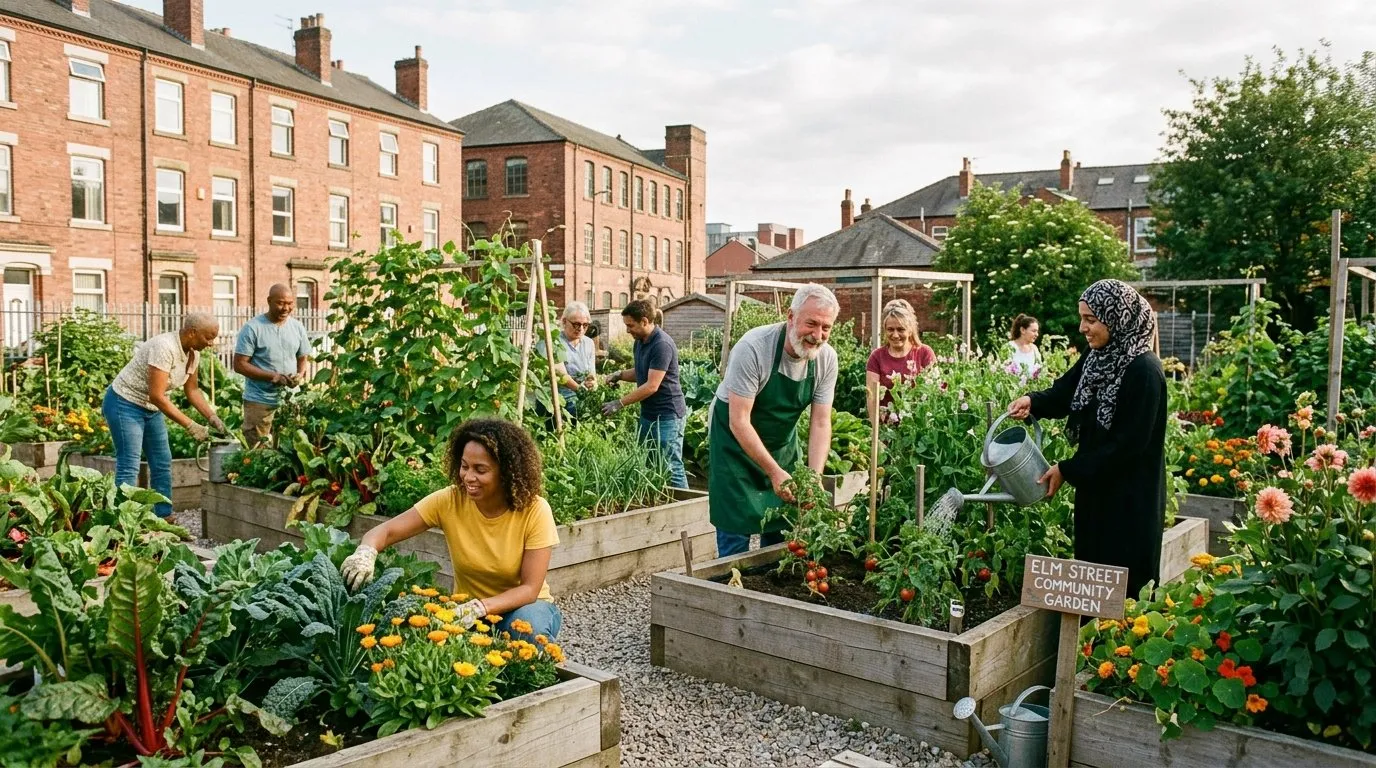
Community gardens offer growing space now and plenty of friendly advice.
Help an existing plot holder
Some plot holders, especially older ones, welcome help with digging and weeding. You’ll learn a lot, and you’ll be first to hear when a plot comes free.
Gather tools and plan
Pick up a fork, spade, rake, hoe and trowel second-hand. Start a compost heap at home. Sketch a simple layout using the allotment layout ideas.
When you get the keys
Don’t try to clear the whole plot at once. Clear one small area and plant it, then cover the rest with cardboard or black sheeting to smother the weeds. Easy first crops include potatoes, courgettes, runner beans, salad leaves and onion sets.
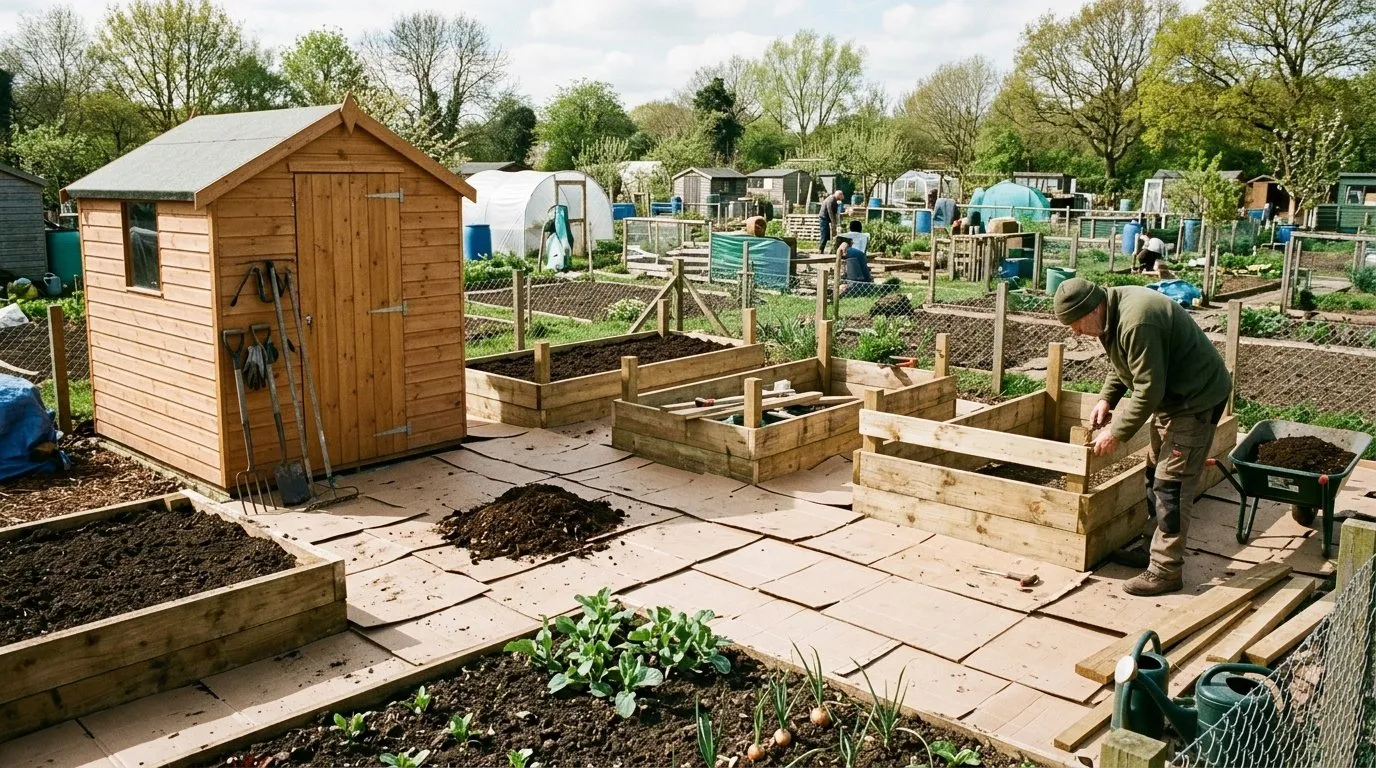
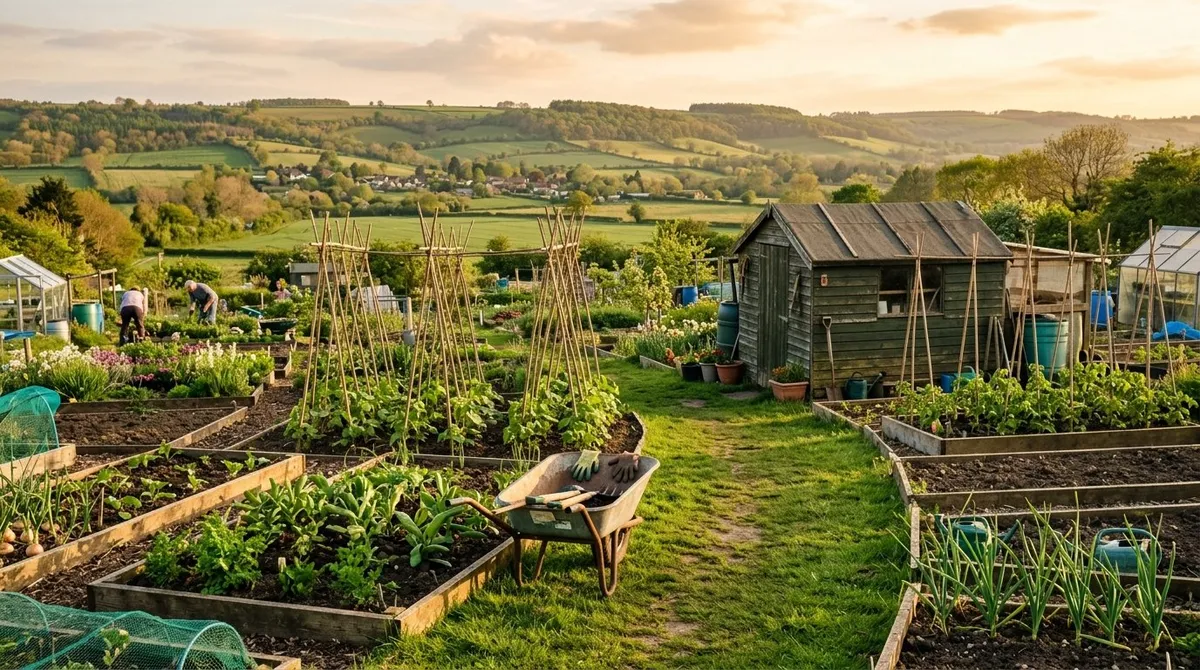
Start small: a couple of beds planted, the rest covered until you’re ready.
The guide to clearing an overgrown allotment walks through the first few weekends.
Common mistakes when getting an allotment
Only applying to one site. Spread your chances across several, and include less popular ones.
Turning down a messy plot. Almost every plot looks rough at handover. Look at the soil and the sun, not the weeds.
Taking too much on. A full plot is a big commitment. A half plot is plenty for a first year.
Not reading the rules. Most tenancy agreements require you to keep the plot cultivated. Neglect can lose you the plot.
Clearing it all before planting. You’ll lose the season. Plant a small patch first.
Frequently asked questions
How long is the waiting list for an allotment?
Anything from a few weeks to several years. Some rural and small-town sites have plots free now. Busy city sites, especially in London, can have very long lists. Asking for a half plot often shortens the wait.
How much does an allotment cost?
Usually much less than you’d expect. Rent is set by whoever runs the site and is paid yearly. Many councils offer reduced rates for pensioners or people on benefits. Ask your council for its current fees.
How do I apply for an allotment?
Contact your local council’s allotments team or the association running your nearest site. Most councils have an online form. Give your details and preferred sites, then you’ll join the waiting list.
Can anyone get an allotment?
Usually anyone who lives in the council’s area can apply. You don’t need to own your home. Rules for under-18s vary, so check with your council.
Do councils have to provide allotments?
In England and Wales, councils have a duty to provide allotments where there is demand. Six or more people on the electoral register can ask their council to provide them. Scotland has its own rules.
Should I take a full plot or a half plot?
A half plot suits most beginners. A full plot is a lot of work, especially in your first summer. Half plots often have shorter waiting lists, and you can usually ask to expand later.
Now you’re on the list, read the allotment guide for beginners to plan your first season, or browse more growing veg guides.
Our team produces practical UK gardening guidance from source research, contributor records and established horticultural practice. Editorial standards are overseen by Matt W.