
Key takeaways
- Move each group on one bed a year: peas and beans, then brassicas, then roots and potatoes, then onions
- Rotation stops soil pests and diseases building up, but won't clear clubroot or white rot
- Peas and beans leave nitrogen behind, which suits the cabbages that follow
- Three beds work fine in a small garden by putting onions in with the roots
- Green manures cover bare soil over winter and feed it
- Jot down what grew where each year, so you don't forget
Crop rotation simply means moving each vegetable family to a different bed every year. Grow the same crop in the same patch year after year and the pests and diseases that love it build up in the soil. Move it on, and they struggle. Here’s how to plan an easy rotation, whether you have a big allotment or a few raised beds at home.
What crop rotation is and why it matters
You grow different families of veg in different beds each year, in the same order. After a few years, each family is back where it started and the cycle begins again.
The RHS crop rotation guide sums up why it’s worth doing:
- Fewer diseases: problems like clubroot (cabbage family), white rot (onion family) and eelworm (potatoes) build up when one family stays put. Moving crops on keeps them in check.
- Better use of food in the soil: peas and beans leave nitrogen behind, and cabbages are greedy for it. Putting cabbages after beans gives them a free feed.
- Better soil: different roots and leaves work the soil in different ways, which helps its structure over time.
- Pest breaks: some pests, such as potato cyst eelworm, wait in the soil for their favourite crop. Take the crop away for a few years and their numbers drop.
Rotation is about prevention, not a cure. Once a bed has clubroot or white rot, a four-year break is too short to clear it (more on that below).
The four-bed rotation plan
The classic four-bed rotation is the easiest system for most veg plots and allotments. It splits crops into four groups by family and by what they like.
Group 1: Legumes and fruiting crops
- Peas (see our pea growing guide)
- Broad beans (our broad bean guide covers varieties and timing)
- Runner beans and French beans
- Sweetcorn
- Courgettes, squash and pumpkins
Why they come first: peas and beans have tiny nodules on their roots that capture nitrogen from the air. When you clear the plants, some of that nitrogen stays in the soil for next year. Courgettes, squash and sweetcorn don’t share pea and bean problems, so they can fit in wherever there’s room.
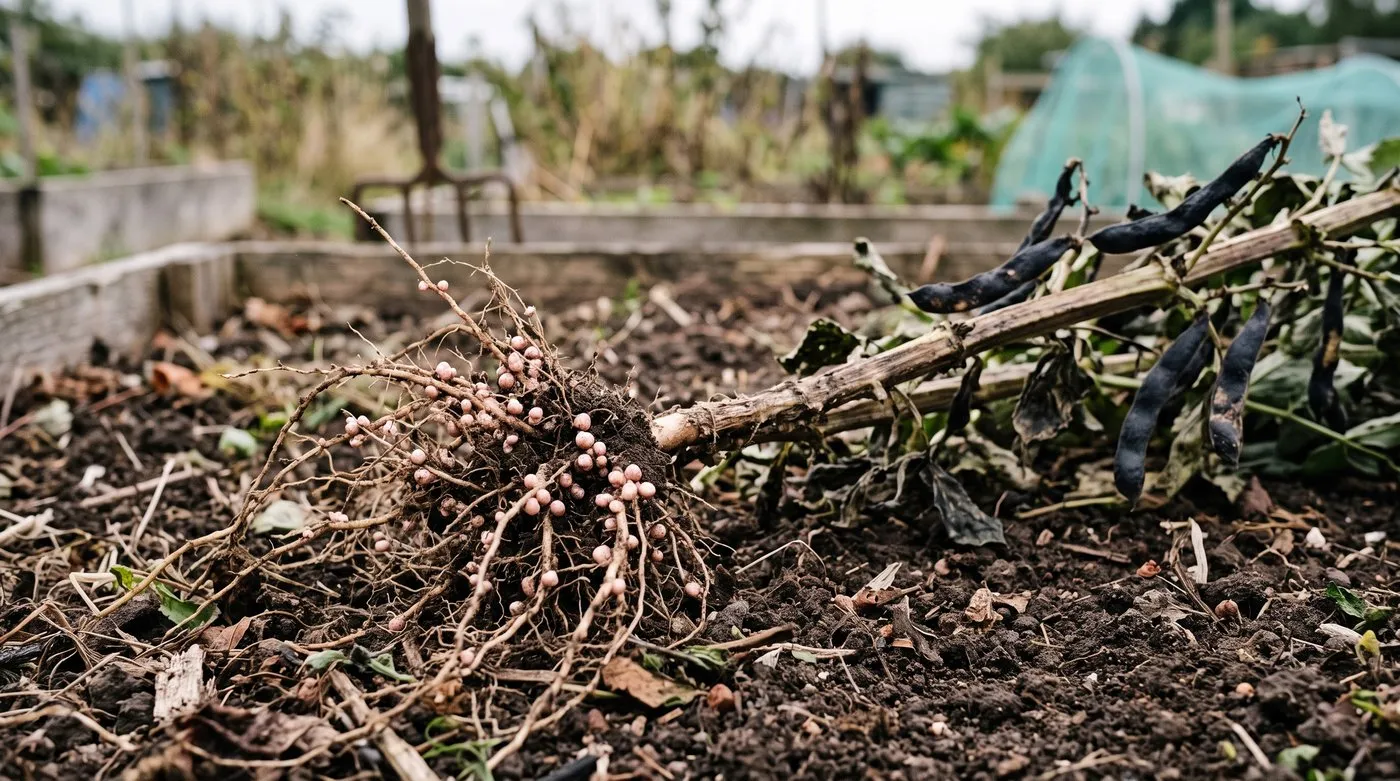
These little nodules hold nitrogen captured from the air. Leave the roots in the soil when you clear beans, and next year’s brassicas benefit.
Group 2: Brassicas
- Cabbages, cauliflowers, broccoli and calabrese
- Brussels sprouts and kale
- Purple and white sprouting broccoli
- Swede, turnips and radishes (all in the cabbage family)
- Rocket, pak choi and mizuna
Why they follow peas and beans: brassicas are the hungriest crops in the plot, so they love the nitrogen the beans leave behind. They also like firm soil, which the bean bed gives them.
Group 3: Roots and tubers
- Potatoes and outdoor tomatoes (our potato growing guide covers chitting and earthing up)
- Carrots (see our carrot guide for good varieties)
- Parsnips and beetroot
- Celeriac and celery
- Florence fennel
Why they follow brassicas: carrots and parsnips fork and split in freshly manured soil. By now the manure from a couple of years ago has settled, which suits them nicely. Potatoes are the exception: they like compost or well-rotted manure in the planting trench, so keep that to the potato end of the bed.
Group 4: Alliums and others
- Onions (our onion guide covers sets and seed)
- Garlic (see our garlic growing guide)
- Shallots, spring onions and leeks
- Lettuce, spinach and chard
- Anything that doesn’t fit the other groups
Why they come last: onions and their cousins aren’t hungry. Moving them on helps keep onion pests and diseases down, though it won’t clear white rot from an infected bed. Salads and leafy greens happily use up whatever food is left.
The four-year rotation table
Here’s what goes where over four years. After year four, start again at year one.
| Year | Bed 1 | Bed 2 | Bed 3 | Bed 4 |
|---|---|---|---|---|
| Year 1 | Peas, beans and fruiting | Brassicas | Roots and potatoes | Onions and salads |
| Year 2 | Brassicas | Roots and potatoes | Onions and salads | Peas, beans and fruiting |
| Year 3 | Roots and potatoes | Onions and salads | Peas, beans and fruiting | Brassicas |
| Year 4 | Onions and salads | Peas, beans and fruiting | Brassicas | Roots and potatoes |
Follow any one bed down the table and you’ll see the order never changes: peas and beans, then brassicas, then roots, then onions.
That means every bed gets the benefit of peas and beans once every four years. Brassicas don’t come back to the same soil for three whole years, which helps keep clubroot down. And roots always go into soil that was manured a couple of years before, just how they like it.
What should you plant after potatoes?
Onions, garlic, leeks and salads, in this plan. The RHS four-year plan uses the same order.
Potatoes leave the soil loose and fairly weed-free, because their big leaves shade out weeds and lifting them turns the soil. That’s perfect for onion sets, autumn garlic and leeks. Don’t follow potatoes with tomatoes, peppers or aubergines, which are in the same family and share blight. When you dig your potatoes, hunt out every little tuber. Ones you miss sprout next spring as “volunteers” and can carry blight and pests into the next crop, so pull them as soon as you spot them.
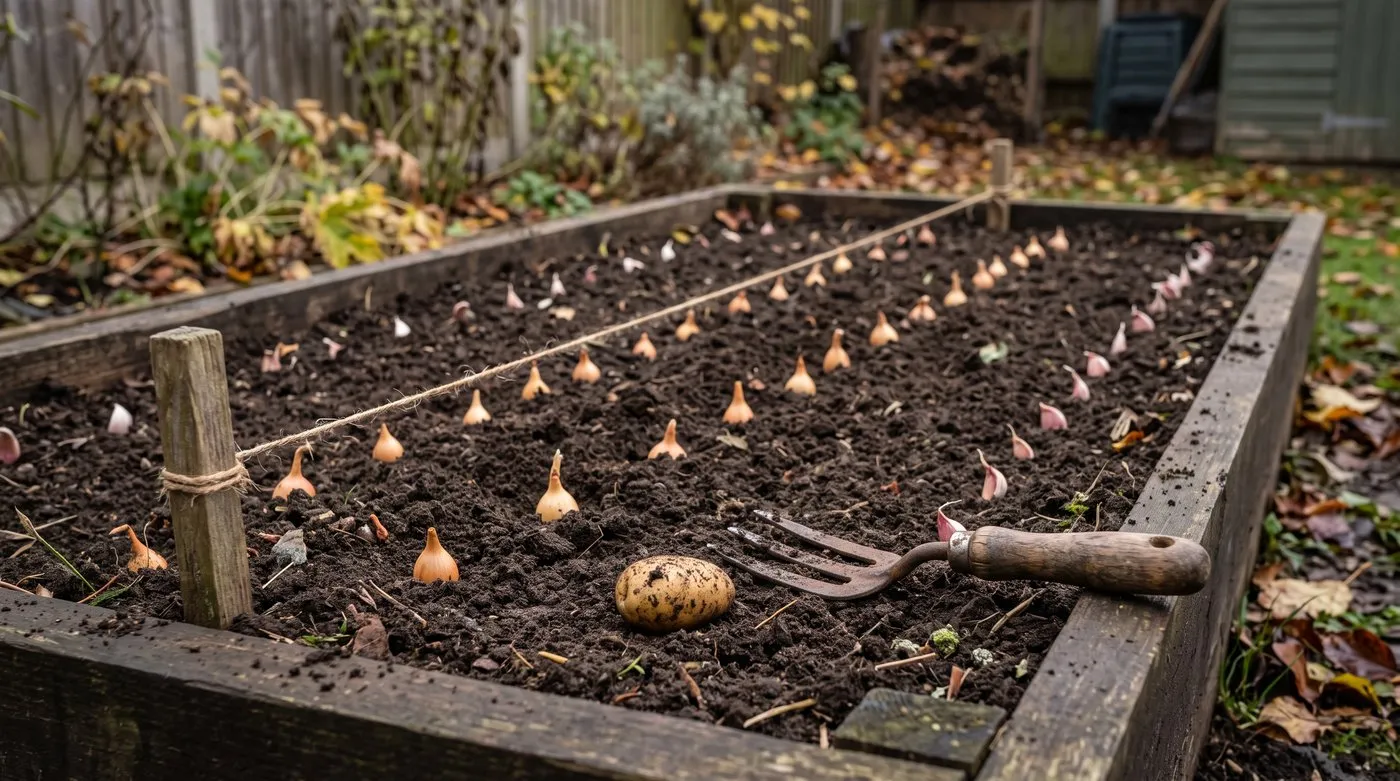
Potatoes leave loose, clean soil that suits onions and garlic. Hunt out every missed tuber so volunteers don’t carry blight into next year.
The three-bed alternative for small gardens
Short on space? Use three beds and put onions in with the roots. It’s ideal for a back garden with three raised beds.
| Year | Bed 1 | Bed 2 | Bed 3 |
|---|---|---|---|
| Year 1 | Peas, beans and fruiting | Brassicas | Roots, onions and salads |
| Year 2 | Brassicas | Roots, onions and salads | Peas, beans and fruiting |
| Year 3 | Roots, onions and salads | Peas, beans and fruiting | Brassicas |
Each family comes back every three years instead of four, so the break is a bit shorter. It’s still far better than no rotation, and it suits gardeners with a few raised beds.
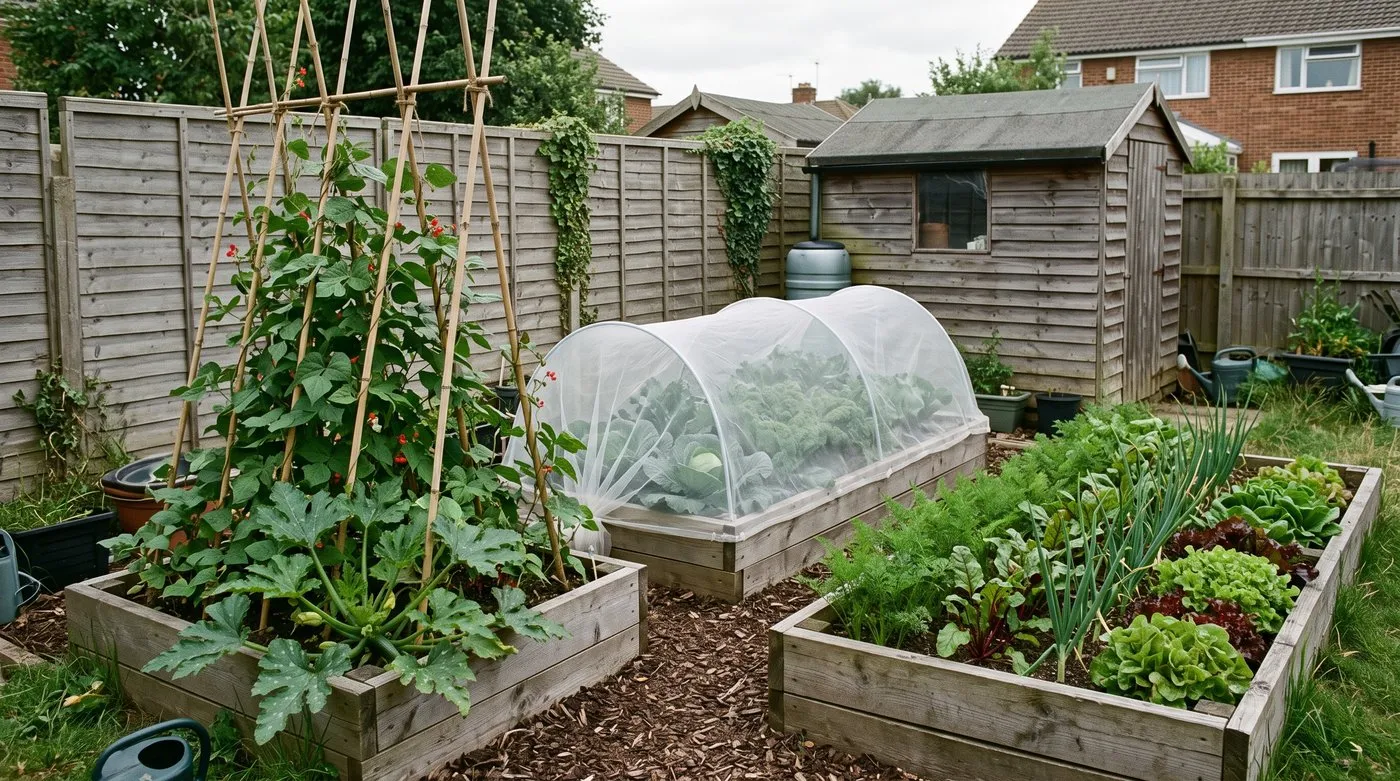
Three beds of roughly equal size make an easy rotation for a back garden. Move each group along one bed every spring.
What if a bed already has clubroot or white rot?
Rotation won’t clear either one once it’s in the soil. The RHS says clubroot can stay in soil for up to 20 years, and onion white rot can last at least 15.
For clubroot, stop growing brassicas in that bed if you can. Liming acid soil helps a bit but won’t get rid of it. Improve the drainage, and grow brassica plants on in pots of fresh compost so they go out with a good, strong root system. Clubroot-resistant varieties like cauliflower ‘Clapton’, Brussels sprout ‘Crispus’ and kale ‘Kilaxy’ are well worth trying.
For white rot, keep onions, garlic and leeks out of that bed and grow them somewhere fresh or in containers. Both diseases travel on muddy boots and tools, so clean them before moving to a clean bed.

A four-bed layout. Each group moves along one bed a year and comes back round after four years.
What goes where: a detailed planting list
Some crops are in surprising families, and that’s where mix-ups happen. Swedes and turnips are brassicas, not roots. Beetroot, chard and spinach are all one family. Tomatoes, potatoes and peppers are cousins too.
| Family | Crops | Group |
|---|---|---|
| Peas and beans | Peas, broad beans, runner beans, French beans | Group 1 |
| Squash family | Courgettes, squash, pumpkins, cucumbers | Group 1 |
| Grasses | Sweetcorn | Group 1 |
| Cabbage family | Cabbage, kale, broccoli, cauliflower, sprouts, swede, turnip, radish, rocket | Group 2 |
| Potato family | Potatoes, outdoor tomatoes, peppers, aubergines | Group 3 |
| Carrot family | Carrots, parsnips, celery, celeriac, fennel | Group 3 |
| Beet family | Beetroot, chard, spinach | Group 3 or 4 |
| Onion family | Onions, garlic, leeks, shallots, spring onions | Group 4 |
| Daisy family | Lettuce, chicory, endive | Group 4 |
Permanent crops that do not rotate
Some crops stay put for years. Give them their own patch outside the rotation beds.
- Asparagus keeps cropping for many years. Plant the crowns in a trench about 20cm deep in a sunny, well-drained spot and leave them be.
- Rhubarb crowns last for years in one place. They like an open or lightly shaded spot and rich, well-manured soil.
- Globe artichokes last a few years before you replace them with offshoots.
- Perennial herbs like rosemary, thyme, sage, oregano and bay stay where they are.
- Fruit bushes such as gooseberries, blackcurrants and raspberries stay put too.
- Strawberries get replanted every few years, but they’re best in a bed of their own rather than in the veg rotation.
A sunny border along one edge of the plot is ideal for permanent crops. Mulch them and give them some garden compost each year.
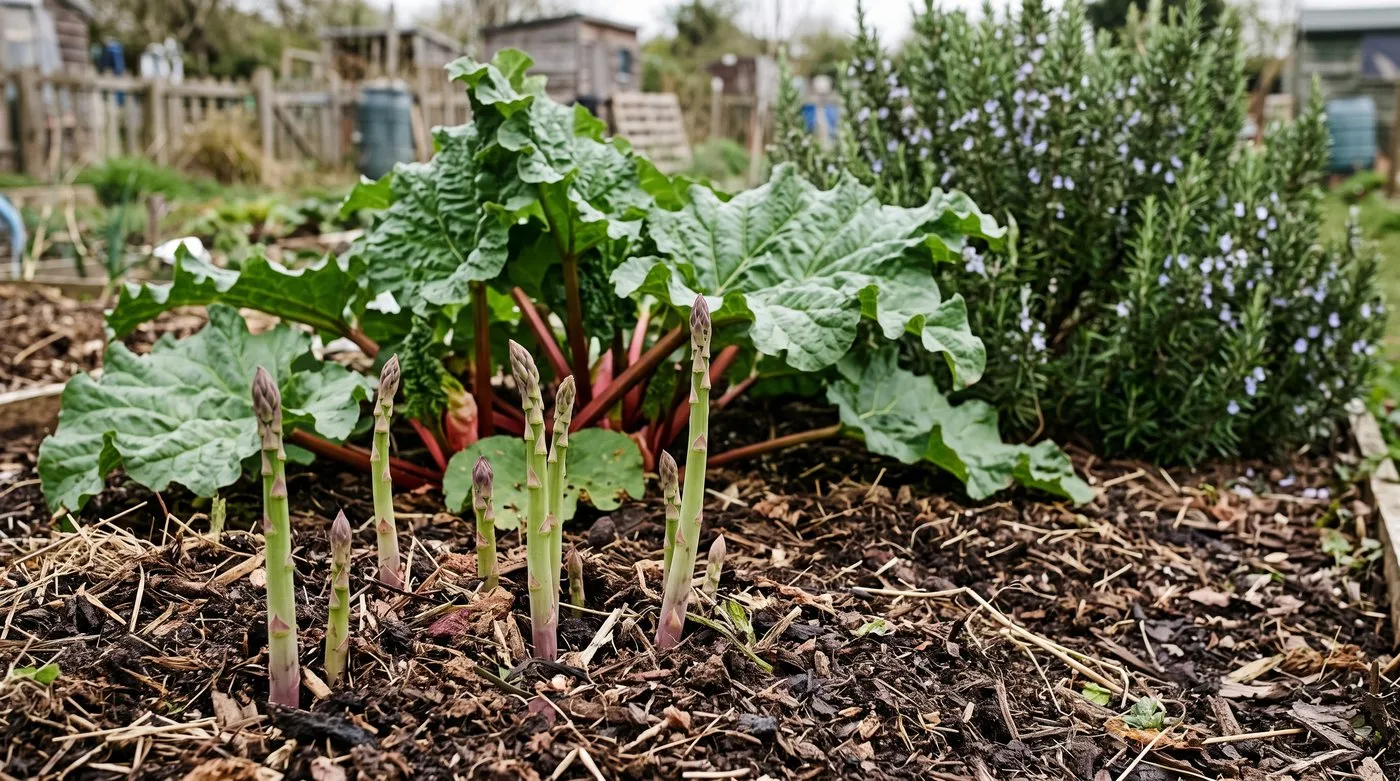
Asparagus and rhubarb stay put for years, so give them their own sunny strip outside the rotation beds.
Green manures between crops
Green manures are quick plants you sow on bare soil between crops. They smother weeds, stop winter rain washing food out of the soil, and some add nitrogen. Think of them as a living blanket that feeds the soil while it waits.
When to sow
The main time is August to October, once summer crops are cleared. Some can also go in during spring to fill a gap before the main crop.
Best green manures for UK vegetable gardens
| Green manure | Sow | Dig in | Adds nitrogen? | Good to know |
|---|---|---|---|---|
| Field beans | September to November | March to April | Yes | Very hardy and reliable over winter |
| Winter tares | August to October | March | Yes | Good at adding nitrogen, a little less hardy |
| Phacelia | March to September | Before it flowers | No | Bees love it, rots down quickly |
| Mustard | March to September | A few weeks after sowing | No | Fast, but it’s a brassica, so not before cabbages |
| Crimson clover | April to August | Before it flowers | Yes | Pretty flowers for pollinators |
| Grazing rye | September to November | March | No | Deep roots help heavy soil |
Handy rule: don’t sow a green manure from the same family as the crop that comes next. Mustard is a brassica, so keep it away from beds due for cabbages. Field beans are a legume, and sowing them before brassicas is spot on.
Chop the green manure down and dig it in, or leave it on the surface if you don’t dig, at least 3 to 4 weeks before sowing or planting. That gives it time to rot down.

Field beans covering a bare bed over winter, adding nitrogen and protecting the soil.
Nutrient management within the rotation
Each group likes a slightly different diet. Feeding to match means less waste and happier crops.
Where to add manure and compost
- Before peas and beans: dig in well-rotted manure or compost in autumn. The beans don’t need much, but the cabbages that follow will love it.
- Before brassicas: add a nitrogen-rich feed like blood, fish and bone or chicken manure pellets when you plant.
- Before roots: no fresh manure, as carrots and parsnips fork in it.
- Before onions: a light sprinkle of garden compost is plenty.
So each bed gets manure once every four years, in the autumn before its pea and bean year. The goodness then works its way through the rotation.
Do no-dig beds still need crop rotation?
Yes. No-dig changes how you add compost, but it doesn’t stop pests and diseases building up when one family stays put.
The main difference is feeding. No-dig growers usually spread a few centimetres of compost or well-rotted manure over every bed each autumn or winter, instead of manuring one bed a year. The order of crops stays the same. Missed potatoes are easier to spot and pull on mulched beds. Clubroot and white rot spread just the same either way.
Our vegetable planting calendar helps you line up sowing dates with your rotation.
Common rotation mistakes
The usual slip-ups are putting crops in the wrong group, forgetting the greenhouse and not writing anything down. Here’s how to avoid them.
Forgetting that turnips and swedes are brassicas
Turnips and swedes belong with the cabbages, not the roots. Grow them in the root bed straight after the cabbages and you’ve just followed brassicas with brassicas. Always group them with cabbages and kale.
Ignoring greenhouse crops
Most of us only have one greenhouse, so tomatoes, peppers and cucumbers often go in the same border every year. Over time, soil diseases like verticillium wilt can build up. The easy fix is to grow in pots or grow bags with fresh compost each year.
Making the beds too different in size
If one bed is twice the size of the others, you’ll have loads of onions one year and hardly any cabbages the next. Keep beds roughly the same size, and use any spare space for a green manure.
Not keeping records
After a couple of years, you’ll forget what grew where. Sketch a quick plan each spring or keep a garden diary. Even a scribble on the back of a seed packet is better than nothing.

A brassica bed in summer. The cabbages, kale and sprouting broccoli are making the most of the nitrogen left by last year’s beans.
Record keeping templates
All you need is a note of which family grew in each bed each year. Copy this into a notebook or spreadsheet.
| Year | Bed 1 | Bed 2 | Bed 3 | Bed 4 | Notes |
|---|---|---|---|---|---|
| 2026 | Peas, beans, courgettes | Cabbage, kale, broccoli | Potatoes, carrots, parsnips | Onions, garlic, lettuce | First year. Manure Bed 4 in autumn |
| 2027 | Cabbage, kale, broccoli | Potatoes, carrots, parsnips | Onions, garlic, lettuce | Peas, beans, courgettes | Manure Bed 3 in autumn |
| 2028 | Potatoes, carrots, parsnips | Onions, garlic, lettuce | Peas, beans, courgettes | Cabbage, kale, broccoli | Manure Bed 2 in autumn |
| 2029 | Onions, garlic, lettuce | Peas, beans, courgettes | Cabbage, kale, broccoli | Potatoes, carrots, parsnips | Manure Bed 1 in autumn |
Add a line about any problems too, like a disease, a pest or a poor crop. Over the years you’ll learn which beds suit which crops, as sun, soil and drainage often vary across a plot.
Rotation for container growers
Rotation helps in pots too. The trick is not to reuse old compost for the same family.
If you grow tomatoes in grow bags one year, don’t put tomatoes in the same bags the next. Use the old compost for something else (beans or lettuce are fine in it), and give the tomatoes fresh compost.
For big permanent pots, swap the crops each year in the same order as the beds. A pot of potatoes in 2026 could grow onions or salads in 2027, beans in 2028 and brassicas in 2029. Top up with fresh compost and some feed each time.
Making rotation work long-term
Rotation is a guide, not a strict rulebook. Real plots rarely follow the plan perfectly. The main thing is never to grow the same family in the same bed two years running, and ideally to leave three or four years between.
A bit of give is fine:
- Quick salads tucked between slow brassicas don’t break the rotation
- A row of radishes in a gap between crops is harmless
- If seedlings fail, plant what you’ve got rather than leaving the bed empty
After two or three seasons it becomes second nature: you just move everything along one bed each spring. Next, see our UK vegetable planting calendar to plan sowing dates around your rotation.
Start your plan this spring. Sketch your beds, give each group a bed, and move everything along one next year.
For something a bit different in the rotation, try growing your own grain.
Frequently asked questions
Why is crop rotation important for vegetable growing?
It stops soil pests and diseases building up. Clubroot, white rot and eelworm can live in soil for years and get worse if their favourite crop stays in one spot. Moving families around also makes better use of the food in the soil.
How many beds do I need for crop rotation?
Four beds is the classic setup. It gives each family a fresh bed every year. Three beds work well in smaller gardens if you put two groups together. Even two beds is better than nothing.
Do potatoes need to be in the rotation?
Yes, potatoes really benefit from rotation. Potato cyst eelworm can lie in the soil for years, and missed tubers that regrow can carry blight. Growing potatoes in the same bed every year means more pests and smaller crops. Aim for a four-year gap.
What are green manures and when should I sow them?
They’re quick plants that cover bare soil between crops. They smother weeds, stop rain washing food out of the soil and some add nitrogen. Sow field beans or winter tares in autumn, and phacelia or mustard in spring. Dig them in before they set seed.
Can I grow the same crops in the same spot every year?
You can, but problems usually build up over time. Greenhouse tomatoes grown in the same border for years often run into soil diseases, and onions on the same patch are at risk of white rot. If you can’t rotate, grow in pots with fresh compost, or replace the top 15cm of soil every few years.
Do herbs need to be included in the rotation?
No, most herbs can stay out of it. Perennial herbs like rosemary, thyme and sage can live in one spot for years. Annual herbs like basil, coriander and dill can be tucked in anywhere.
What crops should not be rotated?
Perennial crops stay put, because they live for years. Asparagus and rhubarb keep cropping in the same spot for many seasons. Globe artichokes, sorrel and perennial herbs stay too. Give them their own patch outside the rotation beds.
Our team produces practical UK gardening guidance from source research, contributor records and established horticultural practice. Editorial standards are overseen by Matt W.


