
Key takeaways
- Four beds, four crop groups, and each group moves on one bed every year
- The order is legumes, brassicas, roots, potatoes, then back to legumes
- Swedes, turnips and radishes are brassicas, so they go in the brassica bed
- Onions, garlic and leeks usually join the potato or legume bed
- Rotation helps clean beds stay clean, but it won't clear clubroot or white rot
- Keep rhubarb, asparagus and soft fruit in a separate permanent bed
A four-year crop rotation moves your veg around four beds in a set order, so no family grows in the same soil two years running. It’s the classic allotment plan. Each winter, every group shifts one bed along, and after four years each bed is back where it started.
This guide goes bed by bed: what to grow in each, when to sow it, and how to prepare the soil for the next crop. For the reasons behind rotation and the other layouts, see the crop rotation planner.
The four-bed rotation at a glance
Each bed follows the same order, one step a year: legumes, brassicas, roots, potatoes, then back to legumes.
| Year | Bed A | Bed B | Bed C | Bed D |
|---|---|---|---|---|
| 1 | Legumes | Brassicas | Roots | Potatoes |
| 2 | Brassicas | Roots | Potatoes | Legumes |
| 3 | Roots | Potatoes | Legumes | Brassicas |
| 4 | Potatoes | Legumes | Brassicas | Roots |
In any one year you have one bed of each group. Make beds roughly equal in size so the plan stays simple.

One bed for each group. Next winter, every group moves one bed along.
Why the order works
Each crop leaves the soil in good shape for the next.
- Legumes to brassicas. Peas and beans don’t need much feeding. Cut them down and leave the roots in the soil. Then add compost, and the hungry brassicas follow on firm, rich ground
- Brassicas to roots. Carrots and parsnips fork in freshly manured soil, so they follow brassicas without any added manure
- Roots to potatoes. Dig in well-rotted manure or compost for the potatoes. Earthing them up and lifting the crop clears weeds and loosens the soil
- Potatoes to legumes. Peas and beans are happy in the leftover goodness, with no need for more manure
The guide to plant families for crop rotation explains which crops belong to which family.
What to grow in the legume bed
Peas and beans of all kinds.
- Broad beans such as ‘Aquadulce Claudia’ sown in October or November, or ‘The Sutton’ in spring
- Peas such as ‘Kelvedon Wonder’ or ‘Meteor’ from March to June
- French beans such as ‘Cobra’ (climbing) from May
- Runner beans such as ‘Lady Di’ or ‘Painted Lady’ from May
At the end of the season, cut the plants off at the base and leave the roots in the soil to rot down. Compost the tops. You can sow a winter green manure if the bed will be empty. Many gardeners also grow onions and garlic here.

Peas, broad beans and French beans share the legume bed. Cut them down in autumn but leave the roots in the soil.
What to grow in the brassica bed
The whole cabbage family, including swedes, turnips and radishes. They share pests and diseases such as clubroot, so they all move together.
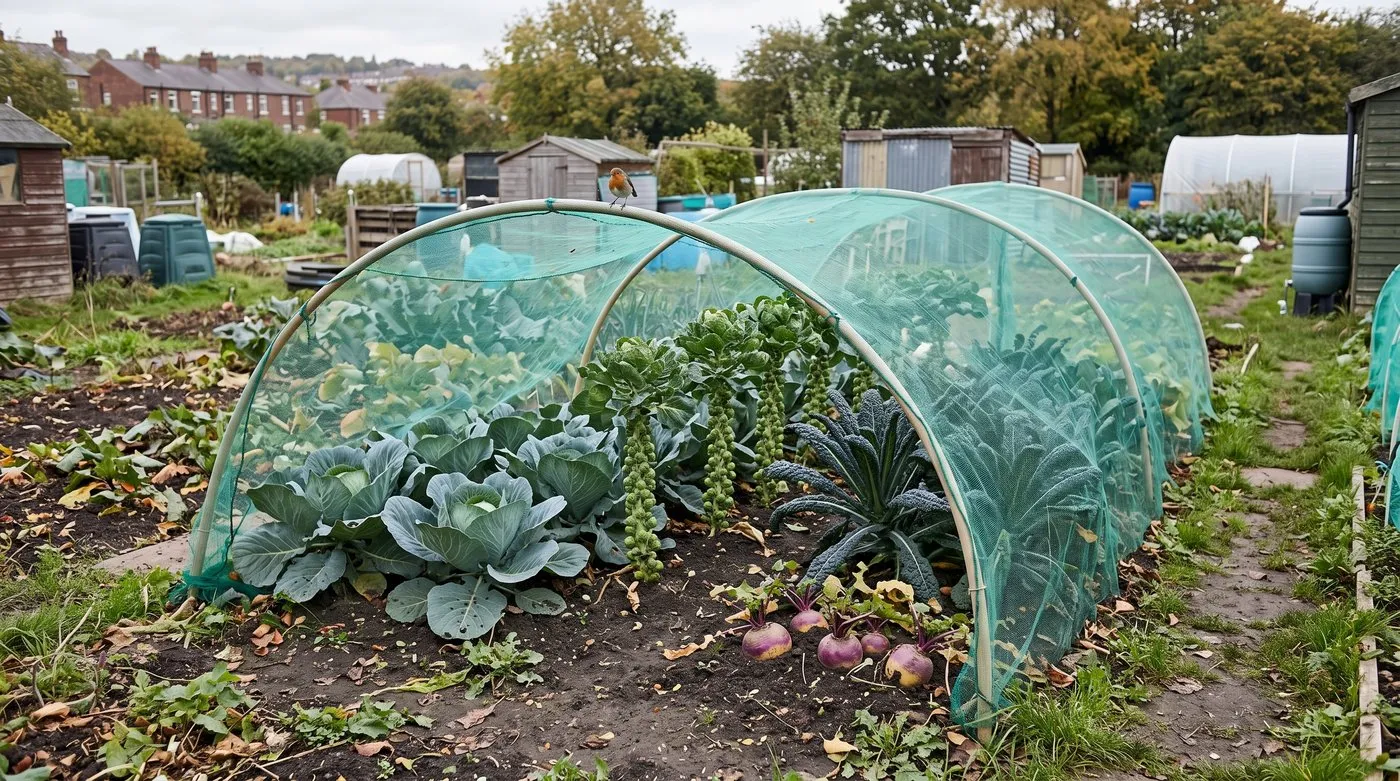
Swedes belong with the cabbages, not the carrots. Netting the whole brassica bed keeps butterflies and pigeons off.
- Cabbages such as ‘Hispi’ and ‘Greyhound’ for summer, and savoys for winter
- Calabrese and sprouting broccoli
- Cauliflowers
- Kale such as ‘Cavolo Nero’ and ‘Dwarf Green Curled’
- Brussels sprouts
- Swedes, turnips, radishes and kohl rabi
Firm the soil well before planting, as brassicas dislike loose ground. Net them against cabbage white butterflies and pigeons. If your soil is acid and clubroot is a worry, liming before brassicas can help. The guide to stopping cabbage white caterpillars shows how to keep them off.
What to grow in the root bed
Carrots, parsnips, beetroot and other roots that aren’t brassicas.
- Parsnips such as ‘Tender and True’ or ‘Gladiator’, sown from March to May
- Carrots such as ‘Nantes’ types for early crops and ‘Autumn King’ for maincrop
- Beetroot such as ‘Boltardy’, sown little and often from April
- Celeriac, chard and spinach, which many gardeners add here too
Don’t add fresh manure to this bed, as it makes carrots and parsnips fork. Cover carrots with fine mesh against carrot root fly. The guide to carrot root fly has the details.
What to grow in the potato bed
Potatoes, plus tomatoes if you grow them outdoors. Both are in the same family and share blight.
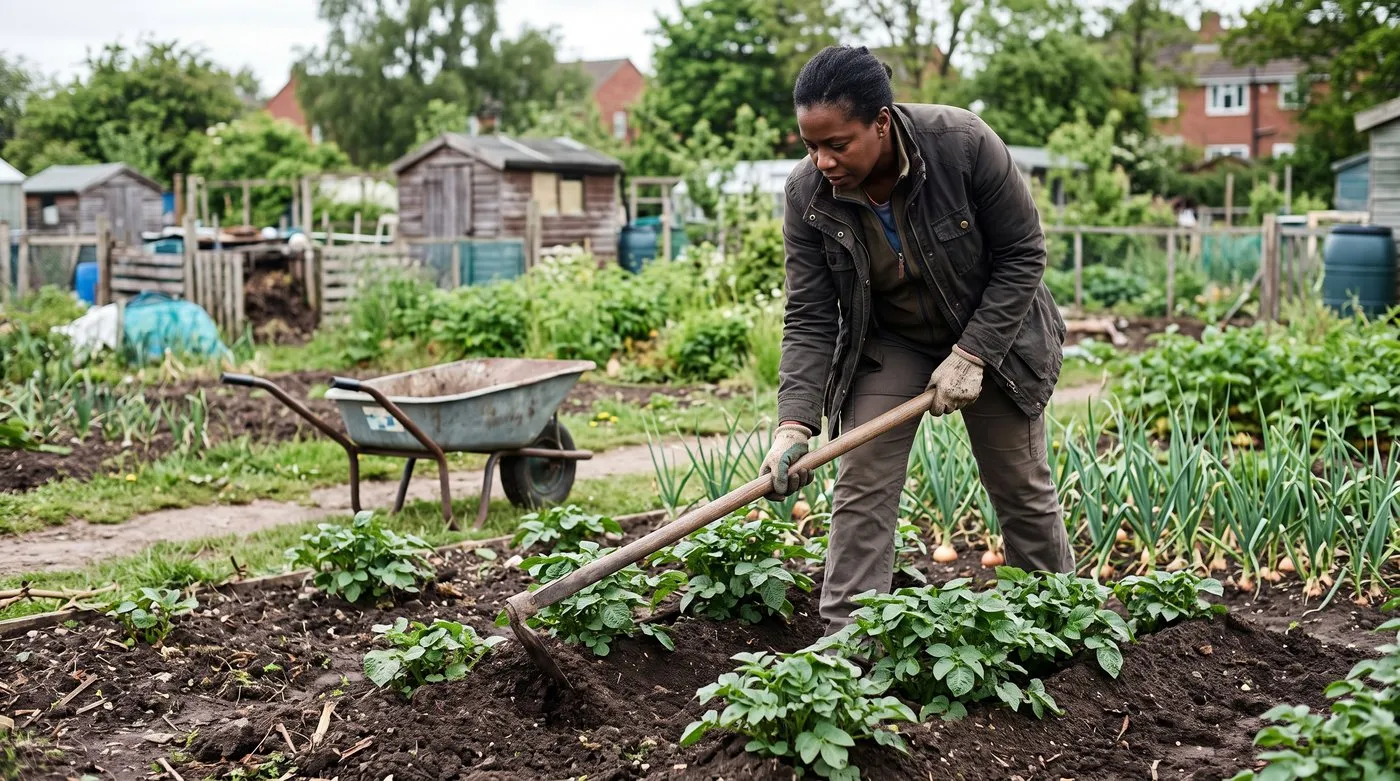
Earthing up protects the shoots from frost and stops tubers going green. It also leaves the bed clean for next year’s peas and beans.
- First earlies such as ‘Rocket’ or ‘Pentland Javelin’, planted in March
- Second earlies such as ‘Charlotte’ or ‘Kestrel’, planted in April
- Maincrops such as ‘Maris Piper’ or ‘Cara’, planted in April
- Onions, garlic, shallots and leeks, if you choose to grow alliums here
Dig in well-rotted manure or compost in autumn or winter before planting. Earth up the shoots as they grow and watch for blight in warm, wet summers.
The fifth bed: permanent crops
Perennial crops stay put and sit outside the rotation. Give them a bed of their own:
- Rhubarb and asparagus, which crop for many years
- Globe artichokes
- Soft fruit such as blackcurrants, raspberries and strawberries
- Perennial herbs such as rosemary, thyme, sage and chives
Mulch this bed with compost every year to keep it in good heart.

Rhubarb, asparagus, fruit bushes and herbs live in their own bed. They stay put while everything else moves round.
Moving the beds on each winter
In winter, every group moves one bed along. Prepare each bed for the crop that’s coming:
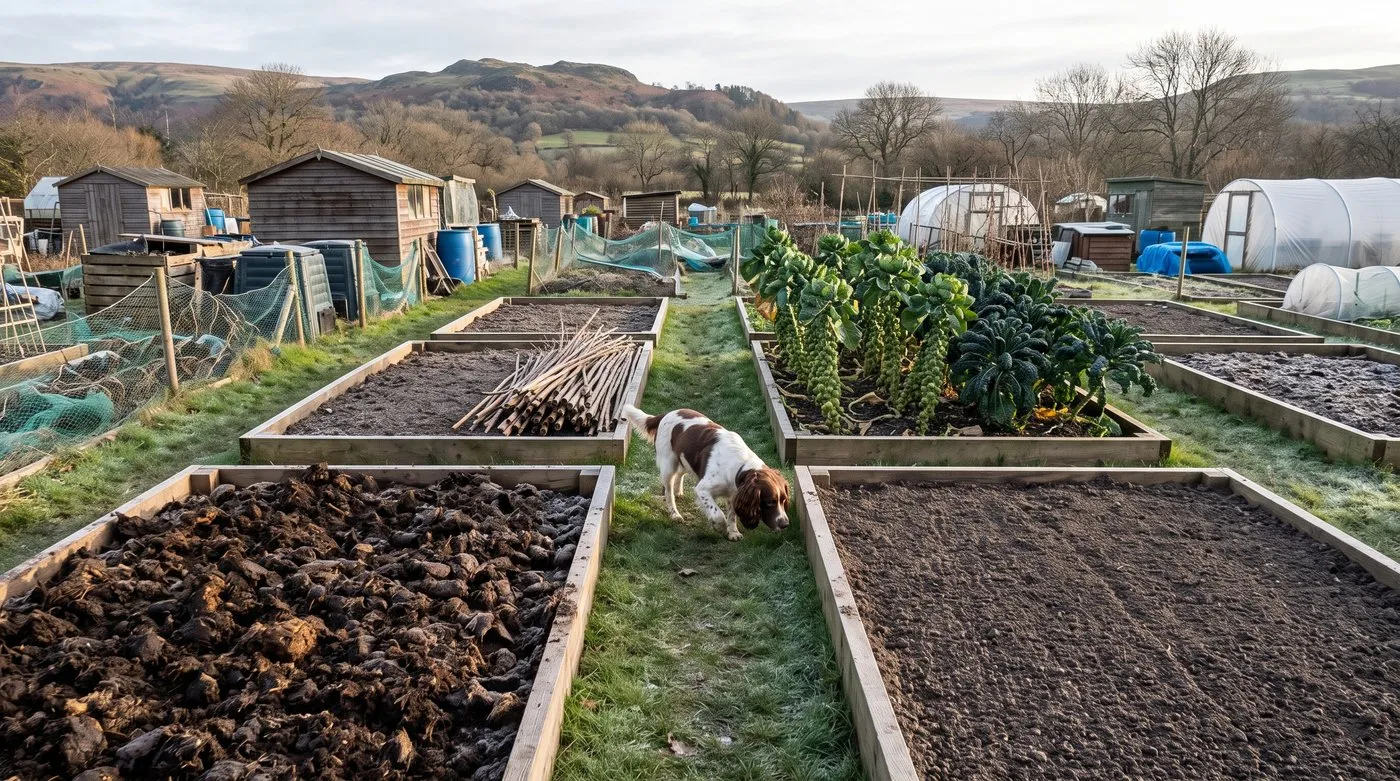
Winter is changeover time. Manure goes on the bed that’s about to grow potatoes, but never on next year’s carrots.
- Old legume bed, becoming brassicas: clear the tops, leave the roots, add compost and firm it before planting
- Old brassica bed, becoming roots: clear the stumps once the last sprouts and kale are picked. Don’t add manure. Rake to a fine finish for sowing
- Old root bed, becoming potatoes: dig in well-rotted manure or compost
- Old potato bed, becoming legumes: lift every last tuber so none regrow. No extra manure needed
Keep a simple record of what grew where each year. A photo of each bed in summer or a page in a notebook stops the plan drifting.
Rotation and soil diseases
Rotation helps keep clean beds clean, but it can’t cure a badly infected one.
- Clubroot lasts for many years in soil. Don’t grow brassicas in an infected bed
- Allium white rot also lasts many years. Keep onions, leeks and garlic out of infected ground
- Potato cyst eelworm builds up when potatoes grow in the same soil often. Rotation helps, and so do resistant varieties
- Flying pests such as aphids and caterpillars move between beds easily, so netting matters more than rotation for these
The guide to common brassica diseases covers clubroot and what to do if it turns up.
4-year rotation calendar
| Month | Legume bed | Brassica bed | Root bed | Potato bed |
|---|---|---|---|---|
| Jan to Feb | Plan; order seed | Pick winter kale and sprouts | Prepare soil | Chit seed potatoes |
| Mar | Sow peas, broad beans | Sow brassicas in modules | Sow parsnips, early carrots | Plant first earlies |
| Apr to May | Sow French and runner beans | Plant out, firm in, net | Sow carrots, beetroot | Plant second earlies, maincrops; earth up |
| Jun to Jul | Pick peas and broad beans | Keep netted | Thin; sow more beetroot | Earth up; watch for blight |
| Aug to Sep | Pick beans | Pick summer cabbages | Lift carrots and beetroot | Lift potatoes |
| Oct to Nov | Cut down; sow broad beans | Net winter crops against pigeons | Store roots | Clear bed fully |
| Dec | Move the plan on one bed | Pick sprouts | Lift parsnips as needed | Add manure for next year’s potatoes |
Common crop rotation mistakes
- Putting swedes and turnips with the roots. They’re brassicas and carry clubroot
- Manuring the root bed. Fresh manure makes carrots and parsnips fork
- Leaving stray potatoes. Volunteer tubers carry disease into the next crop
- Planting tomatoes after potatoes. They share blight and other problems
- Losing track. Write down what grew where each year
If four beds is too many, the guide to the 3-year crop rotation shows a simpler layout, and the growing veg hub has guides to every crop.
Now you’ve got your four beds planned, use the UK vegetable planting calendar to time every sowing.
Frequently asked questions
Why is crop rotation important?
It stops soil pests and diseases building up in one place. Each plant family has its own pests and diseases. Moving each group to a new bed every year breaks the cycle. It also lets you match soil preparation to each crop, such as manure before potatoes.
What is the basic UK 4-year crop rotation?
Legumes, then brassicas, then roots, then potatoes. Each bed follows that order, one step a year. Year one is peas and beans, year two cabbages and kale, year three carrots and parsnips, and year four potatoes. Then the cycle starts again.
How long does crop rotation take to work?
It starts helping in the first year you move crops on. The benefits for soil health and pest control build up over a full cycle. Rotation won’t clear clubroot or white rot, which last in soil for many years, so avoid those crops in an infected bed.
Can you grow tomatoes in a 4-year rotation?
Yes, grow them in the potato bed. Tomatoes and potatoes are in the same family and share pests and diseases, including blight. Avoid planting tomatoes where potatoes grew the year before.
Where do garlic, leeks and onions fit?
Most gardeners put them with potatoes or legumes. Onions, garlic, leeks and shallots are alliums. Some growers use a five-bed plan that gives alliums a bed of their own. Either way works, as long as they move to fresh ground each year.
What if I have fewer than 4 beds?
Use a three-year rotation instead. Combine two groups, such as roots with potatoes, in one bed. Even with two beds, swapping crops each year is better than growing the same family in the same place.
Our team produces practical UK gardening guidance from source research, contributor records and established horticultural practice. Editorial standards are overseen by Matt W.


