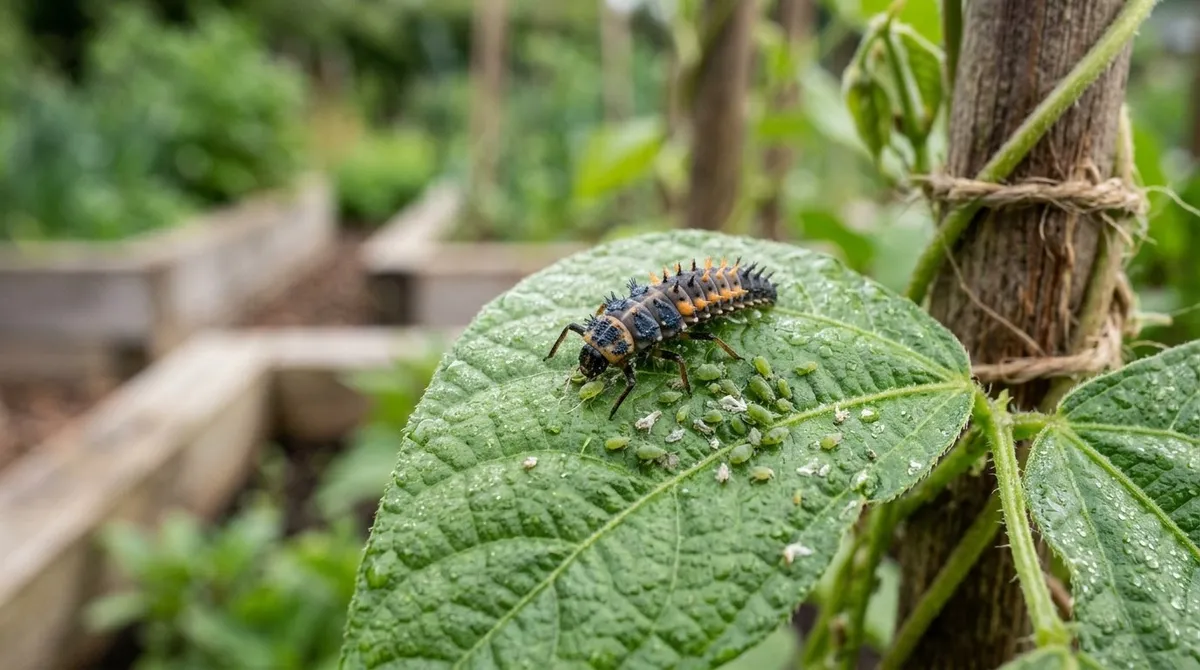
Key takeaways
- Carrot root fly lays eggs twice a year: May to June and August to September
- Cover carrots with fine insect mesh, or fence them with a 60cm-high mesh barrier
- The flies are drawn by the smell of crushed carrot leaves, so thin on calm evenings
- Sowing in early June misses the first wave of egg-laying
- Varieties like Flyaway and Resistafly suffer less damage, but use mesh too
Carrot root fly is the pest that turns lovely carrots into rusty, tunnelled ones. The flies themselves are tiny and easy to miss. It’s their maggots that do the damage, and you often only find out at harvest time.
The good news is it’s one of the easiest veg pests to stop. Mesh, good timing and the right varieties keep it out without any chemicals. Our carrot variety comparison shows where Flyaway, Resistafly and the tastiest types fit in.

Rusty brown tunnels like these are the classic sign of carrot root fly.
How to identify carrot root fly damage
Look for rusty brown tunnels in the outer flesh of your carrots. They’re thin, often full of dark muck, and tend to be worst lower down the root. The flesh round them goes soft and brown.
Above ground, the leaves may turn reddish-purple in late summer and wilt on warm days, even when the soil is moist. Young seedlings attacked in June can die off. Dig around them and you may find tiny cream-coloured maggots.
The carrot root fly lifecycle in the UK
There are two waves each year, and knowing when they come is the key to beating them. The pest spends winter in the soil and starts again each spring.
First generation: May to June
Flies come out of the soil from mid-May. The females lay eggs in the soil right next to carrot plants. The eggs hatch in a week or so, and the maggots burrow into the nearest root. They feed for a few weeks, then rest in the soil. This damage is easy to miss, as the carrots are still small.
Second generation: August to September
The next lot of flies appears from mid-August and lays eggs through September. These maggots often do the most harm, because they carry on feeding in autumn and into winter if it’s mild. Carrots left in the ground over winter can get badly tunnelled.
Lifecycle timing table
| First wave | Second wave | |
|---|---|---|
| Flies about | Mid-May to late June | Mid-August to late September |
| Maggots feeding | June and July | September onwards, into winter if mild |
| What to do | Mesh up or sow in early June | Keep mesh on until harvest |
How to prevent carrot root fly with barriers
Mesh is the best defence by far. Carrot root flies are weak fliers that stay close to the ground. The RHS carrot fly page suggests barriers too.
Vertical barrier method
Put up a mesh fence at least 60cm tall right round your carrot bed. Use fine insect mesh, as butterfly netting is too coarse. Hold it up with canes or stakes, and bury the bottom edge in the soil or weigh it down so nothing can crawl underneath.
The flies come in low, so most of them can’t get over it. It’s a cheap, simple job and the mesh lasts for years.
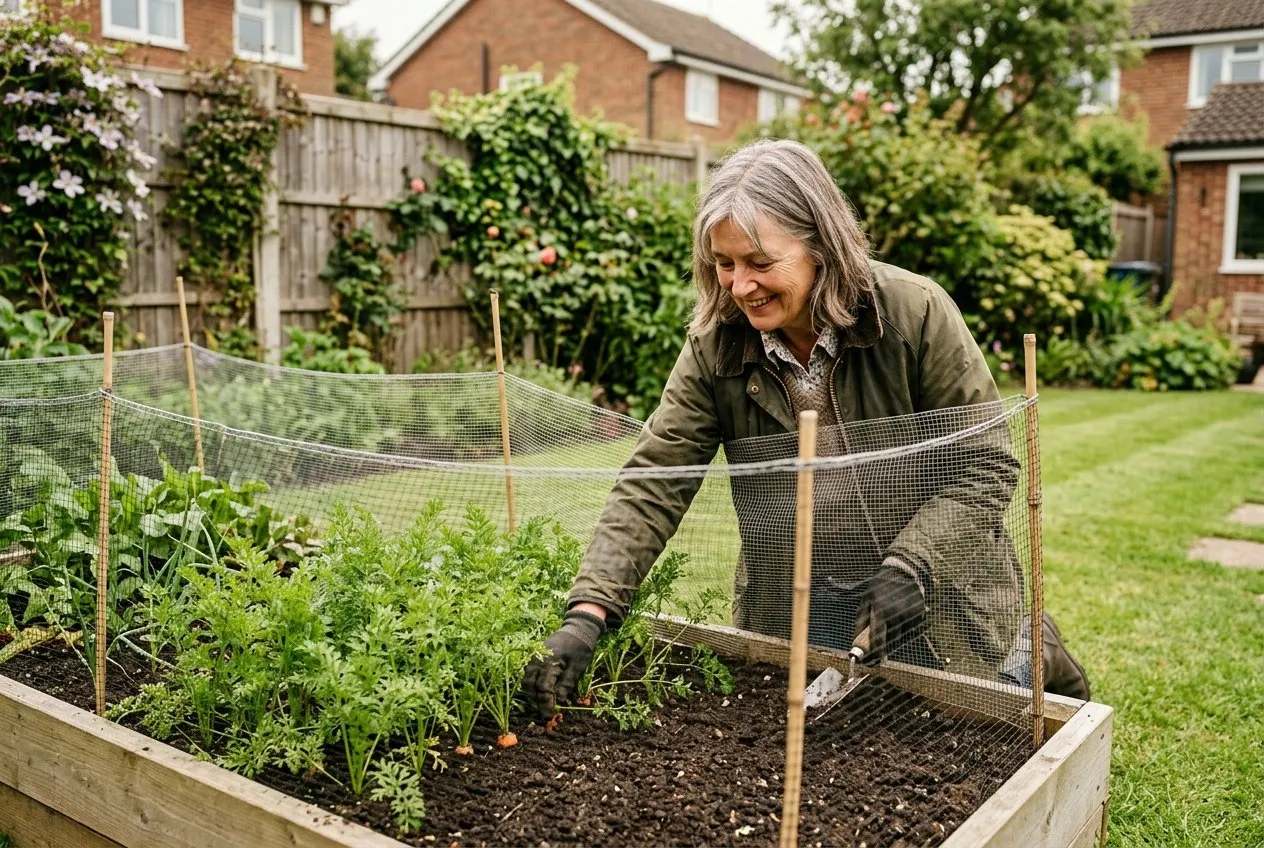
A mesh fence round a raised bed. Make sure the bottom is fixed tight to the bed edge.
Complete cover method
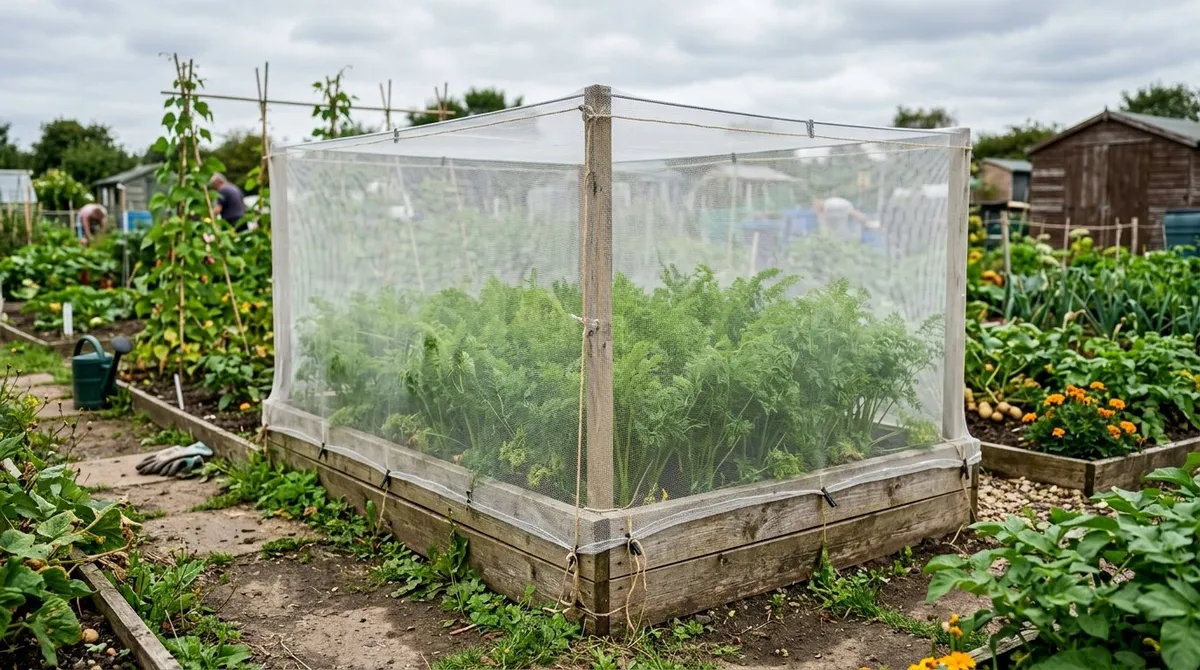
For the best protection, cover the whole bed with fine mesh over hoops. This shuts the flies out completely and is handy for raised beds.
Check for gaps where the mesh meets the soil. Even a small gap lets a fly in. Weigh the edges down with planks, stones or soil.
Which carrot varieties resist carrot root fly?
Some varieties suffer much less damage, which makes them a great backup. None are fully immune, so pair them with mesh.
Resistance comparison table
| Variety | Resistance | Root type | Good for |
|---|---|---|---|
| Flyaway | Good | Medium, Nantes type | Eating fresh |
| Resistafly | Good | Medium, Nantes type | Eating fresh and storing |
| Sytan | Some | Medium | General growing |
| Maestro | Some | Medium-long, Nantes type | Storing and cooking |
| Autumn King | None | Long | Big maincrop for storing |
| Chantenay Red Cored | None | Short and stumpy | Heavy soil, pots |
The flies can still find these tougher varieties, they just do less damage. Sow them exactly as you would any other carrot. Our guide to how to grow carrots covers the basics.
Companion planting to deter carrot root fly
Strong-smelling onion family plants may help hide your carrots. Onions, garlic, leeks and chives are the classic partners, and this is one of the oldest tricks in companion planting. Treat it as a bonus rather than your main defence.
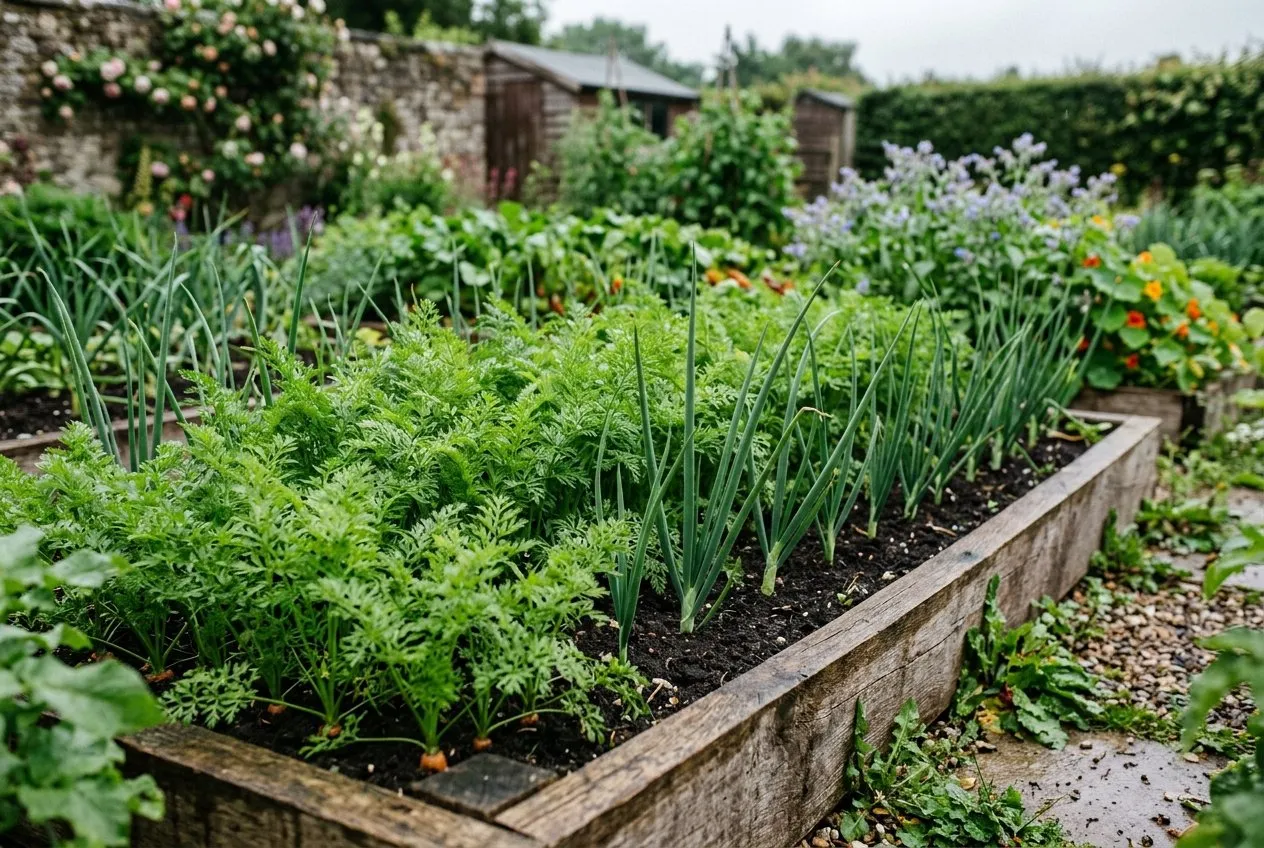
Onions grown between rows of carrots, an old allotment favourite.
How to interplant effectively
Grow a row of spring onions, garlic or chives between every couple of rows of carrots. They need to be up and leafy before the flies arrive in mid-May, so plant onion sets or garlic in March, or use perennial chives.
French marigolds are often suggested too. The evidence against carrot fly is mixed, but they do bring in hoverflies and other helpful insects. Our biological pest control guide has more on welcoming natural helpers.
Sowing timing to avoid carrot root fly
Sow your main crop in early June to dodge the first wave. The first flies are busiest from mid-May to mid-June. Carrots sown after that miss most of it.
Optimal sowing windows for the UK
| Sowing time | Why | Risk | Good varieties |
|---|---|---|---|
| Late February to March (under cover) | Lift before the second wave | Medium | Amsterdam Forcing, Early Nantes |
| Late March to April | Usual time, but both waves hit | High, so use mesh | Any |
| Early to mid-June | Misses the first wave | Low to medium | Flyaway, Resistafly, Autumn King |
| Late June to early July | Late crop for autumn | Low, but cover for the second wave | Flyaway, Autumn King, Chantenay |
Cultural controls and good practice
A few easy habits make a real difference.
Thin in the evening. Crushed carrot leaves give off a smell that draws the flies in. Thin on a calm evening, water the row afterwards, and take the thinnings away in a sealed bag.
Firm the soil after thinning. The flies lay eggs in little cracks next to the stems. Press the soil down round the plants you’ve kept.
Clear up after harvest. Take away old leaves and damaged roots. Maggots may still be in leftover carrots.
Move your carrots each year. The pests spend winter in the soil where carrots grew. Grow them somewhere new each year as part of a simple rotation.
Pick an open spot. The flies like sheltered, still corners by hedges, fences and walls. If your plot is sheltered, mesh matters even more.
Frequently asked questions
What does carrot root fly damage look like?
Rusty brown tunnels running through the outside of the carrot. You’ll often see narrow grooves along the root, sometimes with dark muck in them. The leaves may turn reddish-purple and wilt in late summer. Badly hit carrots go soft around the tunnels.
When is carrot root fly most active in the UK?
Twice a year, in early summer and late summer. The first flies lay eggs from mid-May to late June. The second lot lays from mid-August to late September. The second wave often does more harm, as the maggots carry on feeding in autumn.
Does companion planting really deter carrot root fly?
It can help a little, but don’t rely on it. Onions, garlic and chives may help hide the smell of carrots. Use them alongside a mesh barrier or cover for proper protection.
How tall should a carrot fly barrier be?
At least 60cm tall. Carrot root flies fly low, close to the ground, so a barrier this high keeps most of them out. Seal the bottom firmly to the soil with no gaps. For full protection, cover the bed with mesh on hoops instead.
Are there any carrot varieties resistant to carrot root fly?
Yes, a few suffer less damage than others. Flyaway and Resistafly are the best known, and Sytan has some resistance too. None are fully immune, so grow them under mesh for the best results.
Can you grow carrots in pots to avoid carrot root fly?
Yes, raising them up helps a lot. Stand deep pots on a table, staging or a wall at least 60cm off the ground, where the flies rarely reach. Use pots at least 30cm deep with free-draining compost. Short carrots like Chantenay types are ideal.
Should you use insecticide for carrot root fly?
No, there’s no insecticide approved for home gardeners against it. Mesh, good timing and tidy habits are the way to go. The RHS and Garden Organic both suggest the same chemical-free approach.
Further reading
- Carrot Leaf Blight: UK Control Guide
- Organic Pest Control Guide UK
- Cabbage White Butterfly: ID and Control
- How to Grow Parsnips in the UK
- Best Vegetables to Grow at Home UK
Thinning is what releases the smell, so try sowing at the final spacing from the start. Seed tapes make that easy.
Our team produces practical UK gardening guidance from source research, contributor records and established horticultural practice. Editorial standards are overseen by Matt W.