Key takeaways
- Early Nantes 5 is quick to crop and easy in pots and raised beds
- Round or stumpy carrots such as Paris Market and Chantenay suit clay and stony soil
- Long, sweet types such as Sugarsnax 54 need deep, loose, stone-free soil
- Flyaway and Resistafly suffer less carrot fly damage, but fine mesh still gives the best protection
- Autumn King 2 is a reliable maincrop for lifting and storing over winter
The best carrot variety for you depends on the job. Early Nantes 5 is quick and easy, round Paris Market suits pots and clay, Sugarsnax 54 is lovely raw, and Autumn King 2 stores all winter. Pick one or two that match your soil and how you like to eat them.
This guide helps you choose which carrot seeds to buy. For sowing, thinning and watering, see our guide on how to grow carrots.
Which carrot varieties are best for UK gardens?
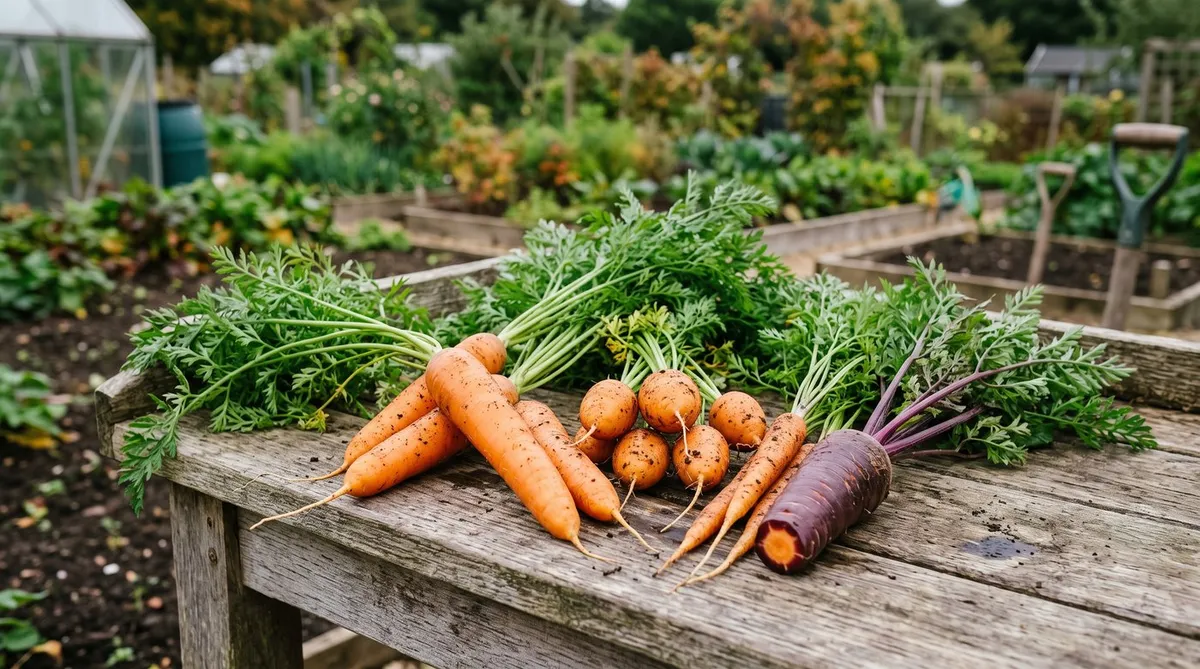
No single carrot is best at everything. Short types are quick and cope with poor soil. Long types are sweet but fussy. Maincrops are slower but keep for months.
| Variety | Root shape | Best for | Watch out for |
|---|---|---|---|
| Early Nantes 5 | Medium, blunt-ended | Quick crops, pots, beginners | Doesn’t store for long |
| Paris Market | Small and round | Pots, clay, stony soil | Small roots |
| Chantenay Red Cored | Short, stumpy, wedge-shaped | Heavy soil, cooking | Not as sweet raw |
| Sugarsnax 54 | Long and slender | Sweet raw carrots | Needs deep, stone-free soil |
| Flyaway | Medium, blunt-ended | Gardens with carrot fly | Still needs mesh in bad years |
| Resistafly | Medium, blunt-ended | Gardens with carrot fly | Still needs mesh in bad years |
| Autumn King 2 | Large, long | Winter storage | Slow, not for small pots |
| Purple Haze | Medium, purple skin | Colour on the plate | Purple fades when cooked |
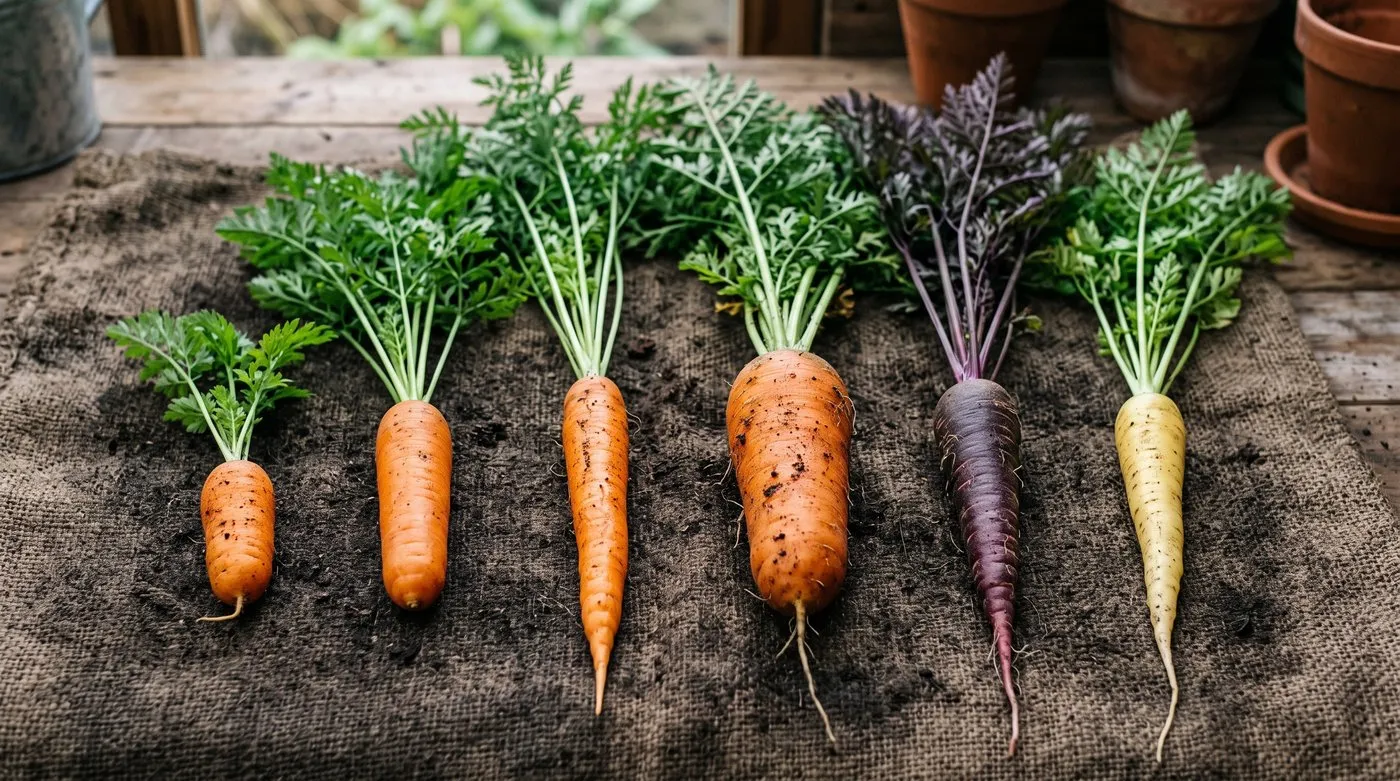
Root shape matters as much as flavour. Short and round types cope with shallow or heavy ground, while long ones need deep, loose soil.
The best quick carrot for beginners
Early Nantes 5 is the easiest place to start. It grows medium, blunt-ended roots with a sweet flavour and crops quickly. Sow it from March under cloches or in a greenhouse, then outdoors through to July.
It suits most soils, pots and raised beds. Pull roots young for sweet baby carrots, or leave them a little longer for full size. It doesn’t keep as well as a maincrop, so sow little and often and eat it fresh.
Which carrots are best for pots and heavy soil?
Short and round carrots are the answer for pots, clay and stony ground. They don’t need to push deep, so they’re less likely to fork or snap.
- Paris Market grows round, golf-ball roots, a bit like radishes. Perfect for shallow pots and window boxes.
- Chantenay Red Cored has stumpy, wedge-shaped roots that push through heavy soil. Good for soups and stews.
- Early Nantes 5 also does well in pots at least 20cm deep.
Fill pots with peat-free multipurpose compost, without extra feed. Too much nitrogen gives lots of leaf and forked roots. Keep the compost evenly moist, because a dry spell then a soaking can split the roots. On heavy clay, our guide to improving clay soil helps in the long run.
Fiddly to sow thinly? Seed tapes space the seeds for you.
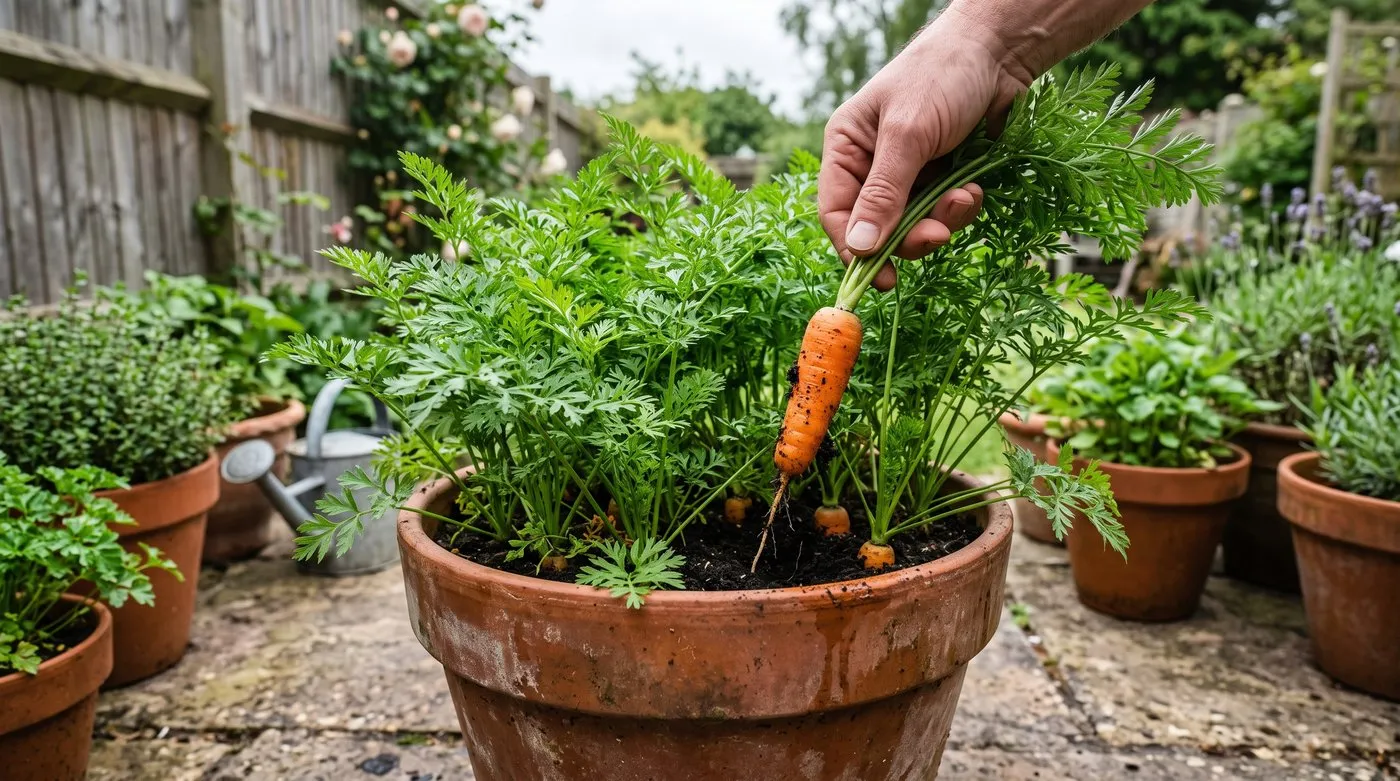
A 20cm-deep pot is plenty for short carrots, as long as the compost never dries out completely.
Which carrot variety tastes sweetest?
Sugarsnax 54 is a favourite for sweet, crunchy raw carrots. It grows long, slender roots, so it needs at least 30cm of loose, stone-free soil. Grow it in a deep raised bed if your soil is heavy or full of stones.
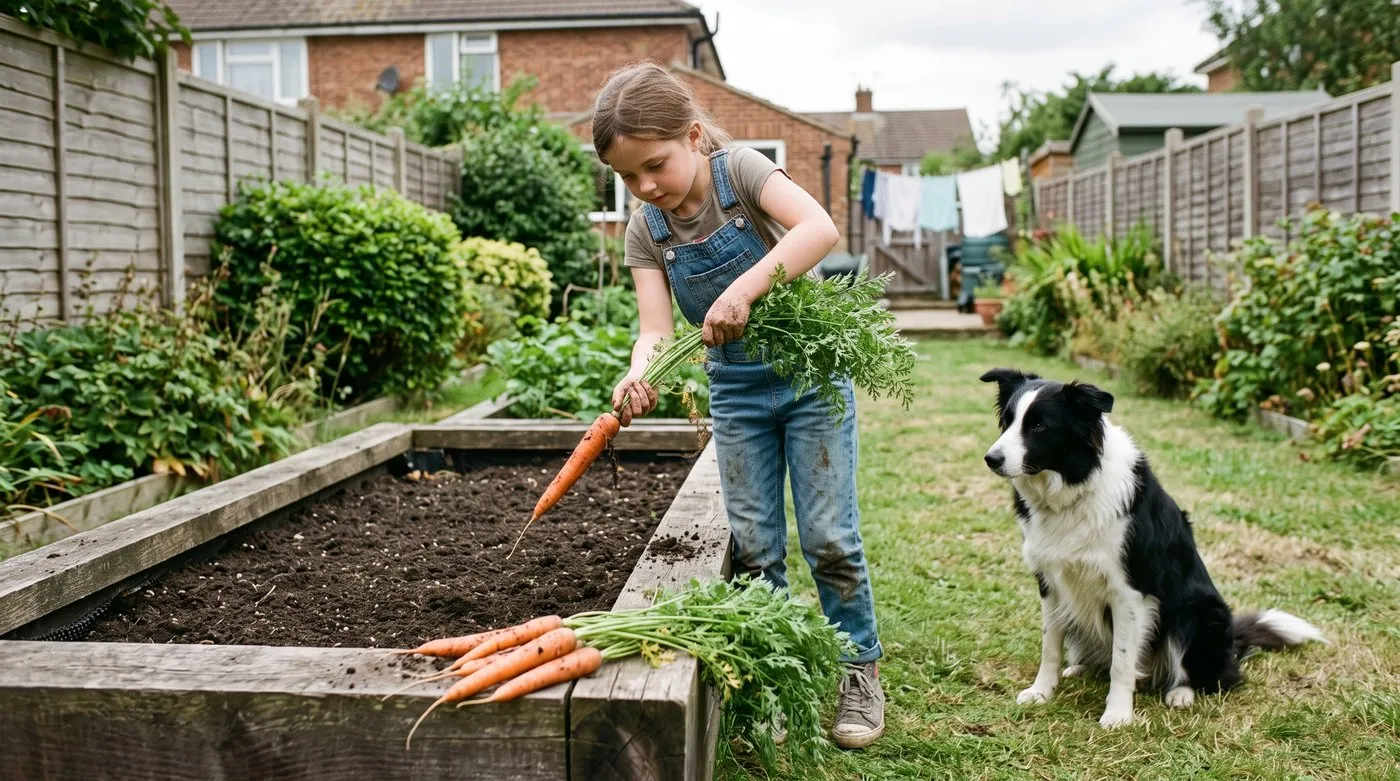
Long, sweet carrots need deep, loose soil. A raised bed gives them room to grow straight.
Growing conditions matter as much as the variety. Carrots that grow steadily, with regular water in dry spells, taste sweeter and stay tender. Stressed carrots turn woody.
Pull a few young and leave the rest to grow on. Baby carrots taste bright and tender, while mature ones have a deeper carrot flavour.
Coloured carrots such as Purple Haze are fun, especially for children. Purple types often keep their colour on the outside but fade when cooked, so they’re at their best raw.
Which carrots resist carrot fly?
Flyaway and Resistafly are the best-known resistant varieties. Carrot fly larvae tunnel into the roots, leaving rusty brown scars. Resistant varieties are less attractive to them, so you get less damage, but they aren’t immune.
For proper protection, cover the bed with fine insect mesh straight after sowing and keep it on until harvest. Tuck the edges into the soil so the flies can’t crawl underneath. Thin seedlings on a still evening, and take away the thinnings, because the smell draws the flies in.
Our carrot root fly guide explains when the flies are about and how to time your sowings.
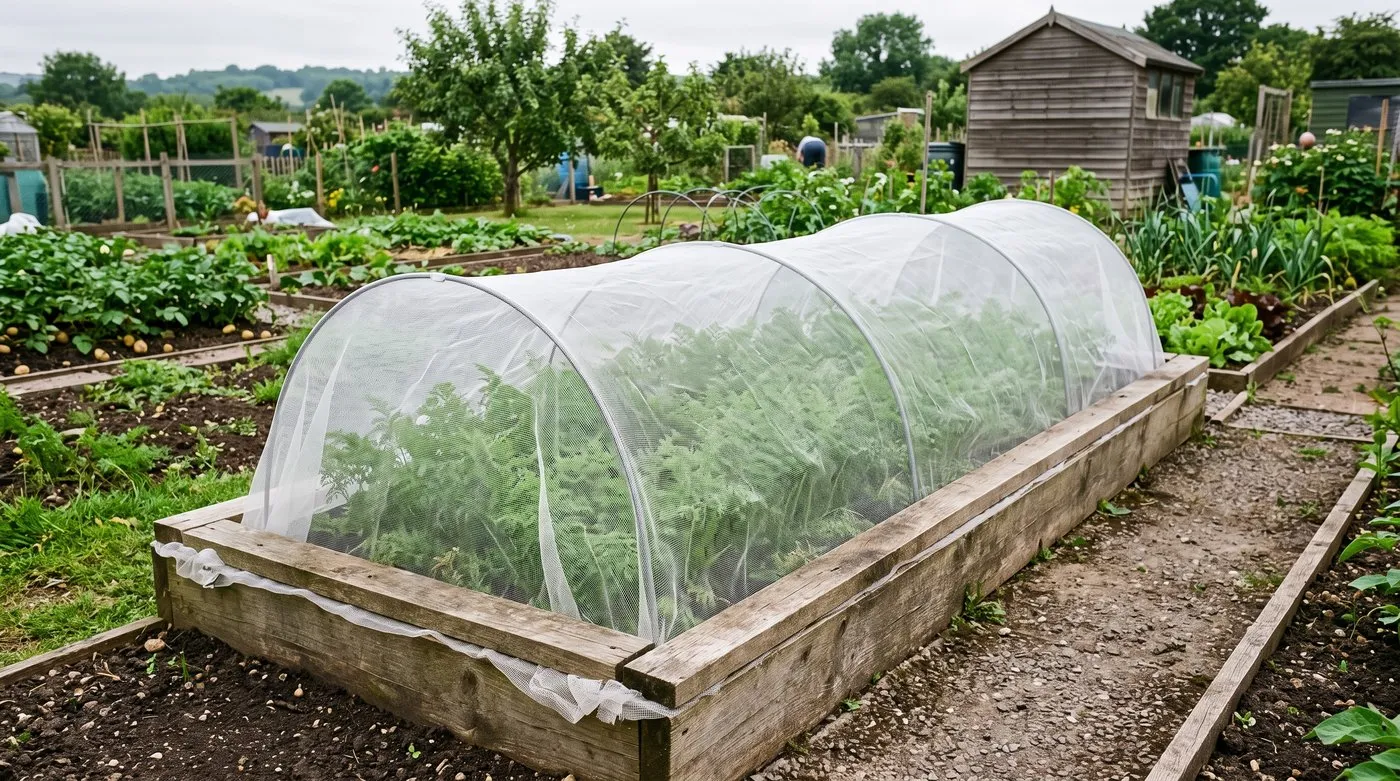
Mesh protects any carrot, resistant or not. Put it on as soon as you sow and tuck the edges in well.
Which maincrop carrot stores best?
Autumn King 2 is the classic choice for winter storage. It’s a slow maincrop that grows large, sturdy roots for lifting in autumn.
Sow from late spring to early summer and thin plants to about 7-8cm apart so the roots have room to grow. Water in long dry spells.
Lift on a dry day before hard frost. Twist off the leaves just above the root and don’t wash them. Pack sound carrots in boxes of barely damp sand, so they don’t touch, and keep them somewhere cool and frost-free. Check every few weeks and remove any that soften. Our guide to storing root vegetables over winter has more ideas.
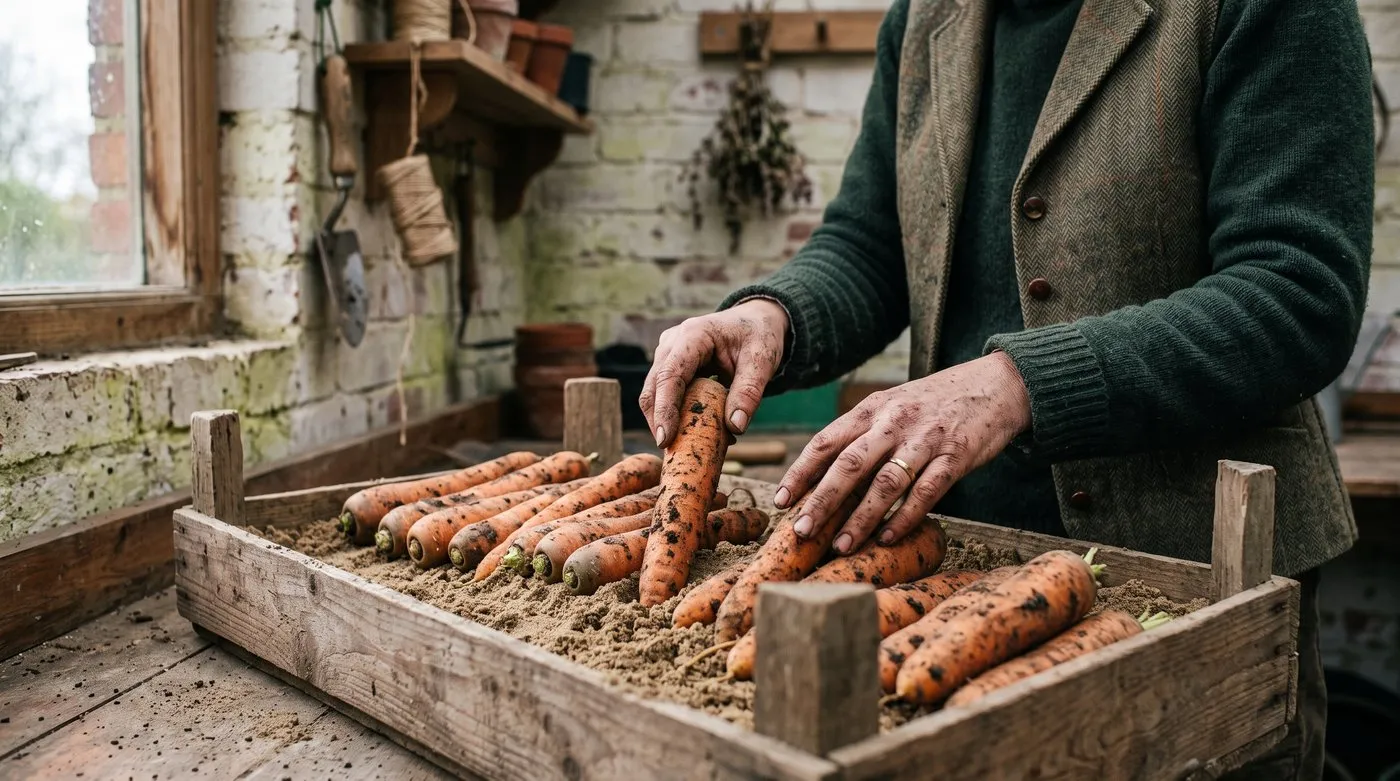
Store sound, unwashed maincrop roots in sand. Early and baby carrots are better eaten fresh.
When to sow each type of carrot
| Month | What to sow |
|---|---|
| March | Early Nantes 5 or Paris Market under cloches, or in pots in a greenhouse |
| April to May | Early types outdoors every few weeks. Sugarsnax and Chantenay |
| May to June | Autumn King 2 and other maincrops for storing |
| June to July | Last sowings of quick early types for autumn carrots |
| August | A last sowing of early types in pots under cover for baby carrots |
A simple plan for carrots all year
You don’t need six packets. Two well-chosen varieties go a long way.
Sow a short row of Early Nantes 5 every three or four weeks from April to July for a steady supply of fresh carrots. Then sow one longer row of Autumn King 2 in late May or June to lift and store for winter. Cover both with mesh.
Grow carrots with the other root crops in your rotation, moving them to a fresh bed each year. Our four-year crop rotation plan shows where they fit.
Common mistakes when choosing carrots
- Long carrots in heavy or stony soil. They fork and snap. Grow short or round types instead.
- Fresh manure in the bed. It causes forked, hairy roots. Use ground manured for a previous crop.
- Relying on resistance alone. Resistant varieties still get some carrot fly. Use mesh too.
- Storing early varieties. Quick early types are for eating fresh. Grow a maincrop for winter.
- Sowing everything at once. You’ll get a glut. Sow short rows every few weeks.
Fancy a challenge? Our guide to long show carrots shows how exhibitors grow perfect roots. For more vegetables to try, browse the growing veg hub.
Frequently asked questions
What is the best carrot variety to grow in the UK?
It depends on your soil and what you want. Early Nantes 5 is a great all-rounder for quick, sweet carrots. On heavy clay, grow a stumpy Chantenay or round Paris Market. For winter storage, choose Autumn King 2.
Which carrot variety is the sweetest?
Sugarsnax 54 is a popular choice for sweet raw carrots. It needs deep, loose soil to grow its long roots. Early Nantes types are sweet too, especially when pulled young. Steady watering helps any variety taste sweeter.
Which carrot is most resistant to carrot fly?
Flyaway and Resistafly are the best-known resistant varieties. They suffer less damage, but they aren’t immune. Cover the crop with fine insect mesh from sowing to harvest for proper protection.
What carrot grows best in containers?
Early Nantes 5 and Paris Market are the best picks for pots. Early Nantes has blunt-ended roots, and Paris Market grows round ones like radishes. Use a pot at least 20cm deep and keep the compost evenly moist.
Which carrot stores best over winter?
Autumn King 2 is the classic storage carrot. Sow it in late spring, lift sound roots in autumn before hard frost and pack them in boxes of barely damp sand. Check them every few weeks.
Which carrots grow best in clay soil?
Short or round carrots cope best with clay. Chantenay types have stumpy, wedge-shaped roots, and Paris Market forms little balls. Long types tend to fork or snap in heavy soil, so save them for raised beds.
Our team produces practical UK gardening guidance from source research, contributor records and established horticultural practice. Editorial standards are overseen by Matt W.