Key takeaways
- Firestorm (red flowers) and Moonlight (white flowers) set pods well even when bees are scarce or it's hot
- Lady Di, Polestar and White Lady are good stringless choices for tender pods
- Benchmaster and Enorma grow long, straight pods for the kitchen or the show bench
- Hestia is a dwarf runner bean about 45cm tall that suits a patio pot
- Czar has white flowers and big white seeds you can dry for winter cooking
- Pick young pods every two or three days so the plants keep flowering
The best runner bean for most UK gardens is Firestorm, or Moonlight if you prefer white flowers. Both set pods reliably when traditional varieties drop their flowers. Choosing the right variety is the easiest way to avoid a frame full of flowers and no beans.
This guide helps you pick a packet. Sowing, frames and watering are covered in the runner bean growing guide linked at the end.
Which runner bean varieties are best for UK gardens?
Firestorm is the strongest all-round choice. Traditional varieties still win for particular jobs, such as long show pods or dried beans.
| Variety | Flowers | Height | Pods | Best for |
|---|---|---|---|---|
| Firestorm | Scarlet | About 2.5-3m | Stringless, fleshy | Reliable crops in any summer |
| Moonlight | White | About 2.5-3m | Stringless, smooth | Reliable crops, white flowers |
| Lady Di | Scarlet | About 2.5-3m | Stringless, slender | Tender pods |
| White Lady | White | About 2.5-3m | Tender, good flavour | Classic flavour |
| Benchmaster | Scarlet | About 2.5-3m | Very long, straight | Showing and slicing |
| Celebration | Salmon pink | About 2.5-3m | Straight, fleshy | Pretty flowers plus a good crop |
| Hestia | Red and white | About 45cm | Short, stringless | Pots and small spaces |
| Czar | White | About 2.5-3m | Large pods, white seeds | Drying for winter |
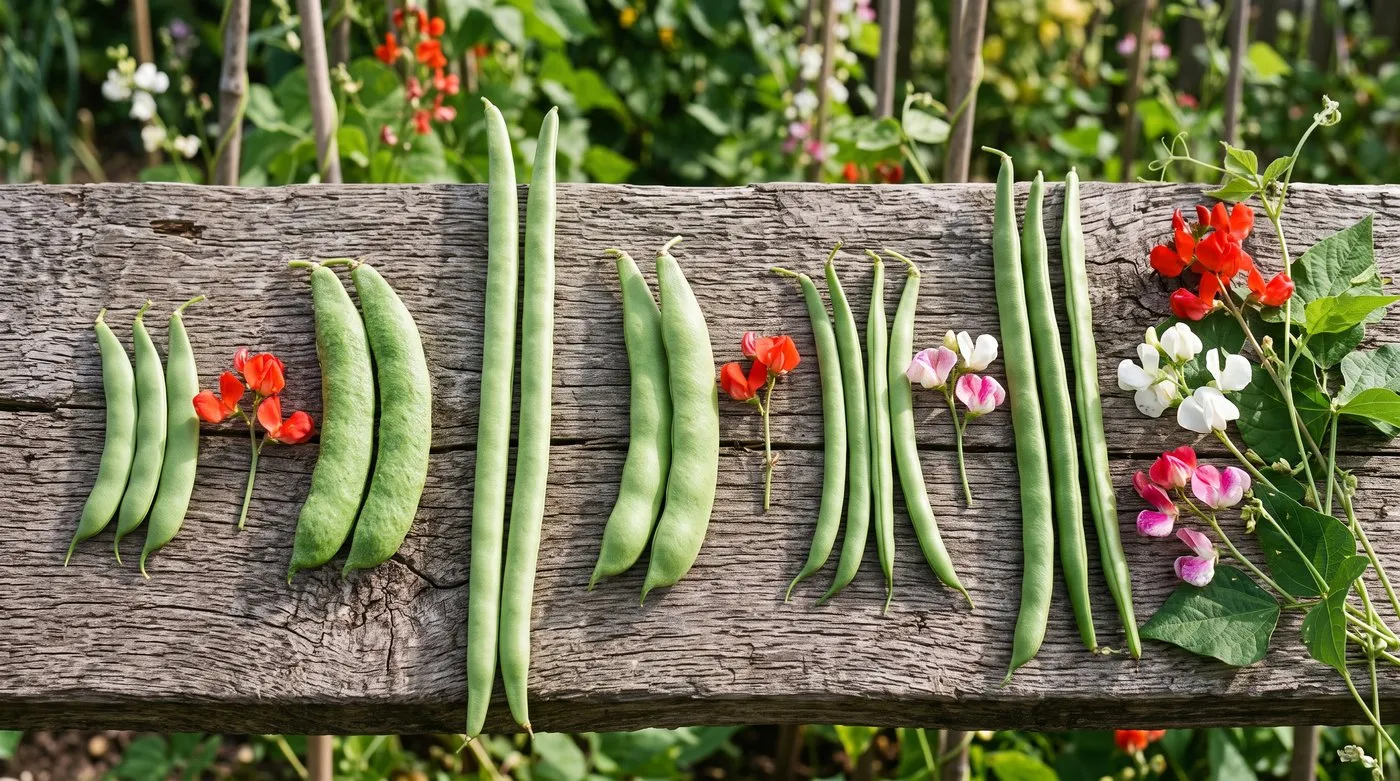
Runner bean varieties differ in pod length and flower colour. Choose for pod set and eating quality first, and let flower colour settle a tie.
Runner beans that set pods in hot summers
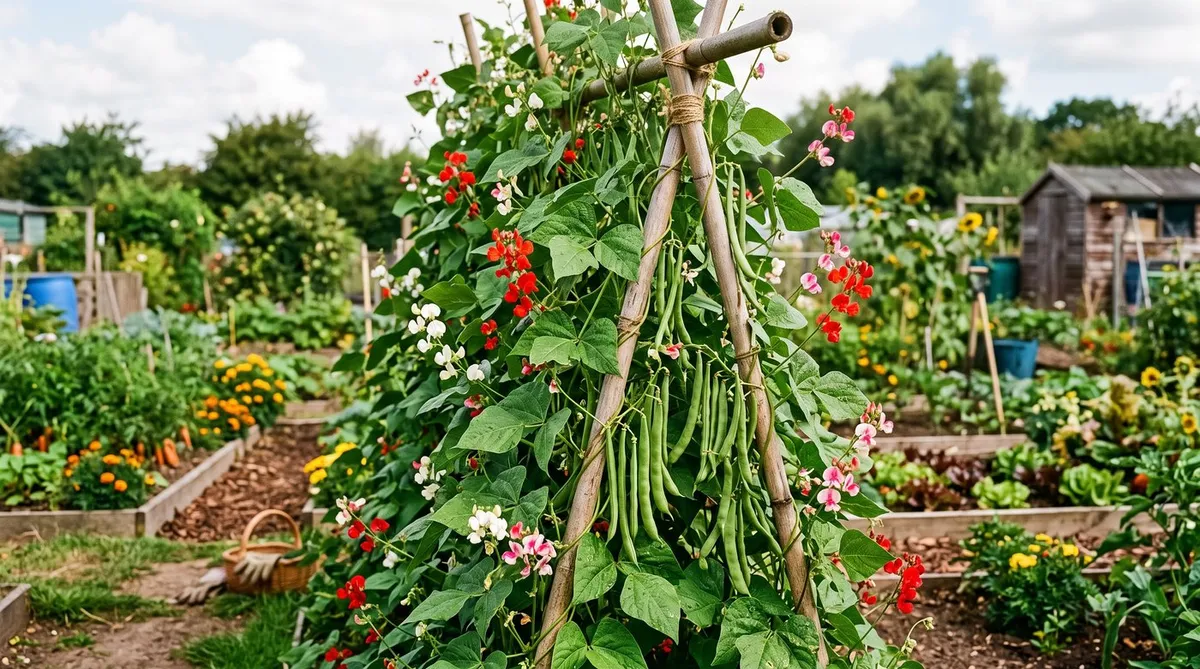
Firestorm and Moonlight are the most reliable runner beans for a decent crop. Both are crosses between runner beans and French beans. That means the flowers can pollinate themselves rather than relying on bees.
Traditional runner beans often drop their flowers in hot, dry spells or when few bees are about. These crosses set pods far more dependably in those conditions. Firestorm has scarlet flowers and Moonlight has white ones. Both give smooth, stringless pods.
Good variety choice won’t make up for dry roots, though. Water well at the roots in dry weather, especially once flowering starts, and mulch to hold the moisture in. If flowers keep falling, the guide to runner beans not setting pods goes through the causes.
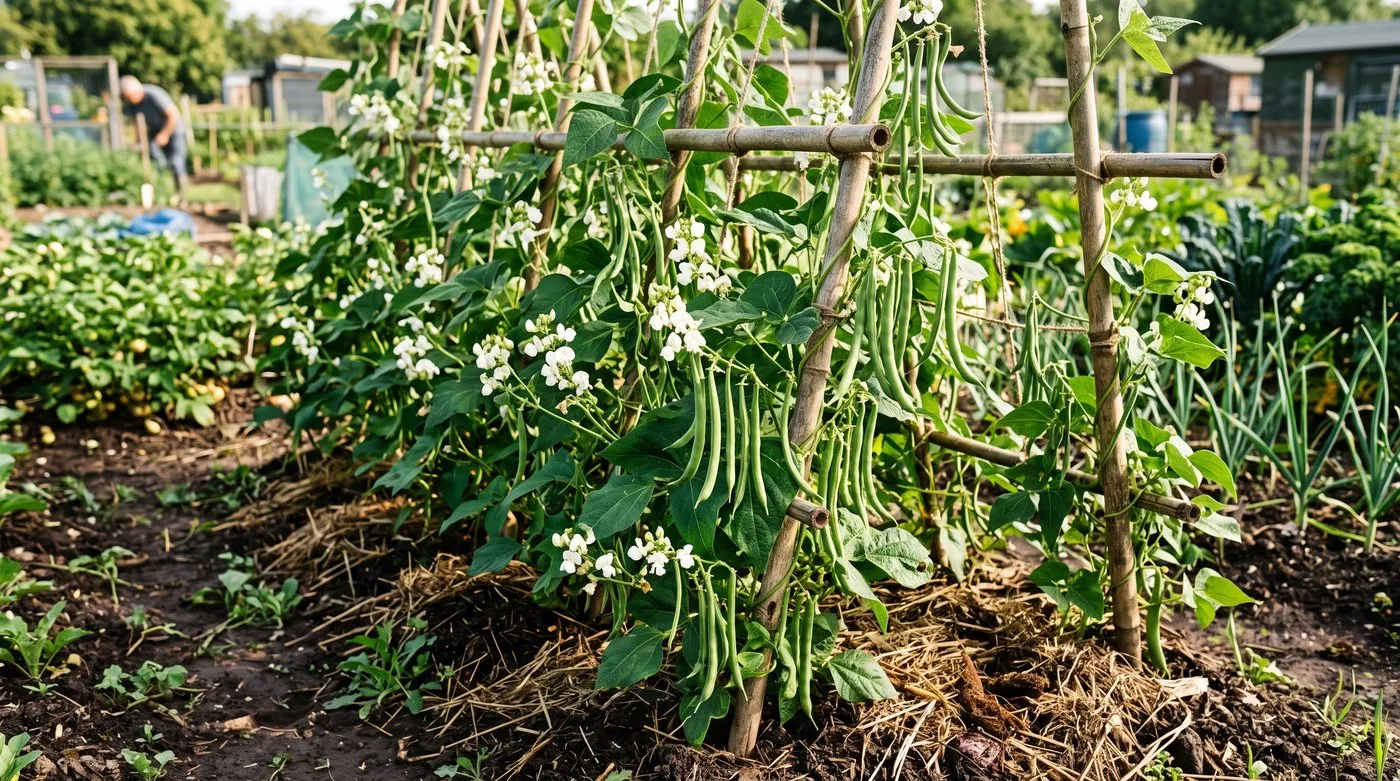
Self-pollinating crosses like Moonlight set plenty of pods, but they still need moist roots. A straw mulch helps.
Best stringless runner beans for flavour
Most modern runner beans are stringless, which means no tough thread down the side of the pod when picked young. Lady Di gives long, slender, tender pods. Polestar is another reliable stringless red-flowered bean.
White Lady is a white-flowered favourite for its tender pods and good flavour. Celebration has salmon-pink flowers and straight, fleshy pods, so it earns its place in a flower border too.
Picking time matters more than the variety. Pick pods at about 15-20cm, before the beans inside make bumps along the pod. Older pods get stringy and coarse, even on a stringless type. Keep picking every two or three days.
Long runner beans for the kitchen and the show bench
Benchmaster and Enorma are the classic long-podded varieties. Their pods grow long and straight, which makes them easy to slice and popular at village shows.
For eating, pick them young like any other runner bean. Leave only a few selected pods to grow on if you’re showing. Long pods need steady watering, or they curl and toughen. The guide to growing show runner beans covers training and what judges look for.
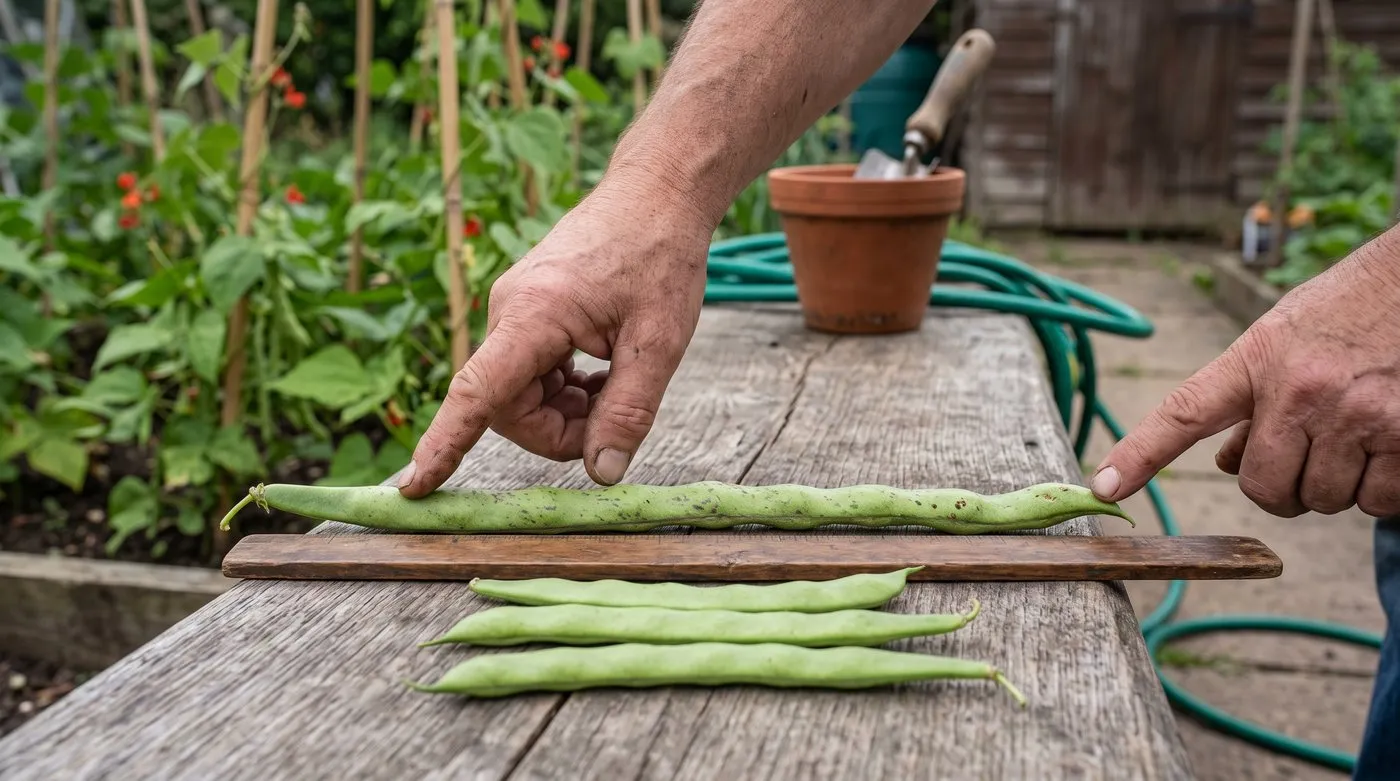
The long, bumpy pod on top has gone past its best for eating. The smooth younger pods below are the ones to cook.
Dwarf runner beans for pots and patios
Hestia is the one to choose if you haven’t got room for a tall frame. It grows to about 45cm and has pretty red and white flowers. The pods are stringless.
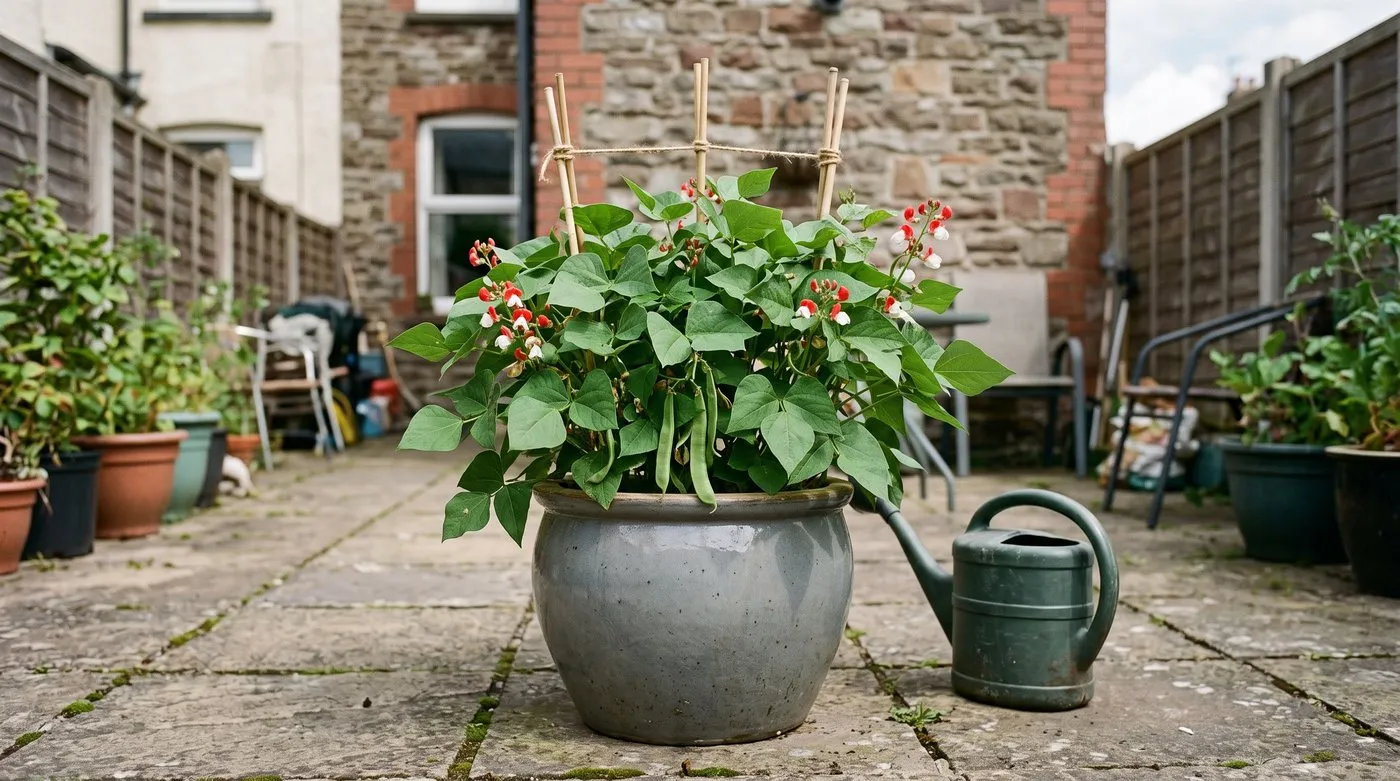
Dwarf runner beans like Hestia stay about knee-high, so a big pot and a few short canes are all they need.
Grow one or two plants in a pot at least 30cm wide, filled with peat-free compost mixed with some loam-based compost. A few short canes stop the stems flopping. Pots dry out fast, so water often once flowers appear. Dwarf plants give a smaller crop than climbers, but they’re perfect for a balcony or patio. There are more compact crops in the guide to dwarf vegetables for small spaces.
Runner beans for drying
Czar is a white-flowered variety grown as much for its seeds as its pods. Pick some pods young for eating. Leave the rest to dry on the plant, then shell out the large white beans for soups and stews.
Warning: Raw and undercooked dried beans can make you ill. Soak dried runner beans overnight, then boil them hard for at least 10 minutes before simmering until soft.
The guide to drying beans and peas explains how to finish and store them.
Choosing runner beans by flower colour
Runner beans were first grown in Britain as ornamental climbers, and they still look lovely. Scarlet is the classic colour. White flowers come with Moonlight, White Lady and Czar. Celebration has salmon-pink flowers. Painted Lady is an old variety with red and white flowers.
Growing two varieties up one frame looks great and spreads the risk. A self-pollinating type like Firestorm next to a traditional favourite keeps the crop coming whatever the weather. If you’re short of space, a frame on a sunny fence is one of the best uses of height. The guide to which vegetables need a trellis has frame ideas.
How many runner bean plants should you grow?
Ten to twelve plants will feed most families through summer. Runner beans crop for weeks, so a single wigwam of six to eight plants is plenty for one or two people.
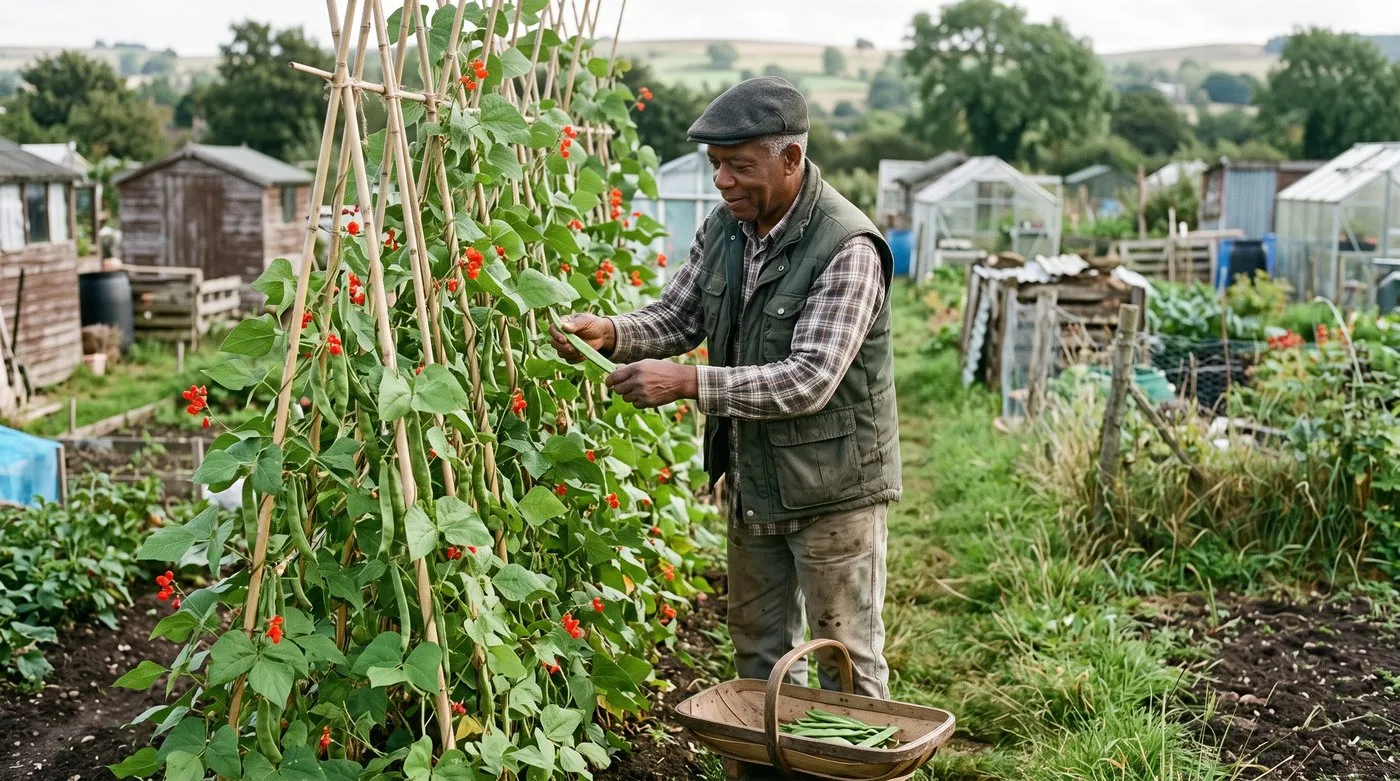
Picking every two or three days keeps the plants flowering. A dozen plants keeps most families in beans all summer.
Pick every two or three days, and take off any pods that have got too big, even if you throw them away. Pods left to mature tell the plant to stop flowering. Freeze spare young beans after blanching. The guide to freezing garden produce shows how.
Common mistakes when choosing runner beans
- Growing only traditional varieties in a hot spot. If flowers keep dropping, try Firestorm or Moonlight next year.
- Choosing a climber for a small pot. Tall varieties need a 2.4m frame. Hestia suits pots.
- Picking long-podded types too late. Benchmaster and Enorma still taste best young.
- Sowing far too many. A dozen plants is a lot of beans. Sow a few more than you need, not a whole packet.
Now you’ve chosen your beans, read the guide to growing runner beans for sowing dates and frames, or browse more crops on the growing veg hub. For another climber that’s easier in pots, see how to grow French beans.
Frequently asked questions
What is the best runner bean variety for the UK?
Firestorm is the best all-round runner bean for most UK gardens. Its flowers pollinate themselves, so it sets pods well in hot or dull summers. Moonlight is the white-flowered alternative.
Which runner bean has the best flavour?
White Lady and Lady Di are popular for classic runner bean flavour. Flavour depends more on picking young than on the variety. Pick pods at about 15-20cm, before the beans inside start to bulge.
Which runner beans are stringless?
Firestorm, Moonlight, Lady Di and Polestar are all stringless when picked young. Even stringless pods get tough if left too long, so keep picking every few days.
Which runner bean is best for a container?
Hestia is the best runner bean for a container. It’s a dwarf variety about 45cm tall with red and white flowers. Grow one or two plants in a pot at least 30cm wide and water often.
Why do some runner bean varieties set pods better than others?
Varieties crossed with French beans can pollinate themselves. Traditional runners rely more on bees, and flowers often drop in hot, dry weather. Firestorm and Moonlight are the easiest crosses to find.
How many runner bean plants do I need?
Ten to twelve plants feed most families through summer. Runner beans crop heavily for weeks if you keep picking. A single wigwam of six to eight plants is plenty for one or two people.
Our team produces practical UK gardening guidance from source research, contributor records and established horticultural practice. Editorial standards are overseen by Matt W.