
Key takeaways
- Sow indoors from mid-April, or outdoors in late May once the soil is warm
- Dwarf beans suit pots and small beds; climbers crop for longer on canes
- Sow a fresh batch every three weeks until late June for beans into October
- Pick pods at 10-15cm every 2-3 days and the plants keep flowering
- Water at the base once flowers appear, and mulch to keep the soil moist
- Pinch out the tips of climbers at the top of their canes to put off blackfly
French beans are one of the most rewarding vegetables you can grow in the UK. Climbing types crop for weeks, and even dwarf beans in pots give you plenty from July to October. They’re easier than runner beans and more tender when picked young.
Dwarf vs climbing French beans
Dwarf French beans make compact bushes about 40-50cm tall. They need no support and crop for a few weeks in one big flush. They’re perfect for pots, raised beds and small gardens.
Climbing French beans grow 1.5-2m tall and need canes, trellis or netting. They crop for longer and give more beans from the same bit of ground.
So it’s simple. Dwarf beans are quick and easy. Climbers give you more beans over a longer season, which is handy on an allotment. For small spaces, see our container vegetable guide.
When to sow French beans
You can start them indoors or sow them straight into the ground.
Indoor sowing (mid-April to late May)
Start indoors from mid-April. Sow one seed per 7cm pot or module, 5cm deep, in moist multipurpose compost. Keep them warm, around 18-20C, and they should come up in 7-10 days. A propagator, warm windowsill or greenhouse all work. Our indoor seed sowing guide has more tips.
Harden them off for a week or so before planting out once the frosts are over. That’s usually mid to late May in the south, late May in the Midlands and early June further north.
Outdoor sowing (late May to late June)
Sow outdoors once the soil has warmed, usually late May in most of England. Cold, wet soil makes the seeds rot before they come up, so don’t rush.
Sow dwarf beans 5cm deep and 15cm apart in rows 45cm apart. For climbers, sow 2 seeds at the foot of each cane and keep the stronger seedling.
 Sowing French beans into modules indoors from mid-April gives them a head start.
Succession sowing for continuous harvest
The best way to keep beans coming is to sow little and often. Instead of sowing everything at once, make 3-4 sowings about three weeks apart from mid-April to late June.
A simple plan for the Midlands:
| Sowing | When | How | First pick |
|---|---|---|---|
| First | Mid-April | Indoors | Early July |
| Second | Early May | Indoors | Mid-July |
| Third | Late May | Outdoors | Early August |
| Fourth | Mid-June | Outdoors | Late August |
This spreads your harvest from July to the first frosts in October. Sow dwarf beans just once and you’ll get a glut for a few weeks, then nothing. Our succession planting guide shows how to do this with other crops too.
Supporting climbing French beans
Put supports in before you plant. Here are three easy options.
Bamboo cane wigwam
Push 6-8 canes, 2.4m long, into a circle about 60cm across and tie the tops together. Each cane gets one plant. It’s the allotment favourite and takes up very little ground.
Double row of canes
Make two rows 45cm apart. Push canes in every 15cm, lean each pair together and tie a cane along the top where they cross. This is the one to choose if you want lots of beans.
Netting or trellis
Fix 2m netting between two strong posts, or against a fence or wall. Plant 15cm apart along the bottom. It’s tidy and suits small gardens.
 Climbing French beans on a cane wigwam in mid-summer, with pods ready to pick.
Best French bean varieties for UK gardens
Climbing varieties
Cobra is a popular all-rounder with long, green, stringless pods over a long season.
Blauhilde has deep purple pods that turn green when you cook them. Stringless and tasty, and the purple pods are easy to spot when picking.
Cobra Bicolour has green pods streaked with purple, and slightly shorter pods than Cobra.
Dwarf varieties
Safari has slim, pencil-thin pods with great flavour. Pick them young. Ideal for pots and raised beds.
Purple Teepee holds its purple pods above the leaves, so picking is easy. They turn green when cooked.
Speedy is quick to crop, which makes it handy for a late sowing in June.
Ferrari has long, slim, even pods that are great for freezing.
Variety comparison table
| Variety | Type | Pod colour | Best for |
|---|---|---|---|
| Cobra | Climbing | Dark green | All-round cropping |
| Blauhilde | Climbing | Deep purple | Looks and taste |
| Cobra Bicolour | Climbing | Purple-streaked | Something a bit different |
| Safari | Dwarf | Green | Flavour, pots |
| Purple Teepee | Dwarf | Purple | Easy picking |
| Speedy | Dwarf | Green | Late sowings |
| Ferrari | Dwarf | Green | Freezing |
Growing French beans: soil, feeding, and watering
French beans like rich soil that holds moisture. Unlike broad beans, they need decent soil to crop well.
Soil preparation
Dig in plenty of well-rotted compost or manure the autumn before. On heavy clay, add some grit for drainage. Skip high-nitrogen fertilisers, which give you lots of leaves and fewer pods.
Watering
Water matters most once flowers appear. Uneven watering makes flowers drop and pods go wonky. Water at the base, not over the leaves, and give climbers a good soak a couple of times a week in dry spells. A mulch of straw, grass clippings or compost keeps the soil moist and the weeds down.
Feeding
Once the first flowers open, give a tomato feed every two weeks. It helps the plants put their energy into pods rather than leaves.
Common problems and pests
Black bean aphid
Blackfly are the most common pest. They cluster on shoot tips and flower buds. Pinch out the top 10cm of climbing beans once they reach the top of their supports, as blackfly love that soft growth. Grow companion flowers like marigolds and nasturtiums nearby to bring in ladybirds and hoverflies, which eat them.
Halo blight
This causes brown spots with yellow rings on the leaves, and spreads in wet weather and through infected seed. There’s no cure, so pull up and bin affected plants. Buy fresh seed, don’t save seed from sick plants, and grow beans in a different bed each year. The RHS halo blight page has photos to help you spot it.
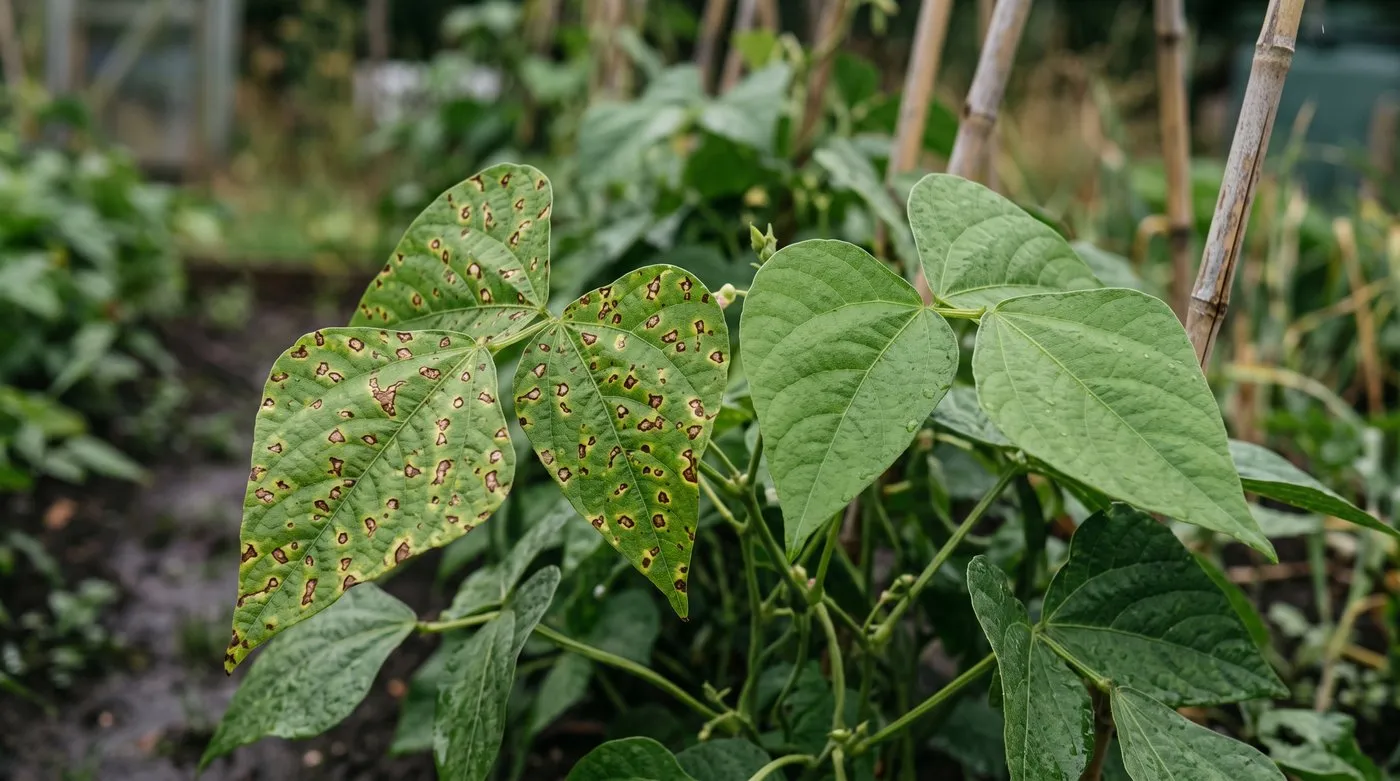
Brown spots with a yellow ring are the giveaway for halo blight. There’s no cure, so pull up affected plants and grow beans somewhere new next year.
Slugs and snails
Young plants are at risk, especially in wet springs. Use wool pellets, beer traps or wildlife-friendly ferric phosphate pellets. Seedlings are most at risk in their first couple of weeks.
Grey mould (Botrytis)
Fluffy grey mould on pods in damp, muggy weather. Space plants properly, water at the base and pick off mouldy pods. It’s most common on late crops in September and October.
Harvesting French beans
Pick pods at 10-15cm long, when they snap cleanly. At this stage you can barely see the beans inside. Leave them longer and they get stringy and tough, and the plant slows down.
Pick every 2-3 days in July and August. Hold the stem with one hand and pull the pod with the other. The stems snap easily, and a broken stem means fewer beans.
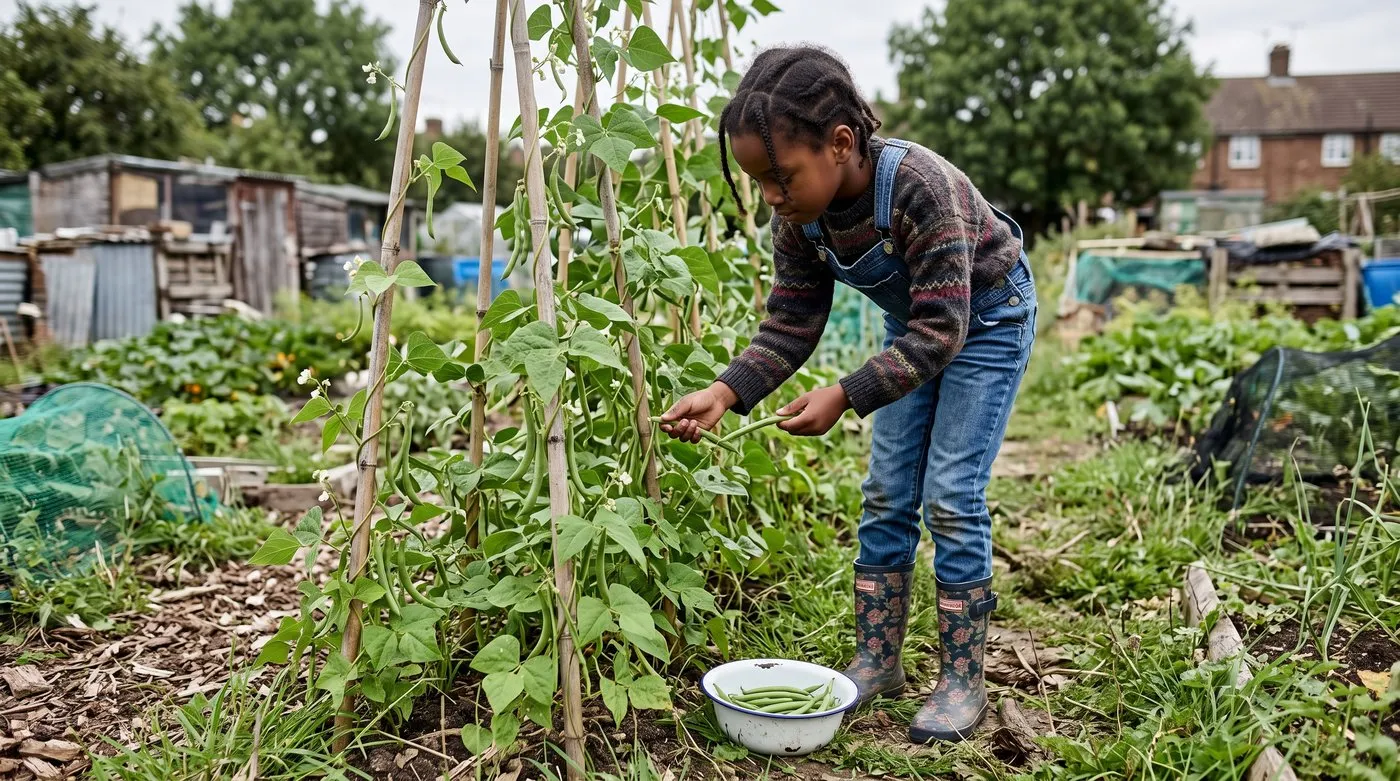
Pick pods while they’re slim and snap cleanly, every two or three days. The more you pick, the more the plants make.
Freezing and storing French beans
Fresh beans keep for 3-4 days in the fridge. For longer, freeze them.
Blanch before freezing. Boil whole beans for 2 minutes, then cool them in iced water. Drain well, spread on a tray and freeze, then bag them up. They won’t clump, and they keep their colour. Use within a year.
You can also dry beans on the plant at the end of the season. Leave the last pods until the beans rattle inside, then shell them and store in airtight jars for soups and stews. Borlotti beans are grown just for this and have pretty speckled pink seeds.
Month-by-month French bean calendar
| Month | What to do |
|---|---|
| January | Order seeds. |
| February | Plan supports and buy canes or netting for climbers. |
| March | Dig compost into beds. Too early to sow in most areas. |
| April | First indoor sowing from mid-April. Put up wigwams or netting. |
| May | Second indoor sowing. Harden off April plants. Sow outdoors from late May. |
| June | Last outdoor sowing by mid-June. Plant out indoor-raised beans and water well. |
| July | First pickings. Pick every 2-3 days. Start tomato feed. Watch for blackfly. |
| August | Peak picking. Later sowings start cropping. |
| September | Keep picking. Watch for grey mould. Leave some pods to dry. |
| October | Last pickings before the frost. Compost old plants. Shell dried beans. |
| November | Nothing to do. |
| December | Plan next year’s varieties. |
Common mistakes when growing French beans
Sowing too early outdoors
Bean seeds rot in cold soil. Wait until late May in most of England and early June in the north. Cold, wet soil kills more bean seeds than any pest.
Not picking often enough
Big pods left on the plant tell it to stop flowering. This is the main reason for a poor crop. Pick every 2-3 days in July and August.
Watering overhead
Wet leaves encourage grey mould and halo blight. Always water at the base. A seep hose is ideal.
Crowding plants
Plants closer than 15cm get poor airflow and more disease. Leaves need to dry after rain. Damp, crowded leaves also invite bean rust later in summer.
Feeding with too much nitrogen
High-nitrogen fertiliser gives lush leaves and fewer pods. Use a tomato feed instead once flowering starts.
Now you’ve got French beans sorted, read our guide to growing courgettes for another generous summer crop.
Frequently asked questions
When should I sow French beans in the UK?
Sow indoors from mid-April or outdoors from late May. Indoor sowing in a warm spot gives you a head start, and seeds usually come up in 7-10 days. Sow outdoors once frosts are over and the soil has warmed up. That’s usually late May, a little earlier in the south and into June in the north.
What is the difference between dwarf and climbing French beans?
Dwarf beans are short bushes; climbers need tall supports. Dwarf types grow to about 45cm and need no support, so they suit pots and small spaces, but they crop for a shorter time. Climbing types reach about 1.8m on canes or netting and keep cropping for longer, so you get more beans from the same patch of ground.
How often should I pick French beans?
Pick every 2-3 days to keep them coming. If you leave pods to get big, the plant slows down flowering. Use two hands when picking so you don’t snap the brittle stems.
Can I grow French beans in pots?
Yes, dwarf varieties do well in pots 30cm across or bigger. Use multipurpose compost and water daily in warm weather. Feed every two weeks with tomato feed once flowers appear. Safari and Purple Teepee are good dwarf varieties for pots. Stand them in full sun, out of strong wind.
Why are my French bean flowers dropping without setting pods?
Dry soil and cold nights are the usual causes. Uneven watering is a common trigger. Water steadily at the base of the plants, especially once flowering starts, and mulch around them to keep the soil moist. Very hot spells can also cause flower drop, but that’s rare in most UK summers.
How do I stop black bean aphid on French beans?
Pinch out the tips of climbing beans when they reach the top. Blackfly love soft new growth. Grow marigolds and nasturtiums nearby to bring in ladybirds and hoverflies. Wash off heavy clusters with a strong jet of water. Avoid sprays near flowers, as they can harm bees.
Can I freeze French beans?
Yes, they freeze well for up to a year. Blanch whole beans in boiling water for 2 minutes, cool them in iced water, drain, and freeze spread out on a tray before bagging. That keeps them from clumping. Frozen beans are best in stews, stir-fries and soups.
Our team produces practical UK gardening guidance from source research, contributor records and established horticultural practice. Editorial standards are overseen by Matt W.


